MEDVision Global Academy · Knowledge · Practice · Higher futures
GCE A/L Chemistry Fast Track Work PackageA+
Prepared under the guidance of Dr. Muthunu Akurugodagama
All 14 units of the A/L Chemistry syllabus as concise, exam-focused notes. Every section is cited to the page in the NIE Resource Book. Every English-medium past paper from 2016 to 2026 is mapped to the units it tests, and each unit ends with model questions in the style of the real papers.
Choose a syllabus unit from Short notes, read its linked NIE Resource Book pages, and attempt the model questions before revealing the answers. Practise past-paper MCQs, structured essays and essays using the year selector. Mark units as revised and follow the 12-week A+ planner; progress is saved on this device.
Know the paper
Exam blueprint
Taken from the paper covers and the "Distribution of Marks" page of the marking schemes (2019–2025).
Paper I · 2 hours
50 multiple-choice questions, all compulsory, 1 mark each (1 × 50 = 50).
Q1–30: choose the single best answer from five options.
Q31–40: decide which of four responses (a)–(d) are correct and mark a code.
Q41–50: judge a pair of statements and mark a code.
A periodic table and constants (R, NA, h, c) are given. Calculators are not allowed.
Paper II · 3 hours + 10 minutes reading
Part A: four structured questions (Q1–4), all compulsory, answered on the paper, 100 marks each.
Part B: answer two of Q5–7, 150 marks each.
Part C: answer two of Q8–10, 150 marks each.
400 + 300 + 300 = 1000 marks, reported as a Paper II mark out of 100.
Use the 10 minutes of reading time to choose your Part B and C questions.
Response codes for Q31–40
Code
Meaning
(1)
only (a) and (b) are correct
(2)
only (b) and (c) are correct
(3)
only (c) and (d) are correct
(4)
only (d) and (a) are correct
(5)
any other number or combination is correct
Statement-pair codes for Q41–50
Code
Statement 1
Statement 2
(1)
True
True, and correctly explains statement 1
(2)
True
True, but does not explain statement 1
(3)
True
False
(4)
False
True
(5)
False
False
Analysis of 2019–2026 papers
Where the marks are
Every MCQ in the seven current-syllabus papers we have in English (2019, 2020, 2021(22), 2022(23), 2024, 2025, 2026) was assigned to the one unit it mainly tests. Paper II questions were mapped to all the units they draw on. The 2023(24) Paper I is not in the collection.
Hover or tap a cell for the exact count. The bar column totals all seven papers; the last column counts Paper II questions since 2019 that test the unit. The biggest MCQ shares: Unit 12 Equilibrium (58), Unit 14 Industry & environment (36), Unit 6 s, p, d block (32).
What each Paper II question slot usually tests
Question
Part
Units it tested, 2019–2026 (papers in which it did)
The slot pattern has held since 2019. Q2 and Q9 always test s, p and d-block identification, and Q10 is always industrial and environmental chemistry. So you can choose your Part C questions in advance.
Structured revision
12-week fast-track plan
Eleven weeks of unit work in syllabus order, then a week of timed full papers. Each week names three recent Paper II questions to practise; the full MCQ lists are on each unit page.
Digital Past Papers: all questions retyped with answers and reviews, sorted by year (newest first).
All English-medium question papers in the collection, with the matching marking scheme and the page where its MCQ key sits. Years are the Department of Examinations' labels; 2021(22) means the 2021 examination held in 2022.
About 2 minutes 20 seconds per question. Do Q41–50 (statement pairs) carefully: decide each statement on its own before judging the "explains" link.
For Q31–40, mark each of (a)–(d) true or false in the margin, then convert to the code. Three correct responses always means code (5).
No calculators: look for numbers designed to cancel, such as RT = 2500 J mol−1 or 96 500 C mol−1 with 0.965 A.
Paper II
Choose Part B and C questions during the reading time, using the slot pattern above.
Start every new question on a new page and number parts exactly as printed.
Show the working: ICE tables, Hess cycles and mole ratios earn marks even if the final number slips.
Give the length the question asks for. Short, precise answers where "state" or "identify" is used; reasoning where "explain" is used.
Rules seen in the marking schemes
"PHYSICAL STATES ARE NECESSARY" for equilibrium and thermochemistry answers in Part B (2025 scheme).
"Physical states are not required" for some industrial equations, but balancing always is (2018 scheme).
"If spelling is incorrect do not award marks" for names of complexes (2018 scheme).
"If name is given instead of symbols do not award marks" where symbols are asked for (2019 scheme).
What the examiners asked candidates to do (Evaluation Report 2016, Part III)
Read the instructions: how many questions in each part, which are compulsory, and the marks available.
Answer the easier questions first to manage time.
In organic chemistry: compare the products of LiAlH4 and NaBH4; compare Grignard reactions of esters with those of alkynes with acidic hydrogen; know enantiomers versus diastereomers; and write equations, not only observations, for Brady's, Fehling's and Tollens' tests.
Understand mechanisms through electron movement rather than learning them by heart.
In physical chemistry: balance equations to the correct ratio and include physical states; always state and convert units; practise problems with symbols and with logarithms.
Connect principles: equilibrium with rates; ΔH, ΔS, ΔG with spontaneity; reactions with phase equilibria; Le Chatelier with applications.
In inorganic chemistry: link colours, complexes and oxidation numbers; draw Lewis and resonance structures with lone pairs and formal charges; explain bond-angle differences (NH3 vs NF3, H2O vs H2S).
Give more attention to the last units of the syllabus, where achievement has been relatively low.
Paraphrased from Department of Examinations (2016), Evaluation Report, 02 – Chemistry, pp. 68–71. Open the report.
Sources
References
National Institute of Education. (2018). G.C.E. (Advanced Level) Chemistry Resource Book, Grade 12 · Units 1–3. Department of Science, Faculty of Science and Technology, NIE, Maharagama, Sri Lanka. Open
National Institute of Education. (2018). G.C.E. (Advanced Level) Chemistry Resource Book, Grade 12 · Units 4–5. Department of Science, Faculty of Science and Technology, NIE, Maharagama, Sri Lanka. Open
National Institute of Education. (2018). G.C.E. (Advanced Level) Chemistry Resource Book, Grade 12 · Unit 6. Department of Science, Faculty of Science and Technology, NIE, Maharagama, Sri Lanka. Open
National Institute of Education. (2019). G.C.E. (Advanced Level) Chemistry Resource Book, Grade 12 · Units 7–10. Department of Science, Faculty of Science and Technology, NIE, Maharagama, Sri Lanka. Open
National Institute of Education. (2019). G.C.E. (Advanced Level) Chemistry Resource Book, Grade 13 · Units 11–13. Department of Science, Faculty of Science and Technology, NIE, Maharagama, Sri Lanka. Open
National Institute of Education. (2019). G.C.E. (Advanced Level) Chemistry Resource Book, Grade 13 · Unit 14. Department of Science, Faculty of Science and Technology, NIE, Maharagama, Sri Lanka. Open
Department of Examinations, Sri Lanka. G.C.E. (A/L) Examination, 02 – Chemistry, English medium question papers: 2016, 2017, 2018 (old syllabus); 2019, 2020, 2021(2022), 2022(2023), 2023(2024) Part B & C, 2024, 2025, 2026.
Department of Examinations, Sri Lanka. 02 – Chemistry marking schemes: 2018, 2019, 2020, 2021(2022), 2024 and 2025 (partial), English; 2017 and 2023(2024), Sinhala medium.
Research and Development Branch, National Evaluation and Testing Service, Department of Examinations. (2016). G.C.E. (A.L.) Examination 2016: Evaluation Report, 02 – Chemistry. Part III, pp. 68–71.
Unit1
Grade 12 · 25 MCQs in 7 papers · 9 Paper II questions since 2019
Atomic structure
How we know atoms have a nucleus and electrons, how electrons are arranged in energy levels, and why properties repeat across the Periodic Table. Every Paper I opens with two or three questions from here, and Paper II Q1 nearly always does too.
Cathode rays (Thomson): streams of negative particles, identical whatever the gas or electrode metal. They travel in straight lines, carry momentum and are deflected by electric and magnetic fields towards the positive plate.
Positive rays (canal rays): their charge-to-mass ratio depends on the gas in the tube. The lightest, from hydrogen, is the proton.
Rutherford's gold-foil experiment: most α-particles pass straight through, a few are deflected strongly. So the atom is mostly empty space, with a tiny, dense, positive nucleus.
Radioactivity was discovered by Becquerel. Neutrons were identified later (Chadwick).
Z = number of protons, and A = protons + neutrons. Isotopes have the same Z but different A. The atomic mass unit is 1/12 of the mass of a 12C atom. Relative atomic mass is the abundance-weighted mean of the isotope masses.
Light behaves as a wave (c = νλ) and as a stream of photons (E = hν). Matter also has wave character: λ = h/mv (de Broglie). Energy in atoms is quantised, so electrons can only occupy fixed energy levels.
Each line comes from an electron falling from a higher level to a lower one: ΔE = hν. The Lyman series ends on n = 1 (ultraviolet). The Balmer series ends on n = 2 (visible). The Paschen series ends on n = 3 (infrared). Lines crowd together at high frequency because the levels converge.
The Aufbau principle fills orbitals from lowest energy upwards: 1s 2s 2p 3s 3p 4s 3d 4p. The Pauli principle allows no two electrons the same four quantum numbers. Hund's rule puts one electron in each orbital of a sub-shell, with parallel spins, before any pairing.
Learn the exceptions: Cr is [Ar]3d54s1 and Cu is [Ar]3d104s1. Transition metals lose their 4s electrons before 3d electrons when they form ions (Fe3+ = [Ar]3d5).
Atomic radius decreases across a period, because effective nuclear charge rises while shielding barely changes. It increases down a group.
Isoelectronic ions: the more protons, the smaller the ion. So O2− > F− > Na+ > Mg2+.
First ionization energy rises across a period, but dips at Group 13 (a 2p electron is higher in energy) and at Group 16 (repulsion between paired electrons).
Successive ionization energies jump sharply when an electron must come from a new, inner shell. The jump tells you the group.
Electron gain energy becomes more negative across a period. Cl is more negative than F because F is small and crowded. N and the noble gases have positive or near-zero values.
Electronegativity increases across a period and decreases down a group. F is the highest.
Key equations
Wave speedc = νλ
Photon energyE = hν = hc/λ
de Broglieλ = h/(mv) = h/√(2mEk)
Electrons in a shell2n2
Orbitals in a sub-shell2l + 1
Exam traps
The Balmer series ends on n = 2, it does not start there. 'n = 3 → n = 2' is visible; 'n = 2 → n = 1' is ultraviolet.
"Number of electrons with n = 4 and l = 2" means the whole 4d sub-shell: 5 orbitals × 2 = 10.
For a second ionization energy, compare the configuration of the ion being ionized (for example B+ is 2s2), not the neutral atom.
Cations are always smaller than their parent atoms and anions always larger. Across a period, compare isoelectronic series separately.
A+ moves
Plot successive ionization energies as a log graph in your head. The first big jump marks the group number.
Keep a one-page table of the d-block configurations (Sc → Zn) and the configurations of their common ions.
2026 Q2 — Identify p-block elements from allotropes (O, C) and an s-block metal from successive ionization energies; an oxoacid formed from CO₂ and water
2026 Q1 — Atomic/ionic properties from a species list; Lewis and resonance structures; σ/π bonds from orbital overlap; ordering properties (incl. carbonate decomposition temperature)
2025 Q1 — True/false on shapes and periodic properties; Lewis structure of ClSO₂F with oxidation state and resonance; successive ionization energies of a period 3 element
2024 Q1 — True/false on shapes and ionization energy; Lewis structure of ISO₂F and oxidation numbers; ordering electronegativity and other properties
2022(23) Q1 — True/false on line spectra and atomic structure; Lewis structure of an N–F–S molecule; ordering ionic character of CaX₂
2021(22) Q1 — True/false on polarizing power and bonding; Lewis structure of Cl₂O₃ and oxidation states
2020 Q1 — Ionic radii and periodic properties; Lewis structures and shapes
2019 Q2 — An s-block element identified from successive ionization energies (Mg) and its compounds
2019 Q1 — Properties of second-row elements; Lewis structures and shapes
2018 Q1old syllabus — Lewis structures and shapes; ordering properties
2017 Q1old syllabus — Formal charge in Lewis structures; quantum numbers of sub-shells
Model questions (original, in past-paper style)
M1.1Single answer · like Q1–30
Which electronic transition in a hydrogen atom emits a photon in the visible region?
(1)n = 2 → n = 1
(2)n = 3 → n = 2
(3)n = 4 → n = 3
(4)n = 5 → n = 3
(5)n = 1 → n = 2
Show model answer
Answer (2). Visible lines belong to the Balmer series, which ends on n = 2. Option 5 is an absorption, not an emission.
M1.2Single answer · like Q1–30
The first four ionization energies of an element are 578, 1817, 2745 and 11 577 kJ mol−1. The element belongs to
(1)Group 1
(2)Group 2
(3)Group 13
(4)Group 14
(5)Group 15
Show model answer
Answer (3). The large jump comes after the third electron, so there are three valence electrons: Group 13. These are aluminium's values.
M1.3Single answer · like Q1–30
How many orbitals in an atom can have n = 3 and ml = −1?
(1)1
(2)2
(3)3
(4)4
(5)6
Show model answer
Answer (2). For n = 3, l can be 0, 1 or 2. ml = −1 is possible only for l = 1 (one 3p orbital) and l = 2 (one 3d orbital).
M1.4Structured · like Paper II
(a) Arrange O2−, F−, Na+ and Mg2+ in increasing order of radius and explain your order. (b) Give the complete electron configurations of Cr and Cr3+.
Show model answer
(a) Mg2+ < Na+ < F− < O2−. All four ions have 10 electrons (isoelectronic). Nuclear charge falls from 12 to 8, so the same electron cloud is pulled in less strongly and the radius increases. (b) Cr: 1s22s22p63s23p63d54s1. Cr3+: 1s22s22p63s23p63d3. The 4s electron is lost first, then two 3d electrons.
Unit2
Grade 12 · 23 MCQs in 7 papers · 7 Paper II questions since 2019
Structure and bonding
Lewis structures, shapes, hybridization, resonance and the forces between particles. These ideas run through every other unit, and Paper II Q1 always asks you to draw a 'most acceptable' Lewis structure.
Count all the valence electrons, add one for each negative charge and remove one for each positive charge. Join the atoms with single bonds, complete the octets of the outer atoms, then put any remaining electrons on the central atom. Period 3 and heavier central atoms (P, S, Cl, Xe) can exceed an octet. B and Be can have fewer than eight.
Formal charge = (valence electrons) − (non-bonding electrons) − ½(bonding electrons). The most acceptable structure has the smallest formal charges, puts any negative formal charge on the more electronegative atom, and avoids like charges on neighbouring atoms.
Both bonding electrons come from one atom, for example NH4+, H3O+, H3N→BF3 and CO. Once a dative bond has formed, it is identical to any other covalent bond.
trigonal bipyramidal / see-saw / T-shaped / linear
6
octahedral
octahedral / square pyramidal / square planar
Repulsion decreases in the order lone pair–lone pair > lone pair–bond pair > bond pair–bond pair, so lone pairs squeeze bond angles (CH4 109.5°, NH3 107°, H2O 104.5°). NF3 has a smaller angle than NH3 because the bonding pairs are pulled out towards F. In a trigonal bipyramid, lone pairs sit in the equatorial positions.
sp (180°), sp2 (120°), sp3 (109.5°), sp3d (trigonal bipyramidal) and sp3d2 (octahedral). A double bond is one σ bond plus one π bond. A triple bond is one σ plus two π. σ bonds form from end-on overlap (s–s, s–hybrid, hybrid–hybrid). π bonds form from sideways overlap of p orbitals. Paper II often asks which orbitals overlap to form a named bond.
When one Lewis structure cannot describe a species, the real structure is a resonance hybrid of several contributing structures (NO3−, CO32−, O3, C6H6, carboxylate ions). The bonds are equal in length and intermediate between single and double. Only electrons move between resonance structures, never atoms. The most stable contributors have complete octets, fewer separated charges and negative charge on the more electronegative atom.
A polar bond does not guarantee a polar molecule. The bond dipoles may cancel by symmetry (CO2, BF3, CCl4 and SF6 are non-polar; SO2, NF3 and SF4 are polar). The electronegativity of an atom also depends on its hybridization (sp C > sp2 C > sp3 C) and on its oxidation state and charge. A carbon bonded to more electronegative atoms is itself more electronegative.
Covalent character in ionic compounds increases with the polarizing power of the cation (small and highly charged) and the polarizability of the anion (large).
Metallic bonding becomes stronger with more delocalised electrons per atom and smaller atoms. Group 2 metals have stronger bonding than Group 1.
Secondary interactions include ion–dipole, dipole–dipole, hydrogen bonding (H on N, O or F) and London dispersion forces, which grow with molar mass and surface area. They control boiling points and solubility.
Key equations
Formal chargeFC = V − N − ½B
Bond order (simple)σ + π count between two atoms
Electron pairs on central atom(valence e⁻ of centre + e⁻ from ligands ± charge) ÷ 2
Exam traps
Always state both the electron-pair geometry and the shape when asked. SF4 has a trigonal bipyramidal pair geometry and a see-saw shape.
Do not draw resonance structures that move atoms or break the octet rule for second-period atoms.
Hydrogen bonding needs H bonded directly to N, O or F. H2S has no hydrogen bonding, which is why it boils far lower than H2O.
Examiners note that candidates lose marks for missing lone pairs and formal charges on Lewis structures (Evaluation Report 2016).
A+ moves
Practise the four-step routine for Lewis structures: count electrons, build the skeleton, complete the octets, then minimise formal charges.
Memorise the VSEPR table as a grid. Most shape MCQs then take about 30 seconds.
2026 Q1 — Atomic/ionic properties from a species list; Lewis and resonance structures; σ/π bonds from orbital overlap; ordering properties (incl. carbonate decomposition temperature)
2025 Q1 — True/false on shapes and periodic properties; Lewis structure of ClSO₂F with oxidation state and resonance; successive ionization energies of a period 3 element
2024 Q1 — True/false on shapes and ionization energy; Lewis structure of ISO₂F and oxidation numbers; ordering electronegativity and other properties
2022(23) Q1 — True/false on line spectra and atomic structure; Lewis structure of an N–F–S molecule; ordering ionic character of CaX₂
2021(22) Q1 — True/false on polarizing power and bonding; Lewis structure of Cl₂O₃ and oxidation states
2020 Q1 — Ionic radii and periodic properties; Lewis structures and shapes
2019 Q1 — Properties of second-row elements; Lewis structures and shapes
2018 Q1old syllabus — Lewis structures and shapes; ordering properties
2017 Q1old syllabus — Formal charge in Lewis structures; quantum numbers of sub-shells
2016 Q1old syllabus — p-block elements from a list; Lewis structure of CN₂-type molecule
Model questions (original, in past-paper style)
M2.1Single answer · like Q1–30
Which molecule is polar?
(1)CO2
(2)BF3
(3)SF6
(4)PCl5
(5)SF4
Show model answer
Answer (5). SF4 has one lone pair on S and a see-saw shape, so its bond dipoles do not cancel. The other four are symmetrical.
M2.2Single answer · like Q1–30
The shapes of XeF4, ClF3 and I3− are respectively
(1)tetrahedral, trigonal planar, linear
(2)square planar, T-shaped, linear
(3)square planar, trigonal pyramidal, angular
(4)see-saw, T-shaped, angular
(5)octahedral, trigonal planar, linear
Show model answer
Answer (2). XeF4 has 6 pairs with 2 lone, so it is square planar. ClF3 has 5 pairs with 2 lone, so it is T-shaped. I3− has 5 pairs with 3 lone, so it is linear.
M2.3Statement pair · like Q41–50
Statement 1: The bond angle in NF3 is smaller than in NH3. Statement 2: F is more electronegative than H, so the bonding pairs in NF3 lie further from N and repel each other less.
Answer with the statement-pair code (1)–(5) from the code table.
Show model answer
Answer (1). Both statements are true, and statement 2 correctly explains statement 1.
M2.4Structured · like Paper II
For the nitrate ion, NO3−: (a) draw the resonance structures, (b) state the hybridization of N and the O–N–O bond angle, (c) explain why all three N–O bonds are the same length.
Show model answer
(a) Three equivalent structures, each with one N=O and two N–O−. N carries a formal charge of +1 and the double bond moves around the three O atoms. (b) N is sp2 hybridized and the angle is 120° (trigonal planar). (c) The real ion is a resonance hybrid. The π electrons are delocalised over all three N–O bonds, so each bond has a bond order of 1⅓ and the bonds are identical.
Unit3
Grade 12 · 24 MCQs in 7 papers · 8 Paper II questions since 2019
Chemical calculations
Oxidation numbers, moles, concentrations, balancing and stoichiometry. Calculators are not allowed, so the skill is setting up the ratio correctly and simplifying the arithmetic. Unit 3 also supports the quantitative analysis part of Paper II Q9 every year.
Elements are 0. O is usually −2 (−1 in peroxides). H is +1 (−1 in metal hydrides). F is always −1. The oxidation numbers in a species add up to its charge. Oxidation is an increase in oxidation number (loss of electrons) and reduction is a decrease. In a disproportionation, one element is oxidized and reduced at the same time (for example Cl2 + H2O).
Use Stock notation for variable valency, such as iron(III) chloride. Learn the polyatomic ions: NO3−, NO2−, SO42−, SO32−, S2O32−, CO32−, HCO3−, PO43−, MnO4−, CrO42−, Cr2O72−, ClO−, ClO3− and ClO4−.
n = m/M and N = n × NA (6.022 × 10²³ mol−1). An empirical formula comes from the mole ratio of the elements. The molecular formula = (empirical formula) × (M ÷ empirical formula mass).
Simple equations can be balanced by inspection. For redox equations, balance the electron change: write the oxidation and reduction half-equations, balance O with H2O and H with H+, then the charge with electrons, and combine. Nuclear equations must balance mass number and atomic number.
Dilution: c1V1 = c2V2. Use a primary standard to make a standard solution. Limiting reagent, percentage yield, gas volumes and titrations (acid–base, KMnO4, K2Cr2O7, iodometric with Na2S2O3) all come back to the mole ratio in the balanced equation.
Key equations
Molesn = m/M = cV
Dilutionc1V1 = c2V2
Mole fractionxA = nA / ntotal
Electrons per oxidant (acid)MnO4− 5 e⁻ · Cr2O72− 6 e⁻
IodometryIO3− → 3I2 → 6S2O32−
Exam traps
Convert cm3 to dm3 (÷1000) before using c = n/V.
Iron(II) oxalate, FeC2O4, gives 3 electrons per formula unit (1 from Fe2+ and 2 from C2O42−). So 5 FeC2O4 react with 3 MnO4−.
In iodometric titrations, I2 + 2S2O32− → 2I− + S4O62−. The average oxidation number of S in S4O62− is +2.5.
Examiners reward correctly balanced equations with physical states, and correct units with correct conversions (Evaluation Report 2016).
A+ moves
Write the mole ratio as a fraction before doing any arithmetic, then cancel. Papers set numbers that simplify neatly.
Build a small table of molar masses you use often: KMnO4 158, K2Cr2O7 294, Na2S2O3·5H2O 248, KIO3 214.
0.214 g of pure KIO3 (M = 214) was dissolved in water and treated with excess KI and dilute acid. The liberated iodine needed 24.00 cm3 of Na2S2O3 solution. (a) Write balanced ionic equations for both reactions. (b) Calculate the thiosulfate concentration.
Grade 12 · 12 MCQs in 7 papers · 5 Paper II questions since 2019
Gaseous state of matter
The gas laws, partial pressures, the kinetic theory and how real gases differ from ideal ones. These calculations also feed into equilibrium (Kp) and kinetics questions in rigid containers.
Boyle's law: PV is constant (fixed n and T). Charles's law: V ∝ T (fixed n and P). Avogadro's law: V ∝ n. Together these give PV = nRT, with P in Pa, V in m3, T in K and R = 8.314 J K−1 mol−1. The molar volume of any ideal gas at 273 K and 1 atm is 22.4 dm3 mol−1. Rearranging gives M = ρRT/P.
Ptotal = PA + PB + …, and each partial pressure PA = xA Ptotal. In a rigid container V is fixed, so the pressure is proportional to nT. Watch the total number of gas moles change as a reaction goes on.
The model assumes negligible molecular volume, no intermolecular forces, elastic collisions and random motion. It gives PV = ⅓Nmc2, where c2 is the mean square speed. The average kinetic energy depends only on temperature: any two gases at the same T have the same average kinetic energy. crms = √(3RT/M), so lighter molecules move faster.
Raising the temperature flattens and broadens the curve and moves the peak to higher speed. The area under the curve, which is the number of molecules, stays the same. More molecules now exceed any chosen energy, and this links straight to reaction rates in Unit 11.
Real gases deviate from ideal behaviour at high pressure (molecular volume matters) and low temperature (attractions matter). Gases are most nearly ideal at low pressure and high temperature. The compressibility factor Z = PV/nRT. The van der Waals equation is (P + an2/V2)(V − nb) = nRT. Above its critical temperature, a gas cannot be liquefied by pressure alone.
Key equations
Ideal gasPV = nRT
Partial pressurePA = xA Ptotal
Kinetic theoryPV = ⅓ N m c2
rms speedcrms = √(3RT/M)
van der Waals(P + an2/V2)(V − nb) = nRT
Exam traps
Always use kelvin. 1 dm3 = 10−3 m3, and 1 cm3 = 10−6 m3.
'Same mean square speed' means T/M is the same. H2 at T matches N2 at 14T.
A rigid container has a fixed volume, so any pressure change must come from a change in n or T.
Real-gas questions are often worded as 'lower pressure than calculated' (attractions dominate) or 'higher than calculated' (molecular volume dominates).
A+ moves
Papers often give a convenient value such as RT = 2500 J mol−1 at 300 K. Look for it before multiplying out 8.314 × T.
Learn the three Maxwell–Boltzmann sketches (two temperatures, a catalyst's Ea line, and the area under the curve).
Statement 1: At the same temperature, H2 and CO2 molecules have the same average kinetic energy. Statement 2: The average kinetic energy of gas molecules depends only on absolute temperature.
Answer with the statement-pair code (1)–(5) from the code table.
Show model answer
Answer (1). Both statements are true, and the second explains the first.
M4.4Structured · like Paper II
(a) State two assumptions of the kinetic theory that fail for real gases at high pressure and low temperature. (b) Explain how the terms a and b in the van der Waals equation correct for each failure.
Show model answer
(a) The volume of the molecules is negligible compared with the container volume, and there are no forces between molecules. (b) The term (V − nb) subtracts the volume taken up by the molecules themselves. The term an2/V2 is added to the measured pressure because attractions pull molecules back from the walls, so the measured pressure is lower than the ideal pressure.
Unit5
Grade 12 · 28 MCQs in 7 papers · 8 Paper II questions since 2019
Energetics
Enthalpy changes, Hess's law, Born–Haber cycles, entropy and Gibbs energy. Paper I carries four or five questions from here every year, and Part B essays usually combine ΔH°, ΔS° and ΔG° with an equilibrium.
A system can be open (exchanges matter and energy), closed (exchanges energy only) or isolated (exchanges neither). Enthalpy H, entropy S and Gibbs energy G are state functions: a change in any of them depends only on the initial and final states, not on the route.
ΔH is the heat change at constant pressure. Exothermic means ΔH < 0 and endothermic means ΔH > 0. Learn the standard enthalpies of formation, combustion, neutralization, solution, hydration, atomization, bond dissociation, ionization and electron gain. Each definition names the substance, the amount (1 mol) and the physical states.
Hess's law: the total enthalpy change is the same whatever route is taken. Calorimetry gives q = mcΔT, and ΔH = −q/n.
ΔHf(MX) = ΔHatom(M) + IE + ΔHatom(X) + electron gain energy + lattice enthalpy (the formation of the solid lattice from gaseous ions, which is negative). The magnitude of the lattice enthalpy increases with higher ionic charges and smaller ions. Enthalpy of solution = (lattice dissociation enthalpy) + Σ(hydration enthalpies of the ions).
Entropy measures how widely energy and matter are dispersed: S(solid) < S(liquid) < S(gas). Entropy increases when a gas forms, when moles of gas increase, when a solid dissolves, and when temperature rises. For the surroundings, ΔSsurr = −ΔH/T.
ΔG = ΔH − TΔS. A process is spontaneous when ΔG < 0. At a phase change, ΔG = 0, so T = ΔH/ΔS (for example, the boiling point is ΔHvap/ΔSvap).
ΔH
ΔS
Spontaneous?
−
+
at all temperatures
+
−
never
−
−
at low T only
+
+
at high T only
Key equations
Calorimetryq = mcΔT ; ΔH = −q/n
Formation routeΔHr = ΣΔHf(P) − ΣΔHf(R)
Bond enthalpy routeΔHr = Σ broken − Σ formed
Gibbs energyΔG = ΔH − TΔS
Phase changeT = ΔH / ΔS
SurroundingsΔSsurr = −ΔH/T
Exam traps
Convert ΔS from J K−1 to kJ K−1 before combining it with ΔH in kJ.
Bond enthalpies apply only to gaseous species. Include enthalpies of vaporization if the data involve liquids.
The free expansion of an ideal gas into a vacuum has ΔH = 0, ΔS > 0 and ΔG < 0.
Not every spontaneous reaction is exothermic. Endothermic reactions are spontaneous when TΔS > ΔH (for example, NH4Cl dissolving in water).
A+ moves
Draw every Hess cycle or Born–Haber cycle as a labelled diagram before writing numbers. Examiners give method marks for a correct cycle.
When a question links ΔG° and an equilibrium constant, think ahead to Unit 12: a negative ΔG° means K > 1.
For a reaction, ΔH° = +40 kJ mol−1 and ΔS° = +100 J K−1 mol−1. Assuming both are independent of temperature, the reaction is spontaneous
(1)at all temperatures
(2)at no temperature
(3)only below 400 K
(4)only above 400 K
(5)only above 4000 K
Show model answer
Answer (4). T = ΔH/ΔS = 40 000 ÷ 100 = 400 K. Above this, TΔS exceeds ΔH and ΔG becomes negative.
M5.3Statement pair · like Q41–50
Statement 1: All spontaneous reactions are exothermic. Statement 2: For any reaction, ΔG = ΔH − TΔS.
Answer with the statement-pair code (1)–(5) from the code table.
Show model answer
Answer (4). Statement 1 is false (endothermic reactions can be spontaneous). Statement 2 is true.
M5.4Structured · like Paper II
Use the data to calculate the lattice enthalpy of MgO (kJ mol−1): ΔHf(MgO) = −602; ΔHatom(Mg) = +148; IE1 = +738; IE2 = +1451; ½ bond enthalpy of O2 = +249; first electron gain energy of O = −141; second = +798. Explain why the second electron gain energy is positive.
Show model answer
Lattice enthalpy = −602 − (148 + 738 + 1451 + 249 − 141 + 798) = −602 − 3243 = −3845 kJ mol−1. The second electron is added to a negative O− ion, so energy must be supplied to overcome the repulsion.
Unit6
Grade 12 · 32 MCQs in 7 papers · 23 Paper II questions since 2019
Chemistry of s, p and d block elements
The largest descriptive unit. It feeds Paper II Q2 (identifying elements and compounds), Q7(b) (complexes) and Q9 (qualitative analysis), as well as about five MCQs a year. Learn it as patterns and tests, not lists.
Reactivity increases down the group. 2M + 2H2O → 2MOH + H2. On burning in air, Li forms Li2O, Na forms Na2O2 (peroxide) and K forms KO2 (superoxide). Li is the only Group 1 metal that forms a nitride (Li3N). LiNO3 and Li2CO3 decompose like Group 2 salts (diagonal relationship with Mg). Other Group 1 carbonates are stable, and their nitrates give the nitrite plus O2. Almost all Group 1 salts are soluble. Flame colours: Li crimson, Na yellow, K lilac.
Be is amphoteric. Mg reacts with steam, while Ca, Sr and Ba react with cold water. When burnt in air they also form nitrides (Mg3N2). The thermal stability of carbonates and nitrates increases down the group, because the polarizing power of the cation decreases. Hydroxides become more soluble down the group, and sulfates become less soluble (BaSO4 is insoluble). Flame colours: Ca brick-red, Sr crimson, Ba apple-green. Mg gives no flame colour.
Al: Al2O3 and Al(OH)3 are amphoteric and dissolve in excess NaOH as [Al(OH)4]−. AlCl3 is covalent, forms the dimer Al2Cl6, acts as a Lewis acid (as in Friedel–Crafts) and hydrolyses to give an acidic solution. Concentrated HNO3 makes Al passive. C: diamond (sp3, hard, an insulator) and graphite (sp2 layers, conducts). CO is a neutral, toxic reducing agent. CO2 is acidic and forms H2CO3 in water.
N2 is unreactive because of its strong triple bond. NH3 is basic, acts as a ligand and is made by the Haber process. Ammonium salts release NH3 when warmed with NaOH. On heating: NH4NO3 → N2O + 2H2O, NH4NO2 → N2 + 2H2O, (NH4)2Cr2O7 → N2 + Cr2O3 + 4H2O. HNO3 is an oxidizing acid: concentrated acid with Cu gives NO2, dilute acid gives NO. Concentrated HNO3 is kept in brown bottles because light decomposes it to NO2.
The allotropes are O2 and O3 (ozone has a pungent smell). H2O boils far higher than H2S because of hydrogen bonding. H2O2 can act as an oxidizing agent or a reducing agent (it reduces MnO4−), and it decomposes to H2O + O2, catalysed by MnO2. Rhombic sulfur is the stable allotrope at room temperature. SO2 is a reducing agent: it turns acidified Cr2O72− from orange to green and decolourises MnO4−. Concentrated H2SO4 is both a dehydrating agent and an oxidizing agent. S2O32− + 2H+ → S + SO2 + H2O.
Oxidizing power: F2 > Cl2 > Br2 > I2. In water, HF is a weak acid, while HCl, HBr and HI are strong. Acid strength increases from HCl to HI as the H–X bond weakens. HF has the highest boiling point of the hydrogen halides (hydrogen bonding). Cl2 + H2O → HCl + HOCl is a disproportionation. With cold dilute NaOH, Cl2 gives NaCl + NaOCl. With hot concentrated NaOH, it gives NaCl + NaClO3. Acid strength of the chlorine oxoacids increases from HOCl to HClO4. Xenon compounds: XeF2 (linear), XeF4 (square planar), XeO3 (trigonal pyramidal).
Oxides go from basic (Na2O, MgO) through amphoteric (Al2O3) to acidic (SiO2, P4O10, SO3, Cl2O7). NaCl and MgCl2 are ionic. AlCl3, SiCl4 and PCl5 hydrolyse in water to give acidic solutions.
They show variable oxidation states, coloured ions (from d–d transitions in partly filled d orbitals), catalytic activity (Fe in the Haber process, V2O5 in the Contact process, Ni in hydrogenation) and complex formation. Sc3+ (d0) and Zn2+ (d10) are colourless, and Zn has the lowest melting point in the 3d series. Oxides become more acidic as the oxidation state rises: CrO is basic, Cr2O3 amphoteric and CrO3 acidic; MnO is basic and Mn2O7 acidic. 2CrO42− (yellow) + 2H+ ⇌ Cr2O72− (orange) + H2O. MnO4− is reduced to Mn2+ in acid, MnO2 in neutral solution and MnO42− (green) in strong alkali.
Name the ligands in alphabetical order (ammine, aqua, chlorido, cyanido, hydroxido), with di-, tri-, tetra- and so on. Then name the metal with its oxidation state in Roman numerals, using the -ate ending for an anionic complex. For example: [Cu(NH3)4]2+ is tetraamminecopper(II); K3[Fe(CN)6] is potassium hexacyanidoferrate(III); [Co(NH3)6]Cl3 is hexaamminecobalt(III) chloride. The colour depends on the metal, its oxidation state and the ligands. Fe3+ with SCN− gives a blood-red colour.
Reaction pathways and tests
Cation tests: dilute NaOH(aq) and NH3(aq), added slowly then in excess
Ion
NaOH(aq)
NH3(aq)
Al3+
white ppt, dissolves in excess
white ppt, insoluble in excess
Zn2+
white ppt, dissolves in excess
white ppt, dissolves in excess
Pb2+
white ppt, dissolves in excess
white ppt, insoluble in excess
Mg2+
white ppt, insoluble
white ppt, insoluble
Cu2+
blue ppt, insoluble
blue ppt, dissolves in excess to a deep blue solution
Ni2+
green ppt, insoluble
green ppt, dissolves in excess to a blue-violet solution
Fe2+
dirty green ppt, turns brown in air
dirty green ppt, turns brown in air
Fe3+
red-brown ppt, insoluble
red-brown ppt, insoluble
Mn2+
off-white ppt, turns brown in air
off-white ppt, turns brown in air
Cr3+
grey-green ppt, dissolves in excess (green)
grey-green ppt
Ag+
brown ppt (Ag2O)
brown ppt, dissolves in excess ([Ag(NH3)2]+)
NH4+
NH3 on warming (damp red litmus turns blue)
—
Group separation used in Paper II
dil. HCl → AgCl, PbCl2 (white)H2S in acid → CuS, PbS (black)NH4Cl / NH3 → Fe(OH)3, Al(OH)3, Cr(OH)3H2S in base → ZnS (white), MnS (pink-buff), NiS, CoS (black)(NH4)2CO3 → CaCO3, SrCO3, BaCO3
Oxidize Fe2+ to Fe3+ (for example with concentrated HNO3) before the NH4Cl/NH3 step. Sulfides that precipitate in acid have the smallest Ksp values (see Unit 12).
Anion tests
CO32−: dilute acid gives CO2, which turns lime water milky.
SO42−: BaCl2 gives a white ppt that is insoluble in dilute HCl. SO32− gives a white ppt that dissolves, and SO2 turns acidified dichromate green.
S2−: dilute acid gives H2S, which blackens lead acetate paper. S2O32−: dilute acid gives a yellow S precipitate and SO2.
Cl−, Br−, I− with AgNO3/HNO3: AgCl is white and dissolves in dilute NH3. AgBr is cream and dissolves in concentrated NH3. AgI is yellow and insoluble.
NO3−: brown ring test, or Devarda's alloy with NaOH gives NH3.
Learn the colours exactly. Pale yellow (AgBr) and yellow (AgI) are marked differently.
Zn2+ dissolves in excess of both reagents, Al3+ only in excess NaOH, and Cu2+ only in excess NH3. These three are tested very often.
Write balanced equations for identification reactions as well as observations (Evaluation Report 2016).
In complex names, spelling counts. One scheme notes: 'If spelling is incorrect do not award marks' (2018 marking scheme).
A+ moves
Make a one-page colour chart of ions, precipitates and complexes and test yourself on it every day in the final month.
For element-identification questions (Paper II Q2), use the clues in order: atomic number < 20, allotropes, ionization energy jumps, then reactions with water, acids and NaOH.
2026 Q9 — Identify four water-soluble inorganic compounds (two with d-block ions); quantitative analysis of a Cu–Zn–Sn alloy
2026 Q7 — Reduction potentials, cell diagrams and E°cell; a 4th-period d-block element with an amphoteric oxide
2026 Q2 — Identify p-block elements from allotropes (O, C) and an s-block metal from successive ionization energies; an oxoacid formed from CO₂ and water
2026 Q1 — Atomic/ionic properties from a species list; Lewis and resonance structures; σ/π bonds from orbital overlap; ordering properties (incl. carbonate decomposition temperature)
2025 Q9 — Qualitative analysis of four cations in solution Y; quantitative analysis of siderite (FeCO₃)
2016 Q8old syllabus — A 3d-block complex and its reactions; identify three metal ions
2016 Q2old syllabus — Two s-block elements and their hydroxides
2016 Q1old syllabus — p-block elements from a list; Lewis structure of CN₂-type molecule
Model questions (original, in past-paper style)
M6.1Single answer · like Q1–30
An aqueous solution gives a white precipitate with both NaOH(aq) and NH3(aq). The precipitate dissolves in excess of each reagent. The cation is
(1)Al3+
(2)Mg2+
(3)Zn2+
(4)Pb2+
(5)Ca2+
Show model answer
Answer (3). Zn(OH)2 is amphoteric (it dissolves in excess OH−) and also forms [Zn(NH3)4]2+ in excess ammonia.
M6.2Multiple response · like Q31–40
Which statement(s) about Group 2 elements and their compounds is/are correct? (a) The thermal stability of the carbonates increases down the group. (b) The solubility of the sulfates increases down the group. (c) Mg burns in air to form MgO and Mg3N2. (d) BeO is a basic oxide.
Answer with the response code (1)–(5) from the code table.
Show model answer
Answer (5). Only (a) and (c) are correct. (b) is wrong because sulfate solubility decreases, and (d) is wrong because BeO is amphoteric. The pair (a)+(c) is not one of the coded pairs, so the answer is (5).
M6.3Single answer · like Q1–30
The correct IUPAC name of [Co(NH3)5Cl]Cl2 is
(1)pentaamminechloridocobalt(III) chloride
(2)chloridopentaamminecobalt(II) chloride
(3)pentaamminechloridocobaltate(III) chloride
(4)pentaamminechlorocobalt(II) dichloride
(5)chloridopentaamminecobalt(III) dichloride
Show model answer
Answer (1). Ligands go in alphabetical order (ammine before chlorido). Co is +3 because NH3 is neutral and there are three Cl− in total (1 inside, 2 outside). The complex is a cation, so there is no -ate ending.
M6.4Structured · like Paper II
Solution S contains two cations. (i) With dilute HCl, nothing happens. (ii) H2S passed through the acidified solution gives a black precipitate. (iii) The filtrate, boiled and treated with NH4Cl/NH3, gives a white gelatinous precipitate that dissolves in NaOH(aq). Identify the two cations and write an equation for each test.
Show model answer
(ii) shows Cu2+: Cu2+(aq) + H2S(g) → CuS(s) + 2H+(aq). Pb2+ is ruled out because no PbCl2 formed in (i). (iii) shows Al3+: Al3+(aq) + 3OH−(aq) → Al(OH)3(s), and then Al(OH)3(s) + OH−(aq) → [Al(OH)4]−(aq).
Unit7
Grade 12 · 12 MCQs in 7 papers · 4 Paper II questions since 2019
Basic concepts of organic chemistry
Functional groups, IUPAC names and isomerism. Every Paper I asks you to name a compound (usually around Q5) and to judge a stereoisomerism statement. Paper II Q4 starts from isomers of a molecular formula.
Carbon is tetravalent and can form stable chains and rings (catenation) as well as single, double and triple bonds, so it builds a huge variety of structures.
The classes to know are alcohols, ethers, aldehydes, ketones, alkyl halides, carboxylic acids, acid halides, esters, amides, amines and nitriles, plus alkenes and alkynes. When a compound has several groups, the principal (suffix) group follows the priority carboxylic acid > ester > acid halide > amide > aldehyde > ketone > alcohol > amine. Halo- and nitro- groups are always prefixes.
Constitutional isomers differ in the chain, the position of a group or the functional group. Stereoisomers have the same connectivity but a different arrangement in space:
Geometric (cis/trans): needs restricted rotation (C=C) and two different groups on each doubly bonded carbon.
Optical: needs a chiral carbon (four different groups). Enantiomers are non-superimposable mirror images that rotate plane-polarised light equally in opposite directions. A racemic mixture is optically inactive.
Diastereoisomers are stereoisomers that are not mirror images. Cis and trans isomers are diastereoisomers.
Key equations
Degree of unsaturation(2C + 2 + N − H − X) ÷ 2
Chiral centreC with four different groups
Geometric isomerismC=C with two different groups on each carbon
Exam traps
Not every compound with a C=C shows geometric isomerism. But-1-ene and 2-methylbut-2-ene do not.
A chiral carbon must carry four different groups. Count CH2CH3 and CH3 as different, but two CH3 groups as identical.
CHO on a ring or side chain is named with the prefix 'formyl' when it is not the principal group.
The examiners asked for clear understanding of 'enantiomer' versus 'diastereomer', with examples (Evaluation Report 2016).
A+ moves
Draw out every structural isomer of C4H9Br, C4H10O and C5H10 once. These formulas recur in Paper II Q4.
Calculate the degree of unsaturation first. It tells you straight away whether a ring or a double bond is present.
2016 Q4old syllabus — C₄H₁₀O isomers; products of organic reactions
Model questions (original, in past-paper style)
M7.1Single answer · like Q1–30
How many structural isomers have the formula C4H9Br, and how many of them are chiral?
(1)3 and 0
(2)4 and 1
(3)4 and 2
(4)5 and 1
(5)5 and 2
Show model answer
Answer (2). The four isomers are 1-bromobutane, 2-bromobutane, 1-bromo-2-methylpropane and 2-bromo-2-methylpropane. Only 2-bromobutane has a chiral carbon.
M7.2Single answer · like Q1–30
Which compound shows geometric isomerism?
(1)but-1-ene
(2)2-methylbut-2-ene
(3)pent-2-ene
(4)cyclohexene
(5)propene
Show model answer
Answer (3). In pent-2-ene, C2 carries H and CH3 and C3 carries H and C2H5, so each carbon has two different groups.
M7.3Statement pair · like Q41–50
Statement 1: cis-But-2-ene and trans-but-2-ene are diastereoisomers. Statement 2: Stereoisomers that are not mirror images of each other are diastereoisomers.
Answer with the statement-pair code (1)–(5) from the code table.
Show model answer
Answer (1). Both statements are true, and the second explains the first.
M7.4Structured · like Paper II
Give the IUPAC names of (a) CH3CH(OH)CH2CHO, (b) CH3COCH2CH(CH3)2, (c) HC≡CCH2CH(Cl)CH3.
Grade 12 · 25 MCQs in 7 papers · 14 Paper II questions since 2019
Hydrocarbons and halohydrocarbons
Alkanes, alkenes, alkynes, benzene and alkyl halides: their reactions and mechanisms. Paper II Q4 and Q8 almost always ask for one full mechanism, either electrophilic addition, electrophilic substitution on benzene, or nucleophilic substitution.
In light, Cl2 → 2Cl• (initiation). Then Cl• + CH4 → •CH3 + HCl and •CH3 + Cl2 → CH3Cl + Cl• (propagation). Two radicals combining is termination, for example •CH3 + •CH3 → C2H6. This is why ethane appears as a by-product. The reaction gives a mixture of substituted products.
HX: H+ adds first to give the more stable carbocation (3° > 2° > 1°), so H goes to the carbon that already has more H (Markovnikov's rule). With peroxides, HBr adds the opposite way.
Br2 (in water or CCl4): the bromine colour disappears, which is the test for C=C. The reaction goes through a cyclic bromonium ion.
Concentrated H2SO4, then water: gives an alcohol (Markovnikov orientation).
H2 with Ni or Pd: gives the alkane. Cold, dilute alkaline KMnO4: gives a diol, and the purple colour turns to a brown MnO2 precipitate.
Alkynes add Br2 and HX twice. With Hg2+ and dilute H2SO4, water adds to give an enol, which rearranges to a carbonyl compound (ethyne gives ethanal). H2 with Lindlar's catalyst (Pd/BaSO4/quinoline) stops at the cis-alkene. A terminal alkyne has an acidic C–H. It gives a precipitate with ammoniacal AgNO3 (white) or ammoniacal CuCl (red), and reacts with CH3MgBr to give RC≡CMgBr + CH4.
Benzene is a resonance hybrid with six delocalised π electrons. All C–C bonds are equal (between single and double), and the ring is far more stable than a 'cyclohexatriene' would be. Benzene therefore undergoes substitution, not addition. Nitration uses concentrated HNO3 and concentrated H2SO4 (electrophile NO2+). Halogenation uses Cl2/FeCl3 or Br2/FeBr3. Friedel–Crafts alkylation uses RCl/AlCl3, and acylation uses RCOCl/AlCl3. The mechanism: the electrophile attacks, forming a resonance-stabilised carbocation (arenium ion), which then loses H+. The ring resists oxidation, but alkyl side chains are oxidized to –COOH by KMnO4.
ortho/para directors: –OH, –NH2, –OR and alkyl groups (activating), and halogens (deactivating). meta directors: –NO2, –CHO, –COR, –COOH, –CN and –CO2R (deactivating). In a synthesis, the order of steps decides which isomer you get.
The C–X bond is polar, so the carbon is attacked by nucleophiles. Aqueous NaOH gives an alcohol. KCN gives a nitrile (one carbon longer). RO− gives an ether. NH3 gives amines. Alcoholic KOH causes elimination to the more substituted alkene. Tertiary halides react by SN1 (carbocation, rate = k[RX]), primary halides by SN2 (one step, back-side attack, rate = k[RX][Nu−]). With Mg in dry ether, RX gives the Grignard reagent RMgX, which water destroys (giving RH). Aryl halides such as C6H5Cl do not undergo nucleophilic substitution easily.
2026 Q8 — Ester → Grignard reaction scheme; substitution vs elimination of 1-bromopropane with ethoxide (mechanisms); resonance and basicity of aniline vs ethylamine; conversions
2026 Q4 — Identify C₅ chloro-compound A and its products; classify reaction types; Br₂ addition to an alkene with mechanism
2025 Q8 — Scheme from 2-methylpropanamide; Markovnikov addition of HBr to 2-methylbut-2-ene; acidity of phenol vs acetic acid; a five-step conversion
2025 Q4 — Reaction scheme from C₅H₁₀ to an optically active product; classify reaction types; Friedel–Crafts alkylation mechanism
2024 Q8 — Reaction scheme from ethanol; conversions incl. an azo dye from aniline; bromination of benzene: mechanism and resonance
2023(24) Q8 — Scheme from (CH₃)₂CHCO₂H; synthesis from benzene; nitration of benzene mechanism
2022(23) Q8 — Synthesis from propyne; four-step transformations; a mechanism with NaOH
2022(23) Q4 — Identify C₅H₁₀ isomers; products of alkyl halide and alcohol reactions
2021(22) Q8 — Multi-step conversion from an amine; nitration route to nitrobenzoic acids; stability of benzene
2021(22) Q4 — C₄H₉Br isomers with optical isomerism; Grignard products; Br₂ addition to but-2-ene mechanism
2020 Q4 — Identify C₅H₁₀ structural isomers from their reactions
2019 Q8 — Synthesis using methyl benzoate as the only organic starting material
2019 Q4 — C₅H₁₀O carbonyl compounds with 2,4-DNP; reaction sequences with Grignard and Lindlar reagents
2018 Q7old syllabus — Conversions using a given list of chemicals; completing a reaction scheme
2017 Q7old syllabus — Conversions in limited steps and reaction schemes
2016 Q7old syllabus — Conversions using a list of chemicals; completing a reaction scheme
2016 Q4old syllabus — C₄H₁₀O isomers; products of organic reactions
Model questions (original, in past-paper style)
M8.1Single answer · like Q1–30
The major product when 2-methylpropene reacts with HBr (no peroxide) is
(1)1-bromo-2-methylpropane
(2)2-bromo-2-methylpropane
(3)1-bromobutane
(4)2-bromobutane
(5)1,2-dibromo-2-methylpropane
Show model answer
Answer (2). H+ adds to CH2 and forms the tertiary carbocation (CH3)3C+, which Br− then attacks.
M8.2Single answer · like Q1–30
Which reagent sequence converts benzene into m-bromonitrobenzene?
(1)Br2/FeBr3, then HNO3/H2SO4
(2)HNO3/H2SO4, then Br2/FeBr3
(3)Br2 (aq), then HNO3
(4)HNO3/H2SO4, then HBr
(5)Br2/hν, then HNO3/H2SO4
Show model answer
Answer (2). –NO2 is a meta director, so it must be put on first. The bromine then enters at the meta position.
M8.3Multiple response · like Q31–40
Which statement(s) about 2-bromo-2-methylpropane is/are correct? (a) With aqueous NaOH it reacts mainly by SN1. (b) Its reaction rate with OH− is first order overall. (c) With alcoholic KOH it gives 2-methylpropene. (d) It reacts with Mg in water to give a Grignard reagent.
Answer with the response code (1)–(5) from the code table.
Show model answer
Answer (5). (a), (b) and (c) are correct. (d) is wrong because a Grignard reagent needs dry ether, and water destroys it. Three correct responses is not one of the coded pairs, so the answer is (5).
M8.4Structured · like Paper II
Write the mechanism for the reaction of propene with HBr. Explain why 2-bromopropane is the major product.
Show model answer
Step 1: the π electrons of C=C attack H of H–Br, and the H–Br bond electrons move to Br, giving Br− and the carbocation CH3C+HCH3. Step 2: Br− attacks C+ to give CH3CHBrCH3. The secondary carbocation is more stable than the primary CH3CH2CH2+ because two alkyl groups release electrons towards it, so the reaction goes mainly through the secondary ion.
Unit9
Grade 12 · 27 MCQs in 7 papers · 14 Paper II questions since 2019
Oxygen containing organic compounds
Alcohols, phenols, aldehydes, ketones, carboxylic acids and their derivatives. This is the most heavily tested organic unit in Paper I, and the starting point for most Paper II reaction schemes.
Alcohols are classified as 1°, 2° or 3° by the carbon carrying –OH. Hydrogen bonding gives them high boiling points, and their water solubility falls as the chain grows. Breaking O–H: 2ROH + 2Na → 2RONa + H2. Breaking C–O: PCl5, PCl3 or HX gives RX. Lucas reagent (ZnCl2/conc. HCl) goes cloudy at once with 3°, after a few minutes with 2°, and not at room temperature with 1°. Concentrated H2SO4 and heat (or Al2O3) dehydrate an alcohol to an alkene. Oxidation: 1° → aldehyde (with PCC) → carboxylic acid (with acidified K2Cr2O7 or KMnO4); 2° → ketone; 3° → no reaction. Dichromate turns from orange to green.
Phenol is more acidic than an alcohol (the phenoxide ion is stabilised by resonance) but weaker than a carboxylic acid. It reacts with NaOH but not with NaHCO3 (no CO2). Its C–O bond does not undergo nucleophilic substitution. The ring is strongly activated: Br2(aq) gives a white precipitate of 2,4,6-tribromophenol without a catalyst, and dilute HNO3 nitrates it. FeCl3 gives a violet colour.
The polar C=O group undergoes nucleophilic addition. HCN gives a cyanohydrin. A Grignard reagent gives an alcohol after hydrolysis (HCHO gives 1°, other RCHO give 2°, ketones give 3°). 2,4-DNP (Brady's reagent) gives an orange-red precipitate, which is the test for C=O. Dilute NaOH causes aldol condensation when the compound has an α-H. LiAlH4 or NaBH4 reduce them to alcohols, and Zn(Hg)/conc. HCl (Clemmensen) reduces C=O to CH2. Only aldehydes are oxidized by Tollens' reagent (silver mirror), Fehling's solution (red Cu2O) and acidified dichromate.
Hydrogen-bonded dimers give them higher boiling points than alcohols of similar mass. They liberate CO2 from NaHCO3. Electron-withdrawing groups make the acid stronger (ClCH2COOH > CH3COOH). PCl5 gives the acid chloride. An alcohol with concentrated H2SO4 gives an ester (reversible). NH3 gives the ammonium salt, which becomes an amide on heating. LiAlH4 reduces the acid to a 1° alcohol. With a Grignard reagent, the acidic H gives an alkane.
Reactivity: acid chloride > ester > amide. Acid chlorides react with water (giving the acid), alcohols and phenols (esters), NH3 or amines (amides) and NaOH (the carboxylate), through a tetrahedral intermediate. Esters hydrolyse in acid (reversible) or base (saponification). With excess Grignard reagent they give 3° alcohols, because the ketone formed first reacts faster than the ester. LiAlH4 gives two alcohols. Amides hydrolyse in acid or base, and LiAlH4 reduces them to amines.
NaBH4 reduces aldehydes and ketones only. LiAlH4 also reduces acids, esters and amides (and nitriles to amines). The examiners asked candidates to compare these reagents (Evaluation Report 2016).
Key equations
AcidityROH < H2O < phenol < RCOOH < ClCH2COOH
Grignard + C=ORMgX + R'CHO → RR'CHOH (after H3O+)
EsterificationRCOOH + R'OH ⇌ RCOOR' + H2O
Exam traps
'HCN with any aldehyde gives a chiral product' is false. Methanal's cyanohydrin, HOCH2CN, has no chiral carbon.
Tollens' and Fehling's tests separate aldehydes from ketones. 2,4-DNP does not, because both give a precipitate.
Phenol does not release CO2 from NaHCO3, so this test separates phenols from carboxylic acids.
For ketone + Grignard, you must show the hydrolysis step (H+/H2O) to get the alcohol.
A+ moves
Build one master reaction grid: rows for each functional group, columns for Na, NaOH, NaHCO3, PCl5, 2,4-DNP, Tollens'/Fehling's, LiAlH4, NaBH4 and RMgX. Fill in product or 'no reaction'.
Most Paper II schemes give molecular formulas. Track how the formula changes at each step.
2026 Q8 — Ester → Grignard reaction scheme; substitution vs elimination of 1-bromopropane with ethoxide (mechanisms); resonance and basicity of aniline vs ethylamine; conversions
2026 Q4 — Identify C₅ chloro-compound A and its products; classify reaction types; Br₂ addition to an alkene with mechanism
2025 Q8 — Scheme from 2-methylpropanamide; Markovnikov addition of HBr to 2-methylbut-2-ene; acidity of phenol vs acetic acid; a five-step conversion
2025 Q4 — Reaction scheme from C₅H₁₀ to an optically active product; classify reaction types; Friedel–Crafts alkylation mechanism
2024 Q8 — Reaction scheme from ethanol; conversions incl. an azo dye from aniline; bromination of benzene: mechanism and resonance
2024 Q4 — Identify a carboxylic acid via PCl₅ product mass; products of acetone with NaOH and other reagents; HCN addition mechanism
2023(24) Q8 — Scheme from (CH₃)₂CHCO₂H; synthesis from benzene; nitration of benzene mechanism
2022(23) Q8 — Synthesis from propyne; four-step transformations; a mechanism with NaOH
2022(23) Q4 — Identify C₅H₁₀ isomers; products of alkyl halide and alcohol reactions
2021(22) Q8 — Multi-step conversion from an amine; nitration route to nitrobenzoic acids; stability of benzene
2021(22) Q4 — C₄H₉Br isomers with optical isomerism; Grignard products; Br₂ addition to but-2-ene mechanism
2016 Q7old syllabus — Conversions using a list of chemicals; completing a reaction scheme
2016 Q4old syllabus — C₄H₁₀O isomers; products of organic reactions
Model questions (original, in past-paper style)
M9.1Single answer · like Q1–30
Propanone reacts with CH3MgBr in dry ether and the product is hydrolysed. The final organic product is
(1)propan-2-ol
(2)2-methylpropan-2-ol
(3)butan-2-ol
(4)2-methylpropan-1-ol
(5)butanone
Show model answer
Answer (2). CH3 adds to the carbonyl carbon, giving (CH3)3COMgBr. Hydrolysis gives the tertiary alcohol (CH3)3COH.
M9.2Single answer · like Q1–30
Which reagent distinguishes propanal from propanone?
(1)2,4-DNP
(2)Na metal
(3)Fehling's solution
(4)Br2/CCl4
(5)NaBH4
Show model answer
Answer (3). Only the aldehyde is oxidized and gives red Cu2O. Both compounds react with 2,4-DNP and NaBH4.
M9.3Multiple response · like Q31–40
Which statement(s) about phenol is/are correct? (a) It liberates CO2 from aqueous NaHCO3. (b) It reacts with aqueous NaOH. (c) It gives a white precipitate with bromine water. (d) Its –OH can be replaced by Cl using HCl.
Answer with the response code (1)–(5) from the code table.
Show model answer
Answer (2). Only (b) and (c) are correct, which is code (2). Phenol is too weak an acid for (a), and its C–O bond does not break as in (d).
M9.4Structured · like Paper II
Compound A (C3H6O) gives an orange precipitate with 2,4-DNP and a silver mirror with Tollens' reagent. A is reduced by NaBH4 to B. B reacts with ethanoic acid (concentrated H2SO4 catalyst) to give C. Identify A, B and C, and write the equation for the formation of C.
Show model answer
A is propanal, CH3CH2CHO (an aldehyde: 2,4-DNP positive, Tollens' positive). B is propan-1-ol, CH3CH2CH2OH. C is propyl ethanoate: CH3COOH + CH3CH2CH2OH ⇌ CH3COOCH2CH2CH3 + H2O.
Unit10
Grade 12 · 8 MCQs in 7 papers · 4 Paper II questions since 2019
Nitrogen containing organic compounds
Amines, amides and diazonium salts. The unit is short, but it is tested every year, usually through basicity order, the reaction with nitrous acid, and azo-dye coupling inside Paper II synthesis routes.
The lone pair on N accepts H+. Aliphatic amines are stronger bases than NH3 because alkyl groups release electrons. Aniline is a much weaker base because its lone pair is delocalised into the ring. Amides are practically neutral because the lone pair is delocalised onto C=O. Amines are more basic than alcohols because N is less electronegative than O. Order: ethylamine > NH3 > aniline > ethanamide.
C6H5N2+Cl− is stable only below about 5 °C. Replacement reactions (N2 is released): warm water gives phenol; H3PO2 gives benzene; CuCl or CuBr gives chloro- or bromobenzene; CuCN gives benzonitrile (which hydrolyses to benzoic acid); KI gives iodobenzene. As an electrophile, it couples with phenol in alkaline solution to give an orange-red azo dye, and also couples with aromatic amines.
Reaction pathways and tests
Aromatic nitrogen map
C6H6 → C6H5NO2 (HNO3/H2SO4)→ C6H5NH2 (Sn/conc. HCl, then NaOH)→ C6H5N2+Cl− (NaNO2/HCl, 0–5 °C)→ C6H5OH, C6H5Cl, C6H5CN, C6H5I or an azo dye
2026 Q8 — Ester → Grignard reaction scheme; substitution vs elimination of 1-bromopropane with ethoxide (mechanisms); resonance and basicity of aniline vs ethylamine; conversions
2025 Q8 — Scheme from 2-methylpropanamide; Markovnikov addition of HBr to 2-methylbut-2-ene; acidity of phenol vs acetic acid; a five-step conversion
2024 Q8 — Reaction scheme from ethanol; conversions incl. an azo dye from aniline; bromination of benzene: mechanism and resonance
2021(22) Q8 — Multi-step conversion from an amine; nitration route to nitrobenzoic acids; stability of benzene
2018 Q7old syllabus — Conversions using a given list of chemicals; completing a reaction scheme
2017 Q7old syllabus — Conversions in limited steps and reaction schemes
2016 Q7old syllabus — Conversions using a list of chemicals; completing a reaction scheme
Model questions (original, in past-paper style)
M10.1Single answer · like Q1–30
Which of the following is the strongest base in water?
(1)aniline
(2)ethanamide
(3)ethylamine
(4)ammonia
(5)phenol
Show model answer
Answer (3). The ethyl group releases electrons and makes the N lone pair more available. Aniline's and ethanamide's lone pairs are delocalised, and phenol is acidic.
M10.2Single answer · like Q1–30
Benzenediazonium chloride is warmed with water. The organic product and the gas formed are
(1)benzene and N2
(2)phenol and N2
(3)aniline and N2
(4)chlorobenzene and N2
(5)phenol and NH3
Show model answer
Answer (2). C6H5N2+ + H2O → C6H5OH + N2 + H+.
M10.3Statement pair · like Q41–50
Statement 1: Aniline is a weaker base than ethylamine. Statement 2: The lone pair on the nitrogen of aniline is delocalised into the benzene ring.
Answer with the statement-pair code (1)–(5) from the code table.
Show model answer
Answer (1). Both statements are true, and the second explains the first.
M10.4Structured · like Paper II
Show how to convert benzene into phenol in four steps, giving the reagents and conditions for each step.
Show model answer
1. Concentrated HNO3 / concentrated H2SO4 (about 50 °C) → nitrobenzene. 2. Sn / concentrated HCl, then NaOH → aniline. 3. NaNO2 / dilute HCl at 0–5 °C → benzenediazonium chloride. 4. Warm with water → phenol (+ N2).
Unit11
Grade 13 · 20 MCQs in 7 papers · 6 Paper II questions since 2019
Chemical kinetics
Rates, rate laws, orders, half-lives, mechanisms and energy profiles. About three MCQs a year, plus a Part B question (Q6) that usually combines kinetics with another physical topic.
Rate is the change in concentration per unit time. It can be an average, instantaneous or initial rate. For aA + bB → cC, rate = −(1/a)Δ[A]/Δt = −(1/b)Δ[B]/Δt = (1/c)Δ[C]/Δt. So in O2 + 2H2 → 2H2O, [H2] falls twice as fast as [O2].
Rates are followed by gas volume, pressure in a rigid container, colour (colorimetry), conductivity, or titration of quenched samples. 'Clock' reactions, such as thiosulfate with acid, measure the time to reach a fixed point. Keep the temperature constant, because rate depends strongly on T.
For a reaction to happen, particles must collide with energy ≥ Ea and with the correct orientation. Concentration and pressure raise the collision frequency. Temperature mainly raises the fraction of collisions with E ≥ Ea (the Maxwell–Boltzmann tail). Surface area and light also matter.
rate = k[A]m[B]n. The orders m and n are found by experiment, not from the balanced equation. The units of k are mol dm−3 s−1 (zero order), s−1 (first order) and mol−1 dm3 s−1 (second order). Initial-rate method: change one concentration at a time. If doubling [A] doubles the rate, the order is 1. If it quadruples the rate, the order is 2. If the rate is unchanged, the order is 0.
Zero order: [A] against t is a straight line, and t½ = [A]0/2k. First order: ln[A] against t is a straight line, and t½ = 0.693/k, independent of [A]0. After n half-lives, (½)n remains, so 87.5% has reacted after 3 half-lives. When one reactant is in large excess, the reaction behaves as pseudo-first-order.
A catalyst provides an alternative pathway with a lower Ea. It speeds up the forward and reverse reactions equally. It changes neither ΔH nor the position of equilibrium, and it is regenerated at the end. Catalysts can be homogeneous or heterogeneous.
An elementary step's molecularity (1, 2 or 3) equals its order. The slowest step determines the rate. Intermediates are formed in one step and used up in a later one, whereas a catalyst is used up first and regenerated. When a fast pre-equilibrium comes before a slow step, substitute K for the intermediate: for I2 ⇌ 2I (fast) followed by H2 + 2I → 2HI (slow), rate = k[H2][I2]. An energy profile shows Ea, ΔH, transition states and any intermediates, and has one hump for each step.
Key equations
Rate lawrate = k[A]m[B]n
First-order half-lifet½ = 0.693 / k
Zero-order half-lifet½ = [A]0 / 2k
Fraction left(½)n after n half-lives
Stoichiometric rates−(1/a)Δ[A]/Δt = (1/c)Δ[C]/Δt
Exam traps
Do not read orders from coefficients unless the question says the reaction is elementary.
Halving the volume of a gas-phase elementary reaction 2X + Y doubles both concentrations, so the rate rises 22 × 2 = 8 times.
A catalyst does not shift an equilibrium. 'A catalyst always increases the rate of the forward reaction only' is false.
Raising the temperature increases k. The big effect comes from more molecules exceeding Ea, not just more collisions.
A+ moves
Set out initial-rate tables as ratios: rate2/rate1 = ([A]2/[A]1)m. One line per order.
Sketch the energy profile whenever a mechanism is given. Number of humps = number of steps, and the highest hump is the slow step.
2026 Q6 — First-order kinetics and half-life; boiling point of a non-ideal liquid mixture; partition coefficient experiment
2025 Q6 — Initial-rate method for 2NO + Cl₂; gas from Cu + HNO₃ (gas laws); vapour pressure of water vs glycerol solution; ideal binary liquid mixture
2024 Q6 — Kinetic molecular theory of gases; elementary reactions and molecularity; iodine partition between water and CCl₄
2022(23) Q3 — Ideal gas laws in a piston container; Cl-catalysed ozone depletion mechanism
2021(22) Q6 — Rate constants and equilibrium constant of reversible elementary reactions; energy profile, ΔH and Ea
2020 Q6 — Rate expressions and kinetics of 2N₂O₅ → 4NO₂ + O₂
2018 Q3old syllabus — Kinetics/equilibrium of A + B ⇌ 2C + D; analysis of Pb and Cu in a sample
2017 Q6old syllabus — Factors affecting reaction rate and kinetics
2016 Q3old syllabus — Kinetics of catalysed gas decomposition
Model questions (original, in past-paper style)
M11.1Single answer · like Q1–30
A first-order reaction has a half-life of 20 min. The fraction of the reactant remaining after 60 min is
(1)1/2
(2)1/3
(3)1/4
(4)1/6
(5)1/8
Show model answer
Answer (5). 60 min is 3 half-lives, so (½)3 = 1/8 remains.
M11.2Single answer · like Q1–30
For the elementary reaction 2X(g) + Y(g) → Z(g), the concentrations of X and Y are both tripled. The rate increases by a factor of
(1)3
(2)6
(3)9
(4)18
(5)27
Show model answer
Answer (5). rate = k[X]2[Y], so the factor is 32 × 3 = 27.
M11.3Structured · like Paper II
Initial-rate data for A + B → products at 25 °C: Exp 1 [A] = 0.10, [B] = 0.10, rate = 2.0 × 10⁻⁴; Exp 2 [A] = 0.20, [B] = 0.10, rate = 8.0 × 10⁻⁴; Exp 3 [A] = 0.10, [B] = 0.20, rate = 2.0 × 10⁻⁴ (concentrations in mol dm−3, rates in mol dm−3 s−1). Find the rate law and the value and units of k.
Show model answer
Exp 1 → 2: [A] doubles and the rate is ×4, so the order in A is 2. Exp 1 → 3: [B] doubles and the rate is unchanged, so the order in B is 0. rate = k[A]2. k = 2.0 × 10⁻⁴ ÷ (0.10)2 = 2.0 × 10⁻² mol−1 dm3 s−1.
Unit12
Grade 13 · 58 MCQs in 7 papers · 19 Paper II questions since 2019
Chemical equilibrium
The single most tested unit: about eight MCQs a year and part of most Part B questions. It covers Kc and Kp, Le Chatelier, acids and bases, buffers, Ksp, phase diagrams, liquid mixtures and partition. Give it the most revision time.
Kc uses equilibrium concentrations. Kp uses partial pressures. Kp = Kc(RT)Δn, where Δn is the change in moles of gas. Pure solids and liquids are left out (CaCO3(s) ⇌ CaO(s) + CO2(g) gives Kp = PCO2). Reversing an equation gives 1/K. Multiplying an equation by n gives Kn. Adding equations multiplies their K values. If Q < K the reaction moves forward, and if Q > K it moves backward.
Adding a reactant or removing a product shifts the equilibrium to the right. Raising the pressure by reducing the volume favours the side with fewer moles of gas. Raising the temperature favours the endothermic direction, and only temperature changes K. A catalyst does not shift the equilibrium. An inert gas added at constant volume has no effect. At constant pressure it favours the side with more moles of gas.
Brønsted–Lowry acids donate protons and bases accept them, forming conjugate pairs. Kw = [H+][OH−] = 1.0 × 10⁻¹⁴ at 25 °C, so pH + pOH = 14. Kw increases with temperature: pure water at a higher temperature has pH < 7 but is still neutral. For a weak acid: Ka = [H+][A−]/[HA], [H+] ≈ √(Ka c), and the degree of dissociation α ≈ √(Ka/c), which increases on dilution. For a conjugate pair, Ka × Kb = Kw.
A salt of a weak acid and strong base is basic (CH3COONa). A salt of a weak base and strong acid is acidic (NH4Cl). At the equivalence point: strong acid with strong base gives pH 7; weak acid with strong base gives pH > 7 (use phenolphthalein); weak base with strong acid gives pH < 7 (use methyl orange). At half-equivalence in a weak-acid titration, pH = pKa. For a diprotic acid such as H2CO3, Ka1 ≫ Ka2.
A buffer is a weak acid with its salt, or a weak base with its salt. pH = pKa + log([A−]/[HA]). Added H+ is removed by A−, and added OH− is removed by HA. The buffer works best when [A−] = [HA], where pH = pKa.
For AB, Ksp = s2. For AB2 or A2B, Ksp = 4s3. A precipitate forms when the ionic product exceeds Ksp. A common ion lowers solubility. Salts whose anion is a weak base (OH−, CO32−, C2O42−, S2−) are more soluble in acid. When two precipitates are possible, the one whose Ksp is reached first forms first, which is the basis of selective precipitation and of H2S group separation (Unit 6). AgBr turns into AgI when I− is added, because AgI has the smaller Ksp.
The saturated vapour pressure depends only on temperature, not on the amount of liquid or the volume. A liquid boils when its vapour pressure equals the external pressure, so water boils below 100 °C at low pressure. In a phase diagram, know the triple point and the critical point. Water's solid–liquid line slopes backwards, so ice melts under pressure. CO2's triple point is above 1 atm, so dry ice sublimes.
Raoult's law: PA = xA PA°. An ideal mixture has ΔHmix = 0 and ΔVmix = 0, because A–B forces equal the A–A and B–B forces. The vapour is richer in the more volatile component, which is the basis of fractional distillation. Positive deviation gives a minimum-boiling azeotrope, and negative deviation a maximum-boiling one. Immiscible liquids each exert their full vapour pressure, so the mixture boils below either pure liquid: this is steam distillation (used for essential oils). Partition coefficient KD = [X]org/[X]aq at a fixed temperature, for the same molecular form. Several small extractions remove more than one large one.
Key equations
Kp and KcKp = Kc (RT)Δn
WaterKw = [H+][OH−] = 1.0 × 10⁻¹⁴ (25 °C)
Weak acid[H+] = √(Ka c)
BufferpH = pKa + log([A−]/[HA])
SolubilityAB: Ksp = s2 · AB2: Ksp = 4s3
RaoultPA = xA PA°
PartitionKD = [X]org / [X]aq
Exam traps
Never put solids or pure liquids in K expressions. This is the commonest error in Part B equilibrium answers.
Use partial pressures in Pa or atm consistently for Kp. In a rigid container, P ∝ n at fixed T.
Adding water to a saturated solution in contact with excess solid does not change the concentrations. It changes the amount dissolved.
The 2025 marking scheme states 'PHYSICAL STATES ARE NECESSARY' for equilibrium equations in Part B. Always write (g), (aq), (s) and (l).
A+ moves
Use an ICE (initial / change / equilibrium) table for every K calculation. It earns method marks even when the arithmetic slips.
Learn log 2 = 0.30 and log 3 = 0.48. Most pH answers without a calculator need nothing else.
The Ksp of AB2 is 4.0 × 10⁻¹² mol3 dm−9 at 25 °C. Its solubility in mol dm−3 is
(1)2.0 × 10⁻⁶
(2)1.0 × 10⁻⁴
(3)2.0 × 10⁻⁴
(4)1.6 × 10⁻⁴
(5)4.0 × 10⁻⁶
Show model answer
Answer (2). Ksp = 4s3, so s3 = 1.0 × 10⁻¹² and s = 1.0 × 10⁻⁴ mol dm−3.
M12.4Structured · like Paper II
A buffer contains 0.10 mol HA and 0.10 mol NaA in 1.00 dm3 (Ka = 1.0 × 10⁻⁵ mol dm−3). (a) Find its pH. (b) Find the pH after adding 0.020 mol HCl, with no change in volume (log 2 = 0.30, log 3 = 0.48).
Show model answer
(a) pH = pKa + log(0.10/0.10) = 5.00. (b) A− + H+ → HA, so HA = 0.12 mol and A− = 0.08 mol. pH = 5.00 + log(0.08/0.12) = 5.00 + log(2/3) = 5.00 + (0.30 − 0.48) = 4.82. The pH falls by only 0.18, which shows the buffer action.
Unit13
Grade 13 · 20 MCQs in 7 papers · 8 Paper II questions since 2019
Electrochemistry
Conductivity, electrodes, galvanic cells and electrolysis. About three MCQs a year, and Part B Q7(a) is usually a full cell or electrolysis problem.
Electrolyte solutions conduct through moving ions. Conductivity rises with ionic charge, ion mobility (H+ and OH− are exceptionally mobile), concentration and temperature. Molar conductivity Λm = κ/c. For a strong electrolyte it falls slightly as concentration rises. For a weak electrolyte it rises sharply on dilution, because the degree of dissociation increases.
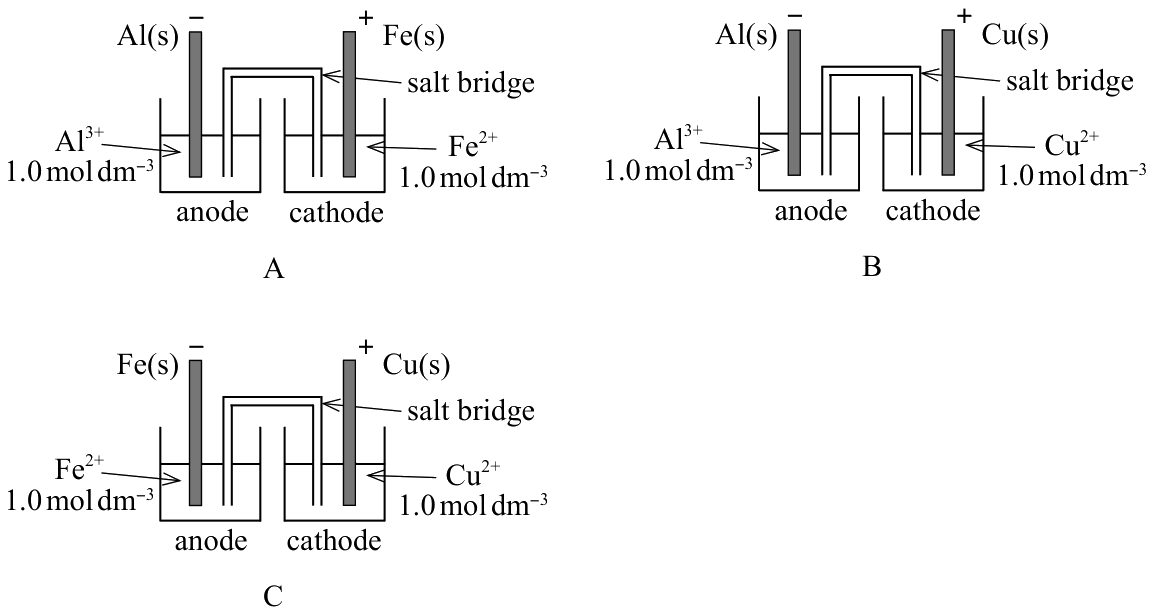
The anode is where oxidation happens (the negative electrode). The cathode is where reduction happens (positive). Electrons flow through the wire from anode to cathode, and the salt bridge completes the circuit and keeps both solutions neutral. Cell notation: Zn(s)|Zn2+(aq)||Cu2+(aq)|Cu(s). E°cell = E°cathode − E°anode (right minus left). The cell reaction is spontaneous when E°cell > 0, because ΔG° = −nFE°. The more positive E°, the stronger the oxidizing agent in that couple.
In an electrolytic cell the anode is positive (oxidation) and the cathode is negative (reduction).
Molten NaCl gives Na and Cl2.
NaCl(aq) with inert electrodes gives H2 at the cathode, and Cl2 at the anode (O2 if the solution is very dilute).
CuSO4(aq) with inert electrodes gives Cu at the cathode and O2 at the anode, and the solution turns acidic. With Cu electrodes, the anode dissolves and Cu is deposited on the cathode (used to purify copper).
Faraday: Q = It, n(e−) = Q/F (F = 96 500 C mol−1), and moles of product = n(e−)/z.
Key equations
Cell emfE°cell = E°cathode − E°anode
Gibbs linkΔG° = −nFE°cell
ChargeQ = It
Faradayn(e−) = Q / F
Molar conductivityΛm = κ / c
Exam traps
In a galvanic cell the anode is negative. In an electrolytic cell the anode is positive. In both, oxidation happens at the anode.
Do not multiply E° values by the coefficients when you balance a half-equation.
Pt is used only when neither half of the couple is a conducting solid. Do not write Pt for Zn2+/Zn.
Compare galvanic and electrolytic cells in a table (sign, energy change, spontaneity). Paper II asked for exactly this in 2020.
A+ moves
Write both half-equations, then add them, then calculate E°cell. This fixed order prevents sign errors.
Use F = 96 500 C mol−1 and look for currents and times that give simple charges (such as 0.965 A × 10 000 s = 9650 C).
E°(Cu2+/Cu) = +0.34 V and E°(Zn2+/Zn) = −0.76 V. For the cell made from these half-cells, which statement is correct?
(1)E°cell = −0.42 V and Zn is the cathode
(2)E°cell = +0.42 V and Cu is the anode
(3)E°cell = +1.10 V and electrons flow from Zn to Cu
(4)E°cell = +1.10 V and electrons flow from Cu to Zn
(5)E°cell = −1.10 V and the reaction is not spontaneous
Show model answer
Answer (3). Zn is oxidized (anode) and Cu2+ is reduced (cathode). E°cell = 0.34 − (−0.76) = +1.10 V, and electrons flow through the wire from Zn to Cu.
M13.2Single answer · like Q1–30
A current of 0.965 A passes through CuSO4(aq) for 10 000 s (Cu = 63.5, F = 96 500 C mol−1). The mass of copper deposited is about
(1)0.32 g
(2)1.59 g
(3)3.18 g
(4)6.35 g
(5)12.7 g
Show model answer
Answer (3). Q = 9650 C = 0.100 mol of electrons. Cu2+ + 2e− → Cu, so 0.050 mol Cu = 3.18 g.
M13.3Multiple response · like Q31–40
Which factor(s) affect the electrode potential of the M2+(aq)/M(s) electrode? (a) the surface area of M(s) (b) the concentration of M2+(aq) (c) the temperature (d) the volume of M2+(aq) solution
Answer with the response code (1)–(5) from the code table.
Show model answer
Answer (2). Only (b) and (c) are correct, which is code (2). Surface area and volume do not change the potential.
M13.4Structured · like Paper II
Molten MgCl2 is electrolysed between inert electrodes. (a) Write the electrode reactions and state which electrode is positive. (b) How long would a 9650 A current take to produce 24.3 kg of Mg (Mg = 24.3)?
Grade 13 · 36 MCQs in 7 papers · 10 Paper II questions since 2019
Industrial chemistry and environmental pollution
Nine manufacturing processes, polymers, products from plants, and air and water pollution. This unit holds the whole of Paper II Q10 and about five MCQs a year. Examiners have noted that achievement in the last units is relatively low, which makes it the easiest place to gain marks.
Raw materials, energy, water, transport, waste disposal, safety and the environment all decide where a plant is built. Recurring ideas: recycling unreacted materials, the counter-current principle (gas and liquid flow in opposite directions for efficient transfer, as in HNO3 absorption) and catalysts.
Dow: seawater with Ca(OH)2 (made from shells or limestone) precipitates Mg(OH)2. Add HCl to get MgCl2, dry it, and electrolyse the molten salt (700–800 °C). Mg forms at the cathode and Cl2 at the anode, and the Cl2 is recycled to make HCl. Membrane cell: brine is electrolysed. Cl2 forms at the anode, and H2 plus OH− at the cathode. Only Na+ can pass the cation-exchange membrane, so the products are NaOH, Cl2 and H2.
Saponification: fat or oil (a triglyceride) + NaOH → soap (sodium salts of fatty acids) + glycerol. Adding NaCl 'salts out' the soap. In hard water, Ca2+ and Mg2+ form insoluble scum, which lowers cleaning efficiency. Biodiesel is made by transesterifying a triglyceride with methanol (NaOH catalyst), giving methyl esters and glycerol.
The raw materials are brine, limestone and ammonia (recycled). The brine is ammoniated first, then carbonated: NaCl + NH3 + CO2 + H2O → NaHCO3(s) + NH4Cl. Heating gives 2NaHCO3 → Na2CO3 + CO2 + H2O. NH3 is recovered with 2NH4Cl + Ca(OH)2 → CaCl2 + 2NH3 + 2H2O. The main by-product is CaCl2.
Haber–Bosch: N2 + 3H2 ⇌ 2NH3, an exothermic reaction. The Resource Book gives 450–500 °C, 250–300 atm, an iron catalyst and K2O/Al2O3 promoters. The temperature is a compromise between rate and yield, and unreacted gases are recycled.
Ostwald: 4NH3 + 5O2 → 4NO + 6H2O (Pt/Rh catalyst). The NO is cooled to about 150 °C: 2NO + O2 → 2NO2. Then 4NO2 + O2 + 2H2O → 4HNO3 is absorbed counter-currently at 5–10 atm.
Contact process: S + O2 → SO2, then 2SO2 + O2 ⇌ 2SO3 (V2O5, about 450 °C, about 1 atm, with excess air). SO3 is absorbed into concentrated H2SO4 to give oleum (H2S2O7), which is then diluted. SO3 is not added directly to water because it forms an acid mist.
TiO2 (chloride process): rutile + coke + Cl2 at about 950 °C gives TiCl4, which is purified by distillation and then oxidized with O2 to pure TiO2, regenerating Cl2. TiO2 is used as a white pigment. Blast furnace: the raw materials are haematite, coke, limestone and hot air. C + O2 → CO2; CO2 + C → 2CO; Fe2O3 + 3CO → 2Fe + 3CO2; CaCO3 → CaO + CO2; CaO + SiO2 → CaSiO3 (slag).
Addition polymers include polyethene, PVC, polystyrene, polypropene and Teflon. Condensation polymers include nylon-6,6, polyesters and Bakelite (phenol + methanal). Thermoplastics soften on heating. Thermosets have a cross-linked 3-D network and do not soften. Natural rubber is cis-polyisoprene (from 2-methylbuta-1,3-diene). Latex is coagulated with acetic or formic acid. Vulcanization with 1–3% sulfur forms S cross-links, making rubber stronger and more elastic. Ozone attacks the C=C bonds in rubber.
Ethanol by fermentation: C6H12O6 → 2C2H5OH + 2CO2 (yeast enzymes). Vinegar: ethanol is oxidized to ethanoic acid by Acetobacter, for example from coconut toddy. Essential oils are extracted by steam distillation, solvent extraction or pressing. Examples: citronella (geraniol), cinnamon leaf (eugenol).
Acid rain: SO2 and NOx form H2SO4 and HNO3. Unpolluted rain is already about pH 5.6 because of CO2.
Global warming: CO2, CH4, N2O, CFCs and water vapour absorb infrared radiation.
Ozone layer: O2 + UV → 2O, then O + O2 → O3. CFCs release Cl• in the stratosphere: Cl• + O3 → ClO• + O2, then ClO• + O → Cl• + O2. HFCs contain no Cl, so they do not destroy ozone, but they are greenhouse gases.
Photochemical smog: NOx + volatile hydrocarbons + sunlight give O3 and PAN. It is worst on sunny days with heavy traffic.
Water-quality parameters include dissolved oxygen (DO falls as temperature rises), BOD, COD, pH, conductivity, turbidity, hardness, nitrate and phosphate (which cause eutrophication) and heavy metals. Know which parameters matter for waste-water discharge.
Marking schemes accept condition ranges, but you must state the catalyst and the promoters (Haber) or the catalyst (Contact, Ostwald) correctly.
The 2018 scheme notes that physical states are not required in industrial equations, but correct balancing is. Check each question's wording.
CFCs and HFCs: both are greenhouse gases, but only CFCs (which contain chlorine) deplete ozone.
Bakelite is a condensation polymer and a thermoset, not an addition polymer.
A+ moves
Draw each process as a flow chart (raw materials → steps with conditions → product → by-product → recycling). Paper II Q10(a) gives exactly such charts with symbols to identify.
Keep a list of the environmental 'cause → chemistry → effect' chains and practise writing them as balanced equations.
2016 Q9old syllabus — Planning a chemical industry; atmospheric pollutants
Model questions (original, in past-paper style)
M14.1Single answer · like Q1–30
The main by-product of the Solvay process is
(1)NH4Cl
(2)CaCl2
(3)NaHCO3
(4)CaO
(5)CO2
Show model answer
Answer (2). NH4Cl is recycled to NH3 using Ca(OH)2, which leaves CaCl2 as the by-product.
M14.2Multiple response · like Q31–40
Which statement(s) is/are correct? (a) Vulcanization forms sulfur cross-links between rubber chains. (b) Bakelite is an addition polymer. (c) CFCs release chlorine atoms in the stratosphere under UV light. (d) HFCs are the main cause of ozone depletion.
Answer with the response code (1)–(5) from the code table.
Show model answer
Answer (5). Only (a) and (c) are correct. That pair is not one of the coded pairs, so the answer is (5).
M14.3Statement pair · like Q41–50
Statement 1: In the Contact process, SO3 is absorbed into concentrated H2SO4 rather than water. Statement 2: SO3 reacts with water very exothermically, forming an acid mist that is hard to condense.
Answer with the statement-pair code (1)–(5) from the code table.
Show model answer
Answer (1). Both statements are true, and the second explains the first.
M14.4Structured · like Paper II
For the Haber process: (a) write the equation with ΔH sign, (b) state the conditions given in the Resource Book, (c) explain why a moderate temperature is used even though a lower temperature gives a higher yield, (d) state two uses of ammonia.
Show model answer
(a) N2(g) + 3H2(g) ⇌ 2NH3(g), ΔH < 0. (b) 450–500 °C, 250–300 atm, an iron catalyst with K2O/Al2O3 promoters. (c) At low temperature the rate is too slow, even with a catalyst. A compromise temperature gives an acceptable yield fast enough, and the unreacted gases are recycled. (d) Making fertilisers (urea, ammonium salts) and nitric acid (Ostwald process).
G.C.E. (A/L) Examination 2026 · 02 Chemistry · English medium
The lines in the Balmer series of the hydrogen emission spectrum result from transitions of electrons denoted by the energy levels (n = principal quantum number)
Answer and review
Answer(4)Prepared answer (no official scheme available)
Emission means an electron falls to a lower level. The Balmer series is the set of lines for electrons falling from any level above n = 2 down to n = 2; these lines are in the visible region. Falls to n = 1 give the Lyman series (ultraviolet) and falls to n = 3 the Paschen series (infrared).
The outermost p electrons of a nitrogen atom in ground state can be denoted by the quantum numbers n = 2 and l = 1. According to Hund's rule the ml and ms quantum numbers of two of these electrons can be
Answer and review
Answer(3)Prepared answer (no official scheme available)
Nitrogen is 2p3. Hund's rule puts the three p electrons in different orbitals (different ml) with parallel spins (same ms). Option (1) breaks the Pauli principle (identical quantum numbers); options (2), (4) and (5) give opposite spins. Only (3) has different ml values and the same ms.
Consider the species Cl−, Ar and K+. Which statement is true regarding these species?
Answer and review
Answer(5)Prepared answer (no official scheme available)
All three are isoelectronic (1s2 2s2 2p6 3s2 3p6), so each has 12 p electrons. Their nuclear charges are 17, 18 and 19, so their radii and the effective nuclear charge felt by the outer electrons differ (K+ is smallest).
Which of the following statements is false with regard to Xe and its compounds?
Answer and review
Answer(2)Prepared answer (no official scheme available)
First ionization energy falls down a group, so He (not Xe) has the highest value in group 18. London forces grow down the group, so Xe has the highest boiling point of He–Xe. XeF2 has 5 electron pairs on Xe (2 bonding, 3 lone), giving a trigonal bipyramidal pair geometry and a linear shape.
The curves A, B and C given in the diagram show the variations in the concentrations of species that exist in a closed system when the following gas phase reaction takes place. O2(g) + 2H2(g) → 2H2O(g)
The correct representation of the species O2(g), H2(g) and H2O(g) respectively, is
Answer and review
Answer(5)Prepared answer (no official scheme available)
Both reactants start at 2 mol dm−3. H2 is used twice as fast as O2, so H2 falls from 2 to 0 (curve B) while O2 falls only from 2 to 1 (curve C). H2O forms at the same rate as H2 is used, rising from 0 to 2 (curve A). Rates are linked by the stoichiometry: −Δ[O2]/Δt = −½Δ[H2]/Δt = ½Δ[H2O]/Δt.
Which of the following statements is correct about sodium and potassium?
Answer and review
Answer(2)Prepared answer (no official scheme available)
Both metals react vigorously and exothermically with water: 2M + 2H2O → 2MOH + H2. In air Na forms mainly Na2O2 but K forms the superoxide KO2. With H2 they form ionic hydrides (NaH, KH), not hydroxides. Among Group 1 only Li forms a nitride.
Consider the following compounds from A to E. A: CH3CH2CHO B: CH3CH2CH2CHO C: CH3CH2CH2OH D: CH3CH2CH2CH2OH E: CH3CH(OH)CH2CH3 The compound that has the lowest water solubility is
Answer and review
Answer(2)Prepared answer (no official scheme available)
Solubility in water depends on hydrogen bonding with water and falls as the hydrocarbon chain grows. Alcohols can both donate and accept hydrogen bonds; aldehydes can only accept them. B is the larger aldehyde (four carbons), so it dissolves least.
Answer(1)Prepared answer (no official scheme available)
NH3/NH4Cl is a basic buffer (pH about 9). A small amount of acid is removed by NH3 + H+ → NH4^+, so the pH hardly changes; it cannot fall to 1. Water has no buffering, so its pH rises quickly with NaOH, and the CH3COOH/CH3COO− buffer removes added OH− as shown in (4).
What is the IUPAC name of the given compound? CH3–CH(OH)–CH(Br)–CH=CH–COOH
Answer and review
Answer(3)Prepared answer (no official scheme available)
The principal group is –COOH, so C1 is the carboxyl carbon. The double bond is then C2=C3, Br is on C4 and OH on C5 in a six-carbon chain. Prefixes are listed alphabetically (bromo before hydroxy): 4-bromo-5-hydroxyhex-2-enoic acid.
The diagram below shows the temperature variation of a sample of a given mass of water starting from the solid state, upon heating under constant pressure of 1 atm in a closed container.
Which of the following gives the correct representation of the phases or phase equilibria of water present in the regions marked as A, B, C, D and E? Assume that no mass loss occurred during the process.
Answer and review
Answer(5)Prepared answer (no official scheme available)
In a sloping region only one phase is being heated; on a flat region two phases coexist at equilibrium while the latent heat is absorbed. So A is ice warming from −50 °C, B is melting at 0 °C (s ⇌ l), C is liquid water warming, D is boiling at 100 °C (l ⇌ g) and E is steam being heated.
To prepare 250.00 cm3 of 0.005 mol dm−3 aqueous solution of Fe2+ ions, a student uses a compound with the formula Fe(NH4)2(SO4)2·6H2O found in a bottle in the laboratory. The label on the bottle indicates that the purity of the compound is 80%. The mass of the compound required to prepare the solution is, (H = 1, N = 14, O = 16, S = 32, Fe = 56)
Answer and review
Answer(3)Prepared answer (no official scheme available)
M = 56 + 2(18) + 2(96) + 6(18) = 392 g mol−1. Moles of Fe2+ needed = 0.250 × 0.005 = 1.25 × 10⁻³ mol, so the mass of pure salt = 1.25 × 10−3 × 392 = 0.490 g. Only 80% of the sample is the salt, so the mass to weigh = 0.490 ÷ 0.80 = 0.6125 g.
Which of the following statements is false regarding oxoanions of chlorine?
Answer and review
Answer(4)Prepared answer (no official scheme available)
ClO− has 14 valence electrons. The most acceptable structure is Cl–O with one negative formal charge on O; a Cl=O double bond would give larger formal charges (+1 on Cl, −2 on O). In the other ions, double bonds reduce the formal charge on Cl, giving one, two and three Cl=O bonds. ClO3^− has three bonding pairs and one lone pair on Cl, so its electron pair geometry is tetrahedral.
Which of the following graphs represents the variation of entropy of a substance when it changes its state as solid → liquid → gas upon heating?
Answer and review
Answer(3)Prepared answer (no official scheme available)
Entropy rises steadily as each phase is heated and jumps vertically at the melting point and the boiling point. The jump on boiling is much larger than on melting, because a gas is far more disordered than a liquid (ΔSvap ≫ ΔSfus). Graphs (1) and (2) fall with temperature; (4) has the larger jump at melting and (5) has equal jumps. Only (3) shows a small jump followed by a large one.
Consider the following equilibrium which exists in a closed-rigid container at a given temperature. M is a metal. MO(s) + H2(g) ⇌ M(s) + H2O(g) A series of experiments were carried out with different initial concentrations of H2(g) keeping MO(s) in excess. Which of the following graphs represents the variation of equilibrium concentration of H2O(g) with the initial concentration of H2(g)? initial concentration of H2(g) = [H2(g)]i ; equilibrium concentration of H2O(g) = [H2O(g)]eq
Answer and review
Answer(2)Prepared answer (no official scheme available)
Solids are left out of the equilibrium expression, so Kc = [H2O(g)]/[H2(g)]. If x mol dm−3 of H2 reacts, Kc = x/([H2]i − x), giving [H2O]eq = {Kc/(1 + Kc)}[H2]i. The equilibrium concentration of H2O is directly proportional to the initial H2 concentration: a straight line through the origin.
Consider the reaction scheme given below. (CH3)2C=CH2 —(cold conc. H2SO4)→ X —(H+/H2O, Δ)→ Y In the reaction scheme given above, the structures of X and Y are respectively,
Answer and review
Answer(4)Prepared answer (no official scheme available)
H2SO4 adds across the C=C by electrophilic addition. H+ adds to the CH2 end to give the more stable tertiary carbocation (Markovnikov), and HSO4^− bonds to it through oxygen, giving the alkyl hydrogen sulfate (CH3)3C–OSO2OH. Hydrolysis replaces –OSO2OH by –OH, giving 2-methylpropan-2-ol.
Two rigid containers A and B are connected through a valve as shown below. Initially, container A is filled with an ideal gas while container B is empty. Predict how the entropy and Gibbs free energy of the system change when the valve is opened. (Consider that the temperature does not change)
Answer and review
Answer(3)Prepared answer (no official scheme available)
The gas spreads into a larger volume, so its entropy increases. For an ideal gas at constant temperature there are no intermolecular forces, so ΔH = 0, and ΔG = ΔH − TΔS = −TΔS < 0. The expansion is spontaneous, as expected.
The elementary reaction 2X(g) + Y(g) → Z(g) takes place in a closed container at a given temperature. By what factor would the rate of the reaction increase if the initial concentration of X(g) is doubled and that of Y(g) is tripled?
Answer and review
Answer(3)Prepared answer (no official scheme available)
For an elementary step the orders equal the coefficients: rate = k[X]2[Y]. Doubling [X] multiplies the rate by 22 = 4 and tripling [Y] by 3, so the rate rises 4 × 3 = 12 times.
Consider the following reactions. 4NH3(g) + 5O2(g) → 4NO(g) + 6H2O(l) : ΔG°rxn = −1010 kJ mol−1 2NO2(g) → 2NO(g) + O2(g) : ΔG°rxn = 70 kJ mol−1 4NO2(g) + O2(g) + 2H2O(l) → 4HNO3(aq) : ΔG°rxn = −170 kJ mol−1 ΔG° of the reaction, 4NH3(g) + 8O2(g) → 4HNO3(aq) + 4H2O(l) in kJ mol−1 is
Answer and review
Answer(1)Prepared answer (no official scheme available)
G is a state function, so ΔG values combine like Hess's law. Add equation 1 (−1010), twice the reverse of equation 2 (4NO + 2O2 → 4NO2, −140) and equation 3 (−170). The NO, NO2 and two H2O cancel, leaving the target reaction: ΔG° = −1010 − 140 − 170 = −1320 kJ mol−1.
Upon the addition of excess dil. HCl which of the solid compounds given below gives a clear solution and evolves a gas which turns a filter paper soaked with acidified K2Cr2O7 green?
Answer and review
Answer(4)Prepared answer (no official scheme available)
The gas must be the reducing gas SO2, which turns orange Cr2O72− green (Cr3+). SrSO3 + 2HCl → SrCl2(aq) + SO2 + H2O leaves a clear solution. Na2S2O3 also gives SO2, but the solution turns cloudy with yellow sulfur. Ag2CO3 gives CO2 and a white AgCl precipitate.
Consider the following reaction. A benzene ring carrying –COCH2CH2CO2H, –CHO and –CO2C2H5 groups is treated with NaBH4 in methanol. The product formed is,
Answer and review
Answer(2)Prepared answer (no official scheme available)
NaBH4 is a mild reducing agent. It reduces aldehydes and ketones to alcohols but leaves carboxylic acids and esters unchanged (LiAlH4 would reduce those too). So –CHO becomes –CH2OH, the ketone C=O becomes CH(OH), and –CO2H and –CO2C2H5 stay as they are.
Consider the reaction, ½A2(g) + ½B2(g) → AB(g). The ratio of the values of enthalpy of bond dissociation of A2(g), B2(g) and AB(g) is 2 : 1 : 2. The enthalpy change for this reaction is −100 kJ mol−1. Bond dissociation enthalpy value of A2(g) in kJ mol−1 is,
Answer and review
Answer(4)Prepared answer (no official scheme available)
Let the bond enthalpies be 2x (A2), x (B2) and 2x (AB). ΔH = (bonds broken) − (bonds formed) = ½(2x) + ½(x) − 2x = −0.5x. So −0.5x = −100 and x = 200 kJ mol−1; the A2 bond enthalpy is 2x = 400 kJ mol−1.
An electrochemical cell was constructed using Pt(s) | Fe2+(aq), Fe3+(aq) and Pt(s) | Mn2+(aq), H+(aq), MnO4^−(aq) half cells at 25 °C. Which of the following is correct about this cell at 25 °C? E°(Fe3+(aq)/Fe2+(aq)) = +0.77 V, E°(MnO4^−(aq)/Mn2+(aq)) = +1.51 V
Answer and review
Answer(2)Prepared answer (no official scheme available)
The couple with the more positive E° (MnO4^−/Mn2+) is reduced at the cathode, and Fe2+ is oxidized at the anode. The anode goes on the left of the cell notation, and E°cell = E°cathode − E°anode = 1.51 − 0.77 = +0.74 V.
Consider the following compounds. A: C6H5–CH(CH3)2 (isopropylbenzene) B: C6H5–COCH2CH3 C: C6H5–OCH3 The increasing order of ease of the Friedel-Crafts acylation of these compounds is
Answer and review
Answer(3)Prepared answer (no official scheme available)
Friedel–Crafts acylation is an electrophilic substitution, so it is faster when the ring is richer in electrons. –COCH2CH3 withdraws electrons (deactivating, meta-directing), an alkyl group donates weakly, and –OCH3 donates strongly through its lone pair. Order: B < A < C.
The steps in the mechanism of a reaction in the presence of a catalyst are shown below. Step I : Ag+(aq) + Ce4+(aq) → Ag2+(aq) + Ce3+(aq) Step II : Tl+(aq) + Ag2+(aq) → Tl2+(aq) + Ag+(aq) Step III : Tl2+(aq) + Ce4+(aq) → Tl3+(aq) + Ce3+(aq) Which of the following correctly identifies the overall reaction, the catalyst and the intermediate/intermediates?
Answer and review
Answer(1)Prepared answer (no official scheme available)
Adding the three steps cancels Ag+, Ag2+ and Tl2+, leaving 2Ce4+ + Tl+ → 2Ce3+ + Tl3+. Ag+ is used in step I and regenerated in step II, so it is the catalyst. Ag2+ and Tl2+ are formed and then used up, so they are intermediates.
Answer(3)Prepared answer (no official scheme available)
For 2HgO(s) ⇌ 2Hg(l) + O2(g), only O2 is a gas, so Kp = PO2. Raising the pressure moves the equilibrium towards fewer moles of gas, which is to the left, not the right. Only temperature changes K, and inert gas added at constant volume leaves the partial pressures unchanged.
The solubility of Mg(OH)2(s) in water at 25 °C and 100 °C are 1.0 × 10⁻⁴ mol dm−3 and 4.0 × 10⁻³ mol dm−3, respectively. How do the concentration of OH−(aq) and the pH value of a Mg(OH)2 solution at 100 °C differ from those of a solution at 25 °C? At 25 °C, Kw = 1.0 × 10⁻¹⁴ mol2 dm−6 and at 100 °C Kw = 5.5 × 10⁻¹⁴ mol2 dm−6.
Answer and review
Answer(2)Prepared answer (no official scheme available)
[OH−] = 2s: 2.0 × 10⁻⁴ mol dm−3 at 25 °C and 8.0 × 10⁻³ mol dm−3 at 100 °C, so it is higher. At 25 °C, [H+] = 1.0 × 10⁻¹⁴ ÷ 2.0 × 10−4 = 5 × 10⁻¹¹ (pH ≈ 10.3). At 100 °C, [H+] = 5.5 × 10⁻¹⁴ ÷ 8.0 × 10⁻³ ≈ 6.9 × 10⁻¹² (pH ≈ 11.2). The pH is higher. The rise in Kw does not outweigh the 40-fold rise in [OH−].
How many isomeric compounds exist with the molecular formula C8H8O, which have a benzene ring in its structure and gives a coloured precipitate with 2,4-dinitrophenylhydrazine (2,4-DNP)?
Answer and review
Answer(4)Prepared answer (no official scheme available)
2,4-DNP reacts with aldehydes and ketones, so the isomers must contain C=O. With a benzene ring and C8H8O there are five: acetophenone (C6H5COCH3), phenylethanal (C6H5CH2CHO) and 2-, 3- and 4-methylbenzaldehyde.
The given graph was obtained from several experiments carried out for the dissociation of the metal carbonate MCO3(s) to MO(s) and CO2(g) at a particular temperature in a closed-rigid container. The concentrations of CO2(g) were measured on changing the initial amount of MCO3(s).
Which of the following statements is incorrect about this system? K is the equilibrium constant and Q is the reaction quotient.
Answer and review
Answer(5)Prepared answer (no official scheme available)
For this heterogeneous equilibrium Kc = [CO2(g)]. Up to point A every bit of MCO3 decomposes, so [CO2] rises with the amount taken. From A onwards solid MCO3 remains, equilibrium is reached and [CO2] stays fixed at K, so the pressure stays constant. B lies above the plateau (Q > K) and C below it (Q < K); neither is at equilibrium.
The reaction of metallic sodium with water is an irreversible reaction. 1.80 g of pure water was cautiously added to 460 g of metallic Na. Maximum amount of H2 gas produced, in moles, is, (H = 1, O = 16 and Na = 23)
Answer and review
Answer(5)Prepared answer (no official scheme available)
2Na + 2H2O → 2NaOH + H2. Water: 1.80 ÷ 18 = 0.10 mol; sodium: 460 ÷ 23 = 20 mol, a large excess. Water is the limiting reagent, so H2 = 0.10 ÷ 2 = 0.050 mol.
When dilute HCl is added to a solid sample of a mixture containing CaCO3 and ZnCO3 in a 1 : 1 mass ratio, a clear solution was obtained. The Ca2+ : Zn2+ mole ratio in the final solution is approximately, (C = 12, O = 16, Ca = 40 and Zn = 65)
Answer and review
Answer(2)Prepared answer (no official scheme available)
Take m g of each. CaCO3 = 100 g mol−1 and ZnCO3 = 125 g mol−1, so the mole ratio is (m/100) : (m/125) = 125 : 100 = 5 : 4. Both carbonates dissolve completely, so the ions are in the same ratio.
Which of the following statements is/are correct regarding the standard hydrogen electrode?
(a)E° value of the electrode is considered as 0.00 V.
(b)The half-reaction is irreversible.
(c)The half-reaction is always spontaneous.
(d)It can act as the anode or cathode depending on the electrochemical cell under consideration.
Choose the correct response code for statements (a)–(d).
Answer and review
Answer(4)Prepared answer (no official scheme available)
The SHE (Pt, H2 at 1 atm, [H+] = 1 mol dm−3) is the reference with E° = 0.00 V by definition. Its half-reaction 2H+ + 2e− ⇌ H2 is reversible, so it can be the cathode (against Zn) or the anode (against Cu). Its direction is not fixed. Only (a) and (d) are correct.
Which of the following statements is/are correct regarding the reaction of acetone with 2,4-dinitrophenylhydrazine (2,4-DNP)?
(a)It is a two-step reaction where the second step is a dehydration reaction.
(b)The product formed in the first step of this reaction can be isolated.
(c)The structure of the coloured product formed in this reaction is (CH3)2C(OH)–N=N–C6H3(NO2)2 (2,4-dinitrophenyl).
(d)This reaction can be used to distinguish acetone from acetic acid.
Choose the correct response code for statements (a)–(d).
Answer and review
Answer(4)Prepared answer (no official scheme available)
The hydrazine first adds to C=O (nucleophilic addition) and the unstable addition product immediately loses water (elimination), so it cannot be isolated. The orange product is the hydrazone (CH3)2C=N–NH–C6H3(NO2)2, not an azo alcohol. Carboxylic acids do not give this precipitate, so the test distinguishes acetone from acetic acid. Only (a) and (d) are correct.
Soap is a sodium or potassium salt of fatty acids. Identify the correct statement/statements regarding hard water and soap.
(a)The cleaning efficiency of soap is higher in hard water than in pure water.
(b)Precipitates formed by reacting polyvalent cations with soap are more dense than water.
(c)A precipitate is formed by the attraction of anions of fatty acids to a polyvalent cation.
(d)Some of the polyvalent cations in hard water are Ca2+, Mg2+ and Fe2+.
Choose the correct response code for statements (a)–(d).
Answer and review
Answer(3)Prepared answer (no official scheme available)
Hardness is caused by polyvalent cations such as Ca2+, Mg2+ and Fe2+. The fatty-acid anions of soap bind to them and form an insoluble scum (for example (C17H35COO)2Ca), which wastes soap and lowers its cleaning efficiency. The scum collects as a floating layer rather than sinking. Only (c) and (d) are correct.
Which of the following statements is/are true with regard to the chemistry of nitrogen?
(a)Nitrogen is slightly soluble in water under atmospheric pressure while the solubility of nitrogen in water increases with pressure.
(b)Nitrogen shows oxidation numbers from −3 to +5 in compounds.
(c)Nitrogen has several allotropes.
(d)Atmospheric nitrogen is converted to NH3 during lightning.
Choose the correct response code for statements (a)–(d).
Answer and review
Answer(1)Prepared answer (no official scheme available)
N2 is non-polar and only slightly soluble, and like any gas it dissolves more at higher pressure. Its oxidation numbers range from −3 (NH3) to +5 (HNO3). Nitrogen has no common allotropes. Lightning converts N2 and O2 to NO (and then NO2 and nitrate), not to NH3. Only (a) and (b) are true.
Consider the following half reactions at 25 °C. Ag+(aq) + e → Ag(s) : E° = +0.80 V Cu2+(aq) + 2e → Cu(s) : E° = +0.34 V Zn2+(aq) + 2e → Zn(s) : E° = −0.76 V Which of the following statements is/are correct?
(a)When a rod of Zn(s) metal is placed in a CuSO4(aq) solution, Cu(s) metal is deposited on the Zn(s) rod.
(b)Among the electrochemical cells that could be assembled from the half-cells represented by the above, Zn(s) | Zn2+(aq) || Ag+(aq) | Ag(s) has the highest e.m.f. value.
(c)When a rod of Ag(s) metal is placed in a CuSO4(aq) solution, Cu(s) metal is deposited on the Ag(s) rod.
(d)H2(g) is not liberated when Cu(s) is added to a solution of 0.50 mol dm−3 H2SO4(aq) acid.
Choose the correct response code for statements (a)–(d).
Answer and review
Answer(5)Prepared answer (no official scheme available)
Zn (−0.76 V) is a stronger reducing agent than Cu, so it displaces Cu2+. The largest difference in E° is between Ag+/Ag and Zn2+/Zn (0.80 + 0.76 = 1.56 V). Ag cannot reduce Cu2+. Cu (+0.34 V) lies above hydrogen (0.00 V), so it does not release H2 from dilute acid (0.50 mol dm−3 H2SO4 gives [H+] = 1 mol dm−3). (a), (b) and (d) are correct, so the code is (5).
Which of the following compounds will not form a Grignard reagent as the final product, when it is reacted with Mg in dry ether?
(a)CH3COCH2CH2Br
(b)CH3CH(NH2)CH2CH2Cl
(c)CH3C≡C–H
(d)BrCH2CH=CH2
Choose the correct response code for statements (a)–(d).
Answer and review
Answer(5)Prepared answer (no official scheme available)
A Grignard reagent survives only if the molecule has no group it reacts with. In (a) any RMgBr formed would attack the ketone C=O; in (b) the acidic N–H protons would destroy it. (c) has no carbon–halogen bond, so Mg does not react. Allyl bromide (d) forms CH2=CHCH2MgBr normally. (a), (b) and (c) do not give a Grignard reagent, so the code is (5).
Dichlorodifluoromethane (R-12) is used as a refrigerant in household refrigerators. Identify the correct statement/statements.
(a)The volatile compound R-12 once released has a high potential to reach the stratosphere.
(b)While R-12 is stable in the troposphere, it decomposes to form chlorine radicals, in the stratosphere.
(c)R-12 is a greenhouse gas that contributes to global warming.
(d)R-12 depletes the ozone formed from photochemical smog.
Choose the correct response code for statements (a)–(d).
Answer and review
Answer(5)Prepared answer (no official scheme available)
CF2Cl2 is volatile and unreactive, so it survives long enough to drift into the stratosphere. There UV light breaks C–Cl bonds and the Cl• radicals destroy stratospheric ozone. CFCs also absorb infrared radiation and are greenhouse gases. They do not remove the ground-level ozone of photochemical smog. (a), (b) and (c) are correct, so the code is (5).
At a given temperature, a rigid-closed container having a volume of 1.0 dm3 filled with a real gas has a lower pressure than the pressure calculated for the equal amount of an ideal gas. Which of the following statements does not/do not give valid reasons for the observed non-ideal behaviour?
(a)The volume of the real gas molecules cannot be neglected when compared to the volume of the container.
(b)Velocities of the real gas molecules are lower than that of an ideal gas.
(c)Because the molecules of the real gas are attracted to each other, they do not exert a force on the container walls which is equal to that exerted by an ideal gas.
(d)The molecules of the real gas are attracted towards the walls of the container.
Choose the correct response code for statements (a)–(d).
Answer and review
Answer(5)Prepared answer (no official scheme available)
A pressure lower than ideal is caused by attractions between molecules, which pull molecules back as they approach a wall and reduce the force of their collisions (c). Non-negligible molecular volume would make the pressure higher, not lower (a). At the same temperature the average kinetic energy is the same (b), and the attractions are between molecules, not towards the walls (d). (a), (b) and (d) are not valid reasons, so the code is (5).
Which of the following industrial processes utilize/utilizes the counter current principle?
(a)The production of NaOH by the membrane cell method
(b)The extraction of Fe by a blast furnace
(c)The production of H2SO4 by the contact process
(d)The production of NH3 by the Haber-Bosch process
Choose the correct response code for statements (a)–(d).
Answer and review
Answer(2)Prepared answer (no official scheme available)
In the blast furnace, ore, coke and limestone move down while hot gases rise. In the contact process, SO3 rises through absorption towers against a downward flow of concentrated H2SO4. Opposing flows give the best contact and transfer. The membrane cell and the Haber process do not depend on this principle. Only (b) and (c) are correct.
Which of the following statements is/are true with regard to oxoacids of sulfur?
(a)Concentrated sulfuric acid can act as a dehydrating agent.
(b)The reaction of SO2(g) with water produces sulfuric acid.
(c)Hot concentrated sulfuric acid can react as an oxidizing agent with certain metals and non-metals.
(d)Both H2SO4 and H2SO3 contain two S=O bonds each, in their structures.
Choose the correct response code for statements (a)–(d).
Answer and review
Answer(5)Prepared answer (no official scheme available)
Concentrated H2SO4 removes water (for example from sugar) and, when hot, oxidizes Cu, C and S, being reduced to SO2. SO2 dissolves to give sulfurous acid, H2SO3, not sulfuric acid. In the most acceptable structures H2SO4 has two S=O bonds but H2SO3 has only one. Only (a) and (c) are true, which is not a coded pair, so the code is (5).
Benzene reacts with Cl2 in the presence of FeCl3, and yields chlorobenzene, C6H5Cl.
Statement 2
Cl2 reacts with FeCl3 to form the electrophile Cl+, which reacts with the electron rich benzene ring.
Choose the correct truth/explanation combination for Statements 1 and 2.
Answer and review
Answer(1)Prepared answer (no official scheme available)
Halogenation of benzene needs a Lewis-acid catalyst. FeCl3 polarizes Cl2 (Cl2 + FeCl3 → Cl+ + FeCl4^−). The electrophile attacks the π electrons of the ring and the arenium ion loses H+, giving chlorobenzene. Both statements are true and the second explains the first.
Unlike s-block elements, p-block elements do not give a characteristic colour to the oxidizing flame in the flame test.
Statement 2
The first ionization energies of all p-block elements of periods 2 and 3 in the Periodic Table are greater than those of s-block elements of the corresponding period.
Choose the correct truth/explanation combination for Statements 1 and 2.
Answer and review
Answer(3)Prepared answer (no official scheme available)
The flame test in the syllabus identifies s-block metals (Li, Na, K, Ca, Sr, Ba) by their characteristic colours; p-block elements are not identified this way. The second statement is false: B (801 kJ mol−1) is lower than Be (900), and Al (578) is lower than Mg (738), because the first p electron is easier to remove.
The process of melting of ice is favoured by high temperature and high pressure.
Choose the correct truth/explanation combination for Statements 1 and 2.
Answer and review
Answer(2)Prepared answer (no official scheme available)
Melting absorbs heat, so it is endothermic; higher temperature therefore favours it. Ice is less dense than water, so higher pressure also favours the liquid (the solid–liquid line of water slopes backwards). Both statements are true, but the second describes conditions; it does not explain why melting is endothermic.
Choose the correct truth/explanation combination for Statements 1 and 2.
Answer and review
Answer(1)Prepared answer (no official scheme available)
Natural rubber (cis-polyisoprene) contains a C=C in every repeating unit. Ozone attacks these double bonds and breaks the chains (ozone cracking), weakening the rubber. Both statements are true and the second explains the first.
Even though the number of valence shell electron pairs of the central atoms in ICl2^−, N3^− and BeCl2 differ from each other, they have the same shape.
Statement 2
In molecules and ions, lone pairs of electrons on the central atom are held as far as possible from each other to reduce repulsing each other.
Choose the correct truth/explanation combination for Statements 1 and 2.
Answer and review
Answer(1)Prepared answer (no official scheme available)
All three are linear. BeCl2 has two bonding pairs and N3^− has two bonding regions (no lone pairs on the central N). ICl2^− has five pairs on I (two bonding, three lone): the three lone pairs take the equatorial positions, as far apart as possible, leaving the two Cl atoms opposite each other. The second statement gives the reason ICl2^− is still linear. (Prepared answer: the examiners could also judge the explanation incomplete, giving (2).)
The entropy change of freezing of liquid water to ice is higher than the entropy change of sublimation of ice.
Statement 2
Solids have less entropy compared to liquids and gases.
Choose the correct truth/explanation combination for Statements 1 and 2.
Answer and review
Answer(4)Prepared answer (no official scheme available)
Freezing lowers entropy (ΔS negative), while sublimation (solid → gas) raises it by a large amount (ΔS large and positive). So ΔS for freezing is lower, and the first statement is false. The second statement is true.
At a given temperature, the molar solubility of Ag2C2O4(s) in a HNO3(aq) solution is higher than its molar solubility in distilled water.
Statement 2
In the presence of a dilute acid, C2O42−(aq) ions are converted to HC2O4^−(aq) ions and/or to H2C2O4(aq).
Choose the correct truth/explanation combination for Statements 1 and 2.
Answer and review
Answer(1)Prepared answer (no official scheme available)
Oxalate is the conjugate base of a weak acid. Acid removes C2O42− as HC2O4^− and H2C2O4, lowering [C2O42−] below the value needed to satisfy Ksp, so more Ag2C2O4 dissolves. Both true; the second explains the first.
The compounds CH3(Br)C=C(Cl)H and CH3(Cl)C=C(Br)H (structures shown) are diastereoisomers.
Statement 2
Any two compounds which are not mirror images of each other are diastereoisomers.
Choose the correct truth/explanation combination for Statements 1 and 2.
Answer and review
Answer(5)Prepared answer (no official scheme available)
In the first compound Br is on the same carbon as CH3 and Cl on the other carbon; in the second it is the reverse. The atoms are connected differently, so these are constitutional (positional) isomers, not stereoisomers. Diastereoisomers must be stereoisomers (same connectivity) that are not mirror images, so the second statement is also false.
Polyethylene is categorized as an addition polymer.
Statement 2
The double bonds in ethylene are responsible for its reactions.
Choose the correct truth/explanation combination for Statements 1 and 2.
Answer and review
Answer(1)Prepared answer (no official scheme available)
Ethylene molecules join by opening their C=C double bonds, with no small molecule lost, which defines an addition polymer. Both true; the reactivity of the C=C bond explains the polymerization.
Concentrated nitric acid is stored in brown coloured glass bottles in laboratories.
Statement 2
Nitric acid decomposes to nitrogen dioxide in the presence of light.
Choose the correct truth/explanation combination for Statements 1 and 2.
Answer and review
Answer(1)Prepared answer (no official scheme available)
Light decomposes HNO3: 4HNO3 → 4NO2 + O2 + 2H2O, turning the acid yellow-brown. Brown glass blocks light and slows this. Both true; the second explains the first.
1Part A · structured essayU2U1U6Prepared answer (no official scheme available)
(a) [32 marks]
You are provided with the following list of chemical species (elements, ions and compounds). Selecting from the list, write the answers to the questions on the relevant dotted lines. Li+, Cs+, Br−, I−, CCl4, ICl, C, Al, SO3, SO2, S
(i) element which as the central atom in a compound, can display sp, sp2, sp3 hybridizations (ii) ion having the highest polarizability (iii) ion having the highest polarizing power (iv) element which can form electron deficient compounds (v) compound having the strongest London forces (vi) compound which displays the strongest dipole-dipole interactions (vii) compound displaying bond angles of 120° (viii) element which can form compounds by exceeding 8 valence electrons
Answer
(i) C (ii) I− (iii) Li+ (iv) Al (v) CCl4 (vi) SO2 (vii) SO3 (viii) S
Review.
C is sp in ethyne, sp2 in ethene and sp3 in methane. The largest anion (I−) is the most easily distorted; the smallest cation (Li+) has the highest charge density. Al forms electron-deficient AlCl3 (6 electrons around Al). CCl4 has the most electrons and largest surface of the molecules listed. SO2 (bent, about 1.6 D) has a larger dipole than ICl (about 1.2 D). SO3 is trigonal planar. S can expand its octet (SF6, H2SO4). (vi) is a prepared answer: ICl is the other polar compound in the list.
(b) [21 marks]
(i) Draw the most acceptable Lewis dot-dash structure for the molecule HCNO2. Its skeleton is O–N–C(–O)–H (the second O is bonded to C). (ii) Draw two Lewis dot-dash structures (resonance structures) for HCNO2, excluding the Lewis structure you have drawn above.
Answer
(i) O=N–CH=O, with two lone pairs on each O and one lone pair on N. Total valence electrons = 1 + 4 + 5 + 12 = 22. Every atom has an octet (H two electrons) and every formal charge is zero, so this is the most acceptable structure.
(ii) Structure 1: O=N+=CH–O− (N has no lone pair, formal charge +1; the O on C has three lone pairs, formal charge −1; all octets complete). Structure 2: O=N–C+H–O− (C has only six electrons, formal charge +1; O on C has three lone pairs, formal charge −1). Structure 2 is less stable because C has an incomplete octet.
Review.
Resonance structures keep the atoms in place and move only π electrons and lone pairs. The most acceptable structure has the smallest formal charges, with any negative charge on the more electronegative atom.
(c) [32 marks]
(i) In the given HN3 molecule, identify the bonds (as a, b, c) formed by the overlap of the following atomic/hybrid orbitals. Indicate whether the bond is σ or π type. Note: c is a triple bond.
Orbitals: s—sp3 · sp—sp · sp—sp3 · p—p
Answer
orbitals
bond
σ or π
s—sp3
a
σ
sp—sp
c
σ
sp—sp3
b
σ
p—p
c
π
Review.
The N bonded to H has two bonds (to H and to N) and two lone pairs, so it is sp3. The central N has two σ bonds and no lone pair (linear), so it is sp. The terminal N (one σ bond, one lone pair) is sp. Bond a is H 1s with N sp3; bond b is sp3 with sp; the triple bond c is one sp–sp σ bond plus two p–p π bonds.
(ii) Write the number of VSEPR pairs, electron pair geometry, shape and hybridization of the central sulfur atom in each of the following molecules: SF3N, Cl2SO.
Answer
molecule
VSEPR pairs
electron pair geometry
shape
hybridization
SF3N
4
tetrahedral
tetrahedral
sp3
Cl2SO
4
tetrahedral
trigonal pyramidal
sp3
Review.
In SF3N, S forms three S–F bonds and an S≡N bond and has no lone pair: four electron domains. In Cl2SO, S forms two S–Cl bonds and an S=O bond and keeps one lone pair: four domains, one of them a lone pair. Multiple bonds count as one VSEPR pair.
(d) [15 marks]
Arrange the following species in increasing order of the property given in parenthesis. I. Li2CO3, Na2CO3, MgCO3 (decomposition temperature) II. Li, Na, B (atomic radius) III. SO32−, SO42−, SO3 (electronegativity of S)
Answer
I. MgCO3 < Li2CO3 < Na2CO3 II. B < Li < Na III. SO32− < SO42− < SO3
Review.
I: a smaller, more highly charged cation polarizes the carbonate ion more and lowers its decomposition temperature (Mg2+ most, then Li+; Na2CO3 is very stable). II: radius falls across a period (Li > B) and rises down a group (Na > Li). III: S is more electronegative in a higher oxidation state (+4 in SO32−, +6 in the others) and less electronegative when the species carries negative charge (SO42− < SO3).
2Part A · structured essayU6Prepared answer (no official scheme available)
(a) [54 marks]
(i) W is a p-block element in the Periodic Table. Its atomic number is less than 20. It has two allotropes; one of them (A) is odourless and the other (B), has a pungent smell. In many countries B is used to disinfect water. Identify W, A and B.
Answer
W = oxygen (O), A = O2, B = O3 (ozone)
(ii) W and the other elements in the group which W belongs to, form simple covalent hydrides. C is the hydride formed by W. Except for C, the other hydrides in the group are poisonous. I. Identify C. II. C has remarkably different properties to those of the other hydrides. List three such properties (other than being non-poisonous) and give the reason for those differences. III. On going down the group; does the covalent bond angle of these hydrides increase or decrease? Briefly explain your answer. Does the bond length of these hydrides increase or decrease? Briefly explain your answer.
Answer
I. C = H2O II. Properties (any three): it is a liquid at room temperature (the others are gases); it has an unusually high boiling point and melting point; high enthalpy of vaporization; high specific heat capacity; high surface tension; the solid (ice) is less dense than the liquid. Reason: strong hydrogen bonding between H2O molecules, because O is small and highly electronegative. III. The bond angle decreases (H2O 104.5° → H2S about 92°). Down the group the central atom becomes less electronegative and larger, so the bonding pairs lie further from it and repel each other less, allowing them to close up. The bond length increases, because the atomic radius of the central atom increases down the group.
(iii) D is a compound composed of the same elements as C (ratio of elements is different). It is a viscous liquid. It can act as both an oxidizing agent as well as a reducing agent. It also undergoes disproportionation. I. Identify D. II. Write balanced half reactions for D acting as an oxidizing agent and D acting as a reducing agent. III. Write the balanced chemical equation for the disproportionation of D.
Answer
I. D = H2O2 II. Oxidizing agent: H2O2(aq) + 2H+(aq) + 2e− → 2H2O(l) Reducing agent: H2O2(aq) → O2(g) + 2H+(aq) + 2e− III. 2H2O2(l) → 2H2O(l) + O2(g)
(b) [24 marks]
(i) X is also a p-block element of the Periodic Table with an atomic number less than 20. It also exists as allotropes. One of the allotropes is a thermal and electrical conductor. I. Identify X. II. Name three allotropes of X.
Answer
I. X = carbon (C) II. Diamond, graphite and fullerene (C60); graphene is also accepted.
(ii) E is a compound of X and W, in the ratio 1:1. It is an odourless, poisonous gas. Identify E.
Answer
E = CO (carbon monoxide)
(iii) F is a compound of X and W, in the ratio 1:2. It contributes to global warming. Its solid form is used as a freezing agent in the food industry. I. Identify F. II. What is the common name used for the solid form of F?
Answer
I. F = CO2 II. Dry ice
(c) [14 marks]
M is a s-block element in the Periodic Table. Its first three successive ionization energies in kJ mol−1 are respectively; 589, 1145 and 4912. M reacts readily with cold water to give compound G and a gas. The cation of M is a major contributor to hardness of water. (i) Identify M and G. (ii) Write the balanced chemical equations for the reactions below. I. The initial reaction of G with F. II. The reaction of G with excess F.
Answer
(i) M = Ca (the big jump after the second ionization energy shows Group 2; Ca2+ causes hardness), G = Ca(OH)2 (ii) I. Ca(OH)2(aq) + CO2(g) → CaCO3(s) + H2O(l) II. CaCO3(s) + CO2(g) + H2O(l) → Ca(HCO3)2(aq) (overall: Ca(OH)2 + 2CO2 → Ca(HCO3)2)
(d) [08 marks]
J is a common oxoacid of X. It can be prepared by dissolving F in C under pressure. (i) Write the chemical formula of J. (ii) Draw the structure of J showing all the bonds.
Answer
(i) J = H2CO3 (carbonic acid) (ii) H–O–C(=O)–O–H: a central C double-bonded to one O and single-bonded to two O–H groups; each O carries two lone pairs.
Review.
The clues are O2/O3 allotropes, water's hydrogen bonding, H2O2 as both oxidant and reductant, carbon allotropes, and Ca from an IE pattern with a jump after IE2.
It was found that the pH value of the mixture after the addition of 80.00 cm3 of KOH(aq) was between 12 and 13. Explain this observation with an appropriate calculation.
Answer
KOH added = 0.08000 × 0.10 = 8.0 × 10⁻³ mol; HA neutralized = 5.0 × 10⁻³ mol; excess OH− = 3.0 × 10⁻³ mol in 100.00 cm3. [OH−] = 3.0 × 10⁻² mol dm−3, pOH = 2 − log 3 = 1.52, pH = 12.48, which lies between 12 and 13. The excess strong base controls the pH; hydrolysis of A− adds a negligible amount of OH−.
(v)
Calculate the pH value of the mixture at the half-equivalence point.
Sketch the titration curve for this titration. Mark the points of pH values and corresponding volumes of KOH(aq) obtained in (i)–(v) above on the titration curve.
Answer
The curve starts at pH 2.0, rises slowly through the buffer region (pH 3.4 at 25 cm3), rises steeply around the equivalence point (pH 8.1 at 50 cm3) and levels off near pH 12.5 at 80 cm3.
(vii)
Explain why the pH of the solution is acidic in the range of 10–40 cm3 volume of KOH added, and basic after the equivalence point.
Answer
Between 10 and 40 cm3, unreacted HA is still present along with A− (a buffer); HA ionizes (HA ⇌ H+ + A−) and keeps [H+] above 10−7 mol dm−3 (pH ≈ pKa ± 1, about 2.8–4.0). After the equivalence point there is no HA left; the solution contains A−, which hydrolyses to give OH−, and excess OH− from KOH, so it is basic.
Review.
Use [H+] = √(Ka c) for the weak acid alone, Kb = Kw/Ka for the salt at equivalence, the Henderson equation in the buffer region, and the excess strong base after equivalence.
(viii) [Q3 total 100 marks]
pKa values of acid-base indicators of methyl red and bromothymol blue are 5.1 and 7.1, respectively. Identify, giving reasons which indicator is the most suitable to observe a sharp end point of the above titration.
AnswerBromothymol blue. An indicator changes colour over about pKIn ± 1: methyl red over pH 4.1–6.1 and bromothymol blue over pH 6.1–8.1. The equivalence point is at pH 8.1 and the steep part of the curve covers roughly pH 6–11, so bromothymol blue changes colour on the vertical section and gives a sharp end point. Methyl red would change before the equivalence point, while HA is still being neutralized.
4Part A · structured essayU8U9Prepared answer (no official scheme available)
(a) [55 marks]
The compound A having five (05) carbon atoms contains only C, H, and Cl. Its relative molecular mass is 137. When A reacts with aqueous NaOH, compound B having a relative molecular mass of 100 is formed. (C = 12, H = 1, O = 16, Cl = 35.5) (i) Write the molecular formula of A. (ii) Write the molecular formula of B.
Answer
(i) A = C5H6Cl2 (5 × 12 + 6 × 1 + 2 × 35.5 = 137) (ii) B = C5H8O2 (both Cl replaced by OH: 60 + 8 + 32 = 100)
When A is hydrogenated with H2/Pd in the presence of BaSO4/quinoline, compound C having a relative molecular mass of 139 is formed. Both compounds A and B exhibit optical isomerism. A and B do not give precipitates with ammoniacal AgNO3. When B is oxidised with pyridinium chlorochromate, compound D (C5H4O2) is formed. When treated with aqueous NaOH, D undergoes a self condensation reaction. Compound B is converted to E (C5H7OCl) when treated with conc. HCl and ZnCl2. (iii) Draw the structures of A, B, C, D and E in the relevant boxes.
Reasoning: C5H6Cl2 has two degrees of unsaturation. Lindlar hydrogenation adds only 2 H (137 → 139), so A contains one C≡C that becomes a cis C=C. No precipitate with ammoniacal AgNO3 means the alkyne is internal. A and B are chiral, so one Cl/OH is on a CH carbon carrying four different groups. PCC oxidizes both alcohol groups of B (C5H8O2 → C5H4O2): the CH2OH becomes CHO and the CH(OH) becomes C=O. D self-condenses in NaOH, so it has α-hydrogens (the CH3 next to the ketone); the isomer CH3C≡C–CO–CHO has none and is ruled out. In Lucas reagent the secondary OH is replaced faster than the primary one, giving E.
(b) [24 marks]
For the reactions given below, write the type of reaction [Nucleophilic addition (AN), Nucleophilic substitution (SN), Electrophilic addition (AE), Electrophilic substitution (SE), Elimination (E), acid-base (AB)] and draw the structure of the major product. (i) CH3CH2C≡C–H + HBr (excess) → (ii) CH3CH2MgBr + H2O → (iii) (CH3)2CH–Br + alcoholic KOH → (iv) C6H5–CO–CH3 + CH3C≡C− Na+ →
Answer
Type
Major product
(i)
AE
CH3CH2CBr2CH3 (2,2-dibromobutane)
(ii)
AB
CH3CH3 (with Mg(OH)Br)
(iii)
E
CH3CH=CH2
(iv)
AN
C6H5–C(CH3)(O^−Na+)–C≡C–CH3
Review.
(i) Two Markovnikov additions of HBr put both Br on the same carbon. (ii) The Grignard carbon is strongly basic and takes H+ from water. (iii) Alcoholic KOH removes HBr. (iv) The acetylide ion is a nucleophile and adds to the carbonyl carbon, giving an alkoxide.
(c) [21 marks]
(i) Draw the structure of the major product F of the following reaction. CH3CH2CH=CHCH2CH3 + Br2 → F (ii) Write the mechanism of the reaction stated above.
Answer
(i) F = CH3CH2CHBr–CHBrCH2CH3 (3,4-dibromohexane)
(ii) Step 1: as Br2 approaches the electron-rich C=C, it is polarized (Brδ+–Brδ−). The π electrons attack Brδ+ and the Br–Br bond breaks, giving Br− and a cyclic three-membered bromonium ion (a curly arrow from the C=C to Brδ+ and a curly arrow from the Br–Br bond to the far Br). Step 2: Br− attacks one carbon of the bromonium ion from the side opposite the ring, opening it (a curly arrow from a Br− lone pair to that carbon and a curly arrow from the C–Br+ bond to Br), giving 3,4-dibromohexane.
Review.
Electrophilic addition: the RB describes the bromonium-ion intermediate. Show the partial charges, both curly arrows in each step and the charge on the intermediate.
5Part B · essayU5U12U6Prepared answer (no official scheme available)
(a) [120 marks]
Consider the reaction shown below at 300 K and 1 atm: Fe2O3(s) + 3CO(g) ⇌ 2Fe(s) + 3CO2(g). The following thermodynamic data at 300 K and 1 atm are given.
CO(g)
CO2(g)
Fe(s)
Fe2O3(s)
ΔHf°/kJ mol−1
−111
−394
0
−824
S°/J K−1 mol−1
197
213
27
87
(i) Calculate the ΔH°rxn of the reaction at 300 K.
(iii) Show that the reaction is "Theoretically possible at any temperature". State the assumption you made.
Answer
ΔG° = ΔH° − TΔS° = −25 kJ mol−1 − T(0.015 kJ K−1 mol−1). Both terms are negative for every T > 0, so ΔG° < 0 at all temperatures and the reaction is spontaneous at any temperature. Assumption: ΔH° and ΔS° do not change with temperature (and no substance changes state).
(iv) Write the expression for the equilibrium constant, KP of the reaction at 300 K.
Answer
KP = (PCO2)3 / (PCO)3 (the solids Fe2O3 and Fe are left out)
(v) Derive the expression for the equilibrium constant, KC of the reaction, in terms of KP at 300 K.
Answer
For an ideal gas P = cRT. KP = ([CO2]RT)3 / ([CO]RT)3 = KC(RT)3−3 = KC(RT)0, so KC = KP (Δngas = 0).
(vi) It was found that the KP value of the reaction is 125 at 300 K, while the value is 27 at 900 K. I. Calculate the ratios of partial pressures of CO2(g) and CO(g), (PCO2(g)/PCO(g)) at these two temperatures. II. Give reasons for the difference in the two values obtained in I above.
Answer
I. PCO2/PCO = KP1/3: at 300 K, 1251/3 = 5; at 900 K, 271/3 = 3. II. The forward reaction is exothermic (ΔH° = −25 kJ mol−1). Raising the temperature favours the endothermic (backward) direction, so KP falls and less CO2 is present relative to CO.
(vii) Explain the effect on the equilibrium position when the total pressure of the system is increased at a given temperature.
Answer
No effect. There are 3 mol of gas on each side (Δngas = 0), so changing the total pressure changes both partial pressures by the same factor and Q stays equal to KP.
(viii) The reduction of Fe2O3(s) to Fe(s) can be carried out in a blast furnace by using CO(g). The maximum temperature achievable in a blast furnace is 2300 K. Even though Al2O3(s) can be reduced to Al(s) in a similar reaction using CO(g), explain by means of a suitable calculation why it is not carried out in a blast furnace. Data: ΔHf°/kJ mol−1: CO(g) −111, CO2(g) −394, Al(s) 0, Al2O3(s) −1676; S°/J K−1 mol−1: CO(g) 197, CO2(g) 213, Al(s) 28, Al2O3(s) 51.
Answer
Al2O3(s) + 3CO(g) → 2Al(s) + 3CO2(g) ΔH° = 3(−394) − [(−1676) + 3(−111)] = −1182 + 2009 = +827 kJ mol−1 ΔS° = [2(28) + 3(213)] − [51 + 3(197)] = 695 − 642 = +53 J K−1 mol−1 At 2300 K: ΔG° = 827 − 2300 × 0.053 = 827 − 122 = +705 kJ mol−1 > 0, so the reaction is not spontaneous. It would need T > ΔH°/ΔS° = 827 000/53 ≈ 15 600 K, far above what a blast furnace can reach.
Review.
Use ΔXrxn = ΣX(products) − ΣX(reactants) with the coefficients; convert ΔS to kJ before combining with ΔH. Solids are omitted from KP, and KP = KC(RT)Δn.
(b) [30 marks]
Ag2CrO4(s) is a sparingly soluble salt in water with Ksp = 4.0 × 10⁻¹² mol3 dm−9 at 25 °C. (i) Write the equilibrium reaction that exists in a saturated aqueous solution of Ag2CrO4(s) at 25 °C. (ii) Calculate the concentration of Ag+(aq) in a saturated aqueous solution of Ag2CrO4(s) at 25 °C.
(iii) When dil. HCl was added dropwise to a saturated Ag2CrO4 solution in a beaker, first the reddish-colour of the solution decreased and turned yellow with formation of a precipitate on the bottom of the beaker. When the addition of HCl is further continued, the colour of the solution turned to an intense-orange. Explain these observations using appropriate chemical reactions.
Answer
Cl− removes Ag+ as AgCl, which is much less soluble: Ag+(aq) + Cl−(aq) → AgCl(s) (white precipitate). Overall, red-brown Ag2CrO4 is converted: Ag2CrO4(s) + 2Cl−(aq) → 2AgCl(s) + CrO42−(aq), so the solution becomes yellow from CrO42−. Further acid converts chromate to dichromate: 2CrO42−(aq) + 2H+(aq) ⇌ Cr2O72−(aq) + H2O(l), giving the orange colour.
Review.
Ksp = 4s3 for an A2B salt. A precipitate with a smaller solubility forms at the expense of a more soluble one; chromate/dichromate is an acid-controlled equilibrium (RB Unit 6).
6Part B · essayU11U12Prepared answer (no official scheme available)
(a) [90 marks]
At a given temperature, the rate law of a first-order reaction A → P can be expressed as 2.303 log(A0/At) = kt, where A0 is the concentration of A at time t = 0, At is the concentration of A at time t, and k is the rate constant. Note: partial pressures can also be used instead of concentrations.
(i) In an experiment carried out for a gas-phase first order reaction, the time required to complete 99% of the reaction was t1, and that for the 90% completion was t2. Show that t1 = 2t2.
Answer
99% complete: At = 0.01A0, so kt1 = 2.303 log 100 = 2 × 2.303. 90% complete: At = 0.10A0, so kt2 = 2.303 log 10 = 2.303. Dividing: t1/t2 = 2, so t1 = 2t2.
(ii) Show that the half-life (t½) of the above reaction is given by the expression t½ = 0.693/k. k is the rate constant. (log102 = 0.301)
Answer
At t = t½, At = A0/2: kt½ = 2.303 log 2 = 2.303 × 0.301 = 0.693, so t½ = 0.693/k (independent of A0).
(iii) A first-order gas phase elementary decomposition reaction A(g) → B(g) + C(g) occurs in a closed-rigid container at a given temperature. When pure A(g) was placed initially in the empty container, the pressure of the system was 40 mmHg. The pressure of the system was 76 mmHg, when t = 300 s. Calculate the rate constant (k) and half-life (t½) of the reaction at this temperature.
Answer
If x mmHg of A reacts: PA = 40 − x, PB = PC = x, total = 40 + x = 76, so x = 36 and PA = 4 mmHg at 300 s. k = (2.303/300 s) log(40/4) = 2.303/300 = 7.7 × 10⁻³ s−1 t½ = 0.693/k = 0.693 × 300/2.303 ≈ 90 s
(iv) Calculate the rate of the reaction given in part (iii) above in mmHg s−1 when the pressure of the system is 50 mmHg.
Answer
Total = 40 + x = 50, so x = 10 and PA = 30 mmHg. Rate = kPA = 7.68 × 10−3 × 30 = 0.23 mmHg s−1
Review.
In a rigid container partial pressure is proportional to concentration, so it can be used in the first-order law. Work out PA from the total pressure using the stoichiometry (1 mol gas → 2 mol gas).
(b) [30 marks]
(i) Explain the following observation. The boiling point of a liquid mixture prepared by mixing two completely miscible liquids A and B in a specified ratio was greater than the boiling points of each of the two liquids A and B.
Answer
The mixture shows a negative deviation from Raoult's law: the A–B attractions are stronger than the A–A and B–B attractions, so molecules escape less easily and the vapour pressure is lower than predicted. At one composition the total vapour pressure reaches a minimum. That mixture needs the highest temperature to make its vapour pressure equal atmospheric pressure, so it boils above both pure liquids (a maximum-boiling azeotrope).
(ii) Sketch the diagram for the variation of partial pressures of A and B against composition of liquid mixtures of A and B. Pure liquid B has a higher boiling point than pure liquid A.
Answer
B boils higher, so its pure vapour pressure P°B is lower than P°A. Both partial-pressure curves sag below the ideal straight lines (dashed), and the total vapour pressure passes through a minimum.
(c) [30 marks]
(i) Define the partition coefficient (KD) of a substance which distributes in two immiscible liquid phases.
Answer
At a given temperature, when a substance distributes between two immiscible liquids at equilibrium, the ratio of its concentrations in the two phases is a constant, KD = [X]phase 1/[X]phase 2, provided the substance has the same molecular form in both phases.
(ii) In an experiment to evaluate the partition coefficient of ammonia between trichloromethane and water, at a given temperature the following procedure was carried out. A given amount of liquid ammonia was added to a given volume of water and then a given volume of trichloromethane was added and shaken vigorously. After reaching the equilibrium, 10.00 cm3 of aqueous layer required 12.00 cm3 of 0.25 mol dm−3 HCl(aq) for the complete neutralization, while 25.00 cm3 of trichloromethane layer required 6.00 cm3 of 0.05 mol dm−3 HCl(aq). Calculate KD of ammonia between trichloromethane and aqueous layers at this temperature.
7Part B · essayU13U6Prepared answer (no official scheme available)
(a) [75 marks]
Consider the following reduction potentials at 25 °C. E°(H+(aq)/H2(g)) = 0.00 V, E°(H2O(l)/H2(g)) = −0.83 V, E°(Na+(aq)/Na(s)) = −2.71 V, E°(Cl2(g)/Cl−(aq)) = 1.36 V, E°(O2(g)/H2O(l)) = 1.23 V
(i) Sketch a labelled diagram of an electrochemical cell that can be used to electrolyse an aqueous NaCl solution using inert electrodes.
Answer
A beaker (or U-tube) of concentrated NaCl(aq) with two inert electrodes (graphite or Pt) dipping in it, connected to a d.c. power supply. Label: anode connected to the positive terminal (Cl2 bubbles), cathode connected to the negative terminal (H2 bubbles), the electrolyte NaCl(aq), and the direction of electron flow in the external wire (from the anode to the power supply, and from the power supply to the cathode).
(ii) Write all the possible half reactions that can take place at the anode and the cathode.
(iii) Giving reasons, identify the half reactions actually occurring at the anode and the cathode.
Answer
Cathode: 2H2O(l) + 2e− → H2(g) + 2OH−(aq). Water (E° = −0.83 V) is far easier to reduce than Na+ (−2.71 V), and [H+] in neutral solution is only about 10−7 mol dm−3. Anode: 2Cl−(aq) → Cl2(g) + 2e−. Although E°(O2/H2O) is slightly lower, the Cl− concentration in brine is high and O2 formation needs a large extra voltage (overpotential), so Cl2 is released.
(iv) If the gas formed at the anode is collected at 1 atm and 25 °C by passing a constant current of 1.2 A for 2 hours through the cell, calculate the volume of the gas. (1 F = 96 500 C mol−1) Note: Assume that the gas does not react with or dissolve in the electrolyte solution. State any other assumptions made in your calculation. (1 atm = 101 kPa)
Answer
Q = It = 1.2 A × 2 × 3600 s = 8640 C; n(e−) = 8640/96 500 = 0.0895 mol; n(Cl2) = 0.0895/2 = 0.0448 mol. V = nRT/P = 0.0448 × 8.314 × 298/(101 × 103) = 1.10 × 10⁻³ m3 = 1.10 dm3 Assumptions: Cl2 behaves as an ideal gas; all the charge is used to form Cl2 (100% current efficiency, no O2); the temperature stays at 298 K.
(v) Write the half reactions occurring at the anode and the cathode, when molten NaCl(l) is used as the electrolyte in the above cell.
With no water present, Na+ is the only species that can be reduced. Use Q = It and n(e−) = Q/F, then the mole ratio from the half-equation.
(b) [47 marks]
X is a d-block element that belongs to the fourth period of the Periodic Table. X forms an amphoteric oxide X1. The most common ion of X is Xn+. In dilute aqueous solution, Xn+ forms the coloured species X2. On treatment of the solution containing X2 separately with: aqueous NH3, the blue-green gelatinous precipitate X3 is formed; excess dil. NaOH, followed by H2O2, the yellow species X4 is formed. In acidic medium X4 gives species X5. On bubbling SO2(g) through an acidic solution containing X5, the ions Xn+ and SO42− are formed.
(i) Identify X, Xn+, X1, X2, X3, X4 and X5. (Give chemical formulae. Reasons are not required.)
(ii) Write balanced ionic equations for I, II and III given below. I. Formation of X4 from X2 on treatment with excess dil. NaOH followed by H2O2. II. Formation of X5 from X4 in acidic medium. III. Reaction of X5 with SO2(g) in acidic medium.
Answer
I. 2[Cr(H2O)6]3+(aq) + 3H2O2(aq) + 10OH−(aq) → 2CrO42−(aq) + 20H2O(l) II. 2CrO42−(aq) + 2H+(aq) → Cr2O72−(aq) + H2O(l) III. Cr2O72−(aq) + 3SO2(g) + 2H+(aq) → 2Cr3+(aq) + 3SO42−(aq) + H2O(l)
(iii) Write the IUPAC name of X2.
Answer
Hexaaquachromium(III) ion
(c) [28 marks]
Y is also a d-block element, which belongs to the fourth period in the Periodic Table. Y has two common oxidation numbers, p and q. q is greater than p. Yp+ forms the dirty-green precipitate Y1 with dil. NaOH. Yq+ forms a yellow/yellow-brown species Y2 in aqueous solution. On reaction of Yq+ with NH4SCN(aq), a red complex Y3 is formed.
(i) Identify Y, Y1, Y2 and Y3. (Give chemical formulae). Write the oxidation numbers p and q. (Reasons are not required.)
Answer
Y = Fe; Y1 = Fe(OH)2; Y2 = [Fe(H2O)6]3+; Y3 = [Fe(SCN)(H2O)5]2+; p = +2, q = +3
(ii) Give the balanced ionic equation for the reaction of Yp+ with an acidic solution of MnO4^− ions.
Key tests: Cr3+ gives a grey/blue-green Cr(OH)3, oxidized by H2O2 in alkali to yellow CrO42−, which becomes orange Cr2O72− in acid. Fe2+ gives a dirty-green Fe(OH)2; Fe3+ gives a blood-red colour with SCN−.
8Part C · essayU9U8U10Prepared answer (no official scheme available)
(a) [30 marks]
Identify the reagents K and L, and the products P, Q and R of the following reaction scheme. CH3OH —K→ P —L→ CH3MgBr —(CH3CH2CO2CH3)→ Q —(dil. HCl)→ R
Answer
K = PBr3 (or PCl5/HBr route giving the bromide; PBr3 is expected) P = CH3Br L = Mg in dry ether Q = CH3CH2C(CH3)2–OMgBr (from two equivalents of CH3MgBr) R = CH3CH2C(CH3)2OH (2-methylbutan-2-ol)
Review.
An ester reacts with a Grignard reagent first to give a ketone (CH3CH2COCH3), which reacts faster than the ester with a second CH3MgBr. Acid hydrolysis of the magnesium alkoxide gives the tertiary alcohol.
(b) [30 marks]
Two products are obtained from the compound CH3CH2CH2Br when it reacts with (CH3)2CHO− ion. (i) Draw the structures of these two products. (ii) Write the mechanisms of the reactions giving these two products. (iii) Give reasons as to why both these mechanisms take place.
Answer
(i) CH3CH2CH2–O–CH(CH3)2 (propyl isopropyl ether) and CH3CH=CH2 (propene).
(ii) Substitution (SN2): a lone pair on the O of (CH3)2CHO− attacks the carbon bonded to Br from the back, and the C–Br bond electrons leave with Br− in the same step, giving the ether. Elimination (E2): the alkoxide O removes an H from the β-carbon (CH2 next to CH2Br); the C–H bond electrons form the C=C and the C–Br bond electrons leave as Br−, giving propene, (CH3)2CHOH and Br−.
(iii) The alkoxide ion is both a good nucleophile and a strong base. The primary alkyl bromide is not hindered, so nucleophilic attack at carbon (substitution) is possible; the bulky isopropoxide ion also removes a β-hydrogen easily, so elimination competes.
(c) [20 marks]
(i) Draw the resonance structures of aniline. (ii) Consider the two compounds aniline and ethylamine. Giving reasons, state which of these two compounds is more basic.
Answer
(i) Two Kekulé structures with a neutral –NH2, plus three structures in which the N lone pair forms C=N^+H2 and the negative charge is placed on the ortho, the other ortho, and the para carbon of the ring.
(ii) Ethylamine is more basic. The ethyl group releases electrons, making the N lone pair more available to accept H+. In aniline the lone pair is delocalised into the benzene ring (as the resonance structures show), so it is less available, and protonation would destroy that delocalisation.
(d)
(i) Show how you would carry out the following conversion using not more than three steps: aniline → 2,4,6-tribromobenzonitrile (CN at C1, Br at C2, C4 and C6). [25 marks]
Answer
1. Br2(aq) at room temperature → 2,4,6-tribromoaniline (white precipitate; –NH2 activates the ortho and para positions) 2. NaNO2 / dil. HCl at 0–5 °C → 2,4,6-tribromobenzenediazonium chloride 3. CuCN → 2,4,6-tribromobenzonitrile (+ N2)
(ii) Show how you would carry out the following conversion using not more than five steps: benzene → 4-nitrobenzaldehyde. [45 marks]
Answer
1. CH3Cl / anhydrous AlCl3 → methylbenzene (toluene) 2. conc. HNO3 / conc. H2SO4 → 4-nitrotoluene (separate from the 2-isomer; –CH3 directs ortho/para) 3. Cl2 / light (UV) → 4-nitrobenzyl chloride (free-radical substitution on the side chain) 4. aq. NaOH, heat → 4-nitrobenzyl alcohol 5. PCC → 4-nitrobenzaldehyde
Review.
The order matters: –NO2 is a meta director, so the carbon group must be introduced first. A common alternative after step 2 is KMnO4 (→ 4-nitrobenzoic acid), then LiAlH4 (→ alcohol), then PCC, also five steps. (Prepared answer.)
9Part C · essayU6U3U12Prepared answer (no official scheme available)
(a) [75 marks]
A, B, C and D are water soluble inorganic compounds. Only two of these compounds contain d-block elements. A and B are white solids, while C and D are coloured solids. When aqueous solutions of A and B are mixed together the white precipitate E is formed. E is insoluble in hot water and in dil. HCl. When E is separated by filtration and dil. NaOH is added to the filtrate, the white gelatinous precipitate F is formed. F dissolves in excess dil. NaOH and gives G. Mixing aqueous solutions of B and C gives the white precipitate H. H, is soluble in hot water. H is separated by filtration and the filtrate is divided into two portions. On addition of dil. NH4OH to one portion of the filtrate a light-blue precipitate, I is formed. On addition of more dil. NH4OH to the precipitate I, a deep blue solution J is formed. To the other portion of the filtrate, when a saturated solution of D is added, followed by the slow addition of conc. H2SO4 along the wall of the test tube, a brown ring is formed. On mixing B and D the white precipitate E is formed. Identify the compounds A, B, C, D, E, F, G, H, I and J. (Give chemical formulae. Explanations are not required.)
Answer
A
B
C
D
E
Al2(SO4)3
Pb(NO3)2
CuCl2
FeSO4
PbSO4
F
G
H
I
J
Al(OH)3
[Al(OH)4]− (NaAl(OH)4)
PbCl2
Cu(OH)2
[Cu(NH3)4]2+
Review.
Reasoning: a white precipitate soluble in hot water is PbCl2, so B contains Pb2+ and C contains Cl−. The light-blue precipitate dissolving to a deep blue solution in ammonia shows Cu2+ (C = CuCl2). The brown-ring test with FeSO4 shows NO3^− came from B (B = Pb(NO3)2, D = FeSO4). PbSO4 is insoluble in hot water and dilute HCl, and the amphoteric white gelatinous hydroxide in the filtrate shows Al3+ (A = Al2(SO4)3). C and D are the two coloured d-block compounds.
(b) [75 marks]
A sample of 5.00 g of white brass [Cu–Zn–Sn alloy] used to make inexpensive jewellery, was dissolved in 10.00 cm3 of conc. HNO3 acid and diluted to 1.00 dm3 in a volumetric flask with water. The resultant solution X, contains Cu2+, Zn2+ and Sn2+ as the only metal ions. (Sn = 118.7, Zn = 65.3, Cu = 63.5, O = 16.0, C = 12.0, H = 1.0) Experiment A: Upon adding dilute NaOH to 50.00 cm3 of solution X, a precipitate is formed. On the addition of excess NaOH, part of the precipitate dissolves, resulting in a precipitate having a mass of 0.0925 g. Note: Consider that Sn2+ reacts with dil. NaOH in a manner similar to that of Zn2+. Experiment B: To 25.00 cm3 portion of solution X, solid Na2CO3 was added to reduce the acidity of the medium. Then excess 5% KI solution was added. Upon adding I−, Cu2+ reduces to CuI(s), producing I2. A certain amount of the total I2 formed is reduced back to I− by Sn2+, which completely oxidizes to Sn4+. The remaining I2 was titrated with standard 0.05 mol dm−3 Na2S2O3 solution using a few drops of starch solution as the indicator. The volume of Na2S2O3 consumed was 8.00 cm3. Note: Consider that NO3^− ions do not react under the above conditions. Experiment C: To a 50.00 cm3 portion of solution X, excess saturated Na2CO3 was added resulting in a precipitate having a mass of 0.4380 g. Note: Saturated Na2CO3 will precipitate all metal ions except Li+, Na+ and K+.
(i) Write balanced ionic equations for all the reactions relevant to experiment A.
(iv) Calculate the mass ratio between Sn and Zn (Sn/Zn) in the white brass sample.
AnswerSn (Experiment B, 25.00 cm3): n(Cu2+) = 9.487 × 10⁻⁴/2 = 4.744 × 10⁻⁴ mol → I2 formed = 2.372 × 10⁻⁴ mol. I2 titrated = ½ × 0.05 × 8.00 × 10−3 = 2.000 × 10⁻⁴ mol. I2 reduced by Sn2+ = 3.72 × 10⁻⁵ mol = n(Sn2+) in 25.00 cm3 → in 50.00 cm3: 7.44 × 10⁻⁵ mol (8.83 × 10⁻³ g Sn). Zn (Experiment C, 50.00 cm3): mass CuCO3 = 9.487 × 10−4 × 123.5 = 0.1172 g; mass SnCO3 = 7.44 × 10−5 × 178.7 = 0.0133 g; mass ZnCO3 = 0.4380 − 0.1172 − 0.0133 = 0.3075 g → n(Zn) = 0.3075/125.3 = 2.454 × 10⁻³ mol (0.1603 g Zn). Sn/Zn = 8.83 × 10⁻³/0.1603 ≈ 0.055 (about 1 : 18). In the whole sample: Sn ≈ 0.177 g, Zn ≈ 3.21 g.
Review.
Amphoteric Zn(OH)2 and Sn(OH)2 dissolve in excess NaOH, leaving only Cu(OH)2. In iodometry, I2 from Cu2+ is shared between Sn2+ and the thiosulfate titration. (Prepared answer; carbonates are taken as the simple MCO3 formulas as the note implies.)
10Part C · essayU14Prepared answer (no official scheme available)
(a) [60 marks]
The following flow chart shows the industrial extraction/manufacturing process of an element and a compound. The following symbols are used to represent raw materials (circle), products (triangle), and extraction/manufacturing processes (rectangle).
A and B are naturally occurring while C and D are produced by other industrial processes. C can be regenerated by reacting E with water. D is regenerated in M2. H is used to remove hardness of water. G is a gaseous pollutant, which can be reused in M2. (i) Write the raw materials A, B, C and D. (ii) Name the extraction/manufacturing processes M1 and M2. (iii) Write the products E, F, G, H and I. (iv) State two ways in which the efficiency of the M2 process can be increased. (v) State the importance of regenerating C and D. (vi) Give two uses each for D and E (other than what is indicated in the flow chart or given in the question).
Answer
(i) A = sea water; B = limestone (CaCO3) (dolomite or shells are also used); C = HCl; D = NH3
(ii) M1 = Dow process (extraction of Mg); M2 = Solvay (ammonia–soda) process
(iii) E = Cl2; F = Mg; G = CO2; H = Na2CO3; I = CaCl2
(iv) Any two: cool the ammonification and carbonation towers (both steps are exothermic, and gases dissolve better at low temperature); ammoniate the brine before carbonating it; use the counter-current principle in the towers; recycle the CO2 from heating NaHCO3 and recover NH3 from NH4Cl; use purified, concentrated brine.
(v) It lowers the cost of raw materials (NH3 and HCl are expensive manufactured chemicals), reduces waste, and prevents the release of toxic NH3 and Cl2/HCl into the environment.
(vi) NH3 (D): manufacture of nitrogen fertilizers (urea, ammonium sulfate), manufacture of nitric acid (Ostwald process), refrigerant. Cl2 (E): disinfection of drinking water, manufacture of PVC, manufacture of bleaching agents (NaOCl, bleaching powder).
Review.
The RB explains that Cl2 from the Dow cell is used to make HCl, which is reacted again with Mg(OH)2, and that the CO2 released from heating NaHCO3 is returned to the carbonation tower in the Solvay process.
(b) [50 marks]
Oxygen is essential for life. Aquatic organisms depend on dissolved oxygen in water. Dissolved oxygen is an important indicator of water quality, commonly measured using the Winkler method. (H = 1, O = 16, S = 32, I = 127) (i) Explain briefly, why, oxygen has a poor solubility in water.
Answer
O2 is a non-polar molecule. It cannot form hydrogen bonds with water and attracts water only through weak dipole–induced dipole and London forces, which are much weaker than the hydrogen bonds between water molecules that must be broken to make room for it.
(ii) I. State two processes that increase dissolved oxygen in a waterbody. II. State three processes that decrease dissolved oxygen in a waterbody.
Answer
I. Photosynthesis by aquatic plants and algae; dissolution from the air (aeration by wind, waves, waterfalls and turbulence); a fall in water temperature. II. Aerobic decomposition of organic matter (sewage, food-industry waste) by micro-organisms; respiration of aquatic organisms; a rise in temperature (thermal pollution); eutrophication followed by decay of algae; oxidation of chemical pollutants (e.g. Fe2+, sulfides).
(iii) In the Winkler method, determination of dissolved oxygen is done in three steps. First, dissolved oxygen is fixed by oxidizing Mn(OH)2 to MnO2. Next, excess KI is added in an acidic medium to reduce MnO2 to Mn2+ liberating iodine. Finally, the released iodine is titrated with a standard thiosulfate solution. I. Write balanced ionic equations to represent the above three steps in the Winkler method. II. If 12.40 cm3 of 0.015 mol dm−3 thiosulfate solution was required for the determination of the amount of dissolved oxygen in a 100.00 cm3 water sample, calculate the amount of dissolved oxygen in water in mg dm−3.
The questions given below are related to the process of manufacturing coconut toddy from sweet toddy. (i) Write the main compound produced by the fermentation of sweet toddy. (ii) Write balanced chemical equations to show the chemical changes that take place in sweet toddy during the formation of the main compound you stated in (i) above. (iii) Name the method used to separate the main compound given by you in (i) above, from coconut toddy. (iv) State why the method named in (iii) above is used to separate the main compound.
Answer
(i) Ethanol, C2H5OH
(ii) Sucrose is hydrolysed by the enzyme invertase (from yeast): C12H22O11 + H2O → C6H12O6 (glucose) + C6H12O6 (fructose) Glucose/fructose is fermented by zymase: C6H12O6 → 2C2H5OH + 2CO2
(iii) Fractional distillation
(iv) Ethanol and water are completely miscible liquids with different boiling points (ethanol 78 °C, water 100 °C), so the more volatile ethanol is concentrated in the vapour and can be separated by repeated vaporization and condensation in a fractionating column.
Review.
The RB (Unit 14, products from plant resources) describes yeast fermentation of toddy sugars to ethanol, which is then distilled to make arrack.
Which of the discoveries given below is Henry Becquerel best known for?
Answer and review
Answer(2)Official marking scheme
Becquerel discovered radioactivity (1896) using uranium salts. Wave–particle duality is de Broglie's idea, X-rays were found by Röntgen, the nucleus by Rutherford and the neutron by Chadwick.
The examples to best denote H-bonds, ion-induced dipole interactions, dipole-induced dipole interactions and dipole-dipole interactions are respectively given by
Answer and review
Answer(1)Official marking scheme
o-Nitrophenol has an (intramolecular) hydrogen bond. In KI(aq) the I− ion induces a dipole in non-polar I2 (forming I3^−). Polar HCl induces a dipole in an Ar atom. ClF molecules are permanent dipoles attracting each other.
The correct order of increasing electronegativities of C in the chemical species, CH2Cl2, CH4, COF2 and CH2F2 is
Answer and review
Answer(1)Official marking scheme
The electronegativity of C rises as it is bonded to more electronegative atoms (a higher oxidation state) and as its s character rises. CH4 (C is −4) < CH2Cl2 (0, Cl less electronegative than F) < CH2F2 (0, F) < COF2 (+4, and sp2).
At a given temperature, A2(g) and B2(g) in a molar ratio of 1:3 were introduced into a closed-rigid container. Then the following reaction takes place. A2(g) + 3B2(g) ⇌ 2AB3(g) At equilibrium, total pressure of the system, partial pressure of AB3(g) and the equilibrium constant are PT, PAB3 and Kp respectively. At this temperature, if PAB3 <<< PT, the value of PAB3 is
Answer and review
Answer(2)Official marking scheme
Since very little AB3 forms, PA2 ≈ PT/4 and PB2 ≈ 3PT/4. Kp = PAB3^2/(PA2PB2^3) = PAB3^2 × 256/(27PT^4), so PAB3 = 33/2Kp1/2PT^2/16.
A description of the atoms X and Y is given below. Y is heavier than X.
Atom
X
Y
Number of protons
a
6
Number of neutrons
7
b
Number of electrons
6
c
Mass Number
d
e
Which of the following could be correct regarding X and Y?Answer and review
Answer(3)Official marking scheme
X has 6 electrons, so as a neutral atom it has 6 protons (a = 6) and mass number 6 + 7 = 13. Y also has 6 protons (carbon) and is heavier, so it is 14C with 8 neutrons and 6 electrons. X and Y are isotopes of carbon.
What is the IUPAC name of the given compound? CH3–C≡C–CH(Cl)–CH(CH3)–CHO
Answer and review
Answer(5)Official marking scheme
–CHO is the principal group, so it is C1. Numbering along the six-carbon chain puts CH3 on C2, Cl on C3 and the triple bond at C4. Prefixes go in alphabetical order (chloro before methyl): 3-chloro-2-methylhex-4-ynal.
CaCO3 and Al2(CO3)3 undergo thermal decomposition as given below. CaCO3(s) → CaO(s) + CO2(g) Al2(CO3)3(s) → Al2O3(s) + 3CO2(g) How much CO2 is formed from Al2(CO3)3 when 3.34 g of an equimolar mixture of CaCO3 and Al2(CO3)3 is thermally decomposed? Relative molecular mass: CO2 = 44, CaCO3 = 100, Al2(CO3)3 = 234
Answer and review
Answer(2)Official marking scheme
Let n mol of each: 100n + 234n = 3.34, so n = 0.010 mol. Al2(CO3)3 gives 3n = 0.030 mol CO2 = 0.030 × 44 = 1.32 g.
Which of the following species is not formed during the chlorination of methane in the presence of light?
Answer and review
Answer(5)Official marking scheme
Light splits Cl2 into Cl• radicals. Cl• removes H from CH4 as HCl, giving •CH3 (and later •CH2Cl, •CHCl2). Two •CH3 combine to give ethane in termination. H atoms are never released as free radicals, because the C–H bond is broken by Cl• taking the H.
Consider the unimolecular zero order reaction A → P at temperature T. Which of the following graphs represents the variation of concentration of A with time at temperature T?
Answer and review
Answer(5)Official marking scheme
For a zero-order reaction the rate is constant (rate = k), so [A] = [A]0 − kt: [A] falls in a straight line until A is used up. Graph (2) is the curved first-order decay.
Identify the species which has a different shape from that of NCO− ion.
Answer and review
Answer(5)Official marking scheme
NCO− is linear (16 valence electrons, two bonding regions on C). NO2^+, N3^− and CNO− are linear for the same reason, and XeF2 is linear (three equatorial lone pairs). SF2 has two bonding pairs and two lone pairs on S, so it is angular.
A volume of 25.00 cm3 of 0.02 mol dm−3 KIO3 solution was added to a titration flask. The solution was acidified with dil. H2SO4 and 15 cm3 of 0.5 mol dm−3 KI solution was added. The liberated I2 was titrated with a Na2S2O3 solution using starch as the indicator. The volume of Na2S2O3 solution required for the titration was 20.00 cm3. The concentration of the Na2S2O3 solution in mol dm−3 is
Enthalpy change, ΔH for the dissolution of NaOH(s) in water at temperature 23 °C is −42 kJ mol−1. An amount of 20 g of NaOH(s) was dissolved in 230 g of water at 23 °C in an insulated container. The specific heat capacity of the resulting solution is 4.2 J g−1 K−1. What is the final temperature of the solution? (Neglect the heat exchange taking place with the container). H = 1, O = 16, Na = 23
Answer and review
Answer(4)Official marking scheme
n(NaOH) = 20/40 = 0.50 mol, so heat released = 0.50 × 42 = 21 kJ. This warms 250 g of solution: ΔT = 21 000/(250 × 4.2) = 20 K. Final temperature = 23 + 20 = 43 °C.
The titration curve for a titration of 25.00 cm3 mono-protic base with mono-basic acid obtained at a given temperature is shown below. (SA: strong acid, SB: strong base, WA: weak acid, WB: weak base, MO: methyl orange, MR: methyl red, Ph: phenolphthalein)
Which of the following descriptions is correct for the above titration curve? (titration · volume of titrant at the end point · pH at the end point · suitable indicator)
Answer and review
Answer(5)Official marking scheme
The pH falls as acid is added, so a base is being titrated. It starts only moderately basic (about 10.5) with a buffer region, so the base is weak; the steep fall ends near pH 2, so the acid is strong. The vertical section is at 25.00 cm3 with its mid-point at about pH 5, which suits methyl red (pKIn 5.1). Phenolphthalein would change in the buffer region.
Which of the following reaction schemes is not suitable to prepare 1,2-dibromopropane?
Answer and review
Answer(4)Official marking scheme
Excess Br2 adds twice to the triple bond, giving CH3CBr2CHBr2 with no C=C left, so H2/Pt cannot give 1,2-dibromopropane. The other routes all make propene (by dehydration, Lindlar hydrogenation or elimination) and add Br2 to it, or make propane-1,2-diol and replace both OH groups with PBr3.
The reaction H2(g) + I2(g) → 2HI(g) proceeds through a fast equilibrium step followed by a slow elementary step. The rate law for the slow elementary step is, rate = k'[H2(g)][I(g)]2. The rate constant is k'. Which of the following gives the rate law of the overall reaction in terms of [H2(g)] and [I2(g)]? k is the rate constant of the overall reaction.
Answer and review
Answer(1)Official marking scheme
The fast equilibrium is I2 ⇌ 2I, with K = [I]2/[I2], so [I]2 = K[I2]. Substituting: rate = k'K[H2][I2] = k[H2][I2].
The colours of AgBr(s) and AgI(s) are pale yellow and yellow, respectively. A solution of NaI(aq) was added to a test tube containing AgBr(s). When the contents in the test tube were stirred, its colour turned yellow. The following ideas were proposed to explain this observation. I. The reaction, AgBr(s) + I−(aq) → AgI(s) + Br−(aq) occurs. II. Ksp of AgBr(s) > Ksp of AgI(s) III. Ksp of AgBr(s) < Ksp of AgI(s) IV. Concentration of I−(aq) is decreased. V. Concentration of Br−(aq) is decreased. Which of the above are correct with regard to this observation?
Answer and review
Answer(3)Official marking scheme
AgI is less soluble than AgBr (smaller Ksp). The small [Ag+] above AgBr is enough to exceed Ksp of AgI, so AgI precipitates; AgBr keeps dissolving to replace Ag+. I− is used up and Br− is released.
A small sample of water placed in a beaker at room temperature was found to have evaporated completely after 6 hours. Which of the following descriptions of this process is correct with respect to the water sample? (ΔH, ΔS, ΔG)
Answer and review
Answer(4)Official marking scheme
Evaporation absorbs heat (ΔH > 0) and turns a liquid into a gas (ΔS > 0). It happened spontaneously in an open beaker, so ΔG < 0: the water vapour is continually removed and TΔS outweighs ΔH under these conditions.
Which of the following statements is incorrect regarding d-block elements?
Answer and review
Answer(4)Official marking scheme
Zn(OH)2 is amphoteric: it dissolves in acid (Zn(OH)2 + 2HCl → ZnCl2 + 2H2O) as well as in excess NaOH. The other statements are correct (Mn3O4 = MnO·Mn2O3; Co2+ stays in solution as an ammine complex; Sc to Mn reach +3 to +7).
Consider the following reaction: a benzene ring carrying CH3 and (meta to it) –CH(OH)CH2CH2OH is treated with pyridinium chlorochromate (PCC) in CH2Cl2. Which is the major product of this reaction?
Answer and review
Answer(4)Official marking scheme
PCC is a mild oxidizing agent: it oxidizes a primary alcohol only as far as the aldehyde and a secondary alcohol to a ketone. It does not oxidize the CH3 group on the ring or take the aldehyde on to a carboxylic acid.
Given that Hg(s) → Hg(l), ΔH = 2.4 kJ mol−1 and normal freezing point of Hg(l) = −38 °C, what is the entropy change (J K−1) when 47 g of Hg(l) freezes at the normal freezing point? (Hg = 200)
Answer and review
Answer(4)Official marking scheme
n = 47/200 = 0.235 mol. Freezing releases heat: ΔH = −2.4 × 0.235 = −0.564 kJ. At the freezing point (235 K) the process is at equilibrium, so ΔS = ΔH/T = −564 J/235 K = −2.40 J K−1.
Which of the following statements regarding E°cell and the flow of electrons is correct for the galvanic cell of Ni(s) | Ni2+(aq, 1.0 mol dm−3) || Cu2+(aq, 1.0 mol dm−3) | Cu(s), at 25 °C immediately after the electrodes are connected? At 25 °C, E°(Cu2+/Cu) = 0.34 V and E°(Ni2+/Ni) = −0.24 V
Answer and review
Answer(1)Official marking scheme
Ni (more negative E°) is oxidized at the anode and releases electrons, which flow through the wire to the Cu cathode. E°cell = 0.34 − (−0.24) = +0.58 V.
Identify the reaction in which the diazonium ion acts as an electrophile. (Each reagent is added to benzenediazonium chloride, C6H5N2^+Cl−.)
Answer and review
Answer(3)Official marking scheme
In alkaline solution the diazonium ion attacks the electron-rich ring of the phenoxide ion (coupling), giving an orange azo dye with N=N retained. In the other reactions N2 is lost and the diazonium group is replaced by OH, I, CN or H.
Consider the following information for an electrochemical cell at 25 °C. Br2(l) + 2e ⇌ 2Br−(aq) : E° = 1.065 V BrO3^−(aq) + 6H+(aq) + 5e ⇌ ½Br2(l) + 3H2O(l) : E° = 1.520 V Which of the following correctly shows the overall cell reaction, the corresponding E°cell and the number of electrons transferred?
Answer and review
Answer(5)Official marking scheme
BrO3^− (higher E°) is reduced and Br− is oxidized. Combine BrO3^− + 6H+ + 5e → ½Br2 + 3H2O with 5Br− → 5/2 Br2 + 5e: 5Br− + BrO3^− + 6H+ → 3Br2 + 3H2O, with 5 electrons. E°cell = 1.520 − 1.065 ≈ +0.46 V; E° values are not multiplied by coefficients.
The following redox couples are given in the decreasing order of their reduction potentials. O2(g)/H2O(l), Br2(l)/Br−(aq), I2(s)/I−(aq), H+(aq)/H2(g), Cd2+(aq)/Cd(s), Fe2+(aq)/Fe(s), Zn2+(aq)/Zn(s), Al3+(aq)/Al(s). Which of the following reactions will not take place spontaneously in an electrochemical cell?
Answer and review
Answer(5)Official marking scheme
A reaction is spontaneous when the species reduced belongs to the couple higher in the list than the species oxidized (E°cell > 0). Al3+/Al is below Fe2+/Fe, so Fe cannot reduce Al3+.
X and Y are two compounds having the molecular formula C4H8O2. The observations, when X and Y are reacted with three reagents are given in the following table.
Reagent
X
Y
Na metal
a gas evolved
a gas evolved
2,4-dinitrophenylhydrazine
no precipitate
coloured precipitate
Br2/H2O
decolourised
no reaction
Which of the following pairs of structures could be X and Y respectively?Answer and review
Answer(2)Official marking scheme
X has –OH (H2 with Na), no C=O and a C=C (decolourizes bromine water): CH2=CHCH(OH)CH2OH. Y has –OH and a C=O (2,4-DNP) but no C=C: CH3COCH2CH2OH. Aldehydes would also decolourize bromine water, ruling out the aldehyde options for Y.
Manganese(III) fluoride can be prepared according to the following reaction. 2MnI2(s) + 13F2(g) → 2MnF3(s) + 4IF5(l). If the percentage yield is 80%, what is the mass of MnF3 obtained when 0.10 moles of MnI2 are reacted with excess F2? (F = 19, Mn = 55, I = 127). % yield = (obtained mass/theoretical mass) × 100%
Answer and review
Answer(3)Official marking scheme
MnI2 : MnF3 = 1 : 1, so theoretical MnF3 = 0.10 mol × 112 g mol−1 = 11.2 g. At 80% yield: 0.80 × 11.2 = 8.96 g.
Consider the equilibrium reaction below taking place in a closed-rigid container at 300 K. AB(g) + CD2(s) ⇌ AD(g) + BD(g) + C(s). In an experiment carried out at 300 K it was found that 5% of AB(g) converted to AD(g) and the total pressure of the system at equilibrium was 10 atm. The equilibrium constant Kp of the system at 300 K is
Answer and review
Answer(2)Official marking scheme
Start with n mol AB: at equilibrium AB = 0.95n, AD = BD = 0.05n; gas total = 1.05n. PAB = (0.95/1.05) × 10 = (19/21) × 10 and PAD = PBD = (1/21) × 10. Kp = PADPBD/PAB = (10/21)2 ÷ (190/21) = 10/(19 × 21) atm. Solids are left out.
The diagram-I below depicts the variation of rates with time of forward and backward reactions of an equilibrium reaction P ⇌ Q at a given temperature. At time t, when an additional amount of P is added to the system the change in rate of the forward reaction is also shown in diagram-I. Which line (A, B, C, D or E) in diagram-II shows the change in the rate of the backward reaction?
Answer and review
Answer(2)Official marking scheme
Adding P raises the forward rate suddenly; it then falls as P is used. Q builds up, so the backward rate rises gradually (no sudden jump) until the two rates become equal again at a new, higher common value. Line B shows this gradual rise to the new equilibrium rate.
Consider the mechanism of the nitration of bromobenzene with conc. HNO3/conc. H2SO4. Which of the following structure/structures represent/s the ion/ions formed during this reaction?
(a)Structure (a)
(b)Structure (b)
(c)Structure (c)
(d)Structure (d)
Choose the correct response code for statements (a)–(d).
Answer and review
Answer(4)Official marking scheme
Br is an ortho/para director. Attack of NO2^+ at the ortho or para position gives an arenium (carbocation) ion with the positive charge on the ring carbons ortho/para to the attacked carbon; one resonance form places it on the carbon bearing Br (stabilised by Br's lone pair, giving C=Br+). Structures (a) and (d) are valid intermediates; (b) and (c) place the charge or the groups incorrectly.
At a given temperature the following equilibrium exists in a closed-rigid container. CO(g) + 2O2(g) ⇌ 2CO2(g) : ΔH < 0 (as printed). Which of the following statements is/are correct for this system?
(a)Adding more CO2(g) at the same temperature increases the amount of CO(g) with a change in the value of the equilibrium constant.
(b)Increasing the temperature of the system increases the amount of CO(g) with a decrease in the value of the equilibrium constant.
(c)Adding more CO(g) at the same temperature increases the amount of CO2(g) without a change in the value of the equilibrium constant.
(d)Adding more CO2(g) at the same temperature increases the amount of O2(g) with an increase in the value of the equilibrium constant.
Choose the correct response code for statements (a)–(d).
Answer and review
Answer(2)Official marking scheme
Only a temperature change alters K. The forward reaction is exothermic, so heating shifts the equilibrium left (more CO) and lowers K. Adding CO shifts it right (more CO2) at constant K. Statements (a) and (d) wrongly say K changes. Only (b) and (c) are correct.
The following statements refer to industrial processes. Which of them is/are correct?
(a)A catalyst is not required in the manufacture of NH3 by the Haber-Bosch process.
(b)Citric acid is used in the purification of soap.
(c)In the extraction of Mg by the Dow process, CO2 is added to the atmosphere only by the thermal decomposition of limestone or dolomite.
(d)HCl is the main by-product in the manufacture of NaOH using the membrane cell method.
Choose the correct response code for statements (a)–(d).
Answer and review
Answer(5)Official marking scheme
None is correct. The Haber process needs an iron catalyst; soap is separated by salting out with NaCl; in the Dow process CO2 also comes from burning fuels to keep the cell hot; the membrane cell gives Cl2 and H2 as by-products, not HCl. "None correct" is "any other combination", code (5).
Which of the following statements is/are correct regarding s-block elements?
(a)The metallic radii of Group II elements are less than the metallic radii of the corresponding Group I elements.
(b)The first ionization energies of Group II elements are greater than the first ionization energies of the corresponding Group I elements.
(c)The densities of Group II elements are lower than the densities of Group I elements.
(d)Group II elements have weaker metallic bonds than Group I elements.
Choose the correct response code for statements (a)–(d).
Answer and review
Answer(1)Official marking scheme
Group II atoms have a higher nuclear charge in the same shell, so they are smaller and hold their outer electrons more tightly (higher IE1). Two delocalised electrons per atom and smaller atoms give stronger metallic bonding and higher densities, so (c) and (d) are wrong.
An organic compound A when heated with aqueous NaOH, liberates ammonia. The compound formed when A is heated with acidified K2Cr2O7, gives a coloured precipitate with 2,4-dinitrophenylhydrazine. Which of the following could be A?
(a)benzene ring with –CONH2 and –CH2CH(CH2OH)CH3 (meta)
(b)benzene ring with –CH(CONH2)CH(OH)CH3 and –CH2OH (meta)
(c)C6H5–CH2CH(OH)CH(CONH2)CO2H
(d)C6H5–CH2CH(OH)CH(CH2NH2)CO2H
Choose the correct response code for statements (a)–(d).
Answer and review
Answer(2)Official marking scheme
NH3 with hot NaOH shows an amide (–CONH2), which rules out (d) (an amine). The dichromate product must be a ketone (a primary alcohol is oxidized right through to a carboxylic acid, which gives no 2,4-DNP precipitate), so A needs a secondary alcohol. (b) and (c) have both groups; (a) has only a primary alcohol.
The phase-diagram of a pure substance X is shown below.
Which of the following statements is/are correct?
(a)The temperature needed to solidify the liquid decreases as the pressure increases.
(b)The freezing point of the liquid is higher than its normal freezing point at pressures above 1.0 atm.
(c)A is the triple point of X.
(d)At a temperature greater than 100 °C, a pressure above 1.0 atm is needed to liquefy the gas.
Choose the correct response code for statements (a)–(d).
Answer and review
Answer(5)Official marking scheme
The solid–liquid line AB slopes back to the left (like water), so a higher pressure lowers the freezing point: (a) true, (b) false. A, where the three lines meet, is the triple point. The normal boiling point is 100 °C, so above 100 °C the vapour pressure exceeds 1 atm and a higher pressure is needed to condense the gas. (a), (c) and (d) are correct: code (5).
Which of the following statements is/are true about atmospheric ozone?
(a)The highest ozone concentration is at the ground level.
(b)Stratospheric ozone protects human life.
(c)Motor vehicle emissions contribute to the formation of ground level ozone.
(d)In the ozone layer, ozone is formed and destroyed in the presence of UV radiation.
Choose the correct response code for statements (a)–(d).
Answer and review
Answer(5)Official marking scheme
Ozone is most concentrated in the stratosphere (15–35 km), where it absorbs harmful UV; there UV both forms it (O2 → 2O, O + O2 → O3) and splits it. NOx and hydrocarbons from vehicles form ground-level ozone in photochemical smog. (b), (c) and (d) are true: code (5).
The enthalpy change, ΔH, for the reaction given below at 25 °C is −126 kJ. 2Na2O2(g) + 2H2O(l) → 4NaOH(aq) + O2(g) (as printed) Which of the following statements about the enthalpy change is/are correct when a given amount of Na2O2(s) is added to an excess of water at 25 °C? (H = 1, O = 16, Na = 23)
(a)63.0 kJ of energy is released when one mole of Na2O2(s) is added.
(b)31.5 kJ of energy is absorbed when 39 g of Na2O2(s) is added.
(c)63.0 kJ of energy is absorbed when one mole of Na2O2(s) is added.
(d)31.5 kJ of energy is released when 39 g of Na2O2(s) is added.
Choose the correct response code for statements (a)–(d).
Answer and review
Answer(All)Official marking scheme
The official scheme awards the mark for every response, because the equation gives Na2O2 as a gas while the question asks about the solid (so ΔH for the solid is not known exactly). Using the printed value, 2 mol releases 126 kJ: 63.0 kJ per mole, and 39 g (0.50 mol) releases 31.5 kJ, which would make (a) and (d) correct.
Which of the following statements is/are correct regarding hydrogen halides?
(a)Hydrogen halides are acidic in water.
(b)The bond dissociation energies of hydrogen halides decrease when going down the group.
(c)The acidic strength of hydrogen halides decreases when going down the group.
(d)The bond length of hydrogen halides decreases when going down the group.
Choose the correct response code for statements (a)–(d).
Answer and review
Answer(1)Official marking scheme
All hydrogen halides dissolve to give acidic solutions. Down the group the halogen atom becomes larger, so the H–X bond gets longer and weaker; because the bond breaks more easily, acid strength increases (HF weak, HI strongest). Only (a) and (b) are correct.
Which of the following statements is/are true regarding the production of H2SO4 by the contact process?
(a)The reaction 2SO2(g) + O2(g) ⇌ 2SO3(g) is endothermic.
(b)Fe is the commonly used catalyst for this process.
(c)SO2 is converted to SO3 in four catalytic chambers.
(d)In this process pressures greater than 1 atm are not utilized.
Choose the correct response code for statements (a)–(d).
Answer and review
Answer(3)Official marking scheme
The oxidation of SO2 is exothermic and uses a V2O5 catalyst (Fe is the Haber catalyst). The gas passes over several catalyst beds with cooling between them, and the RB gives the conditions as about 450 °C and 1 atm, since the yield is already high. Only (c) and (d) are true.
Among the elements of the second period of the Periodic Table, the electron gain energy of N and Be have a positive value.
Statement 2
Half filled shells and completely filled shells have a higher stability than other electron configurations.
Choose the correct truth/explanation combination for Statements 1 and 2.
Answer and review
Answer(3)Official marking scheme
Be (2s2, filled sub-shell) and N (2p3, half-filled sub-shell) resist gaining an electron, so their electron gain energies are positive. The second statement refers to shells; the extra stability belongs to filled and half-filled sub-shells, so as written it is false.
Ketones cannot be prepared from the reaction between esters and Grignard reagents.
Statement 2
Ketones react much faster than esters with Grignard reagents.
Choose the correct truth/explanation combination for Statements 1 and 2.
Answer and review
Answer(1)Official marking scheme
The ester first gives a ketone, but the ketone reacts with Grignard reagent faster than the remaining ester, so the product is a tertiary alcohol and the ketone cannot be isolated. Both true; the second explains the first.
In an evacuated closed-rigid container water boils at a temperature below 100 °C.
Statement 2
When the external pressure is low it is easy for water molecules to be released from the liquid phase to the vapour phase.
Choose the correct truth/explanation combination for Statements 1 and 2.
Answer and review
Answer(4)Official marking scheme
In a closed container the vapour cannot escape, so the pressure above the water rises to the saturated vapour pressure and liquid–vapour equilibrium is set up; the water evaporates but does not boil. Boiling needs the vapour pressure to equal a fixed external pressure. The second statement is true.
The bond angles of H2O, H2S and H2Se decrease in the order H2O > H2S > H2Se.
Statement 2
The electronegativity of the central atom of H2O, H2S and H2Se decreases in the order O > S > Se.
Choose the correct truth/explanation combination for Statements 1 and 2.
Answer and review
Answer(1)Official marking scheme
As the central atom becomes less electronegative (and larger), the bonding pairs lie further from it and repel each other less, so the bond angle closes (104.5° → 92° → 91°). Both true; the second explains the first.
Atmospheric water vapour contributes to global warming.
Statement 2
Water vapour is a greenhouse gas.
Choose the correct truth/explanation combination for Statements 1 and 2.
Answer and review
Answer(4)Official marking scheme
The official answer treats the first statement as false: the RB discusses global warming as caused by the extra greenhouse gases released by human activity (CO2, CH4, N2O, CFCs), while the amount of water vapour in the air is set naturally by the water cycle. Water vapour does absorb infrared radiation, so the second statement is true.
For water, enthalpy of fusion ΔHfus is less than the enthalpy of vaporization ΔHvap.
Statement 2
Water molecules move further apart during fusion compared to vaporization.
Choose the correct truth/explanation combination for Statements 1 and 2.
Answer and review
Answer(3)Official marking scheme
Melting breaks only some hydrogen bonds and the molecules stay close together; vaporization separates them completely, so ΔHvap (about 41 kJ mol−1) ≫ ΔHfus (about 6 kJ mol−1). The second statement reverses this, so it is false.
CH3COCl reacts with excess aqueous NaOH to form CH3COO^−Na+.
Statement 2
During the reaction of an acid chloride with aqueous NaOH a tetrahedral intermediate is formed.
Choose the correct truth/explanation combination for Statements 1 and 2.
Answer and review
Answer(2)Official marking scheme
OH− adds to the carbonyl carbon to form a tetrahedral intermediate, which loses Cl−; the acid formed is then neutralized by excess NaOH to give the sodium salt. Both statements are true, but the second (the mechanism) does not explain why the final product is the salt.
Solubility of Cu(OH)2(s) at pH = 5 is higher than that at pH = 10.
Statement 2
In acidic solutions OH− gets neutralized.
Choose the correct truth/explanation combination for Statements 1 and 2.
Answer and review
Answer(1)Official marking scheme
Cu(OH)2(s) ⇌ Cu2+ + 2OH−. In acid, H+ removes OH− as water, so more Cu(OH)2 dissolves to keep [Cu2+][OH−]2 = Ksp. Both true; the second explains the first.
In the production of Na2CO3 industrially, ammonification precedes carbonation.
Statement 2
When CO2 is passed into an ammoniated (ammonified) brine solution, (NH4)2CO3 is produced in high concentration.
Choose the correct truth/explanation combination for Statements 1 and 2.
Answer and review
Answer(3)Official marking scheme
CO2 is only slightly soluble in neutral brine, so the brine is ammoniated first; the basic solution then absorbs CO2 well, giving a high concentration of HCO3^− (as NH4HCO3), from which NaHCO3 crystallizes. The second statement names the wrong product.
In acidic media, H2O2 can act as an oxidizing agent or a reducing agent, depending on the species it reacts with.
Statement 2
Out of the oxidation states oxygen exhibits, 0 is the most stable and abundant.
Choose the correct truth/explanation combination for Statements 1 and 2.
Answer and review
Answer(3)Official marking scheme
O in H2O2 is −1, between −2 and 0, so it can be reduced (to H2O) or oxidized (to O2): it oxidizes I− but reduces MnO4^−. The most stable and common oxidation state of oxygen is −2, not 0.
1Part A · structured essayU1U2Official marking scheme
(a) [32 marks]
State whether the following statements are true or false. Reasons not required. (i) The pairing of electrons in a particular subshell does not take place until all the orbitals of the subshell are singly occupied by electrons with parallel spins. (ii) The atomic orbitals identified by quantum numbers n and l, (I) n = 4, l = 1 (II) n = 4, l = 0 (III) n = 3, l = 2 can be placed in order of increasing energy as (III) < (II) < (I). (iii) The electron pair geometry of the SOF4 molecule is square pyramidal. (iv) The second ionization energy of Li is less than that of Be. (v) The electron gain energy of fluorine is a negative value. (vi) Among the atoms Be, C, Si and S, the atomic radii increase in the order C < Be < S < Si. (vii) The boiling point of CH3NH2 is higher than that of CH3F. (viii) The ionic radii of Al3+, O2−, F− and S2− decrease in the order S2− > F− > O2− > Al3+.
(ii) 4s (II) < 3d (III) < 4p (I). (iii) SOF4 has five bonding domains and no lone pair: trigonal bipyramidal. (iv) Li+ has the 1s2 configuration, so IE2 of Li is far larger than that of Be. (vi) Be (112 pm) is larger than S (104 pm), so the correct order is C < S < Be < Si. (vii) CH3NH2 forms hydrogen bonds. (viii) O2− > F− (isoelectronic, fewer protons).
(b) [52 marks]
(i) Draw the most acceptable Lewis dot-dash structure for the molecule ClSO2F.
Answer(06 marks)
(ii) Give the oxidation state of S in the structure drawn in (i) above.
Answer
+6 (or +VI) (02 marks) Award marks for (ii) only if the Lewis structure in (i) is correct.
(iii) A stable Lewis dot-dash structure for the HN2O2^− ion is given below. Draw two more Lewis dot-dash structures (resonance structures) for this ion. Indicate the stability of each of the structures drawn by you, relative to the structure given, by writing stable, unstable or less stable under the structure.
Answer
Both structures drawn: less stable. (02 marks structure + 01 mark stability) × 2 = 06 marks
(iv) Complete the table based on the Lewis dot-dash structure and its labelled skeleton given below (F–N1–N2–N3–N4–H).
Answer
N1
N2
N3
N4
I. VSEPR pairs
3
2
3
4
II. electron pair geometry
trigonal planar
linear
trigonal planar
tetrahedral
III. shape around the atom
angular / V / bent
linear
angular / V / bent
angular / V / bent
IV. hybridization
sp2
sp
sp2
sp3
(01 mark × 16 = 16 marks)
Parts (v) to (viii) are based on the Lewis dot-dash structure given in part (iv). (v) Identify atomic/hybrid orbitals involved in the formation of σ bonds between the two atoms given below: I. N1–F II. N1–N2 III. N2–N3 IV. N3–N4 V. N4–H
Answer
I. N1 sp2, F 2p or sp3 II. N1 sp2, N2 sp III. N2 sp, N3 sp2 IV. N3 sp2, N4 sp3 V. N4 sp3, H 1s (01 mark × 10 = 10 marks)
(vi) Identify the atomic orbitals involved in the formation of π bonds between the two atoms given below: I. N1–N2 II. N2–N3
Answer
I. N1 2p, N2 2p II. N2 2p, N3 2p (01 mark × 4 = 04 marks)
(vii) State approximate values of bond angles around the N1, N2, N3 and N4 atoms.
(viii) Arrange N1, N2, N3 and N4 atoms in increasing order of their electronegativities.
Answer
N4 < N3 < N1 < N2(04 marks)
Review.
Electronegativity of an atom rises with s character (sp > sp2 > sp3) and with positive formal charge or bonding to F: N2 (sp, positive) is highest and N4 (sp3, negative) lowest.
(c) [16 marks]
(i) Given below are the six successive ionization energies, IE1–IE6 (in kJ/mol) of an element in the third period, starting from the first ionization energy (IE1): 1012, 1903, 2910, 4956, 6248, 22230. Identify the element and write its electron configuration. I. element II. electron configuration
Answer
I. P (phosphorus) (02 marks) II. 1s2 2s2 2p6 3s2 3p3(02 marks)
Review.
The big jump comes after IE5, so the atom has five valence electrons: Group 15, period 3.
(ii) A molecule of formula AX5 has five A–X σ bonds. Here A and X represent symbols of elements and A is the central atom. Complete the table below by naming the possible molecular shape and giving an example (molecular formula required) for each of the shapes. I. If AX5 is polar II. If AX5 is nonpolar
Answer
I. Polar: square pyramidal; e.g. BrF5 / ClF5 / IF5 / BrCl5 / ICl5 (any one; IBr5 cannot be accepted) II. Nonpolar: trigonal bipyramidal; e.g. PCl5 / PF5 (03 marks × 4 = 12 marks, marked independently)
2Part A · structured essayU6U14Official marking scheme
(a) [40 marks]
(i) A is a water soluble white coloured compound. It is composed of three elements in the ratio 4:2:3 (in the increasing order of atomic mass). The atomic number of each element is less than 20. Two of these elements belong to the p-block of the Periodic Table. On heating A, a colourless, non-toxic, neutral, tri-atomic gas with a linear structure is evolved as one of the products. A is used as a fertilizer. Identify A.
Answer
A = NH4NO3 (ammonium nitrate)
(ii) B is also a water soluble white coloured compound. It is composed of the same three elements as A. These elements are in the ratio 4:2:2 (in the increasing order of atomic mass). On heating B, a colourless, odourless, homo diatomic gas having a high bond dissociation energy is evolved. This gas is obtained industrially by fractional distillation of liquified air. Identify B.
Answer
B = NH4NO2 (ammonium nitrite)
(iii) C is a white coloured ionic compound. It is composed of four elements in the ratio 8:2:4:1 (in the increasing order of atomic mass). The atomic number of each element is less than 20. Three of these elements are found in both A and B. On heating C, a colourless basic gas X having a strong smell, and a strong acid are formed. On addition of BaCl2(aq) to an aqueous solution of C, a white precipitate that is insoluble in dil. HCl is obtained. Identify C.
Answer
C = (NH4)2SO4
(iv) D is a white coloured ionic compound. It is composed of four elements in the ratio 8:1:2:3 (in the increasing order of atomic mass). Three of these elements are found in all three compounds A, B and C. Of the products formed on heating D, gas X and another gas that turns lime water milky are obtained as two of the products. Identify D.
Answer
D = (NH4)2CO3
(v) E is a strong acid. It is composed of the same elements as A and B. They are in the ratio 3:1:1 (not in the increasing order of atomic mass). E is a strong oxidizing agent. E is manufactured using X. Identify E.
Answer
E = HNO3 (nitric acid) 2(a): 08 × 5 = 40 marks
(b) [32 marks]
Give balanced chemical equations for the reactions that take place on heating A, B, C and D identified in (a) above.
Answer
A: NH4NO3(s) → N2O(g) + 2H2O(g) B: NH4NO2(s) → N2(g) + 2H2O(g) C: (NH4)2SO4(s) → 2NH3(g) + H2SO4(g) (or SO3 + H2O + 2NH3) D: (NH4)2CO3(s) → 2NH3(g) + CO2(g) + H2O(g) Physical states are not required. Δ is not required. 2(b): 08 × 4 = 32 marks
(c) [28 marks]
(i) Identify X based on the information given in part (a) above.
Answer
X = NH3(04)
(ii) Name the process by which E, identified in part (a)(v) above, is manufactured using X.
Answer
Ostwald process (04)
(iii) State the other raw material/s used in the above process.
Answer
O2 (air) and H2O (04)
(iv) I. On reacting X with excess Cl2(g) a compound Y is formed as one of the products. Write the balanced chemical equation for this reaction. II. When Y reacts with water, a compound that can be used to disinfect water is formed. Write the balanced chemical equation for the reaction of Y with water.
(v) Give one chemical test to identify X, along with its observation.
Answer
Test: X is reacted with conc. HCl. Observation: white fumes are formed. (Without "conc." only 02 marks.) or Test: X is bubbled through Nessler's reagent (or a filter paper soaked with Nessler's reagent). Observation: brown precipitate / colouration. (04 + 04) No marks for litmus. 2(c): 28 marks
Review.
The ratios count atoms in order of increasing atomic mass (H : N : O). NH4NO3 gives N2O (linear, triatomic); NH4NO2 gives N2.
3Part A · structured essayU12Official marking schemeScheme note: PHYSICAL STATES ARE NECESSARY. The symbol of equilibrium ⇌ is also needed for all the reactions.
(a) [70 marks]
HX(aq) is a weak acid with pKa = 4 at 25 °C. (i) Write the equation for the ionization of HX(aq) in an aqueous solution.
(iv) A volume of 10.00 cm3 of 0.02 mol dm−3 NaOH(aq) solution was added to 25.00 cm3 of 0.01 mol dm−3 HX(aq) solution at a temperature of 25 °C. I. Write the chemical species present in the solution obtained. II. What is this type of solution commonly known as? III. Write the expression for the calculation of pH of this solution. IV. Calculate the pH of this solution. (log 2 = 0.30, log 3 = 0.48, log 4 = 0.60, log 5 = 0.70, log 6 = 0.78, log 7 = 0.85, log 8 = 0.90, log 9 = 0.95)
Answer
I. HX(aq), H3O+(aq), X−(aq), OH−(aq), Na+(aq) (and H2O(l)) (01 × 05) II. Buffer solution (03) III. pH = pKa + log([X−(aq)]/[HX(aq)]) or pH = pKa + log([NaX(aq)]/[HX(aq)]) or pH = pKa + log([salt]/[acid]) (05) IV. HX(aq) + NaOH(aq) → NaX(aq) + H2O(l) (03) Initial moles: HX 0.01 × 25 × 10−3; OH− 0.02 × 10 × 10−3. Remaining: HX (0.01 × 25 × 10−3 − 0.02 × 10 × 10−3); OH− 0; X− 0.02 × 10 × 10−3(01 + 01). Concentrations (mol dm−3): HX 0.05/35, X− 0.20/35 (01 + 01 + 01) pH = 4 + log((0.20/35)/(0.05/35)) = 4 + log 4 = 4 + 0.6 = 4.6(03 + 02). Marks can be awarded with the use of the Ka expression.
V. Calculate the volume of 0.02 mol dm−3 NaOH(aq) solution required to be mixed with 100.00 cm3 of 0.01 mol dm−3 HX(aq) to obtain a solution of pH 4.00.
Answer
Volume of NaOH needed: V cm3. pH = 4 gives 4 = 4 + log([X−]/[HX]); log([X−]/[HX]) = 0; [X−] = [HX] (04) [HX(aq)] = (0.01 × 100 × 10−3 − 0.02 × V × 10−3)/((100 + V) × 10−3) (02 + 01); [X−(aq)] = (0.02 × V × 10−3)/((100 + V) × 10−3) (02 + 01) Equating: 1.0 − 0.02V = 0.02V (02); V = 25 cm3(04 + 01) Alternative answer: pH = 4 = pKa (05); this is the half-equivalence point (03); [NaOH] is twice [HX] (03), so the volume of NaOH at equivalence is half the volume of HX (03); at half equivalence the volume of NaOH = ¼ × volume of HX = 25 cm3 (03). 3(a): 70 marks
(b) [30 marks]
At 25 °C, MgF2(s) is sparingly soluble in water (Ksp = 6.4 × 10⁻⁹ mol3 dm−9). Calculate the maximum mass of MgF2(s) that is completely soluble in 500.00 cm3 of 0.20 mol dm−3 NaF(aq) solution. Assume that there is no change in volume of the solution upon the addition of MgF2(s). (F = 19, Mg = 24)
Answer
MgF2(s) ⇌ Mg2+(aq) + 2F−(aq) (04); Ksp = [Mg2+(aq)][F−(aq)]2(04) Take the solubility of MgF2 in NaF(aq) as s. Equilibrium: [Mg2+] = s, [F−] = (2s + 0.20) mol dm−3(04 + 01) Ksp = 6.4 × 10−9 = s(0.20 + 2s)2 ≈ s(0.20)2(02); s = 1.6 × 10⁻⁷ mol dm−3(04 + 01) Moles in 500 cm3 = 1.6 × 10−7 × 0.5 = 8.0 × 10⁻⁸ mol (04 + 01) Mass of MgF2(s) = 8.0 × 10−8 × 62 = 4.96 × 10⁻⁶ g(04 + 01) · 3(b): 30 marks
Review.
Common-ion effect: the F− already present lowers the solubility of MgF2 by about a thousand times compared with pure water.
4Part A · structured essayU8U9Official marking scheme
(a) [60 marks]
Consider the reaction scheme given below, in which: A is a hydrocarbon having the molecular formula C5H10; D has the molecular formula C5H10O2. It exhibits optical isomerism. When D is reacted with aqueous Na2CO3, CO2 is liberated; J has the molecular formula C5H8. J gives a precipitate with ammoniacal AgNO3. A —(HBr, peroxide)→ B —(aqueous KOH)→ C —(H+/K2Cr2O7)→ D —(PCl5)→ E —(NH3)→ F; A —(H2/Pt)→ G; J —(H2/Pt)→ G
(i) Draw the structures of A, B, C, D, E, F, G and J in the relevant boxes.
When J is reacted with HgSO4/dil. H2SO4, K is formed. K can be converted to G in one (01) step. (ii) Draw the structure of K and give the reagent/s that can be used to convert K to G.
Answer
K: CH3COCH(CH3)CH3 (3-methylbutan-2-one). Reagent: Zn(Hg)/conc. HCl. 06 × 2 = 12 marks When J is wrong, K is also wrong; do not mark independently. 4(a): 60 marks
Review.
HBr with peroxide adds anti-Markovnikov, putting Br on the terminal carbon. Oxidation of the primary alcohol gives the chiral acid D; Clemmensen reduction (Zn(Hg)/HCl) converts C=O to CH2.
(b) [18 marks]
For the reactions given below, write the type of reaction [nucleophilic addition (AN), electrophilic addition (AE), nucleophilic substitution (SN), electrophilic substitution (SE), elimination (E)] and the major product. (i) CH3CH=C(CH3)CH3 + Br2 → (ii) CH3CH2CH(OH)CH2CH3 —(anhydrous Al2O3, heat)→ (iii) CH3CH2CH2OH + HBr →
Answer
(i) AE · CH3CHBr–CBr(CH3)CH3 (ii) E · CH3CH=CHCH2CH3 (iii) SN · CH3CH2CH2Br 03 × 6 = 18 marks
(c) [22 marks]
Draw the structure of the major product L of the reaction given below. Write the mechanism of this reaction. C6H6 + (CH3)3CCl —(anhydrous AlCl3)→ L
Answer
L = C6H5C(CH3)3 (tert-butylbenzene) (04)
Mechanism:
(CH3)3CCl + AlCl3 ⇌ (CH3)3C+(03) + AlCl4^− (03) (if the carbocation is wrong, no marks for AlCl4^−) Benzene π electrons attack (CH3)3C+ (curly arrow 01) → arenium ion with H and C(CH3)3 on the same carbon (03); AlCl4^− removes H+ (curly arrows 01 + 01) → C6H5C(CH3)3 + AlCl3(03) + HCl (03). 4(c): 22 marks
Review.
Friedel–Crafts alkylation is an electrophilic substitution. The Lewis acid AlCl3 generates the tertiary carbocation electrophile and is regenerated at the end.
5Part B · essayU12U4U5U11Official scheme in part; remaining parts preparedScheme note: PHYSICAL STATES ARE NECESSARY. Parts 5(a)(i)–(iii) are transcribed from the official scheme; the copy in the collection ends there, so 5(a)(iv) onwards are prepared answers.
(a) [60 marks]
At 450 °C, 1.0 mol of N2(g) and 2.0 mol of H2(g) were mixed in a 1.0 dm3 previously evacuated closed-rigid container and allowed to reach the equilibrium given below. N2(g) + 3H2(g) ⇌ 2NH3(g). It was found that 1.0 mol of NH3(g) was present at the equilibrium. (i) Calculate the total pressure of the equilibrium system at 450 °C (RT = 6 × 10³ J mol−1 at 450 °C).
(ii) Calculate the partial pressures of N2(g), H2(g) and NH3(g) at 450 °C in the equilibrium system.
Answer
Using Pi = XiP(02) PN2(g) = (0.5/2) × 1.20 × 107 Pa = 3.0 × 10⁶ Pa (03 + 01) PH2(g) = (0.5/2) × 1.20 × 107 Pa = 3.0 × 10⁶ Pa (03 + 01) PNH3(g) = (1.0/2) × 1.20 × 107 Pa = 6.0 × 10⁶ Pa (03 + 01) (OR use PV = nRT for the three gases) 14 marks
(iii) Calculate the equilibrium constant Kp of the system at 450 °C.
(v) State what changes, if any, take place in the values of partial pressures of N2(g), H2(g) and NH3(g) and the value of Kp, when 1.0 mol of Ar(g) is added to the above system at 450 °C (calculations are not required).
Answer
No change in any of them. In a rigid container the volume and temperature are fixed, so adding an inert gas raises the total pressure but leaves the amount and partial pressure of each reacting gas unchanged; Q still equals Kp, and Kp depends only on temperature. Prepared answer.
(b) [60 marks]
Assume that ΔH° and ΔS° of the reaction N2(g) + 3H2(g) ⇌ 2NH3(g) do not change with the temperature. (i) Predict the effect on the equilibrium concentration of NH3(g) when the temperature of the system is increased.
Answer
The forward reaction is exothermic, so raising the temperature shifts the equilibrium to the left and the equilibrium concentration of NH3(g) decreases.
(ii) For the above reaction, ΔH° = −90 kJ mol−1 and ΔS° = −200 J K−1 mol−1. Show that the prediction you made in (i) above is correct by calculating the ΔG° values of the reaction at 27 °C and 527 °C.
Answer
ΔG° = ΔH° − TΔS°. At 300 K: ΔG° = −90 − 300(−0.200) = −30 kJ mol−1 (negative: products favoured, K > 1). At 800 K: ΔG° = −90 − 800(−0.200) = +70 kJ mol−1 (positive: reactants favoured, K < 1). ΔG° becomes less negative and then positive as T rises, so less NH3 is present at the higher temperature.
(iii) Consider the reaction 2NH3(g) ⇌ N2(g) + 3H2(g) occurring in a closed-rigid container at 450 °C. I. Predict the effect of increasing the temperature on the value of [NH3(g)]2/([N2(g)][H2(g)]3). II. Comment on the time taken for the reaction above to reach the equilibrium in the presence and absence of a catalyst at 450 °C. III. Explain your answer in II above.
Answer
I. This ratio is 1/Kc for the decomposition, i.e. Kc for NH3 formation. Decomposition is endothermic, so raising T increases its K and the ratio decreases. II. Equilibrium is reached in a shorter time with a catalyst, but the equilibrium composition is the same. III. A catalyst provides an alternative pathway with a lower activation energy for both the forward and the backward reactions, increasing both rates by the same factor; it does not change ΔG° or K.
(c) [30 marks]
(i) Define the 'normal boiling point' of a pure liquid.
Answer
The temperature at which the saturated vapour pressure of the liquid equals 1 atm (101 325 Pa).
(ii) Write the equilibrium present at the boiling point of pure CCl4(l).
Answer
CCl4(l) ⇌ CCl4(g)
(iii) Given that, ΔHf°(CCl4(g)) = −95 kJ mol−1, ΔHf°(CCl4(l)) = −128 kJ mol−1, S°(CCl4(g)) = 309 J K−1 mol−1, S°(CCl4(l)) = 214 J K−1 mol−1. Calculate the normal boiling point of CCl4(l).
Answer
ΔH°vap = −95 − (−128) = +33 kJ mol−1; ΔS°vap = 309 − 214 = +95 J K−1 mol−1. At the boiling point ΔG = 0, so Tb = ΔH°/ΔS° = 33 000/95 = 347 K (about 74 °C).
Review.
Prepared answers for (iv) onwards use Kp = Kc(RT)Δn, ΔG = ΔH − TΔS, and ΔG = 0 at a phase change.
6Part B · essayU11U4U12Prepared answer (no official scheme available)
(a) [75 marks]
Consider the reaction 2NO(g) + Cl2(g) → 2NOCl(g) at 25 °C. The results of an initial-rate experiment carried out at 25 °C for the reaction above are shown below. [NO(g)]0 and [Cl2(g)]0 are the initial concentrations of NO(g) and Cl2(g), respectively.
Experiment
[NO(g)]0/mol dm−3
[Cl2(g)]0/mol dm−3
−Δ[Cl2(g)]/Δt /mol dm−3 s−1
1
0.25
0.50
0.75
2
0.25
1.00
3.00
3
0.50
2.00
24.00
(i) Write the expressions for the rate of the reaction with respect to each species appearing in the equation of the reaction.
Answer
Rate = −½ Δ[NO(g)]/Δt = −Δ[Cl2(g)]/Δt = ½ Δ[NOCl(g)]/Δt
(ii) Write the rate expression/law for the reaction if the order of the reaction with respect to NO(g) and Cl2(g) are a and b respectively, and the rate constant is k.
Answer
Rate = k[NO(g)]^a[Cl2(g)]^b
(iii) Calculate the values of a and b and overall order of the reaction.
Answer
Exp 1 → 2: [NO] constant, [Cl2] ×2, rate ×4, so 2^b = 4 and b = 2. Exp 2 → 3: [NO] ×2, [Cl2] ×2, rate ×8: 2^a × 22 = 8, so a = 1. Overall order = a + b = 3.
(iv) Calculate the rate constant k of the reaction at 25 °C.
Answer
From Exp 1: 0.75 = k(0.25)(0.50)2, so k = 0.75/0.0625 = 12 mol−2 dm6 s−1
(v) Calculate the rate of disappearance of Cl2(g) at 25 °C when the initial concentrations of NO(g) and Cl2(g) are 0.50 and 0.10 mol dm−3, respectively.
Answer
Rate = 12 × 0.50 × (0.10)2 = 0.060 mol dm−3 s−1
(vi) Calculate the rate of formation of NOCl(g) at 25 °C when the rate of disappearance of Cl2(g) is 4.5 mol dm−3 s−1 at 25 °C.
(vii) Calculate the rate of formation of NOCl(g) at 25 °C when the initial concentrations of NO(g) and Cl2(g) are 0.20 and 0.30 mol dm−3, respectively.
The reaction of Cu powder with nitric acid results in the formation of a red-brown gas containing N and O. In an experiment carried out at 33 °C, the produced gas was collected to a 150 cm3 vessel. The pressure and mass of the gas were 831.4 mm Hg and 0.300 g, respectively. Calculate the molar mass of the produced gas and give its chemical formula. State the assumption/s made. (1 mm Hg = 133.3 Pa, N = 14, O = 16)
Answer
P = 831.4 × 133.3 = 1.108 × 10⁵ Pa; V = 1.50 × 10⁻⁴ m3; T = 306 K. n = PV/RT = (1.108 × 105 × 1.50 × 10−4)/(8.314 × 306) = 6.53 × 10⁻³ mol. M = 0.300/6.53 × 10−3 = 46 g mol−1, so the gas is NO2 (14 + 32 = 46). Assumptions: the gas behaves ideally; the gas is pure NO2 (no N2O4 formed by dimerisation, no water vapour or air).
(c) [15 marks]
Two identical containers A and B, contain equal volumes of pure water and 3.0 mol dm−3 glycerol aqueous solution, respectively, at a given temperature. Giving reasons, compare, (i) the vapour pressures of the contents in A and B. (ii) the boiling points of the contents in A and B.
Answer
(i) Vapour pressure of A > B. Glycerol is practically non-volatile; in B it lowers the mole fraction of water (and occupies part of the surface), so Pwater = xwater P°water is lower. (ii) Boiling point of B > A. Because B has the lower vapour pressure, it must be heated to a higher temperature before its vapour pressure equals atmospheric pressure.
(d) [25 marks]
At a given temperature, an ideal binary liquid mixture was prepared by mixing liquids C and D in a closed container. At this temperature, vapour pressures of C and D are PC and PD respectively, and saturated vapour pressures of C and D are P°C and P°D respectively. The mole fractions of C and D in the liquid phase are XC and XD respectively. (i) Derive the expression for the relative lowering of the vapour pressure of C at this temperature.
(ii) A solution was prepared by dissolving 1.0 mol of glycerol in 900 g of water at 25 °C. Calculate I. the relative lowering of the vapour pressure (mm Hg) II. the vapour pressure (mm Hg) of the solution. At 25 °C, saturated vapour pressure of water is 24 mm Hg. (H = 1, O = 16) At 25 °C, saturated vapour pressure of glycerol is negligible.
Answer
n(water) = 900/18 = 50 mol; Xglycerol = 1.0/51 = 0.0196. I. Relative lowering = Xglycerol = 0.0196 (a ratio, so it has no units; the actual lowering is 24 × 0.0196 = 0.47 mm Hg). II. Psolution = Xwater P°water = (50/51) × 24 = 23.5 mm Hg.
Review.
Prepared answers: orders come from initial-rate ratios; stoichiometric factors convert between species rates; molar mass from M = mRT/PV.
7Part B · essayU13U6Prepared answer (no official scheme available)
(a) [75 marks]
The following electrochemical cell was constructed to study the electrochemical behaviour of the reaction, 3Cu+(aq) + Au3+(aq) → 3Cu2+(aq) + Au(s) at 25 °C. The cell consists of an Au(s) electrode in a beaker with 1.0 mol dm−3 Au(NO3)3(aq) solution and a Pt(s) electrode in another beaker filled with a solution containing 1.0 mol dm−3 each of CuNO3(aq) and Cu(NO3)2(aq). The two half-cells were connected via a salt-bridge filled with saturated KNO3(aq) solution and a voltmeter. E°(Au3+(aq)/Au(s)) = 1.50 V and E°(Cu2+(aq)/Cu+(aq)) = 0.16 V at 25 °C.
(i) Draw a sketch of the electrochemical cell.
Answer
Two beakers joined by a salt bridge (saturated KNO3) and an external wire through a voltmeter. Left: Pt electrode in Cu+/Cu2+ (1.0 mol dm−3 each), labelled anode (−). Right: Au electrode in 1.0 mol dm−3 Au(NO3)3, labelled cathode (+). Arrow for electron flow in the wire from Pt to Au. Cell notation: Pt(s) | Cu+(aq), Cu2+(aq) || Au3+(aq) | Au(s).
(ii) Identify the anode and the cathode of the cell and write the respective half reactions.
(v) Does the mass of the Pt(s) electrode increase, decrease or remain the same as the cell operates? Explain your answer.
Answer
It remains the same. Pt is an inert electrode: it only transfers electrons between Cu+ and the external circuit and takes no part in the reaction (Cu+ is oxidized to Cu2+, which stays in solution).
(vi) State the ionic species present in the Au(s)-half cell before and after the cell operates.
Answer
Before: Au3+(aq), NO3^−(aq) (with H+/OH− from water). After: Au3+(aq) (lower concentration), NO3^−(aq) and K+(aq), because K+ ions move in from the salt bridge to balance the positive charge removed as Au3+ is deposited.
(vii) After the cell has operated for 30 minutes at 25 °C, 0.197 g of Au(s) was deposited on the Au(s) electrode. I. Calculate the number of Au moles deposited. (Au = 197 g mol−1) II. Calculate the current (mA) which passed through the cell during the 30 minute period, assuming the current remained constant.
Answer
I. n(Au) = 0.197/197 = 1.0 × 10⁻³ mol II. n(e−) = 3 × 1.0 × 10−3 = 3.0 × 10⁻³ mol; Q = 3.0 × 10−3 × 96 500 = 289.5 C; I = Q/t = 289.5/1800 = 0.161 A = 161 mA
(b) [75 marks]
(i) A, B, C, D and E are coordination compounds. They have an octahedral geometry. I. Give the structural formulae or draw the structures of these coordination compounds, selecting the appropriate species from the list: Na+, Cu+, Cu2+, Br−, NH3. A: An equal number of two types of ligands are coordinated to the metal ion. Its complex ion has a charge of −1. B: Two types of ligands are coordinated to the metal ion. On addition of AgNO3(aq) to an aqueous solution of B, a pale yellow precipitate soluble in conc. NH4OH is formed. C and D: C and D contain the same elements. However, the complex ion of C has a charge of −2, while that of D has a charge of −3. E: Only one type of ligand is coordinated to the metal ion. E gives two ions in aqueous solution. Note: A complex ion has one metal ion with multiple ligands coordinated to it. II. Give the IUPAC name of E.
Answer
I. A: Na[Cu(NH3)3Br3] (Cu2+: +2 − 3 = −1) B: [Cu(NH3)5Br]Br (the Br− outside the sphere gives pale yellow AgBr) C: Na2[Cu(NH3)2Br4] (Cu2+: −2) D: Na3[Cu(NH3)2Br4] (Cu+: −3) (Na3[Cu(NH3)Br5] with Cu2+ also fits) E: [Cu(NH3)6]Br (Cu+; gives [Cu(NH3)6]+ and Br−) II. E: hexaamminecopper(I) bromide
(ii) X and Y are complex ions of a d-block metal ion M(II). They have a square planar geometry. X: Only ethylenediamine is coordinated to M(II). Y: Ethylenediamine and H2O are coordinated to M(II). Write the structural formulae of X and Y and draw their structures. (Ethylenediamine NH2–CH2–CH2–NH2 coordinates through both N atoms; use 'en' in the structural formula.)
Answer
X = [M(en)2]2+: M at the centre of a square, with the four corners occupied by the N atoms of two en ligands, each en forming a five-membered ring (M–N–CH2–CH2–N–M). Y = [M(en)(H2O)2]2+: one en occupies two adjacent (cis) corners and the two H2O molecules (bonded through O) occupy the other two corners.
Review.
Prepared answers. Work out the metal's oxidation state from the overall charge; ions outside the square brackets are free in solution and give precipitates (e.g. AgBr).
8Part C · essayU10U9U8Prepared answer (no official scheme available)
(a) [35 marks]
Given below is a reaction scheme for the preparation of compound S using 2-methylpropanamide as the starting compound. (CH3)2CHCONH2 —(Reaction 1)→ P —(Reaction 2)→ Q —(Reaction 3)→ R —(Reaction 4)→ S = (CH3)2CH–CH=N–C6H5 Complete the above reaction scheme by drawing the structures of compounds P, Q and R, and writing the appropriate reagents for reactions 1–4, selecting only from the list given below. List of reagents: LiAlH4/dry ether, NaNO2, dil. HCl, Pyridinium chlorochromate (PCC), C6H5NH2
Answer
Reaction 1: LiAlH4/dry ether → P = (CH3)2CHCH2NH2 Reaction 2: NaNO2 / dil. HCl → Q = (CH3)2CHCH2OH (with N2) Reaction 3: PCC → R = (CH3)2CHCHO Reaction 4: C6H5NH2 → S (the imine, with loss of H2O)
Review.
LiAlH4 reduces an amide to a primary amine; a primary aliphatic amine with nitrous acid gives an alcohol and N2; PCC stops at the aldehyde; amines condense with aldehydes to give imines.
(b) [30 marks]
Consider the reaction of 2-methyl-2-butene with HBr. (i) Give the structures of the two products that could possibly be formed in this reaction. (ii) Stating the type of the reaction and considering the mechanism of the reaction, explain which of these two products is the major product.
Answer
(i) (CH3)2CBr–CH2CH3 (2-bromo-2-methylbutane) and (CH3)2CH–CHBrCH3 (2-bromo-3-methylbutane).
(ii) Electrophilic addition. In the first (rate-determining) step H+ adds to one carbon of the C=C, forming a carbocation. Adding H+ to C3 gives the tertiary carbocation (CH3)2C+–CH2CH3; adding it to C2 gives the secondary carbocation (CH3)2CH–C^+HCH3. The tertiary carbocation is more stable (three alkyl groups release electrons and spread the positive charge), so it forms faster, and Br− then attacks it. Major product: 2-bromo-2-methylbutane (Markovnikov's rule).
(c) [50 marks]
Consider the two compounds, phenol and acetic acid. (i) State which of these two compounds is more acidic. (ii) Write the chemical equations for the equilibria existing in aqueous medium for each of the compounds. (iii) Draw the resonance structures of the organic chemical species written in the answer to (ii) above. (iv) Considering the resonance structures, explain your answer to (i) above.
(iii) Acetate ion: two equivalent structures, CH3–C(=O)–O− ↔ CH3–C(–O−)=O. Acetic acid: CH3–C(=O)–OH ↔ CH3–C(–O−)=O^+H (charge-separated, minor). Phenoxide ion: negative charge on O, and (with C=O^ formed) on the two ortho carbons and the para carbon, plus the two Kekulé forms. Phenol: the two Kekulé forms plus charge-separated forms with O+ and negative charge on the ortho and para carbons.
(iv) In the acetate ion the negative charge is shared equally between two highly electronegative O atoms in two equivalent structures, so the ion is strongly stabilised. In the phenoxide ion the charge is delocalised partly onto ring carbons, which are less electronegative, so those structures contribute less and the ion is less stabilised. Phenol itself is also stabilised by charge-separated structures that are lost on ionisation. The more stable the conjugate base, the further the equilibrium lies to the right, so acetic acid is the stronger acid.
(d) [35 marks]
Show how you would carry out the following conversion in not more than five (05) steps: benzene → C6H5–CH(CH3)–O–CO–C6H4–NO2 (meta).
Answer
1. CH3COCl / anhydrous AlCl3 → acetophenone, C6H5COCH3 (use part of it in each branch) 2. (branch A) NaBH4 (or LiAlH4, then H+/H2O) → 1-phenylethanol, C6H5CH(OH)CH3 2. (branch B) conc. HNO3 / conc. H2SO4 → 3-nitroacetophenone (–COCH3 directs meta) 3. KMnO4 / H+, heat → 3-nitrobenzoic acid 4. PCl5 → 3-nitrobenzoyl chloride 5. 3-nitrobenzoyl chloride + 1-phenylethanol → the ester (+ HCl)
Review.
Prepared answer. Any order of nitration and side-chain oxidation works, because both –COCH3 and –COOH direct meta. An acid chloride gives the ester more completely than the acid with conc. H2SO4.
9Part C · essayU6U3U12Prepared answer (no official scheme available)
(a) [75 marks]
An aqueous solution Y contains four cations P, Q, R and S. The following experiments were carried out in sequence to identify these cations.
Experiment
Observation
1
Y was acidified with dil. HCl.
a white precipitate (P1)
2
P1 was separated by filtration and H2S was bubbled through the resulting filtrate.
no precipitate
3
The above filtrate was boiled to completely remove the H2S. A few drops of conc. HNO3 were added, the solution was boiled, cooled and NH4Cl/NH4OH were added.
a brown precipitate (Q1)
4
Q1 was separated by filtration and H2S was bubbled through the resulting filtrate.
a black precipitate (R1)
5
R1 was separated by filtration, the resulting filtrate was boiled to completely remove the H2S, cooled and NH4Cl/NH4OH were added. This solution was warmed and (NH4)2CO3(aq) was added in excess.
a white precipitate (S1)
The following tests were carried out for the precipitates.
Precipitate
Test
Observation
P1
dil. NH4OH was added to P1. The following solutions were added separately to aliquots of P2. I. KI(aq) II. Na2S2O3(aq)/Δ
a colourless solution (P2); I. a dark yellow precipitate (P3); II. a black precipitate (P4)
Q1
Q1 was dissolved in dil. HNO3. To aliquots: I. NH4SCN(aq) II. K4[Fe(CN)6](aq)
I. a deep red solution (Q2); II. a dark blue precipitate (Q3)
R1
R1 was dissolved in warm dil. HCl, cooled. To aliquots: I. a few drops of dil. NH4OH II. excess dil. NH4OH III. a few drops of dil. NH4OH/dimethylglyoxime (DMG)
I. a green precipitate (R2); II. a deep blue solution (R3); III. a deep red precipitate (R4)
S1
S1 was dissolved in dil. HCl. To aliquots: I. dil. H2SO4 II. K2CrO4(aq). S1 was subject to the flame test.
I. a white precipitate that was insoluble in dil. HNO3 (S2); II. a yellow precipitate (S3); a pale green flame
Identify the four cations P, Q, R and S. Write chemical formulae of the compounds/species P1–P4, Q1–Q3, R1–R4, and S1–S3 associated with each cation. Note: Chemical equations and reasons are not required.Answer
Cation
Species
P = Ag+
P1 AgCl · P2 [Ag(NH3)2]+ · P3 AgI · P4 Ag2S
Q = Fe3+ (Fe2+ is also consistent, being oxidized by conc. HNO3)
Group separation: HCl precipitates Ag+ (as AgCl, soluble in ammonia); H2S in acid precipitates nothing here; NH4Cl/NH4OH precipitates Fe(OH)3; H2S in basic solution precipitates NiS; (NH4)2CO3 precipitates BaCO3. DMG is a specific test for Ni2+; the pale green flame confirms Ba.
(b) [75 marks]
The mineral named siderite, contains mainly FeCO3. Siderite is formed when calcium ions (Ca2+) of CaCO3 in limestone are replaced by ferrous ions (Fe2+) over a long period of time. Therefore, FeCO3 in siderite is mixed with CaCO3. In addition, siderite also contains impurities such as silica in small quantities. 8.5 g of such a siderite sample was thermally decomposed at 900 °C under oxygen free conditions until a constant mass was obtained. The mass of the remaining sample was 5.2 g. During thermal decomposition, CaCO3 is converted to CaO and FeCO3 is converted to FeO. Another 1.7 g of the above siderite sample was dissolved in excess dilute H2SO4 acid, filtered, and the resulting solution was diluted to 100.00 cm3 with distilled water. When 25.00 cm3 of the resulting solution was titrated with 0.04 mol dm−3 KMnO4, the end-point reading of KMnO4 was 12.50 cm3. Assume that the quantities of metals other than Fe and Ca in the siderite sample are negligible. (C = 12, O = 16, Ca = 40, Fe = 56)
(i) Calculate the mass percentage of CaCO3 in the siderite sample.
Answer
MnO4^− + 5Fe2+ + 8H+ → Mn2+ + 5Fe3+ + 4H2O n(MnO4^−) = 0.04 × 0.01250 = 5.0 × 10⁻⁴ mol → Fe2+ in 25.00 cm3 = 2.5 × 10⁻³ mol → in 100.00 cm3 (1.7 g sample) = 1.0 × 10⁻² mol. In 8.5 g: n(FeCO3) = 5 × 1.0 × 10−2 = 0.050 mol (5.80 g). Mass lost on heating = 8.5 − 5.2 = 3.3 g of CO2 = 0.075 mol. FeCO3 gives 0.050 mol CO2, so CaCO3 gives 0.025 mol. m(CaCO3) = 0.025 × 100 = 2.50 g → % CaCO3 = 2.50/8.5 × 100 = 29.4%
(ii) Calculate the percentage of impurities, other than CaCO3, in the siderite sample.
Answer
Impurities (other than FeCO3 and CaCO3) = 8.5 − 5.80 − 2.50 = 0.20 g → 2.35% (FeCO3 is 68.2%).
(iii) When 8.5 g of the siderite sample was thermally decomposed in the presence of oxygen, FeCO3 decomposes giving Fe2O3 and Fe3O4 in 1:1 molar ratio whereas CaCO3 decomposes to CaO. Calculate the mass of the remaining residue after this thermal decomposition.
Answer
Let x mol each of Fe2O3 and Fe3O4: Fe atoms 2x + 3x = 0.050, so x = 0.010 mol. Fe2O3 = 0.010 × 160 = 1.60 g; Fe3O4 = 0.010 × 232 = 2.32 g; CaO = 0.025 × 56 = 1.40 g; impurities 0.20 g. Residue = 1.60 + 2.32 + 1.40 + 0.20 = 5.52 g
Review.
Prepared answer. Iron(II) is found by KMnO4 titration (1 : 5); the mass loss on heating is CO2 from both carbonates; silica stays unchanged.
10Part C · essayU14Prepared answer (no official scheme available)
(a) [50 marks]
Consider the industrial manufacture of TiO2. (i) Name the process by which TiO2 is produced from rutile. (ii) Name the required raw materials (other than rutile) for the above process. (iii) Name the two main steps associated with the above process. (iv) Give balanced chemical equations for the reactions which take place under each of the above mentioned steps. (v) Explain how the above process contributes to Global Warming.
Answer
(i) The chloride process (ii) Coke (carbon), chlorine gas and oxygen (air) (iii) 1. Chlorination 2. Oxidation (iv) Chlorination (about 950 °C): TiO2(s) + 2C(s) + 2Cl2(g) → TiCl4(g) + 2CO(g) (also written with CO2: TiO2 + C + 2Cl2 → TiCl4 + CO2) Oxidation: TiCl4(g) + O2(g) → TiO2(s) + 2Cl2(g) (the Cl2 is recycled) (v) Coke is oxidized to CO/CO2 in the chlorination step, and fossil fuels are burned to reach the high temperatures; CO2 is a greenhouse gas.
(b) [50 marks]
NO, NO2, SO2, CH4, CF2Cl2 and CF2HCl are among the pollutants that contribute to various environmental problems. Except for the two halogenated compounds, the others are released into the environment through both natural processes and human activities. (i) State two natural processes and two human activities that release NO to the environment.
Answer
Natural: lightning (N2 + O2 → 2NO); bacterial action in soil (nitrification/denitrification); volcanic activity; forest fires. Human: high-temperature combustion in vehicle engines; thermal power stations and industrial furnaces; burning biomass.
(ii) Acid rain, global warming, ozone layer depletion and photochemical smog are four major atmospheric problems. Briefly describe each of these phenomena and identify two gases each from the above list that make a significant contribution to each of the phenomena.
AnswerAcid rain: rain with pH below about 5.6, formed when SO2 and NOx are oxidized and dissolve to form H2SO4 and HNO3. Gases: SO2, NO2 (NO). Global warming: rise in the average temperature of the Earth as greenhouse gases absorb and re-emit infrared radiation from the surface. Gases: CH4, CF2Cl2 (CF2HCl). Ozone layer depletion: thinning of the stratospheric ozone layer by radicals (mainly Cl•) released from CFCs by UV light. Gases: CF2Cl2, CF2HCl (NO also takes part). Photochemical smog: a brown haze formed in sunlight when NOx react with volatile hydrocarbons to produce O3, PAN and aldehydes. Gases: NO, NO2.
(iii) Explain why CF2HCl was introduced as an alternative to CF2Cl2 as an attempt to protect the ozone layer.
Answer
CF2HCl (an HCFC) contains a C–H bond, so it is attacked by OH radicals and decomposes largely in the troposphere. Less of it reaches the stratosphere, and it has fewer Cl atoms per molecule, so its ozone-depleting potential is much lower than that of CF2Cl2.
(iv) In an industrial zone where sulfur containing coal is used as a fuel, it is reported that fish are dying in nearby lakes. Giving reasons suggest a suitable method to control this environmental problem.
Answer
SO2 from burning the coal forms acid rain, lowering the pH of the lakes (and releasing toxic Al3+), which kills fish. Control: remove SO2 from the flue gases by scrubbing with lime or limestone slurry (flue-gas desulfurization: CaCO3 + SO2 → CaSO3 + CO2, then oxidation to CaSO4), or remove sulfur from the coal before burning, or switch to low-sulfur fuel. Adding lime to the lakes neutralizes the acidity in the short term.
(c) [50 marks]
(i) I. Give the classification of polymers according to the type of reaction taking place during the polymerization process. II. Draw two structures each, for each of the classes of polymers you stated in (I) above.
Answer
I. Addition polymers and condensation polymers. II. Addition: polyethene –[CH2–CH2]n–; PVC –[CH2–CHCl]n– (also polystyrene, Teflon –[CF2–CF2]n–). Condensation: nylon-6,6 –[NH–(CH2)6–NH–CO–(CH2)4–CO]n–; polyester (Terylene) –[O–CH2CH2–O–CO–C6H4–CO]n– (also Bakelite).
(ii) I. Draw the structure of the repeating unit of natural rubber. II. Write the name of the process that is used to change the elastic property of natural rubber and name the substance used in the process.
Answer
I. –[CH2–C(CH3)=CH–CH2]n– (cis-polyisoprene; CH3 and H on the same side of each C=C) II. Vulcanization, using sulfur.
(iii) I. Give a balanced chemical equation to show the synthesis of biodiesel using a triglyceride and methanol. II. Write the name given to the type of reaction used in the production of biodiesel. III. Calculate the mass of biodiesel produced from 7.22 g of the triglyceride of CH3(CH2)12COOH. (H = 1, C = 12, O = 16)
Answer
I. CH2(OCOR)–CH(OCOR)–CH2(OCOR) + 3CH3OH → 3RCOOCH3 + CH2(OH)–CH(OH)–CH2(OH) (NaOH/KOH catalyst) II. Transesterification III. Acid C14H28O2, M = 228; triglyceride M = 3(228) + 92 − 3(18) = 722 g mol−1; n = 7.22/722 = 0.010 mol. Methyl ester CH3(CH2)12COOCH3, M = 242; mass = 3 × 0.010 × 242 = 7.26 g
Review.
Prepared answer from RB Unit 14 (TiO2 chloride process, polymers, biodiesel, air pollution).
Which of the following chemical species is expected to have the highest boiling point?
Answer and review
Answer(5)Official marking scheme
The official answer is CO: it has the largest molar mass with N2 (28) and, unlike the other species, a permanent dipole, so it has dipole–dipole forces as well as London forces. (Note: measured data put CH4 (−162 °C) above CO (−192 °C), because CH4 is a larger, more polarizable molecule; the scheme's answer follows the reasoning above.)
The orbital diagram in which both Aufbau principle and Hund's rule are violated is
Answer and review
Answer(2)Official marking scheme
Aufbau is broken when 2p fills before 2s is complete (2s has only one electron). Hund's rule is broken when electrons pair in one 2p orbital while another 2p orbital is empty. Diagram (2) has both faults.
The de Broglie wavelengths of two particles X and Y are 1 nm and 3 nm respectively. If the mass of X is three times the mass of Y, the ratio of kinetic energies of X and Y (X:Y) would be
Answer and review
Answer(4)Official marking scheme
λ = h/√(2mEk), so Ek = h2/(2mλ^2). EX/EY = (mY λ_Y2)/(mX λ_X2) = (1 × 9)/(3 × 1) = 3, so 3 : 1.
What is the IUPAC name of the following compound? CH3CH(NH2)CH(OH)CH2CH2Cl
Answer and review
Answer(2)Official marking scheme
–OH has priority over –NH2, so the name ends in -ol. OH is on C3 from either end; the substituents then get the lowest set {1, 4} by numbering from the Cl end: 4-amino-1-chloropentan-3-ol.
The shapes of IO3^+, NFCl2, F3ClO2 and F4BrO− are respectively
Answer and review
Answer(5)Official marking scheme
Count electron domains on the central atom. IO3^+: three I=O, no lone pair → trigonal planar. NFCl2: three bonds + one lone pair → trigonal pyramidal. F3ClO2: five bonds, no lone pair → trigonal bipyramidal. F4BrO−: five bonds + one lone pair → square pyramidal.
Electron gain energies: B about −27, C about −122, O about −141 kJ mol−1. The least negative value belongs to B, not C. The other statements are correct (NO3^− and SO3 are both trigonal planar; Al has the lowest IE1 of Mg–P).
Consider the following compounds, A, B, C, D, E and F (relative molecular mass in brackets): A CH3CH2CH2CH2CH3 (72); B (CH3)2CHCH2CH3 (72); C (CH3)2CHCHO (72); D CH3CH2CH2CH2OH (74); E (CH3)2CHCH2OH (74); F CH3CH2CH2CH2CH2OH (88). The variation of boiling points (B.P.) of these compounds is approximately shown best by
Answer and review
Answer(3)Official marking scheme
Alkanes A and B have only London forces (branched B lower, 28 °C vs 36 °C). The aldehyde C adds dipole–dipole forces (64 °C). The alcohols form hydrogen bonds and boil much higher: branched E (108 °C) below D (118 °C), and the larger F (138 °C) highest.
At a given temperature, a catalyst increases the rate of a reaction by
Answer and review
Answer(5)Official marking scheme
A catalyst provides an alternative pathway with a lower activation energy, so a larger fraction of collisions is successful. It does not change the kinetic energy of the molecules or the collision frequency.
FeCl3(s) reacts with NH3(g) and H2O(l) to produce Fe(OH)3 and NH4Cl. When 97.5 g of FeCl3(s), 34 g of NH3(g) and 27 g of H2O(l) are made to react, the maximum quantity of Fe(OH)3 that can be obtained is (H = 1, N = 14, O = 16, Cl = 35.5, Fe = 56)
Answer and review
Answer(3)Official marking scheme
FeCl3 + 3NH3 + 3H2O → Fe(OH)3 + 3NH4Cl. FeCl3 = 0.60 mol, NH3 = 2.0 mol, H2O = 1.5 mol. Water is limiting (1.5/3 = 0.50 mol of product), so Fe(OH)3 = 0.50 × 107 = 53.5 g.
Bond energies of H–H, Cl–Cl and H–Cl are 436, 242 and 431 kJ mol−1 respectively. Enthalpy change (kJ mol−1) of the reaction ½H2(g) + ½Cl2(g) → HCl(g) is
Which of the following figures correctly represents the titration curve when 0.100 mol dm−3 HCl(aq) is added to 25.00 cm3 of 0.05 mol dm−3 CO32−(aq) solution?
Answer and review
Answer(3)Official marking scheme
n(CO32−) = 1.25 × 10⁻³ mol. The pH falls in two steps: CO32− + H+ → HCO3^− (first end point at 12.5 cm3 of 0.100 mol dm−3 HCl), then HCO3^− + H+ → H2CO3 (second end point at 25 cm3). Graph (3) has both end points at the right volumes.
Consider the following reaction: benzaldehyde (C6H5CHO) + Br2/anhydrous FeBr3. Which of the following is a resonance structure of the intermediate which gives the major product of the above reaction?
Answer and review
Answer(1)Official marking scheme
–CHO withdraws electrons and directs the electrophile to the meta position. In the arenium ion from meta attack, the positive charge is spread over the carbons ortho and para to the attacked carbon, and never sits on the carbon carrying –CHO. Structure (1) is one of these resonance forms.
Consider the reaction of KMnO4(aq) with H2O2(l) in the presence of dilute H2SO4(aq). The correct co-efficients of the reactants when the chemical equation of the reaction is balanced with the smallest whole number co-efficients are (MnO4^−(aq), H2O2(l), H+(aq))
A first-order gas phase reaction A(g) → B(g) + C(g) occurs in a closed container at a given temperature. The half-life (t½) of the reaction is 20 s when the initial pressure is 100 kPa. The half-life of the reaction when the initial pressure is 200 kPa at the same temperature is
Answer and review
Answer(2)Official marking scheme
For a first-order reaction t½ = 0.693/k, which does not depend on the initial concentration or pressure. At the same temperature k is unchanged, so t½ is still 20 s.
When solutions of reactants A and B are mixed in a beaker, a spontaneous reaction takes place with the lowering of the temperature of the mixture. Which of the following is correct for the reaction between A and B? (ΔH, ΔS)
Answer and review
Answer(5)Official marking scheme
The temperature falls, so the reaction absorbs heat: ΔH > 0. It is still spontaneous (ΔG < 0), which is possible only if TΔS > ΔH, so ΔS must be positive.
Select the correct statement with regard to the given reaction. CH3NH2(aq) + H2O(l) ⇌ CH3NH3^+(aq) + OH−(aq)
Answer and review
Answer(5)Official marking scheme
A Lewis base donates a lone pair. In the forward reaction the N lone pair of CH3NH2 accepts H+ from water; in the reverse reaction the lone pair of OH− takes H+ from CH3NH3^+. Both are Lewis bases.
Consider the following reaction scheme. CH3C≡CH —(H2/Pd-BaSO4, quinoline)→ A —(HBr, peroxides)→ B. A and B respectively could be:
Answer and review
Answer(4)Official marking scheme
Lindlar's catalyst stops at the alkene (propene). With peroxides, HBr adds anti-Markovnikov (by a free-radical route), putting Br on the terminal carbon: 1-bromopropane.
At a given temperature, the reaction 3ClO−(aq) → ClO3^−(aq) + 2Cl−(aq) occurs through the following mechanism. ClO−(aq) + ClO−(aq) → ClO2^−(aq) + Cl−(aq) (slow) ClO2^−(aq) + ClO−(aq) → ClO3^−(aq) + Cl−(aq) (fast) The rate law of this reaction is, (k = rate constant)
Answer and review
Answer(3)Official marking scheme
The slow (rate-determining) step is elementary and bimolecular in ClO−, so rate = k[ClO−]2. The intermediate ClO2^− does not appear in the rate law.
Compound A forms a coloured precipitate with 2,4-dinitrophenylhydrazine (2,4-DNP). Compound A also forms a precipitate with ammoniacal AgNO3. Compound A reacts with acidified K2Cr2O7 to give product B and a green colour solution. Compound B does not dissolve in aqueous Na2CO3. Compound A could be:
Answer and review
Answer(4)Official marking scheme
A needs a C=O (2,4-DNP), a terminal C≡C–H (precipitate with ammoniacal AgNO3) and a group oxidized by dichromate. B is not an acid (no reaction with Na2CO3), so A must have a secondary alcohol (oxidized to a ketone) and no aldehyde or primary alcohol (which would give a carboxylic acid). Only (4) fits.
At a given temperature the distribution of kinetic energies of molecules of a gas within a sealed container is shown in the following graph.
Some of the gas is removed and the container resealed; then the gas is cooled. Which of the following correctly describes the change in the graph? (area under the curve; position of the maximum point)
Answer and review
Answer(1)Official marking scheme
The area under a Maxwell–Boltzmann curve is the number of molecules, so removing gas lowers it. Cooling lowers the average kinetic energy, so the peak moves to lower energy (left) and becomes taller and narrower.
Consider the electrochemical cell operating at temperature 298 K: Zn(s) | Zn2+(aq, 1.0 mol dm−3) || Fe2+(aq, 1.0 mol dm−3), Fe3+(aq, 1.0 mol dm−3) | Pt(s). E°(Zn2+/Zn) = −0.76 V, E°(Fe3+/Fe2+) = +0.77 V. Which of the following gives the correct overall cell reaction and E°cell?
Answer and review
Answer(1)Official marking scheme
Zn is oxidized at the left (anode) and Fe3+ reduced at the right (cathode). E°cell = 0.77 − (−0.76) = +1.53 V.
Consider the reaction below taking place in a closed-rigid container at a given temperature. 4NH3(g) + 5O2(g) ⇌ 4NO(g) + 6H2O(g) ; ΔH = −900 kJ mol−1. Which of the following statements is true for this reaction?
Answer and review
Answer(4)Official marking scheme
9 mol of gas form 10 mol, so low pressure favours the products. The forward reaction is exothermic, so low temperature also favours them (Le Chatelier).
The following information is displayed on the label of a bottle which contains concentrated NH3 solution: NH3 content – 30.0% (by mass); density – 0.850 g cm−3. When 400.0 cm3 of this NH3 solution was reacted completely with H2SO4, the amount of ammonium sulfate that can be formed is (H = 1, N = 14, O = 16, S = 32)
Answer and review
Answer(2)Official marking scheme
Mass of solution = 400.0 × 0.850 = 340 g; NH3 = 0.300 × 340 = 102 g = 6.0 mol. 2NH3 + H2SO4 → (NH4)2SO4, so 3.0 mol × 132 = 396 g.
What is the major product of the following reaction? (a benzene ring carrying –OH, –COOH and –CH2CH(OH)CH3, treated with excess PCl5)
Answer and review
Answer(5)Official marking scheme
PCl5 replaces the alcohol –OH by Cl and converts –COOH to –COCl. The phenolic –OH is not replaced, because the C–O bond in phenol is strengthened by resonance with the ring.
A wood ash sample X contains CaCO3, K2CO3, and an inert material. In X the molar ratio of CaCO3:K2CO3 is 2:1. A 1.0 g sample of dry powdered X was reacted with excess HCl. The concentration and volume of HCl used was 0.30 mol dm−3 and 25.0 cm3 respectively. After the reaction was completed, the remaining HCl was quantitatively collected and titrated with 0.10 mol dm−3 NaOH. The burette reading at the end-point was 15.0 cm3. The percentage of CaCO3 in the wood ash sample X is
Answer and review
Answer(All)Official marking scheme
The official scheme accepts all responses. The intended working: HCl added = 7.5 × 10⁻³ mol; HCl left = 1.5 × 10⁻³ mol; HCl used = 6.0 × 10⁻³ mol. With 2x mol CaCO3 and x mol K2CO3, HCl used = 2(2x) + 2x = 6x, so x = 1.0 × 10⁻³. CaCO3 = 2.0 × 10⁻³ mol = 0.20 g, i.e. 20%.
Consider the equilibrium reaction given below. H2(g) + I2(g) ⇌ 2HI(g) (Kc = 50 at temperature 600 °C). Equal molar amounts of H2(g), I2(g) and HI(g) were inserted into a 2.0 dm3 previously evacuated closed-rigid container at room temperature and the temperature was increased to 600 °C. Which of the following will occur as the system reaches equilibrium? (Qc = reaction quotient)
Answer and review
Answer(5)Official marking scheme
With equal concentrations, Qc = [HI]2/([H2][I2]) = 1, which is less than Kc = 50. The reaction moves forward, producing more HI until Qc = Kc.
Which of the following statements is/are correct regarding the experiment for determination of the order of the reaction between Fe3+(aq) and I−(aq) (iodine-clock experiment)?
(a)The time taken to react a constant amount of S2O32−(aq) is measured.
(b)The concentration of S2O32−(aq) must be much higher than the concentration of I−(aq).
(c)S2O32−(aq) cannot be used in the experiment determining the rate constant of the reaction between Fe3+(aq) and I−(aq).
(d)The concentration of S2O32−(aq) must be much smaller than the concentration of I−(aq).
Choose the correct response code for statements (a)–(d).
Answer and review
Answer(4/5)Official marking scheme
The official scheme accepts (4) or (5). A small, fixed amount of S2O32− removes the I2 as it forms (I2 + 2S2O32− → 2I− + S4O62−); the time until it is used up and the starch turns blue is measured. Its concentration must be much smaller than [I−] so the reactant concentrations barely change. (a) and (d) are correct; (c) can be argued either way, hence both codes are accepted.
Which of the following statements is/are true regarding the reaction of 2-bromo-2-methylpropane with aqueous NaOH?
(a)It is an electrophilic substitution reaction.
(b)A carbocation is formed as an intermediate during the reaction.
(c)The major product formed is (CH3)3COH.
(d)(CH3)2C=CH2 can be formed as a byproduct.
Choose the correct response code for statements (a)–(d).
Answer and review
Answer(5)Official marking scheme
A tertiary halide reacts by SN1, a nucleophilic substitution through the (CH3)3C+ carbocation, giving 2-methylpropan-2-ol. Some of the carbocation loses H+ to give 2-methylpropene. (b), (c) and (d) are true: code (5).
Choose the correct response code for statements (a)–(d).
Answer and review
Answer(3)Official marking scheme
A Grignard reagent is a strong base and reacts first with any acidic H (–COOH, –OH, terminal ≡C–H), giving CH4. So (c) and (d) are correct; in (a) the acid is just deprotonated, and in (b) the –OH would destroy the Grignard reagent before it adds to –CHO.
Which of the following statements is/are true with regard to s and p block elements and their compounds?
(a)Be reacts with hydrogen gas to produce an ionic metal hydride.
(b)Mg has the highest electronegativity among s-block elements.
(c)NH3, SO2 and H2S can act as oxidizing agents as well as reducing agents.
(d)Na and Ba react with excess oxygen gas when heated to give Na2O2 and BaO2 respectively.
Choose the correct response code for statements (a)–(d).
Answer and review
Answer(3)Official marking scheme
Be does not react directly with H2, and BeH2 is covalent; Be (not Mg) is the most electronegative s-block element. NH3 (with Na), SO2 (with H2S) and H2S (with active metals) can act as oxidizing agents as well as reducing agents. Na and Ba form the peroxides in excess O2. Only (c) and (d) are true.
The phase-diagram of carbon dioxide (CO2) is shown below.
It is observed that liquid CO2 does not form when a sample of solid CO2 (dry-ice) is placed in a beaker at 25 °C and 1 atm pressure. According to the above diagram which of the following statement/s explain/s this observation?
(a)The temperature at the triple-point is less than the critical temperature.
(b)The temperature at the critical point is higher than 25 °C.
(c)The pressure of the triple-point is higher than 1 atm.
(d)At 1 atm pressure solid CO2 is in equilibrium only with the gas phase.
Choose the correct response code for statements (a)–(d).
Answer and review
Answer(3)Official marking scheme
Liquid CO2 can exist only above the triple-point pressure (5.11 atm). At 1 atm the solid–gas line is crossed directly, so dry ice sublimes at −78.5 °C. (a) and (b) are true facts but do not explain the observation.
(a)Following a systematic method of waste-disposal contributes to minimize global warming.
(b)Minimizing deforestation contributes to increase global warming.
(c)NO gas emitted from transportation contributes to increase global warming.
(d)Coolant gases used in refrigerators and air-conditioners contribute to increase global warming.
Choose the correct response code for statements (a)–(d).
Answer and review
Answer(4)Official marking scheme
Proper waste disposal reduces CH4 from rotting waste, and CFC/HFC coolants are strong greenhouse gases. Reducing deforestation lowers global warming, and NO is not a significant greenhouse gas (N2O is). Only (a) and (d) are true.
Which of the following statements is/are true with regard to the function of the ozone layer in the stratosphere?
(a)NO2 is required for the formation of ozone.
(b)Atomic oxygen produced in the troposphere produces ozone after reaching the stratosphere.
(c)Ozone level in the stratosphere fluctuates throughout the year.
(d)Infrared radiation is essential for the formation of ozone.
Choose the correct response code for statements (a)–(d).
Answer and review
Answer(5)Official marking scheme
Stratospheric ozone forms when UV (not IR) splits O2 there: O2 → 2O, O + O2 → O3; NO2 is not needed (it forms ground-level ozone in smog). The ozone level varies with season. Only (c) is true, so the code is (5).
(b)Mixing of electrolytes is prevented in both A and B.
(c)Ion migration occurs only in B.
(d)Mixing of electrolytes is prevented only in B.
Choose the correct response code for statements (a)–(d).
Answer and review
Answer(1)Official marking scheme
Both a porous partition (¦) and a salt bridge (||) let ions move to complete the circuit while keeping the two solutions from mixing. (a) and (b) are correct.
Which of the following statements is/are correct regarding 3d-block elements and their compounds?
(a)The correct IUPAC name of [Cr(NH3)6]Br3 is hexaamminechromium(III) tribromide.
(b)Based on the electronic configurations of the 3d-block metals, Zn is expected to have the lowest melting point.
(c)Cu shows the lowest stable oxidation state among 3d-block elements.
(d)CrO3 dissolves in aqueous NaOH and gives Cr2O72− ion.
Choose the correct response code for statements (a)–(d).
Answer and review
Answer(2)Official marking scheme
The name is hexaamminechromium(III) bromide (no "tri"). Zn (3d104s2) has no unpaired d electrons for metallic bonding, so it has the lowest melting point. Cu shows the +1 state. Acidic CrO3 dissolves in NaOH to give CrO42− (Cr2O72− forms in acid). Only (b) and (c) are correct.
Which of the following statements is/are true regarding some industrial processes?
(a)The entropy change for the reaction of N2(g) with H2(g) to produce NH3(g) in the Haber-Bosch process is positive (ΔS > 0).
(b)The reaction of N2(g) with H2(g) to produce NH3(g) in the Haber-Bosch process is an exothermic reaction.
(c)The industrial process for the production of high purity TiO2 from rutile by chlorination followed by oxidation, results in the release of CO2 to the environment.
(d)The reaction of SO2(g) with O2(g) to give SO3(g) in the contact process for producing sulphuric acid is an endothermic reaction.
Choose the correct response code for statements (a)–(d).
Answer and review
Answer(2)Official marking scheme
N2 + 3H2 → 2NH3 lowers the number of gas molecules (ΔS < 0) and is exothermic. In the chloride process coke is oxidized to CO/CO2. The oxidation of SO2 is exothermic. Only (b) and (c) are true.
Metallic bonding in Group 1 elements (Li–Cs) is weaker than metallic bonding in Group 2 elements (Be–Ba).
Statement 2
Metallic bonding involves only one valence electron in Group 1 elements whereas two electrons are involved in Group 2 elements.
Choose the correct truth/explanation combination for Statements 1 and 2.
Answer and review
Answer(1)Official marking scheme
Group 2 atoms each give two electrons to the delocalised sea and form smaller, doubly charged cations, so their metallic bonding is stronger (higher melting points). Both true; the second explains the first.
The two compounds shown (CH3(Cl)C=C(Br)CH2CH3 and CH3(Cl)C=C(CH2CH3)Br) are diastereoisomers of each other.
Statement 2
Stereoisomers which are not mirror images of each other are diastereoisomers.
Choose the correct truth/explanation combination for Statements 1 and 2.
Answer and review
Answer(1)Official marking scheme
The two structures have the same connectivity and differ only in the arrangement of Br and CH2CH3 about the C=C: they are geometric (E/Z) isomers, which are stereoisomers that are not mirror images. Both true; the second explains the first.
When a few drops of dilute mineral acid are added to a 100 cm3 solution of CH3NH2(aq)/CH3NH3Cl(aq), the pH of the solution does not change significantly.
Statement 2
A solution containing CH3NH2(aq) and CH3NH3Cl(aq) acts as a buffer solution.
Choose the correct truth/explanation combination for Statements 1 and 2.
Answer and review
Answer(1)Official marking scheme
A weak base with its salt is a buffer: added H+ is removed by CH3NH2 + H+ → CH3NH3^+. Both true; the second explains the first.
Aqueous solutions of Ni2+, Cu2+ and Zn2+ when individually treated with excess NH4OH(aq) do not give permanent precipitates.
Statement 2
All three ions Ni2+(aq), Cu2+(aq) and Zn2+(aq) give ammine complexes when individually treated with excess NH4OH(aq).
Choose the correct truth/explanation combination for Statements 1 and 2.
Answer and review
Answer(1)Official marking scheme
Each first gives a hydroxide precipitate, which dissolves in excess ammonia as [Ni(NH3)6]2+, [Cu(NH3)4]2+ or [Zn(NH3)4]2+. Both true; the second explains the first.
Benzene reacts with electrophilic reagents to give substitution products and not addition products.
Statement 2
The carbocation intermediate formed by the reaction between benzene and the electrophile is stabilized by the delocalization of its positive charge.
Choose the correct truth/explanation combination for Statements 1 and 2.
Answer and review
Answer(2)Official marking scheme
Substitution happens because losing H+ restores the very stable aromatic ring, whereas addition would destroy it. The arenium ion is indeed resonance-stabilized (true), but that is not the reason substitution is preferred over addition.
In an electrochemical cell constructed by Ag+(aq)/Ag(s) and Cu2+(aq)/Cu(s) electrodes, electrons flow from Cu to Ag. E°(Cu2+/Cu) = 0.34 V, E°(Ag+/Ag) = 0.80 V
Statement 2
In the electrochemical cell Cu(s) | Cu2+(aq, 1 M) || Ag+(aq, 1 M) | Ag(s), the Cu2+(aq) | Cu(s) electrode is the cathode.
Choose the correct truth/explanation combination for Statements 1 and 2.
Answer and review
Answer(3)Official marking scheme
Cu (lower E°) is oxidized, so it is the anode and electrons flow from Cu to Ag. The Cu electrode is the anode, not the cathode, so statement 2 is false.
Addition of dilute HNO3(aq) to a saturated solution of PbC2O4 increases the solubility of PbC2O4(s).
Statement 2
In the equilibrium PbC2O4(s) ⇌ Pb2+(aq) + C2O42−(aq), C2O42−(aq) can be considered as the conjugate-base of H2C2O4(aq) acid.
Choose the correct truth/explanation combination for Statements 1 and 2.
Answer and review
Answer(3)Official marking scheme
H+ removes C2O42− (as HC2O4^−), so more PbC2O4 dissolves. But C2O42− is the conjugate base of HC2O4^−, not of H2C2O4 (a conjugate pair differs by one H+), so statement 2 is false.
The amount of CO(g) produced by the reaction of coke and O2(g) in a blast furnace increases with increasing temperature.
Statement 2
The reaction between coke and O2(g) which produces CO(g) has a positive entropy change.
Choose the correct truth/explanation combination for Statements 1 and 2.
Answer and review
Answer(1)Official marking scheme
2C(s) + O2(g) → 2CO(g) increases the moles of gas (ΔS > 0), so −TΔS becomes more negative and the reaction is favoured more at higher temperature (also via CO2 + C → 2CO). Both true; the second explains the first.
Thermoset polymers have a molecular structure arranged as a three dimensional network.
Choose the correct truth/explanation combination for Statements 1 and 2.
Answer and review
Answer(1)Official marking scheme
Cross-links form a rigid three-dimensional network that heating cannot loosen, so thermosets (e.g. Bakelite) char rather than soften. Both true; the second explains the first.
1Part A · structured essayU1U2Official marking scheme
(a) [32 marks]
State whether the following statements are true or false. Reasons not required. (i) Particles in both cathode rays and β rays have the same charge to mass ratio (e/m). (ii) In a copper (Cu) atom there are 6 electrons having magnetic quantum number, ml = −1. (iii) The F2ClO+ ion has a trigonal planar shape. (iv) Sulphur (S) has the lowest first ionization energy among the elements F, S and Cl. (v) Rules related to polarizing power of cations and polarizability of anions, predict that the melting point of LiCl is higher than that of KF. (vi) In nitrous acid (HNO2) the two N–O bonds are equal in length. (vii) The number of Lewis dot-dash structures (resonance structures) that can be drawn for the ion CN22− is 3. (viii) The boiling point of hexane is higher than that of 2,2-dimethylbutane.
(i) Both are electrons. (ii) Cu: 2p, 3p and 3d each have one orbital with ml = −1, all filled: 6 electrons. (iii) F2ClO+ has a lone pair on Cl: trigonal pyramidal. (v) Li+ polarizes Cl− strongly, giving LiCl more covalent character and a lower melting point than KF. (vi) HNO2 is H–O–N=O, so one N–O is single and one double. (viii) Branching lowers London forces.
(b) [56 marks]
(i) Draw the most acceptable Lewis dot-dash structure for the molecule ISO4F. Its skeleton is given (F–S–I with two O on S and two O on I).
Answer(06 marks)
(ii) Give oxidation numbers of the S and I atoms in the structure drawn in (i) above.
Answer
S: +5 (or +V); I: +4 (or +IV) (01) + (01). Award marks for (ii) only if the Lewis structure in (i) is correct.
(iii) An acceptable (stable) Lewis dot-dash structure for the HNCO molecule is H–N=C=O. Draw two more Lewis dot-dash structures (resonance structures) for this molecule and indicate their stabilities relative to the structure given by writing stable or less stable or unstable under these structures.
Answer
H–N≡C–O− with N+: less stable; H–N−–C≡O+: unstable. (02 marks structure + 01 mark stability) × 2 = 06 marks
(iv) Complete the table based on the Lewis dot-dash structure and its labelled skeleton given below (H2N1–N2(O)–N3–N4–C).
Answer
N1
N2
N3
N4
I. VSEPR pairs
4
3
3
2
II. electron pair geometry
tetrahedral
trigonal planar
trigonal planar
linear
III. shape
pyramidal / trigonal pyramidal
trigonal planar
angular / V / bent
linear
IV. hybridization
sp3
sp2
sp2
sp
(01 mark × 16 = 16 marks)
Parts (v) to (viii) are based on the Lewis structure in part (iv). (v) Identify atomic/hybrid orbitals involved in the formation of σ bonds between: I. H–N1 II. N1–N2 III. N2–O IV. N2–N3 V. N3–N4 VI. N4–C
Answer
I. H 1s, N1 sp3 II. N1 sp3, N2 sp2 III. N2 sp2, O 2p/sp3 IV. N2 sp2, N3 sp2 V. N3 sp2, N4 sp VI. N4 sp, C 2p/sp (01 mark × 12 = 12 marks)
(vi) Identify the atomic orbitals involved in the formation of π bonds between: I. N2–N3 II. N4–C
Answer
I. N2 2p, N3 2p II. N4 2p, C 2p (two π bonds, each 2p–2p) (01 mark × 6 = 06 marks)
(vii) State approximate bond angles around the N1, N2, N3 and N4 atoms.
(viii) Arrange the atoms N1, N2, N3 and N4 in increasing order of their electronegativities.
Answer
N1 < N3 < N2 < N4(04 marks) · 1(b): 56 marks
(c) [12 marks]
Arrange the following species in the increasing order of the property indicated in parenthesis. (Reasons are not required) (i) B, O, F, S, Na, Mg (electronegativity) (ii) K+, Mg2+, Ca2+, Al3+, Cl−, S2− (ionic radius)
Answer
(i) Na < Mg < B < S < O < F (06 marks) (ii) Al3+ < Mg2+ < Ca2+ < K+ < Cl− < S2−(06 marks) · 1(c): 12 marks
2Part A · structured essayU6U14Official marking scheme
(a) [50 marks]
(i) I. X is an orange coloured ionic compound. It is composed of three elements in the ratio 7:2:2 (not in the order of writing the chemical formula). Of these, two are metals that belong to the same row of the Periodic Table. One of these two metals belongs to the s-block and the other to the d-block. The d-block metal is widely used for electroplating. II. Y is a mineral acid. It is composed of three elements in the ratio 1:2:4 (not in the order of writing the chemical formula). One of the elements in Y is also found in X. Y is used in the manufacture of phosphate fertilizer. III. Z is a tri-atomic gas with a pungent smell. It has a V-shape. It is used in the manufacture of Y. Identify X, Y and Z.
(ii) Write the oxidation numbers and the electronic configurations of the two metals in X.
Answer
Metal K: oxidation number +1; 1s2 2s2 2p6 3s2 3p6 (or the atom, 1s2 2s2 2p6 3s2 3p6 4s1) Metal Cr: oxidation number +6; 1s2 2s2 2p6 3s2 3p6 (or the atom, 1s2 2s2 2p6 3s2 3p6 3d5 4s1) (02 marks × 6 = 12 marks)
(iii) I. Name the process by which Y is manufactured using Z. II. When the gas formed on reaction of Z with O2(g) is dissolved in a concentrated solution of Y, the compound P is formed. When compound P reacts with water, Y is obtained again. Write the name and the chemical formula of compound P.
Answer
I. Contact process (02 marks) II. Oleum / pyrosulfuric acid / fuming sulfuric acid / disulfuric acid; H2S2O7(04 marks × 2 = 08 marks)
(iv) Write the balanced chemical equation for the reaction taking place when X, Y and Z are reacted together.
Answer
K2Cr2O7(aq) + H2SO4(aq) + 3SO2(g) → K2SO4(aq) + Cr2(SO4)3(aq) + H2O(l) (10 marks) or Cr2O72−(aq) + 3SO2(g) + 2H+(aq) → 2Cr3+(aq) + 3SO42−(aq) + H2O(l) (06 marks). Physical states are not required. 2(a): 50 marks
(b) [50 marks]
A student is provided with eight bottles labelled A–H with aqueous solutions of BaCl2, NaI, Pb(NO3)2, dil. HCl, Al2(SO4)3, AgNO3, conc. NH4OH and dil. NH4OH (not in order). Observations on mixing two solutions at a time:
Solutions mixed
Observation
I
A + C
a yellow precipitate soluble in hot water
II
B + C
a yellow precipitate insoluble in H
III
A + E
a white precipitate soluble in hot water
IV
B + E
a white precipitate soluble in D
V
E + F
a white precipitate insoluble in G
VI
A + F
a white precipitate insoluble in G
VII
D + G
a colourless solution
VIII
H + G
a colourless solution
(i) Identify A to H.Answer
A Pb(NO3)2 · B AgNO3 · C NaI · D dil. NH4OH · E BaCl2 · F Al2(SO4)3 · G dil. HCl · H conc. NH4OH (04 marks × 8 = 32 marks)
(ii) Give balanced chemical equations for the formation of precipitates, in each of the reactions I to VI. Use the symbol ↓ to indicate precipitates.
Answer
I. Pb(NO3)2 + 2NaI → PbI2↓ + 2NaNO3 II. AgNO3 + NaI → AgI↓ + NaNO3 III. Pb(NO3)2 + BaCl2 → PbCl2↓ + Ba(NO3)2 IV. 2AgNO3 + BaCl2 → 2AgCl↓ + Ba(NO3)2 V. 3BaCl2 + Al2(SO4)3 → 3BaSO4↓ + 2AlCl3 VI. 3Pb(NO3)2 + Al2(SO4)3 → 3PbSO4↓ + 2Al(NO3)3(03 marks × 6 = 18 marks) Note: deduct 01 mark if precipitates are not indicated using the symbol ↓. 2(b): 50 marks
Review.
PbI2 and PbCl2 dissolve in hot water; AgI does not dissolve even in conc. ammonia, while AgCl dissolves in dilute ammonia; BaSO4 and PbSO4 are insoluble in dilute acid.
3Part A · structured essayU12Official marking schemeScheme note: PHYSICAL STATES ARE NECESSARY. The symbol of equilibrium ⇌ is also needed for all the reactions.
(a) [60 marks]
At temperature 25 °C, dissociation constants of H2CO3(aq) acid are, K1 = 4.5 × 10⁻⁷ mol dm−3 and K2 = 4.7 × 10⁻¹¹ mol dm−3. (i) Write the equilibrium reactions for the first and second dissociations of H2CO3(aq).
(iii) Considering the second dissociation, show that [CO32−(aq)] of the solution is approximately equal to K2. State any assumption/s made.
Answer
K2 = [H3O+(aq)][CO32−(aq)]/[HCO3^−(aq)] (05) HCO3^−: 1.5 × 10⁻⁴ − y; H3O+: 1.5 × 10⁻⁴ + y; CO32−: y (05)* K2 = 4.70 × 10−11 = (1.5 × 10⁻⁴ + y)·y/(1.5 × 10−4 − y) ≈ y (05)* *If the student writes in words that the amount dissociated from HCO3^− is very small, so the concentration changes of the two species are negligible, award these 05 + 05 marks. [CO32−(aq)] ≈ K2(05). Assumption: the 2nd dissociation is much less compared to the 1st. (05) · 3(a): 60 marks
(b) [40 marks]
You are provided with an aqueous solution containing 0.01 mol dm−3 Al3+(aq) ions and 0.01 mol dm−3 Ag+(aq) ions at temperature 25 °C. To 1.0 dm3 of this solution, a concentrated solution of PO43−(aq) ions was added dropwise with continuous stirring. At 25 °C, Ksp(AlPO4) = 1.3 × 10⁻²⁰ mol2 dm−6 and Ksp(Ag3PO4) = 8.1 × 10⁻¹² mol4 dm−12. (i) Neglecting any volume change that may occur when the PO43−(aq) solution is added, state which metal ion (Al3+ or Ag+) will precipitate first from the mixture. Give reasons for your answer based on a suitable calculation.
Answer
The precipitates formed are AlPO4 and Ag3PO4. For AlPO4: AlPO4(s) ⇌ Al3+(aq) + PO43−(aq) (02); Ksp = [Al3+(aq)][PO43−(aq)] (02); 1.30 × 10−20 = 0.01 × [PO43−(aq)] (04); [PO43−(aq)] = 1.30 × 10⁻¹⁸ mol dm−3 needed to precipitate AlPO4(s) (03 + 01) For Ag3PO4: Ag3PO4(s) ⇌ 3Ag+(aq) + PO43−(aq) (02); Ksp = [Ag+(aq)]3[PO43−(aq)] (02); 8.10 × 10−12 = (0.01)3 × [PO43−(aq)] (04); [PO43−(aq)] = 8.10 × 10⁻⁶ mol dm−3 needed to precipitate Ag3PO4(s) (03 + 01) [PO43−]AlPO4 < [PO43−]Ag3PO4(04), so AlPO4(s) precipitates first. (04)
(ii) Calculate the concentration of the ion which precipitated first when the second ion starts to precipitate.
Answer
[Al3+(aq)] left after precipitation of AlPO4(s) = Ksp(AlPO4)/8.10 × 10−6(04) = 1.30 × 10⁻²⁰/8.10 × 10−6 = 1.6 × 10⁻¹⁵ mol dm−3(03 + 01) · 3(b): 40 marks
Review.
The salt that needs the lower concentration of the precipitating ion forms first; compare the required [PO43−], not the Ksp values directly, because the two salts have different formulas.
4Part A · structured essayU9U7Official marking scheme
(a) [68 marks]
The organic compound A having the molecular formula C5H10O3 reacts with excess PCl5 to give compound B, having a relative molecular mass of 155. Compound A liberates CO2 with aqueous Na2CO3. (C = 12.0, H = 1.0, O = 16.0, Cl = 35.5) (i) Write the functional groups present in compound A.
Answer
OH / hydroxy / hydroxyl, and COOH / carboxylic acid. Note: no marks if 'acid' is not written. (05 marks × 2 = 10 marks)
Compound A does not exhibit optical isomerism. Compound A reacts with pyridinium chlorochromate to give compound C. Compound C gives a silver mirror with ammoniacal AgNO3. Compound B reacts with water to form compound D. Compound D reacts with alcoholic KOH to give the product E which contains a double bond. (ii) Draw the structures of A, B, C, D and E in the relevant boxes.
Compound F is a structural isomer of A. Compound F reacts with excess PCl5 to give compound G having a relative molecular mass of 155. Compound F does not liberate CO2 with aqueous Na2CO3. Compound F exhibits optical isomerism. Compound F does not give a turbidity when treated with conc. HCl/anhydrous ZnCl2. Compound F forms a coloured precipitate with 2,4-dinitrophenylhydrazine (2,4-DNP) and gives a silver mirror with ammoniacal AgNO3. (iii) Write the functional groups present in F.
Answer
CHO / aldehyde, and OH / hydroxy / hydroxyl. Note: if both are correct, award 09 marks; if only one is correct, award 05 marks only. (05 + 04 = 09 marks)
(iv) Draw the structures of F and G in the relevant boxes.
Answer
F: OHC–CH(CH2OH)–CH2CH2OH · G: OHC–CH(CH2Cl)–CH2CH2Cl (07 marks × 2 = 14 marks) · 4(a): 68 marks
Review.
B has M = 155 = C5H8OCl2: both –OH groups of A (alcohol and acid) are replaced by Cl. F has two primary alcohols (no Lucas turbidity) and an aldehyde, with a chiral carbon.
(b) [12 marks]
(i) Draw the structure of the product H formed when acetone is reacted with dilute aqueous NaOH. (ii) Draw the structure of the product I formed when H is heated with hydrochloric acid.
Aldol addition of acetone in base, then acid-catalysed dehydration to the conjugated enone.
(c) [20 marks]
(i) Draw the structure of the product J formed from the reaction between acetone and HCN.
Answer
J: (CH3)2C(OH)CN (06 marks)
(ii) Write the mechanism of the above reaction.
Answer
Step 1: ^−CN attacks the carbonyl carbon (curly arrow 02, ^−CN 02) while the C=O π electrons move onto O (curly arrow 02), giving the alkoxide (CH3)2C(O−)CN (04). Step 2: the alkoxide O takes H+ (curly arrow 02, H+ 02), giving (CH3)2C(OH)CN. Note: if HCN is used instead of ^−CN, deduct the 02 marks allocated for ^−CN. (14 marks) · 4(c): 20 marks
Review.
Nucleophilic addition to C=O: the nucleophile is the cyanide ion, not the HCN molecule.
5Part B · essayU12U4U5Official marking schemeScheme note: PHYSICAL STATES ARE NECESSARY.
(a) [70 marks]
A mixture of NO(g) and O2(g) in 2:1 molar ratio respectively, was introduced to a rigid closed container of volume 10 dm3 and allowed to react at temperature T. After a certain time, the system reached the equilibrium as given below, at temperature T: 2NO(g) + O2(g) ⇌ 2NO2(g). At equilibrium, the following observations were noted: the pressure of the gaseous mixture was 32 × 8.314 × 103 Pa; the total number of moles of the three gases was 0.64; the mass of O2 was 6.4 g. (i) Calculate the concentration of each gaseous species in mol dm−3 at equilibrium. (O = 16)
Answer
Moles of O2(g) = 6.4 g/32 g mol−1 = 0.20 (02); [O2(g)] = 0.20 mol/10 dm3 = 2.0 × 10⁻² mol dm−3(02 + 01) Moles of NO(g) = 0.40 (2:1 ratio maintained, since NO and O2 react 2:1) (02); [NO(g)] = 0.40/10 = 4.0 × 10⁻² mol dm−3(02 + 01) Moles of NO2(g) = 0.64 − (0.40 + 0.20) = 0.04 (02); [NO2(g)] = 0.04/10 = 4.0 × 10⁻³ mol dm−3(02 + 01)
(ii) Calculate the equilibrium constant, Kc at temperature T.
(iii) Using the results obtained in (ii) above, predict the following. I. the sign of ΔSf°(N2O5(g)) II. spontaneity of the reaction for the formation of N2O5(g) from N2(g) and O2(g)
Answer
I. N2(g) + 5/2 O2(g) → N2O5(g): 3.5 mol of gas → 1 mol, the number of moles decreases (05), so ΔS° is negative (< 0) (05) II. ΔG° = ΔH° − TΔS° (05) = (+ve) − (+ve)(−ve) = +ve (05). The reaction is non-spontaneous at 298 K. (05) · 5(b): 80 marks
6Part B · essayU4U11U12Official marking schemeScheme note: PHYSICAL STATES ARE NECESSARY.
(a) [40 marks]
According to the kinetic molecular theory of gases, for an ideal gas at temperature T, PV = ⅓mNC2. Here P is the pressure of the gas, V is the volume of the gas, m is the mass of a gas molecule, N is the number of molecules of gas and C2 is the mean square speed of the gas. (i) Show that C2 = 3RT/M for an ideal gas. M is the molar mass of the gas.
(ii) A and B are two ideal gases with molar masses MA and MB respectively. Show that the mean square speed of gas B at temperature T = 300MB/MA is equal to the mean square speed of gas A at T = 300. (Temperatures are given in kelvin)
Answer
For gas A: CA^2 = 3RT/MA = 3R × 300/MA (1). For gas B: CB^2 = 3R × 300(MB/MA)/MB = 3R × 300/MA (2) (04 + 04). (1) = (2): CA^2 = CB^2(04)
(iii) Derive an expression for the ratio between the molar kinetic energies of the two gases A and B at any given temperature T.
Answer
(KE)A = 3RTA/2 (04); (KE)B = 3RTB/2 (04); as TA = TB, (KE)A = (KE)B, i.e. the ratio is 1 : 1 (04). OR: the kinetic energy of a gas depends only on the absolute temperature, so (KE)A = (KE)B(12) · 6(a): 40 marks
(b) [75 marks]
(i) Define the term 'an elementary reaction'.
Answer
A reaction that occurs through a single step (without involving an intermediate). (05)*
(ii) Define the term 'molecularity' of a reaction.
Answer
The total number of reacting molecules (particles) participating in an elementary reaction, or in the rate-determining step of a reaction. (05)
(iii) For an elementary reaction what is the relationship between 'reaction order' and 'molecularity'?
Answer
For an elementary reaction, reaction order = molecularity. (05)* *If the student has attempted Q6(b), award marks for parts (i) and (iii).
(iv) The following table gives the variation of the concentration of the reactant in a reaction with time: time (minutes) 0, 10, 20, 30, 40; reactant concentration (mol dm−3) 1.6, 0.8, 0.4, 0.2, 0.1. I. Determine the order of the reaction. II. State the half-life of the reaction.
Answer
In 10 minutes the concentration decreased to half of the initial concentration (05); this is consistent for all the 10 min intervals (05). I. The reaction is first order (05). II. Half-life (t½) of the reaction is 10 min (05).
(v) Consider two first order reactions ① A → P1 (rate rA, rate constant kA, half-life (t½)A) and ② B → P2 (rate rB, rate constant kB, half-life (t½)B) at a given temperature. A first order reaction with rate constant k has a half-life t½ = 0.693/k. If rB = 3rA when [B] = 2[A], show that 2(t½)A = 3(t½)B.
Answer
As the reactions are first order: rA = kA[A], so kA = rA/[A] (03 + 02); rB = kB[B], so kB = rB/[B] (03 + 02) Given [B] = 2[A] and rB = 3rA: kA = rA/[A] (I); kB = 3rA/2[A] (II) (05) (I) ÷ (II): kA/kB = 2/3 (05 + 05) (t½)A/(t½)B = (0.693/kA)/(0.693/kB) = kB/kA = 3/2 (05 + 05), so 2(t½)A = 3(t½)B(05) · 6(b): 75 marks
(c) [35 marks]
At temperature 25 °C, 50.0 cm3 of 0.30 g dm−3 iodine aqueous solution was shaken well with 10.0 cm3 of CCl4. When the system reached equilibrium the concentration of iodine in the water layer was found to be 0.02 g dm−3. (i) Calculate the concentration of iodine in the CCl4 layer at equilibrium.
Answer
Initial I2 mass in water layer = 0.30 g dm−3 × 50 × 10−3 dm3 = 0.015 g (03) Equilibrium I2 mass in water layer = 0.02 g dm−3 × 50 × 10−3 dm3 = 0.001 g (03); [I2]H2O = 0.02 g dm−3 Equilibrium I2 mass in CCl4 layer = (0.015 − 0.001) g = 0.014 g (03) [I2]CCl4 = 0.014 g/(10 × 10−3 dm3) = 1.4 g dm−3(03 + 03 + 01)
(ii) At temperature 25 °C, calculate the partition co-efficient of I2 between CCl4 and water.
Answer
KD = [I2]CCl4/[I2]H2O = 1.4 g dm−3/0.02 g dm−3 = 70(03 + 03)
(iii) If the above experiment was done at 25 °C with 20.0 cm3 of CCl4 instead of 10.0 cm3, calculate the concentration of iodine in the water layer at equilibrium.
Answer
Take the I2 mass in the water layer as x: KD = 70 = [(0.015 − x)/20]/[x/50] (05); x = 0.0005 g (04) [I2]H2O = 0.0005 g/(50 × 10−3 dm3) = 0.01 g dm−3(03 + 01) Alternate: take the I2 mass in CCl4 as x: 70 = (x/20)/[(0.015 − x)/50] (05); x = 0.0145 g (02); I2 in water = 0.0005 g (02); [I2]H2O = 0.01 g dm−3 (03 + 01). 6(c): 35 marks
7Part B · essayU13U6U14Official marking schemeScheme note: PHYSICAL STATES ARE NECESSARY.
(a) [75 marks]
Mg metal can be extracted by the electrolysis of molten MgCl2(l) using inert electrodes (examples: Pt, graphite). A simple setup for this is shown in the diagram. E°(Mg2+(l)/Mg(s)) = −2.37 V; E°(H2O(l)/H2(g)) = −0.63 V.
(i) Identify the anode and the cathode. Write the half reaction taking place at each electrode.
Answer
Anode: C(graphite, s)|Cl2(g)|MgCl2(l): 2Cl−(l) → Cl2(g) + 2e (05 + 05) Cathode: Pt(s)|Mg(s)|MgCl2(l): Mg2+(l) + 2e → Mg(s) or Mg(l) (05 + 05) OR MgCl2(l) → Mg(s)/(l) + Cl2(g) (05)
(iii) State the direction of electron flow through the external circuit as the cell operates.
Answer
From the C(graphite, s)|Cl2(g) anode to the Pt(s)|Mg(s) cathode. (05)
(iv) Explain the following: I. Molten MgCl2(l) is used instead of MgCl2(s) in this extraction process. II. A solution of MgCl2(aq) cannot be used in this extraction process.
Answer
I. Solid (crystalline) MgCl2(s) has no movable ions. The molten state has mobile ions Mg2+(l) and Cl−(l). (05) II. Water molecules would be reduced to H2(g) instead of Mg2+(l) (E° of water, −0.63 V, is much less negative than −2.37 V). (05)
(v) If a 5.37 A current is passed through this cell for one hour and the Cl2(g) formed is collected at temperature 300 K and pressure 1 atm (~1.0 × 10⁵ Pa), calculate the volume of Cl2(g) produced in dm3. (1 F = 96 500 C)
Answer
Q = It (05) = 5.37 A × (60 × 60) s = 19 300 C (04 + 01) Moles of electrons = 19 300/96 500 = 0.2 mol (05); 2 mol of electrons ≡ 1 mol of Cl2(g); moles of Cl2(g) = 0.10 mol (05) Assuming ideal gas behaviour: PV = nRT (05); V = nRT/P = (0.10 mol × 8.314 J K−1 mol−1 × 300 K)/(1 × 105 Pa) (05) = 249.4 × 10⁻⁵ m3 or 2.49 dm3(04 + 01) · 7(a): 75 marks
(b) [75 marks]
(i) P, Q, R, S and T are coordination compounds of Co(III). They have an octahedral geometry. Give the structural formulae or draw the structures of these coordination compounds, selecting the appropriate species from the list: Co3+, K+, NH3, SO42−, NO2^−, Cl−. Note: NO2^− behaves as a monodentate ligand. P – Only neutral ligands are coordinated to the metal ion. On reaction of an aqueous solution of P with dil. HCl, reddish-brown fumes are evolved. P gives four ions in aqueous solution. Q – Two types of ligands are coordinated: neutral ligands and mono-atomic anionic ligands. A white precipitate insoluble in dilute acid is formed on addition of BaCl2(aq) to an aqueous solution of Q. Q gives two ions in aqueous solution. R – Two types of ligands are coordinated: neutral ligands and multi-atomic anionic ligands. R shows geometric isomerism. On reaction of an aqueous solution of R with AgNO3(aq), a white precipitate is formed, soluble in dil. NH4OH. R gives two ions in aqueous solution. S – It is a non-ionic compound. An equal number of neutral ligands and multi-atomic anionic ligands are coordinated to the metal ion. T – Only mono-atomic anionic ligands are coordinated to the metal ion. T gives four ions in aqueous solution.
(ii) I. Write the IUPAC name of T. II. Draw the structures of the geometric isomers of R.
Answer
I. Potassium hexachloridocobaltate(III) (10)
II. cis- and trans-[Co(NH3)4(NO2)2]Cl: in the cis isomer the two NO2 ligands are adjacent; in the trans isomer they are opposite. (05 marks if both correct; 03 if only one)* *Concession in the scheme: because geometric isomerism of complexes may be unfamiliar, R = [Co(NH3)5(SO4)]Cl was also credited (06 for (i) R and 03 for (ii) II).
(iii) X is a coordination compound of Co(III) with an octahedral geometry. The ligands H2O and CO32− are coordinated to the metal ion. On treatment of an aqueous solution of X with AgNO3(aq) a pale yellow precipitate, soluble in conc. NH4OH is formed. X gives two ions in aqueous solution. Give the structural formula or draw the structure of X. Note: CO32− coordinates to the metal ion through two oxygen atoms.
Answer
[Co(H2O)4(CO3)]Br (10) · 7(b): 75 marks
Review.
Count ions in solution (the complex ion plus the counter-ions) and use the precipitation tests to decide which anions are outside the coordination sphere. Pale yellow AgBr dissolves only in concentrated ammonia.
Given below is a reaction scheme for the preparation of compound V using ethanol as the only organic starting material: CH3CH2OH —(Reaction 1)→ P —(Reaction 2)→ Q; CH3CH2OH —(Reaction 3)→ R —(Q)→ S —(Reaction 4)→ CH3CH(OH)CH2CH3 —(Reaction 5)→ T —(Q)→ U —(Reaction 6)→ V = CH3C(OH)(CH2CH3)CH2CH3. Complete the scheme by drawing the structures of P, Q, R, S, T and U and writing the reagents for reactions 1–6, selected only from: dilute H2SO4, Mg/dry ether, PBr3, pyridinium chlorochromate (PCC).
Answer
Reaction 1: PBr3 → P = CH3CH2Br (07) Reaction 2: Mg/dry ether → Q = CH3CH2MgBr (13)* Reaction 3: PCC → R = CH3CHO (07) R + Q → S = CH3CH(OMgBr)CH2CH3(06) Reaction 4: dil. H2SO4 → CH3CH(OH)CH2CH3(07) Reaction 5: PCC → T = CH3COCH2CH3(06) T + Q → U = CH3C(OMgBr)(CH2CH3)CH2CH3(07) Reaction 6: dil. H2SO4 → V (07) *If the structure of Q is not given or wrong but given correctly as a reagent in an appropriate place, award 06 marks once. If Q is wrong or not given, mark the rest of the answer as in the scheme. 8(a): 60 marks
Review.
Grignard reagents add to an aldehyde to give a secondary alcohol and to a ketone to give a tertiary alcohol; PCC oxidizes the secondary alcohol back to a ketone, which is the trick that lets one ethyl Grignard be used twice.
(b) [40 marks]
(i) Show how you would carry out the following conversion in not more than four (04) steps: benzene → 3-chlorostyrene (CH=CH2 and Cl meta on the ring).
Answer
1. CH3COCl / anh. AlCl3 → acetophenone (06) 2. Cl2/FeCl3 (or Cl2/AlCl3, or Cl2/Fe**) → 3-chloroacetophenone (–COCH3 directs meta) (07) 3. NaBH4/methanol* (or 1. LiAlH4/ether, 2. H+/H2O) → 1-(3-chlorophenyl)ethanol (07) 4. conc. H2SO4 / heat → 3-chlorostyrene (05) · 25 marks *Methanol is necessary for the reaction; if methanol is not written deduct 01 mark. **Cl2/Fe is obsolete and not in the syllabus, but is accepted. Alternative accepted: benzene —(CO/HCl/anh. AlCl3)→ benzaldehyde —(Cl2/FeCl3)→ 3-chlorobenzaldehyde —(1. CH3MgBr, 2. H+/H2O)→ alcohol —(conc. H2SO4/heat)→ product.
(ii) Propose a method to prepare C6H5–N=N–C6H4–OH (4-hydroxyazobenzene) from aniline in not more than two (02) steps.
Answer
1. NaNO2 / dil. HCl, 0–5 °C → benzenediazonium chloride (07) 2. phenol / NaOH → C6H5–N=N–C6H4–OH (08) · 15 marks · 8(b): 40 marks
(c) [50 marks]
(i) Write the product and the mechanism of the reaction that takes place between benzene and bromine in the presence of anhydrous FeBr3.
(ii) Draw the resonance structures of benzene and aniline.
Answer
Benzene: the two Kekulé structures. Aniline: the two Kekulé structures with –N̈H2, and three structures with C=N^+H2 and a negative charge (lone pair) at the two ortho positions and the para position. Note: if the lone pair is not written, deduct 02 marks once. (02 marks × 7 = 14 marks)
(iii) Considering the above resonance structures, explain why the benzene nucleus in aniline is more reactive towards electrophilic substitution reactions than benzene itself.
Answer
The benzene ring in aniline is electron rich compared to benzene (03) due to the delocalization of the lone pair of electrons on the nitrogen atom into the benzene ring (03). Therefore the ring in aniline is more reactive towards electrophiles than benzene. (06 marks)
(iv) Draw the structure of the product formed when aniline reacts with bromine.
Answer
2,4,6-tribromoaniline (Br at both ortho positions and the para position). (04 marks) · 8(c): 50 marks
The following question is based on the qualitative analysis of cations. An aqueous solution M contains one cation of each of the metals A, B, C and D. M is analysed according to the scheme given below. (▽ precipitate with solution, ◇ solid, ▭ solution, ○ gas)
A1–A4, B1–B3, C1–C4 and D1–D5 are compounds/species of the four cations of metals A, B, C and D. X is a gas. Identify A1, A2, A3, A4, B1, B2, B3, C1, C2, C3, C4, D1, D2, D3, D4, D5 and X. (Write only chemical formulae.)
Answer
A1 CuS (06)
A2 Cu(OH)2 (04)
A3 [Cu(NH3)4]2+ (04)
A4 [CuCl4]2− (04)
B1 Cr(OH)3 (06)
B2 Na2CrO4 (04)
B3 Na2Cr2O7 (04)
C1 MnS (06)
C2 [Mn(H2O)6]2+ (04; Mn2+(aq) only 02)
C3 Mn(OH)2 (04)
C4 [MnCl4]2− (04)
D1 CaCO3 (06)
D2 CaO (04)
D3 Ca(OH)2 (04)
D4 CaSO4 (04)
D5 Ca(HCO3)2 (04)
X CO2 (03)
(06 × 4 + 04 × 12 + 03 × 1) · 9(a): 75 marks
Review.
So the metals are A = Cu, B = Cr, C = Mn and D = Ca. Light pink MnS and the brick-red flame of Ca are the key clues; Cr(OH)3 is oxidized by H2O2 in alkali to yellow chromate, which becomes orange dichromate in acid.
(b) [75 marks]
The main compound present in iron pyrite is FeS2. A 1.50 g sample of iron pyrite was oxidized under laboratory conditions and all the sulphur in FeS2 was converted to SO42−. The resultant SO42− was precipitated as BaSO4. The dry weight of BaSO4 obtained was 4.66 g. (i) Calculate the weight percentage of FeS2 present in iron pyrite.
Answer
BaSO4 molar mass = 137 + 32 + 64 = 233 g mol−1(03); FeS2 molar mass = 56 + 64 = 120 g mol−1(03) Moles of BaSO4 = 4.66/233 = 0.02 mol (03); 1 mole of FeS2 gives 2 moles BaSO4(03); moles of FeS2 = 0.02/2 = 0.01 mol (03) Weight of FeS2 = 0.01 × 120 = 1.20 g (03); weight percentage = 1.20/1.50 × 100 (03) = 80%(04) · 9b(i): 25 marks
FeS2 in 20.0 g of iron pyrite was subjected to oxidation by soil microbes under natural conditions for 120 hours: 4FeS2(s) + 15O2(g) + 14H2O(l) → 4Fe(OH)3(s) + 8H2SO4(aq). H2SO4 produced after 120 hours was quantitatively separated and precipitated as BaSO4. The dry weight of BaSO4 obtained was 31.13 g. (ii) Calculate the percentage conversion of FeS2 in iron pyrite to SO42− after 120 hours by soil microbes. (Percentage conversion = experimentally obtained mass using soil microbes/theoretical mass × 100)
Answer
4 mol FeS2 → 8 mol H2SO4 → 8 mol BaSO4. FeS2 in 20.0 g of pyrite = 20.0 × 80/100 = 16.0 g (03 + 03) Theoretical mass of BaSO4: 4 × 120 g FeS2 gives 8 × 233 g BaSO4(03); 16 g gives (8 × 233/4 × 120) × 16 (03) = 62.13 g (03); experimental mass = 31.13 g % conversion = 31.13/62.13 × 100 (03) = 50.1%(04) Alternates accepted: via moles of FeS2 reacted (½ × 31.13/233 × 120 = 8.016 g; 8.016/16 × 100 = 50.1%), or via the mass of H2SO4 (13.09 g of a theoretical 26.13 g = 50.1%). 9b(ii): 25 marks
(iii) Calculate the amount of iron pyrite required to produce 8 kg of H2SO4 by soil microbes when the conversion percentage of FeS2 in iron pyrite to SO42− is 100%. (O = 16, S = 32, Fe = 56, Ba = 137)
Answer
H2SO4 = 8 kg = 8000 g (03); molar mass H2SO4 = 98 (03); moles = 8000/98 (03) Moles of FeS2 required = (8000/98) × ½ (03) = 40.8 mol (03) = 40.8 × 120 g = 4896 g (03) Iron pyrite required = 4896/80 × 100 g (03) = 6120 g = 6.12 kg(04) · 9b(iii): 25 marks · 9(b): 75 marks
The following questions are based on the Solvay process. (i) What is the main product of the Solvay process? (ii) What is the main by-product of the Solvay process? (iii) What are the raw materials (starting materials) used in the Solvay process? (iv) Which one of these raw materials in (iii) above is not consumed in the process but is recycled repeatedly?
Answer
(i) Na2CO3 / sodium carbonate (04) (ii) CaCl2 / calcium chloride (04) (iii) NH3 gas (04); CO2 gas (04); brine (purified concentrated NaCl solution free from Ca2+, Mg2+ and SO42−, made from sea water) (04) · 12 marks (iv) NH3 gas (04)
(v) Identify the first step of the Solvay process in which raw materials are mixed inside a tower which consists of perforated clay trays. Explain why this is carried out at a low temperature.
Answer
Ammonification (mixing NH3 gas and brine using the counter current principle) (02). Ammonification is an exothermic process (03); if the temperature increases, the efficiency of dissolving NH3 gas in brine decreases, hence a low temperature is maintained (03). OR: dissolution of ammonia is exothermic (ΔH < 0) (01) and the entropy change is negative (ΔS < 0) (01); ΔG = ΔH − TΔS (01); with ΔS negative, −TΔS is +ve (01); as temperature increases ΔG becomes less negative (01), reducing the efficiency of dissolving, so a low temperature is more suitable (03).
(vi) Give three uses of the main product of the Solvay process.
Answer
Any three: to remove hardness of water; in the glass industry; in the paper industry; in the soap and detergent industry to improve cleaning action; as a powerful cleaning agent (washing soda). (03 marks × 3 = 09 marks)
(vii) Give three reasons contributing to the economic profitability of the Solvay process.
Answer
NaCl and CaCO3 can be obtained easily at low cost; NH3 is not used up and is recycled repeatedly; a portion of the CO2 can be reused. (03 marks × 3 = 09 marks) · 10(a): 50 marks
(b) [50 marks]
Briefly explain each of the following statements. In your answer indicate how the chemical species responsible for the given environmental effect in each statement is/are formed. (i) Agriculture contributes to global warming.
Answer
N2O (02) and CH4 (02) contribute to global warming; both are greenhouse gases (02); an increase in their concentration contributes to global warming (02). Formation of N2O: action of denitrifying bacteria (02) on nitrogen-containing fertilizers (02) produces N2O. Formation of CH4: paddy cultivation in marsh and water-logged areas (02) favours anaerobic decomposition of organic matter to CH4 (01); organic matter disposed of indiscriminately (02) undergoes anaerobic decomposition to CH4 (01); digestion of organic/cellulose matter in the guts of ruminant animals (cows, goats, sheep) under anaerobic conditions (02) produces CH4. 10b(i): 20 marks
(ii) Iron extraction contributes to global warming.
Answer
CO2 contributes to global warming; CO2 is a greenhouse gas; an increase in its concentration contributes to global warming (02 × 3). Formation of CO2: fossil fuels and coke used in iron extraction are converted to CO2 during combustion (and CaCO3 → CaO + CO2 in the furnace) (04) · 10b(ii): 10 marks
(iii) Transportation contributes to photochemical smog.
Answer
Species that contribute: NO and volatile hydrocarbons (CH3(CH2)nCH3, n = 1–4) (02 × 2). NO and volatile hydrocarbons undergo reactions in the presence of sunlight to produce volatile short-chain aldehydes and other toxic chemicals (PAN, PBN); the aldehydes are further polymerized to produce suspended particles; these form large particles by deposition of dust, water vapour etc.; the large particles scatter sunlight, reducing visibility and appearing as a mist in the lower atmosphere. (02 × 8 = 16) · 10b(iii): 20 marks · 10(b): 50 marks
(c) [50 marks]
(i) The following questions are based on vinegar production. I. State what is the process used in the production of natural vinegar. II. Write the name of the active chemical ingredient present in natural vinegar. III. Name the titrant and the indicator used in the quantitative determination of the active chemical ingredient in natural vinegar. IV. State the difference in composition between natural vinegar and artificial vinegar.
Answer
I. Microbial activity / microbial fermentation (04) II. Acetic acid (04) III. Titrant: NaOH (04); indicator: phenolphthalein (04) IV. Natural vinegar contains salts, simple sugars, esters and alcohols in minute quantities (01 × 4); synthetic vinegar contains only acetic acid (02).
(ii) The following questions are based on the extraction of essential oils from plants. I. Name three methods that can be used to extract essential oils. II. State which of the above methods is based on the application of Dalton's law of partial pressures. III. Name the major compound present in each of: citronella oil, cinnamon root oil, cinnamon leaf oil.
Answer
I. Steam distillation; solvent extraction; pressing (04 × 3 = 12) II. Steam distillation (04) III. Citronella – geraniol; cinnamon root – camphor; cinnamon leaf – eugenol (04 × 3 = 12) · 10(c): 50 marks
G.C.E. (A/L) Examination 2023(2024) · 02 Chemistry · English medium
2023(2024) Chemistry paper
0 questions · 2 hours
MCQ · Paper I
The English-medium Paper I (MCQ) for 2023(2024) is not in the collection, so the questions cannot be shown. The official answer key, from the Sinhala-medium marking scheme, is given below for students working from a printed copy (two answers are accepted for Q7 and Q49).
1
2
3
4
5
6
7
8
9
10
3
2
1
5
4
4
3/5
4
2
5
11
12
13
14
15
16
17
18
19
20
5
3
3
2
2
4
2
1
5
2
21
22
23
24
25
26
27
28
29
30
3
3
2
1
5
5
1
5
2
3
31
32
33
34
35
36
37
38
39
40
5
5
2
1
5
3
5
4
4
5
41
42
43
44
45
46
47
48
49
50
2
4
1
1
2
1
4
3
2/3
3
Structured essay · answer all four
SEQ · Paper II Part A
Paper II Part A (structured essay questions 1–4) of the 2023(2024) English-medium paper is not in the collection.
Answer two from each part
Essay · Paper II Parts B and C
Part B
5Part B · essayU5U12Prepared from the Sinhala-medium official scheme
Given at the head of Part B: universal gas constant R = 8.314 J K−1 mol−1; Avogadro constant NA = 6.022 × 10²³ mol−1.
(a) [80 marks]
CaO(s) reacts with water as shown below. CaO(s) + H2O(l) → Ca(OH)2(s) ΔH° = −64 kJ mol−1 The following questions are based on the reaction given above. (i) When 200 g of H2O(l) was reacted with a certain mass of CaO(s), the temperature of water changed from 25 °C to 75 °C. Calculate the amount of heat (in kJ) absorbed by water. Specific heat capacity of water is 4.2 J g−1 °C−1. (Note: Disregard the change in the mass of water due to the formation of Ca(OH)2.)
Answer
q = msθ q = (200 g)(4.2 J g−1 °C−1)(75 − 25) °C (04 + 01) = 42 kJ (42 or 42 kJ or 42 000 J) (05) Examiners' note: if the unit is given as kJ mol−1, the (05) for the answer is not awarded. 5(a)(i): 10 marks
(ii) What is the minimum mass of CaO(s) needed to make the temperature change that occurred in (i) above? (O = 16, Ca = 40)
Answer
Amount of CaO needed to raise the temperature from 25 °C to 75 °C = (42 kJ/64 kJ mol−1) (= 0.656 mol) × 56 g mol−1(04 + 01) = 36.75 g(04 + 01) · 5(a)(ii): 10 marks
(iii) Standard entropy values of CaO(s), H2O(l) and Ca(OH)2(s) are 40, 70 and 80 J K−1 mol−1 respectively. Calculate the entropy change of the reaction.
Answer
ΔS° = ΣS°(products) − ΣS°(reactants) (04) (Note: the standard-state symbol (°) must be shown.) = (80 − (40 + 70)) J K−1 mol−1(04 + 01) = −30 J K−1 mol−1(04 + 01) · 5(a)(iii): 14 marks
(iv) Predict the spontaneity of the reaction at 300 K. State any assumptions made.
Answer
ΔG° = ΔH° − TΔS° (04) (Note: the standard-state symbol (°) must be shown.) = (−64 − 300(−30 × 10−3)) kJ mol−1(04 + 01) = −55 kJ mol−1(04 + 01) The reaction is spontaneous at 300 K. (02) (Note: the 02 marks may be given for a prediction that is correct according to the candidate's final answer.) Assumption: ΔH° and ΔS° are independent of temperature. (01 + 01) · 5(a)(iv): 18 marks
(v) Predict the spontaneity of the reaction at 400 K if steam (H2O(g)) is used instead of liquid water. H2O(g) → H2O(l) ΔH° = −44 kJ mol−1 S°H2O(g) = 190 J K−1 mol−1
Answer
Change in ΔH° when steam is used instead of liquid water: CaO(s) + H2O(g) → Ca(OH)2(s) ΔH° = −108 kJ mol−1(04 + 01) [= −64 + (−44)] ΔS° = (80 − (40 + 190)) J mol−1 K−1(04 + 01) = −150 J mol−1 K−1(04 + 01) ΔG° = −108 kJ mol−1 − 400 K(−150 × 10−3) kJ mol−1 K−1(04 + 01) = −48 kJ mol−1(04 + 01) The reaction is still spontaneous. (03) · 5(a)(v): 28 marks Note: the 03 marks may be given for a prediction that is correct according to the candidate's final answer. 5(a): 80 marks
Review.
The principle is calorimetry (q = msΔθ), then the mole ratio from ΔH°, then ΔS° = ΣS°(products) − ΣS°(reactants) and ΔG° = ΔH° − TΔS°. Watch the units: ΔS° in J K−1 mol−1 must be changed to kJ before it is combined with ΔH°. The "minimum" mass assumes that all the heat released goes into the water. In (v), Hess's law gives ΔH° for steam: −64 + (−44) = −108 kJ mol−1. ΔS° becomes much more negative (−150 J K−1 mol−1) because a gas is used up. At 400 K, −TΔS° = +60 kJ mol−1, which is still smaller than the −108 kJ mol−1 of ΔH°, so the reaction stays spontaneous. Common mistakes: using 75 °C instead of the change of 50 °C, giving the heat in kJ mol−1, and not changing J to kJ.
(b) [40 marks]
(i) At temperature 570 °C, the equilibrium given below exists in a closed rigid container. Ca(OH)2(s) ⇌ CaO(s) + H2O(g) The pressure of the container was found to be 7.0 × 10⁵ Pa. Calculate Kp and Kc for the reaction at the temperature 570 °C (at 570 °C, RT = 7000 J mol−1).
(ii) Giving reasons briefly explain the effect on the equilibrium in (b)(i) above when the following changes are done. I. When Ca(OH)2(s) is added. II. When some amount of H2O(g) is removed.
Answer
I. There is no effect when Ca(OH)2(s) is added (02), because the concentration of a solid is constant. (03) II. The reaction proceeds in the forward direction (02). According to Le Chatelier's principle, the reaction shifts forward to form more water (vapour). (03) OR: the reaction moves forward, producing more H2O(g), until PH2O rises back to Kp(03). OR: the reaction moves forward until the reaction quotient Qp (Qc) rises back to Kp (Kc) (03). 5(b)(ii): 10 marks
(iii) To determine the relationship between the pressure of the water vapour produced (PH2O) and the mass of Ca(OH)2(s) introduced into the container (MCa(OH)2), the pressure was measured introducing small quantities of Ca(OH)2(s) into an evacuated rigid container at 570 °C. Draw the expected graph for the variation of PH2O with MCa(OH)2 and briefly describe it.
AnswerScheme graph: PH2O rises with MCa(OH)2 and levels off at Kp. The Sinhala label beside the plateau reads "correct shape".
Graph: PH2O (y-axis) against MCa(OH)2 (x-axis). PH2O rises from zero and then stays constant at Kp. Kp marked on the y-axis (03); correct shape (03). Note: the axes must be labelled correctly for the marks to be awarded. When Ca(OH)2 is added to the container, the pressure of H2O(g) increases (03), because at first Ca(OH)2(s) is converted into CaO(s) and H2O(g). (03) Once equilibrium is reached, PH2O stays constant and solid Ca(OH)2 remains in the container. (03) · 5(b)(iii): 15 marks · 5(b): 40 marks
Review.
In this heterogeneous equilibrium the solids do not appear in the equilibrium expression, so Kp = PH2O, and with Δn = +1, Kc = Kp/RT. Pa divided by J mol−1 gives mol m−3, so divide by 1000 to get mol dm−3. Adding more solid cannot shift the equilibrium. Removing H2O(g) lowers Qp below Kp, so more Ca(OH)2 decomposes. In (iii), while all the added Ca(OH)2 decomposes, PH2O (= nRT/V) is proportional to the mass added. Strictly, the graph is a straight line that becomes horizontal at Kp as soon as some Ca(OH)2(s) remains. The scheme's smoothly curving sketch has the same two features (a rise, then a plateau at Kp) and is the shape accepted.
(c) [30 marks]
(i) Write the reversible reaction for the dissolution of Ca(OH)2(s) in water at temperature 25 °C.
Answer
Ca(OH)2(s) ⇌ Ca2+(aq) + 2OH−(aq) (x, 2x) (04) Note: physical states are necessary. 5(c)(i): 04 marks
(ii) At temperature 25 °C the solubility product (Ksp) of Ca(OH)2(s) is 4.0 × 10⁻⁶ mol3 dm−9. Calculate the molar solubility of Ca(OH)2(s) at this temperature.
Answer
Ksp = [Ca2+(aq)][OH−(aq)]2(04) (Note: physical states are necessary.) Ksp = x(2x)2; 4.0 × 10⁻⁶ mol3 dm−9 = 4x3(04 + 01) x = molar solubility of Ca(OH)2(s); x = 1.0 × 10⁻² mol dm−3(04 + 01) · 5(c)(ii): 14 marks
(iii) State giving reasons whether the solubility of Ca(OH)2(s) will be higher, lower or the same in aqueous solutions of NaOH, NaCl and Ca(NO3)2 (concentrations of solutions 0.1 mol dm−3) when compared with the solubility of Ca(OH)2(s) in water.
Answer
In NaOH: solubility is lower (02), because of the common ion effect (OH−) (02) In NaCl: no change in solubility (02), because there is no common ion (02) In Ca(NO3)2: solubility is lower (02), because of the common ion effect (Ca2+) (02) · 5(c)(iii): 12 marks · 5(c): 30 marks
Review.
Here Ksp = 4s3 for a 1:2 salt. A common mistake is to write Ksp = s2 or to forget to square 2s. A common ion (OH− from NaOH, Ca2+ from Ca(NO3)2) pushes the dissolution equilibrium to the left, so the solubility falls. Na+ and Cl− are not involved in the equilibrium, so at the level of this syllabus the solubility is unchanged in NaCl. (In fact, the ionic strength of NaCl would raise the solubility slightly, but this is not expected.)
6Part B · essayU12Prepared from the Sinhala-medium official scheme
(a) [80 marks]
At 25 °C the methanoate ion, HCOO−(aq) reacts with water to form methanoic acid, HCOOH(aq) and OH−(aq) as shown below. HCOO−(aq) + H2O(l) ⇌ HCOOH(aq) + OH−(aq) (i) Given that [OH−(aq)] = 1.0 × 10⁻⁶ mol dm−3 in a solution prepared by dissolving 0.10 mol of HCO2Na in 1.0 dm3 of water, calculate the following at 25 °C. I. The value of Kb of methanoate ion. II. The value of Ka of methanoic acid. (Kw = 1.0 × 10⁻¹⁴ mol2 dm−6 at 25 °C)
Answer
I. HCOO−(aq) + H2O(l) ⇌ HCOOH(aq) + OH−(aq); at equilibrium: C(1 − α), Cα, Cα Kb = [HCOOH(aq)][OH−(aq)]/[HCOO−(aq)] (05) (Note: physical states are necessary.) Assumption 1 − α ≈ 1: Kb = (1.0 × 10⁻⁶ mol dm−3 × 1.0 × 10−6 mol dm−3)/1.0 × 10−1 mol dm−3(04 + 01) OR: Cα = 1.0 × 10⁻⁶ mol dm−3; α = 1.0 × 10⁻⁶ mol dm−3/0.1 mol dm−3 = 1.0 × 10⁻⁵; Kb = (1.0 × 10⁻⁶ mol dm−3 × 1.0 × 10−6 mol dm−3)/[0.10 mol dm−3(1 − 1.0 × 10⁻⁵)] (04 + 01) (the scheme prints 1.0 × 10⁻⁶ in this denominator, a misprint for 0.10) Kb = 9.9 × 10⁻¹² mol dm−3 ≅ 1.0 × 10⁻¹¹ mol dm−3(04 + 01) · 15 marks II. KaKb = Kw(05); Ka = 1 × 10⁻¹⁴ mol2 dm−6/1 × 10−11 mol dm−3(04 + 01); Ka = 1.0 × 10⁻³ mol dm−3(04 + 01) · 15 marks · 6(a)(i): 30 marks
(ii) Calculate the pH of a methanoic acid solution of concentration 0.10 mol dm−3.
Answer
HCOOH(aq) + H2O(l) ⇌ HCOO−(aq) + H3O+(aq), or HCOOH(aq) ⇌ HCOO−(aq) + H+(aq) (equation with physical states) (05) At equilibrium: C(1 − α), Cα, Cα; Ka = (Cα)2/C(1 − α) 1 − α ≈ 1 (05); [H3O+] = (KaC)1/2 = (1.0 × 10⁻³ mol dm−3 × 0.10 mol dm−3)1/2; [H3O+] = 1.0 × 10⁻² mol dm−3(04 + 01) Note: if this calculation is done by calculating the value of α, award (09 + 01) for the correct steps. pH = −log[H3O+(aq)] or pH = −log[H+(aq)] (05) = −log(1.0 × 10⁻²) = 2.0(04 + 01) · 6(a)(ii): 25 marks
(iii) When 3.40 g of HCO2Na was dissolved in 50.00 cm3 of 0.10 mol dm−3 HCOOH(aq) solution, it was observed that there was no change in volume. (H = 1, C = 12, O = 16, Na = 23) I. Determine the pH of this solution. II. Explain how this solution acts as a buffer solution.
Answer
I. Molar mass of HCOONa = (12 + 32 + 1 + 23) g mol−1 = 68 g mol−1(01) Amount of HCOONa = 3.4 g/68 g mol−1 = 0.05 mol (01) Concentration of HCOONa = (5.0 × 10−2 mol × 1000 cm3 dm−3)/50.0 cm3 = 1.0 mol dm−3(01 + 01) pH = pKa + log([salt]/[acid]) (05) = −log(1.0 × 10⁻³) + log(1.0/0.1) (05) = 4.0(04 + 01) Note: if the calculation is done using the Ka expression, award (10) for the correct steps. II. When an acid is added: HCOO−(aq) + H3O+(aq) ⇌ HCOOH(aq) + H2O(l), or HCOO−(aq) + H+(aq) ⇌ HCOOH(aq) (03) (Note: physical states not necessary; accepted without them.) OR: when an acid is added, the formate ions accept protons and reduce the H+ concentration. When a base is added: HCOOH(aq) + OH−(aq) ⇌ HCOO−(aq) + H2O(l) (03) (Note: physical states not necessary; accepted without them.) OR: when a base is added, formic acid dissociates and reduces the OH− concentration. 6(a)(iii): 25 marks · 6(a): 80 marks
Review.
The conjugate pair links the two constants: KaKb = Kw. Kb comes straight from [OH−]2/C, because hydrolysis of HCOO− is very small (α = 10−5). In (ii) the approximation 1 − α ≈ 1 is borderline (α = 0.1). The exact quadratic gives [H+] = 9.5 × 10⁻³ mol dm−3 and pH 2.02, which still rounds to the scheme's 2.0. In (iii) the 0.05 mol of salt in 50 cm3 gives 1.0 mol dm−3 HCOO−. The Henderson–Hasselbalch equation then gives pH = 3 + log 10 = 4.0. (The scheme's printed 9.9 × 10⁻¹² in (i) should be 1.0 × 10⁻¹¹; dividing 1.0 × 10−12 by 0.10(1 − 10−5) gives 1.00001 × 10⁻¹¹.) Explain the buffer action with the two equations: HCOO− removes added H+, and HCOOH removes added OH−. Common mistakes: using the mass of salt as a concentration, and forgetting the 50 cm3 volume.
(b) [70 marks]
(i) This question is in respect of a solution that could be made by mixing two completely miscible liquids A and B. Copy the following table on to your answer script and fill in the blanks. Different types of solutions (ideal, non-ideal/positive deviation, non-ideal/negative deviation) that could be made are given in the table. While the mole fractions of A and B in the solution are XA and XB, and the vapour pressures of A and B at a given temperature are PA and PB respectively. The saturated vapour pressures of A and B at this temperature are P°A and P°B respectively. Intermolecular forces between A and A, B and B and A and B are fA−A, fB−B and fA−B respectively.
Property
Ideal solution
Non-ideal solution
Positive deviation from Raoults law
Negative deviation from Raoults law
ΔH of mixing
relationship among fA−A, fB−B and fA−B
relationship among P°A, PA and XA
Answer
Property
Ideal solution
Positive deviation from Raoult's law
Negative deviation from Raoult's law
ΔH of mixing
0 (zero)
ΔH > 0 (ΔH +ve)
ΔH < 0 (ΔH −ve)
Relationship among fA−B, fA−A and fB−B
fA−B = fA−A = fB−B
fA−B < fA−A, fB−B, or fA−A > fA−B < fB−B
fA−B > fA−A, fB−B, or fA−A < fA−B > fB−B
Relationship among P°A, PA and XA
PA = P°AXA
PA > P°AXA
PA < P°AXA
(05 × 9) · 6(b)(i): 45 marks
(ii) The phase diagram of pure water is given below. Copy the diagram on to your answer script and answer the following questions.
I. Mark the normal boiling point (V) and melting point (L) of pure water. II. What are represented by lines BT, TC and point T? III. Assume that a small amount of salt (NaCl) is added to the pure water sample. After the addition of salt, positions of the lines BT and TC in the phase diagram were changed. Their new positions are B′T′ and T′C′ respectively. Draw their new positions on the phase diagram you have copied and label them as B′T′ and T′C′. Mark the new boiling point (V′) and the new melting point (L′) on the phase diagram.
AnswerScheme diagram for I and III. Sinhala labels: ඝන = solid, ද්රව = liquid, වායු = vapour. The handwritten labels mark the B′T′ curve and the T′C′ curve.
I and III (diagram): a horizontal line at 1 atm cuts BT at L (melting point) and TC at V (boiling point). After NaCl is added, B′T′ lies to the left of BT (lower temperatures) and T′C′ lies below/right of TC (lower vapour pressure), meeting at a new triple point T′. On the 1 atm line, L′ is to the left of L (lower melting point) and V′ is to the right of V (higher boiling point). B′T′ curve (02); T′C′ curve (02); L′ (02); L (02); V (02); V′ (02)· 12 marks II. Line BT = variation of the melting point with pressure, or solid–liquid equilibrium (04) Line TC = variation of the boiling point with pressure, or liquid–vapour equilibrium (04) Point T = triple point (05) · 13 marks · 6(b)(ii): 25 marks · 6(b): 70 marks
Review.
(i) tests Raoult's law (PA = P°AXA) and why real solutions deviate from it. Weaker A–B attractions let molecules escape more easily, so the vapour pressure is higher than ideal (positive deviation) and mixing is endothermic. Stronger A–B attractions give a negative deviation and exothermic mixing. (ii) tests reading a phase diagram. Each line is a two-phase equilibrium, and the normal melting and boiling points lie where the 1 atm line crosses BT and TC. A non-volatile solute lowers the vapour pressure of the liquid, so the liquid–vapour curve moves down (to higher temperature at 1 atm: boiling-point elevation). The solid–liquid curve moves to lower temperature (freezing-point depression). A common mistake is to move both points in the same direction.
7Part B · essayU13U6Prepared from the Sinhala-medium official scheme
(a) [75 marks]
A Daniel cell consists of Zn and Cu rods immersed in ZnSO4(aq, 1.0 mol dm−3) and CuSO4(aq, 1.0 mol dm−3) respectively. The solutions are separated by a porous membrane. The overall cell reaction when the cell is operating is given below. Zn(s) + Cu2+(aq) → Zn2+(aq) + Cu(s) (i) Identify the anode and the cathode.
Answer
Anode = Zn (the Zn rod), or Zn(s)|Zn2+(aq) (05) Cathode = Cu (the Cu rod), or Cu(s)|Cu2+(aq) (05) · 7(a)(i): 10 marks
(ii) Write the anodic half reaction of the cell.
Answer
Anode reaction: Zn(s) → Zn2+(aq) + 2e (05) Note: physical states are necessary. 7(a)(ii): 05 marks
(iii) Write the cathodic half reaction of the cell.
Answer
Cathode reaction: Cu2+(aq) + 2e → Cu(s) (05) Note: physical states are necessary. 7(a)(iii): 05 marks
(vi) Calculate the time in seconds required to deposit 3.175 g of Cu(s) when a current of 5.0 A flows through the cell. (Cu = 63.5, 1 F = 96500 C mol−1)
Answer
Amount of charge Q = It (03) This charge must deposit 3.175 g of Cu. Amount of Cu deposited = 3.175 g/63.5 g mol−1 = 0.05 mol (03 + 01) (the 0.05 mol may be written or used) Therefore t = (0.05 mol × 96500 C mol−1 × 2)/5.0 C s−1(03 + 01) t = 1930 s(03 + 01) · 7(a)(vi): 15 marks
(vii) How does the conductivity of the solution in the cell compartment containing the Zn-rod change when a current is drawn from the cell? Explain giving reasons.
Answer
The conductivity increases (04). This is because Zn2+ ions are released (02) and SO42− ions migrate into this compartment (02). Examiners' notes: "the ion concentration increases" alone earns no marks; "due to oxidation of Zn" alone earns no marks. 7(a)(vii): 08 marks
(viii) It was observed that when a current is drawn from the cell, the intensity of the colour of the solution in the cell compartment containing the Cu-rod changes. Explain this observation.
Answer
The intensity of the blue colour decreases (04), because Cu2+ ions are deposited as Cu. (04) · 7(a)(viii): 08 marks
(ix) As shown in the diagram, an external voltage higher than the calculated electromotive force in (v) above, was applied to the Daniel cell using another electrochemical cell. Write the overall cell reaction of the Daniel cell under this condition.
Answer
Cu(s) + Zn2+(aq) → Zn(s) + Cu2+(aq) (04) OR 2H2O(l) + Cu(s) → H2(g) + 2OH−(aq) + Cu2+(aq) OR 2H2O(l) + Cu(s) + Zn2+(aq) → Zn(OH)2(s) + H2(g) + Cu2+(aq) Note: physical states are necessary for the marks in part (ix). 7(a)(ix): 04 marks · 7(a): 75 marks
Review.
In a galvanic cell oxidation takes place at the anode (Zn, the more negative E°) and reduction at the cathode (Cu). E°cell = E°cathode − E°anode = 1.10 V. In the cell notation the porous membrane is shown by a dotted line (⋮), not the double line used for a salt bridge. Faraday's law: Cu2+ + 2e → Cu, so 0.05 mol Cu needs 0.10 mol of electrons = 9650 C, and t = 9650 C/5.0 A = 1930 s. Forgetting the factor 2 is the usual error. As the cell works, Zn2+ builds up in the anode compartment and SO42− migrates in through the membrane to keep the solution neutral, so the conductivity rises. Meanwhile blue Cu2+ is removed at the cathode. An opposing external voltage larger than the emf forces the reverse (non-spontaneous) reaction, so the cell now acts as an electrolytic cell. Zn2+ (or water) is reduced at the Zn electrode, and Cu is oxidized.
(b) [75 marks]
A, B, C and D are coordination compounds of iron with an octahedral geometry. The molecular formulae of the compounds are (not in order) FeH14N2O4Br3, FeH15N5Br2, FeKH4O2Br4 and FeH15N3O3Br2. In each compound two types of ligands are coordinated to the metal ion. Compound A: Gives three ions in aqueous solution. When AgNO3(aq) is added to an aqueous solution of A, two moles of a yellow precipitate are formed per mole of A. Compound B: Gives four ions in aqueous solution. When AgNO3(aq) is added to an aqueous solution of B, three moles of a yellow precipitate are formed per mole of B. Compound C: Gives two ions in aqueous solution. When AgNO3(aq) is added to an aqueous solution of C one mole of a yellow precipitate is formed per mole of C. Compound D: Gives two ions in aqueous solution. A yellow precipitate is not formed when AgNO3(aq) is added to an aqueous solution of D.
(i) What are the common oxidation states of iron (Fe)?
Answer
+2, +3 (03 + 03) · 7(b)(i): 06 marks
(ii) Identify the yellow precipitate. (Give chemical formula.) Name a chemical reagent that can dissolve this precipitate.
(iii) Identify the ligands coordinated to the metal ion in each compound A, B, C and D.
Answer
A: NH3, H2O (01 + 01) B: NH3, H2O (01 + 01) C: NH3, Br−(01 + 01) D: H2O, Br−(01 + 01) Note: do not award marks for "Br" (written without the negative charge). 7(b)(iii): 08 marks
(iv) In each of the compounds A, B, C and D, I. write the oxidation state of iron. II. write the electronic configuration of iron.
Answer
I. A: +2 or +II (02); B: +3 or +III (02); C: +2 or +II (02); D: +3 or +III (02) Examiners' note: the + sign is compulsory; Fe2+ or Fe3+ is accepted. II. A: 1s22s22p63s23p63d6(02); B: 1s22s22p63s23p63d5(02); C: 1s22s22p63s23p63d6(02); D: 1s22s22p63s23p63d5(02) · 7(b)(iv): 16 marks
(v) Give the structures of A, B, C and D.
Answer
A: [Fe(NH3)3(H2O)3]Br2 or [Fe(H2O)3(NH3)3]Br2(10) B: [Fe(NH3)2(H2O)4]Br3 or [Fe(H2O)4(NH3)2]Br3(10) C: [Fe(NH3)5Br]Br or [FeBr(NH3)5]Br (10) D: K[FeBr4(H2O)2] or K[Fe(H2O)2Br4] (10) Note: award the marks if, instead of structural formulae, structures with the correct cations and anions are drawn. 7(b)(v): 40 marks · 7(b): 75 marks
Review.
Match each formula to a compound by its ion count and by the moles of AgBr. Only Br− outside the coordination sphere is precipitated by Ag+ (as pale yellow AgBr, which dissolves in concentrated ammonia as [Ag(NH3)2]+). B (4 ions, 3 AgBr) must be [Fe(NH3)2(H2O)4]Br3 = FeH14N2O4Br3, so Fe is +3. A (3 ions, 2 AgBr) is FeH15N3O3Br2 = [Fe(NH3)3(H2O)3]Br2 with Fe +2. C (2 ions, 1 AgBr) is FeH15N5Br2 = [Fe(NH3)5Br]Br with Fe +2. D gives no AgBr, so all four Br− are ligands and K+ is the counter-ion: K[FeBr4(H2O)2] with Fe +3. Each complex has six ligands, which fits an octahedral geometry. Fe2+ is 3d6 and Fe3+ is 3d5, because the 4s electrons are lost first. A common mistake is to write the configuration with 4s electrons.
8Part C · essayU9U8Prepared from the Sinhala-medium official scheme
(a) [45 marks]
(CH3)2CHCO2H has been converted to compound F by using the reaction scheme given below.
Complete the above reaction scheme by giving the structures of compounds A, B, C, D and E and the reagents required for the reactions 1 - 5. Only the chemical substances given below should be used (either singly or as combinations) as reagents. Chemical substances: C2H5OH, dry ether, LiAlH4, Mg, PBr3, conc. H2SO4, dil. H2SO4
AnswerScheme answer. Sinhala labels: ප්රතික්රියාව = Reaction; වියළි ඊතර් = dry ether; තනුක H2SO4 = dil. H2SO4. Handwritten notes: the numbering 1), 2) is compulsory; "dry ether" is not compulsory.
Reaction 1: 1) LiAlH4/dry ether, 2) dil. H2SO4 → A = (CH3)2CHCH2OH (07) (the numbering 1), 2) is compulsory; "dry ether" is not compulsory) Reaction 2: PBr3 → B = (CH3)2CHCH2Br (08) Reaction 3: Mg/dry ether → C = (CH3)2CHCH2MgBr (08) Reaction 4: C2H5OH/conc. H2SO4 → D = (CH3)2CHCOOCH2CH3(07) D + C → E = (CH3)2CH–C(OMgBr)(CH2CH(CH3)2)2(08) Reaction 5: dil. H2SO4 → F = (CH3)2CH–C(OH)(CH2CH(CH3)2)2(07) Note: –OMgBr in the structure of E may be shown with +/− charges or partial charges. Alternative answer for reaction 4: (CH3)2CHCOOH —PBr3→ D = (CH3)2CHCOBr (07). Note: acyl bromides are not much used, and the reaction between acyl halides and Grignard reagents is not in the syllabus. 8(a): 45 marks
Review.
Work backwards from F. F is a tertiary alcohol carrying two identical CH2CH(CH3)2 groups and the (CH3)2CH group of the starting acid, so it must come from an ester of (CH3)2CHCOOH reacting with two moles of the Grignard reagent (CH3)2CHCH2MgBr. The first mole gives a ketone, which reacts again at once. The Grignard reagent is built from the same acid: LiAlH4 reduces –COOH to –CH2OH, PBr3 converts the alcohol to the bromide, and Mg in dry ether gives RMgBr. Esterification with ethanol/conc. H2SO4 gives D, and dilute acid hydrolyses the magnesium alkoxide E to F. Common mistakes: reducing the acid with NaBH4 (not in the list and too weak), forgetting the separate acid work-up step after LiAlH4, and using dil. H2SO4 for esterification.
(b) [30 marks]
(i) Using C2H2 as the only starting compound, show how you would prepare compound G using not more than four (04) steps. G: CH3CH2–C≡CH
Answer
HC≡CH —H2/Pd–BaSO4/quinoline→ H2C=CH2(06) H2C=CH2 —HBr→ CH3CH2Br (07) HC≡CH —NaNH2 or Na (Na/NH3(l))→ HC≡C−Na+(06) HC≡C−Na+ + CH3CH2Br → CH3CH2–C≡CH (G) (07) · 8(b)(i): 26 marks Notes: if the catalyst is not written as H2/Pd–BaSO4/quinoline and only its name ("Lindlar catalyst") is written, do not award marks. HBr is the most suitable; HCl and HI are also accepted. The alkene may be written with C=C, or as C2H4 or CH2CH2. NaNH2 (liq. NH3) or Na (liq. NH3). C−Na+ or CNa is acceptable (C–Na is not accepted). Award marks for the steps that prepare the alkene and the sodium salt of the alkyne. If the synthesis has more than 04 steps, do not award marks for the extra steps even if they are correct. (Examiners' handwritten notes: with 5 steps, marks are given for the first 4 steps; with more than 5 steps, no marks.)
(ii) Give the structure of the compound H which is formed when compound G is reacted with excess Cl2.
AnswerH = CH3CH2CCl2CHCl2H = CH3CH2–CCl2–CHCl2 (1,1,2,2-tetrachlorobutane) (04) · 8(b)(ii): 04 marks · 8(b): 30 marks
Review.
The chain is lengthened by an acetylide ion: the terminal alkyne is acidic, NaNH2 (or Na) gives HC≡C−Na+, and this attacks a primary alkyl halide (nucleophilic substitution) to add two carbons. The ethyl bromide is made from the same C2H2. Partial hydrogenation stops at ethene only with the poisoned catalyst Pd/BaSO4/quinoline, and HBr then adds to ethene. The scheme insists on the reagent formula, not the name "Lindlar catalyst". In (ii) the triple bond adds two moles of Cl2, one across each π bond, so each alkyne carbon gains two Cl atoms. A common mistake is to stop at the dichloroalkene.
(c) [25 marks]
Write the product and the mechanism of the reaction of benzene with conc. HNO3/conc. H2SO4.
AnswerFormation of the nitronium ion (handwritten alternative: +NO2 + HSO4− + H2O)Attack of +NO2 on benzene, the arenium ion, and loss of H+ to HSO4−
H2SO4 + HONO2 → H–O+(H)–NO2(02) + HSO4−(02); curly arrow showing loss of water (02) → H2O (02) + +NO2(02) (or written directly as H2SO4 + HNO3 → +NO2 + HSO4− + H2O) Benzene π electrons attack +NO2 (curly arrow) (02) → arenium ion (carbocation with H and NO2 on the same carbon) (02); curly arrow from the C–H bond (02); HSO4− removes H+ (curly arrow) (02) → nitrobenzene (05) + H2SO4(02) Notes: mark the reaction that forms +NO2 independently. Mark the reaction of +NO2 with benzene independently, but to award the marks for the arenium ion, its formation from benzene and +NO2 must be shown. If only the reaction between benzene and +NO2 is written, award 02 marks for +NO2. 8(c): 25 marks
Review.
This is electrophilic substitution. Concentrated H2SO4 protonates HNO3, and the protonated acid loses water to give the nitronium ion, +NO2, the electrophile. The π electrons of benzene attack +NO2 to form a resonance-stabilized arenium ion (σ-complex). HSO4− then removes the H+ from the sp3 carbon, which restores aromaticity and regenerates H2SO4 (it acts as a catalyst). Curly arrows must start from electrons (a π bond, a C–H bond or a lone pair) and point to the atom that receives them. Showing addition instead of substitution, or drawing the arrow from +NO2 to the ring, loses marks.
(d) [50 marks]
Show how you would carry out each of the following conversions in not more than three (03) steps. (i) benzene → 1-chloro-3-ethylbenzene
AnswerScheme answer for (d)(i). The handwritten Sinhala annotations repeat the reagents: (anh.) AlCl3 and Zn(Hg)/conc. HCl.
1. CH3COCl/(anh.) AlCl3 → acetophenone (C6H5COCH3) (08) 2. Cl2/FeCl3 → 3-chloroacetophenone (09) 3. Zn(Hg)/conc. HCl → 1-chloro-3-ethylbenzene (08) · 8(d)(i): 25 marks Note: Cl2/FeCl3, or Cl2 with a Lewis acid such as Fe/FeBr3/AlCl3/AlBr3.
(ii) CH3CH(OH)CH3 → CH3CH2CH2OH
Answer
1. conc. H2SO4/heat (170–180 °C) → CH3–CH=CH2(08) 2. HBr/peroxide → CH3CH2CH2Br (09) 3. aq. NaOH (dil. NaOH, aq. KOH or dil. KOH) → CH3CH2CH2OH (08) · 8(d)(ii): 25 marks Notes: Al2O3/heating is accepted (reaction 1). HBr/H2O2 is accepted (reaction 2). Aqueous/dilute NaOH or aqueous/dilute KOH is accepted; "NaOH" or "KOH" alone is not accepted (reaction 3). If the synthesis routes in (d)(i) and (ii) have more than 03 steps, do not award marks. 8(d): 50 marks
Review.
(i) depends on the order of steps. The ethyl and Cl groups are meta to each other, but both are ortho/para directors, so a meta-directing group must be in place before chlorination. Friedel–Crafts acylation puts on –COCH3 (meta-directing and deactivating), Cl2/FeCl3 then substitutes meta, and Clemmensen reduction (Zn(Hg)/conc. HCl) turns C=O into CH2. Ethylating first would give 2- and 4-chloroethylbenzene. (ii) moves the OH from C-2 to C-1. Dehydration gives propene. HBr in the presence of peroxide adds anti-Markovnikov to give 1-bromopropane, and aqueous NaOH substitutes OH for Br. Without the peroxide, HBr would give 2-bromopropane. With alcoholic KOH, elimination would take place instead of substitution.
9Part C · essayU12U6U3Prepared from the Sinhala-medium official scheme
(a) [75 marks]
(i) Aqueous solutions of compounds MgSO4, NaOH, BaCl2, Na2SO4 and Zn(NO3)2 are contained in five 100 cm3 beakers labelled A, B, C, D and E (not in order). Identify A, B, C, D and E based on the observations given below. (Reasons not required.) Note: Small portions of the solutions are mixed in test tubes. On mixing D and E a white precipitate is formed. When excess E is added to the precipitate, the precipitate dissolves giving a colourless solution. A white precipitate is formed when E is added to C. Precipitates are not formed when E is added to A and when E is added to B. On mixing A and B a white precipitate is formed. When C is added to A, a white precipitate is formed. However, a precipitate is not formed when C is added to B.
(ii) An aqueous solution M contains three cations. The following tests (1-5) were carried out to identify these cations.
Test No.
Test
Observation
1
Dilute HCl was added to solution M.
A white precipitate (P1)
2
P1 was separated by filtration and H2S was bubbled through the solution.
No precipitate
3
The solution was boiled until all the H2S was removed and then cooled. NH4Cl/NH4OH was added.
No precipitate
4
H2S was bubbled through this solution.
A pale pink precipitate (P2)
5
P2 was separated by filtration and the solution was boiled until all the H2S was removed. (NH4)2CO3 solution was added.
A white precipitate (P3)
The following tests were carried out for the precipitates P1, P2 and P3.
Precipitate
Test
Observation
P1
Dilute ammonia solution was added to P1.
P1 dissolved.
P2
P2 was dissolved in dil. HNO3 and excess dilute NaOH was added to the solution.
A white precipitate which turns brown on standing
P3
P3 was dissolved in conc. HCl and the solution was subjected to the flame test.
A green colour flame
I. Identify the three cations in solution M. (Reasons not required.) II. Write the chemical formulae of the precipitates P1, P2 and P3.Answer
I. Ag+, Mn2+, Ba2+ II. P1: AgCl; P2: MnS; P3: BaCO3(04 × 6 = 24) · 9(a)(ii): 24 marks
(iii) X, Y and Z are ionic solids. Sodium is the cation in all three compounds. The following tests were carried out to identify the anions in X, Y and Z.
Test No.
Test
Observation
1
(i) A portion of X was dissolved in water in a test tube.
A colourless solution
(ii) Pb(CH3COO)2 solution was added to the colourless solution.
A yellow precipitate
(iii) The resulting mixture (yellow precipitate and solution) was heated.
The precipitate dissolved giving a colourless solution.
(iv) This colourless solution was cooled.
A yellow precipitate (as golden yellow plates)
2
(i) A portion of Y was dissolved in water in a test tube.
A colourless solution
(ii) A BaCl2 solution was added to the colourless solution.
A white precipitate
(iii) Dilute HCl was added to the resulting mixture (white precipitate and solution).
A clear colourless solution with the evolution of a gas
(iv) The gas evolved was tested by holding a filter paper moistened with acidified K2Cr2O7 over the mouth of the test tube.
Orange filter paper turned green.
3
(i) A portion of Z was dissolved in water in a test tube.
A colourless solution
(ii) AgNO3 solution was added to the colourless solution.
A black precipitate
(iii) Dilute HCl was added to a portion of Z in a test tube.
A colourless gas evolved.
(iv) The gas evolved was tested by holding a filter paper moistened with Pb(CH3COO)2 solution over the mouth of the test tube.
Filter paper turned black
I. Identify the anions in X, Y and Z. (Reasons not required.) II. Write balanced chemical equations for the reactions taking place in the above tests.Answer
(i) is solved from the mixing pattern. The only reagent that gives a precipitate that dissolves in excess of itself is NaOH (E) with Zn2+ (D, amphoteric Zn(OH)2). NaOH precipitates Mg(OH)2 from C but nothing from BaCl2 or Na2SO4. The BaSO4 precipitates then show that A = BaCl2 (it precipitates both sulfates) and B = Na2SO4. (ii) follows the cation group scheme. Group I gives a white chloride soluble in dilute ammonia (AgCl, as [Ag(NH3)2]+). There is no Group II or III ion. In Group IV, pale pink (flesh-coloured) MnS appears; Mn(OH)2 is white and darkens as it is oxidized in air. Group V gives a carbonate whose flame is green: Ba2+. (iii) are anion tests. Yellow PbI2 dissolves in hot water and recrystallizes as golden plates. BaSO3 dissolves in dilute HCl, releasing SO2, which turns acidified dichromate green. S2− gives black Ag2S, and with acid gives H2S, which blackens lead acetate paper. Note on equation 6: test 3(iii) adds HCl to a fresh portion of Z, so the equation that matches it is the scheme's handwritten Na2S + 2HCl → 2NaCl + H2S. Ag2S is too insoluble to be attacked by dilute HCl.
(b) [75 marks]
A solid sample X contains the compounds P, Q and an inert substance. Here P = Fe2O3 and Q = Fe3O4. Q is a single compound and contains iron in Fe2+ and Fe3+ oxidation states. It reacts with I− in an acidic medium as follows. Fe3O4 + 2I− + 8H+ → 3Fe2+ + 4H2O + I2 The following experimental procedure was used to determine the mass percentages of P and Q in X. When 3.2 g of sample X was treated with excess KI solution in the presence of dilute H2SO4, all the Fe3+ in it was converted to Fe2+ with the liberation of iodine. The resulting solution was diluted to 100.00 cm3 (labelled as S). To convert the iodine to iodide in a 25.00 cm3 volume of this diluted solution (S), 15.00 cm3 of 0.50 mol dm−3 Na2S2O3 was required. After complete removal of iodine from another 50.00 cm3 volume of the diluted solution (S), in dil. H2SO4 medium, 14.00 cm3 of 0.25 mol dm−3 KMnO4 was required to oxidize all the Fe2+ contained in it. (i) Write balanced chemical equations for the reactions taking place in the above procedure.
(ii) Calculate the mass percentages of P and Q in X. (O = 16, Fe = 56)
Answer
In sample X, let moles of Fe3O4 = n1 and moles of Fe2O3 = n2(02 + 02) Moles of S2O32− = (0.5/1000) × 15 (02) Hence moles of I2 in 25.00 cm3 = (0.5/1000) × 15.0 × ½ (02) Hence moles of I2 in 100.0 cm3 of solution = (0.5/1000) × 15.0 × ½ × 100/25 (02) = 0.015 (02) According to the equations: n1 mol of Fe3O4 gives n1 mol of I2(02); n2 mol of Fe2O3 gives n2 mol of I2(02) Hence n1 + n2 = 0.015 ……(1) (04) Moles of MnO4− = (0.25/1000) × 14 (02); moles of Fe2+ reacted = 5 × (0.25/1000) × 14 (02) Moles of Fe2+ in the diluted solution S = 5 × (0.25/1000) × 14.0 × 100/50 (02) = 5 × (0.25/1000) × 14.0 × 2 = 0.035 (02) 1 mol of Fe3O4 gives 3 mol of Fe2+(01); n1 mol of Fe3O4 gives 3n1 mol of Fe2+(01) 1 mol of Fe2O3 gives 2 mol of Fe2+(01); n2 mol of Fe2O3 gives 2n2 mol of Fe2+(01) Hence 3n1 + 2n2 = 0.035 ……(2) (04) Equation (1) × 2: 2n1 + 2n2 = 0.03 ……(3) (2) − (3): n1 = 0.005 mol (03); hence n2 = 0.015 − 0.005 = 0.01 mol (03) Molar mass of Fe3O4 = 232 g mol−1(02); mass of Fe3O4 in sample X = 0.005 × 232 = 1.16 g (02) Molar mass of Fe2O3 = 160 g mol−1(02); mass of Fe2O3 in sample X = 0.01 × 160 = 1.6 g (02) % Fe3O4 (Q) = (1.16/3.2) × 100 = 36.25(05) % Fe2O3 (P) = (1.6/3.2) × 100 = 50.00(05) · 9(b)(ii): 60 marks Alternative method 01 (same marks): Fe3O4 ≡ Fe2O3·FeO, so 1 mol Fe3O4 ≡ 2 mol Fe3+ + 1 mol Fe2+, and 1 mol Fe2O3 ≡ 2 mol Fe3+. Moles of S2O32− = 7.5 × 10⁻³; I2 in 25.00 cm3 = 3.75 × 10⁻³; I2 in 100.0 cm3 = 15 × 10−3 = 0.015. Moles of Fe3+ that reacted with I− = 2 × 0.015 = 0.03 (02); moles of Fe2+ formed from Fe3+ = 0.03 (02); hence 2n1 + 2n2 = 0.03 ……(1) (04). Then, as above, 3n1 + 2n2 = 0.035 ……(2); (2) − (1): n1 = 0.005 mol, n2 = 0.01 mol, giving 36.25% and 50.00%. Alternative method 02 (same marks): let the masses be m1 g (Fe3O4) and m2 g (Fe2O3); moles = m1/232 and m2/160. Then m1/232 + m2/160 = 0.015 ……(1) and 3m1/232 + 2m2/160 = 0.035 ……(2); (2) − 2 × (1): m1/232 = 0.005 mol, so m1 = 1.16 g; m2/160 = 0.01 mol, so m2 = 1.6 g; 36.25% and 50.00%. 9(b): 75 marks
Review.
This is a two-titration redox problem. The iodometric titration counts only the Fe3+: each Fe3O4 (2Fe3+ + Fe2+) and each Fe2O3 (2Fe3+) liberates one I2, which uses 2 S2O32−. The permanganate titration counts all the iron, because after reduction by I− every Fe atom is Fe2+ (5 Fe2+ per MnO4−). Scale each aliquot back to the 100 cm3 of S (×4 and ×2), then solve n1 + n2 = 0.015 and 3n1 + 2n2 = 0.035. The percentages add up to only 86.25%; the remaining 13.75% is the inert substance. Common mistakes: forgetting the aliquot factors, using a 1:1 ratio for thiosulfate with I2, and assuming the KMnO4 measures only the Fe2+ originally present in Fe3O4.
10Part C · essayU14Prepared from the Sinhala-medium official scheme
(a) [50 marks]
The following questions are based on the extraction of magnesium by the Dow process. (i) State the raw materials used.
Answer
Bittern (from sea water) (04) Limestone or dolomite (CaCO3 or CaCO3·MgCO3) (04) Conc. HCl (04) · 10(a)(i): 12 marks
(ii) Give balanced chemical equations/half reactions in the sequence they occur in the Dow process. Appropriate conditions must be stated as required.
AnswerStep 1 (or production of CaO): CaCO3(s) ⇌(Δ) CaO(s) + CO2(g), or CaCO3·MgCO3(s) ⇌(Δ) CaO(s) + MgO(s) + CO2(g) (02) (Note: showing that the reaction is reversible is not necessary.) Step 2 (or precipitation of Mg(OH)2): CaO(s) + H2O(l) → Ca(OH)2(s) (02); Ca(OH)2(s) ⇌ Ca2+(aq) + 2OH−(aq) (02); Mg2+(aq) + 2OH−(aq) ⇌ Mg(OH)2(s)↓ (02) (Note: showing reversibility is not necessary.) Step 3 (or reaction between Mg(OH)2 and conc. HCl): Mg(OH)2(s) + 2HCl(aq) → MgCl2(aq) + 2H2O (02) (the scheme prints 2H2O(aq)) Step 4 (or evaporating the water by strong heating): MgCl2·6H2O(s) → MgCl2·4H2O(s) + 2H2O(l) (01) and MgCl2·4H2O(s) → MgCl2·2H2O(s) + 2H2O(l) (01) (Note: showing reversibility is not necessary.) Step 5 (or melting MgCl2 and electrolysis): Anode – graphite (01): 2Cl−(l) → Cl2(g) + 2e (03); Cathode – steel (01): Mg2+(l) + 2e → Mg(l) (03) Note: physical states must be shown for step 5. If the half reactions are not labelled as the anodic reaction and the cathodic reaction, do not award the marks. Correct order(10): considering the above sequence, if only step 1 is correct (02); if only steps 1 and 2 are correct (04); if only steps 1, 2 and 3 are correct (06); if only steps 1, 2, 3 and 4 are correct (08); if all 5 steps are correct (10). 10(a)(ii): 30 marks
(iii) Give two industrial uses of magnesium.
Answer
Any two: 1. to produce alloys; 2. to produce light, strong alloys in the aircraft and vehicle manufacturing industries; 3. to prepare Grignard reagents; 4. to manufacture light equipment such as power tools, camera bodies and laptops; 5. in the fireworks industry; 6. in the pharmaceutical industry (milk of magnesia); 7. to remove sulfur from molten iron; 8. for cathodic protection. (02 × 2) · 10(a)(iii): 04 marks
(iv) Give two ways in which the Dow process has a negative impact on the environment.
Answer
1. CO2 released by the thermal decomposition of limestone or dolomite contributes to global warming. (02) 2. CO2 released by burning petroleum fuels to obtain the high temperature needed for the electrolytic cell contributes to global warming. (02) · 10(a)(iv): 04 marks · 10(a): 50 marks
Review.
The Dow process (Resource Book Unit 14) uses Mg2+ from bittern, the liquor left after salt crystallizes from sea water. Mg(OH)2 is precipitated with OH− from slaked lime, because its Ksp is much lower than that of Ca(OH)2. It is then converted to MgCl2 with HCl and partly dehydrated, and molten MgCl2 is electrolysed at 700–800 °C. Mg(l) forms at the steel cathode and Cl2(g) at the graphite anode; the Cl2 is recycled to make HCl. The order of the steps is marked separately, so learn them in sequence. The scheme's dolomite equation omits a coefficient: the balanced form (as in the Resource Book) is CaCO3·MgCO3(s) → CaO(s) + MgO(s) + 2CO2(g). Common mistakes: writing aqueous MgCl2 in the electrolysis, and leaving out physical states or the electrode labels in step 5.
(b) [50 marks]
Given below are some pollutants that exist in the atmosphere. Pollutant List CH4, CO2, NO, NO2, N2O, SO2, SO3, CH3CH2CH2CH2CH3,
CF2Cl2, CF3CH2F and CF3CHCl2
The following questions are based on the pollutant list given above. (i) Identify the pollutant that directly contributes towards increasing the level of ozone in the atmosphere.
Answer
NO2(02)
(ii) Explain using balanced chemical equations how the pollutant you identified in (i) above increases the ozone level in the atmosphere.
(iii) Identify two pollutants that contribute to the reduction of ozone level in the upper atmosphere.
Answer
Any two of: CF3–CHCl2, CF2Cl2, NO (02 + 02)
(iv) Briefly explain using balanced chemical equations how one of the pollutants you identified in (iii) above contributes to the reduction of ozone level in the upper atmosphere.
Answer
CF2Cl2 —hν→ ·CF2Cl + Cl· (03) Cl· + O3 → O2 + ·OCl ……(1) (03) O3 → O2 + ·O ……(2) (03) ·OCl + ·O → O2 + Cl· ……(3) (03) (1) + (2) + (3): 2O3 → 3O2(03) OR ·NO + O3 → NO2 + O2(15) (examiners' handwritten breakdown: NO + O3 → NO2 + O2 (04); NO2 → NO + O (04); O + O3 → 2O2 (04); overall 2O3 → 3O2 (03)) OR ·NO + O2 → NO2 + ·O (08); O3 + O2 → 2O2(07) (as printed in the scheme) (The radical dot (·) is not required – "only for this time".)
(v) Identify two pollutants that cause photochemical smog.
Answer
Any two of: NO, NO2 and CH3CH2CH2CH2CH3(02 + 02)
(vi) Identify four pollutants that can absorb infrared radiation in the atmosphere and remain stable in the atmosphere for a long period of time.
Answer
Any four of: CH4, CO2, N2O, CF3–CF2H (the CF3CH2F of the list), CF3–CHCl2, CF2Cl2(02 × 4)
(vii) What is the commonly used name that describes the behaviour of the pollutants you identified in (vi) above?
Answer
Greenhouse gases / greenhouse effect (03)
(viii) Identify two pollutants that contribute to make a significant change in some water quality parameters when dissolved in water. State the water quality parameter(s) that will be affected by the pollutants you identified.
Answer
Any two of: NO2, SO2, SO3, CO2(02 + 02) pH and conductivity (02 + 02) · 10(b): 50 marks
Review.
NO2 is the only listed species that makes O3 directly: sunlight splits it into NO and an O atom, which combines with O2. This is how ground-level ozone forms in photochemical smog, together with NO and volatile hydrocarbons such as pentane. In the stratosphere, Cl atoms from CFCs/HCFCs (CF2Cl2, CF3CHCl2) and NO destroy ozone catalytically: the Cl or NO is regenerated, so one atom removes many O3 molecules (net 2O3 → 3O2). CF3CH2F contains no chlorine, so it does not deplete ozone, but like CH4, CO2, N2O and the CFCs it is a long-lived greenhouse gas. Acidic oxides (NO2, SO2, SO3, CO2) dissolve to form acids, lowering pH and raising conductivity. Two slips in the scheme: in (vi) the hydrofluorocarbon of the list is CF3CH2F (printed CF3–CF2H), and the last alternative equation for (iv) should be O3 + ·O → 2O2 (O3 + O2 → 2O2 does not balance).
(c) [50 marks]
Consider the polymerization reactions between one monomer from group A and one monomer from group B given below. Group A monomers: Cl–CO–(CH2)n–CO–Cl, HO–CO–(CH2)n–CO–OH Group B monomers: HO–(CH2)n–OH, H2N–(CH2)n–NH2 where n is an integer. (i) Write the pair/pairs of monomers that would release an acidic molecule during the polymerization reaction.
Answer
Cl–CO–(CH2)n–CO–Cl and HO–(CH2)n–OH (10) Cl–CO–(CH2)n–CO–Cl and H2N–(CH2)n–NH2(10)
(ii) Write the pair/pairs of monomers that would release a neutral molecule during the polymerization reaction.
Answer
HO–CO–(CH2)n–CO–OH and HO–(CH2)n–OH (10) HO–CO–(CH2)n–CO–OH and H2N–(CH2)n–NH2(10) · (i) + (ii): 40 marks
(iii) The molar mass of the repeating unit –[–CO–(CH2)n–CO–NH–(CH2)n–NH–]– is 226 g mol−1. Calculate the number of –CH2– units in a repeating unit.
Answer
Molar mass of the repeating unit: 28 × 2 + 15 × 2 + 14 × 2 × n = 226 (05) 56 + 30 + 28n = 226; 28n = 140; n = 5 (02) Hence the number of –CH2– units in the repeating unit = 5 × 2 = 10(03) · 10 marks · 10(c): 50 marks
Review.
This is condensation polymerization. A diacid chloride eliminates HCl (an acidic molecule) when it reacts with a diol (giving a polyester) or a diamine (giving a polyamide). A dicarboxylic acid eliminates H2O (a neutral molecule) with either partner. In (iii) the repeating unit contains two C=O groups (28 each), two N–H groups (15 each) and 2n CH2 groups (14 each), so 86 + 28n = 226 and n = 5. The question asks for the total number of CH2 units, 2n = 10, not n. Answering 5 is the common mistake.
Which of the following electronic transitions belongs to the visible region of the line spectrum of atomic hydrogen? (n = Principal quantum number)
Answer and review
Answer(2)Prepared answer (no official scheme available)
The visible lines of the hydrogen emission spectrum form the Balmer series, in which the electron falls from a higher level to n = 2. So n = 4 → n = 2 (the blue-green line at 486 nm) is visible. Transitions ending at n = 1 (Lyman series) are in the ultraviolet, and those ending at n = 3 (Paschen series) are in the infrared. n = 1 → n = 2 is an upward (absorption) transition in the UV.
Answer(4)Prepared answer (no official scheme available)
Ionic radii (pm): Na+ 102, Mg2+ 72, K+ 138, Ca2+ 100. The two closest in size are Na+ and Ca2+ (diagonally related), while K+ and Mg2+ differ the most, so (4) is incorrect. The others are correct: K is 1s2 2s2 2p6 3s2 3p6 4s1, so the n = 3, ml = 0 electrons are the two 3s electrons and the two in the ml = 0 3p orbital (4 in total). Effective nuclear charge rises across period 2, so it is greater for N than for C. Carbon releases energy on gaining an electron (about −122 kJ mol−1).
The increasing order of the second ionization energy (X+(g) → X2+(g) + e) of Be, B and O is,
Answer and review
Answer(1)Prepared answer (no official scheme available)
The second electron is removed from the X+ ion. Be+ (1s2 2s1) loses a single 2s electron with nuclear charge +4. B+ (1s2 2s2) loses a 2s electron with nuclear charge +5, which is harder. O+ (1s2 2s2 2p3) loses an electron from a stable half-filled 2p subshell with nuclear charge +8, which is hardest. So IE2: Be (1757) < B (2427) < O (3388 kJ mol−1). The trap is to use the first-ionization pattern (B < Be), which does not apply to the X+ ions.
The shapes of F3ClO, FClO2 and FClO3 are respectively,
Answer and review
Answer(5)Prepared answer (no official scheme available)
Cl has 7 valence electrons. Each Cl–F bond uses one of them and each Cl=O bond uses two. F3ClO: 3 + 2 = 5 used, one lone pair left, giving 4 bonding domains + 1 lone pair (trigonal bipyramidal electron-pair geometry), so it is see-saw. FClO2: 1 + 4 = 5 used, one lone pair, giving 3 bonding domains + 1 lone pair, so it is trigonal pyramidal. FClO3: all 7 used, no lone pair, giving 4 bonding domains, so it is tetrahedral.
Answer(3)Prepared answer (no official scheme available)
–CHO has priority over –OH, so the compound is named as an aldehyde (suffix -al) with –OH as the prefix hydroxy; names with "formyl" are wrong. The parent chain contains the CHO carbon (C-1) and the C≡C: C-1 is CHO, C-2 carries the ethyl group, C-3≡C-4, and C-5 carries the OH, giving pent-3-ynal. Prefixes go in alphabetical order (ethyl before hydroxy), so the name is 2-ethyl-5-hydroxypent-3-ynal. Option (1) has the right locants but the wrong order of prefixes.
A saturated aqueous solution of a sparingly soluble salt AB2 was prepared at 25 °C. Solubility product of AB2 at 25 °C is 3.20 × 10⁻⁸ mol3 dm−9. The concentration of ion B− (mol dm−3) in the saturated solution is,
Answer and review
Answer(5)Prepared answer (no official scheme available)
AB2(s) ⇌ A2+(aq) + 2B−(aq). If the solubility is s, Ksp = s(2s)2 = 4s3 = 3.20 × 10⁻⁸. So s3 = 8.0 × 10⁻⁹ and s = 2.0 × 10⁻³ mol dm−3. Then [B−] = 2s = 4.0 × 10⁻³ mol dm−3. Option (4) is s (= [A2+]), not [B−].
Answer(4)Prepared answer (no official scheme available)
Boiling points: CH4 (−162 °C, small molecule, weak London forces) < Xe (−108 °C, large, easily polarized atom) < CH3NH2 (−6 °C, N–H···N hydrogen bonds) < CH3OH (65 °C, stronger O–H···O hydrogen bonds), so (4) is correct. The other orders are wrong. S2− (larger, with a higher charge) is more polarizable than Cl−. Li+ is smaller than Na+, so its polarizing power is higher (Mg2+ > Li+ > Na+). Cl (3.2) is more electronegative than S (2.6). HF (92 pm) has the shortest bond, not the longest (N2 110, O2 121, F2 142 pm).
Compounds P and Q are diastereoisomers of each other. Which of the following could be the molecular formula of compounds P and Q?
Answer and review
Answer(1)Prepared answer (no official scheme available)
Diastereoisomers are stereoisomers that are not mirror images of each other, for example cis/trans (geometric) isomers. C5H10 includes pent-2-ene, CH3CH=CHCH2CH3, which exists as cis and trans isomers, so P and Q could have this formula. None of the other formulae allows a C=C with two different groups on each carbon, or two stereocentres. C3H6 (propene, cyclopropane), C4H6 (butynes, butadienes, cyclobutene) and C4H10 (butane, 2-methylpropane) have no stereoisomers. C4H10O has at most one stereocentre (butan-2-ol), which gives a pair of enantiomers, not diastereoisomers.
The increasing order of electronegativity of the carbon (C) atom in CH4, CH3Cl, H2CO, HCN and NCO− is
Answer and review
Answer(3)Prepared answer (no official scheme available)
The Resource Book compares the electronegativity of the same atom first by hybridization (more s character means more electronegative), then by charge on the atom, then by oxidation number. The sp3 carbons come lowest: CH4 (oxidation number −4) < CH3Cl (−2). Next is the sp2 carbon of H2CO. The sp carbons are highest: HCN (+2) < NCO− (+4; the carbon itself carries no formal charge). Hence CH4 < CH3Cl < H2CO < HCN < NCO−.
The organic compound X does not give a coloured precipitate when treated with 2,4-DNP. When compound X is treated with acidic K2Cr2O7, product Y is formed. The product Y gives a coloured precipitate with 2,4-DNP. Y liberates CO2 when treated with aqueous Na2CO3 solution. Compound X could be,
Answer and review
Answer(3)Prepared answer (no official scheme available)
X must have no C=O group (no 2,4-DNP precipitate). On oxidation it must give both a ketone (2,4-DNP positive) and a –COOH group (CO2 with Na2CO3), so X needs a secondary –OH and a primary –CH2OH. In (3), acidified dichromate gives Y = CH3CH2COCH2CH2COOH. The others fail. (1) already contains –CHO, so X itself would give the 2,4-DNP precipitate. In (2) the tertiary –OH is not oxidized, so Y has no C=O. (4) gives a diketone with no –COOH. (5) gives a keto-ester with no free –COOH.
Consider the following equilibrium that exists in a closed rigid container at 500 K.
A(g) + B(g) ⇌ 2C(g) : ΔH < 0
Which of the following describes/explains the effect on the equilibrium constant KP when the temperature is increased to 750 K?
Answer and review
Answer(5)Prepared answer (no official scheme available)
An equilibrium constant changes only with temperature. The forward reaction is exothermic, so raising the temperature favours the endothermic backward reaction and KP decreases. Equal numbers of gas molecules on both sides mean pressure does not shift the equilibrium, but that does not keep KP constant when T changes. Temperature does not change the activation energy. Option (4) gives the right result for the wrong reason: heating favours the endothermic backward reaction, not the forward one.
The details of an initial rate measuring experiment carried out for the reaction X(aq) + Y(aq) → Z(aq) at a given temperature are given in the table below.
Experiment
[X(aq)]0/mol dm−3
[Y(aq)]0/mol dm−3
Initial rate/mol dm−3 s−1
①
0.40
0.10
R
②
0.20
0.20
?
The initial rate of formation of Z(aq) in experiment ① is R. The reaction is first order with respect to X(aq) and second order with respect to Y(aq). The initial rate of formation of Z(aq) in experiment ② is,
Answer and review
Answer(4)Prepared answer (no official scheme available)
Rate = k[X][Y]2. Experiment ①: R = k(0.40)(0.10)2 = 4.0 × 10⁻³k. Experiment ②: rate = k(0.20)(0.20)2 = 8.0 × 10⁻³k = 2R. Halving [X] halves the rate, while doubling [Y] multiplies it by 22 = 4, giving 2R overall.
A 0.4314 g sample of pure iron(II) oxalate (FeC2O4) was dissolved in excess dilute H2SO4. The entire solution was titrated with 0.060 mol dm−3 KMnO4 solution. The burette reading at the end point is (relative molecular mass of FeC2O4 = 143.8)
Answer and review
Answer(3)Prepared answer (no official scheme available)
n(FeC2O4) = 0.4314/143.8 = 3.000 × 10⁻³ mol. MnO4− oxidizes both ions: Fe2+ → Fe3+ (1 e) and C2O42− → 2CO2 (2 e), so each FeC2O4 gives 3 electrons, 9.000 × 10⁻³ mol in total. MnO4− + 8H+ + 5e → Mn2+ + 4H2O, so n(MnO4−) = 9.000 × 10⁻³/5 = 1.800 × 10⁻³ mol (overall 5FeC2O4 : 3MnO4−). V = 1.800 × 10⁻³/0.060 = 0.0300 dm3 = 30.00 cm3. Counting only the oxalate gives 20.00 cm3, option (1).
At a given temperature a certain number of moles of H2S(g) was inserted into an evacuated 1.0 dm3 closed rigid container and the system was allowed to reach the equilibrium shown below.
2H2S(g) ⇌ 2H2(g) + S2(g)
At equilibrium, it was found that a fraction x of H2S(g) has dissociated. At equilibrium the total pressure in the container was P. Which of the following gives the equilibrium constant KP of the system?
Answer and review
Answer(3)Prepared answer (no official scheme available)
Start with n mol H2S. At equilibrium: H2S n(1 − x), H2nx, S2nx/2; total n(1 + x/2) = n(2 + x)/2. Mole fractions: H2S 2(1 − x)/(2 + x), H2 2x/(2 + x), S2x/(2 + x). KP = pH22 × pS2 / pH2S2 = [4x2/(2 + x)2 × x/(2 + x)]P3 ÷ [4(1 − x)2/(2 + x)2]P2 = x3P/[(2 + x)(1 − x)2]. Leaving out the S2 term gives the x2 form (1), and inverting the expression gives (2).
The pH curve obtained for a titration of 25.00 cm3 of 0.10 mol dm−3 unknown acid with 0.10 mol dm−3 unknown base at a given temperature is shown on the right.
Which of the following is most appropriate regarding the acid and base used in this titration?
Answer and review
Answer(5)Prepared answer (no official scheme available)
The curve starts near pH 3, too high for a 0.10 mol dm−3 strong acid (pH 1), so the acid is weak. It levels off near pH 13, as expected for excess 0.10 mol dm−3 strong base. There is one sharp rise at 25.00 cm3, the same volume as the acid at the same concentration, so the reaction is 1 : 1: a monobasic acid and a monoprotic base. The equivalence point is above pH 7, as for the salt of a weak acid and a strong base. A dibasic acid would need 50.00 cm3 of base, and a weak base would not give a steep rise to pH 12–13.
Which of the following statements is false with regard to the elements in the s and p blocks?
Answer and review
Answer(3)Prepared answer (no official scheme available)
The Group 2 trends run the other way: the hydroxides become more soluble down the group (Mg(OH)2 is sparingly soluble, Ba(OH)2 is soluble), while the sulfates become less soluble (MgSO4 is soluble, BaSO4 is insoluble). The other statements are true. XeF2, XeF4 and XeF6 contain Xe in the +2, +4 and +6 states. H–F is the strongest H–X bond. Metallic bonding weakens down Group 1, so Cs melts lowest (about 28 °C). In NH2OH, N + 3(+1) + (−2) = 0, so N = −1.
At 25 °C, to V1 cm3 of x mol dm−3 CH3COOH(aq) solution in a beaker, V2 cm3 (V2 > V1) of y mol dm−3 (y > x) NaOH(aq) solution was added. The pH of the final mixture is,
(Kw is the dissociation constant of water at 25 °C)
Answer and review
Answer(2)Prepared answer (no official scheme available)
Since V2y > V1x, NaOH is in excess. All the CH3COOH is neutralized, and the excess OH−, (V2y − V1x)/1000 mol, is in (V1 + V2)/1000 dm3. So [OH−] = (V2y − V1x)/(V1 + V2) mol dm−3. The excess strong base suppresses the hydrolysis of CH3COO−, so it alone fixes the pH: pOH = −log[OH−] and pH = pKw − pOH = pKw + log{(V2y − V1x)/(V1 + V2)}. Option (1) has the wrong sign on the log term.
Which of the following statements is incorrect with regard to the reaction given below under standard conditions?
2H2(g) + O2(g) → 2H2O(g) : ΔH° = −483.7 kJ mol−1
Answer and review
Answer(5)Prepared answer (no official scheme available)
ΔH° = −483.7 kJ mol−1 refers to one mole of reaction as written: 2 mol H2 and 1 mol O2 consumed and 2 mol H2O(g) formed. Consuming one mole of O2 is one mole of reaction, so 483.7 kJ is evolved, not 241.85 kJ. The value 241.85 kJ is the heat per mole of H2 consumed or H2O formed. Doubling the equation doubles ΔH (967.4 kJ), so (1)–(4) are all correct.
Which of the following statements is incorrect with regard to a galvanic cell?
Answer and review
Answer(3)Prepared answer (no official scheme available)
In a galvanic cell a spontaneous redox reaction produces electrical energy. Oxidation at the anode releases electrons, which flow through the external circuit to the cathode, where reduction takes place. So the anode is the negative electrode and the cathode is the positive electrode. (The cathode is negative only in an electrolytic cell, where the external supply sets the polarity.)
Which of the following is not a resonance structure of bromobenzene?
Answer and review
Answer(2)Prepared answer (no official scheme available)
Br can donate one of its lone pairs into the ring, giving C=Br+ (Br keeps two lone pairs and has a formal charge of +1) with the negative charge on an ortho or para carbon, as in (3) and (4). (1) and (5) are the two Kekulé structures. Structure (2) has a positive ring carbon and a C=Br double bond while Br still has three lone pairs, i.e. 10 electrons around Br. That would require pushing an electron pair onto Br, which already has a full octet, so (2) is not a valid resonance structure.
Under which of the following conditions of temperature and pressure, would a real gas tend to behave as an ideal gas?
Answer and review
Answer(2)Prepared answer (no official scheme available)
A real gas behaves ideally when two conditions hold. First, the volume of the molecules must be negligible compared with the volume of the gas, which needs low pressure. Second, intermolecular attractions must be negligible compared with the kinetic energy of the molecules, which needs high temperature. At very low temperatures attractions matter (the gas tends to condense) even at low pressure, so (4) and (5) are wrong.
Two identical closed rigid containers at standard temperature and pressure contain 1.0 mol of H2(g) and 2.0 mol of O2(g). Which of the following is true of the above two systems?
Answer and review
Answer(1)Prepared answer (no official scheme available)
By kinetic molecular theory, the average kinetic energy of gas molecules depends only on the absolute temperature (3kT/2 per molecule). Both gases are at the same temperature, so they have the same average kinetic energy. Since ½mc2 is the same, the lighter H2 molecules move faster (crms ∝ 1/√M, so H2 is 4 times faster than O2), and their speeds and effusion rates differ. The masses (2.0 g and 64 g), and so the densities in equal volumes, also differ.
At 25 °C the molar entropy change of dissolution ΔS°dissol of the solid X(s) is 70 J K−1 mol−1, and the molar entropy of X(s) is 100 J K−1 mol−1. Which of the following gives the molar entropy (J K−1 mol−1) of X(aq)?
Answer and review
Answer(5)Prepared answer (no official scheme available)
For X(s) → X(aq), ΔS°dissol = S°[X(aq)] − S°[X(s)]. So S°[X(aq)] = 70 + 100 = +170 J K−1 mol−1. The distractors come from subtracting the two values (±30) or from a sign error (−170).
Consider the major product of the electrophilic addition reaction between CH3–CH=CH2 and HBr. Which of the following shows a correct step in the mechanism of the reaction which gives the major product?
Answer and review
Answer(5)Prepared answer (no official scheme available)
The major product is 2-bromopropane (Markovnikov's rule). In step 1, the C=C π electrons attack the H of H–Br (curly arrow from the π bond to H) as the H–Br bond breaks heterolytically. This gives the more stable secondary carbocation CH3–C+H–CH3 and Br−. In step 2, a lone pair of Br− attacks the carbocation, which is exactly what (5) shows. (1), (2) and (4) go through the less stable primary carbocation, which leads to the minor product, 1-bromopropane. In (3) the curly arrow is drawn from H–Br to the alkene, the wrong direction, since an arrow must start at an electron source.
Consider a gaseous equilibrium reaction at constant temperature taking place in a closed system. When doubling the pressure and volume of the system the equilibrium constant of the system,
Answer and review
Answer(3)Prepared answer (no official scheme available)
An equilibrium constant (Kc or Kp) depends only on temperature. At constant temperature, changing the pressure or volume may shift the position of equilibrium (when the number of gas moles changes), but the composition then re-adjusts so that the reaction quotient again equals the same K.
A mixture containing three moles of magnesium metal and an unknown amount of lithium metal was reacted completely with excess N2 gas. When the product mixture resulting from this reaction was completely reacted with excess water, 44.2 g of NH3 gas was produced. The mass of lithium in the metal mixture is,
(H = 1, Li = 7, N = 14, Mg = 24)
Answer and review
Answer(3)Prepared answer (no official scheme available)
3Mg + N2 → Mg3N2 and 6Li + N2 → 2Li3N. n(NH3) = 44.2/17 = 2.60 mol. 3 mol Mg gives 1 mol Mg3N2, which gives 2.00 mol NH3. The remaining 0.60 mol NH3 comes from 0.60 mol Li3N, which contains 1.80 mol Li = 1.80 × 7 = 12.6 g. Option (1) takes the number of moles of Li as grams.
At a temperature of 25 °C, the E°cell of the reaction 2H2O2(aq) → 2H2O(l) + O2(g) occurring in an electrochemical cell is +0.55 V while the half-reactions of this process are,
O2(g) + 4H+(aq) + 4e → 2H2O(l) -------------- (1), E°1 = 1.23 V O2(g) + 2H+(aq) + 2e → H2O2(aq) -------------- (2), E°2 = ?
The standard reduction potential E°2 of reaction (2) is
Answer and review
Answer(4)Prepared answer (no official scheme available)
The overall reaction is (1) − 2 × (2). At the cathode O2 is reduced to H2O (reaction (1), 4e), and at the anode 2H2O2 → 2O2 + 4H+ + 4e (reaction (2) reversed and doubled). The electrons cancel, so E°cell = E°cathode − E°anode = E°1 − E°2. Then 0.55 = 1.23 − E°2, so E°2 = +0.68 V. Electrode potentials are not multiplied when a half-equation is doubled. ±1.78 V comes from adding the two potentials instead of subtracting.
What could be the major product of the following reaction?
Answer and review
Answer(5)Prepared answer (no official scheme available)
NaBH4 is a mild hydride reducing agent. It reduces aldehydes and ketones to alcohols, but it does not reduce esters or carboxylic acids, and it does not reduce an isolated C=C. So only –CHO → –CH2OH, and the –CO2C2H5 and CH=CH2 groups are unchanged, giving (5). Reducing the ester to –CH2OH (options 1, 2 and 4) needs LiAlH4, and reducing the C=C (options 3 and 4) needs H2 with a catalyst.
Consider the reaction 3O2(g) ⇌ 2O3(g), (KC = 2.0 × 10−56 mol−1 dm3) at temperature 25 °C. O2(g) 0.30 mol and O3(g) 0.005 mol were inserted into an evacuated closed rigid 1.0 dm3 container at 25 °C and the system was allowed to reach the equilibrium above. Which of the following best describes the system approaching equilibrium at 25 °C?
(QC is the reaction quotient)
Answer and review
Answer(3)Prepared answer (no official scheme available)
QC = [O3]2/[O2]3 = (0.005)2/(0.30)3 = 2.5 × 10⁻⁵/0.027 = 9.3 × 10⁻⁴ mol−1 dm3. This is far greater than KC = 2.0 × 10−56. With QC > KC the net reaction goes backward (2O3 → 3O2) until QC falls to KC, so the amount of O3 decreases (practically all of it decomposes).
For a given chemical reaction, which of the following is/are affected by the temperature?
(a)Collision frequency of reactant molecules
(b)Kinetic energy of colliding molecules
(c)Standard enthalpy change of the reaction at 25 °C
(d)Activation energy of the reaction
Choose the correct response code for statements (a)–(d).
Answer and review
Answer(1)Prepared answer (no official scheme available)
Raising the temperature increases the average kinetic energy of the molecules, so they move faster and collide more often, and a larger fraction of collisions exceeds Ea. So (a) and (b) are affected. The standard enthalpy change at 25 °C is a fixed value for that stated temperature. The activation energy is a property of the reaction pathway: temperature changes the fraction of molecules with energy ≥ Ea, not Ea itself (only a catalyst, by providing a new pathway, lowers it). Only (a) and (b) are correct: code (1).
Which of the following ions is/are formed while this reaction is taking place?
Structures (c) and (d)
(a)FeCl4−
(b)FeCl4+
(c)The cation shown as (c) in the figure below
(d)The cation shown as (d) in the figure below
Choose the correct response code for statements (a)–(d).
Answer and review
Answer(4)Prepared answer (no official scheme available)
The Lewis acid FeCl3 polarizes Cl2: Cl2 + FeCl3 → Cl+ + FeCl4−, so (a) forms but FeCl4+ (b) does not. Cl+ attacks benzene to give the arenium (σ-complex) ion (d), with Cl and H on the sp3 carbon and the positive charge delocalized over the ring. FeCl4− then removes H+, giving chlorobenzene and regenerating FeCl3 (+ HCl). Ion (c) already has a second Cl on the ring, so it would form only if chlorobenzene were chlorinated further, not in this reaction. Hence (a) and (d): code (4).
At 25 °C, a 1.0 dm3 aqueous solution of lead iodide (PbI2) in equilibrium with an excess of solid lead iodide contains a mol of Pb2+(aq) ions. Which of the following is/are correct for this system?
(a)The amount of Pb2+(aq) will be 2a mol when the volume is doubled.
(b)The concentration of Pb2+(aq) will be 2a mol dm−3 when the volume is doubled.
(c)The amount of Pb2+(aq) will decrease when a small amount of solid NaI(s) is added.
(d)The amount of Pb2+(aq) will be a/2 mol when the volume is doubled.
Choose the correct response code for statements (a)–(d).
Answer and review
Answer(5)Prepared answer (no official scheme available)
While excess solid remains, the solution stays saturated: [Pb2+] = a mol dm−3, fixed by Ksp at 25 °C. If the volume is doubled, more PbI2 dissolves, so the concentration stays a mol dm−3 and the amount becomes 2a mol: (a) is correct, (b) and (d) are wrong. Adding NaI raises [I−], and by the common-ion effect PbI2 precipitates, so the amount of Pb2+(aq) decreases: (c) is correct. The correct pair (a) and (c) is not one of codes (1)–(4), so the response is (5).
Which of the following statements is/are correct with regard to the compounds/ions formed by d block elements that belong to the fourth period?
(a)Cr2O3 is expected to react with strong acids and strong bases.
(b)When NaOH(aq) is added to solutions containing Fe2+(aq), Fe3+(aq), Mn2+(aq) and Ni2+(aq) precipitates which are insoluble in excess NaOH(aq) are formed.
(c)Both KMnO4 and K2Cr2O7 are strong oxidizing agents capable of converting H2O2 to O2 gas under acidic conditions.
(d)The IUPAC name of [CuCl4]2− is tetrachlorocuprate(II) ion.
Choose the correct response code for statements (a)–(d).
Answer and review
Answer(5)Prepared answer (no official scheme available)
(a) is correct: Cr2O3 (Cr +3, an intermediate oxidation state) is amphoteric. (b) is correct: Fe(OH)2 (dirty green), Fe(OH)3 (reddish-brown), Mn(OH)2 (white/cream) and Ni(OH)2 (green) are not amphoteric, so they do not dissolve in excess NaOH (unlike Zn(OH)2). (c) is correct: in acid H2O2 is oxidized to O2, as in 2MnO4− + 5H2O2 + 6H+ → 2Mn2+ + 5O2 + 8H2O and Cr2O72− + 3H2O2 + 8H+ → 2Cr3+ + 3O2 + 7H2O. (d) is not correct under current IUPAC rules, which the Resource Book follows: the Cl− ligand is named "chlorido", so the name is tetrachloridocuprate(II) ion. Three statements are correct, so the response is (5). Even if (d) were accepted, all four would be correct and the response would still be (5).
(a)The boiling point of propanoic acid is higher than that of 1-butanol.
(b)The boiling point of pentane is higher than that of 2-methylbutane.
(c)The boiling point of butanal is higher than that of 1-butanol.
(d)The boiling point of hexane is higher than that of 1-pentanol.
Choose the correct response code for statements (a)–(d).
Answer and review
Answer(1)Prepared answer (no official scheme available)
(a) True: propanoic acid (M = 74, b.p. 141 °C) forms stronger and more extensive hydrogen bonds (dimers) than 1-butanol (M = 74, 118 °C). (b) True: unbranched pentane (36 °C) has a larger contact area and stronger London forces than branched 2-methylbutane (28 °C). (c) False: butanal (75 °C) has only dipole–dipole and London forces, so it boils below hydrogen-bonded 1-butanol (118 °C). (d) False: hexane (69 °C) cannot form hydrogen bonds, so it boils below 1-pentanol (138 °C). Code (1).
Which of the following statements is/are correct with regard to nitric acid (HNO3) and its salts?
(a)Both dilute and concentrated HNO3 act as oxidizing agents.
(b)Thermal decomposition of NH4NO3 gives N2O and water.
(c)N–O bonds of HNO3 are all equal in length.
(d)Carbon does not react with concentrated HNO3 even when heated.
Choose the correct response code for statements (a)–(d).
Answer and review
Answer(1)Prepared answer (no official scheme available)
(a) True: e.g. 3Cu + 8HNO3(dil.) → 3Cu(NO3)2 + 2NO + 4H2O and Cu + 4HNO3(conc.) → Cu(NO3)2 + 2NO2 + 2H2O. (b) True: on heating, NH4NO3 → N2O + 2H2O. (c) False: the N–OH bond is a single bond, longer than the other two N–O bonds, which share a delocalized π bond. (d) False: hot concentrated HNO3 oxidizes carbon: C + 4HNO3 → CO2 + 4NO2 + 2H2O. Code (1).
Which of the following statements is/are correct regarding the ozone layer?
(a)It is a region in the upper atmosphere (stratosphere) where only ozone is present.
(b)It is a region in the atmosphere where atomic oxygen is abundant.
(c)It is a region that prevents ultra-violet radiation that is emitted from the sun from reaching the earth surface.
(d)It is a region where ozone breakdown only occurs via a chlorine free radical mechanism.
Choose the correct response code for statements (a)–(d).
Answer and review
Answer(5)Prepared answer (no official scheme available)
(c) is correct: the UV absorbed in forming and breaking ozone (3O2 ⇌ 2O3) stops most of the harmful UV from the Sun reaching the Earth's surface. (a) is false: the ozone layer (about 20–35 km up, in the stratosphere) holds about 95% of the atmosphere's ozone but is not made of ozone only. (b) is false: O atoms formed by photolysis of O2 are very reactive and are used up at once (O + O2 → O3), so they are never abundant. (d) is false: ozone is also broken down by UV itself (O3 → O2 + O; O3 + O → 2O2), by NO from aircraft and by bromine compounds. Only one statement is correct, so the response is (5).
A 100.00 cm3 volume of 0.135 mol dm−3 aqueous solution of methylamine (CH3NH2) was shaken thoroughly with 75.00 cm3 of water immiscible organic solvent in a closed bottle at 25 °C, and allowed to reach equilibrium. When 50.00 cm3 of the aqueous layer was titrated with 0.200 mol dm−3 HCl solution, the end-point was 15.00 cm3. No reaction occurs between methylamine and organic solvent. Which of the following is/are correct?
(a)Partition coefficient KD of CH3NH2 between organic and aqueous layers is 1.67.
(b)Partition coefficient KD of CH3NH2 between organic and aqueous layers is 4.67.
(c)CH3NH2 is more soluble in the aqueous layer.
(d)CH3NH2 is more soluble in the organic layer.
Choose the correct response code for statements (a)–(d).
Answer and review
Answer(4)Prepared answer (no official scheme available)
Total CH3NH2 = 0.100 × 0.135 = 0.0135 mol. In 50.00 cm3 of the aqueous layer, n = n(HCl) = 0.0150 × 0.200 = 3.00 × 10⁻³ mol, so [aq] = 0.0600 mol dm−3 and the whole 100.00 cm3 holds 6.00 × 10⁻³ mol. The organic layer holds 0.0135 − 0.0060 = 7.50 × 10⁻³ mol in 75.00 cm3, i.e. 0.100 mol dm−3. KD = [org]/[aq] = 0.100/0.0600 = 1.67. Since KD > 1, methylamine is more soluble in the organic layer. So (a) and (d) are correct: code (4).
Which of the following statements is/are correct with regard to dissolved oxygen level of water in water bodies.
(a)Composition of dissolved oxygen in water is the same as that of atmospheric oxygen.
(b)Dissolved oxygen level in water decreases due to eutrophication.
(c)H2S could be produced in water when the dissolved oxygen level in water is high.
(d)Aquatic plants contribute to the dissolved oxygen level in water via photosynthesis.
Choose the correct response code for statements (a)–(d).
Answer and review
Answer(5)Prepared answer (no official scheme available)
(b) True: algal blooms block sunlight, so photosynthesis lower down stops, and aerobic bacteria use up O2 decomposing the dead organisms. (d) True: dissolved oxygen comes both from atmospheric O2 dissolving and from O2 released by photosynthesis of aquatic plants and algae. (a) False: dissolved oxygen is not simply atmospheric oxygen in the same proportion. Gases dissolve according to their own solubilities (dissolved air is richer in O2 than the 21% in air), and part of the DO comes from photosynthesis. (c) False: H2S forms under anaerobic conditions, when DO is very low. The correct pair (b) and (d) is not one of codes (1)–(4), so the response is (5).
Which of the following statements is/are correct regarding the given industrial processes?
(a)Coke, a raw material used in the extraction of iron by the Blast Furnance, functions only as a reducing agent.
(b)A raw material used in the extraction of magnesium (Dow Process) can be regenerated utilizing a by-product formed during the electrolysis step.
(c)In the manufacture of high purity TiO2 using rutile, inorganic impurities are removed in the chlorination step.
(d)The manufacture of nitric acid using Ostwald method uses Fe as the catalyst.
Choose the correct response code for statements (a)–(d).
Answer and review
Answer(2)Prepared answer (no official scheme available)
(a) False: coke is also the fuel, since its combustion (C + O2 → CO2) keeps the base of the furnace at about 1700 °C; it also forms CO and reduces FeO. (b) True: Cl2 from the anode is converted to HCl, which is used again to turn Mg(OH)2 into MgCl2. (c) True: at about 950 °C, TiO2 + C + 2Cl2 → TiCl4 + CO2. Volatile TiCl4 (b.p. 134 °C) leaves the inorganic impurities behind, as the Resource Book states for this step; the purified TiCl4 is then oxidized back to pure TiO2. (d) False: NH3 is oxidized over a Pt/Rh catalyst; Fe is the catalyst in the Haber–Bosch process. So (b) and (c): code (2).
The decreasing order of the acid strengths of oxoacids of chlorine is HClO4 > HClO3 > HClO2 > HOCl
Statement 2
When the oxidation number of the chlorine atom in the oxoacids of chlorine increases, the acidity of the oxoacid increases.
Choose the correct truth/explanation combination for Statements 1 and 2.
Answer and review
Answer(1)Prepared answer (no official scheme available)
Oxidation numbers of Cl: HOCl +1, HClO2 +3, HClO3 +5, HClO4 +7. As the oxidation number (and the number of O atoms on Cl) rises, electron density is drawn away from the O–H bond and the negative charge of the anion is spread over more O atoms, so acid strength increases: HClO4 > HClO3 > HClO2 > HOCl. Both statements are true, and the Resource Book uses this oxidation-number trend to explain the order.
When H2S gas reacts with an acidic solution of K2Cr2O7, elemental sulphur is formed.
Statement 2
H2S gas can act as a reducing agent in acidic medium.
Choose the correct truth/explanation combination for Statements 1 and 2.
Answer and review
Answer(1)Prepared answer (no official scheme available)
K2Cr2O7 + 4H2SO4 + 3H2S → K2SO4 + Cr2(SO4)3 + 3S + 7H2O. H2S reduces Cr(+6) to Cr3+ (orange to green) and is itself oxidized from S(−2) to S(0), seen as a yellow precipitate. Both statements are true, and H2S acting as a reducing agent is why sulphur is formed.
An electrochemical cell based on the reaction Cl2(g) + 2I−(aq) → 2Cl−(aq) + I2(s) can be used to generate electricity.
Statement 2
Cl2(g) is a stronger reducing agent than I2(s).
Choose the correct truth/explanation combination for Statements 1 and 2.
Answer and review
Answer(3)Prepared answer (no official scheme available)
E°(Cl2/Cl−) = +1.36 V is higher than E°(I2/I−) = +0.54 V, so the reaction is spontaneous (E°cell = +0.82 V) and a galvanic cell based on it produces electricity: statement 1 is true. This is because Cl2 is a stronger oxidizing agent than I2; here Cl2 is reduced and I− is the reducing agent. Statement 2 is false.
Grignard reagents react with water to give alcohols.
Statement 2
The carbon atom of the carbon-magnesium bond in a Grignard reagent has a partial negative charge.
Choose the correct truth/explanation combination for Statements 1 and 2.
Answer and review
Answer(4)Prepared answer (no official scheme available)
RMgX + H2O → RH + Mg(OH)X. The strongly basic carbon takes a proton from water, giving an alkane, not an alcohol, so statement 1 is false. Mg is much less electronegative than C, so the carbon of the C–Mg bond carries a partial negative charge; this is why Grignard reagents are strong bases and nucleophiles. Statement 2 is true. (Alcohols are made from Grignard reagents and aldehydes or ketones, followed by hydrolysis.)
While diazonium salts formed from aniline are stable at low temperatures (0–5 °C), diazonium salts formed from primary aliphatic amines are unstable at these temperatures.
Statement 2
The lone pair of electrons on the nitrogen atom of aniline is delocalized on the benzene ring.
Choose the correct truth/explanation combination for Statements 1 and 2.
Answer and review
Answer(2)Prepared answer (no official scheme available)
Aliphatic diazonium salts lose N2 at once (giving alcohols), while benzenediazonium salts can be kept in solution at 0–5 °C, so statement 1 is true. Statement 2 is also true, but it explains why aniline is a weaker base than aliphatic amines. In the diazonium ion that nitrogen has already used its lone pair to form –N≡N+. The arenediazonium ion is more stable because the –N≡N+ group is conjugated with the benzene ring, which delocalizes its positive charge, and because the aryl cation that would form on losing N2 is very unstable. So statement 2 does not explain statement 1.
The enthalpy change would be zero when an ideal binary liquid mixture is formed by two completely miscible liquids at a given temperature.
Statement 2
At a given temperature, all intermolecular forces that exist in an ideal binary liquid mixture are equal.
Choose the correct truth/explanation combination for Statements 1 and 2.
Answer and review
Answer(1)Prepared answer (no official scheme available)
In an ideal mixture the A–A, B–B and A–B attractions are equal (fA–A = fB–B = fA–B). The energy absorbed in breaking A–A and B–B interactions therefore equals the energy released in forming A–B interactions, so ΔHmix = 0. Both statements are true, and the second explains the first.
When a pH value of 6.5 is reported in rain water, it is considered as acid rain.
Statement 2
Lowering of pH to below 7 in rain water occurs only due to the dissolution of the acidic gases SO3 and NO2.
Choose the correct truth/explanation combination for Statements 1 and 2.
Answer and review
Answer(5)Prepared answer (no official scheme available)
Rain water is naturally slightly acidic, because dissolved CO2 forms carbonic acid and gives a pH of about 5.6. Acid rain is rain whose pH is below 5.6 because of strong acids formed from NOx and SOx. A pH of 6.5 is therefore not acid rain, so statement 1 is false. CO2 alone lowers the pH below 7, so the fall is not due only to SO3 and NO2, and statement 2 is false.
At a given temperature, the half-life t1/2 of a first order reaction is given by the equation t1/2 = 0.693/k where k is the first order rate constant.
Statement 2
In a first order reaction with t1/2 = 50 s, 87.5% of the reaction is completed after 150 s.
Choose the correct truth/explanation combination for Statements 1 and 2.
Answer and review
Answer(2)Prepared answer (no official scheme available)
For a first-order reaction ln([A]0/[A]) = kt. At t1/2, [A] = [A]0/2, so t1/2 = ln 2/k = 0.693/k, independent of concentration: statement 1 is true. 150 s is 3 half-lives, which leaves (½)3 = 12.5% of the reactant, so 87.5% has reacted: statement 2 is true. Statement 2 is an application of the constant half-life, not the reason for the equation in statement 1.
In the manufacture of NH3 gas by the Haber-Bosch process temperatures higher than 600 °C are used.
Statement 2
The activation energy of NH3 gas producing equilibrium reaction in the Haber-Bosch process decreases with increasing temperature.
Choose the correct truth/explanation combination for Statements 1 and 2.
Answer and review
Answer(5)Prepared answer (no official scheme available)
N2 + 3H2 ⇌ 2NH3 is exothermic, so high temperatures lower the equilibrium yield. A compromise of 450–500 °C, 250–300 atm and an iron catalyst is used, not temperatures above 600 °C, so statement 1 is false. The activation energy does not change with temperature: heating only raises the fraction of molecules with energy ≥ Ea, and the iron catalyst provides a pathway with a lower Ea. Statement 2 is false.
Bakelite has a three dimensional network structure.
Choose the correct truth/explanation combination for Statements 1 and 2.
Answer and review
Answer(4)Prepared answer (no official scheme available)
Bakelite is formed from phenol and formaldehyde (methanal) by condensation polymerization, in which water is eliminated. It is a condensation polymer, not an addition polymer, so statement 1 is false. Phenol can react at three ring positions, so the chains are cross-linked into a three-dimensional network, which makes Bakelite a thermoset. Statement 2 is true.
1Part A · structured essayU2U1Prepared answer (no official scheme available)
(a) [24 marks]
State whether the following statements are true or false on the dotted lines. Reasons are not required. (i) The Lyman series observed in the emission spectrum of atomic hydrogen lies in the ultra-violet region of the electromagnetic spectrum. (ii) There are only 10 electrons in a calcium atom with the azimuthal quantum number l = 0. (iii) The number of Lewis dot-dash structures (resonance structures) that can be drawn for the N2O molecule is 3. (iv) Among the second row elements of the Periodic Table, fluorine has the largest negative value of electron gain energy. (v) The boiling point of argon (Ar) is higher than that of chlorine (Cl2). (vi) Ne has the highest first ionization energy, among the noble gases He, Ne and Ar.
(i) The Lyman series contains the transitions that end on n = 1; these have the largest energies, so they lie in the ultra-violet. (ii) Ca is 1s2 2s2 2p6 3s2 3p6 4s2: only the 1s, 2s, 3s and 4s electrons have l = 0, which is 8 electrons, not 10. (iii) The Resource Book shows three octet structures for N2O: N≡N+–O−, −N=N+=O and 2−N–N+≡O+ (the last is the least stable). (iv) Within period 2, F has the most negative electron gain energy (about −328 kJ mol−1); do not confuse this with Cl, which is more negative but is in period 3. (v) Cl2 (34 electrons, b.p. 239 K) has stronger London forces than Ar (18 electrons, b.p. 87 K). (vi) First ionization energy falls down Group 18, so He (2372 kJ mol−1) is highest, then Ne (2081), then Ar (1521).
(b) [56 marks]
(i) The skeleton of a molecule containing only the elements N, F and S is given below. Draw the most acceptable Lewis dot-dash structure for this molecule. Skeleton: F–N–S–F, with a third F atom also bonded to S (F2S–N–F).
Answer
F–N=S(F)–F (the molecule NSF3): N is single-bonded to F and double-bonded to S; S is single-bonded to two F atoms. Lone pairs: three on each F, one on N, one on S. Total valence electrons = 5 + 6 + 3 × 7 = 32 (5 bonds = 10 electrons + 11 lone pairs = 22 electrons). Formal charges: N = 5 − 2 − 3 = 0; S = 6 − 2 − 4 = 0; each F = 7 − 6 − 1 = 0. S (a period 3 atom) holds 10 electrons, which is allowed. The all-single-bond structure F–N−–S+F2 (two lone pairs on N) obeys the octet rule but carries formal charges, so it is less acceptable.
(ii) Give, (I) shapes around the N and S atoms and (II) oxidation numbers of the atoms in the structure drawn in (i) above. (I) N ……, S …… (shape) (II) N ……, S …… (oxidation number)
(iii) A Lewis dot-dash structure for the NO4− ion is given below. Draw three more Lewis dot-dash structures (resonance structures) for the NO4− ion.
Answer
Label the skeleton Oa–Ob–N(Oc)(Od), where Oa is the terminal O of the O–O unit and Oc is the O doubly bonded to N in the given structure. Each structure has 30 valence electrons and every atom has an octet. Structure 1:−Oa–Ob–N+(–Oc−)=Od — the N=O double bond moves to the other terminal O on N. Oa: 3 lone pairs (−1); Ob: 2 lone pairs (0); N: no lone pair (+1); Oc: 3 lone pairs (−1); Od: 2 lone pairs (0). Structure 2: Oa=Ob+–N(–Oc−)–Od− — double bond between the two O atoms of the O–O unit. Oa: 2 lone pairs (0); Ob: 1 lone pair (+1); N: 1 lone pair (0); Oc and Od: 3 lone pairs each (−1 each). Structure 3:−Oa–Ob+=N+(–Oc−)–Od− — double bond between Ob and N. Oa: 3 lone pairs (−1); Ob: 1 lone pair (+1); N: no lone pair (+1); Oc and Od: 3 lone pairs each (−1 each). (Net charge −1 in every structure. Structure 1 is equivalent to the given structure; structures 2 and 3 carry more formal charges, and 3 has like charges on adjacent atoms, so they are less stable.)
(iv) Complete the given table based on the Lewis dot-dash structure and its labelled skeleton given below. Rows: I. the number of VSEPR pairs around the atom; II. electron pair geometry around the atom; III. shape around the atom; IV. hybridization of the atom. Columns: C1, N2, N3, N4.
Answer
C1
N2
N3
N4
I. VSEPR pairs
3
3
4
2
II. electron pair geometry
trigonal planar
trigonal planar
tetrahedral
linear
III. shape
trigonal planar
angular / V-shaped
angular / V-shaped
linear
IV. hybridization
sp2
sp2
sp3
sp
Parts (v) to (viii) are based on the Lewis dot-dash structure given in part (iv) above. Labelling of atoms is as in part (iv). (v) Identify the atomic/hybrid orbitals involved in the formation of σ bonds between the two atoms given below. I. H—C1 II. C1—N2 III. N2—N3 IV. N3—N4 V. N4—N
Answer
I. H 1s, C1 sp2 II. C1 sp2, N2 sp2 III. N2 sp2, N3 sp3 IV. N3 sp3, N4 sp V. N4 sp, N sp (or 2p)
(vi) Identify the atomic orbitals involved in the formation of π bonds between the atoms given below. I. C1—N2 II. N4—N (two π bonds)
Answer
I. C1 2p, N2 2p II. N4 2p, N 2p and N4 2p, N 2p (the two π bonds are formed by two mutually perpendicular pairs of 2p orbitals)
(vii) State the approximate bond angles around C1, N2, N3 and N4 atoms.
Answer
C1: 120° · N2: about 117° (slightly less than 120°) · N3: about 104.5° (less than 109.5°) · N4: 180°
(viii) Arrange the atoms N2, N3 and N4 in the increasing order of their electronegativity.
Answer
N3 < N2 < N4
Review.
The structure is H2C=N–N−–N+≡N. Count VSEPR pairs as σ bonds plus lone pairs (a double or triple bond counts once): C1 has 3 σ bonds; N2 has 2 σ bonds and 1 lone pair; N3 has 2 σ bonds and 2 lone pairs; N4 has 2 σ bonds and none. Lone pairs squeeze the bond angles below the ideal values (120° → about 117°, 109.5° → about 104.5°). Electronegativity rises with s character (sp3 < sp2 < sp) and with positive charge (N− < N < N+), so the negatively charged sp3 N3 is lowest and the positively charged sp N4 is highest. In (i), minimise formal charges; S may exceed the octet. In (iii), only π bonds and lone pairs move: with 30 electrons exactly one π bond is possible, and it can sit on any of the four bonds, so there are exactly four structures. Oxidation numbers come from giving all bonding electrons to the more electronegative atom (F > N > S).
(c) [20 marks]
Arrange the following species in the increasing order of the property indicated in parentheses. Reasons are not required. (i) CaF2, CaCl2, CaBr2, CaI2 (ionic character) (ii) ClF5, ClF2+, ClF2− (bond angle) (iii) Na+, S2−, Cl−, K+ (ionic radius) (iv) CO, CO32−, HCO2−, H2CO, CH3OH (C—O bond length) (v) Li, N, F, Mg, P (first ionization energy)
Answer
(i) CaI2 < CaBr2 < CaCl2 < CaF2 (ii) ClF5 < ClF2+ < ClF2− (iii) Na+ < K+ < Cl− < S2− (iv) CO < H2CO < HCO2− < CO32− < CH3OH (v) Li < Mg < P < N < F
Review.
(i) The larger the anion, the more easily Ca2+ polarizes it, so covalent character rises (ionic character falls) from F− to I−. (ii) ClF5: 6 VSEPR pairs, square pyramidal, F–Cl–F about 90°; ClF2+: 4 pairs (2 lone pairs), angular, below 109.5°; ClF2−: 5 pairs (3 lone pairs in the equatorial plane), linear, 180°. (iii) Na+ (period 3, 10 electrons) is smallest; K+, Cl− and S2− are isoelectronic (18 electrons), so the radius increases as nuclear charge falls (K+ Z = 19 < Cl− Z = 17 < S2− Z = 16). (iv) C–O bond order: CO 3, H2CO 2, HCO2− 1.5 (two resonance forms), CO32− 1.33 (three resonance forms), CH3OH 1; a higher bond order means a shorter bond. (v) Ionization energies (kJ mol−1): Li 520, Mg 738, P 1012, N 1402, F 1681 — IE rises across a period and falls down a group.
2Part A · structured essayU6U3Prepared answer (no official scheme available)
(a) [80 marks]
The questions (i), (ii) and (iii) are based on the following reactions. A is an ionic compound composed of three elements in the ratio 1:4:1 (Not in order of the chemical formula). One of these is a d-block element that belongs to the fourth period of the Periodic Table. When A is subjected to the flame test, a lilac (purple) flame is observed. On dissolving A in water, a purple coloured solution is obtained. B is also an ionic compound composed of the same three elements as in A. B dissolves in water to give a green coloured solution. C is a viscous colourless liquid composed of two elements. It disproportionates to give another colourless liquid D as one of the products. C can act as an oxidizing agent as well as a reducing agent. When C is added to a solution of B, the brown precipitate E is obtained. F is a compound composed of three elements. One of these elements is a 3d element found in hematite. When BaCl2(aq) is added to an aqueous solution of F, the white precipitate G that is insoluble in dil. H2SO4 is formed. H is composed of three elements. When an aqueous solution of H in a test tube is treated with a saturated solution of F, followed by addition of a small volume of conc. H2SO4 slowly, along the wall of the test tube, a brown colouration is seen on the surface where the liquids meet. The species responsible for the brown colouration is I. Brown fumes are not evolved when dil. H2SO4 is added to H. When H is subjected to the flame test, a yellow flame is observed. J is the sodium salt of a weak dibasic acid. On treatment of a solution of J with CaCl2(aq), the white precipitate K is formed. K reacts with dil. H2SO4 to give the weak dibasic acid L as one of the products. A warm solution of J acidified with dil. H2SO4 decolourizes an aqueous solution of A.
(i) Identify A to L. Note: Write the chemical formulae.
Answer
A
B
C
D
E
F
KMnO4
K2MnO4
H2O2
H2O
MnO2
FeSO4
G
H
I
J
K
L
BaSO4
NaNO3
[Fe(NO)]2+ (or [Fe(H2O)5NO]2+)
Na2C2O4
CaC2O4
H2C2O4
(ii) Give balanced chemical equations for the following (physical states not required). I. Formation of D from C. II. Formation of I. III. Formation of K.
Answer
I. 2H2O2 → 2H2O + O2 II. 2NO3− + 4H2SO4 + 6Fe2+ → 6Fe3+ + 2NO + 4SO42− + 4H2O (or NO3− + 3Fe2+ + 4H+ → 3Fe3+ + NO + 2H2O; or 2NaNO3 + 6FeSO4 + 4H2SO4 → Na2SO4 + 3Fe2(SO4)3 + 2NO + 4H2O) then Fe2+ + NO → [Fe(NO)]2+ (brown) III. Na2C2O4 + CaCl2 → CaC2O4 + 2NaCl (or Ca2+ + C2O42− → CaC2O4)
(iii) Give balanced ionic equations for the reactions that take place when A is added to the following solutions (physical states not required). I. an acidified solution of C II. an aqueous solution of F acidified with dil. H2SO4 III. an acidified solution of J
Key clues: a 1:1:4 compound of a period-4 d-block metal with a lilac flame (K+) and a purple solution is KMnO4; the green K–Mn–O salt is K2MnO4 (Mn +6). The viscous liquid that is both an oxidant and a reductant and disproportionates is H2O2 (D = H2O); it reduces manganate(VI) to brown MnO2 (MnO42− + H2O2 → MnO2 + O2 + 2OH−). Hematite is Fe2O3, and F must contain Fe2+ because it is used in the brown-ring test; a white precipitate with BaCl2 that does not dissolve in acid is BaSO4, so F = FeSO4. A brown ring with no brown fumes from dil. H2SO4 means nitrate, not nitrite, and a yellow flame means Na+. The calcium salt that gives a weak dibasic acid and whose sodium salt decolourizes warm acidified KMnO4 is the oxalate. Common mistakes: writing MnO4− for B, Fe2(SO4)3 or FeCl2 for F, NaNO2 for H, and forgetting that oxalate needs warming with permanganate.
(b) [20 marks]
Give balanced chemical equations for the reactions that take place between the following (physical states not required). State the function (oxidizing agent/reducing agent) of H2S and SO2 in reactions (i)–(iii). (i) Mg(s) and H2S(g) · H2S: …… (ii) Mg(s) and SO2(g) · SO2: …… (iii) H2S(g) and SO2(g) · H2S: ……, SO2: …… (iv) S(s) and conc. HNO3(aq)
Follow the oxidation numbers. (i) H in H2S goes from +1 to 0 (H2), so H2S oxidizes Mg. (ii) S in SO2 goes from +4 to 0 (or −2 in MgS) while Mg is oxidized to +2. (iii) S goes from −2 (H2S) and +4 (SO2) to 0 (comproportionation): H2S is the reductant and SO2 the oxidant. (iv) Hot conc. HNO3 oxidizes S (0) to H2SO4 (+6) and is itself reduced to NO2 (+4), so 6 mol of HNO3 accept the 6 electrons lost by 1 mol of S. These reactions are listed in the Resource Book under H2S, SO2 and HNO3.
3Part A · structured essayU4U11Prepared answer (no official scheme available)
(a) [30 marks]
(i) A closed container equipped with a piston contains a given mass of an ideal gas at a constant temperature T. Give the relationship between pressure P and volume V of the gas using a mathematical expression.
Answer
PV = constant (P ∝ 1/V), for a fixed amount of gas at constant temperature (Boyle's law); equivalently P1V1 = P2V2.
(ii) Show that the density d of the ideal gas in (i) above, at a constant temperature T is directly proportional to the pressure P.
Answer
Ideal gas equation: PV = nRT. With n = m/M (m = mass, M = molar mass): PV = (m/M)RT, so P = (m/V)(RT/M) = dRT/M, since d = m/V. Therefore d = (M/RT) × P. For the given gas at constant T, M, R and T are constant, so d ∝ P.
(iii) Show the variation of P with V of the system in (i) above at the two different temperatures of 300 K and 500 K, by drawing two graphs in the figure given below. Indicate clearly the temperature corresponding to each graph. (The figure is a pair of axes: P on the vertical axis and V on the horizontal axis.)
Answer
Both graphs are rectangular hyperbolas (PV = nRT = constant at each temperature) that approach the axes without touching them. The 500 K curve lies above (further from the origin than) the 300 K curve, because nRT is larger: at the same V, P(500 K) = (500/300) × P(300 K) = 1.67 × P(300 K). Label each curve with its temperature.
Review.
Boyle's law follows from PV = nRT with n and T fixed. Writing n = m/M gives P = dRT/M, the form used to relate density and molar mass. On a P–V plot each isotherm is a hyperbola; a higher temperature gives a larger constant nRT and so a curve further from the axes. Common mistakes: drawing straight lines, letting the curves cross or touch the axes, or putting the higher temperature curve below.
(b) [70 marks]
Depletion of O3(g) occurs according to the mechanism given below in the presence of Cl(g) and O(g) atoms, Step 1: O3(g) + Cl(g) → O2(g) + ClO(g) Step 2: ClO(g) + O(g) → Cl(g) + O2(g)
(i) Write the overall reaction for the mechanism given above.
Answer
O3(g) + O(g) → 2O2(g) (adding steps 1 and 2 and cancelling Cl(g) and ClO(g))
(ii) Giving reasons, identify the catalyst and the intermediate product of the above mechanism.
AnswerCatalyst: Cl(g) — it is used up in step 1 and regenerated in step 2, so it is present unchanged at the end and does not appear in the overall reaction. Intermediate: ClO(g) — it is formed in step 1 and consumed in step 2, so it does not appear in the overall reaction.
(iii) The following graphs were obtained from an experiment carried out in relation to the overall reaction in (i) above at temperature T. Rates and concentrations are measured in units of mol dm−3 s−1 and mol dm−3 respectively.
Graph 1: rate against [O3(g)]; Graph 2: rate against [O(g)]
Graph 1 was obtained by keeping [O(g)] constant. Graph 2 was obtained by keeping [O3(g)] constant. I. With the help of graphs 1 and 2, deduce orders of the reaction with respect to O3(g) and O(g). What is the overall order of the reaction?
Answer
Graph 1 is a straight line through the origin, so at constant [O(g)], rate ∝ [O3(g)]1: the reaction is first order with respect to O3(g). Graph 2 is a straight line through the origin, so at constant [O3(g)], rate ∝ [O(g)]1: the reaction is first order with respect to O(g). Overall order = 1 + 1 = 2.
II. If the rate constant of the reaction is k at temperature T, write the rate law of the reaction.
Answer
rate = k[O3(g)][O(g)]
III. Derive the units of k.
Answer
k = rate/([O3(g)][O(g)]); units = mol dm−3 s−1 ÷ (mol dm−3 × mol dm−3) = mol−1 dm3 s−1
IV. In an experiment carried out at temperature T, the concentrations of O3(g) and O(g) were 1.0 × 10⁻³ mol dm−3 and 1.0 × 10⁻⁴ mol dm−3 respectively. The rate of the reaction was found to be 1.0 × 10⁻³ mol dm−3 s−1. Calculate the value of k.
A catalyst is consumed in an early step and regenerated later; an intermediate is formed in one step and used up in a later one, and neither appears in the overall equation (the Resource Book uses the same Cl/ClO ozone example). Orders come from experiment, not from the overall equation: a straight line through the origin on a rate–concentration plot (other concentrations fixed) means first order. The units of k follow from the rate law: for overall order 2, mol−1 dm3 s−1. Common mistakes: giving O2 or O as the intermediate, writing k without units, and dividing the exponents wrongly (10−3 ÷ 10−7 = 104).
4Part A · structured essayU8U9Prepared answer (no official scheme available)
(a) [60 marks]
A, B and C are hydrocarbons having the molecular formula C5H10. None of them show geometric isomerism. Both A and B are chain isomers of C. When A and B are separately treated with cold concentrated H2SO4 and the products obtained are diluted with water and heated, D and E are formed respectively. Of the two compounds D and E, only D shows optical isomerism. On catalytic hydrogenation, both compounds A and B give the same compound F, while compound C gives G. When B reacts with HBr in the presence of peroxide, H which is a primary alkyl halide is formed. Compound H when treated with aqueous NaOH gives I.
(i) Draw the structures of A, B, C, D, E, F, G, H and I in the boxes given below.
Answer
Structure (condensed)
Name
A
CH2=CH–CH(CH3)2
3-methylbut-1-ene
B
CH2=C(CH3)–CH2CH3
2-methylbut-1-ene
C
CH2=CH–CH2CH2CH3
pent-1-ene
D
CH3–CH(OH)–CH(CH3)2
3-methylbutan-2-ol (C-2 is chiral)
E
(CH3)2C(OH)–CH2CH3
2-methylbutan-2-ol
F
(CH3)2CH–CH2CH3
2-methylbutane
G
CH3CH2CH2CH2CH3
pentane
H
BrCH2–CH(CH3)–CH2CH3
1-bromo-2-methylbutane
I
HOCH2–CH(CH3)–CH2CH3
2-methylbutan-1-ol
(ii) Describe a chemical test to distinguish D, E and I from one another.
AnswerLucas test. Add Lucas reagent (conc. HCl containing anhydrous ZnCl2) to a separate sample of each alcohol at room temperature and shake. E (tertiary alcohol): the solution turns cloudy (turbid) immediately. D (secondary alcohol): turbidity appears only after some time (about 5–10 minutes). I (primary alcohol): no turbidity at room temperature (reacts only very slowly, on heating).
Review.
Reasoning: C5H10 with a C=C has 2-methylbutane or pentane skeletons only. A and B give the same alkane F, so they share the branched skeleton (F = 2-methylbutane); C has the other skeleton, and the only straight-chain pentene without geometric isomers is pent-1-ene (pent-2-ene has cis/trans forms). Cold conc. H2SO4 followed by water and heat adds H2O by Markovnikov's rule. Of the three methylbutenes, only 3-methylbut-1-ene gives a chiral alcohol (3-methylbutan-2-ol), so it is A; 2-methylbut-1-ene and 2-methylbut-2-ene both give achiral 2-methylbutan-2-ol. HBr with peroxide adds anti-Markovnikov: 2-methylbut-1-ene gives the primary halide BrCH2CH(CH3)CH2CH3, whereas 2-methylbut-2-ene would give a secondary halide, so B = 2-methylbut-1-ene. Aqueous NaOH substitutes OH for Br (SN). In the Lucas test, ROH → RCl; the insoluble alkyl chloride causes the cloudiness, and the rate follows carbocation stability (3° > 2° > 1°). Acidified K2Cr2O7 alone cannot separate D from I, because both are oxidized (orange → green).
(b) [40 marks]
(i) Draw the structures of the products J, K, L, M and N of the following reactions (I–V) in the given boxes. (I) CH3CH(CH3)CH2CH2Br —(alcoholic KOH)→ J (II) C6H5COOH (benzoic acid) —(conc. HNO3/conc. H2SO4)→ K (III) CH3C(CH3)=CH2 —(HBr)→ L (IV) CH3COCH2CH3 —(HCN)→ M (V) CH3CH2CH(CH3)CH2Br —(KCN)→ N
Answer
J: (CH3)2CH–CH=CH2 (3-methylbut-1-ene) K: 3-nitrobenzoic acid (m-nitrobenzoic acid) — a benzene ring carrying –COOH at C-1 and –NO2 at C-3 (meta to each other) L: (CH3)3C–Br (2-bromo-2-methylpropane) M: CH3–C(OH)(CN)–CH2CH3 (2-hydroxy-2-methylbutanenitrile, the cyanohydrin) N: CH3CH2CH(CH3)CH2–CN (3-methylpentanenitrile)
(ii) Selecting from the reactions I–V, give one example each, for each type of reaction given below. Nucleophilic addition …… Electrophilic addition …… Elimination reaction ……
Answer
Nucleophilic addition: IV Electrophilic addition: III Elimination reaction: I
Review.
(I) Alcoholic KOH removes HBr (elimination); the only β-carbon is the CH2 next to CH2Br, so a single alkene forms. (II) –COOH withdraws electrons, deactivates the ring and directs the incoming NO2+ to the meta position (electrophilic substitution). (III) H+ adds to the CH2 end, giving the more stable tertiary carbocation, which Br− then attacks (Markovnikov, electrophilic addition). (IV) −CN attacks the carbonyl carbon and the alkoxide is then protonated (nucleophilic addition). (V) CN− replaces Br− on a primary carbon (nucleophilic substitution), adding one carbon to the chain. Reactions II and V are the substitutions, so they are not used in (ii).
5Part B · essayU12U5Prepared answer (no official scheme available)
Given at the head of Part B: universal gas constant R = 8.314 J K−1 mol−1; Avogadro constant NA = 6.022 × 10²³ mol−1.
(a) [60 marks]
Consider the reaction (1) given below at a temperature of 800 °C. H2(g) + I2(g) ⇌ 2HI(g) -------------- (1) Initially, 0.45 mol of HI(g) was introduced into a 1.0 dm3 evacuated rigid closed container at 800 °C, and allowed to reach the equilibrium given above. It was found that 0.05 mol of H2(g) was present at equilibrium.
(i) Calculate the equilibrium constant KC1, for the above equilibrium at a temperature of 800 °C.
Answer
H2(g)
I2(g)
2HI(g)
Initial amount / mol
0
0
0.45
Change / mol
+0.05
+0.05
−0.10
At equilibrium / mol
0.05
0.05
0.35
Concentration / mol dm−3 (1.0 dm3)
0.05
0.05
0.35
KC1 = [HI(g)]2/([H2(g)][I2(g)]) = (0.35)2/(0.05 × 0.05) = 0.1225/0.0025 = 49 (no units, since the moles of gas are the same on both sides)
(ii) In a separate similar evacuated container at a temperature of 800 °C, reaction (2) takes place with an equilibrium constant KC2 = 1.2 × 10⁸ mol−1 dm3. 2H2(g) + S2(g) ⇌ 2H2S(g) -------------- (2) When the two containers are connected together, the following reaction (3) takes place at a temperature of 800 °C. 2I2(g) + 2H2S(g) ⇌ S2(g) + 4HI(g) -------------- (3) Calculate the equilibrium constant KC3 for the reaction (3) at a temperature of 800 °C.
(iii) A 1.0 dm3 rigid closed container at a temperature of 800 °C contains an equilibrium mixture of (3) in (ii) above with 5.00 × 10⁻⁵ mol HI(g), 1.25 × 10⁻⁶ mol S2(g) and 2.50 × 10⁻⁵ mol H2S(g). Calculate the number of moles of I2(g) in the above mixture.
Answer
The volume is 1.0 dm3, so the amounts in mol are numerically equal to the concentrations in mol dm−3. [I2(g)]2 = [S2(g)][HI(g)]4/(KC3[H2S(g)]2) = (1.25 × 10⁻⁶)(5.00 × 10⁻⁵)4/[(2.0 × 10−5)(2.50 × 10⁻⁵)2] = (7.81 × 10⁻²⁴)/(1.25 × 10−14) = 6.25 × 10⁻¹⁰ mol2 dm−6 [I2(g)] = 2.5 × 10⁻⁵ mol dm−3, so the amount of I2(g) = 2.5 × 10⁻⁵ mol
(iv) An extra 2.50 × 10⁻⁵ mol I2(g) was added to the equilibrium mixture in (iii) above at a temperature of 800 °C. I. Calculate the reaction quotient (QC) at the moment the extra I2(g) is added.
Answer
At that moment n(I2) = 2.5 × 10⁻⁵ + 2.50 × 10−5 = 5.0 × 10⁻⁵ mol, so [I2(g)] = 5.0 × 10⁻⁵ mol dm−3; the other concentrations are still those in (iii). QC = [S2(g)][HI(g)]4/([I2(g)]2[H2S(g)]2) = (1.25 × 10⁻⁶)(5.00 × 10⁻⁵)4/[(5.0 × 10−5)2(2.50 × 10⁻⁵)2] = (7.81 × 10⁻²⁴)/(1.56 × 10−18) = 5.0 × 10⁻⁶ mol dm−3
II. Explain the change in the equilibrium that takes place upon the addition of extra I2(g).
Answer
QC (5.0 × 10⁻⁶ mol dm−3) < KC3 (2.0 × 10⁻⁵ mol dm−3), so the mixture is no longer at equilibrium. The rate of the forward reaction now exceeds the rate of the backward reaction, so a net forward reaction takes place: the equilibrium shifts to the right, as Le Chatelier's principle predicts, partly using up the added I2. I2(g) and H2S(g) are consumed and S2(g) and HI(g) are formed until QC again equals KC3; KC3 itself does not change because the temperature is constant. The concentrations change in the ratio I2 : H2S : S2 : HI = 2 : 2 : 1 : 4 (decrease : decrease : increase : increase). For reference, solving 2.0 × 10−5 = (1.25 × 10⁻⁶ + x)(5.00 × 10⁻⁵ + 4x)4/[(5.0 × 10−5 − 2x)2(2.50 × 10⁻⁵ − 2x)2] gives x ≈ 1.25 × 10⁻⁶ mol dm−3, so at the new equilibrium [I2] ≈ 4.75 × 10⁻⁵, [H2S] ≈ 2.25 × 10⁻⁵, [S2] ≈ 2.50 × 10⁻⁶ and [HI] ≈ 5.50 × 10⁻⁵ mol dm−3.
III. Sketch the variation in the concentrations of each constituent in the mixture, with time, upon the addition of extra I2(g).
Answer
Features to show: before the addition all four concentrations are constant (the I2 and H2S lines coincide at 2.5 × 10⁻⁵ mol dm−3). At the moment of addition [I2] rises vertically (instantly) from 2.5 × 10⁻⁵ to 5.0 × 10⁻⁵ mol dm−3 and then falls gradually; [H2S] falls gradually; [S2] and [HI] rise gradually; all four curves then level off at the new equilibrium. The fall in [I2] equals the fall in [H2S], and the rise in [HI] is four times the rise in [S2] (2 : 2 : 1 : 4). In the sketch the changes are drawn larger than scale for clarity; the values are in 10−5 mol dm−3.
Review.
The principle tested is the equilibrium law. KC comes from an initial–change–equilibrium table; because the container is 1.0 dm3, moles equal concentrations. Equilibrium constants are combined by these rules: multiplying an equation by n raises K to the power n, reversing it inverts K, and adding equations multiplies their K values, so KC3 = KC12/KC2. Comparing QC with KC predicts the direction of change: QC < KC means a net forward reaction. Common mistakes: forgetting that 0.10 mol of HI is used to make 0.05 mol of H2; writing KC3 = KC1/KC2; omitting the unit of KC3 (mol dm−3); and, in the sketch, drawing [I2] rising gradually (it jumps at once) or failing to show all four curves levelling off.
(b) [60 marks]
(i) Using the data given below, calculate ΔH°, ΔS° and ΔG° for the reaction (4) at 27 °C. H2(g) + I2(g) → 2HI(g) -------------- (4) At 27 °C: H2(g) + I2(s) → 2HI(g); ΔH° = 53 kJ mol−1, ΔS° = 410 J K−1 mol−1 I2(s) → I2(g); ΔH° = 63 kJ mol−1, ΔS° = 260 J K−1 mol−1
(iii) Using the answers obtained in (b)(i) and (b)(ii) above, predict giving reasons whether the reaction (6) below is spontaneous or not at 27 °C. 2I2(g) + 2H2S(g) → S2(g) + 4HI(g) -------------- (6)
Answer
Reaction (6) = 2 × (4) + (5): [2H2(g) + 2I2(g) → 4HI(g)] + [2H2S(g) → 2H2(g) + S2(g)] gives 2I2(g) + 2H2S(g) → S2(g) + 4HI(g). ΔG°(6) = 2ΔG°(4) + ΔG°(5) = 2(−55) + 140 = +30 kJ mol−1 Check: ΔH°(6) = 2(−10) + 167 = +147 kJ mol−1; ΔS°(6) = 2(150) + 90 = +390 J K−1 mol−1; ΔG°(6) = 147 − 300 × 0.390 = +30 kJ mol−1. Since ΔG° > 0 at 27 °C, reaction (6) is not spontaneous at 27 °C under standard conditions; the reverse reaction is spontaneous. (Because ΔH° and ΔS° are both positive, it would become spontaneous above T = ΔH°/ΔS° = 147 000/390 ≈ 377 K, assuming ΔH° and ΔS° do not change with temperature.)
Review.
Hess's law applies to ΔH°, ΔS° and ΔG° alike: when equations are added, subtracted or multiplied, these quantities are combined in the same way. The second column of the table (printed as ΔSf°) holds standard molar entropies S°, so ΔS° = ΣS°(products) − ΣS°(reactants); an element such as H2(g) has ΔHf° = 0 but a non-zero S°. Change ΔS° to kJ K−1 mol−1 before using ΔG° = ΔH° − TΔS°, with T in kelvin (300 K). A reaction is spontaneous when ΔG < 0. Common mistakes: using T = 27 instead of 300 K, mixing J and kJ, forgetting to double reaction (4) in (iii), and taking S°(H2) as zero.
(c) [30 marks]
An aqueous solution of volume 1.0 dm3 in a beaker at a temperature of 25 °C contains 2.0 × 10⁻² mol of Cl−(aq) ions and 2.0 × 10⁻² mol of CrO42−(aq) ions. Small portions of concentrated aqueous AgNO3 solution were added slowly to the above solution. At 25 °C, Ksp(AgCl(s)) = 1.60 × 10⁻¹⁰ mol2 dm−6 and Ksp(Ag2CrO4(s)) = 8.0 × 10⁻¹² mol3 dm−9. Assume that there was no significant change in solution volume upon the addition of AgNO3(aq) solution.
(i) Show that AgCl precipitates first by a suitable calculation.
Answer
AgCl begins to precipitate when the ionic product [Ag+][Cl−] exceeds Ksp(AgCl): [Ag+] needed = Ksp(AgCl)/[Cl−] = 1.60 × 10⁻¹⁰/2.0 × 10−2 = 8.0 × 10⁻⁹ mol dm−3 Ag2CrO4 begins to precipitate when [Ag+]2[CrO42−] exceeds Ksp(Ag2CrO4): [Ag+] needed = √(8.0 × 10⁻¹²/2.0 × 10−2) = √(4.0 × 10⁻¹⁰) = 2.0 × 10⁻⁵ mol dm−3 The [Ag+] needed to start precipitating AgCl (8.0 × 10⁻⁹ mol dm−3) is much lower than that for Ag2CrO4 (2.0 × 10⁻⁵ mol dm−3). So, as Ag+ is added slowly, the ionic product of AgCl reaches its Ksp first, and AgCl precipitates first.
(ii) Calculate the concentration of Cl−(aq) ions present in the solution at the time Ag2CrO4 starts to precipitate.
Answer
Ag2CrO4 starts to precipitate when [Ag+] = 2.0 × 10⁻⁵ mol dm−3. No chromate has precipitated before this, and the volume is constant, so [CrO42−] is still 2.0 × 10⁻² mol dm−3. At that moment the solution is saturated with AgCl: [Cl−] = Ksp(AgCl)/[Ag+] = 1.60 × 10⁻¹⁰/2.0 × 10−5 = 8.0 × 10⁻⁶ mol dm−3 Only 0.04% of the original Cl− is left in solution, so the precipitation of AgCl is practically complete before Ag2CrO4 appears. This is why chromate can act as the end-point indicator when Cl− is titrated with Ag+.
Review.
A salt precipitates when its ionic product exceeds Ksp. AgCl (1 : 1) and Ag2CrO4 (2 : 1) are different formula types, so their Ksp values cannot be compared directly; work out the [Ag+] each one needs. For Ag2CrO4 the expression contains [Ag+]2, so a square root is needed. Common mistakes: deciding from the Ksp values alone (8.0 × 10⁻¹² < 1.6 × 10⁻¹⁰ wrongly suggests Ag2CrO4 first), forgetting the square root, and writing Ksp = [2Ag+]2[CrO42−].
(v) A portion of 25.00 cm3 of 0.10 mol dm−3 CH3COONa solution is titrated with a solution of 0.10 mol dm−3 HCl. What is the volume of 0.10 mol dm−3 HCl required to reach the equivalence point? Calculate the pH of the solution at the equivalence point.
Answer
CH3COONa(aq) + HCl(aq) → CH3COOH(aq) + NaCl(aq) (1 : 1), i.e. CH3COO−(aq) + H3O+(aq) → CH3COOH(aq) + H2O(l) n(CH3COONa) = 0.10 mol dm−3 × 25.00 × 10−3 dm3 = 2.5 × 10⁻³ mol = n(HCl) required Volume of HCl = 2.5 × 10⁻³ mol/0.10 mol dm−3 = 2.5 × 10⁻² dm3 = 25.00 cm3 At the equivalence point the solution holds 2.5 × 10⁻³ mol CH3COOH (and NaCl, which does not hydrolyse) in 25.00 + 25.00 = 50.00 cm3: [CH3COOH] = 2.5 × 10⁻³ mol/0.050 dm3 = 0.050 mol dm−3 CH3COOH(aq) + H2O(l) ⇌ CH3COO−(aq) + H3O+(aq); with [CH3COO−] = [H3O+] and the dissociation small (0.050 − x ≈ 0.050): [H3O+]2 = Ka × c = 1.8 × 10−5 × 0.050 = 9.0 × 10⁻⁷ mol2 dm−6 [H3O+] = 9.5 × 10⁻⁴ mol dm−3; pH = −log(9.5 × 10⁻⁴) = 3.02 (≈ 3.0) (The degree of dissociation is only about 1.9%, so the approximation is valid.)
(vi) Sketch the titration curve (pH vs. volume of HCl) for the above titration in (v).
Answer
Key features: the starting pH is about 8.9 (0.10 mol dm−3 CH3COO−: [OH−] = √(Kh × 0.10) = 7.5 × 10⁻⁶ mol dm−3, pOH = 5.13, pH = 8.87). The pH drops quickly at first and then falls slowly through the buffer region (CH3COOH/CH3COO−), with pH = pKa = 4.74 at 12.50 cm3 (half-way). The equivalence point is at 25.00 cm3, pH ≈ 3.0 (acidic, because CH3COOH is formed). Beyond it the excess HCl lowers the pH slowly towards that of dilute HCl (about 1.5 at 50 cm3). The pH change around the equivalence point is small, because CH3COO− is a very weak base (Kb = Kh = 5.6 × 10⁻¹⁰ mol dm−3).
(vii) State an indicator which can be used for the titration in (v) above.
AnswerMethyl orange (colour-change range pH 3.1–4.4). Its range lies on the acidic side, closest to the equivalence-point pH of about 3.0. (Bromophenol blue, range 3.0–4.6, is also suitable.) Phenolphthalein (8.3–10.0) cannot be used.
(viii) Explain why it is not possible to titrate a 0.10 mol dm−3 CH3COOH solution with a solution of 0.10 mol dm−3 aqueous ammonia.
Answer
CH3COOH is a weak acid and NH3(aq) is a weak base. Both ions of the salt formed (CH3COO− and NH4+) hydrolyse. Before the equivalence point the solution is a CH3COOH/CH3COO− buffer, and after it an NH3/NH4+ buffer. So there is no steep (sharp) change in pH at the equivalence point; the pH changes only gradually (for 25.00 cm3 of acid, from about 6.1 at 24 cm3 to about 7.9 at 26 cm3 of NH3, with pH ≈ 7 at the equivalence point). No indicator changes colour sharply on the addition of a drop or two of titrant, so the end point cannot be located accurately.
Review.
Salt hydrolysis and acid–base titrations (Resource Book 12 2.2). The anion of a weak acid is a base: Kh = Kw/Ka. When CH3COONa is titrated with HCl, the product at the equivalence point is the weak acid CH3COOH, so the equivalence pH is acidic. Find it from [H3O+] = √(Ka c), using the concentration after mixing (0.050 mol dm−3, not 0.10). An indicator is suitable when its colour-change range lies within the pH change around the equivalence point; for a weak acid–weak base titration there is no steep region, so no indicator works. Common mistakes: including Na+ in the hydrolysis equation, taking the equivalence pH as 7, forgetting the dilution to 50.00 cm3, choosing phenolphthalein, and drawing a rising curve (the pH falls because acid is being added).
(b) [60 marks]
An ideal binary liquid mixture was prepared by mixing two volatile liquids A and B at a given temperature. When the composition of the liquid phase was XA = 0.2 and XB = 0.8, the pressure of the vapour phase was P (XA and XB are mole fractions of A and B respectively in the liquid phase). When the composition of the liquid phase was changed to XA = 0.5 and XB = 0.5, the pressure of the vapour phase becomes (5/3)P. At this temperature, saturated vapour pressures of A and B are P°A and P°B respectively.
(i) Show that P°A = 5P°B.
Answer
For an ideal mixture, Raoult's law and Dalton's law give Ptotal = PA + PB = XA P°A + XB P°B. XA = 0.2: P = 0.2P°A + 0.8P°B ... (1) XA = 0.5: (5/3)P = 0.5P°A + 0.5P°B ... (2) Substituting (1) in (2): (5/3)(0.2P°A + 0.8P°B) = 0.5P°A + 0.5P°B Multiplying by 3: P°A + 4P°B = 1.5P°A + 1.5P°B, so 2.5P°B = 0.5P°A ∴ P°A = 5P°B
(ii) Draw the corresponding composition - vapour pressure diagram for the mixture of A and B by showing the variations in PA, PB and Ptotal and label the diagram.
Answer
PA = XA P°A is a straight line from 0 (pure B, XA = 0) to P°A = 5P°B (pure A, XA = 1). PB = XB P°B is a straight line from P°B (pure B) to 0 (pure A). Ptotal = PA + PB is a straight line joining P°B and P°A. P = 1.8P°B (at XA = 0.2) and (5/3)P = 3.0P°B (at XA = 0.5) both lie on this line.
(iii) Calculate the composition of the liquid phase at the point where PA = PB.
Answer
PA = PB: XA P°A = XB P°B = (1 − XA)P°B XA(5P°B) = (1 − XA)P°B → 5XA = 1 − XA → 6XA = 1 XA = 1/6 ≈ 0.17 and XB = 5/6 ≈ 0.83 (here PA = PB = (5/6)P°B)
Review.
Raoult's law for an ideal mixture of volatile liquids (Resource Book 12 2.6): each partial pressure is proportional to the mole fraction of that component in the liquid, so PA, PB and Ptotal are all straight lines against composition. Write Ptotal for both compositions and eliminate P. Common mistakes: using vapour-phase mole fractions in Raoult's law, drawing PA and PB starting from the wrong ends of the axis, not labelling P°A and P°B, and drawing a curved total-pressure line, which applies only to non-ideal mixtures.
7Part B · essayU13U6Prepared answer (no official scheme available)
(a) [75 marks]
A galvanic electrochemical cell was constructed at 25 °C based on the following half - reactions (1) and (2). 2H2O(l) + O2(g) + 4e → 4OH−(aq) -------------- (1); E° = 0.40 V 2H2O(l) + 2e → H2(g) + 2OH−(aq) -------------- (2); E° = −0.83 V
(i) Identify the anodic and cathodic half reactions of the cell.
Answer
E° of (1) (+0.40 V) is more positive than E° of (2) (−0.83 V), so (1) takes place as a reduction and (2) runs in reverse as an oxidation. Cathode (reduction): 2H2O(l) + O2(g) + 4e → 4OH−(aq) Anode (oxidation): H2(g) + 2OH−(aq) → 2H2O(l) + 2e
(ii) Write the overall balanced cell reaction of the cell.
E°cell = E°cathode − E°anode = 0.40 V − (−0.83 V) = +1.23 V (E° values are not multiplied when the half-equations are multiplied.)
(iv) The cell was operated for a duration of 600 s. During this period, 1.0 mol H2(g) was consumed. I. Calculate the number of moles of electrons which passed through the cell.
Answer
H2(g) + 2OH−(aq) → 2H2O(l) + 2e: 1 mol of H2 gives 2 mol of electrons. Moles of electrons = 1.0 mol × 2 = 2.0 mol
II. Calculate the amount of electricity (in coulombs) generated in the cell during its operation (1 F = 96500 C mol−1).
Answer
Q = n(e) × F = 2.0 mol × 96500 C mol−1 = 1.93 × 10⁵ C
III. Assuming that the current drawn from the cell is constant during the operation, calculate its value.
Answer
Q = It, so I = Q/t = 1.93 × 10⁵ C/600 s = 3.2 × 10² A (321.7 A)
(v) In the above galvanic electrochemical cell propane (C3H8(g)) is used instead of H2(g). I. Write the half-cell reaction for the propane electrode assuming propane is converted to CO2(g) and H2O(l).
Answer
The propane electrode is the anode (oxidation), in the alkaline (OH−) electrolyte: C3H8(g) + 20OH−(aq) → 3CO2(g) + 14H2O(l) + 20e (The oxidation number of C changes from −8/3 to +4, so 3 × 20/3 = 20 electrons are lost. Balance O with OH− and H with H2O, then check the charges: −20 = −20.)
II. Derive the balanced equation for the overall cell reaction by using propane instead of H2(g) in the answer given in (ii) above.
III. Giving reasons, state one environmental advantage of the cell which uses H2(g) over the cell that uses propane.
Answer
The only product of the H2 cell is water, whereas the propane cell releases CO2(g), a greenhouse gas. So the H2 cell does not add CO2 to the atmosphere and does not contribute to global warming.
Review.
Galvanic (fuel) cells (Resource Book 13 3.3–3.4). The half-reaction with the more positive E° is the cathode (reduction), and E°cell = E°cathode − E°anode; E° is not multiplied by coefficients. Faraday's laws: charge Q = n(e)F and Q = It. For propane, balance the half-equation in alkaline medium using OH− and H2O, and match the electrons (20) before adding it to the cathode equation. (In a real alkaline cell CO2 would react with OH− to form CO32−, but the question tells you to take CO2(g) and H2O(l) as the products.) Common mistakes: multiplying E° values, taking 1 mol H2 as 1 mol of electrons, using H+ in an alkaline cell, and forgetting to change minutes or hours to seconds in Q = It.
(b) [75 marks]
(i) X is a d-block element that belongs to the fourth period of the Periodic Table. On reacting X with dil. HCl, the colourless solution X1 and the gas X2 are obtained. When X1 is treated with dil. NH4OH/NH4Cl and H2S is bubbled through the solution thereafter, the white precipitate X3 is obtained. X3 is soluble in dil. HCl. On addition of dil. NaOH to X1, the gelatinous white precipitate X4 is formed. X4 dissolves in excess dil. NaOH and in excess dil. NH4OH to give X5 and X6 respectively. Both X5 and X6 are colourless. I. Identify the species X and X1 to X6. (Give chemical formulae) Note: Reasons are not required.
Answer
X
X1
X2
X3
X4
X5
X6
Zn
ZnCl2 ([Zn(H2O)6]2+)
H2
ZnS
Zn(OH)2
[Zn(OH)4]2− (Na2[Zn(OH)4])
[Zn(NH3)4]2+
II. Write the electronic configuration of X.
Answer
Zn: 1s2 2s2 2p6 3s2 3p6 3d10 4s2 ([Ar] 3d10 4s2)
III. Explain why X1 is colourless.
Answer
X1 contains Zn2+ (as [Zn(H2O)6]2+), whose configuration is [Ar] 3d10. The 3d subshell is completely filled, so no d–d electron transition (promotion of a d electron to a higher-energy d orbital) is possible. No visible light is absorbed, so the solution is colourless.
IV. Write the IUPAC name of X6.
Answer
[Zn(NH3)4]2+: tetraamminezinc(II) ion
(ii) Y is also a d-block element that belongs to the same row as X in the Periodic Table. Y has two common oxidation numbers n and m. m is greater than n. Yn+ forms the pink coloured species Y1 in aqueous solution. On treatment of the solution containing Y1 with dil. NaOH the pink precipitate Y2 is formed. When H2S is bubbled through a slightly basic solution containing Y1, the black precipitate Y3 is obtained. The yellowish-brown species Y4 is formed on addition of excess conc. ammonia to a solution containing Y1. On treatment of a solution containing Y1 with conc. HCl, the blue coloured species Y5 is obtained. On exposure of Y4 to air, the brownish-red species Y6 is formed. I. Give the values of n and m.
Answern = 2, m = 3 (Y is cobalt: Co(II) and Co(III))
II. Identify the species Y and Y1 to Y6. (Give chemical formulae) Note: Reasons are not required.
Answer
Y
Y1
Y2
Y3
Y4
Y5
Y6
Co
[Co(H2O)6]2+
Co(OH)2
CoS
[Co(NH3)6]2+
[CoCl4]2−
[Co(NH3)6]3+
III. Write the electronic configurations of Yn+ and Ym+.
Answer
Co2+: 1s2 2s2 2p6 3s2 3p6 3d7 ([Ar] 3d7) Co3+: 1s2 2s2 2p6 3s2 3p6 3d6 ([Ar] 3d6) (Co is [Ar] 3d7 4s2; the 4s electrons are removed first.)
IV. Write the IUPAC name of Y5.
Answer
[CoCl4]2−: tetrachloridocobaltate(II) ion
Review.
Qualitative chemistry of the 3d elements (Resource Book 6 4.10). A d-block metal that gives a colourless solution and H2 with dilute HCl, a white sulfide in NH4OH/NH4Cl medium, and a white amphoteric hydroxide that dissolves in both excess NaOH and excess NH3, is zinc. Pink [Co(H2O)6]2+, pink Co(OH)2, black CoS, blue [CoCl4]2−, and the air oxidation of yellowish-brown [Co(NH3)6]2+ to brownish-red [Co(NH3)6]3+ identify cobalt. Transition-metal ions lose their 4s electrons before 3d. IUPAC names (6 4.10.6): ligands come before the metal, Cl− as a ligand is 'chlorido', NH3 is 'ammine', and an anionic complex takes the '-ate' ending (cobaltate). Common mistakes: writing Co2+ as [Ar] 3d5 4s2, naming [CoCl4]2− without '-ate', giving Cl2 as the gas X2, and writing 'amine' for 'ammine'.
8Part C · essayU8U9Prepared answer (no official scheme available)
Part C — Essay: answer two questions only (each question carries 150 marks).
(a) [60 marks]
Preparation of the compound F has been carried out using CH3C≡CH and (CH3)2CHC≡CH according to the reaction scheme given below.
CH3C≡CH →(R1) A →(R2) CH3CHBrCH3 (B); CH3CH(CH3)C≡CH →(R3) C; B + C → D →(R4) E →(R5) F, CH3CH(CH3)CH(OH)CH2CH(CH3)CH3
(i) Give the structures of the compounds A, C, D and E and the reagents R1, R2, R3, R4, and R5. Only the chemical substances given below should be used either singly or as combinations as reagents. Chemical substances: H2, NaNH2, NaBH4, HgSO4, HBr, dil. H2SO4, Pd-BaSO4/Quinoline catalyst, CH3OH
Answer
A
C
D
E
CH3CH=CH2 (propene)
(CH3)2CHC≡C− Na+ (sodium salt of 3-methylbut-1-yne)
(CH3)2CHC≡CCH(CH3)2 (2,5-dimethylhex-3-yne)
(CH3)2CHCOCH2CH(CH3)2 (2,5-dimethylhexan-3-one)
R1
R2
R3
R4
R5
H2 / Pd-BaSO4 / quinoline
HBr
NaNH2
dil. H2SO4 / HgSO4
NaBH4 / CH3OH
Reaction sequence: CH3C≡CH + H2 —(Pd-BaSO4/quinoline)→ CH3CH=CH2 (A) (the poisoned catalyst stops the reduction at the alkene) CH3CH=CH2 + HBr → CH3CHBrCH3 (B) (Markovnikov addition) (CH3)2CHC≡CH + NaNH2 → (CH3)2CHC≡C− Na+ (C) + NH3 (the terminal alkyne H is acidic) (CH3)2CHC≡C− Na+ + CH3CHBrCH3 → (CH3)2CHC≡CCH(CH3)2 (D) + NaBr (the acetylide ion substitutes Br) D + H2O —(HgSO4/dil. H2SO4)→ enol → (CH3)2CHCOCH2CH(CH3)2 (E) (D is symmetrical, so only one ketone forms) E —(NaBH4/CH3OH)→ (CH3)2CHCH(OH)CH2CH(CH3)2 (F)
(ii) Compound F was reacted with H+/K2Cr2O7. When the product obtained from this reaction is reacted with 2,4-dinitrophenylhydrazine (2,4-DNP), compound G is formed. Give the structure of G.
Answer
F is a secondary alcohol, so H+/K2Cr2O7 oxidises it back to the ketone E, (CH3)2CHCOCH2CH(CH3)2. The ketone condenses with 2,4-DNP, losing H2O: (CH3)2CHCOCH2CH(CH3)2 + H2N–NH–C6H3(NO2)2 → (CH3)2CHC(=N–NH–C6H3(NO2)2)CH2CH(CH3)2 + H2O G = (CH3)2CH–C(=N–NH–Ar)–CH2CH(CH3)2, where Ar = 2,4-dinitrophenyl, –C6H3(NO2)2, with the two NO2 groups at ring positions 2 and 4 relative to the NH. G is the orange-yellow 2,4-dinitrophenylhydrazone of 2,5-dimethylhexan-3-one.
Review.
Alkyne and carbonyl chemistry (Resource Book 8 2.2–2.3, 8 2.6, 9 3.4). Work backwards from F: its C–OH carbon was the C=O of E, which came from the C≡C of D. D is the symmetrical alkyne made by joining the isopropyl group of B to the acetylide carbon of C. Key reagent facts: Pd on BaSO4 poisoned with quinoline stops hydrogenation at the alkene; HBr adds by Markovnikov's rule; NaNH2 removes the acidic terminal alkyne H; the acetylide ion is a nucleophile that extends the carbon chain (with a secondary halide, elimination also competes in practice, but the scheme intends substitution); Hg2+/dil. H2SO4 hydrates an alkyne to a ketone; NaBH4 in CH3OH reduces a ketone to a secondary alcohol. 2,4-DNP gives a C=N condensation product with C=O compounds. Common mistakes: using H2 with an unpoisoned catalyst (gives propane), anti-Markovnikov addition (gives 1-bromopropane), using NaBH4 as R3, and putting the C=N of G on the wrong carbon.
(b) [60 marks]
(i) Show how the transformation given below can be carried out using not more than four (04) steps.
Step 1: C6H6 + CH3Cl —(anhydrous AlCl3)→ C6H5CH3 + HCl (Friedel–Crafts alkylation) Step 2: C6H5CH3 —(H+/KMnO4, heat)→ C6H5COOH (oxidation of the side chain) Step 3: C6H5COOH + Cl2 —(anhydrous FeCl3)→ 3-ClC6H4COOH + HCl (–COOH is meta-directing, so Cl enters the 3-position) Step 4: 3-ClC6H4COOH —(1. LiAlH4/dry ether; 2. H+/H2O)→ 3-ClC6H4CH2OH (target)
(ii) Show how the transformation given below can be carried out using not more than three (03) steps. CH3CH2OH → CH3CH(OH)CH2CH2OH
Answer
Step 1: CH3CH2OH —(PCC)→ CH3CHO (PCC stops at the aldehyde; acidified K2Cr2O7 would oxidise on to CH3COOH) Step 2: 2CH3CHO —(dil./aq. NaOH)→ CH3CH(OH)CH2CHO (base-catalysed self-condensation, aldol) Step 3: CH3CH(OH)CH2CHO —(NaBH4/CH3OH, or 1. LiAlH4 2. H+/H2O)→ CH3CH(OH)CH2CH2OH (target)
Review.
Planning syntheses: directing effects and the order of steps (Resource Book 8 2.4–2.5), side-chain oxidation, and reductions and condensations of carbonyl compounds (9 3.4–3.5). The CH2OH and Cl are meta to each other, but CH3 and CH2OH are ortho/para-directing. So the carbon must be present as the meta-directing –COOH when the ring is chlorinated, and reduced to CH2OH last. LiAlH4 is needed because NaBH4 does not reduce carboxylic acids. In (ii) the C4 chain with OH on C-1 and C-3 is the reduced aldol of ethanal. Common mistakes: chlorinating toluene (gives the 2- and 4-chloro products), using NaBH4 on the acid, and oxidising ethanol with acidified dichromate (gives ethanoic acid, which does not undergo aldol condensation).
(c) [30 marks]
Give the structure of the product H of the following reaction. Write the mechanism of this reaction. CH3CH(CH3)COCl [i.e. (CH3)2CHCOCl] —(aqueous NaOH)→ H
Answer
H = (CH3)2CHCOO− Na+ (sodium 2-methylpropanoate). Overall: (CH3)2CHCOCl + 2NaOH → (CH3)2CHCOONa + NaCl + H2O Mechanism (nucleophilic acyl substitution: addition then elimination), in outline: (CH3)2CH–C(=O)–Cl + HO− → (CH3)2CH–C(O−)(OH)–Cl (tetrahedral intermediate) → (CH3)2CH–C(=O)–OH + Cl−; then (CH3)2CH–COOH + HO− → (CH3)2CH–COO− + H2O Step 1 (nucleophilic addition): a lone pair of HO− attacks the electron-deficient carbonyl carbon (curly arrow from HO− to C), and the C=O π electrons move onto oxygen (curly arrow from the C=O bond to O). This gives the tetrahedral intermediate (CH3)2CH–C(O−)(OH)–Cl. Step 2 (elimination): a lone pair on O− re-forms the C=O bond, and Cl− leaves with the C–Cl bonding pair, giving (CH3)2CH–COOH + Cl−. Step 3 (acid–base): a second HO− removes the acidic H of –COOH: (CH3)2CHCOOH + OH− → (CH3)2CHCOO− + H2O. With Na+, this is the sodium salt H.
Review.
Reactions of acid chlorides (Resource Book 9 3.6.1.1). As with aldehydes and ketones, the nucleophile (OH−) first adds to the C=O group to form a tetrahedral intermediate. Unlike them, an acid chloride has a good leaving group (Cl−), so the C=O bond re-forms and Cl− is expelled, which is substitution overall. In aqueous NaOH the carboxylic acid formed is deprotonated, so the product is the carboxylate salt. Common mistakes: giving the free acid as the final product in excess NaOH, showing a one-step SN2-type displacement at the carbonyl carbon, and drawing the curly arrows from the wrong atoms (arrows always start at an electron pair).
9Part C · essayU6U3U12Prepared answer (no official scheme available)
(a) [75 marks]
A and B are water soluble inorganic compounds. A is coloured while B is colourless. When aqueous solutions of A and B are mixed together, the white precipitate C and the water soluble compound D are formed. C dissolves in dil. HCl to give the gas E with a pungent smell as one of the products. When E is passed through a solution of acidified K2Cr2O7, the solution turns green. Addition of dil. NH4OH to an aqueous solution of A gives a green precipitate F. F dissolves in excess dil. NH4OH to give a dark blue solution G. A black precipitate is formed when H2S is bubbled through an aqueous solution of A to which NH4OH/NH4Cl has been added. On addition of AgNO3(aq) to an aqueous solution of B, a white precipitate H that is soluble in dil. NH4OH is formed. Addition of Pb(NO3)2(aq) to an aqueous solution of B gives a white precipitate I that is soluble in hot water. When dil. H2SO4 is added to an aqueous solution of B, a white precipitate J that is insoluble in dil. HCl is formed. B gives a green coloured flame in the flame test.
(i) Identify the species A to J. (Give chemical formulae) Note: Reasons are not required.
Answer
A
B
C
D
E
NiSO3
BaCl2
BaSO3
NiCl2
SO2
F
G
H
I
J
Ni(OH)2
[Ni(NH3)6]2+
AgCl
PbCl2
BaSO4
(ii) Write balanced chemical equations for the following. I. Formation of C and D
Reasoning: B gives a green flame (Ba2+), a white AgCl precipitate soluble in dilute ammonia, PbCl2 soluble in hot water, and BaSO4 insoluble in dilute HCl, so B = BaCl2. A gives a green Ni(OH)2 precipitate that dissolves in excess ammonia to form blue [Ni(NH3)6]2+, and black NiS in NH4OH/NH4Cl medium, so A contains Ni2+. The white Ba2+ salt C dissolves in dilute HCl giving a pungent gas that turns acidified dichromate green, i.e. SO2 (Cr2O72− + 3SO2 + 2H+ → 2Cr3+ + 3SO42− + H2O), so C = BaSO3 and the anion of A is SO32−. Then D = NiCl2. (Resource Book 6 4.10 for the colours of Ni compounds, 6 4.6 for SO2 and sulfites, 6 4.2 for Ba2+.) Common mistakes: taking C as BaSO4 (insoluble in HCl, so no gas), or E as H2S (it would also turn the dichromate green, but BaS is soluble, so no white precipitate C would form), and writing G as [Ni(NH3)4]2+.
(b) [75 marks]
An iron ore, X, contains FeO, Fe2O3 and inert substances. The following experimental procedure was used to determine the mass percentages of FeO and Fe2O3 in X. A mass of 0.4800 g of X was dissolved in 10 cm3 of concentrated acid. This solution was filtered to remove insoluble matter, and thereafter diluted to 50.00 cm3 using distilled water. This entire diluted solution was titrated with 0.020 mol dm−3 KMnO4 solution. The titration reading at the end point was 20.00 cm3. The pH of the entire solution, obtained after the titration, was raised to 12. At this stage, the metal ions in solution were precipitated as their hydroxides. The precipitate was filtered and dried until a constant mass was obtained. The mass of the precipitate obtained was 0.5706 g.
(i) Write balanced chemical equations for titration and precipitation reactions.
(ii) Calculate the mass percentages of FeO and Fe2O3 in X. Note: Assume that the composition does not change during drying of metal hydroxides and there is no effect from dissolved oxygen in solution. (H = 1, O = 16, Mn = 55, Fe = 56)
AnswerFeO (from the titration): n(MnO4−) = 0.020 mol dm−3 × 20.00 × 10−3 dm3 = 4.0 × 10⁻⁴ mol n(Fe2+) = 5 × 4.0 × 10−4 = 2.0 × 10⁻³ mol = n(FeO) Mass of FeO = 2.0 × 10−3 mol × 72 g mol−1 = 0.144 g; % FeO = (0.144/0.4800) × 100 = 30.0% Fe2O3 (from the precipitate): after the titration all the iron is Fe3+, and the Mn from the permanganate is Mn2+; both precipitate at pH 12. n(Mn(OH)2) = n(MnO4−) = 4.0 × 10⁻⁴ mol; mass = 4.0 × 10−4 × 89 = 0.0356 g Mass of Fe(OH)3 = 0.5706 − 0.0356 = 0.5350 g; n(Fe(OH)3) = 0.5350/107 = 5.0 × 10⁻³ mol = total n(Fe) n(Fe) from Fe2O3 = 5.0 × 10⁻³ − 2.0 × 10−3 = 3.0 × 10⁻³ mol, so n(Fe2O3) = 1.5 × 10⁻³ mol Mass of Fe2O3 = 1.5 × 10−3 mol × 160 g mol−1 = 0.240 g; % Fe2O3 = (0.240/0.4800) × 100 = 50.0%
Review.
Redox titration and gravimetric analysis (Resource Book 3 3.8; 12 2.4). MnO4− oxidises only Fe2+ (1 mol MnO4− : 5 mol Fe2+), so the titration measures the FeO alone. After the titration all the iron (from both oxides) is Fe3+. The Mn2+ formed from the permanganate also precipitates as Mn(OH)2 at pH 12, and its mass must be subtracted. The note on dissolved oxygen means Mn(OH)2 is not oxidised further. (The concentrated acid must be one, such as H2SO4, that MnO4− does not oxidise; Cl− would interfere.) Common mistakes: ignoring Mn(OH)2 (0.5706/107 mol Fe gives a wrong answer), counting the Fe3+ formed from FeO as part of Fe2O3, and forgetting that 1 mol of Fe2O3 contains 2 mol of Fe.
10Part C · essayU14Prepared answer (no official scheme available)
(a) [50 marks]
The following questions [(i)–(v)] are based on the manufacture of sulphuric acid by the Contact Process.
(i) State the three raw materials used.
AnswerSulfur (elemental sulfur, or SO2 from roasting sulfide ores such as ZnS, CuS and PbS), air (as the source of O2) and water. (Concentrated H2SO4 is also used to absorb the SO3.)
(ii) Write balanced chemical equations for the reactions taking place. State proper conditions where necessary.
Answer
1. Burning sulfur: S(s) + O2(g) → SO2(g) (sulfur is melted at about 140 °C, filtered, and sprayed into the furnace with dry air; the SO2 gas is cleaned of dust and ash, which would poison the catalyst) 2. Oxidation of SO2: 2SO2(g) + O2(g) ⇌ 2SO3(g), ΔH < 0 — V2O5 catalyst, 400–450 °C, about 1 atm (1–2 atm), SO2 : O2 ≈ 1 : 1 by moles (excess air), several catalyst beds with cooling between them 3. Absorption: SO3(g) + H2SO4(l) → H2S2O7(l) (oleum) — SO3 is absorbed in 98% H2SO4 at about 70 °C, not in water 4. Dilution: H2S2O7(l) + H2O(l) → 2H2SO4(l)
(iii) State two strategies used to increase the efficiency of the Contact Process.
Answer
Any two: • Use excess air (O2 : SO2 ≈ 1 : 1 instead of the stoichiometric 1 : 2) to shift the SO2/SO3 equilibrium to the right. • Carry out the oxidation in four catalyst beds with heat exchangers (cooling) between them, so the heat released does not drive the exothermic equilibrium backwards. The remaining SO2 is passed through a further bed after the SO3 is absorbed. • Purify the SO2/air mixture (remove dust and ash) so that the V2O5 catalyst is not poisoned. • Absorb SO3 in 98% H2SO4 by counter-current flow in packed towers (large surface area), avoiding the acid mist formed with water. • Recover the heat of the exothermic steps (e.g. to raise steam) to save energy.
(iv) State two principles used in the determination of the optimum conditions for the Contact Process and briefly explain each principle using a reaction you specified in part (ii) above.
Answer
Reaction: 2SO2(g) + O2(g) ⇌ 2SO3(g), ΔH < 0 (exothermic; 3 mol of gas → 2 mol of gas). 1. Le Chatelier's principle (position of equilibrium / yield): the forward reaction is exothermic, so a low temperature increases the equilibrium yield of SO3. It reduces the number of gas molecules, so a high pressure favours SO3. Excess O2 also shifts the equilibrium to the right. 2. Rate of reaction (kinetics / collision theory): at low temperatures the rate is too slow, which lowers productivity. Raising the temperature and using a V2O5 catalyst increase the rate. The optimum conditions are a compromise: 400–450 °C with V2O5 gives a fast enough rate with a high yield. The conversion is already about 99% at about 1 atm, so high pressure is unnecessary; it would only add cost (economic consideration).
(v) Name two industries which utilize sulphuric acid as a raw material.
Answer
Any two: fertilizer manufacture (superphosphate, ammonium sulfate); detergent manufacture (alkyl/aryl sulfonates); artificial fibres such as rayon, and plastics; dyes, explosives and medicines; lead–acid battery (battery acid) manufacture.
Review.
Industrial chemistry of the Contact process (Resource Book 14 1.8). The key step, 2SO2 + O2 ⇌ 2SO3, is reversible and exothermic, so the conditions balance yield (Le Chatelier) against rate (kinetics) and cost. A V2O5 catalyst at 400–450 °C and about 1 atm is used. SO3 is absorbed in concentrated H2SO4 to form oleum, not in water, because the violent reaction with water forms an acid mist. Common mistakes: naming Fe or Pt as the catalyst (Fe is used in the Haber process), saying that a catalyst increases the yield (it only increases the rate), claiming high pressure is used, and dissolving SO3 directly in water.
(b) [50 marks]
Gaseous compounds of carbon, nitrogen and sulphur with various oxidation numbers directly contribute to global environment issues.
(i) Name two non-halogenated carbon compounds and one nitrogen compound that directly contribute to global warming and state the oxidation numbers of C and N in these compounds.
AnswerCarbon dioxide, CO2: oxidation number of C = +4 Methane, CH4: oxidation number of C = −4 Nitrous oxide (dinitrogen monoxide), N2O: oxidation number of N = +1
(ii) State how the three compounds you named in (i) above are released to the atmosphere due to human activities.
AnswerCO2: burning of fossil fuels (coal and petroleum) in vehicles, power stations and industries; deforestation, and the burning or decay of the cleared plant material. CH4: anaerobic decomposition of organic waste in garbage dumps and landfills; paddy cultivation in water-logged fields; rearing of ruminant animals (cattle, goats, sheep) on a large scale; release of natural gas during crude oil and gas extraction. N2O: the action of denitrifying bacteria on nitrogen fertilizers added to agricultural soils.
(iii) Explain how the compounds you mentioned in (i) above contribute to global warming.
Answer
The Earth's surface absorbs incoming solar radiation (mainly visible and low-energy UV) and re-emits energy as infrared (IR) radiation. CO2, CH4 and N2O molecules absorb this IR radiation and re-emit it in all directions, including back towards the Earth, so heat is trapped in the lower atmosphere (the greenhouse effect). These gases stay in the atmosphere for a long time. As human activities raise their concentrations, more IR radiation is retained and the average temperature of the Earth rises (enhanced greenhouse effect, i.e. global warming).
(iv) Name two nitrogen compounds with the oxidation numbers of N that directly contribute to photochemical smog.
AnswerNitric oxide (nitrogen monoxide), NO: oxidation number of N = +2 Nitrogen dioxide, NO2: oxidation number of N = +4
(v) Write balanced chemical equations for the formation of tropospheric ozone by a nitrogen compound you stated in (iv) above.
(vi) Explain why the tropospheric ozone level reaches its maximum level in the afternoon.
Answer
NO and unburnt hydrocarbons are released mainly by vehicle traffic, especially in the morning. During the morning NO is oxidised to NO2, both directly and by the peroxy radicals formed from the hydrocarbons. Ozone forms only through the photodissociation of NO2, which needs sunlight. The intensity of sunlight (and the temperature) is greatest around midday and early afternoon, when the NO2 concentration is also high, so O3 builds up and reaches its maximum in the afternoon. In the evening the sunlight fades, O3 is no longer produced, and it is used up by reaction with NO (NO + O3 → NO2 + O2), so its level falls.
(vii) State three water quality parameters that are affected as a result of the dissolution of oxides of nitrogen and sulphur in water bodies.
Answer
Any three: pH (falls, because HNO3, H2SO3 and H2SO4 form); electrical conductivity / total dissolved solids (rise, because of the extra H+, NO3− and SO42− ions); hardness (rises, as acidic water dissolves Ca- and Mg-containing rocks); also the nitrate and sulfate content, the concentration of dissolved metal ions such as Al3+ and heavy-metal ions leached from soil, and dissolved oxygen (falls, e.g. through oxidation of sulfite and nitrate-driven eutrophication).
Review.
Air pollution chemistry (Resource Book 14 1.13) and water quality parameters (14 1.14). Greenhouse gases are long-lived gases that absorb IR radiation: CO2, CH4 and N2O (water vapour is not counted as a cause of global warming). NO and NO2 are too short-lived to be greenhouse gases, but they drive photochemical smog. Ozone in the troposphere comes from the photolysis of NO2, so it needs sunlight and peaks after the morning traffic peak. Assign oxidation numbers with O = −2 and H = +1. Common mistakes: naming CO or CFCs (CFCs are halogenated, which the question excludes), giving NO2 as the greenhouse nitrogen compound, writing 'the hole in the ozone layer' for global warming, and omitting hν in the photolysis equation.
(c) [50 marks]
The following questions are based on chemical products related to plant sources.
(i) Give relevant balanced equations to indicate the chemical changes that take place when ethanol in coconut toddy is produced by fermentation of sweet toddy.
Answer
Yeast from the air grows in sweet toddy (a sucrose solution), and its enzymes convert the sugar into ethanol: C12H22O11 + H2O → C6H12O6 + C6H12O6 (sucrose → glucose + fructose; enzyme sucrase/invertase) C6H12O6 → 2C2H5OH + 2CO2 (yeast enzymes, zymase; anaerobic)
(ii) Explain why it is necessary to remove free fatty acids from plant oils taken as raw materials in the production of bio-diesel.
Answer
Biodiesel is made by the transesterification of the triglycerides in the oil with methanol, using NaOH (or KOH) as the catalyst. Free fatty acids (RCOOH) react with the NaOH to form soap: RCOOH + NaOH → RCOONa + H2O. This uses up (neutralises) the catalyst. The soap forms foam and emulsions that inhibit the catalytic action and make it difficult to separate the biodiesel and glycerol layers, so the yield and purity of the biodiesel fall. The free fatty acid content is therefore kept low (below about 2% w/w).
(iii) Explain briefly why essential oils can be extracted from plant materials by steam distillation, at a temperature which is below the boiling points of both pure water and essential oil.
Answer
Water and the essential oil are immiscible, so each exerts its own saturated vapour pressure, independent of the other and of the amounts present. By Dalton's law of partial pressures, the total vapour pressure is P = PH2O + Poil. The mixture boils when P equals atmospheric pressure. Because both liquids contribute to P, this is reached at a temperature at which each individual vapour pressure is still below atmospheric pressure, that is, below 100 °C and below the boiling point of the essential oil. The oil therefore distils over with the steam at a lower temperature, without decomposing or polymerising.
Review.
Chemical products from plant sources (Resource Book 14 1.12). Fermentation by yeast runs in two enzyme-catalysed steps: hydrolysis of sucrose, then conversion of the hexoses to ethanol and CO2. Biodiesel is formed by base-catalysed transesterification, and free fatty acids consume the base as soap. Steam distillation works because the vapour pressures of immiscible liquids add (Dalton's law), so the mixture boils below 100 °C. Common mistakes: writing the oxidation of ethanol to acetic acid (that is what happens if toddy is left too long), forgetting the sucrose hydrolysis step, and explaining steam distillation with Raoult's law for miscible liquids.
Select the correct statement with regard to particles associated with cathode rays observed in a cathode ray tube.
Answer and review
Answer(4)Official marking scheme
Cathode rays are streams of electrons: negatively charged, travelling from cathode to anode in straight lines, and deflected by electric and magnetic fields (this deflection is how e/m was measured). Their e/m is the same whatever the gas or pressure, and fast electrons can ionize the gas, so (1), (2), (3) and (5) are false.
Which of the following statements is incorrect with regard to an energy level of an atom with principal quantum number (n), n = 3?
Answer and review
Answer(5)Official marking scheme
For n = 3: sub shells 3s, 3p, 3d (3); orbitals n2 = 9; electrons 2n2 = 18; l = 2 is the 3d sub shell with 5 orbitals = 10 electrons. Each sub shell (s, p, d) has exactly one orbital with m_l = 0, so only 3 orbitals × 2 = 6 electrons, not 8. Statement (5) is the incorrect one.
The decreasing order of the first ionization energy of the atoms H, He, Li, Be, B and Na is,
Answer and review
Answer(2)Official marking scheme
He (1s2, 2372 kJ mol−1) > H (1312) > Be (899) > B (801) > Li (520) > Na (496). Two traps: Be > B because B removes a higher-energy 2p electron (the 2s2 subshell of Be is more stable), and Li > Na because Na's valence electron is further from the nucleus (down the group IE falls).
The compound is H2N–CH2–CH2–CH(OH)–C(=CH2)–CH2CH3. The principal functional group is –OH (alcohol outranks amine, which becomes the prefix "amino"). The main chain must contain the C–OH and the C=C: C1 = CH2=, C2 bears the ethyl, C3 bears OH, C5 bears NH2. The suffix gets the lowest locants as a whole (en 1, ol 3), giving 5-amino-2-ethylpent-1-en-3-ol. Options (3), (4) name it as an amine, (1) numbers wrongly, (5) leaves out the "-ol" suffix.
Which of the following statements is correct with regard to boiling points?
Answer and review
Answer(3)Official marking scheme
Xe is larger and more polarizable than Kr, so its London forces are stronger and it boils higher (165 K vs 120 K). N2 (non-polar) boils lower than polar NO; NH3 hydrogen bonds, PH3 does not; propan-1-ol (larger, H-bonding) boils higher than ethanol; the branched isomer has less surface contact than the straight-chain butane, so it boils lower.
M(OH)2 is a sparingly water soluble solid. The concentration of M2+(aq) in a saturated aqueous solution of M(OH)2 at pH = 8.0 and at a given temperature is 1.0 × 10⁻⁶ mol dm−3. The pH of a saturated aqueous solution of M(OH)2 having M2+(aq) concentration of 1.0 × 10⁻⁴ mol dm−3 at this temperature is,
Answer and review
Answer(4)Official marking scheme
Ksp = [M2+][OH−]2. At pH 8.0, [OH−] = 10−6, so Ksp = 10−6 × (10−6)2 = 10−18 mol3 dm−9. For [M2+] = 10−4: [OH−]2 = 10−18/10−4 = 10−14, so [OH−] = 10−7, pOH = 7 and pH = 7.0 (at the given temperature, pKw = 14). The trap is using [OH−] = 2[M2+], which ignores that the pH is set by the solution.
The electronegativity of carbon rises with its s character: sp3 (CH4) < sp2 (COCl2) < sp (HCN). Others: SF5^+ has 5 bond pairs and no lone pair (both geometry and shape trigonal bipyramidal); the radius order should be Mg2+ < F− < Al < Cl− < K; HNO3 has two resonance structures; the longest C–O bond is the single bond in CH3OH (CO32− has bond order 1.33).
9Q1–30 · single answerU9A and B are two organic compounds containing C, H and O. When A and B were separately treated with Br2/H2O, only A gave a white precipitate. The product formed when B was heated with concentrated H2SO4 decolourised Br2/H2O. The organic compounds A and B are respectively,Answer and review
Answer(3)Official marking scheme
Phenol with bromine water gives a white precipitate of 2,4,6-tribromophenol, so A is C6H5OH. B is an alcohol that dehydrates with conc. H2SO4 to an alkene, which decolourises Br2/H2O: 2-methylpropan-1-ol gives 2-methylpropene. Option (1): CH3OH cannot form an alkene; (2): C6H5CH2OH gives no precipitate with Br2/H2O; (4) and (5) A is an aldehyde with no white precipitate.
The elementary reaction A(g) → B(g) + C(g) occurs in a closed rigid container at constant temperature. The initial pressure of the container when only A(g) is present was measured to be 2P0. The pressure of the container after two half lives of A(g) would be,
Answer and review
Answer(5)Official marking scheme
After two half lives, PA = 2P0/4 = P0/2, so P0 × 3/2 of A has reacted: PB = PC = 3P0/2. Total pressure = P0/2 + 3P0/2 + 3P0/2 = 7P0/2. The trap is giving only the pressure of A.
A suitable method to prepare the following compound is,
Options (1)–(5)Answer and review
Answer(3)Official marking scheme
1-Bromo-3-nitrobenzene is made from 3-nitroaniline: diazotization with NaNO2/dilute HCl at 0–5 °C gives the diazonium salt, which CuBr (Sandmeyer reaction) converts to the aryl bromide. (1) nitration of bromobenzene gives o/p products (Br is o/p directing); (2) Br2/FeBr3 cannot replace a diazonium group; (4) at 25 °C the diazonium salt decomposes; (5) nitrobenzene is strongly deactivated, so Br2 alone (no FeBr3) does not react.
Which expression gives the correct volume (cm3) of 70.0% (w/w) concentrated HNO3 acid with density 1.42 g cm−3 required to prepare 300 cm3 of a 0.150 mol dm−3 solution of HNO3? (Relative atomic mass: H = 1, N = 14, O = 16)
Answer and review
Answer(2)Official marking scheme
Build it step by step: moles needed = 0.150 × 300/1000; mass of HNO3 = moles × 63; mass of concentrated acid = mass × 100/70.0; volume = mass/1.42. Multiplying gives (100/1.42) × (63/70.0) × (0.150/1000) × 300, option (2). Options (1) and (5) invert 63 and 70.0.
The elementary reaction, A(aq) + H3O+(aq) → B+(aq) occurs in an aqueous solution at constant temperature. Which of the following graphs correctly represents the relationship between Log(Initial rate) vs pH at a constant concentration of A(aq)?
Options (1)–(5), left to rightAnswer and review
Answer(5)Official marking scheme
For an elementary reaction the rate law follows the stoichiometry: rate = k[A][H3O+]. At constant [A], log(rate) = log(k[A]) + log[H3O+] = constant − pH. Log(rate) therefore falls linearly with slope −1 as pH increases: graph (5). Graph (1) would be a rate that rises with pH; (2) would be zero-order in H3O+.
An excess amount of A(g) and a small amount of B(g) are introduced into an evacuated rigid container. Then, the following elementary reactions take place at a constant temperature. A(g) + B(g) → C(g) fast A(g) + C(g) → 3D(g) slow Which of the following statements is correct regarding the variation of pressure of the system with time?
Answer and review
Answer(4)Official marking scheme
Step 1 (fast) turns 2 mol of gas into 1 mol, so the pressure first falls. Step 2 (slow) turns 2 mol (A + C) into 3 mol (D), so the pressure rises again. Adding the steps: B + 2A → 3D (3 mol of gas to 3 mol), so when B is used up the total number of moles, and hence the pressure, is back at the initial value: option (4). Option (3) forgets the second step.
The solute A present in volume V of an aqueous solution is extracted twice using 2V volume portions of a water immiscible organic solvent. The partition coefficient of A between the organic solvent and water, [A](org)/[A](aq) = 4.0. The initial amount of A in the aqueous phase is a (mol). The amount (mol) of A remaining in the aqueous phase after the second extraction is,
Answer and review
Answer(5)Official marking scheme
With x = amount left in water, (a − x)/2V ÷ (x/V) = 4, so (a − x)/(2x) = 4 and x = a/9 after one extraction (fraction left = V/(V + K·2V) = 1/(1 + 8) = 1/9). Each extraction repeats this factor, so after two: a × (1/9)2 = a/81. The trap is a/9, which is the answer for one extraction only.
Compound A reacts with NaNO2/dilute HCl to give B. When B is treated with acidified aqueous K2Cr2O7, the solution turns green. When treated with Fehling's reagent A did not give a brick red precipitate. Compound A could be,
Options (1)–(5)Answer and review
Answer(2)Official marking scheme
Aliphatic primary amines react with HNO2 (NaNO2/HCl) to give alcohols (with N2), so B is an alcohol; it turns Cr2O72− green, so B must be a primary or secondary alcohol, and A must have no –CHO. In (2) the –CH(NH2)– becomes a secondary –CH(OH)–, which is oxidised, and A is a ketone (negative Fehling's). (1) and (5): the NH2 is on a tertiary carbon, giving a tertiary alcohol (not oxidised); (3) and (4) contain –CHO and would give a brick-red precipitate.
MCl2 is a solid which is sparingly soluble in water (Ksp = 1.0 × 10⁻⁸ mol3 dm−9). Which of the following is correct regarding a saturated aqueous solution of MCl2?
Answer and review
Answer(2)Official marking scheme
Adding NaCl(s) adds Cl− (common-ion effect): [Cl−] rises while MCl2 precipitates and [M2+] falls, so (2) is correct. (1) and (5): in a saturated solution with solid present the concentrations are fixed by Ksp (they do not change on evaporating or adding water); (3) HCl can be added; (4) the saturated solution has [Cl−] = 2s, where 4s3 = 1.0 × 10⁻⁸, so s ≈ 1.4 × 10⁻³ and [Cl−] ≈ 2.7 × 10⁻³ mol dm−3, which can be exceeded by adding a soluble chloride.
When a mass of 0.0119 g of KBr is dissolved in 500.0 cm3 of distilled water, the K+ composition of the solution in mol dm−3 and ppm (mg kg−1) are respectively, (Relative atomic mass: K = 39, Br = 80; density of solution = 1.00 kg dm−3)
Answer and review
Answer(5)Official marking scheme
Moles of KBr = 0.0119/119 = 1.0 × 10⁻⁴ mol, in 0.5000 dm3 gives 2.0 × 10⁻⁴ mol dm−3 K+. Mass of K+ = 1.0 × 10−4 × 39 = 3.9 × 10⁻³ g = 3.9 mg; mass of 500 cm3 solution = 0.500 kg (density 1.00 kg dm−3), so ppm = 3.9 mg/0.500 kg = 7.8. The traps are forgetting that the volume is 0.5 dm3 (giving 1.0 × 10⁻⁴ and 3.9).
The correct reaction relevant to the standard enthalpy of hydration of the sodium ion is,
Answer and review
Answer(3)Official marking scheme
Enthalpy of hydration is the enthalpy change when one mole of a gaseous ion is dissolved in water to form the aqueous ion: Na+(g) + aq → Na+(aq), written with H2O(l) as in (3). (5) is the enthalpy of solution of NaCl from its gaseous ions (it involves both ions); (4) would also involve water ionizing.
Which of the following is not a step in the chlorination of methane?
Answer and review
Answer(5)Official marking scheme
Free-radical chlorination has initiation (1), and propagation steps (2), (3), and (4) (further chlorination of CH3Cl). Step (5) would produce an H atom, which is not formed in the mechanism; the real step is •CH2Cl + Cl2 → CH2Cl2 + Cl•.
Which of the following statements regarding the critical temperature of a real gas is correct?
Answer and review
Answer(4)Official marking scheme
The critical temperature Tc is the highest temperature at which a gas can be liquified (above it no amount of pressure produces a liquid), i.e. the highest temperature at which liquid and gas phases coexist. Intermolecular forces are not zero at Tc; the gas–solid equilibrium is sublimation, not Tc; and the lowest pressure option mixes up the critical pressure Pc, which is the pressure needed at Tc.
In an experiment, Mg metal was made to react with excess N2 gas and the product obtained was reacted with H2O. The volume of the gas evolved at standard temperature (273 K) and pressure (1.0 atm) was 672 cm3. The mass of Mg used in the experiment is, (Assume that 1.0 mol of gas occupies a volume of 22.4 dm3 at 273 K and 1.0 atm. Relative atomic mass: Mg = 24)
Answer and review
Answer(4)Official marking scheme
3Mg + N2 → Mg3N2; Mg3N2 + 6H2O → 3Mg(OH)2 + 2NH3. Moles of NH3 = 0.672/22.4 = 0.030 mol; so Mg3N2 = 0.015 mol and Mg = 3 × 0.015 = 0.045 mol; mass = 0.045 × 24 = 1.08 g. The trap is using mol Mg = mol NH3 (0.72 g).
The mean square speed of H2 at absolute temperature T is equal to the mean square speed of N2 at absolute temperature T′. Which of the following equations gives the correct relationship between T and T′? (Relative atomic mass: H = 1, N = 14)
Answer and review
Answer(5)Official marking scheme
Mean square speed = 3RT/M. Equal values: T/M(H2) = T′/M(N2), so T/2 = T′/28 and T = T′/14. The trap is using the atomic masses (1 and 14) instead of the molar masses of the molecules (2 and 28).
A buffer solution at constant temperature contains a monobasic weak acid (Ka = 1.00 × 10⁻⁵ mol dm−3) and its sodium salt. The concentrations of the weak acid and the sodium salt in the solution are 0.10 mol dm−3 each. The volume of 1.00 mol dm−3 weak acid that should be added to change the pH of 10.00 cm3 of this solution by one unit, and the pH value of the solution after the addition of the weak acid are respectively,
Answer and review
Answer(1)Official marking scheme
Initial pH = pKa = 5.0 (equal concentrations). Adding acid lowers the pH, so the new pH is 4.0, which needs [salt]/[acid] = 0.10. Amounts in 10.00 cm3: acid 1.0 mmol, salt 1.0 mmol. Adding V cm3 of 1.00 mol dm−3 acid gives 1.0/(1.0 + V) = 0.10, so V = 9.00 cm3. Total volume cancels in the ratio.
A gaseous discharge/production that contributes to all three environmental issues, namely, global warming, acid rain and photochemical smog is,
Answer and review
Answer(1)Official marking scheme
Vehicle exhaust from fossil fuels contains CO2 (global warming), NOx (acid rain and, with unburnt hydrocarbons and sunlight, photochemical smog). Coal power plants emit CO2 and SO2/NOx but few hydrocarbons for smog; refrigerant gases (CFC/HFC) affect ozone and warming; waste gas (CH4) affects warming; the official key is (1).
Which of the following statements is incorrect with regard to element Lithium (Li) and its compounds?
Answer and review
Answer(4)Official marking scheme
Lithium has the strongest metallic bonding in Group 1 (smallest atom, highest melting point of the group), so statement (4) is incorrect. Correct ones: Li burns in air to Li2O and Li3N; 4LiNO3 → 2Li2O + 4NO2 + O2 (two gases) while Li2CO3 → Li2O + CO2 (one gas); the flame is crimson/red.
The number of moles of KMnO4 that are required to react completely with one mole of Fe(NO2)2 in acidic medium is, (Note: Neglect the loss of NO2^− due to acidic conditions.)
Answer and review
Answer(3)Official marking scheme
Oxidations by MnO4^− (each MnO4^− takes 5 e−): Fe2+ → Fe3+ gives 1 mol e−; 2 NO2^− → 2 NO3^− gives 2 × 2 = 4 mol e−. Total 5 mol e− per mol Fe(NO2)2, hence 5/5 = 1 mol KMnO4. The trap is counting only Fe2+ (giving 1/5).
Which of the following statements is correct regarding water and aqueous solutions at a given temperature?
Answer and review
Answer(3)Official marking scheme
Henry's law: at constant temperature the solubility of a gas is proportional to its pressure (applies to sparingly soluble gases). Polar gases (HCl, NH3) are generally more soluble in water; not every gas ionizes (e.g. N2, O2); boiling point rises with pressure; the triple point is a fixed point (611 Pa, 273.16 K) that does not change with pressure.
Select the correct statement with regard to chromium (Cr) and its compounds.
Answer and review
Answer(3/4)Official marking scheme
The official scheme accepts (3) or (4). Cr3+(aq) (the paper's "2+" charge is a misprint) dissolves in excess NaOH as green [Cr(OH)4]−, and H2O2 oxidises this to yellow CrO42−, so (3) is true. Cr2O3 is amphoteric (it reacts with acids as a base as well as with alkali), so (4) can also be taken as true. (1) is false: yellow CrO42− turns orange Cr2O72− in acid; (2) Cr (1.66) is less electronegative than Co (1.88); (5) H2S reduces dichromate to green Cr3+ but also deposits a milky yellow sulfur precipitate, so the solution is not clear.
Which of the following statements is incorrect regarding carboxylic acids?
Answer and review
Answer(2)Official marking scheme
Carboxylic acids react with NaOH by simple neutralization, giving the carboxylate salt and water; CO2 is released only with carbonates/hydrogen carbonates. The others are standard: LiAlH4 reduces –COOH to a primary alcohol; PCl5 gives RCOCl; CH3MgBr acts as a base giving CH4; aldehydes are oxidised to carboxylic acids.
Which of the following give(s) 3-bromo-3-methylhexane as the major product when reacted with HBr?
(a)CH3CH2CH2C(CH3)=CHCH3
(b)CH3CH2CH2CH(CH3)CH=CH2
(c)CH3CH=CHCH(CH3)CH2CH3
(d)CH3CH2CH2C(CH2CH3)=CH2
Choose the correct response code for statements (a)–(d).
Answer and review
Answer(4)Official marking scheme
3-Bromo-3-methylhexane is the tertiary bromide CH3CH2C(Br)(CH3)CH2CH2CH3. By Markovnikov addition, H adds to the less substituted alkene carbon and Br to the more substituted one: (a) (3-methylhex-2-ene) and (d) (2-ethylpent-1-ene) both place Br on the tertiary carbon bearing CH3 and the ethyl/propyl groups. (b) and (c) are alkenes whose double bond carbons are both secondary and give secondary bromides (2-bromo-3-methylhexane; 2- and 3-bromo-4-methylhexane) as the major products. Only (a) and (d): code (4).
Which of the following statements is/are correct regarding products related to plant sources?
(a)Essential oils contain complex mixtures of volatile constituents of plants.
(b)Biodiesel is produced from volatile plant oils.
(c)Methanol is not used in the production of biodiesel.
(d)Ethanol produced by fermentation of plant materials is regarded as a renewable energy source.
Choose the correct response code for statements (a)–(d).
Answer and review
Answer(4)Official marking scheme
Essential oils are volatile plant extracts (steam distillation), so (a) is true; ethanol from fermentation of plant sugars is renewable, so (d) is true. Biodiesel is made by transesterification of non-volatile vegetable oils/fats (triglycerides) with methanol (or ethanol) and a catalyst, so (b) and (c) are false. Only (a) and (d): code (4).
On which of the following factor/factors does the electrode potential of the electrode M2+(aq)/M(s) depend?
(a)Surface area of M(s)
(b)Concentration of M2+(aq)
(c)Temperature
(d)Volume of M2+(aq) solution
Choose the correct response code for statements (a)–(d).
Answer and review
Answer(2)Official marking scheme
From the Nernst equation, E = E° + (RT/2F) ln[M2+], the potential depends on the concentration of M2+(aq) (an intensive quantity) and on the temperature (through RT/F and E°). The surface area of the metal and the volume of the solution are extensive properties that do not change the potential. Only (b) and (c): code (2).
Which of the following give(s) CO2 when treated with aqueous Na2CO3?
Compounds (a)–(d), left to right
(a)(a)
(b)(b)
(c)(c)
(d)(d)
Choose the correct response code for statements (a)–(d).
Answer and review
Answer(3)Official marking scheme
Na2CO3 releases CO2 only from acids stronger than carbonic acid (pKa ≈ 6.4): carboxylic acids such as (c) phenylacetic acid and (d) 3-nitrobenzoic acid (pKa ≈ 4) do so. Phenols (a) (methylphenol, pKa ≈ 10) and (b) (phenol, pKa ≈ 10) are weaker acids than H2CO3 and only dissolve (giving the phenoxide and HCO3^−) without evolving CO2. Only (c) and (d): code (3).
Which of the following statements is/are always correct regarding an aqueous solution of a weak electrolyte?
(a)When conducting an electric current, the fraction of the current carried by the anion is greater than the fraction of the current carried by the cation.
(b)The conductivity of the anion is greater than the conductivity of the cation.
(c)Only a small percentage of molecules of the weak electrolyte is dissociated into ions.
(d)The fraction of molecules of the weak electrolyte dissociated increases with dilution.
Choose the correct response code for statements (a)–(d).
Answer and review
Answer(5)Official marking scheme
Only (d) is always true: by Ostwald's dilution law the degree of dissociation α rises as the solution is diluted. (a) and (b) depend on which ion is more mobile (for CH3COOH the cation H+ carries more current); (c) is not always true because a weak electrolyte can be largely dissociated at high dilution. With only (d) correct the answer is "any other combination": code (5).
Which of the following statements is/are correct regarding the relationship between global environmental issues and volatile halogenated hydrocarbons?
(a)CFC, HCFC and HFC all three contribute to global warming.
(b)CFC contributes to ozone layer depletion by producing chlorine radicals in the troposphere.
(c)HFC contributes to ozone layer depletion by producing chlorine radicals in the stratosphere.
(d)Both CFC and HCFC contribute to ozone layer depletion by producing chlorine radicals in the stratosphere.
Choose the correct response code for statements (a)–(d).
Answer and review
Answer(4)Official marking scheme
CFCs, HCFCs and HFCs are all greenhouse gases (a). CFCs and HCFCs contain chlorine and are photolysed by UV in the stratosphere to give Cl• radicals that destroy ozone (d); (b) is false because the radicals are produced in the stratosphere, not the troposphere; HFCs contain no chlorine so (c) is false. Only (a) and (d): code (4).
Which of the following statements is/are correct with regard to the two allotropes of carbon, namely, graphite and diamond?
(a)Carbon atoms in diamond are tetrahedrally surrounded by four other carbon atoms to give a three-dimensional lattice.
(b)Because graphite is composed of two-dimensional layers held together by weak van der Waals forces (secondary interactions), it acts as a good lubricant.
(c)Diamond is a good conductor of heat and electricity.
(d)Graphite has a considerably higher melting point than diamond.
Choose the correct response code for statements (a)–(d).
Answer and review
Answer(1)Official marking scheme
(a) and (b) are standard: diamond is a rigid sp3 network, graphite has sp2 layers that slide over each other. (c) is false: diamond conducts heat well but is an electrical insulator (no delocalised electrons). (d) is false: both are giant covalent solids with extremely high melting points, with no considerable difference. Only (a) and (b): code (1).
Which of the following statements is/are correct regarding gases?
(a)Molecules move at different speeds in a sample of a real gas whereas all the molecules move at the same speed in a sample of an ideal gas.
(b)Ideal gases can be liquified at extremely high pressures.
(c)The Maxwell-Boltzmann speed distribution curve of an ideal gas is symmetric about the maximum point.
(d)The compressibility factor of a real gas depends on pressure.
Choose the correct response code for statements (a)–(d).
Answer and review
Answer(5)Official marking scheme
Only (d) is correct: Z = PV/nRT of a real gas changes with pressure (and temperature). (a) is false because molecules of an ideal gas also have a spread of speeds (Maxwell–Boltzmann); (b) an ideal gas has no intermolecular forces and can never be liquified; (c) the distribution is skewed with a long tail to high speeds. Only one statement is correct, so code (5).
Which of the following statements is/are correct regarding the phase diagram of a pure substance given below?
(a)The number of molecules in a unit volume is always higher in the gas phase than in the liquid phase.
(b)The liquid phase and the gas phase never co-exist at the same temperature.
(c)The solid phase and the gas phase never co-exist at the same pressure.
(d)When the system is at the triple point, the rate at which the gas is converted to the liquid is equal to the rate at which the liquid is converted to the gas.
Choose the correct response code for statements (a)–(d).
Answer and review
Answer(5)Official marking scheme
Only (d) is correct: at the triple point all three phases are in dynamic equilibrium, so the forward and reverse rates for every pair of phases are equal. (a) is false: a liquid is far denser than its gas; (b) false: liquid and gas co-exist at every point on the vaporization curve (and at each temperature up to Tc); (c) false: solid and gas co-exist along the sublimation curve. Code (5).
Which of the following statements is/are correct regarding the given industrial processes?
(a)Sea water can be used directly as a raw material in the extraction of Mg by the Dow process.
(b)In the production of NaOH, the use of membrane cells is more environmentally friendly than the use of mercury cells.
(c)The efficiency of the Solvay process used to produce Na2CO3 can be increased by cooling the ammonification tower.
(d)Rh metal is used as a catalyst in the production of H2SO4 by the contact process.
Choose the correct response code for statements (a)–(d).
Answer and review
Answer(2)Official marking scheme
(b) is correct: mercury cells release toxic mercury, whereas membrane cells do not. (c) is correct: dissolving NH3 in brine is exothermic and NH3 is more soluble in the cold, so the tower is cooled. (a) is false: sea water is first treated with lime (CaO/Ca(OH)2) to precipitate Mg(OH)2, which is then converted to MgCl2 for electrolysis; (d) false: the contact process catalyst is V2O5 (or Pt), not Rh. Only (b) and (c): code (2).
When an acidic solution of MnO4^− is treated with H2O2, it turns colourless with the evolution of O2, whereas, an acidic solution of Fe2+ on treatment with H2O2 turns yellow-brown.
Statement 2
H2O2 can act as an oxidizing agent as well as a reducing agent in acidic medium.
Choose the correct truth/explanation combination for Statements 1 and 2.
Answer and review
Answer(1)Official marking scheme
MnO4^− is reduced to colourless Mn2+ while H2O2 is oxidised to O2 (H2O2 as reductant); Fe2+ is oxidised to yellow-brown Fe3+ while H2O2 is reduced to H2O (oxidant). Both observations arise from the dual redox behaviour in the second statement, so both are true and (2) explains (1).
Energy of a gas in a closed rigid container with thermally insulated walls remains constant.
Statement 2
Both energy and matter of an isolated system do not exchange with the surroundings.
Choose the correct truth/explanation combination for Statements 1 and 2.
Answer and review
Answer(1)Official marking scheme
A rigid container permits no work (ΔV = 0) and insulated walls permit no heat exchange, so ΔU = q + w = 0 and the energy stays constant. This is exactly the definition of an isolated system (no exchange of energy or matter), so the second statement is true and explains the first.
Cl2 gas undergoes disproportionation on reaction with water giving HOCl(aq) and HCl(aq).
Statement 2
HOCl has the highest oxidizing ability among the oxoacids of chlorine.
Choose the correct truth/explanation combination for Statements 1 and 2.
Answer and review
Answer(2)Official marking scheme
In Cl2 + H2O ⇌ HOCl + HCl, chlorine goes from 0 to +1 (HOCl) and −1 (HCl): disproportionation, so P1 is true. P2 is also true (oxidizing ability falls HOCl > HClO2 > HClO3 > HClO4), but a high oxidizing power of HOCl is not the reason Cl2 disproportionates, so P2 does not explain P1.
When a catalyst is added, the position of equilibrium of a reversible reaction changes.
Statement 2
A catalyst always increases the rate of the forward reaction more than the rate of the reverse reaction.
Choose the correct truth/explanation combination for Statements 1 and 2.
Answer and review
Answer(5)Official marking scheme
A catalyst lowers the activation energy of both the forward and reverse reactions by the same amount, so both rates increase by the same factor, Kc is unchanged and the equilibrium position does not shift (the equilibrium is just reached faster). Both statements are false.
RC≡CMgBr can be prepared by the reaction between RC≡CH and methylmagnesium bromide.
Statement 2
The alkyl group of a Grignard reagent can react as a base.
Choose the correct truth/explanation combination for Statements 1 and 2.
Answer and review
Answer(1)Official marking scheme
The terminal alkyne C–H is acidic enough for the strongly basic CH3^− of CH3MgBr to remove it: RC≡CH + CH3MgBr → RC≡CMgBr + CH4. Because the Grignard alkyl group acts as a base here, both statements are true and the second explains the first.
Reaction of HCN with any aldehyde gives a product containing a chiral carbon atom.
Statement 2
A carbon atom joined to four different groups is called a chiral carbon atom.
Choose the correct truth/explanation combination for Statements 1 and 2.
Answer and review
Answer(4)Official marking scheme
P2 is the definition of a chiral (stereogenic) carbon, so it is true. P1 is false: methanal (HCHO) gives HOCH2CN, whose carbon carries two H atoms and is not chiral. Every other aldehyde RCHO gives RCH(OH)CN, with four different groups, but "any aldehyde" includes HCHO.
The main by-product in the production of Na2CO3 by the Solvay process is CaCl2.
Statement 2
CaO is used to regenerate NH3 in the Solvay process.
Choose the correct truth/explanation combination for Statements 1 and 2.
Answer and review
Answer(1)Official marking scheme
CaO (from limestone) forms Ca(OH)2, which reacts with NH4Cl: 2NH4Cl + Ca(OH)2 → CaCl2 + 2NH3 + 2H2O. NH3 is recycled and CaCl2 is the by-product, so both statements are true and the second explains the first.
Benzenediazonium chloride reacts with phenol in the presence of aqueous NaOH to give the following compound,
Statement 2
Diazonium ions can react as electrophiles.
Choose the correct truth/explanation combination for Statements 1 and 2.
Answer and review
Answer(1)Official marking scheme
In alkaline solution phenol is present as the electron-rich phenoxide ion, which is attacked at the 4-position by the electrophilic diazonium ion (C6H5N2^+), a coupling reaction giving the azo dye 4-hydroxyazobenzene. Both statements are true, and the electrophilic character of the diazonium ion explains the reaction.
When strong acids are titrated with aqueous ammonia, a neutral solution is not obtained at the equivalence point.
Statement 2
NH4^+ reacts with water forming H3O+.
Choose the correct truth/explanation combination for Statements 1 and 2.
Answer and review
Answer(1)Official marking scheme
At the equivalence point the solution contains only NH4^+ (the conjugate acid of a weak base), which hydrolyses: NH4^+ + H2O ⇌ NH3 + H3O+. The solution is therefore acidic (pH < 7, not 7), so both statements are true and the second explains the first. Methyl orange/methyl red is the suitable indicator.
Atomic oxygen is an essential factor for the formation of ozone in the atmosphere.
Statement 2
Atomic oxygen in the atmosphere is produced only by decomposition of molecular oxygen.
Choose the correct truth/explanation combination for Statements 1 and 2.
Answer and review
Answer(3)Official marking scheme
O• + O2 + M → O3 + M, so P1 is true. P2 is false because atomic oxygen is also produced by photolysis of NO2 (NO2 + hν → NO + O•) in the troposphere, which is how ozone forms in photochemical smog; the "only" makes the statement wrong.
1Part A · structured essayU2U1Official marking scheme
(a) [24 marks]
State whether the following statements are true or false on the dotted lines. Reasons are not required. (i) Rules related to polarizing power of cations and polarizability of anions predict that the melting point of KBr is higher than that of LiI. (ii) The electron gain energy of Be is positive. (iii) The spacing between two adjacent lines in a given series of the atomic spectrum of hydrogen decreases gradually in the direction of decreasing wavelengths. (iv) The de Broglie wavelength associated with the N2 molecule is shorter than the de Broglie wavelength of the O2 molecule when travelling at the same velocity. (v) The effective nuclear charge (Zeff) felt by a valence electron of C is greater than the effective nuclear charge felt by a valence electron of N. (vi) All C–O bonds in carbonic acid (H2CO3) are equal in length.
Answer
(i) True (ii) True (iii) True (iv) False (v) False (vi) False (04 marks × 6 = 24 marks) · 1(a): 24 marks
(b) [54 marks]
(i) Draw the most acceptable Lewis dot-dash structure for the molecule Cl2O4. Its skeleton is given below.
AnswerScheme: Lewis structure of Cl2O4
Cl–O–Cl(=O)(=O)=O: the first Cl is bonded to the bridging O by a single bond (Cl with three lone pairs, O with two lone pairs); the second Cl carries three Cl=O double bonds (each terminal O with two lone pairs) in addition to the single bond to the bridging O. (06 marks)
(ii) Give the oxidation states of the two chlorine atoms in the structure drawn in (i) above. The chlorine atoms are labelled as follows: Cl1–O–Cl2(–O)(–O)–O.
Answer
Cl1: +I (+1); Cl2: +VII (+7) (01 + 01)
(iii) The most stable Lewis dot-dash structure for the ion N2O22− is shown below. Draw two additional Lewis dot-dash structures (resonance structures) for this ion.
AnswerScheme: resonance structures of N2O22−
Two further resonance structures (lone pairs as shown in the figure): O−–N−–N=O (negative charges on one terminal O and on the adjacent N; N=O double bond at the other end) and O=N–N−–O− (the mirror image). (02 + 02)
(iv) Complete the given table based on the Lewis dot-dash structure and its labelled skeleton given below. Rows: I. VSEPR pairs around the atom; II. electron pair geometry around the atom; III. shape around the atom; IV. hybridization of the atom. Columns: N1, C2, C3, N4.
Answer
N1
C2
C3
N4
I. VSEPR pairs around the atom
3
3
2
2
II. electron pair geometry
trigonal planar
trigonal planar
linear
linear
III. shape around the atom
angular / V
trigonal planar
linear
linear
IV. hybridization
sp2
sp2
sp
sp
(01 mark × 16 = 16 marks)
Parts (v) to (viii) are based on the Lewis dot-dash structure given in part (iv) above. Labelling of atoms is as in part (iv). (v) Identify the atomic/hybrid orbitals involved in the formation of σ bonds between the two atoms given below. I. N1–F II. N1–C2 III. C2–H IV. C2–C3 V. C3–N4 VI. N4–O
Answer
I. N1 sp2; F 2p or sp3 II. N1 sp2; C2 sp2 III. C2 sp2; H 1s IV. C2 sp2; C3 sp V. C3 sp; N4 sp VI. N4 sp; O 2p or sp3(01 mark × 12 = 12 marks)
(vi) Identify the atomic orbitals involved in the formation of π bonds between the two atoms given below. I. N1–C2 II. C3–N4
Answer
I. N1 2p; C2 2p II. C3 2p; N4 2p (first π bond) and C3 2p; N4 2p (second π bond) (01 mark × 6 = 06 marks)
(vii) State the approximate bond angles around N1, C2, C3 and N4 atoms.
(viii) Arrange the atoms N1, C2, C3 and N4 in the increasing order of electronegativity.
Answer
C2 < C3 < N1 < N4(04 marks) · 1(b): 54 marks
(c) [22 marks]
(i) A laser emits photons of wavelength 695 nm. I. To which region of the electromagnetic spectrum do these photons belong? II. Calculate the energy of a mole of these photons in kJ mol−1. Velocity of light c = 3.00 × 10⁸ m s−1; Planck constant h = 6.63 × 10⁻³⁴ J s
Answer
I. Visible region (02) II. Energy of a photon, E = hν = hc/λ (01) Energy of a mole of photons = (hc/λ) × NA (NA = Avogadro constant) (01) = 6.63 × 10⁻³⁴ (J s) × 3.00 × 10⁸ (m s−1) × 6.022 × 1023 (mol−1) / 695 × 10−9 (m) (03 + 01) = 172 kJ mol−1(02) Note: marks can be awarded for combining steps. h = 6.626 × 10⁻³⁴ J s is accepted.
(ii) A molecule of formula AX3 has three A–X σ bonds. Here, A and X represent symbols of elements and A is the central atom. Name the molecular shape(s) possible for AX3 in I and II given below. I. if AX3 is polar II. if AX3 is non-polar III. Give one example each, for the shapes stated by you in I and II above. (Note: Molecular formulae are required.)
Answer
I. AX3 polar: T shape, trigonal pyramidal (02 + 02) II. AX3 non-polar: trigonal planar III. Examples (any one for each shape): T shape – ClF3, BrF3, IF3(02); trigonal pyramidal – NH3, PH3, NCl3, PCl3(02); trigonal planar – BF3, BCl3, BBr3, BI3(02)· 1(c): 22 marks
Review.
Part (a) tests polarization (Fajans' rules: small, highly charged cation and large anion give more covalent character, so LiI melts lower than KBr), the positive electron gain energy of Be (full 2s subshell), Rydberg-series convergence (lines get closer at shorter wavelength), de Broglie λ = h/mv (lighter N2 has the longer λ), Zeff increasing across a period (N > C) and resonance in H2CO3 (C=O is shorter than the two C–O single bonds). Part (b): draw Lewis structures with formal charges minimised (expanded octet at Cl+7), then use VSEPR pairs → geometry → hybridization: N1 (bonds to F and C, one double bond, one lone pair) is sp2 and bent; C3 and N4 are sp. The C3≡N4 triple bond is one σ and two π (2p–2p) bonds. Common mistakes: counting a lone pair as a bond when finding hybridization, forgetting the second π bond of the triple bond, and ordering electronegativity without noting that sp carbon (C3) is more electronegative than sp2 carbon (C2). Part (c): Emol = NA hc/λ = 172 kJ mol−1 (695 nm is visible, red); AX3 shapes are trigonal planar (non-polar), trigonal pyramidal and T-shaped (polar). Common mistakes: forgetting NA, leaving λ in nm and the answer in J.
2Part A · structured essayU6U3Official marking scheme
(a) [35 marks]
A is a s-block element. It has an atomic number less than 20. It reacts with water vigorously with ignition to give a strongly basic solution, with the evolution of a gas. A reacts with excess O2(g) to give the superoxide. The naturally occurring ore Sylvite contains a compound of A. (i) Write the chemical symbol of A.Answer
K (05)
(ii) Write the complete electronic configuration of A.
Answer
1s2 2s2 2p6 3s2 3p6 4s1(05)
(iii) Name the gas evolved in the reaction of A with water.
Answer
Hydrogen or H2(05)
(iv) What is the colour given by A in the flame test?
Answer
Lilac (violet) (05)
(v) Write the balanced chemical equation for the reaction of A with excess O2(g).
Answer
K + O2 → KO2(05)
(vi) Is the first ionization energy of A higher or lower than that of the element in the same group and the period above it in the Periodic Table? Briefly explain your answer.
Answer
Lower (02) When going down the group, the change in effective nuclear charge (or Zeff) for the outermost / last electron is negligible. (01) However, atom size increases. (01) Therefore, the attraction of the outer electron to the nucleus decreases. (01) Note: (vi) Award marks for the reasoning only if "lower" is written.
(vii) Give the chemical formula of the compound of A in Sylvite.
Answer
KCl (05) · 2(a): 35 marks
(b) [25 marks]
B is an anion containing only the two elements X and Y, in the ratio 2:3 respectively. Both X and Y are p-block elements that belong to the same group in the Periodic Table. The atomic number of each element is less than 20. The electronegativity of X is less than the electronegativity of Y. When X reacts with hot concentrated sulfuric acid, a colourless gas with a pungent smell is evolved as one of the products. (i) Write the chemical formula, including the charge, of B.Answer
S2O32−(05)
(ii) Draw the Lewis dot-dash structure of B.
AnswerScheme: Lewis dot-dash structure of S2O32−
Central S bonded to the terminal S by a double bond (S has two lone pairs) and to the two O atoms: one O by a double bond and the other two O atoms by single bonds, each of the single-bonded O atoms carrying three lone pairs and a negative charge (see figure). (05)
(iii) Give the oxidation state of the central atom of B.
Answer
+4 (05)
(iv) Give a chemical test to identify B. (Note: Observation(s) is/are also required.)
Answer
Test
Observation
1. Add dil. H2SO4
Colourless gas with a pungent smell and colloidal sulfur precipitate (or milky solution)
2. Add Pb(OAc)2
White precipitate which turns black on heating
3. Add AgNO3
White precipitate which turns black on standing / heating
Any one of the above. Test (02), Observation (03) Note: the test must be correct to award marks for the observation.
(v) Write the chemical formula for the compound which has A as the cation and B as the anion.
Answer
K2S2O3(05) · 2(b): 25 marks
(c) [10 marks]
C is an oxidizing agent. It is composed of three elements in the ratio 1:1:3. One of the elements of C is A. The other two elements belong to the p-block of the Periodic Table. One of these two elements is also present in B. The salt formed between Ag+ and the anion of one of these elements is yellow in colour, and insoluble in concentrated ammonia solution. Write the chemical formula of C.Answer
KIO3(10) · 2(c): 10 marks
(d) [30 marks]
D is a compound composed of two elements. Both these elements are also present in C. (i) When C(aq) is mixed with an excess of D(aq) in acidic medium, a reddish-brown solution results. I. Identify D.Answer
D = KI (05)
II. Write the balanced ionic equation for the reaction that takes place.
(ii) On addition of an excess of a solution containing B, to the reddish-brown solution obtained in (i) above, the reddish-brown solution becomes colourless. Write the balanced ionic equation for the reaction that takes place.
Answer
I2 + 2S2O32− → S4O62− + 2I−(05)
(iii) The concentration of a solution containing B can be determined by volumetric analysis utilizing the reactions in (i) and (ii) above. State an indicator which can be used and give the expected colour change at the end point.
Answer
Indicator: starch (05) Colour change: blue / dark blue / blue-violet to colourless (05) · 2(d): 30 marks
Review.
Part (a): group 1 metal that ignites with water and forms a superoxide on burning in excess O2 is K (Na gives the peroxide, Li the oxide); K is lilac in the flame and occurs as KCl in sylvite; first ionization energy falls down a group because the outer electron is further from the nucleus while Zeff barely changes. Part (b): X and Y are in the same group with X less electronegative, so X = S and Y = O; the 2:3 ratio and the pungent gas (SO2) from S with hot conc. H2SO4 give S2O32−. Taking the central S–terminal S bond as S to S, the central S is +4 (as in the scheme); do not quote the average value +2. In acid, thiosulfate gives SO2 and colloidal sulfur. Part (c): the yellow AgI, insoluble in concentrated NH3, shows iodine, so C is KIO3. Part (d): iodate oxidizes iodide in acid to iodine (iodate–iodide reaction), and thiosulfate reduces iodine to tetrathionate, which is the basis of iodometric titrations with starch added near the end point (blue to colourless). Common mistakes: writing KIO4, giving +2 (the average) instead of +4 for the central S, unbalanced ionic equations and forgetting the 6H+.
3Part A · structured essayU12Official marking scheme
(a) [50 marks]
X and Y are two volatile liquids that form an ideal solution. The temperature-composition phase diagram (at a pressure of 1.0 × 10⁵ Pa) for a system containing X and Y is given below. Parts (i) to (v) are based on the given phase diagram.Temperature (°C) against composition (X, mol%); the horizontal axis runs from 100% X on the left to 0% X on the right
(i) Indicate the following regions on the phase diagram by writing the letters P, Q, R. P – region where only the liquid phase is present Q – region where only the vapour phase is present R – region where the liquid phase and the vapour phase are in equilibrium
AnswerScheme: regions of the phase diagram
Q (vapour only): the region above the upper curve (02); R (liquid + vapour): the lens-shaped region between the two curves (02); P (liquid only): the region below the lower curve (02)
(ii) Give the boiling points of pure X and pure Y.
Answer
X = 60 °C; Y = 120 °C (02 + 01) × 2
(iii) What is the temperature at which a liquid mixture of X and Y containing 40 mol% of X begins to boil?
Answer
80 °C (02 + 01)
(iv) What is the lowest temperature at which a mixture of X and Y containing 60 mol% of X is completely converted to vapour?
Answer
100 °C (02 + 01)
(v) Calculate the saturated vapour pressure of X at the temperature of 100 °C.
(vi) In a separate experiment, a mixture containing X and Y was allowed to reach equilibrium in a closed rigid container at temperature T. It was then found that the liquid phase in equilibrium with the vapour phase contained 0.10 mol of X and 0.10 mol of Y. Saturated vapour pressures of X and Y at this temperature are 4.0 × 10⁵ Pa and 2.0 × 10⁵ Pa, respectively. Using Raoult law, calculate the partial pressures of X and Y.
Answer
PX = 0.1 mol × 4.0 × 105 Pa / (0.1 mol + 0.1 mol) (02 + 01) PX = 2.0 × 10⁵ Pa (02 + 01) PY = 0.1 mol × 2.0 × 105 Pa / (0.1 mol + 0.1 mol) (02 + 01) PY = 1.0 × 10⁵ Pa (02 + 01)· 3(a): 50 marks (The printed scheme writes "PX" in the last line, a misprint for PY.)
(b) [50 marks]
The concentration of an aqueous solution of acetic acid (solution Z) was determined by titrating with an aqueous solution of NaOH. A volume of 12.50 cm3 of solution Z required 25.00 cm3 of NaOH solution of concentration 0.050 mol dm−3 to reach the end point. (i) Calculate the concentration of acetic acid in solution Z.
(ii) Calculate the pH value of solution Z. Acid dissociation constant of acetic acid (Ka) at the temperature at which the experiment was carried out is 1.80 × 10⁻⁵ mol dm−3.
Answer
CH3COOH(aq) ⇌ CH3COO−(aq) + H+(aq) (02) or CH3COOH(aq) + H2O(l) ⇌ CH3COO−(aq) + H3O+(aq) Initial concentration of acetic acid = C; fraction dissociated = α (or amount dissociated = x). [Physical states are required for Ka] Ka = [H+(aq)][CH3COO−(aq)] / [CH3COOH(aq)] or Ka = [H3O+(aq)][CH3COO−(aq)] / [CH3COOH(aq)] (02) Ka = CαCα / C(1−α) or Ka = x2 / (C−x) (02) [if this is not written but the calculation is done correctly, award 02 marks for the calculation] Since α << 1 or x << C (02) pH calculation (do not deduct marks if physical states are not given): [H+(aq)] = √(Ka C) = √(1.80 × 10⁻⁵ mol dm−3 × 0.1 mol dm−3) (02) [H+(aq)] = 0.00134 mol dm−3(02) pH = −log[H3O+(aq) / 1.0 mol dm−3] or −log[H+(aq) / 1.0 mol dm−3] (02) pH = 2.87 (02) Alternate answer: −log[H+(aq)] = ½(−log(Ka c)) (02); pH = ½(−log(1.8 × 10−5 × 0.1)) (04); pH = 2.87 (02)
(iii) To another portion (100.00 cm3) of solution Z, 0.200 g of pure solid NaOH was added and dissolved. Calculate the pH value of this solution assuming that the volume and the temperature of the solution remain unchanged. [Relative atomic mass: Na = 23, O = 16, H = 1]
Answer
Amount of CH3COOH in 100.00 cm3 of solution = 1.0 × 10⁻² mol (02) Amount of NaOH added = 0.005 mol (02) Amount of CH3COOH left in the medium (after reacting with NaOH) = 5.00 × 10⁻³ mol (02) Therefore, in solution (do not deduct marks if physical states are not given): [CH3COOH(aq)] = 0.05 mol dm−3(02); [CH3COONa(aq)] = 0.05 mol dm−3(02) pH calculation: [H+(aq)] = Ka [CH3COOH(aq)] / [CH3COO−(aq)] (02) = 1.80 × 10⁻⁵ mol dm−3 × 0.050 mol dm−3 / 0.050 mol dm−3(02) = 1.80 × 10⁻⁵ mol dm−3; pH = 4.74 (02) Alternate answer (Henderson): pH = pKa + log([CH3COO−(aq)] / [CH3COOH(aq)]) (02); pH = −log(1.8 × 10⁻⁵) + log(0.05/0.05) (02); pH = 4.74 (02) (The printed scheme shows 1.80 × 10⁵ in the substitution line, a misprint for 10−5.)
(iv) Does the solution described in (iii) above behave as a buffer solution? Explain your answer.
Answer
The solution in (iii) above behaves as a buffer solution. (02) The solution contains a weak acid and the sodium salt of its conjugate base. (02 + 02)
(v) In a separate experiment, 0.800 g of pure solid NaOH was dissolved in a 100.00 cm3 volume of solution Z. Does this solution behave as a buffer solution? Explain your answer using a suitable calculation. Assume that the volume and temperature of the solution remain unchanged.
Answer
The amount of CH3COOH in 100.00 cm3 = 0.01 mol The amount of NaOH added = 0.02 mol (02) Solution does not contain CH3COOH (or CH3COOH has reacted completely) (02) Solution does not behave as a buffer solution (02)· 3(b): 50 marks
Review.
Part (a): in an ideal solution at equilibrium, Raoult's law gives PX = PX^0 xXliquid, while Dalton's law gives PX = Ptotal xXvapour; at 100 °C the tie line reads xX (liquid) = 15% and xX (vapour) = 60%, so PX^0 = 1.0 × 105 × 60/15 = 4.0 × 10⁵ Pa. In (vi) the liquid mole fractions are both 0.5, so PX = 2.0 × 10⁵ Pa and PY = 1.0 × 10⁵ Pa. Read the lens correctly: the lower curve is the boiling (liquid) curve and the upper curve the dew (vapour) curve; commonest errors are swapping the two curves and using the vapour composition in Raoult's law. Part (b): C = 25.00 × 0.050 / 12.50 = 0.10 mol dm−3; for a weak acid [H+] = √(Ka C) = 1.34 × 10⁻³, pH = 2.87. NaOH 0.200 g = 0.0050 mol neutralizes half of the 0.010 mol acid, giving equal CH3COOH and CH3COO− (0.05 mol dm−3 each) so pH = pKa = 4.74; this is a buffer. 0.800 g = 0.020 mol exceeds 0.010 mol, so all the acid is consumed and excess OH− remains, and the solution is not a buffer. Common mistakes: using the Henderson equation without checking that both buffer components are present and forgetting that the volume is 100.00 cm3 in both cases.
4Part A · structured essayU7U8U9U10Official marking scheme
(a) [56 marks]
A, B and C are structural isomers having the molecular formula C5H11Br. Of these three isomers, only B exhibits optical isomerism. A and C are positional isomers of each other. When A, B and C were reacted separately with aqueous NaOH, compounds D, E and F having the molecular formula C5H12O were formed respectively. D, E and F were treated separately with PCC. F did not react with PCC. D and E reacted with PCC and gave G and H respectively. Both compounds G and H gave coloured precipitates with 2,4-dinitrophenylhydrazine (2,4-DNP) and silver mirrors with ammonical AgNO3. Draw the structures of A, B, C, D, E, F, G and H in the boxes given below.AnswerScheme: structures of A to HA (CH3)2CHCH2CH2Br (1-bromo-3-methylbutane) B CH3CH2CH(CH3)CH2Br (1-bromo-2-methylbutane) C (CH3)2C(Br)CH2CH3 (2-bromo-2-methylbutane) D (CH3)2CHCH2CH2OH E CH3CH2CH(CH3)CH2OH F (CH3)2C(OH)CH2CH3 G (CH3)2CHCH2CHO H CH3CH2CH(CH3)CHO (07 marks × 8 = 56 marks) · 4(a): 56 marks
(b) [24 marks]
Draw the structures of the products I, J, K and L of the following reactions, in the given boxes. (i) CH3COOCH3 → (1) CH3MgBr (excess) / dry ether; (2) H+ / H2O → I (ii) C2H5C≡CH → dilute H2SO4 / Hg2+ → J (iii) CH3COCH3 → (1) aqueous NaOH; (2) H+ / Δ → K (iv) benzenediazonium chloride (C6H5N2^+Cl−) → KI → L
AnswerScheme: structures of I, J, K and LI (CH3)3C–OH (2-methylpropan-2-ol) J C2H5COCH3 (butan-2-one) K (CH3)2C=CHCOCH3 (4-methylpent-3-en-2-one) L iodobenzene, C6H5I (06 marks × 4 = 24 marks) · 4(b): 24 marks
(c) [20 marks]
Give the mechanism and the structure of the product formed for the reaction between CH3CH=CHCH3 and Br2/CCl4.
AnswerScheme: mechanism of bromine addition to but-2-ene
Electrophilic addition: the π electrons of C=C attack the Brδ+ of the polarized Br–Br molecule (curved arrows from the π bond to Brδ+ and from the Br–Br bond to Brδ−), giving a cyclic bromonium ion CH3–CH–CH–CH3 (bridged by Br+) and Br−. The Br− then attacks one of the carbons of the bromonium ion from the opposite side, opening the ring to give CH3CHBrCHBrCH3 (2,3-dibromobutane). Marks: polarization of Br–Br (02); arrow from π bond (02); arrow from Br–Br bond (02); bromonium ion (04) and Br− (02); attack of Br− (02); product (04); 4(c): 20 marks
Review.
Part (a): optical activity of B requires a chiral carbon, so B = 1-bromo-2-methylbutane; A and C are positional isomers (the Br on a different carbon), A = 1-bromo-3-methylbutane (primary, gives an aldehyde G with PCC) and C = 2-bromo-2-methylbutane (tertiary: its alcohol F resists PCC). Both aldehydes G and H give a 2,4-DNP precipitate and Tollens' silver mirror. Part (b): (i) an ester reacts with excess Grignard reagent twice, giving a tertiary alcohol (2-methylpropan-2-ol); (ii) hydration of a terminal alkyne with Hg2+/H+ follows Markovnikov addition, giving the methyl ketone; (iii) aldol condensation of propanone, followed by dehydration, gives the α,β-unsaturated ketone; (iv) the diazonium group is replaced by I with KI. Part (c): bromine adds to an alkene by electrophilic addition through a bromonium ion, with anti stereochemistry; draw curved arrows from the π bond and from the Br–Br bond. Common mistakes: forgetting the intermediate ion, showing a carbocation instead of the bridged ion, and drawing a ketone for G or H.
5Part B · essayU4U5Official marking schemeGas constant R = 8.314 J K−1 mol−1; Avogadro constant NA = 6.022 × 10²³ mol−1.
(a) [75 marks]
(i) A gas mixture containing CH4, C2H6 and excess O2 was introduced into an evacuated closed rigid container. The volume of the container was 8.314 × 10⁻³ m3. The pressure of the container at 400 K was 4.80 × 10⁶ Pa. Calculate the total number of moles of gases in the container. Assume that all the gases behave ideally and that there is no reaction at this temperature.
(ii) All the hydrocarbons in the container were completely combusted by increasing the temperature of the container to 800 K. The pressure of the container after the combustion reactions at 800 K was 1.00 × 10⁷ Pa. Calculate the total number of moles of gases in the container after combustion. Assume that H2O is present as a gas under these conditions.
Answer
At 800 K, n2 = (1.0 × 107 Pa × 8.314 × 10−3 m3)/(8.314 J mol−1 K−1 × 800 K) (04 + 01) n2 = 12.5 mol(04 + 01) (the scheme prints this as "n1 = 12.5 mol")
(iii) Write balanced chemical equations (giving physical states, at 800 K) for the combustion reactions of the gases given below. I. CH4(g) II. C2H6(g)
Answer
I. CH4(g) + 2O2(g) → CO2(g) + 2H2O(g) (05) II. 2C2H6(g) + 7O2(g) → 4CO2(g) + 6H2O(g) (05)
(iv) Only one of the two hydrocarbons above contributes to the change in the number of moles of gases before and after combustion. Calculate the number of moles of this hydrocarbon initially introduced into the container.
Answer
The hydrocarbon that contributes to the change of the number of moles before and after the combustion is C2H6(05) (CH4 + 2O2 → CO2 + 2H2O: 3 mol of gas → 3 mol of gas, no change; 2C2H6 + 7O2 → 4CO2 + 6H2O: 9 mol → 10 mol). Number of moles increased after combustion = 12.5 − 12.0 = 0.5 mol The amount of C2H6 introduced initially = 0.5 mol × 2 = 1.0 mol(04 + 01) Alternate answer (iv) and (v): Let the initial moles be CH4 = n1, C2H6 = n2, O2 = 2n1 + (7/2)n2 + nexcess. After combustion: CO2 = n1 + 2n2, H2O = 2n1 + 3n2, O2 = nexcess (the scheme's list prints the final O2 as 2n1 + 7/2 n2 + nexcess, a slip; its equation (2) correctly uses nexcess). Before combustion: 12.0 = n1 + n2 + 2n1 + (7/2)n2 + nexcess (1). After combustion: 12.5 = n1 + 2n2 + 2n1 + 3n2 + nexcess (2). (2) − (1): 0.5 = ½n2, so n2 = 1.0 mol(05) + (04 + 01)
(v) The container was then cooled to 300 K and the water was removed. Then the pressure of the container was 2.10 × 10⁶ Pa. Calculate the following. I. Total number of moles of H2O produced II. Number of moles of H2O produced from the combustion of C2H6 III. Number of moles of H2O produced from the combustion of CH4 IV. Number of moles of O2 introduced initially into the container
Answer
Amount (moles) of gases after removing water: n3 = (2.1 × 106 Pa × 8.314 × 10−3 m3)/(8.314 J mol−1 K−1 × 300 K) (04 + 01); n3 = 7.0 mol(04 + 01) I. The amount of water formed = (12.5 − 7.0) mol = 5.5 mol(04 + 01) (the scheme prints "12.7 − 7.0", a slip for 12.5 − 7.0) II. Water from the combustion of C2H6 = 1.0 mol × 6/2 = 3.0 mol(04 + 01) III. Water from the combustion of CH4 = (5.5 − 3.0) mol = 2.5 mol(04 + 01) IV. The amount of O2 introduced initially = 12.0 mol − (1.0 + amount of CH4 introduced) = 12.0 mol − (1.0 + 2.5/2) mol = 9.75 mol(04 + 01) Alternate answer: n1 + 2n2 + nexcess = 7.0 mol (04 + 01) and 7.0 mol (04 + 01); from (2), n1 = ½(12.5 − (n1 + 2n2 + 3n2 + nexcess)) = ½(12.5 − 10.0) mol = 1.25 mol. I. Total water = 2n1 + 3n2 = (2 × 1.25 + 3 × 1.0) mol = 5.5 mol (04 + 01); II. water from C2H6 = 3n2 = 3.0 mol (04 + 01); III. water from CH4 = 2n1 = 2.5 mol (04 + 01); IV. O2 introduced initially = (12.0 − (1.25 + 1.0)) mol = 9.75 mol (04 + 01). · 5(a): 75 marks
Review.
Principle: the ideal gas equation applied to a rigid container (V constant) at three states, and mole balance through the reaction stoichiometry (U4 §1.2, Dalton's law §1.3). Method: n = pV/RT gives 12.0, 12.5 and 7.0 mol; CH4 burns with no change in moles (3 → 3) so the 0.5 mol rise comes only from C2H6 (2C2H6 + 7O2 → 4CO2 + 6H2O: 9 → 10, so Δn = 0.5 per 1 mol of C2H6, i.e. 1.0 mol C2H6 gives 0.5 mol rise). Water removed = 12.5 − 7.0 = 5.5 mol. Check: CO2 3.25 + O2 left 3.75 = 7.0 mol. Common mistakes: using the wrong temperature for n, forgetting that H2O is a gas at 800 K but is removed at 300 K, and mixing up 'moles of C2H6 reacting' with '0.5 mol increase'.
(b) [75 marks]
(i) Using a thermochemical cycle and the data given, calculate the standard enthalpy change for the reaction given below. 4CH4(g) + O2(g) → 2C2H6(g) + 2H2O(g)
ΔHf° (kJ mol−1)
S° (J mol−1 K−1)
CH4(g)
−74.8
186.3
C2H6(g)
−84.7
229.6
CO2(g)
−393.5
213.7
H2O(g)
−214.8
188.8
C(s), graphite
0.0
5.7
O2(g)
0.0
205.1
H2(g)
0.0
130.7
Answer
For the thermochemical cycle: for the correct species, correct stoichiometry and correct physical state (02 marks × 7 = 14) ΔH2° = ΔH1° − ΔH3° (03) Or ΔH2° = Σ ΔH°(products) − Σ ΔH°(reactants) (06) (06) (06) (02) ΔH2° = [−84.7 × 2 − 214.8 × 2 − (−74.8 × 4)] kJ mol−1 = −299.8 kJ mol−1(03 + 01)
Thermochemical cycle (formation route): ΔH1° from the elements, ΔH3° from the elementsAlternate thermodynamic cycle (through combustion to CO2(g) and H2O(g)): for the correct species, stoichiometry and state (02 marks × 7 = 14)Alternate cycle through 4CO2(g) + 8H2O(g)
(iv) State, giving reasons, whether increase in temperature favours the reaction in (b)(i) above. Assume that the enthalpy change and entropy change are independent of temperature.
Answer
Increasing temperature does not favour the forward reaction. (03) (Or: increasing temperature makes the Gibbs energy change less negative.) Because the reaction has a negative change in entropy. (03) [If the sign of the entropy change is incorrect, but the prediction agrees with the sign of the entropy change, award 06 marks.] 5(b): 75 marks
Review.
Principle: Hess's law (ΔH° = Σ ΔHf°(products) − Σ ΔHf°(reactants), elements 0) and ΔG° = ΔH° − TΔS° (U5 §2.2 and §2.4). Method: ΔH° = 2(−84.7) + 2(−214.8) − 4(−74.8) = −299.8 kJ mol−1; ΔS° = 2(229.6) + 2(188.8) − 4(186.3) − 205.1 = −113.5 J K−1 mol−1; ΔG°(500 K) = −299.8 + 500 × 0.1135 = −243.05 kJ mol−1. Because ΔS° is negative, −TΔS° becomes more positive as T rises, so ΔG° becomes less negative and higher temperature disfavours the reaction (exothermic, fewer gas moles: 5 → 4). Common mistakes: not converting ΔS° to kJ before combining with ΔH°, wrong sign on ΔG°, and forgetting that H2O(g) has the ΔHf° value given here (the data are as printed in the question, not textbook values).
(i) Consider the reversible reaction a A(aq) ⇌ b B(aq) + c C(aq) that occurs in the aqueous medium. Considering that both forward and reverse steps are elementary reactions, write expressions for the rate of the forward reaction (R1) and the rate of the reverse reaction (R2). Rate constants for the forward reaction and the reverse reaction are k1 and k2, respectively.
Answer
R1 = k1[A(aq)]^a (05 + 01) R2 = k2[B(aq)]^b[C(aq)]^c (05 + 01) (the scheme prints "R = k [B(aq)]^b [C(aq)]^c")
(ii) Write the relationship between R1 and R2 at equilibrium.
Answer
At equilibrium, R1 = R2(05)
(iii) Write down the expression for equilibrium constant KC. Also give the relationship between KC, k1 and k2.
(iv) To study the above equilibrium, three experiments were carried out at a constant temperature. In these experiments, different amounts of A, B and C were mixed, and the system was allowed to reach equilibrium. The following data were obtained at equilibrium.
Experiment Number
Concentration at equilibrium (mol dm−3)
[A]
[B]
[C]
1
1.0 × 10⁻¹
1.0 × 10⁻²
1.0 × 10⁻³
2
1.0 × 10⁻²
1.0 × 10⁻³
1.0 × 10⁻³
3
1.0 × 10⁻²
1.0 × 10⁻²
1.0 × 10⁻⁵
I. Obtain three relationships by substituting the concentrations of A, B and C given in the table for experiments 1, 2 and 3 in the equilibrium constant expression written in (a)(iii) above.Answer
II. Prove that a = b = 2c using these relationships.
Answer
From (1)/(2): 1 = 10^b/10^a (05), so 10^a = 10^b, a = b (05) From (2)/(3): 1 = 102c/10^b (05), so 10^b = 102c Therefore a = b = 2c (05) Alternate answer 1: KC = 10−2b−3c+a ... (4) (04); KC = 10−3b−3c+2a ... (5) (04); KC = 10−2b−5c+2a ... (6) (04). Taking logs: log KC = −2b − 3c + a (7); = −3b − 3c + 2a (8); = −2b − 5c + 2a (9). (4)/(5) or (7) − (8): a = b (04); (5)/(6) or (8) − (9): a = 2c (04). Therefore a = b = 2c. Alternate answer 2: KC = (0.01)^b(0.001)^c(0.1)−a (4); KC = (0.001)^b(0.001)^c(0.01)−a (5); KC = (0.01)^b(0.00001)^c(0.01)−a (6). (1)/(2): 1 = 10^b × 10−a, so 10^a = 10^b, a = b (05) + (05); (1)/(3): 1 = 102c × 10−a, so a = 2c (05) + (05). Therefore a = b = 2c.
III. Using the smallest integers for the stoichiometric coefficients a, b and c, calculate the value of the equilibrium constant, KC of the above reaction.
Answer
Using the smallest set of integers, a = 2, b = 2, c = 1 KC = (1.0 × 10⁻² mol dm−3)2 (1.0 × 10⁻³ mol dm−3)1/(1.0 × 10−1 mol dm−3)2((02 + 01) × 3 = 09) KC = 1.0 × 10⁻⁵ mol dm−3(04 + 01) · 6(a): 80 marks
Review.
Principle: at equilibrium of an elementary reversible reaction the forward and reverse rates are equal, so KC = k1/k2 (U12 §2.1; rate laws, U11 §1.6). Method: dividing the KC expressions for different experiments cancels KC and leaves a power-of-ten equation: (1)/(2) gives a = b and (2)/(3) gives b = 2c, so the smallest integers are 2A ⇌ 2B + C, with KC = (10−2)2(10−3)/(10−1)2 = 1.0 × 10⁻⁵ mol dm−3 (check with experiment 2: 10−6 × 10⁻³/10−4 = 10−5). Common mistakes: writing the units of KC wrongly (here Δn = +1 so mol dm−3), forgetting that rate exponents equal stoichiometric coefficients only because the steps are elementary, and not simplifying powers of ten correctly.
(b) [70 marks]
Consider the reaction, p P(g) ⇌ q Q(g) + r R(g) that takes place in gas phase. (i) The enthalpy change and activation energy of the forward reaction, p P(g) → q Q(g) + r R(g) are 50.0 kJ mol−1 and 90.0 kJ mol−1, respectively. Draw the labelled energy diagram (the graph of energy vs reaction coordinate) for this reaction. Show the positions of P, Q and R by marking them on the energy diagram. Also, mark the position of the activated complex as 'activated complex' on it.
AnswerEnergy diagram: pP(g) at lower energy, activated complex at the peak, qQ(g) + rR(g) higher than the reactants
The scheme marks: axes labelled, with Energy (kJ mol−1) on the y-axis (03 + 01) and Reaction coordinate on the x-axis (04); pP(g) (04); activated complex (04); qQ(g) + rR(g) at a higher level than pP(g) (04 + 04). The forward reaction is endothermic (ΔH = +50.0 kJ mol−1) and the peak lies 90.0 kJ mol−1 above P.
(ii) Calculate the activation energy for the reverse reaction.
(iii) Explain the effect of increasing temperature on the equilibrium constant of this reaction.
Answer
When the temperature is increased, the equilibrium constant is increased (05) because the reaction has a positive change in enthalpy (it is endothermic) (05). When the temperature is increased, the rate constant of the forward reaction is increased more than the rate constant of the reverse reaction. (05)
(iv) Explain the effect of a catalyst I. on the rates of forward and reverse reactions. II. on the equilibrium constant.
Answer
I. Increases the rate of the forward reaction (05) and the rate of the reverse reaction (05) by the same factor (extent). (05) II. The value of the equilibrium constant is not changed. (05) Alternate answer: I. It provides a new pathway for the reaction with higher rate constants for forward and reverse reactions (05). The ratio between the two rate constants does not change (05). Rate constants of the forward and reverse reactions are increased by the same factor (extent). (05) II. The value of the equilibrium constant is not changed. (05) · 6(b): 70 marks
Review.
Principle: an energy profile shows ΔH = Ea(forward) − Ea(reverse), a catalyst lowers both activation energies equally, and K depends only on temperature through ΔH (van 't Hoff / Le Chatelier) (U11 §1.8, §1.9; U12 §2.1). Method: Ea(reverse) = 90.0 − 50.0 = 40.0 kJ mol−1; an endothermic reaction has K increasing with T because kforward (larger Ea) rises faster than kreverse. A catalyst gives a lower-energy pathway, raising kforward and kreverse by the same factor, so K = k1/k2 is unchanged and equilibrium is reached faster. Common mistakes: drawing products below reactants for an endothermic reaction, putting the activated complex at 50 rather than 90 kJ above P, and saying a catalyst shifts the equilibrium or changes ΔH.
You are provided with the three metal rods L, M, N and the three solutions L2+ (1.0 mol dm−3), M2+ (1.0 mol dm−3), N2+ (1.0 mol dm−3). When the metal N is dipped in the solution of M2+ ions, M2+ is reduced to M, whereas when N is dipped in the solution of L2+ ions, L2+ does not get reduced to L. (i) Giving reasons arrange the three metals, L, M and N in the increasing order of their reducing ability.
Answer
N(s) + M2+(aq) → N2+(aq) + M is spontaneous. Reducing ability N > M, or [E°N2+/N < E°M2+/M] (05) N(s) + L2+(aq) → N2+(aq) + L is not spontaneous. Reducing ability L > N, or [E°L2+/L < E°N2+/N] (05) Increasing order of reducing ability: M < N < L(05) (or increasing order of oxidizing ability L < N < M)
(ii) Electromotive forces of the two electrochemical cells prepared using L2+(aq)/L(s) electrode and each of the other two electrodes are +0.30 V and +1.10 V. Using this information and your answer to (i) above, calculate E°M2+(aq)/M(s) and E°N2+(aq)/N(s). (E°L2+(aq)/L(s) = −0.80 V)
Answer
Out of the two cells one has Ecell = 0.30 V and the other has Ecell = 1.10 V. The highest Ecell is between the L2+(aq)/L and M2+(aq)/M electrodes; the lowest Ecell is between the L2+(aq)/L and N2+(aq)/N electrodes. E°M2+(aq)/M − E°L2+(aq)/L = 1.10 V (05); E°M2+(aq)/M = 1.10 V − 0.80 V = 0.30 V(05) E°N2+(aq)/N − E°L2+(aq)/L = 0.30 V (05); E°N2+(aq)/N = 0.30 V + (−0.80 V) = −0.50 V(05) Alternate answer: Based on the order of reducing ability, L2+/L should be the anode in both cells. E°cathode − E°L2+/L = 1.10 V, so E°cathode = 1.10 − 0.80 = 0.3 V (05); E°cathode − E°L2+/L = 0.3 V, so E°cathode = 0.3 − 0.80 = −0.5 V (05). Therefore E°M2+/M = 0.3 V (05) and E°N2+/N = −0.5 V (05).
(iii) You are provided with the following arrangement, where a potentiometer (P) is connected between the metal rods L and N.
Electrodes A (L in L2+), B and C (M in M2+), D (N in N2+); salt bridges link the cells; potentiometer P across L and N
I. Calculate the potentiometer reading. II. Write the electrode reactions that occur at each of the electrodes (A), (B), (C) and (D) separately when the potentiometer is removed and L and N are connected by a conductor.
Answer
I. Potentiometer reading P = E°cell(1) + E°cell(2) (05) = (E°M2+(aq)/M − E°L2+(aq)/L) + (E°N2+(aq)/N − E°M2+(aq)/M) (05) = E°N2+(aq)/N − E°L2+(aq)/L(05) = −0.50 V − (−0.80 V) = 0.30 V(05) II. Electrode reactions when a current is drawn: Electrode (A): L(s) → L2+(aq) + 2e (05) Electrode (B): M2+(aq) + 2e → M(s) (05) Electrode (C): M(s) → M2+(aq) + 2e (this line is missing from the printed scheme, which gives 05 marks each for A, B and D and totals 75; it follows from the arrangement, since M at B is reduced and M at C is oxidised) Electrode (D): N2+(aq) + 2e → N(s) (05) · 7(a): 75 marks
Review.
Principle: a spontaneous displacement shows the more strongly reducing metal; cell emf = E°cathode − E°anode; emfs of cells in series add, so the intermediate M electrodes cancel (U13 §3.2, §3.3). Method: N reduces M2+ so N is a stronger reducer than M; N does not reduce L2+, so L is stronger still: M < N < L, hence E° (M) > E° (N) > E° (L). Emfs 1.10 V (L with M) and 0.30 V (L with N) give E°M = +0.30 V and E°N = −0.50 V. Potentiometer reading = E°N − E°L = 0.30 V. With a conductor, the most reducing metal L is the anode (oxidation) and N2+ is reduced at D. Common mistakes: reversing the cell emf direction, adding the potentials of the two intermediate M electrodes instead of letting them cancel, and writing reductions at the anode.
(b) [75 marks]
The following questions are based on the element manganese (Mn). (i) Write the complete electronic configuration of Mn.
Answer
1s2 2s2 2p6 3s2 3p6 3d5 4s2(03)
(ii) Write three common oxidation states of Mn.
Answer
+2, +3, +4, +7 (any three) (02 × 3)
(iii) When MnSO4·H2O is dissolved in water, solution P is obtained. I. State the colour of solution P. II. Give the chemical formula and the IUPAC name of the species responsible for this colour.
Answer
I. Very pale pink / pale pink / colourless (03) II. [Mn(H2O)6]2+(aq) (03); hexaaquamanganese(II) ion (03)
(iv) What would you observe when I. dilute NaOH is added to solution P? II. the mixture from (iv)(I) above is exposed to air? III. conc. HCl is added to the mixture from (iv)(I) above?
Answer
I. White / cream precipitate (03) II. Brown precipitate or blackish-brown precipitate (03) III. Yellow / greenish-yellow solution (03)
(v) Give the chemical formulae of five oxides of Mn, and write the oxidation state of Mn in each. State the nature of each of the oxides as basic, weakly basic, amphoteric, weakly acidic, acidic.
Answer
Oxide
Oxidation state
Nature
MnO
+2
basic
Mn2O3
+3
weakly basic
MnO2
+4
amphoteric
MnO3
+6
weakly acidic
Mn2O7
+7
acidic
(02 × 3 for each oxide)
(vi) Give the chemical formula of the most common oxoanion of Mn.
Answer
MnO4^− (03)
(vii) Give balanced ionic half equations to indicate how the oxoanion given by you in (vi) above behaves as an oxidizing agent in acidic and basic media.
(viii) State one use of MnSO4 in the analysis of water quality parameters.
Answer
Determination of dissolved O2 in water samples (03) · 7(b): 75 marks
Review.
Principle: 3d-block chemistry of Mn: variable oxidation states, the pale pink [Mn(H2O)6]2+, Mn(OH)2 oxidising in air, acidic character rising with oxidation state, and KMnO4 as an oxidant (U6 §4.10, §4.10.6; Winkler DO method, U14 §1.14). Method: Mn2+ + OH− gives white Mn(OH)2, which is oxidised by O2 to brown MnO(OH)2 / MnO2; conc. HCl dissolves the brown Mn(IV) compound (it is reduced by Cl−, forming Cl2 and chloro-manganese species), giving a yellow/greenish-yellow solution. Oxides become more acidic as Mn's oxidation state rises (MnO basic to Mn2O7 acidic). Common mistakes: writing Mn2+(aq) as strongly coloured, giving MnO4^− products that do not balance in charge (check: acidic 8H+ − 1 + 5e−: +8 − 1 − 5 = +2 ✓), and confusing the two reduction products of permanganate (Mn2+ in acid, MnO2 in base).
Compound P was converted to compound V using the reaction scheme given below.
Reaction scheme: P (CH3CH(CH3)NH2) → Q → R → S → T (Steps 1–4); T → U (Step 5); U → V, CH3CH(CH3)COCl (Step 6)
(i) Complete the above reaction sequence by drawing the structures of compounds Q, R, S, T and U and writing the reagents for steps 1–6 selected only from those given in the list below. List of reagents: HCHO, Mg/dry ether, H+/K2Cr2O7, PCl5, PBr3, NaNO2/dilute HCl, H+/H2O (Note: The reaction of a compound with a Grignard reagent and the hydrolysis of the resultant magnesium alkoxide should be considered as one step in the above reaction sequence.)
Answer
Step 1: NaNO2/dil. HCl → Q = CH3CH(CH3)OH (propan-2-ol) (08) Step 2: PBr3 or PCl5 → R = (CH3)2CHBr or (CH3)2CHCl (11) Step 3: Mg/dry ether → S = (CH3)2CHMgBr or (CH3)2CHMgCl (11) Step 4: (1) HCHO; (2) H+/H2O → T = (CH3)2CHCH2OH (2-methylpropan-1-ol) (11) Step 5: H+/K2Cr2O7 → U = (CH3)2CHCOOH (2-methylpropanoic acid) (11) Step 6: PCl5 → V = (CH3)2CHCOCl (08) · (a)(i): 60 marks *In Step 4 the student may have misinterpreted the instruction given in the note in the question and written HCHO and H+/H2O without showing the sequence 1 and 2 (the scheme allows this).
Scheme answer: structures Q, R, S, T, U and reagents for steps 1–6 with mark allocation
(ii) Draw the structure of the product formed when compounds P and V react with each other.
Answer
(CH3)2CH–CO–NH–CH(CH3)2 (N-isopropyl-2-methylpropanamide, an amide) (05) · (a)(ii): 05 marks · 8(a): 65 marks
Amide formed from P and V
Review.
Principle: amine → diazotisation-type conversion to alcohol → alkyl halide → Grignard reagent → one-carbon chain extension with HCHO to a primary alcohol → oxidation to carboxylic acid → acid chloride; amine + acid chloride → amide (U10 §4.3, U8 §2.7, U9 §3.1, §3.6). Method: HCHO adds to R–MgX to give R–CH2OMgX, hydrolysed to the primary alcohol RCH2OH, which K2Cr2O7/H+ oxidises to the acid; PCl5 converts the acid to the acid chloride. The product of P with V is the amide formed by nucleophilic acyl substitution. Common mistakes: using H+/K2Cr2O7 too early (it would convert Q to a ketone), using PCl5/PBr3 where the alcohol must first be made, forgetting that the Grignard + HCHO + H+/H2O is one step, and giving an ammonium salt rather than an amide.
(b) [65 marks]
(i) Propose a method to prepare a mixture of o-nitrobenzoic acid and p-nitrobenzoic acid from benzene using not more than three (03) steps.
Benzene → toluene → o- and p-nitrotoluene → o- and p-nitrobenzoic acids
(ii) Give the structure of the product X and the mechanism of the following reaction: benzene → (CH3COCl, anhydrous AlCl3) → X
Answer
X = acetophenone (C6H5COCH3) (05) Formation of the electrophile: CH3COCl + AlCl3 → CH3C+=O (04) + AlCl4^− (04) (or CH3–C≡O+(04) + AlCl4^− (04)) Attack of the benzene ring on the acylium ion (curved arrow from the ring to C+) (03) (or, for CH3–C≡O+, arrows (02) + (01)); formation of the carbocation (σ-complex) intermediate (05); AlCl4^− removes H+ from the ring (curved arrows) (03) + (03) to give C6H5COCH3 + AlCl3 + HCl (04) · (b)(ii): 31 marks · 8(b): 65 marks
Friedel–Crafts acylation mechanism
Review.
Principle: electrophilic aromatic substitution; Friedel–Crafts alkylation then acylation of the ring (U8 §2.4, §2.5). Method: a –CH3 group directs ortho/para, and nitration gives o- and p-nitrotoluene; the methyl group is then oxidised to –COOH (a nitro-substituted ring survives). The order matters: nitrating benzoic acid would give the meta isomer, so the CH3 group is introduced first and oxidised last. In (ii) AlCl3 converts CH3COCl into the acylium ion CH3CO+, the electrophile, and is regenerated at the end. Common mistakes: nitrating before alkylating (nitrobenzene does not undergo Friedel–Crafts), oxidising before nitrating (the –COOH group is meta-directing), and omitting the σ-complex or the regeneration of AlCl3.
(c) [20 marks]
The structure of benzene is represented as the resonance hybrid of the following two hypothetical six membered cyclic structures (cyclohexatriene).
The two hypothetical cyclohexatriene (Kekulé) structures
Using the standard enthalpy data of hydrogenation given below, show that benzene is more stable than hypothetical 'cyclohexatriene'.
Standard enthalpy of hydrogenation of cyclohexene = −120 kJ mol−1 Expected enthalpy of hydrogenation of hypothetical 'cyclohexatriene' = −120 × 3 kJ mol−1 = −360 kJ mol−1(10) Standard enthalpy of hydrogenation of benzene = −208 kJ mol−1 Stabilization energy of benzene = −152 kJ mol−1 (benzene is 152 kJ mol−1 more stable) (10) OR by an enthalpy diagram: 'cyclohexatriene' at the top, 120 × 3 = 360 kJ down to cyclohexane; benzene 208 kJ above cyclohexane; 152 kJ stabilization energy of benzene (10 + 10). NB. 10 marks for calculating the expected enthalpy of hydrogenation of 'cyclohexatriene'; 10 marks for stating or indicating the stabilization of benzene. These 10 marks can be awarded even if the stabilization energy is not calculated but is indicated by a statement such as: hydrogenation of both benzene and 'cyclohexatriene' (with 3H2) gives cyclohexane; however, benzene (releases less energy, i.e. is more stable). 8(c): 20 marks
Enthalpy diagram: cyclohexatriene, benzene and cyclohexane
Review.
Principle: delocalisation (resonance) stabilises benzene, and the stabilisation energy is the difference between the enthalpy of hydrogenation expected for three isolated C=C bonds and the measured value (U8 §2.4). Method: 3 × (−120) = −360 kJ mol−1 expected; measured −208 kJ mol−1; difference 152 kJ mol−1, so benzene is more stable than the hypothetical localised cyclohexatriene. Common mistakes: forgetting the factor of 3, subtracting in the wrong direction (the answer is a stabilisation, not a destabilisation), and quoting the sign of the energy incorrectly.
The following question is based on the qualitative analysis of cations. An aqueous solution Q contains four cations of metals A, B, C and D. Q is subjected to the reactions given in the scheme below. The symbols given in the box are used to represent precipitates with solutions, solids and solutions. (Note: RT – room temperature)
Flow scheme: Q + dil. HCl; white precipitate; A1, A2, A3, B1, B2, C1, C2 and D1 (symbols: precipitate with solution, solid, solution)
(i) A1, A2, A3, B1, B2, C1, C2 and D1 are compounds/species of the four cations A, B, C and D. Identify A1, A2, A3, B1, B2, C1, C2 and D1. (Note: Write only chemical formulae. Chemical equations and reasons are not required.)
Answer
A1 = PbCl2; A2 = PbI2; A3 = PbS; B1 = Al(OH)3; B2 = NaAlO2 or AlO2^− or [Al(OH)4]− or Na[Al(OH)4]; C1 = ZnS; C2 = Zn(OH)2; D1 = SrCO3(08 marks × 8 = 64 marks)
(ii) Give a reason for the use of NH4OH/NH4Cl as a reagent when obtaining the white gelatinous precipitate (∗).
Answer
NH4OH is added to precipitate the Group III ions (Fe3+, Al3+ and Cr3+) as hydroxides. (02) Then, the hydroxides of Group IV metal ions (Zn2+, Mn2+, Co2+ and Ni2+) may also precipitate together with the hydroxides of Group III metal ions. (02) NH4Cl is added to reduce the concentration of OH− (common ion effect) (02), or: addition of NH4Cl shifts the equilibrium position of NH4OH(aq) ⇌ NH4^+(aq) + OH−(aq) so that the concentration of OH− is reduced. The Ksp of hydroxides of Group IV metal ions is greater than those of the Group III metal ions. (02) This allows Fe3+, Al3+ and Cr3+ hydroxides to be precipitated while the hydroxides of Zn2+, Mn2+, Co2+ and Ni2+ remain in solution. (03) · (11 marks) Alternate answer: NH4OH is added to precipitate Al3+ as the hydroxide (02). However, then both Zn2+ and Al3+ can be precipitated as their hydroxides (02). NH4Cl is added to reduce the concentration of OH− (common ion effect) (02) (or it shifts the equilibrium NH4OH ⇌ NH4^+ + OH− so that [OH−] is reduced). Ksp of Zn(OH)2 > Al(OH)3(02). Therefore precipitation of Zn(OH)2 can be prevented by using NH4Cl/NH4OH (03) · (11 marks) · 9(a): 75 marks
Review.
Principle: group separation of cations by sulfides and hydroxides under controlled [S2−] and [OH−], using Ksp and the common-ion effect (U12 §2.4; reactions of the cations, U6 §4.10). Method: Q + dil. HCl precipitates PbCl2 (A1: white, dissolves in hot water; the hot filtrate gives yellow PbI2 with KI and black PbS with H2S). The filtrate + H2S in acid gives black PbS (A3). After boiling off H2S, oxidising with conc. HNO3 (oxidising any Fe2+ to Fe3+), NH4OH/NH4Cl precipitates white gelatinous Al(OH)3 (B1), which dissolves in excess NaOH to [Al(OH)4]− (B2). The filtrate + H2S (in the ammoniacal medium) gives white ZnS (C1), which dissolves in dil. HCl and then gives white Zn(OH)2 (C2) with dil. NaOH, soluble in excess (zincate). The final filtrate + (NH4)2CO3 gives white SrCO3 (D1), which gives a crimson-red flame with conc. HCl. Common mistakes: writing Zn(OH)2 instead of ZnS for C1, confusing the white gelatinous precipitate with Zn(OH)2, and not giving a reason involving both the common-ion effect and the Ksp difference between Group III and Group IV hydroxides.
(b) [75 marks]
A mixture X contains only aluminium sulfide (Al2S3) and ferric sulfide (Fe2S3). The following procedure was carried out to calculate the mass percentages of Al2S3 and Fe2S3 in X. When a mass m of mixture X was heated at high temperature under H2 gas, Al2S3 remains unchanged but Fe2S3 was converted to iron (Fe) metal. The final mass obtained was 0.824 g. When another mass m of mixture X was heated at high temperature in air, both Al2S3 and Fe2S3 decomposed, giving SO2 gas. This SO2 gas was bubbled through a solution of H2O2 and oxidized to H2SO4 acid, which is the only product. When this entire solution was titrated with a standard 1.00 mol dm−3 NaOH solution in the presence of phenolphthalein indicator, the burette reading was 36.00 cm3. (Relative atomic mass: Al = 27, S = 32, Fe = 56) (i) Write the balanced chemical equation for the reaction of Fe2S3 with hydrogen gas.
Answer
Fe2S3 + 3H2 → 2Fe + 3H2S (04)
(ii) Write the balanced chemical equation for the reaction of SO2 with H2O2 to give H2SO4.
Answer
SO2 + H2O2 → H2SO4(04)
(iii) Calculate the mass percentages of Al2S3 and Fe2S3 in mixture X.
Answer
2Al2S3 + 9O2 → 2Al2O3 + 6SO2, or Al2S3 : SO2 = 1 : 3 (03) 2Fe2S3 + 9O2 → 2Fe2O3 + 6SO2, or Fe2S3 : SO2 = 1 : 3 (03) H2SO4 + 2NaOH → Na2SO4 + 2H2O, or H2SO4 : NaOH = 1 : 2 (03) Molar mass of Al2S3 = (27 × 2) + (32 × 3) = 150 (02); molar mass of Fe2S3 = (56 × 2) + (32 × 3) = 208 (02) (the scheme prints 218 here, but uses 208 in all the working) Let the masses of Al2S3 and Fe2S3 be m1 and m2. Mass of Fe from Fe2S3 after heating under H2 = (m2/208) × 56 × 2 (04) Total mass after heating under H2: m1 + (m2/208) × 56 × 2 = 0.824 g ... [1] (08) Heating in air: moles of H2SO4 from Al2S3 = (m1/150) × 3 (04); from Fe2S3 = (m2/208) × 3 (04); total = (m1/150) × 3 + (m2/208) × 3 (04) Moles of NaOH = (1/1000) × 36 (02); moles of H2SO4 from titration = (1/1000) × (36/2) = 18 × 10−3(02) 3m1/150 + 3m2/208 = 18 × 10−3 ... [2] (08) Solving [1] and [2]: m1/50 + 3m2/208 = 0.018 [3]; [3] × 50: m1 + 150m2/208 = 0.900 [4]; [4] − [1]: 150m2/208 − 112m2/208 = 0.900 − 0.824, so m2 = 0.416 g(02); m1 = 0.824 − 0.416 × 112/208 = 0.600 g(02) % Al2S3 = 0.600/(0.416 + 0.600) × 100% = 59.06% (or 59%)(04); % Fe2S3 = 100 − 59.06 = 40.94% (or 41%)(04) Alternate answer 01: let the moles of Al2S3 = n1 and Fe2S3 = n2. 150n1 + 112n2 = 0.824 [1] (08); 3n1 + 3n2 = 0.018 [2] (08) (n(H2SO4) from Al2S3 = 3n1(04), from Fe2S3 = 3n2(04), total (04); n(NaOH) = 36/1000 (02); n(H2SO4) = 18 × 10−3(02)). [2] × 50: 150n1 + 150n2 = 0.9 [3]; [3] − [1]: 38n2 = 0.076, n2 = 0.002 mol (02); 3n1 + 3 × 0.002 = 0.018, n1 = 0.004 mol (02). Mass of Al2S3 = 0.004 × 150 = 0.600 g; mass of Fe2S3 = 0.002 × 208 = 0.416 g; % Al2S3 = 59.06% or 59% (04); % Fe2S3 = 40.94% or 41% (04). Alternate answer 02: let the mass of Al2S3 in the 0.824 g be m. nFe = (0.824 − m)/56 mol (06); nFe2S3 = ½(0.824 − m)/56 mol (06) [1]; nSO2 = 3 × m/150 + 3 × ½(0.824 − m)/56 mol (10); n(NaOH) = 36/1000 mol (02); n(H2SO4) = 18 × 10−3 mol (02); so 3 × m/150 + 3 × ½(0.824 − m)/56 = 0.018 [2] (10). Then m/150 + (0.824 − m)/112 = 0.006; 112m + 150(0.824 − m) = 0.006 × 150 × 112; 38m = 22.8, m = mAl2S3 = 0.60 g (02); nFe2S3 = ½(0.824 − 0.60)/56 = 0.002 mol; mFe2S3 = 0.002 × 208 = 0.416 g (02); % Al2S3 = 59.06% or 59% (04); % Fe2S3 = 40.94% or 41% (04).
(iv) If the above titration is carried out using methyl orange as the indicator instead of phenolphthalein, would there be a change in the burette reading? Explain your answer.
Answer
No (02) Because this is a strong acid – strong base titration (02), so the colour-change pH intervals of methyl orange and phenolphthalein both fall within the vertical region of the titration curve. (02) · 9(b): 75 marks
Review.
Principle: stoichiometry of two linked experiments giving two simultaneous equations (U3 §3.8), and acid–base indicator choice for a strong acid–strong base titration (U12 §2.2). Method: one equation from the mass after H2 reduction (m1 + 112m2/208 = 0.824) and one from the SO2 → H2SO4 titration (3m1/150 + 3m2/208 = 0.018); solving gives 0.600 g Al2S3 and 0.416 g Fe2S3, i.e. 59.06% and 40.94%. Check: 0.600 + 0.416 × 112/208 = 0.824 g and 3(0.004 + 0.002) = 0.018 mol. Common mistakes: using the Fe2S3 molar mass 218 (it is 208), forgetting that Fe2S3 loses its sulfur on reduction (2 mol Fe2S3, 416 g, leaves 4 mol Fe, 224 g; equivalently 208 g Fe2S3 leaves 112 g Fe), forgetting that 1 mol H2SO4 needs 2 mol NaOH, and wrongly saying the indicator changes the end point for a strong acid–strong base titration.
The following flow chart shows the industrial extraction/production of three important elements/compounds P1, P2 and P3. There is evidence to show that our ancestors produced P1 thousands of years ago. P1 is used as a catalyst in M2. P3 is used in the manufacture of explosives.
Flow chart: R1, R2, R3 → M1 (waste gas) → P1; air (liquefaction, fractional distillation) → R4 → M2 with R5 (from hydrocarbon cracking) → P2; P2, hot compressed air and water → M3 → P3. Key: R raw material, P product, (P) product and raw material, M extraction/manufacturing process
(i) Name the manufacturing processes M2 and M3. (e.g.: Manufacture of Na2CO3 is named as Solvay process.)
Answer
M2 – Manufacture of NH3 by the Haber process (02) M3 – Manufacture of HNO3 by the Ostwald process (02)
(ii) Identify the process M1 and name the main constituent of its waste gas.
Answer
M1 – extraction of Fe (iron) (02); waste gas: N2 gas (02)
(iii) Give the common names of the raw materials R1, R2 and R3 used in M1. (Note: R1 functions as a reducing agent as well as an energy source in M1; R2 is a naturally occurring source which can be used to obtain P1.)
(iv) Write a balanced chemical equation for the role of R1 as a reducing agent in M1 process.
Answer
As a reducing agent: FeO(s) + C(s) → Fe(l) + CO(g) (02) Or CO2(g) + C(s) → 2CO(g) Or 2FeO(s) + C(s) → 2Fe(l) + CO2(g)
(v) Identify R4 and R5.
Answer
R4 – N2(g) (02); R5 – H2(g) (02)
(vi) Give balanced chemical equations for reactions taking place in the processes M1, M2 and M3. Appropriate conditions (temperature, pressure, catalysts, etc.) must be stated as required. (Note: For the M1 process, give only the reactions showing the conversion of R2 to P1.)
AnswerM1: 3Fe2O3 + CO → 2Fe3O4 + CO2 (the scheme prints "3Fe2O3 + CO → Fe3O4 + CO2") (02); Fe3O4(s) + CO → 3FeO(s) + CO2(g) (02); either (A) FeO(s) + CO(s) → Fe(l) + CO2(g) or (B) 2FeO(s) + C(s) → 2Fe(l) + CO2(g) (02) M2: N2(g) + 3H2(g) ⇌ 2NH3(g) (02) at 200–300 atm (01), 400–500 °C (01), Fe catalyst (01), K2O and Al2O3 promoters (01) (any pressure between 200–300 atm and any temperature between 400–500 °C accepted) M3: 4NH3(g) + 5O2(g) ⇌ 4NO(g) + 6H2O(g) at 800–900 °C (01), Pt or Pt–Rh catalyst (01); equation (02) 2NO(g) + O2(g) → 2NO2(g) (02) 4NO2(g) + 2H2O(l) + O2(g) → 4HNO3(02)
(vii) Give two uses each of P1, P2 and P3 (other than what is indicated in the flow chart or given in the question).
Answer
P1 (Fe): to make alloy steel / construction industry to provide strength to structures / machinery and tool manufacture (01 × 2) P2 (NH3): production of fertilizers / production of nylon / in the petroleum industry to neutralize acids in crude oil constituents / water and waste water treatment / as a refrigerant / to prevent coagulation of rubber (01 × 2) P3 (HNO3): manufacture of fertilizer / in industries which require nitrates such as KNO3 in explosive manufacture and AgNO3 in photography / to clean surfaces when welding metals / aqua regia (01 × 2)
(viii) State whether the M2 process would be favoured at very high temperatures. Explain your answer using ΔH, ΔS and ΔG.
Answer
The reaction is exothermic, ΔH is negative (−ve). The number of gaseous moles decreases, so ΔS is negative (−ve) (01). According to ΔG = ΔH − TΔS: when ΔS is negative, the −TΔS term is positive (01). As temperature increases, the positive term overrides the negative term, making ΔG positive (01). Therefore the process is not favoured at high temperature. (01) · 10(a): 50 marks
Review.
Principle: industrial chemistry of iron (blast furnace), ammonia (Haber) and nitric acid (Ostwald), and the Gibbs-energy criterion ΔG = ΔH − TΔS (U14 §1.10, §1.6; U5 §2.4). Method: identify the processes from the clues (P1 = Fe, a catalyst in the Haber process; R4 = N2 from liquefied air; R5 = H2 from hydrocarbon cracking; P2 = NH3; P3 = HNO3 for explosives). In the blast furnace, coke gives CO, which reduces Fe2O3 stepwise; the waste gas is mostly N2 from the hot air blast. For the Haber process, ΔH < 0 and ΔS < 0, so ΔG becomes positive at high T, and a compromise temperature (400–500 °C) with catalyst and high pressure is used. Common mistakes: omitting conditions, writing NH3 oxidation to NO2 directly, and arguing from Le Chatelier alone without ΔG = ΔH − TΔS as the question requires.
(b) [50 marks]
The following questions are based on photochemical smog and water pollution. (i) State the major types of gaseous chemical pollutants and conditions that are required for the formation of photochemical smog.
Answer
NOx (NO or NO2), volatile hydrocarbons (VOC), sunlight/solar radiation, temperature above 15 °C (02 × 4)
(ii) State why the strength of photochemical smog is low in the morning and evening.
Answer
The intensity of solar radiation is low during the morning and evening. (03) Therefore photochemical smog is weak in the morning and evening.
(iii) Using balanced chemical equations, explain how ozone is formed in the lower atmosphere due to photochemical smog.
(vi) Many countries now promote the use of electric vehicles. State how the use of electric vehicles affect the formation of photochemical smog.
Answer
Electric vehicles do not release ingredients for photochemical smog. (02) Therefore, electric vehicles contribute to the reduction of photochemical smog (or no photochemical smog from them).
(vii) State an environmental problem, other than photochemical smog, that could ease due to the use of electric vehicles.
Answer
Global warming / acid rain (03)
(viii) A ship carrying the following chemicals sank in the sea. Na2HPO4, HNO3, Pb(CH3COO)2 State an effect from each chemical on the water quality parameters of the water surrounding the ship, by the release of the above chemicals.
Answer
PO43−, NO3^− – reduction of the dissolved oxygen level (nutrients cause eutrophication and algal growth) HNO3 – increases the acidity / decreases the pH Pb2+ – increases the heavy metal level (lead level) of the sea water (03 × 3) · 10(b): 50 marks
Review.
Principle: photochemical smog forms when NOx and VOCs react in sunlight; water-quality parameters respond to nutrients, acids and heavy metals (U14 §1.13, §1.14). Method: NO from engines is oxidised to NO2, whose photolysis gives O, and O + O2 gives O3; VOCs and radicals (OH•, RO2•) give PAN, aldehydes and particles. Smog peaks around midday when sunlight is strongest. Phosphate and nitrate raise nutrient (eutrophication) and lower dissolved oxygen, HNO3 lowers pH, and Pb2+ adds toxic heavy metal. Common mistakes: forgetting sunlight and VOCs as conditions, giving ozone formation without the NO2 photolysis step, and naming effects (e.g. 'pollution') instead of the specific water-quality parameter.
(c) [50 marks]
The following questions are based on natural rubber and additives used for polymer related products. (i) Sketch the repeating unit of natural rubber.
AnswerRepeating unit of natural rubber (cis-1,4-polyisoprene)
–[CH2–C(CH3)=CH–CH2]– with the cis arrangement about the C=C bond (H3C and the –CH2– of the chain on the same side) (10)
(ii) Give a compound that can be used to prevent coagulation of natural rubber latex.
Answer
NH3 solution (04)
(iii) State a compound that can be used to coagulate natural rubber latex and explain how it acts.
Answer
Acids such as acetic/formic acid. (04) H+ can neutralize the COO− groups, making the surface of the rubber particles neutral. The particles can then combine together and become a mass. (02 × 4 = 08)
(iv) Briefly state how the 'vulcanization' of natural rubber is carried out.
Answer
Rubber is heated with 1–3% sulfur. (03 × 3 = 09)
(v) State two types of substances used to increase the efficiency of vulcanization.
Principle: natural rubber is cis-1,4-polyisoprene, stabilised as latex by NH3, coagulated by acid (which removes the negative charge on the protein/fatty-acid coating), and cross-linked with sulfur bridges on vulcanization to give a harder, more elastic, less sticky material (U14 §1.11). Method: recall the isoprene repeat unit, the role of NH3 (keeps the latex alkaline so the particles stay charged), acid (H+ neutralises COO− and the particles aggregate), and sulfur plus accelerators/ZnO. Common mistakes: drawing trans-polyisoprene (gutta-percha), using a base to coagulate, and stating that vulcanization uses oxygen or more than a few percent sulfur.
Consider the following discoveries made with regard to the atomic structure.
I. Positive rays inside a cathode ray tube II. Radioactivity by certain types of nuclei
The two scientists who discovered the above stated I and II respectively, are,
Answer and review
Answer(5)Official marking scheme
Positive (canal) rays in a discharge tube were discovered by Eugen Goldstein (1886), and natural radioactivity by Henri Becquerel (1896). The traps are the other famous names: Thomson (electron, cathode rays), Millikan (charge of the electron) and Rutherford (nucleus).
The number of electrons in the manganese atom (Mn, Z = 25) that have quantum numbers l = 0 and ml = −1 respectively, are,
Answer and review
Answer(3)Official marking scheme
Mn: 1s2 2s2 2p6 3s2 3p6 3d5 4s2. l = 0 means s electrons: 1s, 2s, 3s, 4s = 2 + 2 + 2 + 2 = 8. ml = −1 is found in one orbital of each p subshell and one d orbital: 2p (2 e) + 3p (2 e) + 3d (1 e, since the five 3d electrons occupy five different orbitals by Hund's rule) = 5. Trap: counting all p electrons (12) or all d electrons.
3Q1–30 · single answerU2M is an element that belongs to the second period in the Periodic Table. It forms a covalent molecule MCl3 which has a dipole moment. The group of the Periodic Table to which M belongs is,Answer and review
Answer(4)Official marking scheme
MCl3 has a net dipole only if its shape is unsymmetrical. Group 13 (BCl3) is trigonal planar, three equal bond dipoles cancel, non-polar. Group 15 (NCl3) is trigonal pyramidal because of the lone pair on N, so the bond dipoles do not cancel: polar. Group 2 (Be) and 14 (C) and 16 (O) do not form MCl3 as stable covalent molecules.
The number of unstable Lewis dot-dash structures that can be drawn for the peroxynitric acid molecule (formula HNO4, structure shown below) is,
Answer and review
Answer(2)Official marking scheme
The given structure (N+ carrying =O and one O−) obeys the octet rule, and its equivalent partner (the two terminal oxygens swapped) is equally good, so these are the stable resonance forms. The Resource Book's rules for relative stability of Lewis/resonance structures (octet rule obeyed, minimum formal-charge separation, positive charge not on a very electronegative atom such as O, no like charges on adjacent atoms) are used to decide which other drawings are unstable. The official key is 2; the main trap is counting the equivalent stable forms as "unstable".
The official scheme gives full credit for any response (All). Working: the principal characteristic group is the ketone (suffix –one), on the 5-carbon chain; numbering from either end gives C=O locant 3, so the lower locant for the double bond decides: numbering from the Br end gives en = 1. Substituents in alphabetical order: bromo (1), hydroxy (5), methyl (4): 1-bromo-5-hydroxy-4-methylpent-1-en-3-one, which is option (3). Options (1) is not alphabetical; (2) and (4) number from the wrong end; (5) treats the ketone as an enol.
The decreasing order of radii of the species O, O2−, F, F−, S2−, Cl− is,
Answer and review
Answer(1)Official marking scheme
Anions are larger than their atoms. Third-period anions (S2− 184 pm, Cl− 181 pm) exceed second-period anions (O2− 140 pm, F− 133 pm); S2− > Cl− because it has fewer protons for the same 18 electrons, and O2− > F− for the same reason (10 electrons). The neutral atoms are smaller, and O (66 pm) > F (64 pm) because Zeff increases across the period. Traps: reversing O and F, or putting an atom above an anion.
A rigid-closed container contains n_1 moles of an ideal gas at temperature T_1 (K) and pressure P_1 (Pa). When an additional amount of the gas was inserted into the container, the new temperature and pressure were T_2 and P_2, respectively. The total number of moles of the gas now in the container is,
Answer and review
Answer(2)Official marking scheme
The container is rigid, so V is constant. Initially n_1 = P_1V/(RT_1); finally n_2 = P_2V/(RT_2). Dividing, n_2/n_1 = P_2T_1/(P_1T_2), so n_2 = n_1T_1P_2/(T_2P_1). Trap: inverting the temperature or pressure ratio.
The total number of electrons exchanged in the reaction of the oxidation of ethanol (C2H5OH) to acetic acid (CH3COOH) using acidic K2Cr2O7 solution is,
Answer and review
Answer(3)Official marking scheme
Possible error in the official key. The official key is (3) = 10, and it is kept here. Working: the carbinol carbon goes from oxidation number −1 (CH3CH2OH, with the CH3 carbon at −3 and the other carbon at −1) to +3 in CH3COOH, a change of 4 electrons per ethanol. Cr2O72− + 14H+ + 6e → 2Cr3+ + 7H2O. Balancing: 3C2H5OH + 2Cr2O72− + 16H+ → 3CH3COOH + 4Cr3+ + 11H2O, in which 3 × 4 = 2 × 6 = 12 electrons are exchanged, which corresponds to option (4). Option (3) is accepted by the official scheme; students should be aware of the discrepancy.
Which compound of the following, can undergo aldol condensation, when reacted with aqueous NaOH?
Answer and review
Answer(4)Official marking scheme
Aldol condensation needs an aldehyde or ketone with an α-hydrogen, so that base can form the enolate. CH3CH2CHO has α-H (on CH2). (CH3)3CCHO has no α-H. The acid and the esters react with NaOH by neutralisation or hydrolysis instead.
AX(s), A2Y(s) and AZ(s) are sparingly soluble salts in water having Ksp values of 1.6 × 10⁻⁹, 3.2 × 10⁻¹¹ and 9.0 × 10⁻¹², respectively at 25 °C. Which of the following shows the order of the three saturated solutions of these salts in decreasing concentration of cation A+(aq), at 25 °C?
Answer and review
Answer(2)Official marking scheme
AX: [A+] = √(1.6 × 10⁻⁹) = 4.0 × 10⁻⁵ mol dm−3. A2Y: Ksp = (2s)2s = 4s^3 = 3.2 × 10⁻¹¹, s = 2.0 × 10⁻⁴, so [A+] = 2s = 4.0 × 10⁻⁴. AZ: [A+] = √(9.0 × 10⁻¹²) = 3.0 × 10⁻⁶. Order A2Y > AX > AZ. Trap: comparing Ksp values directly or forgetting that A2Y gives two A+ per formula unit.
Variation of boiling points (B.P) of these compounds is best shown by,
Answer and review
Answer(2)Official marking scheme
Boiling points: B (2,2-dimethylbutane, compact, only London forces) 50 °C < A (hexane) 69 °C < D (2,2-dimethylpropanal, polar C=O but compact) 77 °C < C (pentanal, polar and unbranched) 103 °C < E (pentan-1-ol, hydrogen bonding) 138 °C. So from A to E: down at B, up at C (large rise), down at D, up to the highest at E, which is graph (2). Branching lowers b.p.; dipole–dipole (C=O) raises it; H-bonding raises it most.
The increasing order of covalent character of the chemical species NaCl, Na2S, KF and KCl is,
Answer and review
Answer(3)Official marking scheme
By Fajans' rules covalent character increases with a more polarizing (smaller, more highly charged) cation and a more polarizable (larger, more highly charged) anion. K+ is larger than Na+, so potassium salts are less covalent than sodium salts with the same anion: KCl < NaCl. F− is small and hard to polarize, so KF is the most ionic; S2− is large and doubly charged, so Na2S is the most covalent. Order: KF < KCl < NaCl < Na2S.
Standard combustion enthalpies of H2(g), C(s) and CH3OH(l) at 298 K are −286 kJ mol−1, −393 kJ mol−1 and −726 kJ mol−1, respectively. Enthalpy of vaporization of CH3OH(l) is +37 kJ mol−1. Enthalpy of formation (kJ mol−1) of one mole of gaseous CH3OH at 298 K is,
Answer and review
Answer(3)Official marking scheme
Formation of CH3OH(l): C(s) + 2H2(g) + ½O2(g) → CH3OH(l). ΔHf = ΔHc(C) + 2ΔHc(H2) − ΔHc(CH3OH) = −393 + 2(−286) − (−726) = −239 kJ mol−1. Converting liquid to gas absorbs 37 kJ mol−1: −239 + 37 = −202 kJ mol−1. Trap: stopping at −239 (option 2, the liquid) or forgetting the factor 2 for H2.
Phosphorous can be prepared in an electric furnace as given by the following balanced chemical equation.
2Ca3(PO4)2 + 6SiO2 + 10C → 6CaSiO3 + 10CO + P4
When 620 g of Ca3(PO4)2, 180 g of SiO2 and 96 g of C were reacted, 50 g of P4 were obtained. Under these conditions, the limiting reagent (reagent that is completely consumed) and percentage yield of P4 respectively are, (C = 12, O = 16, Si = 28, P = 31, Ca = 40)
Answer and review
Answer(2)Official marking scheme
Moles: Ca3(PO4)2 = 620/310 = 2.0; SiO2 = 180/60 = 3.0; C = 96/12 = 8.0. Divide by the coefficients: 2.0/2 = 1.0; 3.0/6 = 0.50; 8.0/10 = 0.80. The smallest is SiO2, the limiting reagent. P4 formed (theoretical) = 3.0 × (1/6) = 0.50 mol = 0.50 × 124 = 62 g. Yield = 50/62 × 100 = 80.7%. Trap: choosing the reagent with the smallest number of moles (Ca3(PO4)2 here is 2 mol, SiO2 3 mol) without dividing by coefficients.
Consider the following two equilibria occurring in two separate rigid-closed containers under the same conditions.
N2(g) + 3H2(g) ⇌ 2NH3(g); KP1 = 3.0 × 10⁻⁴
NH3(g) + H2S(g) ⇌ NH4HS(g); KP2 = 8.0 × 10⁻⁴
Under these conditions Kp for the equilibrium 2H2S(g) + N2(g) + 3H2(g) ⇌ 2NH4HS(g) is,
Answer and review
Answer(All)Official marking scheme
The official scheme gives full credit for any response (All), because none of the options matches the correct value. Working: the target equation = (equilibrium 1) + 2 × (equilibrium 2), so Kp = KP1 × (KP2)2 = 3.0 × 10−4 × (8.0 × 10−4)2 = 1.92 × 10⁻¹⁰. Option (3) has the right digits but the exponent −8. When equations are added the K values multiply; when an equation is multiplied by 2, K is squared.
Consider the nitration reaction of bromobenzene. Resonance stabilized carbocation intermediates are formed during this reaction. Which of the following is not a resonance structure of these intermediates?
Answer and review
Answer(3)Official marking scheme
In the arenium ion the carbon that bears H and NO2 is sp3, and the + charge is delocalised over the ring carbons that are ortho and para to that sp3 carbon. Structures (1), (2), (4) and (5) satisfy this (some of them put + on the C–Br carbon, which Br can stabilise with a lone pair). Structure (3) is wrong because the sp3 carbon carries H and Br while NO2 is on a neighbouring ring carbon: the substituent pattern is not that of an intermediate formed by NO2^+ attack, and Br and NO2 cannot be moved by resonance (only electrons move).
A reaction which is non-spontaneous at room temperature and 1 atm pressure becomes spontaneous at high temperature at the same pressure. Which of the following is correct for this reaction at room temperature? (Assume that ΔH and ΔS do not change with temperature and pressure.)
Options are given as (ΔG, ΔH, ΔS):
Answer and review
Answer(1)Official marking scheme
Non-spontaneous at room temperature means ΔG > 0. ΔG = ΔH − TΔS becomes negative only at high T if the −TΔS term grows more negative, so ΔS > 0; for ΔG to be positive at low T, ΔH must be positive. So ΔG +, ΔH +, ΔS + (option 1). Options (2) and (3) have negative ΔH: with ΔS negative the reaction gets less favourable on heating (opposite behaviour), and with ΔS positive it would be spontaneous at all temperatures. Options (4) and (5) give negative ΔG at room temperature, contradicting the data.
The de Broglie wavelength of a neutron travelling with a velocity v is λ. If the kinetic energy E (E = ½mv^2) of this neutron is increased four times, the new de Broglie wavelength would be,
Answer and review
Answer(1)Official marking scheme
λ = h/mv and E = ½mv^2, so v ∝ √E and λ ∝ 1/√E. Increasing E four times doubles v (√4 = 2), so λ becomes λ/2. Trap: using λ ∝ 1/E (λ/4).
Which of the following correctly shows the electrolytic cell constructed for the electrolysis of an aqueous solution of the salt MX?
Answer and review
Answer(2)Official marking scheme
In an electrolytic cell the external source makes the anode positive (oxidation occurs there) and the cathode negative (reduction occurs there). In a cell symbol the longer line is the positive terminal, so the long line must be on the side connected to the anode. Only diagram (2) has the anode labelled + and joined to the long (positive) plate of the battery, with the cathode − joined to the short plate. (1) has the labels right but the battery reversed; (3) and (4) label the electrodes with the galvanic-cell polarity; (5) gives no polarity.
Which of the following statements is correct regarding the reaction between a carboxylic acid and an alcohol to give an ester?
Answer and review
Answer(2)Official marking scheme
Esterification (Fischer) is a nucleophilic acyl substitution: the lone pair on the alcohol oxygen attacks the (protonated) carbonyl carbon, so the alcohol is the nucleophile. Overall the OH of the acid (C–OH bond) is replaced by OR, so it is substitution, not simple addition (1), the C–O bond cleaved is that of the acid, not of the alcohol (4), and the O–H of the alcohol loses its proton (3 is wrong). It is not an acid-base reaction (5).
Decomposition of 1 mol of CH3OH(l) occurs at high temperatures as follows.
CH3OH(l) → CO(g) + 2H2(g); ΔH = +128 kJ
Which of the following is incorrect for the above reaction? (H = 1, C = 12, O = 16)
Answer and review
Answer(3)Official marking scheme
ΔH is positive, so the reaction is endothermic and 128 kJ is absorbed, not released, when 1 mol CO forms (3 is incorrect). (1) is true because CH3OH(g) is already higher in enthalpy than the liquid by the heat of vaporization. (2) products are higher in enthalpy (ΔH > 0). (4) is the definition for 1 mol of reactant. (5) 1 mol CO + 2 mol H2 = 28 + 4 = 32 g of products for 128 kJ.
Identify the incorrect statement from the following.
Answer and review
Answer(4/5)Official marking scheme
The official scheme accepts (4) or (5). Statement (5) is clearly incorrect: Al reacts with N2 at high temperature to give AlN (2Al + N2 → 2AlN). (1) is true (N: +134 kJ mol−1, half-filled p3 subshell); (2) is true (BiCl3 + H2O → BiOCl↓ + 2HCl); (3) is true (S2− in H2S can be oxidised; H+ can be reduced by active metals). Statement (4) is also credited by the scheme, although Z* for He is about 1.7 by Slater's rules (so the statement itself is true); the Resource Book only states that Zeff < Z. Option (5) is therefore the safest choice.
The concentration of a dilute aqueous solution of a weak acid HA is C mol dm−3 and its acid dissociation constant is Ka at 298 K. Which of the following expressions gives the pH of the solution at 298 K?
Answer and review
Answer(1)Official marking scheme
For a weak acid [H+] = √(KaC) (dissociation negligible). pH = −log[H+] = −½logKa − ½logC = ½pKa − ½logC. Check: for 0.1 mol dm−3 acid with pKa = 5, pH = 2.5 + 0.5 = 3. Trap: sign errors; note log(1/C) = −log C, so (5) is really ½pKa + ½log C, which is wrong.
The strength of a H2O2 solution can be expressed as the volume of O2 produced at standard temperature and pressure (STP). For example, a litre of 20 volume strength H2O2 solution will produce 20 litres of O2 gas at STP (2H2O2(aq) → 2H2O(l) + O2(g)). (Assume that 1 mole of gas has 22.4 litres volume at STP.)
A bottle labelled X contains H2O2 solution. When 25.0 cm3 of solution X was titrated with 1.0 mol dm−3 KMnO4 in the presence of dilute H2SO4 the volume required to reach the end point was 25.0 cm3. The volume strength of solution X is,
Answer and review
Answer(All)Official marking scheme
The official scheme gives full credit for any response (All). Working: 2MnO4^− + 5H2O2 + 6H+ → 2Mn2+ + 5O2 + 8H2O. n(MnO4^−) = 1.0 × 0.0250 = 0.0250 mol; n(H2O2) = 0.0250 × 5/2 = 0.0625 mol in 25.0 cm3, so [H2O2] = 2.5 mol dm−3. 1 dm3 of solution decomposes to give 2.5/2 = 1.25 mol O2 = 1.25 × 22.4 = 28 dm3 at STP, i.e. 28 volume strength, option (4). The unusually concentrated 1.0 mol dm−3 KMnO4 is a likely reason all responses were credited.
M(OH)2(s) is a sparingly water soluble salt formed by the reaction between M2+(aq) and OH−(aq) ions at 298 K. The solubility (mol dm−3) of M(OH)2(s) in water at pH = 5 is, (Ksp M(OH)2 = 4.0 × 10−36 at 298 K).
Answer and review
Answer(All)Official marking scheme
The official scheme gives full credit for any response (All), because the correct value is not among the options. Working: at pH 5, [H+] = 10−5 so [OH−] = 10−9 mol dm−3 (fixed by the buffer/pH). Ksp = [M2+][OH−]2, so solubility = [M2+] = 4.0 × 10−36/(10−9)2 = 4.0 × 10⁻¹⁸ mol dm−3. The pure-water value (4s^3 = 4.0 × 10−36, s = 1 × 10⁻¹²) is option (5), the trap for those who ignore the pH.
Which of the following correctly denotes the standard galvanic cell constructed by using a standard hydrogen electrode, a standard Mg-electrode and a salt-bridge at 298 K?
Answer and review
Answer(1)Official marking scheme
Mg (E° = −2.37 V) is a stronger reducing agent than H2 (0.00 V), so Mg is oxidised and is the anode. By convention the anode (oxidation) is written on the left, the salt bridge is ||, the cathode (reduction) on the right, and a phase boundary is written as |. In the cell Mg(s) | Mg2+ || H+ | H2(g) | Pt(s) the H+ solution and H2 gas are separate phases. Options (2) and (5) put the hydrogen electrode on the left (anode); (3) and (4) use commas incorrectly for different phases.
The following procedure was carried out at 298 K to determine the distribution coefficient KD of a monobasic organic acid between dichloromethane and water. 50.00 cm3 of a 0.20 mol dm−3 aqueous solution of acid were mixed vigorously with 10.00 cm3 of dichloromethane and the two layers were allowed to separate. Thereafter, the dichloromethane layer in the bottom of the flask was drained out. 10.00 cm3 of 0.02 mol dm−3 NaOH(aq) solution were required to neutralize the acid remaining in the aqueous layer. (Assume that the acid does not dimerize in the organic phase.) KD of the acid between dichloromethane and water at 298 K is,
Answer and review
Answer(5)Official marking scheme
Acid initially = 50.00 × 0.20 = 10.00 mmol. Acid left in water (the whole aqueous layer is titrated) = 10.00 × 0.02 = 0.20 mmol, so [acid]aq = 0.20/50.00 = 0.0040 mol dm−3. Acid in dichloromethane = 10.00 − 0.20 = 9.80 mmol in 10.00 cm3, so [acid]DCM = 0.98 mol dm−3. KD = [DCM]/[water] = 0.98/0.0040 = 245. Traps: using amounts instead of concentrations, or inverting the ratio (water/DCM = 0.0041).
A reaction C2H4(g) + 3O2(g) → 2CO2(g) + 2H2O(g) occurs in a rigid-closed container at a given temperature. After a certain time, it was found that the rate of the reaction with respect to consumption of C2H4(g) was x mol dm−3 s−1. Which of the following shows the rates of consumption of O2(g), formation of CO2(g) and formation of H2O(g) respectively, during that time?
Rates are in mol dm−3 s−1, listed in the order O2(g), CO2(g), H2O(g).
Answer and review
Answer(5)Official marking scheme
Rates follow the stoichiometric coefficients: −d[C2H4]/dt = −(1/3)d[O2]/dt = (1/2)d[CO2]/dt = (1/2)d[H2O]/dt = x. So O2 is consumed at 3x, and CO2 and H2O are each formed at 2x. Options with x in the denominator are dimensionally wrong; dividing by the coefficients (3) is the reverse operation.
Consider the following reaction occurring in a rigid-closed container at temperature T.
M(g) + Q(g) → R(g) + Z(g)
The rate of reaction doubled when the concentration of M was doubled. The rate of reaction is 5.00 × 10⁻⁴ mol dm−3 s−1 when the concentrations of M and Q are 1.0 × 10⁻⁵ mol dm−3 and 2.0 mol dm−3 respectively. The rate constant of the reaction under these conditions is,
Answer and review
Answer(4)Official marking scheme
Doubling [M] doubles the rate, so the reaction is first order in M. All the answer choices have units of s−1, which means the overall order is one, so the order in Q is zero (rate = k[M]). k = rate/[M] = 5.00 × 10⁻⁴/1.0 × 10−5 = 50 s−1. Trap: treating Q as first order gives 25 (option 3), but that would have units dm3 mol−1 s−1, not s−1.
benzoic acid (a benzene ring bearing CO2H) —(Cl2/AlCl3)→ P —(1. LiAlH4, 2. H+/H2O)→ Q
P and Q respectively could be,Answer and review
Answer(2)Official marking scheme
–CO2H is a deactivating, meta-directing group, so chlorination with Cl2/AlCl3 gives 3-chlorobenzoic acid (P). LiAlH4 reduces a carboxylic acid to the primary alcohol (not an aldehyde), so Q is 3-chlorobenzyl alcohol, with the aryl C–Cl bond untouched. Option (2) is the only one with meta Cl and CO2H → CH2OH. (1) stops at CHO; (3) and (4) involve acid chlorides, not formed by Cl2/AlCl3; (5) has para Cl.
Which of the following statement/s is/are correct with regard to 3d-block elements and their compounds?
(a)Among the 3d-block elements, Sc is not considered as a transition element.
(b)The radii of atoms (Sc to Cu) decrease from left to right.
(c)[Ni(NH3)6]2+ is blue in colour whereas [Zn(NH3)4]2+ is colourless.
(d)The IUPAC name of K2NiCl4 is dipotassium tetrachloronickelate(II).
Choose the correct response code for statements (a)–(d).
Answer and review
Answer(5)Official marking scheme
(a) is true: Sc forms only Sc3+ (3d0), so it has no partly filled d subshell in any common ion. (c) is true: Ni2+ (d8) complex is blue-violet while Zn2+ (d10) gives colourless complexes. (d) is true: anionic complex, ligand chloro, Ni(II), so tetrachloronickelate(II), with the cation named first. (b) is not strictly true because the radii fall to Ni and then rise slightly at Cu. Hence (a), (c), (d) are correct, which is none of the listed pairs: code (5).
Which statement/s is/are correct regarding the following molecule?
(a)Atoms labelled P, Q, R and S lie on a straight line.
(b)Atoms labelled Q, R, S and T lie on a straight line.
(c)Atoms labelled R, S, T, U and V lie on the same plane.
(d)Atoms labelled R, S, T and U lie on a straight line.
Choose the correct response code for statements (a)–(d).
Answer and review
Answer(2)Official marking scheme
Q (the ether O) is bonded to P and R and is bent (sp3 O), so P–Q–R is not linear: (a) false. R and S are sp carbons, so the atoms attached to the C≡C unit (Q and T) lie on the same line as R and S: (b) true. T is sp2 (trigonal planar) with S, U and V attached, and R lies on the S–T axis, so R, S, T, U, V are all in one plane: (c) true. T–U makes about 120° with the S–T axis, so R, S, T, U are not collinear: (d) false. Only (b) and (c): code (2).
0.01 moles of N2(g), 0.10 moles of H2(g) and 0.40 moles of NH3(g) were inserted into a 1.0 dm3 rigid-closed container and allowed to reach equilibrium at 500 K as given below.
N2(g) + 3H2(g) ⇌ 2NH3(g) KC = 2.0 × 10² mol−2 dm6
Which of the following statement/s is/are correct for the changes in the system from the initial stage to equilibrium? QC is the reaction quotient.
(a)Initially QC > KC; NH3(g) starts to produce N2(g) and H2(g) and the system reaches equilibrium.
(b)Initially QC < KC; NH3(g) starts to produce N2(g) and H2(g) and the system reaches equilibrium.
(c)Initially QC < KC; N2(g) and H2(g) react to form NH3(g) and the system reaches equilibrium.
(d)Initially QC > KC; N2(g) and H2(g) react to form NH3(g) and the system reaches equilibrium.
Choose the correct response code for statements (a)–(d).
Answer and review
Answer(5)Official marking scheme
Volume = 1.0 dm3, so concentrations equal the moles. QC = [NH3]2/([N2][H2]3) = (0.40)2/(0.01 × 0.103) = 0.16/(1.0 × 10−5) = 1.6 × 10⁴ > KC = 2.0 × 10². When QC > KC the net reaction runs backwards: NH3 decomposes to N2 and H2 until equilibrium. Only (a) is correct, which is not one of the listed pairs: code (5).
Which of the following statement/s regarding the reaction between compound P and HCl to form an alkyl halide is/are correct?
P = CH3CH=C(CH3)2
(a)The major product is 2-chloro-2-methylbutane.
(b)A secondary carbocation is formed as an intermediate in this reaction.
(c)In one of the steps of the reaction, the HCl bond is cleaved to give a chlorine radical (Cl•).
(d)In one of the steps of the reaction, a nucleophile reacts with a carbocation.
Choose the correct response code for statements (a)–(d).
Answer and review
Answer(4/5)Official marking scheme
The official scheme accepts (4) or (5). Working: P is 2-methylbut-2-ene. H+ adds to the CH carbon (Markovnikov), giving the tertiary carbocation (CH3)2C+–CH2CH3, which is captured by Cl− (a nucleophile) to give 2-chloro-2-methylbutane. So (a) and (d) are true, (b) is false (tertiary, not secondary carbocation) and (c) is false (HCl breaks heterolytically; this is electrophilic addition, not a radical reaction). The true pair (d, a) is code (4); code (5) is also credited by the scheme.
A binary liquid mixture prepared by mixing two liquids in a closed evacuated container at a given temperature shows a negative deviation from Roult's Law. Which of the following statement/s is/are correct for this system?
(a)Total vapour pressure of the mixture is less than the expected total vapour pressure should it behave as an ideal mixture.
(b)Heat is released when the mixture is formed.
(c)Number of molecules in the vapour phase of the mixture is greater than the expected number of molecules should it behave as an ideal mixture.
(d)Heat is absorbed when the mixture is formed.
Choose the correct response code for statements (a)–(d).
Answer and review
Answer(1)Official marking scheme
Negative deviation arises when A–B attractions are stronger than A–A and B–B attractions. Molecules then escape less easily, so the vapour pressure is lower than the ideal value (a) and fewer molecules are present in the vapour (c is false); forming stronger interactions releases heat, ΔHmix < 0 (b), so (d) is false. (a) and (b): code (1).
Which of the following statement/s is/are correct with regard to CFC, HCFC and HFC?
(a)Both classes of compounds CFC and HCFC have the ability to produce chlorine free radicals in the upper atmosphere (stratosphere).
(b)Both classes of compounds HFC and HCFC have the ability to produce chlorine free radicals in the upper atmosphere (stratosphere).
(c)All three classes of compounds CFC, HCFC and HFC are strong greenhouse gases.
(d)All three classes of compounds CFC, HCFC and HFC contribute significantly to ozone layer depletion.
Choose the correct response code for statements (a)–(d).
Answer and review
Answer(5)Official marking scheme
Only compounds that contain chlorine release Cl• on photolysis by stratospheric UV, so CFCs and HCFCs do (a true) but HFCs (no Cl) do not, so they do not deplete ozone (b and d false). All three classes absorb infrared strongly and are potent greenhouse gases (c true). The correct set is (a) and (c), which is not among the listed pairs: code (5).
Which of the following statement/s is/are correct with regard to halogens, noble gases and their compounds?
(a)Hypochlorous ion disproportionates rapidly in acidic solutions.
(b)Xe forms a series of compounds with F2 gas, among which XeF4 has a square planar geometry.
(c)Among the hydrogen halides, HF has the highest bond dissociation energy per mole.
(d)Boiling points of halogens increase down the group as a result of increasing strength of London forces.
Choose the correct response code for statements (a)–(d).
Answer and review
Answer(3/5)Official marking scheme
The official scheme accepts (3) or (5). (a) is false: in acid HOCl is the more stable species, and disproportionation of ClO− (3ClO− → ClO3^− + 2Cl−) is favoured under basic conditions. (b) XeF2, XeF4, XeF6 form with F2, and XeF4 (4 bond pairs, 2 lone pairs) is square planar: true. (c) H–F is the strongest H–X bond (about 565 kJ mol−1): true. (d) Larger, more polarisable halogen molecules have stronger London forces: true. The fully correct set is (b), (c), (d), code (5); code (3) (c, d) is also credited.
Which of the following statement/s is/are correct regarding the Daniell cell when it operates at room temperature? (E°cell = +1.10 V)
(a)Net electron flow occurs from Zn to Cu.
(b)The equilibrium Zn2+(aq) + 2e ⇌ Zn(s) shifts to the right.
(c)A liquid-junction potential is created due to the presence of a salt-bridge.
(d)The equilibrium Cu2+(aq) + 2e ⇌ Cu(s) shifts to the right.
Choose the correct response code for statements (a)–(d).
Answer and review
Answer(4)Official marking scheme
In the spontaneous Daniell cell Zn is oxidised (anode) and Cu2+ is reduced (cathode). Electrons flow through the external wire from Zn to Cu (a true). At the Zn electrode Zn2+ + 2e ⇌ Zn shifts to the left (b false), while at the Cu electrode Cu2+ + 2e ⇌ Cu shifts to the right (d true). The salt bridge is used to minimise the liquid-junction potential, not to create one (c false). (a) and (d): code (4).
Which of the following statement/s is/are correct for ideal gases and real gases at constant temperature?
(a)At very high pressures, the volume of a real gas is higher than that of an ideal gas.
(b)At high pressures, real gases tend to behave as ideal gases.
(c)At very high pressures, the volume of a real gas is lower than that of an ideal gas.
(d)At low pressures, real gases tend to behave as ideal gases.
Choose the correct response code for statements (a)–(d).
Answer and review
Answer(4)Official marking scheme
At very high pressure the molecules are packed closely, their own volume is no longer negligible and repulsions dominate (Z > 1), so the real gas occupies a larger volume than the ideal gas (a true, c false). At high pressure gases deviate strongly (b false); at low pressure the molecules are far apart and intermolecular forces and molecular volume are negligible, so the gas behaves ideally (d true). (d) and (a): code (4).
Which of the following statement/s is/are correct regarding some industrial processes?
(a)The first two steps involved in the manufacture of Na2CO3 by Solvay Process are endothermic.
(b)The presence of Mg2+, Ca2+ and SO42− ions in brine, hinders the production of NaOH using the membrane cell method.
(c)The first step involved in the manufacture of nitric acid by Ostwald method is the oxidation of NH3 gas using O2 in air in the presence of a catalyst to give NO2 gas.
(d)High temperature and low pressure conditions are employed in the manufacture of NH3 gas using Haber-Bosch process.
Choose the correct response code for statements (a)–(d).
Answer and review
Answer(5)Official marking scheme
Only (b) is correct. (a) false: the first two steps, ammonification of brine (dissolving NH3) and carbonation (formation of NH4HCO3), are both exothermic, so the towers are cooled. (b) true: Mg2+, Ca2+ and SO42− must be removed from the brine, otherwise they foul the membrane (precipitating Mg(OH)2, Ca(OH)2, CaSO4) and damage the cell. (c) false: the first step gives NO (4NH3 + 5O2 → 4NO + 6H2O), which is later oxidised to NO2. (d) false: the exothermic reaction with a decrease in moles of gas uses high pressure (about 200 atm) and a moderate temperature (about 450 °C) as a compromise. A single correct statement is not a listed pair: code (5).
Among the oxides of Cr and Mn, CrO and MnO are acidic, while CrO3 and Mn2O7 are basic.
Statement 2
The acidic/basic nature of the oxides of Cr and Mn is dependant on the oxidation number of the metal.
Choose the correct truth/explanation combination for Statements 1 and 2.
Answer and review
Answer(4)Official marking scheme
The first statement is false: it is reversed. Low oxidation states give basic oxides (CrO, MnO), the intermediate ones are amphoteric (Cr2O3), and the highest oxidation states give acidic oxides (CrO3, Mn2O7, which give H2CrO4 and HMnO4). The second statement is true: acidity increases with the oxidation number of the metal (more covalent M–O bonding). So the first is false and the second is true: response (4).
An acidic buffer solution can be prepared by mixing a weak acid HA(aq) with its sodium salt NaA(aq).
Statement 2
When OH−(aq) or H+(aq) ions are added to a buffer solution, the added amounts of OH−(aq) or H+(aq) are removed through the reactions; OH−(aq) + HA(aq) → A−(aq) + H2O(l) and H+(aq) + A−(aq) → HA(aq) respectively.
Choose the correct truth/explanation combination for Statements 1 and 2.
Answer and review
Answer(1/2)Official marking scheme
The official scheme accepts (1) or (2). Both statements are true. A weak acid with its conjugate base (salt) is an acidic buffer, and the second statement gives the mechanism by which HA removes added OH− and A− removes added H+. Whether this is regarded as "explaining" the first statement is debatable (it explains how the buffer works, not why this mixture is called an acidic buffer, which depends on pH < 7), so both (1) and (2) are credited.
Essential oils can be extracted from plants by steam distillation at a temperature below 100 °C.
Statement 2
At the temperature at which a mixture of essential oil and water boils, the total vapour pressure of the system is less than the atmospheric pressure.
Choose the correct truth/explanation combination for Statements 1 and 2.
Answer and review
Answer(3)Official marking scheme
The first statement is true: the essential oil is immiscible with water, so the total vapour pressure is the sum of the two vapour pressures, P = Poil + Pwater, and the mixture boils below 100 °C. The second statement is false: a liquid (or mixture) boils when its total vapour pressure equals the atmospheric pressure, not when it is less. Response (3).
At a given temperature and pressure the molar volumes of two different ideal gases are different from each other.
Statement 2
At 0 °C temperature and 1 atm pressure, the molar volume of an ideal gas is 22.4 dm3 mol−1.
Choose the correct truth/explanation combination for Statements 1 and 2.
Answer and review
Answer(4)Official marking scheme
By Avogadro's law, equal volumes of any ideal gases at the same T and P contain the same number of moles, so the molar volume Vm = RT/P is the same for all ideal gases: the first statement is false. At 273.15 K and 1 atm, Vm = 0.08206 × 273.15/1 = 22.4 dm3 mol−1: the second statement is true. Response (4).
All compounds having a C=C bond show diastereoisomerism.
Statement 2
Any two isomers which are not mirror images of each other are diastereoisomers.
Choose the correct truth/explanation combination for Statements 1 and 2.
Answer and review
Answer(5)Official marking scheme
Both statements are false. A C=C bond gives geometric (cis/trans, E/Z) diastereoisomers only when each carbon of the double bond carries two different groups (e.g. CH2=CH2 and (CH3)2C=CH2 show none). Diastereoisomers are stereoisomers that are not mirror images; "any two isomers" also includes structural (constitutional) isomers such as butan-1-ol and butan-2-ol, which are not diastereoisomers. Response (5).
Hydrogenation of benzene is more difficult than hydrogenation of alkenes.
Statement 2
Addition of hydrogen to benzene results in the loss of aromatic stabilization.
Choose the correct truth/explanation combination for Statements 1 and 2.
Answer and review
Answer(1)Official marking scheme
The delocalised π system of benzene gives it extra (aromatic) stability, about 150 kJ mol−1 (resonance energy). Hydrogenation destroys this delocalisation, so it needs more severe conditions (high pressure, Ni catalyst and heat) than a simple alkene. Both statements are true and the second explains the first: response (1).
The reaction that takes place between SO3 gas and water in the production of sulphuric acid is endothermic.
Statement 2
SO3 gas reacts with concentrated H2SO4 to give oleum.
Choose the correct truth/explanation combination for Statements 1 and 2.
Answer and review
Answer(4)Official marking scheme
The first statement is false: the reaction SO3 + H2O → H2SO4 is highly exothermic (it gives a mist of acid), which is why it is not carried out directly in industry. The second statement is true: in the Contact process SO3 is absorbed in 98% H2SO4 to give oleum, H2S2O7, which is then diluted with water. Response (4).
Reaction between ammonia and an alkylhalide gives a mixture of primary, secondary and tertiary amines and a quaternary ammonium salt.
Statement 2
Primary, secondary and tertiary amines can react as nucleophiles.
Choose the correct truth/explanation combination for Statements 1 and 2.
Answer and review
Answer(1)Official marking scheme
NH3 attacks the alkyl halide (SN2) to give a primary amine. The amine still has a lone pair on N and is itself a nucleophile, so it attacks another molecule of RX to give the secondary amine, then the tertiary amine and finally the quaternary ammonium salt R4N^+X−. Both statements are true and the second explains the first: response (1).
If P + Q → R is a first order reaction with respect to the reactant P, the graph of rate against concentration of P gives a straight line passing through the origin.
Statement 2
Initial rate of a first order reaction is independent of the concentration of reactant(s).
Choose the correct truth/explanation combination for Statements 1 and 2.
Answer and review
Answer(3)Official marking scheme
For first order in P, rate = k[P] (the order in Q does not alter this when [Q] is held constant), which is a straight line through the origin: the first statement is true. The second statement is false: for a first order reaction the rate is directly proportional to the concentration, so the initial rate changes when the concentration changes (it is the rate constant, and the half-life, that are independent of concentration). Response (3).
On a sunny day, strong photochemical smog can be seen in a city with heavy traffic congestion.
Statement 2
Photochemical smog is caused entirely by scattering of solar radiation by small particles and water droplets that are emitted by vehicle exhaust systems.
Choose the correct truth/explanation combination for Statements 1 and 2.
Answer and review
Answer(3)Official marking scheme
The first statement is true: vehicle exhaust supplies NOx and hydrocarbons, which react in strong sunlight (UV) to form O3, PAN and aldehydes. The second statement is false: photochemical smog is caused by photochemical reactions producing secondary pollutants, not "entirely" by scattering of light by particles and droplets. Response (3).
1Part A · structured essayU1U2Official marking scheme
(a) [24 marks]
Write the answers to the questions given below. (i) Of the three ions Na+, Mg2+ and F−, which one has the smallest ionic radius?
Answer
Mg2+(04 marks)
(ii) Of the three elements C, N and O, which one has the highest second ionization energy?
Answer
O (04 marks)
(iii) Of the three compounds H2O, HOCl and OF2, which one has the most electronegative oxygen atom?
Answer
OF2(04 marks)
(iv) Of the three elements Be, C and N, which one will liberate energy when an electron is added to its atom [Y(g) + e → Y−(g); Y = Be, C, N] in the gaseous state?
Answer
C (04 marks)
(v) Of the three ionic compounds NaF, KF and KBr, which one has the highest solubility in water?
Answer
KF or KBr (04 marks)
(vi) Of the three compounds HCHO, CH3F and H2O2, which one has the strongest intermolecular forces?
Answer
H2O2(04 marks × 6 = 24 marks) · 1(a): 24 marks
Review.
(i) Mg2+ has the largest nuclear charge (+12) for the same 10 electrons, so it is the smallest isoelectronic ion. (ii) Removing the second electron from O (O+, 2p3 half-filled) is hardest; N+ (2p2) and C+ (2p1) lose theirs more easily. (iii) The two electronegative F atoms pull electron density from O in OF2, making O the most electronegative here (O is attached to atoms of higher electronegativity). (iv) Be (2s2, full) and N (2p3, half-filled) have positive (endothermic) electron gain enthalpies; C (2p2 → 2p3) releases energy. (v) NaF has a high lattice energy that makes it much less soluble; KF and KBr are both very soluble (the scheme accepts either). (vi) H2O2 forms extensive hydrogen bonds; HCHO and CH3F have only dipole–dipole forces (no O–H or N–H/F–H bond, so no hydrogen bonding). Common error: choosing HCHO or CH3F for (vi) because of polarity alone.
(b) [56 marks]
(i) Draw the most acceptable Lewis dot-dash structure for the ion, N2O32−. Its skeleton is given below.
Skeleton of N2O32−AnswerMost acceptable Lewis structure
Each of two O atoms bonded singly to the first N carries a negative charge (O−) and has three lone pairs; N–N single bond; the other N is doubly bonded to the terminal O (N=O). Formal charges on both N atoms are zero. (06 marks)
(ii) Draw three more Lewis structures (resonance structures) for this ion. Indicate the relative stabilities of the structures drawn by you, when compared with the most acceptable structure drawn in (i) above, by writing 'less stable' or 'unstable' under these structures.
AnswerResonance structures
(1) O−–N+(–O−)=N–O− (N1 carries +1, N1=N2 double bond, N2–O− single bond): less stable(02 + 01) (2) O=N+(–O−)–N−–O− (double bond from N1 to one O; N2 carries −1): unstable(02 + 01) (3) the same as (2) with the double bond to the other O on N1: unstable(02 + 01) (02 + 01) × 3 = 09 marks
(iii) Complete the given table based on the Lewis dot-dash structure (Cl–N1(O−)=N2–O3–C4≡N, with N1 carrying a formal positive charge) and its labelled skeleton below (Cl–N1(O)–N2–O3–C4–N).
Lewis structure and labelled skeletonAnswer
N1
N2
O3
C4
VSEPR pairs around the atom
3
3
4
2
electron pair geometry around the atom
trigonal planar
trigonal planar
tetrahedral
linear
shape around the atom
trigonal planar
angular / V
angular / V
linear
hybridization of the atom
sp2
sp2
sp3
sp
(01 mark × 16 = 16 marks)
Parts (iv) to (vii) are based on the Lewis dot-dash structure given in part (iii) above. Labelling of atoms is as in part (iii). (iv) Identify the atomic / hybrid orbitals involved in the formation of σ bonds between the two atoms given below. I. Cl–N1 II. N1–O III. N1–N2 IV. N2–O3 V. O3–C4 VI. C4–N
Answer
I. Cl: 3p or sp3; N1: sp2 II. N1: sp2; O: 2p or sp3 III. N1: sp2; N2: sp2 IV. N2: sp2; O3: sp3 V. O3: sp3; C4: sp VI. C4: sp; N: 2p or sp (01 mark × 12 = 12 marks)
(v) Identify the atomic orbitals involved in the formation of π bonds between the two atoms given below. I. N1–N2 II. C4–N
Answer
I. N1: 2p; N2: 2p II. (two π bonds) C4: 2p, N: 2p; and C4: 2p, N: 2p (01 mark × 6 = 06 marks)
(vi) State the approximate bond angles around N1, N2, O3 and C4 atoms.
(vii) Arrange the atoms N1, N2, O3 and C4 in the increasing order of electronegativity.
Answer
C4 < N2 < N1 < O3(03 marks) · 1(b): 56 marks
Review.
Method: for each atom count σ-bond pairs plus lone pairs (VSEPR pairs); this gives the electron-pair geometry and hybridization (2 → sp, 3 → sp2, 4 → sp3); lone pairs are then removed to describe the shape. Each double bond has one σ and one π bond (π from side-on 2p–2p overlap) and a triple bond has one σ and two π bonds. N2 has one lone pair, so its shape is angular with an angle a little below 120° (115°–118°); O3 has two lone pairs (≈104°). Electronegativity increases with s-character and with positive formal charge, hence the scheme's order puts N1 (formal charge +1) above N2. Common mistakes: forgetting the formal charges when drawing the best structure, counting π bonds as σ bonds, and giving the shape as 'tetrahedral' instead of 'angular' for O3.
(c) [20 marks]
Consider the following information. I. The atoms A and B combine to form a heterodiatomic molecule AB that has a σ bond. This is represented as A–B. II. The electronegativity of A is less than that of B (XA < XB). X = electronegativity of the atom. III. The inter-nuclear distance between A and B atoms (dA–B) of the AB molecule is given by the following equation. dA–B = rA + rB − c(XB − XA) (r = atomic radius, c = 9 pm) Note: d and r are measured in picometres (pm). (1 pm = 10−12 m) Based on the above information, answer the following questions. (i) What is the name used to identify the type of σ bond between A and B?
Answer
Polar covalent bond (03 marks)
(ii) Show how fractional charges (δ+ and δ−) are located in the molecule AB.
Answer
Aδ+–Bδ−(03 marks)
(iii) Write the equation to calculate the dipole moment (μ) of molecule AB and show its direction.
Answer
μ = dAB × δ or μ = q r; direction shown by an arrow from A towards B (A→B), or A+→B (crossed arrow, positive end at A). (01 + 01 marks)
(iv) Calculate the percentage of ionic character of the H–F bond in the HF molecule using the data given below. Inter-nuclear distance of H2 (dH–H) = 74 pm Electronegativity of F = 4.0 Inter-nuclear distance of F2 (dF–F) = 144 pm Dipole moment of HF = 6.0 × 10⁻³⁰ C m Electronegativity of H = 2.1 Charge of an electron = 1.6 × 10⁻¹⁹ C
Principle: a bond between atoms of different electronegativity is polar covalent, with partial charges δ+ and δ−; the dipole moment is μ = δ × d. The bond length is estimated by the Schomaker–Stevenson-type relation given, d = rA + rB − c(ΔX). Percentage ionic character = (observed μ / μ if the bond were 100 % ionic, i.e. one full electronic charge separated by d) × 100 = δ/e × 100. Check: d = 91.9 pm, μionic = 1.47 × 10⁻²⁹ C m, 6.0 × 10⁻³⁰/1.47 × 10−29 = 40.8 %; the δ-first route gives 40.6 % because of rounding (both accepted). Common mistakes: using dH–H and dF–F directly instead of the radii (half the bond length), omitting the electronegativity correction, and not converting pm to m.
2Part A · structured essayU6U3Official marking scheme
(a) [50 marks]
A, B, C and D are chlorides of p-block elements. These elements have atomic numbers less than 20. A description of the products (P1–P9) formed when A is reacted with a limited amount of water and B, C and D are reacted with excess water are given below.
Compound
Product
Description of products
A
P1
a compound with a covalent network structure
P2
a strong monobasic acid
B
P3
a gas that turns red litmus blue
P4
a compound with bleaching properties
C
P5
a tribasic acid
P6
a strong monobasic acid
D
P7
a gas that turns acidic KMnO4 solution colourless
P8
a colloidal solid
P9
a strong monobasic acid
(i) Identify A, B, C and D (give the chemical formulae).Answer
(ii) Give balanced chemical equations for the reactions of A, B, C and D with water to give products P1 to P9.
Answer
SiCl4 + 2H2O → SiO2 (P1) + 4HCl (P2) (05) NCl3 + 3H2O → NH3 (P3) + 3HOCl (P4) (05) PCl5 + 4H2O → H3PO4 (P5) + 5HCl (P6) (05) 2SCl2 + 2H2O → SO2 (P7) + S (P8) + 4HCl (P9) (05) Note: award marks if correct balanced equations are given. (05 marks × 4 = 20 marks)
(iii) Write balanced chemical equations for the following reactions. I. P1 with NaOH(aq) II. P3 with Mg III. P7 with acidic K2Cr2O7
Answer
I. SiO2 + 2NaOH → Na2SiO3 + H2O (04) II. 3Mg + 2NH3 → Mg3N2 + 3H2(04) III. 3(SO2 + 2H2O → SO42− + 4H+ + 2e); Cr2O72− + 14H+ + 6e → 2Cr3+ + 7H2O Overall: 3SO2 + Cr2O72− + 2H+ → 2Cr3+ + 3SO42− + H2O (06) If only half reactions are given, part marks (02 + 02). (14 marks) · 2(a): 50 marks
(b) [50 marks]
A student is provided with bottles labelled P, Q, R, S, T and U containing aqueous solutions of Al2(SO4)3, H2SO4, Na2S2O3, BaCl2, Pb(Ac)2 and KOH (not in order). Some useful observations for their identification on mixing two solutions at a time are given below. (Ac – acetate ion)
(ii) Give balanced chemical equations for each of the reactions I to VI. (Note: indicate precipitates as ↓)
Answer
I. 2KOH + H2SO4 → K2SO4 + 2H2O or Al2(SO4)3 + H2SO4 → no reaction (03) II. Pb(Ac)2 + H2SO4 → PbSO4↓ + 2HAc (03) III. 6KOH + Al2(SO4)3 → 2Al(OH)3↓ + 3K2SO4(03) IV. BaCl2 + H2SO4 → BaSO4↓ + 2HCl (03) V. formation of white precipitate: Pb(Ac)2 + Na2S2O3 → PbS2O3↓ + 2NaAc (03) turning black on heating: PbS2O3 + H2O → PbS↓ + H2SO4(02) VI. Pb(Ac)2 + BaCl2 → PbCl2↓ + Ba(Ac)2(03) Note: precipitates have to be shown by ↓ or as (s); if not, deduct 01 mark. (20 marks) · 2(b): 50 marks
Review.
Part (a): the hydrolysis of covalent chlorides of p-block elements is the key: SiCl4 gives hydrated SiO2 (network solid) and HCl; PCl5 gives H3PO4 (tribasic) and HCl; NCl3 hydrolyses to NH3 (turns red litmus blue) and HOCl (bleaching), because in NCl3 the N–Cl bond is polarised Nδ−–Clδ+ (N and Cl have similar electronegativity and N has the lone pair), so water gives NH3 and HOCl rather than HCl; SCl2 disproportionates (S(+2) → S(+4) and S(0)) to SO2 (decolourises acidic KMnO4), colloidal S and HCl. P3 (NH3) reacts with hot Mg to form Mg3N2; SiO2 is an acidic oxide that dissolves in NaOH; SO2 is oxidised to sulphate by dichromate (orange to green Cr3+). Part (b): start with unique observations: a precipitate that turns black on heating = lead thiosulfate → PbS, which fixes P and Q; a gelatinous white precipitate with an excess-soluble hydroxide = Al(OH)3, which fixes T/S (KOH and Al2(SO4)3); R must be H2SO4 because it gives white precipitates with both P (PbSO4) and U (BaSO4). PbCl2 dissolves on heating, which confirms VI. Common mistakes: writing Pb(Ac)2 + Na2S2O3 directly to PbS at the white-precipitate stage, balancing errors in the dichromate redox equation (check: 6e on each side), and omitting ↓ (1 mark deducted).
3Part A · structured essayU12U3Official marking scheme
(a) [60 marks]
A saturated aqueous solution of a sparingly soluble salt AB2(s) was prepared by stirring an excess amount of AB2(s) in 1.0 dm3 of distilled water at 25 °C. The amount of A2+(aq) ions present in this saturated aqueous solution was found to be 2.0 × 10⁻³ mol. (i) Write the equilibrium related to the dissolution of AB2(s) in the above system at 25 °C.
Answer
AB2(s) ⇌ A2+(aq) + 2B−(aq) (05 marks)
(ii) Write the expression for the equilibrium constant for the equilibrium written in (i) above at 25 °C.
Answer
Ksp = [A2+(aq)][B−(aq)]2(05 marks) (Kc = [A2+(aq)][B−(aq)]2 / [AB2(s)]: if only Kc is given, award 03 marks.)
(iii) Calculate the value of the equilibrium constant stated in (ii) above at 25 °C.
(iv) Another saturated aqueous solution of AB2 was prepared by stirring an excess amount of AB2(s) in 2.0 dm3 of distilled water at 25 °C. Giving reasons, predict the value of the equilibrium constant for this system.
Answer
Ksp = 3.2 × 10⁻⁸ mol3 dm−9(05) Ksp is a constant at constant temperature (05) and does not depend on the volume (05)
(v) A small amount of the strong electrolyte NaB(s) is added to a saturated aqueous solution of AB2 at 25 °C. Giving reasons, predict whether the concentration of A2+(aq) is increased or decreased.
Answer
Common ion B−(aq) is added (05) ∴ more AB2(s) is formed to keep the Ksp constant or the reverse reaction takes place (05) [A2+(aq)] decreases(05)· 3(a): 60 marks
Review.
Principle: for a sparingly soluble salt the solubility product Ksp = [A2+][B−]2 (the solid has unit activity and is left out), and Ksp depends only on temperature. Method for (iii): the stoichiometry gives [B−] = 2[A2+], so Ksp = s(2s)2 = 4s3 = 4(2.0 × 10⁻³)3 = 3.2 × 10⁻⁸ mol3 dm−9. Doubling the volume of water doubles the amount dissolved but not the concentrations, so Ksp is unchanged. Adding NaB raises [B−] and, by Le Chatelier's principle (common-ion effect), the equilibrium shifts left and [A2+] falls. Common mistakes: including [AB2(s)] in the expression, forgetting to square [B−] or to double it, and omitting units.
(b) [40 marks]
In an aqueous solution, propanoic acid (C2H5COOH) ionizes as given below. C2H5COOH(aq) + H2O(l) ⇌ C2H5COO−(aq) + H3O+(aq) At 25 °C, Ka (propanoic acid) = 1.0 × 10⁻⁵ (i) Write the expression for the equilibrium constant for the above reaction at 25 °C.
Answer
Ka = [C2H5COO−(aq)][H3O+(aq)] / [C2H5COOH(aq)] (05 marks)
(ii) 100.0 cm3 of an aqueous solution of C2H5COOH(aq) was prepared by dissolving 0.74 cm3 of C2H5COOH in distilled water at 25 °C. Calculate the pH of the solution at 25 °C. (C = 12; O = 16; H = 1; consider the density of C2H5COOH as 1.0 g cm−3)
Answer
mass of C2H5COOH = 0.74 cm3 × 1.00 g cm−3 = 0.74 g moles of C2H5COOH in 100 cm3 = 0.74 g / 74 g mol−1 = 0.01 mol (05) ∴ [C2H5COOH(aq)] = 0.10 mol dm−3(05) Equilibrium: initial 0.10, 0, 0; change −x, +x, +x; at equilibrium 0.10 − x, x, x (mol dm−3) (05) Ka = x·x / (0.10 − x) = 1.0 × 10⁻⁵(02) x2/0.10 = 1.0 × 10⁻⁵ (0.10 − x ≈ 0.10) (03) x2 = 1.0 × 10⁻⁶ x = 1.0 × 10⁻³ mol dm−3 = [H3O+(aq)] (05) pH = −log[H3O+(aq)] = −log(1.0 × 10⁻³) (05) pH = 3.0(05) Note: students may take −log of both sides of Ka = [C2H5COO−][H3O+]/[C2H5COOH] and calculate the pH; award marks appropriately. 3(b): 40 marks
Review.
Principle: a weak acid ionizes only slightly, so [H+] = √(Ka c) when x << c. Method: molar mass of C2H5COOH = 74 g mol−1; 0.74 g = 0.010 mol in 0.100 dm3 gives 0.10 mol dm−3; [H+] = √(1.0 × 10−5 × 0.10) = 1.0 × 10⁻³ mol dm−3, so pH = 3.0 (x is 1 % of 0.10, so the approximation is valid). Common mistakes: not converting 0.74 cm3 to a mass with the density, forgetting that the final volume is 100 cm3 (concentration in mol dm−3), and using the concentration of the acid directly as [H+] (that would give pH 1).
4Part A · structured essayU8U9U7Official marking scheme
(a) [60 marks]
A, B, C and D are structural isomers having the molecular formula C6H10. None of them show optical isomerism. All four isomers, A, B, C and D when treated with HgSO4/dil. H2SO4 give products which react with 2,4-dinitrophenylhydrazine (2,4-DNP) to give coloured precipitates. Only A gives a precipitate with ammoniacal AgNO3. A has only one position isomer, which is B. B is a chain isomer of C. C reacts with HgSO4/dil. H2SO4 to give two products E and F. D reacts with HgSO4/dil. H2SO4 to give only one product, which is E. (i) Draw the structures of A, B, C, D, E and F in the boxes given below.
(ii) Which of the compounds A, B, C and D gives a product that does not show diastereoisomerism when reacted separately with H2 / Pd-BaSO4 / quinoline?
Answer
A, i.e. CH3CH(CH3)CH2C≡CH (or the appropriate letter A identifying the correct structure) (05 marks)
(iii) Draw, in the box given below, the structure of the product G obtained when A is reacted with excess HBr.
(iv) Draw the structures of products X and Y obtained in the following reactions of E, in the appropriate boxes. E → X with NaBH4 / methanol; E → Y with 1. C2H5MgBr, 2. H+/H2O. Name a test to distinguish between X and Y.
AnswerProducts X and Y
X: CH3CH2CH2CH(OH)CH2CH3 (hexan-3-ol) Y: CH3CH2CH2C(OH)(CH2CH3)CH2CH3 (3-ethylhexan-3-ol) (05 × 2 = 10 marks) Test to distinguish X and Y: Lucas test or anhydrous ZnCl2 / conc. HCl or H+/K2Cr2O7or H+/KMnO4(04 marks) · 4(a): 60 marks
Review.
Principle: HgSO4/dil. H2SO4 hydrates an alkyne (Markovnikov) to an enol that tautomerises to a ketone, which gives an orange 2,4-DNP precipitate; only a terminal alkyne (≡C–H) forms a silver acetylide precipitate with ammoniacal AgNO3, so A is terminal. A and B are position isomers of the same carbon skeleton (the triple bond moves), B and C are chain isomers (branched vs straight), and C (unsymmetrical, hex-2-yne) gives two ketones while the symmetrical D (hex-3-yne) gives only one (E). H2/Pd-BaSO4/quinoline (Lindlar-type) stops at the cis-alkene; B, C and D give cis-alkenes (with cis/trans stereoisomers possible in the product), while the terminal alkyne A gives a terminal alkene with no geometric isomerism. Excess HBr adds Markovnikov twice, to give the geminal dibromide G. NaBH4 reduces the ketone E to the secondary alcohol X; the Grignard reagent adds to give the tertiary alcohol Y after hydrolysis. The Lucas reagent gives turbidity immediately with the tertiary alcohol Y but only slowly (on warming) with the secondary alcohol X. Common mistakes: placing the keto group wrongly in E/F, forgetting that C gives two ketones and D only one, and giving a test that does not separate secondary from tertiary alcohols.
(b) [40 marks]
(i) Complete the following three reaction sequences by drawing structures of compounds K, L and M and giving the reagents/catalysts P, Q and R in the boxes given below. Sequence 1: (CH3)2C=CHCH3 → [P, Reaction I] → CH3CH(Br)CH(CH3)CH3 → [CH3C≡C^−Na+, Reaction II] → K Sequence 2: benzaldehyde (C6H5CHO) → [Zn(Hg)/conc. HCl, Reaction III] → L → [Q, Reaction IV] → 4-methylacetophenone (p-CH3C6H4COCH3) → [HCN, Reaction V] → M Sequence 3: CH3CH2C(=O)CH3 → [R, Reaction VI] → CH3CH2C(CH3)=N–C6H5
Reaction sequences 1 to 3AnswerCompounds and reagents
(ii) Selecting from the reactions I–VI, give one (01) example for each of the following types of reactions. Nucleophilic addition Nucleophilic substitution
Answer
Nucleophilic addition: Reaction V (05) Nucleophilic substitution: Reaction II (05)(05 × 2 = 10 marks) · 4(b): 40 marks
Review.
Sequence 1: HBr with peroxides adds in an anti-Markovnikov (free-radical) manner, putting Br on the less substituted carbon of (CH3)2C=CHCH3 (Markovnikov addition would give the tertiary bromide); the propynide ion then displaces Br− from the secondary halide (SN2 type nucleophilic substitution) to give K. Sequence 2: the Clemmensen reduction (Zn(Hg)/conc. HCl) converts –CHO to –CH3, and Friedel–Crafts acylation (CH3COCl/AlCl3) puts the acetyl group para to the activating methyl group; HCN adds to the C=O of the ketone (nucleophilic addition) to give the cyanohydrin M. Sequence 3: a ketone reacts with a primary amine (aniline) to form an imine (Schiff base) by addition–elimination. Common mistakes: using HBr alone for Reaction I, and naming Reaction VI as nucleophilic addition (it is addition–elimination, condensation).
5Part B · essayU12U4U5Official marking schemeScheme note: PHYSICAL STATES ARE NECESSARY. The scheme prints some part-headings of 5(b) one place out of step with the paper; the answers below are placed under the sub-question they actually answer. Universal gas constant R = 8.314 J K−1 mol−1; Avogadro constant NA = 6.022 × 10²³ mol−1.
(a) [75 marks]
A compound XY2Z2(g) undergoes dissociation when heated to temperatures above 300 K as given below: XY2Z2(g) ⇌ XY2(g) + Z2(g) (on heating). A sample of 7.5 g of XY2Z2(g) was placed in an evacuated 1.00 dm3 rigid-closed container and the temperature was raised to 480 K. Molar mass of XY2Z2(g) is 150 g mol−1. Use the approximate value of 4000 J mol−1 for RT at 480 K. Assume ideal gas behaviour for all gases. (i) Calculate the number of moles of XY2Z2(g) in the container before dissociation.
Answer
7.5 g/150 g mol−1 = 5.0 × 10⁻² mol(05) · 5(a)(i): 05 marks
(ii) When the above system reaches equilibrium at 480 K, the total number of moles in the container was found to be 7.5 × 10⁻² mol. Calculate the number of moles of XY2Z2(g), XY2(g) and Z2(g) in the equilibrium mixture at 480 K.
Answer
XY2Z2(g) ⇌ XY2(g) + Z2(g) Initial: 0.05, 0, 0 mol (05) Change: −x, +x, +x At equilibrium: 0.05 − x, x, x (05) Total number of moles = 0.05 + x = 7.5 × 10⁻² mol (05) x = 2.5 × 10⁻² mol (05) XY2(g) = Z2(g) = 2.5 × 10⁻² mol (05) XY2Z2(g) = 5.0 × 10⁻² − 2.5 × 10−2 = 2.5 × 10⁻² mol (05) · 5(a)(ii): 30 marks
(iii) Calculate the equilibrium constant Kc for the above reaction at 480 K.
Kp = Kc(RT)Δn(05); Δn = 1 (05) Kp = 2.5 × 10⁻² mol dm−3 × 4 × 103 J mol−1(05) (= 25 mol m−3 × 4000 J mol−1) Kp = 1.0 × 10⁵ Pa(05) Alternative: total moles at equilibrium = 7.5 × 10⁻² mol; Ptotal = (7.5 × 10−2 mol × 4 × 103 J mol−1)/(1.0 × 10−3 m3) = 3.0 × 10⁵ Pa. The moles of XY2Z2(g), XY2(g) and Z2(g) are each 2.5 × 10⁻² mol, so each mole fraction = 1/3 and Pi = XiPtotal: PXY2Z2 = PXY2 = PZ2 = 1.0 × 10⁵ Pa. Kp = PXY2(g) PZ2(g)/PXY2Z2(g) = 1.0 × 10⁵ Pa(20) · 5(a)(iv): 20 marks · 5(a): 75 marks
Review.
Principle: an equilibrium-table (ICE) treatment of a gas-phase dissociation in a rigid container, then the link between Kc and Kp. Method: moles initially = mass/M; the increase in total moles equals the amount dissociated (x); divide moles by the 1.00 dm3 volume for concentrations; Kp = Kc(RT)Δn with Δn = (moles of gaseous products − moles of gaseous reactant) = 1. Take care with units: Kc is in mol dm−3, so to get Kp in Pa convert to mol m−3 (× 1000) before multiplying by RT in J mol−1; the check by partial pressures (P = nRT/V, then Kp from Pi) gives the same value. Common mistakes: using 7.5 × 10⁻² mol as the amount of reactant left, forgetting that Δn = 1, and leaving Kp in mixed units.
(b) [75 marks]
For the reaction XY2Z2(g) → XY2(g) + Z2(g) described in (a), Gibbs free energies (G) at 480 K for XY2Z2(g), XY2(g) and Z2(g) are −60 kJ mol−1, −76 kJ mol−1 and −30 kJ mol−1, respectively. (i) Calculate ΔG (in kJ mol−1) for the reaction at 480 K.
Answer
ΔGrxn = Gproducts − Greactants(05) = [(−76) + (−30)] − (−60) = −46 kJ mol−1(04 + 01) Note: no marks if ΔG°rxn is written.5(b)(i): 10 marks
(ii) The magnitude of ΔS of the above reaction is 150 J K−1 mol−1 at 480 K. Calculate ΔH for the reaction at 480 K by using the appropriate sign (− or +) of ΔS.
Answer
ΔS must be positive (the number of gaseous moles is higher in the products) (05) ΔG = ΔH − TΔS (05) −46 kJ mol−1 = ΔH − 480 K × 150 × 10−3 kJ K−1 mol−1(04 + 01) ΔH = −46 kJ mol−1 + 72 kJ mol−1 ΔH = +26 kJ mol−1(04 + 01) · 20 marks for this sub-question (5 + 15 in the scheme's headings 5(b)(ii) and 5(b)(iii))
(iii) By using the sign (− or +) of ΔH obtained in (ii), explain whether this reaction is exothermic or endothermic.
Answer
The reaction is endothermic (05) because ΔH is positive (05) · 10 marks (printed in the scheme under the heading 5(b)(iv))
(iv) Deduce the enthalpy difference for the formation of XY2Z2(g) from XY2(g) and Z2(g) at 480 K.
Answer
This is the reverse of the dissociation reaction, so ΔH = −26 kJ mol−1(09 + 01) · 10 marks (printed in the scheme under the heading 5(b)(v))
(v) If the bond enthalpy of the X–Z bond in XY2Z2(g) is +250 kJ mol−1, calculate the bond enthalpy of the Z–Z bond. (Assume that XY2Z2(g) has the structure shown: Z–X–Z with a double-bonded Y on each side of X.)
Assumed structure of XY2Z2(g)Answer
ΔHrxn = ΔHbonds formed − ΔHbonds broken(05) ΔHrxn = ΔHZ−Z − 2ΔHX−Z(05) 26 kJ mol−1 = ΔHZ−Z − 2 × 250 kJ mol−1 ΔHZ−Z = 526 kJ mol−1(04 + 01) (OR students may solve through an appropriate thermochemical cycle.) 15 marks (printed in the scheme under the heading 5(b)(vi))
(vi) If liquid XY2Z2 is used instead of gaseous XY2Z2, giving reasons, explain whether the value of ΔH obtained for the reaction XY2Z2(l) → XY2(g) + Z2(g) is equal to, or higher or lower than ΔH obtained in (ii).
AnswerHigher(05) It is necessary to supply energy to convert the liquid to gas first (or: XY2Z2(l) → XY2Z2(g) needs extra energy). (05) · 5(b)(vi): 25 marks (with the bond-enthalpy part above) · 5(b): 75 marks
Review.
Principle: ΔG = ΣG(products) − ΣG(reactants) and ΔG = ΔH − TΔS (Gibbs energy and entropy), Hess's law, bond enthalpies. Method: ΔG = −46 kJ mol−1; one mole of gas gives two moles of gas, so ΔS is positive; ΔH = ΔG + TΔS = +26 kJ mol−1, so the dissociation is endothermic and the reverse (formation) has ΔH = −26 kJ mol−1; liquid → gas vaporisation adds an endothermic step, so ΔH is higher for the liquid. Issue in the official answer to (v): the official working equates +26 with ΔHZ−Z − 2 × 250, giving 526 kJ mol−1. For the dissociation (ΔH = +26) two X–Z bonds are broken and one Z–Z bond is formed, so ΔH = 2(250) − ΔHZ−Z and ΔHZ−Z = 474 kJ mol−1; the printed formula "bonds formed − bonds broken" has the opposite sign convention to the Resource Book (ΔH = Σ bonds broken − Σ bonds formed). The official 526 is kept as the scheme answer, but check the sign convention if you use it. Common mistakes: writing ΔG° for a non-standard calculation (the scheme gives no marks), using J and kJ together in TΔS, and forgetting the sign change for the reverse reaction.
6Part B · essayU11U12Official marking schemeScheme note: PHYSICAL STATES ARE NECESSARY.
(a) [90 marks]
Consider the reaction given below occurring in a closed container at a given temperature T: 2N2O5(g) → 4NO2(g) + O2(g) (i) Write three expressions for the rate of reaction relevant to each of the compounds appearing in the reaction.
(ii) This reaction was carried out at temperature T with an initial concentration of 0.10 mol dm−3 of N2O5(g). It was found that 40% of the initial amount was decomposed after a period of 400 s. I. Calculate the average rate of decomposition of N2O5(g) in this time interval.
(iii) In another experiment, initial rates were measured for this reaction at 300 K and the results are given below: [N2O5(g)]/mol dm−3: 0.01, 0.02, 0.03; initial rate/mol dm−3 s−1: 6.930 × 10⁻⁵, 1.386 × 10⁻⁴, 2.079 × 10⁻⁴. Derive the rate law for the reaction at 300 K.
Answer
When the concentration was increased two and three times, the rate increased two and three times, respectively (05); therefore the reaction is first order (05). Rate law: Rate = k[N2O5(g)](05) (OR R1/R2 = 1/2 when [N2O5] is halved, so the reaction is first order.) 6(a)(iii): 15 marks
(iv) Another experiment was carried out at 300 K with an initial concentration of 0.64 mol dm−3 of N2O5(g). It was found that the concentration of N2O5(g) which remained after a period of 500 s was 2.0 × 10⁻² mol dm−3. I. Calculate the half-life (t½) of the reaction at 300 K.
Answer
Order of concentration change = 0.64/2.0 × 10−2 = 32 = (2)5(05) Fraction of initial N2O5(g) remaining = (½)5(05) That is, 5 half-lives passed to reach this concentration (05) t½ = 500 s/5 = 100 s(05)
II. Calculate the rate constant of the reaction at 300 K.
Answer
From (iii): Rate = k[N2O5(g)]; 6.93 × 10⁻⁵ mol dm−3 s−1 = k × 0.01 mol dm−3(05); k = 6.93 × 10⁻³ s−1(04 + 01) OR the reaction is first order, so t½ = 0.693/k (05); k = 0.693/100 s = 6.93 × 10⁻³ s−1(05) · 6(a)(iv): 30 marks
(v) This reaction proceeds through a mechanism involving the following elementary steps. Step 1: N2O5(g) ⇌ NO3(g) + NO2(g) : Fast. Step 2: NO3(g) + NO2(g) → 2NO2(g) + O(g) : Slow. Step 3: N2O5(g) + O(g) → 2NO2(g) + O2(g) : Fast. Show that the above mechanism is consistent with the rate law of the reaction.
Answer
From Step 2 (the slow step): Rate = k[NO3(g)][NO2(g)] (05) For Step 1 (equilibrium): Keq = [NO3(g)][NO2(g)]/[N2O5(g)] (05), so Keq[N2O5(g)] = [NO3(g)][NO2(g)] ∴ Rate = k Keq[N2O5(g)] = k′[N2O5(g)] (05) This is a first-order rate law, which agrees with the rate law derived experimentally. (05) · 6(a)(v): 20 marks · 6(a): 90 marks
Review.
Principle: rate expressions with stoichiometric coefficients, rate law from initial-rate data, half-life of a first-order reaction, and the rate-determining-step method for a mechanism. Method: divide each Δ[ ]/Δt by its coefficient (so the rate of NO2 formation = 2 × the rate of N2O5 loss, and the rate of O2 formation = ½ × the rate of N2O5 loss); for a first-order reaction the half-life is constant, so 0.64 → 0.02 mol dm−3 is five half-lives (0.64/25 = 0.02), and k = 0.693/t½; in the mechanism, an intermediate (NO3) in the slow step is replaced using the fast pre-equilibrium. Common mistakes: forgetting the coefficients (giving NO2 the same rate as N2O5), using the stoichiometric coefficient as the order, and writing the rate law from the overall equation.
(b) [60 marks]
An ideal binary-liquid mixture was prepared by mixing two liquids A and B in a closed evacuated container at temperature T. After establishing the equilibrium at temperature T, partial pressures of A and B in the vapour phase are PA and PB, respectively. At temperature T, the saturated vapour pressures of A and B are P°A and P°B, respectively. Mole fractions of A and B in solution are XA and XB, respectively. (i) Show that PA = P°AXA. (Consider that the rates of vaporization and condensation are equal at equilibrium.)
Answer
Consider the vapour–liquid equilibrium of an ideal solution of components A and B. As the rate of evaporation equals the rate of condensation at equilibrium: A(l) ⇌ A(g) (1) (05) rv and rc are the rates of vaporization and condensation of component A. From (1): rv = k[A(l)] = k1XA(05), where XA is the mole fraction of A in solution. Likewise, rc = k′[A(g)] = k2PA(05) (written r′_v in the scheme), where PA is the partial pressure of A in the vapour phase. At equilibrium rv = rc: k2PA = k1XA(05) ∴ PA = (k1/k2)XA or PA = kXA(05) When XA = 1, PA = P°A = saturated vapour pressure of A, ∴ k = P°A(05) ∴ PA = P°AXA(05) · 6(b)(i): 35 marks
(ii) In the above system at 300 K, the total pressure was 5.0 × 10⁴ Pa. The saturated vapour pressures of pure A and B at 300 K are 7.0 × 10⁴ Pa and 3.0 × 10⁴ Pa, respectively. I. Calculate the mole fraction of A in the liquid phase of the equilibrium mixture.
II. Calculate the vapour pressure of A in the equilibrium mixture.
Answer
PA = P°AXA = ½ × 7 × 10⁴ Pa = 3.5 × 10⁴ Pa(05) · 6(b)(ii): 25 marks · 6(b): 60 marks
Review.
Principle: Raoult's law derived from the equality of rates of vaporization and condensation, and Dalton's law of partial pressures for an ideal solution. Method: Ptotal = XAP°A + (1 − XA)P°B, which rearranges to XA = (Ptotal − P°B)/(P°A − P°B) = 0.5; then PA = 0.5 × 7.0 × 104 = 3.5 × 10⁴ Pa (and PB = 1.5 × 10⁴ Pa, which sums to 5.0 × 10⁴ Pa). Common mistakes: using the vapour-phase mole fraction in Raoult's law (which needs the liquid-phase XA), and presenting the derivation without stating that k = P°A comes from the limiting case XA = 1.
7Part B · essayU13U6Official marking schemeScheme note: PHYSICAL STATES ARE NECESSARY. Use F = 96 500 C mol−1. In the scheme the total for part (ii) is printed as "7(a)(i): 55 marks"; it is the total for 7(a)(ii).
(a) [75 marks]
(i) To compare the properties of Electrolytic and Galvanic cells, copy and complete the following table using the given terms. Terms: anode, cathode, positive, negative, spontaneous, non-spontaneous.
Electrolytic cell
Galvanic cell
A.
Oxidation half-reaction takes place at
B.
Reduction half-reaction takes place at
C.
Sign of E°cell
D.
Electron flow
From ......... to .........
From ......... to .........
E.
Spontaneity of the cell reaction
Answer
Electrolytic cell
Galvanic cell
A.
Oxidation half-reaction takes place at
Anode
Anode
B.
Reduction half-reaction takes place at
Cathode
Cathode
C.
Sign of E°cell
−ve (negative)
+ve (positive)
D.
Electron flow
From anode to cathode
From anode to cathode
E.
Spontaneity of the cell reaction
Non-spontaneous
Spontaneous
(2 × 10 = 20 marks) · 7(a)(i): 20 marks
(ii) An electrochemical cell was constructed at 300 K by using a Zn(s) anode, an aqueous alkaline electrolyte and a porous Pt cathode which facilitates the collection of oxygen O2(g) from air as shown below. As the cell operates ZnO(s) is produced. You are given that E°ZnO(s)|Zn(s)|OH−(aq) = −1.31 V and E°O2(g)|OH−(aq) = +0.34 V; Zn = 65 g mol−1, O = 16 g mol−1 and 1 F = 96 500 C.
The cell: Zn anode, electrolyte, porous Pt cathode with O2(g) from air
I. Write the half-reactions occurring at anode and cathode.
Answer
Anode: Zn(s) + 2OH−(aq) → ZnO(s) + H2O(l) + 2e (05) Cathode: O2(g) + 2H2O(l) + 4e → 4OH−(aq) (05)
II. Write the overall cell reaction.
Answer
2Zn(s) + O2(g) → 2ZnO(s) (05)
III. Calculate the cell potential E°cell at 300 K.
IV. State the direction of migration of OH−(aq) ions between the electrodes.
Answer
From the anode to the cathode (from the Zn electrode to the oxygen electrode). (05)
V. When the cell operates for a period of 800 s at 300 K, 2 mol of O2(g) are consumed. A. Calculate the number of moles of electrons passing through the cell.
Mass of ZnO(s) = (8 mol e × 96 500 C/1 mol e × 800 s) × (1 mol e/96 500 C) × (2 mol ZnO/4 mol e) × (81 g/1 mol ZnO) (05) = 324 g(04 + 01) OR mass of ZnO = 4 mol × 81 g mol−1(05) = 324 g (04 + 01)
C. Calculate the current passing through the cell.
Answer
I = q/t (05) = (8 mol e × 96 500 C/1 mol e)/800 s = 965 A(05) · 7(a)(ii): 55 marks · 7(a): 75 marks
Review.
Principle: the common features of galvanic and electrolytic cells, standard cell potential from electrode potentials, and Faraday's laws. Method: oxidation is always at the anode and reduction at the cathode, electrons always flow anode → cathode in the external circuit, and E°cell = E°cathode − E°anode (+1.65 V here, so the cell is spontaneous); the cathode half-reaction uses 4 e per O2, so 2 mol O2 corresponds to 8 mol e, 4 mol ZnO (4 × 81 = 324 g) and I = Q/t = 8 × 96 500/800 = 965 A. Anions (OH−) migrate towards the anode through the electrolyte to balance charge as OH− is consumed there and produced at the cathode. Common mistakes: mixing up the anode/cathode signs between the two cell types, using 2 e per O2, and forgetting that ZnO is 81 g mol−1 (not 65).
(b) [75 marks]
A coloured complex ion P is formed when the salt M(NO3)n is dissolved in distilled water. M is a transition element belonging to the 3d block. P undergoes the following reactions (see the figure: P with aq. NH3 gives Q (blue coloured precipitate), which with excess aq. NH3 gives R (deeply coloured solution); P with conc. HCl gives S (yellow coloured solution); P with U gives T (reddish-brown precipitate)). T and U are coordination compounds each containing four elements. P, R and S are complex ions.
Reaction scheme of the complex ion P
(i) Identify the metal M. Give the oxidation state of M in complex ion P.
Answer
M = Cu (10); oxidation state: +2 (or Cu2+) (03) · 7(b)(i): 13 marks
(ii) Give the value of n in M(NO3)n.
Answer
n = 2 (03)
(iii) Write the complete electronic configuration of M in complex ion P.
Answer
1s2 2s2 2p6 3s2 3p6 3d9(03)
(iv) Write the chemical formulae of P, Q, R, S, T and U.
P: hexaaquacopper(II) ion (03) R: tetraamminecopper(II) ion (03) S: tetrachloridocuprate(II) ion (03) T: copper hexacyanoferrate(II) U: potassium hexacyanoferrate(II) (7(b)(v): 12 marks)
(vi) What is the colour of P?
Answer
Pale blue (04)
(vii) What would you expect to observe in I and II given below? I. When H2S gas is passed into an acidic solution containing P at room temperature II. When the mixture obtained in I above is heated with dilute HNO3 after the removal of dissolved H2S
Answer
I. A black precipitate (06) II. A pale blue solution (04); the solution is turbid / a pale yellow, milky or white precipitate (sulfur) (02) OR a turbid pale blue solution (06) · 7(b)(vii): 12 marks
(viii) Briefly describe a method with the aid of balanced chemical equations for determining the concentration of Mn+ present in an aqueous solution, using the following chemicals: KI, Na2S2O3 and starch.
Answer
Add excess KI (01) to an aqueous solution of volume V1 cm3 containing Mn+(01). Here Mn+ = Cu2+. Titrate the liberated I2(01) with Na2S2O3 whose concentration is known (M mol dm−3) (01) with starch as the indicator (01). 2Cu2+ + 2I− → 2Cu+ + I2 (1) (01) I2 + 2S2O32− → S4O62− + 2I− (2) (01) 2Cu2+ + 2S2O32− → S4O62− + 2Cu+ (3) (02) OR 2Cu2+ + 4I− → 2CuI↓ + I2 (1a) (01); I2 + 2S2O32− → S4O62− + 2I− (2a) (01); 2Cu2+ + 4I− + 2S2O32− → 2CuI↓ + S4O62− + 2I− (3a) (02) Note: if the correct overall equation is given, award the part marks for the half equations as well. From (3) or (3a): Cu2+ ≡ S2O32−(01) Let the burette reading of S2O32− be V2 cm3(01) Moles of S2O32− = V2M/1000 (01); therefore moles of Cu2+ = V2M/1000 (01) Therefore [Cu2+] = (V2M/1000) × (1000/V1) (01) = MV2/V1 mol dm−3(01) Note: the above explanation could be given in words.7(b)(viii): 15 marks · 7(b): 75 marks
Review.
Principle: the chemistry of copper(II) (aqua, hydroxide, ammine and chlorido complexes; reaction with hexacyanoferrate(II)) and iodometric titration. Method: the pale blue [Cu(H2O)6]2+ gives a blue Cu(OH)2 precipitate with a little NH3, which dissolves in excess to give the deep blue [Cu(NH3)4]2+; conc. HCl gives yellow [CuCl4]2−; K4[Fe(CN)6] gives reddish-brown Cu2[Fe(CN)6]; H2S gives black CuS, which dissolves in hot dil. HNO3 (sulfur is deposited). Cu2+ oxidises I− to I2, which is titrated with standard thiosulfate (starch added near the end point), the mole ratio Cu2+ : S2O32− being 1 : 1. Common mistakes: writing the oxidation state of copper as +1, wrong ligand numbers (6 H2O, 4 NH3, 4 Cl−), naming errors (ammine has two m's; "cuprate" for the anionic complex), and omitting the starch/end-point detail.
8Part C · essayU8U9U10Official marking schemeScheme note: PHYSICAL STATES ARE NECESSARY.
(a) [76 marks]
(i) Given below is a reaction scheme for the synthesis of compound G using CH3CH2CH2OH as the only organic starting compound. Complete the reaction scheme by drawing the structures of compounds A, B, C, D, E and F and writing the appropriate reagents for steps 1 – 7, selected only from those given in the list. List of Reagents: HBr, PBr3, pyridiniumchlorochromate (PCC), Mg/dry ether, KCN, conc. H2SO4, dil. H2SO4
Reaction scheme (CH3CH2CH2OH → … → G)AnswerCompounds: A = CH3CH=CH2; B = CH3CHBrCH3 (2-bromopropane); C = (CH3)2CHMgBr; D = CH3CH2CHO; E = CH3CH2CH(OMgBr)CH(CH3)2; F = CH3CH2CHBrCH(CH3)2 (3-bromo-2-methylpentane). Reagents: Step 1 = conc. H2SO4; Step 2 = HBr; Step 3 = Mg/dry ether; Step 4 = PCC; Step 5 = dil. H2SO4; Step 6 = PBr3; Step 7 = KCN. (04 × 13 = 52 marks) · 8(a)(i): 52 marksStructures of A – F (scheme)
(ii) Consider the following series of reactions. Draw the structures of compounds G, H and K. Give the reagents X, Y and Z. Benzaldehyde —X→ G —Y→ benzoyl chloride (C6H5COCl) —Z→ H —(1. LiAlH4; 2. H+/H2O)→ K. Note that K gives benzyl alcohol (C6H5CH2OH) when reacted with NaNO2/dil. HCl.
Reaction series from benzaldehydeAnswer
G = benzoic acid, C6H5CO2H; H = benzamide, C6H5CONH2; K = benzylamine, C6H5CH2NH2. X = H+/K2Cr2O7 (or H+/KMnO4, or H+/CrO3); Y = PCl5 or PCl3; Z = NH3. (04 × 6 = 24 marks) · 8(a)(ii): 24 marks · 8(a): 76 marks
Structures of G, H and K (scheme)
Review.
Principle: building a carbon skeleton with a Grignard reagent, and interconversion of carboxylic acid derivatives. Method for (i): dehydrate propan-1-ol (conc. H2SO4) to propene; Markovnikov addition of HBr gives 2-bromopropane, which with Mg in dry ether gives the Grignard reagent C; propan-1-ol is oxidised only to the aldehyde propanal with PCC (D); C adds to the carbonyl group of D to give the magnesium alkoxide E, which dil. H2SO4 hydrolyses to the secondary alcohol; PBr3 replaces OH with Br (F) and KCN (nucleophilic substitution) gives the nitrile G. For (ii): oxidise the aldehyde to benzoic acid, make the acid chloride with PCl5 (or PCl3), then the amide with NH3; LiAlH4 reduces the amide to the amine, and a primary aliphatic amine with NaNO2/dil. HCl gives the alcohol (via the unstable diazonium ion). Common mistakes: using HBr (instead of PBr3) for step 6, choosing an acidic reagent for step 3, and forgetting that PCC stops at the aldehyde.
(b) [40 marks]
(i) Show how the following conversion could be carried out in not more than three steps: aniline (C6H5NH2) → 1,3,5-tribromobenzene.
The required conversionAnswer
Step 1: Br2 gives 2,4,6-tribromoaniline (06) Step 2: NaNO2/HCl at 0 – 5 °C gives the 2,4,6-tribromobenzenediazonium chloride (08) Step 3: H3PO2 replaces the diazonium group by H, giving 1,3,5-tribromobenzene (06) · 8(b)(i): 20 marks
Three-step route (scheme)
(ii) Consider the following reaction: benzene + P —Q→ isopropylbenzene (C6H5CH(CH3)2). Identify the chemical substances P and Q necessary to carry out this reaction. Write the mechanism of this reaction.
The reactionAnswer
P and Q: (CH3)2CHCl + AlCl3(05) Mechanism (electrophilic substitution, Friedel–Crafts alkylation): (CH3)2CHCl + AlCl3 → ^+CH(CH3)2 + ^−AlCl4(03 + 03); the π electrons of benzene attack the carbocation (curved arrow) (02) giving the carbocation (arenium) intermediate with the H and CH(CH3)2 on the same ring carbon (03); AlCl4^− removes H+ (curved arrow) (02) to give isopropylbenzene, C6H5CH(CH3)2 (and regenerates AlCl3 and HCl). (Intermediates 03 × 3 = 09; arrows 02 × 3 = 06) Alternative answer: if the student has written the electrophile as the R–Cl molecule polarised by coordination to AlCl3, only the marks for the last two steps may be awarded: both arrows (02), then the arenium intermediate (02 + 03), then removal of H+ by AlCl4^− (02) = 09 marks. The electrophile may be written as (CH3)2CHδ+–Cl···δ−AlCl3 (with + / − or δ+ / δ− on the polarised complex). 8(b)(ii): 20 marks · 8(b): 40 marks
Principle: electrophilic aromatic substitution; the directing/activating effects of NH2, and diazonium chemistry; Friedel–Crafts alkylation. Method for (i): the strongly activating NH2 group directs Br to positions 2, 4 and 6; replacing N2^+ by H (H3PO2) leaves bromines at positions 1,3,5 — a pattern that cannot be made by direct bromination of benzene. For (ii): AlCl3 generates the electrophile (isopropyl cation, or the polarised R–Cl···AlCl3 complex); loss of H+ restores aromaticity. Common mistakes: drawing curved arrows from the carbocation to the benzene ring, omitting the AlCl4^− step, and using H2O instead of H3PO2 (which gives a phenol).
(c) [34 marks]
(i) Explain why phenol is more reactive in electrophilic substitution reactions than benzene, by considering their resonance hybrids.
Answer
Structures of benzene and phenol can be illustrated as follows: two Kekulé structures for benzene (01 + 01 + 01 for the double-headed arrow) and the resonance structures of phenol, including the three structures in which the oxygen carries a + charge and the ring carbons at the 2-, 4- and 6- positions carry a − charge (Resonance structures and double-headed arrows: 01 × 8 = 08). The benzene ring in phenol is electron rich compared with benzene (04) due to the delocalization (04) of a lone pair of electrons on the oxygen atom over the benzene ring of phenol (04), so the ring is more reactive towards electrophiles than benzene itself. (04 × 3 = 12) · 8(c)(i): 20 marks
Resonance structures of benzene and phenol (scheme)OR (resonance hybrids): benzene drawn as a hexagon with a circle (03); phenol drawn with the oxygen carrying δ+ and the ring carbons at the 2-, 4- and 6- positions carrying δ− (any one such structure) (05).Alternative: resonance hybrids (scheme)
(ii) Illustrate the difference in reactivity between phenol and benzene as given in (i) above by means of a suitable reaction.
Answer
Phenol reacts with bromine at room temperature / decolorizes bromine / gives a white precipitate with bromine water. Benzene does not react with bromine at room temperature / does not decolorize bromine / does not give a white precipitate with bromine water. (04 × 2 = 08) OR benzene reacts with bromine (only) in the presence of a Lewis catalyst, whereas the reaction of phenol with bromine occurs even in the absence of a Lewis catalyst. OR nitration of phenol takes place at room temperature / at 20 °C / without heating with dilute HNO3 (20% HNO3), while benzene does not react with dilute HNO3. 8(c)(ii): 08 marks
(iii) Draw the structure(s) of product(s) you described in the reaction in (ii) above.
Answer
Phenol + Br2 → 2,4,6-tribromophenol (white precipitate) (06) OR phenol + dil. HNO3 → 2-nitrophenol + 4-nitrophenol (03 + 03) · 8(c)(iii): 06 marks · 8(c): 34 marks
Products (scheme)
Review.
Principle: the +M (mesomeric) electron donation of the OH lone pair activates the ring and directs substitution to the ortho and para positions (Resource Book: phenol as an activated aromatic ring). Method: draw the three charge-separated resonance forms of phenol (− charge at C-2, C-4, C-6) and show the lone pair of oxygen delocalised into the ring; the higher electron density makes the ring react with Br2 without a Lewis-acid catalyst (white precipitate of 2,4,6-tribromophenol with bromine water) and with dilute HNO3. Common mistakes: stating "OH is electron-withdrawing so the ring is more reactive", drawing the + charge on carbon, and forgetting the double-headed arrows between resonance structures (each carries a mark).
9Part C · essayU6U3Official marking schemeScheme note: PHYSICAL STATES ARE NECESSARY.
(a) [75 marks]
(i) Write the chemical formulae of the substances A – Q given in the flow chart below. (Note: Chemical equations and reasons are not expected for the identification of substances A – Q.) The symbols given in the box (dash lines) are used to represent solids, precipitates, solutions and gases (diamond = solid, inverted triangle = precipitate, rectangle = solution, circle = gas). Hint: E is a compound that contains two elements belonging to the first two periods of the Periodic Table.
Flow chart (A – Q)Answer
A: Fe B: FeSO4 (or [Fe(H2O)6]SO4, or [Fe(H2O)6]2+) C: H2 D: Fe(OH)2 E: H2O2 F: Fe(OH)3 G: Fe2O3 H: K4[Fe(CN)6] I: Fe4[Fe(CN)6]3 (or KFe[Fe(CN)6]) J: FeCl3 K: H2S L: FeS M: S (or S8) N: Fe(SCN)3 (or [Fe(SCN)(H2O)5]2+, or [Fe(SCN)]2+) O: NH4SCN P: NH3 Q: AgCl (04 marks × 17 = 68 marks) · 9(a)(i): 68 marks
(ii) Write the complete electronic configuration of A.
Answer
1s2 2s2 2p6 3s2 3p6 3d6 4s2(02)
(iii) State the function of E in the conversion of D to F. Give the relevant balanced chemical equations for the stated function.
Answer
E (H2O2): oxidizing agent (02) 2[Fe(OH)2 + H2O → Fe(OH)3 + H+ + e] H2O2 + 2H+ + 2e → 2H2O Overall: 2Fe(OH)2 + H2O2 → 2Fe(OH)3(03) OR 2(Fe2+ → Fe3+ + e); H2O2 + 2H+ + 2e → 2H2O; overall 2Fe2+ + H2O2 + 2H+ → 2Fe3+ + 2H2O (03) (Half-reactions: 01 each if written.) 9(a)(ii) and (iii): 07 marks · 9(a): 75 marks
Review.
Principle: qualitative analysis of iron(II) and iron(III) (colours of Fe(OH)2, Fe(OH)3, Prussian blue, thiocyanato complex), with the hint that E = H2O2. Method: Fe + dil. H2SO4 gives pale green FeSO4 (B) and colourless odourless H2 (C); NaOH gives dirty-green Fe(OH)2 (D), which H2O2 oxidises to reddish-brown Fe(OH)3 (F), giving Fe2O3 on heating (G); F with HCl gives yellow-brown FeCl3 (J); H2S reduces Fe3+ to Fe2+, giving S (milky) and, with NaOH, FeS (black); K4[Fe(CN)6] gives dark-blue Prussian blue with Fe3+ (I); NH4SCN (O) gives deep-red Fe(SCN)3 (N); NaOH on NH4SCN releases NH3 (P) that turns Nessler's paper brown; AgNO3 gives white AgCl (Q). Common mistakes: confusing K4[Fe(CN)6] and K3[Fe(CN)6], and writing the electronic configuration of Fe with 4s before 3d.
(b) [75 marks]
The solid X contains only Cu2S and CuS. The following procedure was used to determine the percentage of Cu2S in X. Procedure: A 1.00 g portion of solid X was treated with 100.00 cm3 of 0.16 mol dm−3 KMnO4 in dilute H2SO4 medium. This reaction gave Mn2+, Cu2+ and SO42− as products. Thereafter, the excess KMnO4 in this solution was titrated with 0.15 mol dm−3 Fe2+ solution. The volume required for the titration was 35.00 cm3. (i) Write the balanced ionic equations for the reactions taking place in the above procedure.
AnswerReaction of Cu2S with MnO4^−: 2Cu+ → 2Cu2+ + 2e (1) (03) S2− + 4H2O → SO42− + 8H+ + 8e (2) (03) (1) + (2): 2Cu+ + S2− + 4H2O → 2Cu2+ + SO42− + 8H+ + 10e (3) 2(MnO4^− + 8H+ + 5e → Mn2+ + 4H2O) (4) (03) (3) + (4): 2Cu+ + S2− + 2MnO4^− + 8H+ → 2Cu2+ + SO42− + 2Mn2+ + 4H2O (05) OR Cu2S + 2MnO4^− + 8H+ → 2Cu2+ + SO42− + 2Mn2+ + 4H2O (if only this equation is written, award the full 14 marks) Reaction of CuS with MnO4^−: 5(S2− + 4H2O → SO42− + 8H+ + 8e) (5) 8(MnO4^− + 8H+ + 5e → Mn2+ + 4H2O) (6) (5) + (6): 5S2− + 8MnO4^− + 24H+ → 5SO42− + 8Mn2+ + 12H2O (05) OR 5CuS + 8MnO4^− + 24H+ → 5CuSO4 + 8Mn2+ + 12H2O (written in the scheme; 5Cu2+ + 5SO42− in ionic form) Reaction of Fe2+ with MnO4^−: 5(Fe2+ → Fe3+ + e) (7) (03) MnO4^− + 8H+ + 5e → Mn2+ + 4H2O (8) (7) + (8): 5Fe2+ + MnO4^− + 8H+ → Mn2+ + 5Fe3+ + 4H2O (05) · 9(b)(i): 27 marks OR (separating the ions): Cu+ with MnO4^−: 5(Cu+ → Cu2+ + e) (03); MnO4^− + 8H+ + 5e → Mn2+ + 4H2O (03); 5Cu+ + MnO4^− + 8H+ → 5Cu2+ + Mn2+ + 4H2O (05); S2− with MnO4^− as above (03 + 05); Fe2+ with MnO4^− as above (03 + 05). Note: if only the overall reaction is written correctly, award the marks due to the half reactions as well.
(ii) Based on the answers to (i) above, determine the molar ratio between, I. Cu2S and KMnO4, II. CuS and KMnO4, III. Fe2+ and KMnO4.
Answer
I. Cu2S : MnO4^− = 1 : 2 II. CuS : MnO4^− = 5 : 8 III. Fe2+ : MnO4^− = 5 : 1 (05 × 3) · 9(b)(ii): 15 marks
(iii) Calculate the percentage by weight of Cu2S in X. (Cu = 63.5, S = 32)
Answer
Let the number of moles of Cu2S and CuS be n1 and n2 respectively in the 1.0 g of X. Molar mass of Cu2S = (2 × 63.5) + 32 = 159 (02); molar mass of CuS = 63.5 + 32 = 95.5 (02) 159n1 + 95.5n2 = 1.0 (9) (02) Moles of Fe2+ reacted = (0.15/1000) × 35.0 (02) Moles of excess MnO4^− = (0.15/1000) × 35.0 × ⅕ (02) Moles of MnO4^− reacted with Cu2S and CuS = (0.16/1000) × 100.0 − (0.15/1000) × 35.0 × ⅕ (02) = 0.016 − 0.001 (02) = 0.015 mol (02) Based on the molar ratios: 2n1 + (8/5)n2 = 0.015 (10) (02) (9) + (10): 2n1 + (8/5)(1 − 159n1)/95.5 = 0.015 (02) 2 × 5 × 95.5n1 + 8(1 − 159n1) = 0.015 × 95.5 × 5 (02) 955n1 + 8 − 1272n1 = 7.1625; 317n1 = 0.84; n1 = 0.0027 (02) Weight of Cu2S = 0.0027 × 159 g = 0.43 g (02); % Cu2S = (0.43/1.0) × 100 (02) = 43%(03) · 9(b)(iii): 33 marks OR (second method, same first steps): Moles of Fe2+ = (0.15/1000) × 35.0 (02); moles of MnO4^− remaining = (0.15/1000) × 35.0 × ⅕ (02); moles of MnO4^− added = (0.16/1000) × 100.0 (02); moles reacted with Cu2S and CuS = 0.016 − 0.001 = 0.015 mol (02 + 02 + 02). Let the masses of Cu2S and CuS be p and q: p + q = 1.0 g (9a) (02); M(Cu2S) = 159 (02), M(CuS) = 95.5 (02); 2p/159 + 8q/(95.5 × 5) = 0.015 (10a) (02); substituting q = 1 − p: 2p × 5 × 95.5 + 8 × 159(1 − p) = 0.015 × 5 × 159 × 95.5 (02); 955p − 1272p = 1138.84 − 1272 (02); 317p = 133.16, p = 0.42 (02); % Cu2S = 0.42/1.0 × 100 (02) = 42%(03) OR (third method): moles of MnO4^− added = 0.016 (02); moles of Fe2+ reacted = 0.005 (02); moles of MnO4^− remaining = 0.001 (02); moles reacted = 0.015 (02); 159n1 + 95.5n2 = 1 (1) (02 + 02 + 02 + 02); moles of Cu+ = 2n1, so MnO4^− reacted with Cu+ = 2n1/5; moles of S2− = n1 + n2, so MnO4^− reacted with S2− = 8(n1 + n2)/5 (02); total MnO4^− reacted = (10n1 + 8n2)/5 = 0.015 (02), i.e. 10n1 + 8n2 = 0.075 (2) (02); (1) × 8 − (2) × 95.5: 1272n1 − 955n1 = 8 − 7.14 (02); 317n1 = 0.86 (02); mass of Cu2S = (0.86/317) × 159 g (02 + 02); % Cu2S = 43%(03) · 9(b)(iii): 33 marks · 9(b): 75 marks
Review.
Principle: redox titration with back-titration, where MnO4^− (reduced to Mn2+) oxidises Cu(I) to Cu(II) and sulfide to sulfate, and Fe2+ is used to determine the excess; two unknowns need two simultaneous equations (mass and moles of MnO4^−). Method: MnO4^− used = 0.016 − (0.15 × 0.035)/5 = 0.016 − 0.00105 = 0.01495 mol (the scheme rounds the excess to 0.001, giving 0.015 mol); with 159n1 + 95.5n2 = 1.00 and 2n1 + 1.6n2 = (moles MnO4^− used) one gets n1 ≈ 0.0027 mol of Cu2S, i.e. about 43% (the scheme gives 43% in two of its methods and 42% in the mass-based method because of rounding; with 0.015 mol exactly the value is 42.0% and with 0.01495 mol it is 43.2%, so 42–43% should be accepted). Common mistakes: forgetting that Cu2S contains two Cu+ (so a total of 10 electrons per Cu2S, not 8), taking Fe2+ : MnO4^− as 1 : 1, and using the mole ratio of S2− alone for Cu2S.
10Part C · essayU14Official marking schemeScheme note: PHYSICAL STATES ARE NECESSARY.
(a) [50 marks]
The following questions are based on the properties of titanium dioxide (TiO2) and its manufacture carried out by the "Chloride Process". (i) Name the raw materials used in this process.
Answer
Rutile (02); coke (02); Cl2(02); O2(02) · 10(a)(i): 08 marks
(ii) Briefly describe the manufacturing process of TiO2 giving balanced chemical equations where applicable.
AnswerChlorination: removal of water at 200 °C / 300 °C (02); heating of the rutile and coke mixture at 900 °C / 950 °C (02); TiO2(s) + C(s) → Ti(s) + CO2(g) (A) (03); a stream of chlorine is passed over the mixture of rutile and coke (02); Ti(s) + 2Cl2(g) → TiCl4(g) (B) (03) OR reactions (A) and (B) can be combined: TiO2(s) + C(s) + 2Cl2(g) → TiCl4(g) + CO2(g) (06) and three descriptions above (02 × 3) After removal of dust particles, the gaseous TiCl4 mixture is cooled and liquid TiCl4 is separated. (02) Oxidation: TiCl4 is reacted with oxygen and TiO2 is regenerated: TiCl4(g) + O2(g) → TiO2(s) + 2Cl2(g) (03); Cl2 is re-used in chlorination. (02) · 10(a)(ii): 19 marks
(iii) State three properties of TiO2 and give one use each, relevant to each property.
Answer
White colour – as a pigment in paint, plastic goods and paper High refractive index – as a pigment Chemically inert – as a pigment in medicine and toothpaste Prevents the reach of UV rays to skin – to produce substances that prevent sunburn Any three properties (02 × 3 = 06); one use for each property (02 × 3 = 06) · 10(a)(iii): 12 marks
(iv) If you were to consider establishing a TiO2 manufacturing plant in Sri Lanka, state three requirements that need to be fulfilled.
Answer
Any three (02 × 3 = 06): availability of raw material; capital; labour force; technology; storage conditions; minimizing environmental pollution; transport facilities; waste product management. 10(a)(iv): 06 marks
(v) Does the manufacturing process described in (ii) above contribute to global warming? Justify your answer.
Answer
Yes (02). CO2 is produced and given out to the environment in the oxidation of coke (03) · 10(a)(v): 05 marks · 10(a): 50 marks
Review.
Principle: industrial production of TiO2 from rutile by the chloride process, and the environmental/economic factors of siting an industry. Method: chlorination of rutile with coke and Cl2 at about 900 °C gives volatile TiCl4 (CO2 is released), which is condensed, purified and oxidised with O2 to give pure TiO2 with Cl2 recycled. Common mistakes: writing the oxidation step with the wrong state of TiCl4, omitting recycling of Cl2, and giving a use that does not match the stated property.
(b) [50 marks]
Currently, global warming due to change in greenhouse effect is significantly greater than that before the industrial revolution. (i) Explain briefly what is meant by greenhouse effect.
Answer
Heating of the earth (01) by infrared-absorbing gases (01) in the atmosphere by trapping energy (IR radiation) (02) re-radiated from the earth's surface (02) · 10(b)(i): 06 marks
(ii) Identify the major environmental problem that occurs due to global warming.
Answer
Climate change (03)
(iii) State two main natural gases that contribute to global warming.
Answer
CO2, CH4 and N2O – any two (03 + 03)
(iv) Explain briefly how microorganisms contribute to the release of the gases you stated in (iii).
Answer
CO2 – action of aerobic bacteria on organic substances / plant materials / animal materials CH4 – action of anaerobic bacteria on organic substances / materials N2O – action of denitrifying bacteria on ammonia / nitrogen fertilizers (urea) / nitrogen-containing substances Any two (04 + 04) · 10(b)(iv): 08 marks
(v) In addition to the gases you stated in (iii), name two classes of synthetic volatile compounds that directly contribute to the global warming, and selecting one compound from each class, draw their structures.
Answer
Classes: CFC, HFC, HCFC (any two, each with one structure). The scheme draws CCl2F2 (labelled CFC), CHClF2 (labelled HFC) and CF3CH2F (labelled HCFC). (03 for class + 03 for the structure) × 2 = 12 marks; no marks for the structure if the class is wrong Note: in addition to these compounds, award marks for the following structures in each class. CFC – any saturated organic compound that contains one or two carbon atoms with only Cl and F atoms. HCFC – any saturated organic compound that contains one or two carbon atoms with only one hydrogen atom and others Cl and F atoms. HFC – any saturated organic compound that contains one or two carbon atoms with only one hydrogen atom and others F atoms. 10(b)(v): 12 marks
Structures of CFC, HFC and HCFC given in the scheme
(vi) Select one class of compounds from the two classes you stated in (v) that contributes to the catalytic degradation of ozone in the upper atmosphere.
Answer
CFC or HCFC (must be selected from (v) to get marks) (03)
(vii) The slow down of industrial activities due to the Covid-19 pandemic temporarily eased the global environmental issues in many countries. Justify this statement by using two main global environmental issues you have learnt.
AnswerReduction of global warming(01): due to the reduction of emission of CO2(01) because of reduction of fossil fuel burning (02) due to limitation of industrial activities (01) and transportation (01). Reduction of acid rain(01): reduction of emission of SO2(01) into the atmosphere due to decrease of burning of coal and diesel (01 + 01) for power generation and transportation (01 + 01) respectively; or reduction of acid rain (01): reduction of emission of NO2/NO into the atmosphere (01) due to decrease of fuel burning (01) in the internal combustion engines (01) of vehicles caused by limitation of transportation (02). Reduction of photochemical smog(01): reduction of emission of NO and volatile hydrocarbons (01 + 01) into the atmosphere from internal combustion engines/vehicles (01) due to limitation of transportation (02). Any two (06 × 2 = 12 marks) · 10(b)(vii): 12 marks · 10(b): 50 marks
Review.
Principle: the greenhouse effect, greenhouse gases and their sources, ozone depletion by CFCs/HCFCs, and the link between fossil-fuel burning and global warming, acid rain and photochemical smog. Method: link each gas to its source (aerobic decay gives CO2, anaerobic decay gives CH4, denitrification gives N2O), pick one named class and draw a valid saturated structure with the right atoms (a CFC has only C, F and Cl; an HFC has C, H and F; an HCFC has C, H, F and Cl), and only CFCs/HCFCs (which carry Cl) take part in the catalytic destruction of ozone. Issue in the scheme: the printed labels of the second and third structures look swapped (CHClF2 contains Cl, so it is an HCFC, and CF3CH2F contains no Cl, so it is an HFC); the scheme's own note defines the classes by composition, so match the class to the atoms present. Common mistakes: drawing an HFC and then selecting it as the ozone-depleting class, naming ozone depletion as the cause of global warming, and giving only the effect (not the cause) in (vii).
(c) [50 marks]
The following questions are based on the polymers given below: Polyvinyl chloride (PVC), Polyethylene (PE), Polystyrene (PS), Bakelite, Nylon 6,6, Polyethylene terephthalate (PET), Gutta percha. (i) Draw the repeating units of four of the above polymers.
Answer
PVC: –[CH2–CHCl]–; PE: –[CH2–CH2]–; PS: –[CH2–CH(C6H5)]–; Nylon 6,6: –[NH–(CH2)6–NH–CO–(CH2)4–CO]–; PET: –[CO–C6H4–CO–O–CH2–CH2–O]– (benzene-1,4-diyl); gutta percha: –[CH2–C(CH3)=CH–CH2]– (trans-polyisoprene). Brackets are not required for award of marks. Any four (02 × 4 = 08) · 10(c)(i): 08 marks
Repeating units (scheme)
(ii) Categorize each of the above seven (7) polymers as either, I. natural or synthetic polymers; II. addition or condensation polymers.
Answer
Polymer
I – natural / synthetic
II – addition / condensation
PVC
synthetic
addition
PE
synthetic
addition
PS
synthetic
addition
Bakelite
synthetic
condensation
Nylon 6,6
synthetic
condensation
PET
synthetic
condensation
Gutta percha
natural
addition
For I – any 6 (02 × 6 = 12); for II – any 6 (02 × 6 = 12) · 10(c)(ii): 24 marks
(iii) Name the two monomers used in the formation of bakelite.
Answer
Phenol and formaldehyde (methanal, HCHO) (02 × 2 = 04) · 10(c)(iii): 04 marks
(iv) Polymers can be grouped into two categories based on their thermal properties. State these two categories. Write to which of these categories PVC and bakelite belong.
(v) Give one use each for three of the polymers given in the above list.
Answer
PVC – pipes to supply water, seat covers, electric wire covers PE – food wrapping, garbage bags PS – styrofoam cups, rigiform, insulating materials, packing materials Bakelite – heat-resistant parts of electric utensils, insulating materials Nylon 6,6 – clothes, fishing nets and lines, tyre threads PET – bottles Gutta percha – insulation, permanent tooth fillings, golf balls Any three (02 × 3 = 06) · 10(c)(v): 06 marks · 10(c): 50 marks
Review.
Principle: classification of polymers (natural/synthetic, addition/condensation, thermoplastic/thermoset), their monomers and uses. Method: addition polymers come from alkene monomers with no by-product (PVC, PE, PS, and natural gutta percha from isoprene); condensation polymers lose a small molecule (water) — nylon 6,6 from hexane-1,6-diamine and hexanedioic acid, PET from benzene-1,4-dicarboxylic acid and ethane-1,2-diol, bakelite from phenol and methanal; bakelite is cross-linked (thermoset, cannot be remelted) while PVC softens on heating (thermoplastic). Common mistakes: drawing the monomer rather than the repeating unit, calling gutta percha a condensation polymer, and classifying PET as an addition polymer.
I. The energy absorbed or released by atoms is quantized.
II. Small particles under appropriate conditions show wave properties.
The two scientists who proposed the theories as given by statements I and II respectively are,
Answer and review
Answer(2/4)Official marking scheme
The official scheme accepts (2) or (4). Statement I (energy is absorbed or emitted only in quanta, E = hν) is Planck's quantum theory, and Bohr applied the same quantisation to the energy levels of the atom, so either Planck or Bohr is accepted for I. Statement II (matter has wave character, λ = h/mv) is de Broglie's hypothesis. Options (1), (3) and (5) pair de Broglie with the wrong idea, or Rutherford (nuclear atom) with quantisation.
The maximum number of electron pairs of an atom that are associated with principal quantum number n = 3 is,
Answer and review
Answer(5)Official marking scheme
For n = 3 the subshells are 3s (1 orbital), 3p (3 orbitals) and 3d (5 orbitals): 1 + 3 + 5 = 9 = n2 orbitals. Each orbital holds a pair of electrons (Pauli), so the maximum is 9 pairs (18 electrons). The trap is answering 18 (electrons) or counting only the s and p orbitals (4 pairs).
The number of stable resonance structures that can be drawn for the oxalate ion [C2O42− / (O2C−CO2)2−] is,
Answer and review
Answer(3)Official marking scheme
Each CO2^− end can place the double bond on either oxygen (O=C–O− or ^−O–C=O). The two ends are independent, so the stable structures are 2 × 2 = 4, which is option (3). Structures with a charge-separated C–C double bond or unequal charge distribution are not stable, so 5 or 6 is too many.
The official scheme accepts every option (all candidates receive the mark). The compound is a five-carbon chain with C=O at C-2, NH2 at C-1 and OH at C-5. Since the ketone has the highest priority among ketone, amine and alcohol, the strictly correct IUPAC name is 1-amino-5-hydroxypentan-2-one, the form in option (3). The other options use non-standard ordering or a substituent-style prefix, but because the question is ambiguous about the naming style, all were credited.
Identify the pair of elements which has the largest difference in electronegativities.
Answer and review
Answer(5)Official marking scheme
Electronegativity increases across a period and decreases down a group. Pauling values: B 2.0, Al 1.5, Be 1.5, Si 1.8, C 2.5. Differences: B–Al 0.5, Be–Al about 0, B–Si 0.2, B–C 0.5, Al–C 1.0. Al (lowest) and C (highest) give the largest difference, option (5).
The electron pair geometry and shape around the two nitrogen atoms (labelled as N1 and N2) in the H2NNO molecule (skeleton: H2N1—N2—O, i.e. two H atoms on N1) respectively are,
(For each nitrogen atom the options give the electron pair geometry first and then the shape.)
Answer and review
Answer(1)Official marking scheme
In H2N–N=O, N1 has three bond pairs (two N–H, one N–N) and one lone pair: four electron pairs, so the electron pair geometry is tetrahedral and the shape is pyramidal. N2 has a double bond to O, a single bond to N1 and one lone pair: three electron domains, so the geometry is trigonal planar and the shape (counting only atoms) is angular. Only option (1) matches both.
Which of the following statements is incorrect regarding benzene?
(1) The resonance hybrid of benzene is depicted as follows:
Answer and review
Answer(1)Official marking scheme
Statement (1) is incorrect: resonance structures are linked by a double-headed arrow (↔) and the real molecule is a single hybrid, not an equilibrium between two forms, so the ⇌ sign is wrong. Statements (2)–(5) are true: benzene is a planar regular hexagon with six sp2 carbons, all C–C bonds equal (about 140 pm) and all angles 120°.
TiCl4(g) reacts with liquid magnesium metal (Mg(l)) to give Ti(s) metal and MgCl2(l) at high temperature. When 0.95 kg of TiCl4(g) is made to react with 97.2 g of Mg(l), the reactant that is completely consumed (this is commonly referred to as limiting reactant) and the amount of Ti(s) metal formed respectively are, (Molar mass: TiCl4 = 190 g mol−1; Mg = 24.3 g mol−1; Ti = 48 g mol−1)
Answer and review
Answer(2)Official marking scheme
TiCl4 + 2Mg → Ti + 2MgCl2. n(TiCl4) = 950/190 = 5.0 mol; n(Mg) = 97.2/24.3 = 4.0 mol. 5.0 mol TiCl4 would need 10 mol Mg, so Mg is limiting. n(Ti) = 4.0/2 = 2.0 mol, mass = 2.0 × 48 = 96 g. The trap is comparing the mole numbers directly (5 vs 4) without the 1 : 2 ratio, which gives TiCl4 as limiting and 192 g.
The ideal gas equation can be expressed in the form, P = ρRT/M where ρ is the density of the gas, M is the molar mass (g mol−1) of the gas, P is the pressure (Pa) and T is the temperature (K). If the units of R are J mol−1 K−1, units of ρ in this equation should be,
Answer and review
Answer(2)Official marking scheme
From PV = nRT with n = m/M: P = (m/V)RT/M = ρRT/M. Pa = N m−2 = J m−3. RT/M has units (J mol−1) / (g mol−1) = J g−1, so ρ × J g−1 = J m−3 requires ρ in g m−3. Using kg m−3 would need M in kg mol−1.
The decreasing order of conductivity of the following aqueous solutions including H2O is, 0.01 M KCl, 0.1 M KCl, 0.1 M HAc; (HAc = acetic acid; M = mol dm−3)
Answer and review
Answer(4)Official marking scheme
Conductivity depends on the concentration of ions. KCl is a strong electrolyte, fully ionised: 0.1 M gives 0.2 M ions and 0.01 M gives 0.02 M ions. 0.1 M acetic acid is only about 1% ionised (Ka about 1.8 × 10⁻⁵, [H+] about 1.3 × 10⁻³ M), far fewer ions than 0.01 M KCl. Pure water has the least. The order is 0.1 M KCl > 0.01 M KCl > 0.1 M HAc > H2O.
The correct answer when the chemical species SO2, SO3, SO32−, SO42− and SCl2 are arranged in the increasing order of the electronegativity of sulphur (S) atom is,
Answer and review
Answer(4)Official marking scheme
The effective electronegativity of an atom rises with its oxidation state (more positive charge on S) and falls when the species carries a negative charge. Oxidation numbers of S: SCl2 +2; SO32− +4; SO2 +4; SO42− +6; SO3 +6. SCl2 (+2) is lowest; the two anions come next, SO32− (+4) < SO42− (+6); the neutral oxides are highest, SO2 (+4) < SO3 (+6). This gives SCl2 < SO32− < SO42− < SO2 < SO3, option (4). Option (5) reverses the two anions.
Which of the following answers gives the maximum hydroxide concentration that can exist in a 1.775 mol dm−3 aqueous solution of MgCl2 at 25 °C? At this temperature, solubility product of Mg(OH)2 is 7.1 × 10⁻¹² mol3 dm−9.
Answer and review
Answer(2)Official marking scheme
No precipitate forms while [Mg2+][OH−]2 ≤ Ksp. [OH−]max = √(Ksp/[Mg2+]) = √(7.1 × 10⁻¹² / 1.775) = √(4.0 × 10⁻¹²) = 2.0 × 10⁻⁶ mol dm−3. The trap is stopping at 4.0 × 10⁻¹², which is [OH−]2 (option (1) is 4.0 × 10⁻⁶, a slip of the exponent), or ignoring the common ion Mg2+ and taking the pure-water value.
What is the major product of the following reaction?
Reactant: 3-hydroxy-5-(hydroxymethyl)benzoic acid, treated with excess aq. NaOHAnswer and review
Answer(2)Official marking scheme
With excess aqueous NaOH only groups acidic enough to be deprotonated by hydroxide react: the carboxylic acid (pKa about 4) gives –CO2^−Na+ and the phenol (pKa about 10) gives –O^−Na+. The benzylic alcohol –CH2OH (pKa about 16) is a weaker acid than water and stays unchanged. This is option (2). Options (1) and (3) wrongly ionise the alcohol; (4) leaves the phenol and (5) leaves the carboxylic acid unionised.
Identify the correct statement from the following.
Answer and review
Answer(2/5)Official marking scheme
The official scheme accepts (2) or (5). (2) is the textbook statement (the Resource Book says the halogens other than F show nearly all oxidation numbers from −1 to +7), although strictly F shows only −1. (5) is also acceptable because gaseous AlCl3 exists largely as the dimer Al2Cl6, where dative Cl→Al bonds give every atom an octet. (1) is false (F pulls the bond pair away from N, so NF3 about 102° < NH3 about 107°); (3) is false (rhombic sulphur is the stable form at room temperature); (4) is false (diamond about 3.5 g cm−3, graphite about 2.3 g cm−3).
The standard electromotive force of the electrochemical cell Mn(s)|Mn2+(aq)||Br−(aq)|Br2(g)|Pt(s) is 2.27 V. The standard reduction potential of Br2(g)|Br−(aq) is 1.09 V. The standard reduction potential of Mn2+(aq)|Mn(s) is,
Answer and review
Answer(2)Official marking scheme
E°cell = E°reduction, cathode − E°reduction, anode. In this cell Mn is oxidised (anode) and Br2 is reduced (cathode): 2.27 = 1.09 − E°(Mn2+/Mn), so E°(Mn2+/Mn) = 1.09 − 2.27 = −1.18 V. The trap is adding the two values (3.36 V) or using the wrong sign (+1.18 V).
The enthalpy change of vaporization and the entropy change of vaporization of a liquid are, 45.00 kJ mol−1 and 90.0 J K−1 mol−1 respectively. The boiling point of the liquid is,
Answer and review
Answer(5)Official marking scheme
At the boiling point liquid and vapour are in equilibrium, so ΔG = 0 and Tb = ΔHvap/ΔSvap = 45 000 J mol−1 / 90.0 J K−1 mol−1 = 500 K = 500 − 273 = 227 °C. Forgetting to convert kJ to J gives 0.5 K, and forgetting to convert K to °C leaves 500.
What is the incorrect statement about C6H5N+≡NCl−?
Answer and review
Answer(4)Official marking scheme
Benzenediazonium chloride is made by diazotisation of aniline at 0–5 °C (1), gives iodobenzene with KI (2), acts as an electrophile in azo coupling (3), and couples with phenoxide in basic medium to give coloured azo dyes (5). On warming in water it is hydrolysed to phenol, C6H5OH, with loss of N2, not benzene; benzene would need a reducing agent such as H3PO2. So (4) is incorrect.
H2S(g) reacts with O2(g) to give only water vapour (H2O(g)) and SO2(g), as products. When 4 dm3 of H2S(g) reacts with 10 dm3 of O2(g) at a constant pressure and 250 °C, the final volume of the mixture is,
Answer and review
Answer(4)Official marking scheme
2H2S + 3O2 → 2H2O + 2SO2. At constant T and P gas volumes are proportional to moles. 4 dm3 H2S needs 6 dm3 O2, leaving 10 − 6 = 4 dm3 O2 unreacted; it forms 4 dm3 H2O(g) and 4 dm3 SO2. Final volume = 4 (O2) + 4 (H2O) + 4 (SO2) = 12 dm3. At 250 °C water is a vapour and counts; leaving it out gives 8 dm3.
A mixture of A(g) and D(g) was introduced in to a rigid evacuated container at the temperature T. At this temperature, both A(g) and D(g) decompose according to the elementary reactions given below.
2A(g) → B(g) + 3C(g); rate constant k_1
D(g) → B(g) + 2C(g)
The initial pressure of the container P, changed to 2.7 P after the complete decomposition of both reactants. The initial rate of decomposition of A(g) at this temperature is, (R is the universal gas constant)
Answer and review
Answer(3)Official marking scheme
Let the initial partial pressures be pA and pD, so pA + pD = P. In a rigid container at constant T, pressure is proportional to moles of gas. 2A → B + 3C raises the moles from 2 to 4 (factor 2); D → B + 2C from 1 to 3 (factor 3). Final pressure: 2pA + 3pD = 2.7P. Substituting pD = P − pA: 3P − pA = 2.7P, so pA = 0.3P. [A] = pA/RT = 0.3P/RT. The step is elementary and bimolecular in A, so rate = k1[A]2 = k1(0.3P/RT)2 = 0.09 k1 (P/RT)2. Options (1) and (2) are first order, which cannot arise from an elementary 2A step; (4) and (5) are the squares of 1.7 and 2.7, from misreading the pressure change.
An organic compound (X) decolourizes bromine water (Br2/H2O). X does not give a precipitate with ammoniacal CuCl. When X is treated with an acidic K2Cr2O7 solution, a green coloured solution is obtained. X could be:
Options (1)–(5)Answer and review
Answer(3)Official marking scheme
The three observations mean: (i) unsaturation (C=C or C≡C) decolourises Br2/H2O; (ii) no precipitate with ammoniacal CuCl means there is no terminal alkyne (≡C–H); (iii) orange Cr2O72− turning green Cr3+ means the compound is oxidised, so it is a primary or secondary alcohol (a tertiary alcohol is not oxidised). Option (3), CH3CH(OH)CH2CH=CHCH3, is a secondary alcohol with an internal alkene. (1) and (4) are terminal alkynes (CuCl precipitate); (2) is a tertiary alcohol; (5) is saturated and does not decolourise bromine water.
A buffer solution of pH 5.0 was prepared by mixing equal volumes of a 0.10 mol dm−3 monobasic weak acid solution and a 0.10 mol dm−3 solution of the sodium salt of this acid. The pH of the resultant solution, when 20.00 cm3 of this buffer solution was mixed with 90.00 cm3 of 0.10 mol dm−3 weak acid solution, is,
Answer and review
Answer(2)Official marking scheme
Equal concentrations of acid and salt mean pH = pKa = 5.0. Mixing equal volumes of the two 0.10 M solutions gives 0.050 M of each. 20.00 cm3 of the buffer contains 1.0 mmol HA and 1.0 mmol A−. Adding 90.00 cm3 × 0.10 M = 9.0 mmol HA gives 10.0 mmol HA and 1.0 mmol A−. pH = pKa + log([A−]/[HA]) = 5.0 + log(1/10) = 4.0. Because both species are in the same final volume, only the ratio of the amounts matters, not the dilution itself.
P - a weak acid,Q - an equimolar mixture of the weak acid and its sodium salt,R - titration mixture at the equivalence point of the titration of the weak acid and a strong base
When each solution is diluted by the same amount at constant temperature, the pH of P, Q and R respectively, will
Answer and review
Answer(2)Official marking scheme
P: dilution lowers [H+] (α rises but [H+] = √(KaC) falls), so pH increases. Q: a buffer, pH = pKa + log([A−]/[HA]); both concentrations fall by the same factor, so the ratio and the pH do not change. R: at the equivalence point the solution is the salt of a weak acid and a strong base, which is basic from A− hydrolysis; dilution makes [OH−] = √(KwC/Ka) smaller, so pH decreases towards 7. Hence increase, not change, decrease.
The incorrect statement with regard to the oxoacids of chlorine HOCl, HClO2, HClO3 and HClO4 is,
Answer and review
Answer(4)Official marking scheme
HOCl is H–O–Cl and has no Cl=O bond, so "all contain at least one double bond" is incorrect. The others are true: Cl has 2, 3 and 4 bond pairs (plus 2, 1 and 0 lone pairs) in HClO2, HClO3 and HClO4, giving angular, pyramidal and tetrahedral shapes; oxidation numbers are +1, +3, +5, +7; acid strength rises with the number of terminal oxygens; and each acid has an O–H group.
The density of an aqueous acidic solution at 25 °C is 1.0 kg dm−3. If the pH of this solution is 1.0, its H+ concentration in ppm would be,
Answer and review
Answer(3)Official marking scheme
pH = 1.0 gives [H+] = 0.10 mol dm−3 = 0.10 g dm−3 (M = 1 g mol−1). One dm3 of solution has mass 1.0 kg = 1000 g, so the mass ratio is 0.10 g / 1000 g = 1.0 × 10⁻⁴. In ppm (parts per million by mass) this is 1.0 × 10−4 × 106 = 100 ppm. Equivalently 0.10 g dm−3 = 100 mg per kg of solution = 100 ppm.
A 25.0 g sample of polluted air containing ozone (O3) is treated with an acidic solution containing excess KI. Ozone is converted to O2 and H2O during this reaction. The iodine liberated is titrated with 0.002 mol dm−3 Na2S2O3 solution. Volume of Na2S2O3 required was 25.0 cm3. The mass percent of O3 in the air sample is, (O = 16)
Which of the following reaction steps is not present in the Born-Haber cycle of NaCl(s) formation?
Answer and review
Answer(1)Official marking scheme
The Born-Haber cycle contains only steps starting from the elements and ending with the solid, through gaseous atoms and gaseous ions: sublimation of Na (2), dissociation of Cl2 (3), ionisation of Na(g), electron gain of Cl(g) (4) and lattice formation from gaseous ions (5). The aqueous-ion step (1) belongs to a dissolution/hydration cycle, not to the Born-Haber cycle.
Activation energy of the elementary reaction A(g) + B(g) → C(g) is Ea. This reaction is catalysed by the metal M. The energy diagram of the catalysed reaction is given below.
Which of the following is always correct with regard to this reaction?
Energy diagram of the catalysed reaction: three peaks; E_1 is measured from A(g) + B(g) to the first peak, ΔH1 from A(g) + B(g) to the first intermediate, E_2 from that intermediate to the highest peak, E_3 from the second intermediate to the third peakAnswer and review
Answer(5)Official marking scheme
A catalyst gives an alternative pathway with a lower overall barrier. The overall barrier of the catalysed route is the height of its highest point above the reactants. Reading the diagram, the first intermediate lies ΔH1 above A + B and the highest peak lies E_2 above that intermediate, so its height is ΔH1 + E_2 (the intermediate is not at the height of the first peak, so E_1 + E_2 would overstate it). The uncatalysed barrier Ea must exceed this highest point, otherwise the catalyst would not speed up the reaction, so Ea > ΔH1 + E_2. Statements comparing Ea with the single steps E_1 or E_3 need not hold.
For a weak acid, it can be given that F = (Amount of the acid dissociated) / (Amount of the acid undissociated). Which of the following graphs shows the relationship between Log F and pH?
Graphs (1)–(5): Log F against pHAnswer and review
Answer(5)Official marking scheme
F = [A−]/[HA]. From Ka = [H+][A−]/[HA], F = Ka/[H+], so log F = log Ka − log[H+] = pH − pKa. This is a straight line of slope +1 that cuts the pH axis (log F = 0) at pH = pKa, with a negative intercept at pH = 0. That is graph (5). Graph (4) has the wrong (negative) slope, and (2) and (3) are curves.
Which of the following statements with regard to polymers is correct?
Answer and review
Answer(5)Official marking scheme
In condensation polymerisation small molecules such as H2O or HCl are lost as the monomers join, so (5) is correct. Nylon is a condensation polymer (polyamide), Teflon (PTFE) is an addition polymer of CF2=CF2, Bakelite is a cross-linked (network) thermosetting polymer, and natural rubber is poly(isoprene), whose repeating unit C5H8 has 5 carbons, not 4.
Two ideal gases that do not react with each other are separated by a valve and kept in a rigid container. This system is maintained at constant temperature and pressure. Which of the following correctly describes the change in Gibbs energy, enthalpy and entropy of the system respectively when the valve is opened?
Answer and review
Answer(3)Official marking scheme
Ideal gases have no intermolecular forces, so mixing does not change the enthalpy: ΔH = 0. Mixing is spontaneous because the disorder rises: ΔS > 0. Then ΔG = ΔH − TΔS = −TΔS < 0, so G decreases. Result: decreased, unchanged, increased.
Which of the following statement/statements is/are correct with regard to simple covalent molecules containing oxygen and sulphur atoms?
(a)H2O shows amphoteric properties.
(b)The boiling point of H2O2 is higher than the boiling point of H2O.
(c)H2O2 can act as an oxidizing agent only in an acidic medium.
(d)Both H2S and SO2 have the capacity to act only as reducing agents.
Choose the correct response code for statements (a)–(d).
Answer and review
Answer(1/5)Official marking scheme
The official scheme accepts (1) or (5). (a) is true (H2O accepts H+ to form H3O+ and donates H+ to form OH−). (b) is true: H2O2 has stronger hydrogen bonding and a larger molar mass (b.p. about 150 °C against 100 °C). (c) is false: H2O2 is an oxidant in acidic and in basic medium. (d) is false: SO2 (S at +4) can also act as an oxidant (e.g. with H2S), and H2S can oxidise active metals by taking up electrons as H+. So (a) and (b) alone are correct, code (1); the scheme also accepts (5), the scheme does not give the reason (the wording of one statement was probably considered ambiguous).
Which of the following statement/statements is/are correct with regard to hydrocarbons?
(a)All hydrocarbons give CO2 and H2O when completely reacted with excess O2.
(b)All alkynes react with Grignard reagents to give alkynylmagnesium halides.
(c)The boiling point of a branched alkane is higher than the boiling point of an unbranched alkane with the same relative molecular mass.
(d)None of the hydrocarbons react with aqueous NaOH.
Choose the correct response code for statements (a)–(d).
Answer and review
Answer(4)Official marking scheme
(a) true: complete combustion of any hydrocarbon gives CO2 and H2O. (b) false: only terminal alkynes (R–C≡C–H) have the acidic hydrogen that the Grignard reagent removes. (c) false: branching reduces the surface area and the London forces, so the branched isomer boils lower. (d) true: hydrocarbons are non-polar and do not react with aqueous NaOH. Only (a) and (d), code (4).
If an endothermic reaction occurs spontaneously at constant temperature and pressure, then,
(a)enthalpy of the system decreases.
(b)entropy of the system increases.
(c)enthalpy of the system increases.
(d)entropy of the system does not change.
Choose the correct response code for statements (a)–(d).
Answer and review
Answer(2)Official marking scheme
Endothermic means ΔH > 0, so the enthalpy of the system increases, (c) is true and (a) is false. Spontaneity needs ΔG = ΔH − TΔS < 0 at constant T and P, which with ΔH > 0 is only possible if TΔS > ΔH > 0, i.e. the entropy of the system increases, (b) true and (d) false. Code (2).
Which of the following statement/statements is/are correct regarding the precipitation of metal ions by passing H2S(g) in to their aqueous solutions?
(a)When the pressure of H2S(g) is decreased, the sulphide ion concentration is increased.
(b)When the temperature is increased, the sulphide ion concentration is decreased.
(c)Addition of Na2S(s) to the solution, decreases the dissociation of dissolved H2S(aq).
(d)Increase in pH of the solution decreases sulphide ion concentration.
Choose the correct response code for statements (a)–(d).
Answer and review
Answer(2)Official marking scheme
Overall H2S ⇌ 2H+ + S2− gives [S2−] = Ka1Ka2[H2S]/[H+]2, and [H2S] is proportional to the pressure of H2S. (a) false: lower pressure gives lower [H2S] and lower [S2−]. (b) true: the gas is less soluble at higher temperature, so [H2S] and [S2−] fall. (c) true: Na2S adds S2− (common ion), shifting the dissociation equilibria back. (d) false: higher pH means lower [H+], so [S2−] increases (this is how metal sulphides are selectively precipitated). Code (2).
Which of the following is/are nucleophilic substitution reaction/reactions?
(a)CH3C(=O)–H + HCN → CH3CH(OH)CN
(b)CH3CH2OH + PCl3 → CH3CH2Cl
(c)(CH3)2CHCl + NaOH → (CH3)2CHOH
(d)(CH3)3CH + Cl2 —(hν)→ (CH3)3CCl
Choose the correct response code for statements (a)–(d).
Answer and review
Answer(2)Official marking scheme
(a) is nucleophilic addition to the C=O of an aldehyde (CN− adds to the carbonyl carbon). (b) replaces OH by Cl with attack of Cl− on the activated alcohol, a nucleophilic substitution. (c) replaces Cl by OH−, a nucleophilic substitution. (d) is free-radical substitution (chlorination with light). Only (b) and (c): code (2).
Which of the following statement/statements is/are correct regarding the elevation of carbon dioxide level in the atmosphere?
(a)It contributes to the increase in acidity of sea water.
(b)It reduces the hardness of water bodies.
(c)It strongly absorbs UV radiation coming from the sun.
(d)It does not contribute to acid rain.
Choose the correct response code for statements (a)–(d).
Answer and review
Answer(4)Official marking scheme
(a) true: CO2 dissolves in sea water to give carbonic acid (CO2 + H2O ⇌ H+ + HCO3^−), lowering the pH. (b) false: the extra acid dissolves carbonate rocks and shells, which would increase, not reduce, Ca2+/Mg2+ hardness. (c) false: CO2 absorbs infrared (heat) radiation re-emitted by the Earth, which is the greenhouse effect, not UV from the sun. (d) true as the scheme intends: acid rain is attributed to the strong acids from SO2 and NOx; CO2 gives only the weak carbonic acid (rain pH about 5.6, natural). Hence (a) and (d): code (4).
Which of the following statement/statements is/are correct with regard to 3d-block elements?
(a)Zn has the highest first ionization energy among the 3d-block elements.
(b)In contrast to the ions of most main group elements (s and p-block), 3d-block metal ions rarely attain the noble gas configuration.
(c)Although the electronegativities of 3d-block elements are higher than the electronegativities of the corresponding s-block elements, their atomic radii are smaller than the atomic radii of the corresponding s-block elements.
(d)The 3d-block elements that form colourless compounds are Ti and Zn.
Choose the correct response code for statements (a)–(d).
Answer and review
Answer(5)Official marking scheme
(a) true: Zn (3d104s2, filled subshells) has the highest first ionisation energy of the 3d series (about 906 kJ mol−1). (b) true: 3d ions such as Fe2+, Cu2+ have partly filled d subshells, not [Ar]. (c) true: across a period the d-block atoms have higher nuclear charge, so they are smaller and more electronegative than the s-block metals of the same period. (d) false: the Resource Book names Sc3+ and Zn2+ (d0 and d10) as the colourless ions, not Ti. So (a), (b), (c) are correct, which is not one of the pair codes (1)–(4); the answer is code (5).
Volatile liquids A and B having saturated vapour pressures PA^° and PB^° (PA^° ≠ PB^°) form an ideal solution. A mixture of the liquids A and B is in equilibrium with their vapour phase, in a closed container. When the volume of the container is increased and the equilibrium is re-established at the same temperature, which of the following statement/statements is/are correct?
(a)While some amount of A and B go to the gas phase, the composition of the liquid phase remains unchanged.
(b)While some amount of A and B go to the gas phase, the composition of the gas phase remains unchanged.
(c)While some amount of A and B go to the gas phase, the composition of the liquid phase changes.
(d)While some amount of A and B go to the gas phase, the composition of the gas phase changes.
Choose the correct response code for statements (a)–(d).
Answer and review
Answer(3)Official marking scheme
With PA^° ≠ PB^° the vapour is richer in the more volatile component than the liquid (yA = xA PA^°/Ptotal). When more liquid evaporates, the more volatile component leaves preferentially, so the liquid becomes richer in the less volatile one: the liquid composition changes (c true, a false). Because the vapour composition is fixed by the liquid composition through Raoult's law, it changes too (d true, b false). Code (3).
Which of the following statement/statements is/are correct regarding an aqueous solution of a weak acid?
(a)Conductivity of the solution increases as the concentration of the weak acid decreases.
(b)Conductivity of the solution increases as the temperature increases.
(c)Conductivity of the solution decreases but the fraction dissociated of the weak acid increases as more water is added to the solution.
(d)When NaCl(s) is dissolved in the weak acid solution, conductivity decreases.
Choose the correct response code for statements (a)–(d).
Answer and review
Answer(2)Official marking scheme
(a) false: the conductivity of the solution depends on the ion concentration, which falls as the acid is diluted (it is the molar conductivity that rises). (b) true: ions move faster, and ionisation of a weak acid increases, with temperature. (c) true: dilution lowers the ion concentration (conductivity falls) while Ostwald's dilution law shows the degree of dissociation α rises. (d) false: dissolved NaCl adds Na+ and Cl− ions, so conductivity increases. Code (2).
Which of the following statement/statements regarding compound A is/are correct?
Compound A: CH3CH=C(CH2COCH3)(CH2CHOHCH3)
(a)A exhibits geometric isomerism.
(b)A does not exhibit optical isomerism.
(c)The product obtained when A is reacted with pyridinium chlorochromate (PCC) exhibits optical isomerism.
(d)The product obtained when A is reacted with pyridinium chlorochromate does not exhibit geometric isomerism.
Choose the correct response code for statements (a)–(d).
Answer and review
Answer(4)Official marking scheme
(a) true: each carbon of C=C carries two different groups (CH3 and H; CH2COCH3 and CH2CHOHCH3), so E/Z isomers exist. (b) false: the CH(OH) carbon in –CH2CH(OH)CH3 has four different groups (H, OH, CH3, CH2–), so A is chiral. PCC oxidises the secondary alcohol to a ketone, giving CH3CH=C(CH2COCH3)2. (c) false: it has no chiral centre. (d) true: the two groups on one C=C carbon are now identical, so there is no geometric isomerism. Only (a) and (d): code (4).
Among the halogens, I2 is a solid whereas Br2 is a liquid.
Statement 2
London forces become stronger with increase in molecular surface area.
Choose the correct truth/explanation combination for Statements 1 and 2.
Answer and review
Answer(1)Official marking scheme
Halogen molecules are non-polar and held only by London (dispersion) forces. I2 is larger and more polarisable, with a larger surface area, so its London forces are stronger than those of Br2 and it is a solid at room temperature while Br2 is a liquid. Both true; the second explains the first.
At a given pressure, the spontaneity of the reaction between N2 and H2 to give NH3 drops with increasing temperature.
Statement 2
Entropy change of the reaction between N2 and H2 to give NH3 is negative.
Choose the correct truth/explanation combination for Statements 1 and 2.
Answer and review
Answer(1)Official marking scheme
N2 + 3H2 → 2NH3 is exothermic (ΔH < 0) and 4 mol of gas become 2 mol, so ΔS < 0. ΔG = ΔH − TΔS = −|ΔH| + T|ΔS|, which becomes less negative as T rises, so spontaneity drops. Both true, and the negative ΔS explains the temperature dependence.
Essential oils are generally extracted from plant materials by steam distillation.
Statement 2
Essential oils have a high solubility in water.
Choose the correct truth/explanation combination for Statements 1 and 2.
Answer and review
Answer(3)Official marking scheme
Essential oils are volatile, water-immiscible (sparingly soluble) liquids, and steam distillation separates them at a temperature below 100 °C so they are not decomposed: the first statement is true. The second is false; if the oils were highly soluble in water, the distillate would not separate into an oil layer and could not be collected as the oil.
A spontaneous reaction always has a negative Gibbs energy change no matter what the conditions are.
Statement 2
Gibbs energy change can be used to predict the direction of a reaction only under constant temperature and constant pressure conditions.
Choose the correct truth/explanation combination for Statements 1 and 2.
Answer and review
Answer(4)Official marking scheme
The criterion ΔG < 0 for spontaneity is derived for constant temperature and pressure (ΔG = ΔH − TΔS), so the second statement is true. The first is false because "no matter what the conditions are" is not valid: under other conditions (e.g. constant V and T the Helmholtz energy applies) ΔG is not the criterion.
Solubility of 1-butanol in water is less than the solubility of methanol in water.
Statement 2
The solubility of alcohols in water decreases as the size of the non-polar alkyl group increases relative to the polar OH group.
Choose the correct truth/explanation combination for Statements 1 and 2.
Answer and review
Answer(1)Official marking scheme
Methanol is miscible with water, whereas 1-butanol dissolves only to about 8 g per 100 g. Both alcohols hydrogen-bond through OH, but the larger non-polar C4H9 group of butanol disrupts the water hydrogen-bond network and adds little attraction, which is exactly what the second statement says. Both true; the second explains the first.
The reaction CH3—CH=CH2 —(HBr)→ CH3—CH(Br)—CH3 is a nucleophilic addition reaction.
Statement 2
A secondary carbocation is formed as a reaction intermediate in the following reaction: CH3—CH=CH2 —(HBr)→ CH3—CH(Br)—CH3
Choose the correct truth/explanation combination for Statements 1 and 2.
Answer and review
Answer(4)Official marking scheme
The attack on the electron-rich C=C is first made by the electrophile H+, so the reaction is electrophilic addition and the first statement is false. H+ adds to the terminal carbon to give the more stable secondary carbocation CH3–CH+–CH3 (Markovnikov), which then combines with Br−, so the second statement is true.
Choose the correct truth/explanation combination for Statements 1 and 2.
Answer and review
Answer(3)Official marking scheme
Coke is used as the reducing agent and fuel in the blast furnace for iron, in the chlorination of rutile (TiO2) to TiCl4, and in producing industrial gases such as producer gas, so the first statement is true. "Only as a fuel" is therefore false.
The carbonyl carbon atom of a ketone and the other atoms bonded to it lie in the same plane.
Statement 2
The carbonyl carbon atom of a ketone is sp2 hybridized.
Choose the correct truth/explanation combination for Statements 1 and 2.
Answer and review
Answer(1)Official marking scheme
The carbonyl carbon forms three σ bonds (to O and two carbons) using sp2 hybrid orbitals, with one unhybridised p orbital forming the π bond. The sp2 geometry is trigonal planar (about 120°), so the carbonyl C, O and the two attached carbons are coplanar. Both true; the second explains the first.
Any two ideal gases have the same average kinetic energies at the same temperature.
Statement 2
At a given temperature, the average speed of gas molecules adjust according to their masses.
Choose the correct truth/explanation combination for Statements 1 and 2.
Answer and review
Answer(1)Official marking scheme
The average kinetic energy ½mv2 = (3/2)kT of an ideal gas depends only on temperature, so it is the same for any two gases at the same T. For this to hold for gases of different molecular mass, the lighter molecules must move faster (vrms = √(3RT/M)), i.e. the average speed adjusts according to mass. Both true; the second explains the first.
Although CFC contribute to ozone layer depletion, the contribution from HFC is negligible.
Statement 2
HFC undergoes complete decomposition before reaching the upper atmosphere.
Choose the correct truth/explanation combination for Statements 1 and 2.
Answer and review
Answer(All)Official marking scheme
The official scheme accepts every response. The first statement is true: HFCs contain no chlorine, so they do not release Cl atoms in the stratosphere, whereas CFCs do. The second statement is open to dispute: the Resource Book explains HFCs are less stable because of their C–H bonds and so are largely broken down before the ozone layer, but "complete decomposition" is too strong, and the reason their effect is negligible is the absence of chlorine. Because of this ambiguity all answers were credited. HFCs are still powerful greenhouse gases.
1Part A · structured essayU1U2Official marking scheme
(a) [24 marks]
1. (a) The following questions are related to the elements of the second row in the Periodic Table. Write the symbol of the element in the space provided in answering parts (i) to (vi).
(i) Identify the element that has the highest electronegativity (disregard the noble gas).
Answer
F (04 marks)
(ii) Identify the element that has an allotrope which conducts electricity.
Answer
C (04 marks)
(iii) Identify the element that forms the monoatomic ion largest in size (this should be a stable ion).
Answer
N (04 marks)
(iv) Identify the element that has no p electrons but has a stable s configuration.
Answer
Be (04 marks)
(v) Identify the element that has the highest first ionization energy.
Answer
Ne (04 marks)
(vi) Identify the element that forms mostly electron deficient trigonal planar covalent compounds.
Answer
B (04 marks) Note: if the name is given instead of the symbol, do not award marks. (04 marks × 6 = 24 marks) · 1(a): 24 marks
Review.
Second-row trends (Resource Book Unit 1, periodic trends). Electronegativity is highest for F. Graphite (an allotrope of C) conducts electricity through its delocalised π electrons. Among the stable monoatomic ions of period 2 (Li+, Be2+, N3−, O2−, F−), N3− is the largest because it has the lowest nuclear charge for the same 10 electrons. Be (1s2 2s2) has no p electrons but a filled s subshell. Ne, the noble gas, has the highest first ionization energy. Boron halides such as BF3 are electron deficient (six electrons around B) and trigonal planar. Common mistake: writing names instead of symbols, which earns no marks.
(b) [52 marks]
(i) Draw the most acceptable Lewis dot-dash structure for the molecule SO3F2. Its skeleton is given below.
AnswerMost acceptable Lewis structure of SO3F2
The structure drawn in the scheme (see figure) has S with a double bond to the terminal O at the top (O with two lone pairs), a double bond to the O on the left (two lone pairs), a single bond to F below (three lone pairs) and a single bond to the bridging O, which is bonded to the second F (bridging O with two lone pairs, F with three lone pairs). All formal charges are zero. (06 marks)
(ii) The most stable Lewis dot-dash structure for the molecule H3N3O is shown below. Draw two more Lewis dot-dash structures (resonance structures) for this molecule. Write 'unstable' under the more unstable structure drawn by you.
AnswerResonance structures of H3N3O
Structure 1: H–Ö–N̈^−–N=N^+H2 (formal charge − on the middle N, + on the terminal N; O has two lone pairs) (04 marks) Structure 2: H–O+=N̈–N̈^−–NH2 (+ charge on O, − on the middle N); this is the unstable structure because the positive charge is on the more electronegative O atom (04 marks) 'unstable' written under it (02 marks)(10 marks)
(iii) Based on the Lewis dot-dash structure given below, state the following regarding the C, N and O atoms given in the table. I. VSEPR pairs around the atom; II. electron pair geometry around the atom; III. shape around the atom; IV. hybridization of the atom. The atoms are numbered as follows: F–O1–N2–C3–N4(–O5)–Cl.
Answer
O1
N2
C3
N4
I. VSEPR pairs
4
3
2
3
II. electron pair geometry
tetrahedral
trigonal planar
linear
trigonal planar
III. shape
angular / V / bent
angular / V / bent
linear
trigonal planar
IV. hybridization
sp3
sp2
sp
sp2
(01 mark × 16 = 16 marks)
(iv) Identify the atomic/hybrid orbitals involved in the formation of the following σ bonds in the Lewis dot-dash structure given in part (iii) above. (Numbering of atoms is as in part (iii).) I. F–O1 II. O1–N2 III. N2–C3 IV. C3–N4 V. N4–O5 VI. N4–Cl
Answer
I. F: 2p or sp3; O1: sp3 II. O1: sp3; N2: sp2 III. N2: sp2; C3: sp IV. C3: sp; N4: sp2 V. N4: sp2; O5: 2p or sp3 VI. N4: sp2; Cl: 3p or sp3(01 mark × 12 = 12 marks)
(v) Identify the atomic orbitals involved in the formation of the following π bonds in the Lewis dot-dash structure given in part (iii) above. I. N2–C3 II. C3–N4
Answer
I. N2: 2p; C3: 2p II. C3: 2p; N4: 2p (01 mark × 4 = 04 marks)
(vi) I. How are the two double bonds oriented in the Lewis dot-dash structure given in part (iii)? II. Give an example of a molecule/ion that has a similar orientation of double bonds. Note: Your example should not contain more than 3 atoms. The elements in your example should be restricted to the first and second periods of the Periodic Table.
Answer
I. The double bonds are perpendicular to each other (02 marks) OR the σ bonds are linear and the π bonds are perpendicular (01 + 01 marks) II. CO2, NO2^+, CN22−, N3^− (any one) (02 marks) · 1(b): 52 marks
Review.
Tests Lewis structures, formal charge, VSEPR, hybridization, σ/π bonding and resonance (Resource Book Unit 2). For SO3F2 the most acceptable structure expands the S octet and gives zero formal charges (S=O rather than S+–O−). Resonance structures keep the same atom positions and move only electrons; a structure that puts a positive charge on the more electronegative O is the less stable one. The shape is read from VSEPR pairs (lone pairs included): O1 has 4 pairs (2 bond + 2 lone) so is angular, N2 has 3 pairs (angular), C3 has 2 and N4 has 3 pairs and no lone pair (trigonal planar). In cumulated double bonds (C=N=C type, as in CO2) the two π bonds use perpendicular 2p orbitals on the central atom. Common mistakes: giving shape equal to the electron pair geometry when lone pairs are present, and forgetting that the σ bond to a halogen may use 2p or 3p.
(c) [24 marks]
(i) An atomic orbital is described by three quantum numbers n, l and ml. Write the appropriate quantum numbers and the name of the atomic orbital in the blanks.
n
l
ml
atomic orbital
I.
?
?
+1
3p
II.
3
2
−2
?
III.
?
?
?
2s
Answer
n
l
ml
atomic orbital
I.
3
1
+1
3p
II.
3
2
−2
3d
III.
2
0
0
2s
(01 mark × 6 = 06 marks)
(ii) Arrange the following in the increasing order of the property indicated in parenthesis. (Reasons are not required.) I. LiF, LiI, KF (melting point) II. NO2^−, NO43−, NF5 (stability) III. NOCl, NOCl3, NO2F (N–O bond distance)
Answer
I. LiI < LiF < KF II. NF5 < NO43− < NO2^− III. NOCl < NO2F < NOCl3(06 marks × 3 = 18 marks) · 1(c): 24 marks
Review.
Quantum numbers: n = shell, l = 0, 1, 2 for s, p, d, and ml runs from −l to +l (Resource Book Unit 1.3). Melting points (Unit 2.4): LiI is the most covalent salt (small, strongly polarizing Li+ with the large, easily polarized I−), so it has the lowest melting point; LiF and KF are both highly ionic and the scheme places KF above LiF. NF5 and NO43− would need N to exceed its octet (no d orbitals in the second period), so they are unstable and NO2^− is the most stable. N–O bond distance: NOCl has N=O (shortest), NO2F has a bond order of about 1.5, and NOCl3 would have only a N–O single bond (longest).
2Part A · structured essayU6U1U14Official marking scheme
(a) [50 marks]
2. (a) X is an s-block element in the Periodic Table. The first, second and third ionization energies of X, in kJ mol−1, are 738, 1451 and 7733 respectively. X reacts slowly with hot water, liberating H2(g) and forming its hydroxide. The hydroxide is basic. X also liberates H2(g) on reaction with dilute acids. X burns in air with a bright white light. The cation of X contributes to hardness of water.
(i) Identify X.
Answer
Mg OR Magnesium (07 marks)
(ii) Write the ground state electronic configuration of X.
Answer
1s2 2s2 2p6 3s2(04 marks)
(iii) Write the chemical formulae of the two compounds formed when X burns in air.
Answer
MgO and Mg3N2(03 + 03 marks) Note: if X has been identified correctly, marks can be awarded for XO and X3N2.
(iv) Consider the given compounds of the elements in the group in the Periodic Table to which X belongs. In the given boxes, write whether the indicated property increases or decreases down the group. I. Solubility of sulphates in water II. Solubility of hydroxides in water III. Thermal stability of metal carbonates Give reasons for your answer in III.
Answer
I. Decreases (03 marks) II. Increases (03 marks) III. Increases (03 marks) Reasons for III: Cation size increases down the group. Charge same. (03 marks)OR Charge density decreases down the group. (03 marks) Therefore, polarizing power decreases down the group. (02 marks) Hence, decomposition of the carbonates becomes difficult on going down the group. (03 marks)
(v) Identify the element in the s-block of the Periodic Table, which reacts in a similar manner to X with H2(g), O2(g) and N2(g), but does not belong to the same group as X.
Answer
Lithium OR Li (04 marks)
(vi) Identify another metal ion that contributes to hardness of water.
Answer
Ca2+ (no marks for Ca or Calcium) (04 marks)
(vii) Identify the compound most commonly used to remove hardness of water.
Answer
Na2CO3OR Soda Ash (04 marks)
(viii) X is a component of a well-known reagent used in organic chemistry. Give the name of this reagent.
Answer
Grignard reagent (04 marks) Note: if X is incorrect, do not award marks for (a)(ii) – (iv). 2(a): 50 marks
Review.
The large jump between the second (1451) and third (7733) ionization energies shows two valence electrons (Group 2), and the values with the reactions described (slow reaction with hot water, bright white flame, hard water) identify Mg (Resource Book Unit 6, 4.2). Mg burns in air to give MgO and Mg3N2, as does Li (diagonal relationship, Li2O and Li3N). Down Group 2 sulphate solubility decreases (BaSO4 is insoluble) while hydroxide solubility and carbonate thermal stability increase; the carbonate trend is explained by the falling polarizing power (charge density) of the larger cation, which distorts the CO32− ion less. Common mistakes: writing Ca instead of Ca2+ and answering (iv) III without mentioning polarizing power. Hardness is removed with Na2CO3, which precipitates Ca2+ and Mg2+ as carbonates, and RMgX is the Grignard reagent.
(b) [50 marks]
(b) Test tubes labelled A to E contain aqueous solutions of Na2S2O3, Na2CO3, KNO2, KBr and Na2S (not in order). The characteristics of the solutions obtained and gases evolved on addition of dil. HCl (warming if required) to each of the test-tubes A to E are given in the table below.
Test-tube
Appearance of solution
Gas
A
colourless
colourless and odourless
B
colourless
reddish-brown with a pungent odour
C
colourless
colourless with a rotten egg odour
D
turbid
colourless with a pungent odour
E
colourless
not evolved
(i) Identify the solutions in each of the test-tubes A to E.Answer
(ii) Write balanced chemical equations for the reactions that take place in test-tubes A, B, C and D.
Answer
In A: Na2CO3 + 2HCl → 2NaCl + H2O + CO2 In B: KNO2 + HCl → KCl + HNO2OR 2KNO2 + 2HCl → 2KCl + NO2 + NO + H2O OR 3KNO2 + 3HCl → 3KCl + HNO3 + 2NO + H2O OR 3KNO2 + 3HCl + O2 → 3KCl + HNO3 + H2O + 2NO2OR 4KNO2 + 4HCl + O2 → 4KCl + 4NO2 + 2H2O In C: Na2S + 2HCl → 2NaCl + H2S In D: Na2S2O3 + 2HCl → 2NaCl + SO2 + S + H2O (04 marks × 4 = 16 marks)
(iii) Write a chemical test to identify each of the gases evolved in A, C and D. Note: Observations are also required.
AnswerIn A (CO2): Pass through a solution of Ca(OH)2. (02) Solution turns milky. On continued passing, the milky solution becomes colourless. (02) In C (H2S): Test with filter paper moistened with lead acetate. (03) Filter paper turns black. (02) OR filter paper moistened with cadmium acetate (03); filter paper turns yellow (02) OR pass through a solution of acidified KMnO4(03); (purple) solution becomes colourless, but the solution is not clear (cloudy) (02) OR pass through a solution of acidified K2Cr2O7(03); (orange) solution becomes green, but the solution is not clear (cloudy) (02) In D (SO2): Pass through a solution of acidified KMnO4(03); (purple) solution becomes colourless (02) OR pass through a solution of acidified K2Cr2O7, or test with filter paper moistened with acidified K2Cr2O7(03); (orange) solution becomes green / filter paper turns green (02) OR pass through a solution of Ca(OH)2(03); solution turns milky, and on continued passing the milky solution becomes colourless (02) OR test with moist coloured flower petals (03); petals are decolourized / bleached (02) Note: identification in (b)(i) must be correct for the award of marks for the respective answers in (b)(ii) and (b)(iii). 2(b): 50 marks
Review.
Each anion is identified from the product of its reaction with dil. HCl (Resource Book Unit 6, 4.4–4.6): carbonate gives odourless CO2; nitrite gives HNO2, which decomposes to brown NO2 (with NO); sulphide gives H2S (rotten egg); thiosulphate gives SO2 (pungent) and a turbidity of sulphur; bromide gives no gas. CO2 and SO2 both turn lime water milky, so SO2 is better identified with acidified KMnO4 or K2Cr2O7, which H2S also decolourizes but with turbidity (sulphur). Common mistakes: writing the equation for thiosulphate without the sulphur, and giving a test without the observation.
3Part A · structured essayU5Official marking scheme
(a) [100 marks]
3. The set up shown in the figure was used to calculate the heat change associated with the dissolution of MX(s) in water. 100.00 cm3 of distilled water was added to the cup. The initial temperature of distilled water was measured to be 25.0 °C. Then 0.10 mol of MX(s) was added to the water and stirred continuously. It was observed that the temperature of the solution decreased gradually. The lowest temperature measured was 17.0 °C. The amount of water used was sufficient to completely dissolve MX(s). Density and specific heat capacity of water are 1.00 g cm−3 and 4.20 J g−1 °C−1 respectively. Assume that the density and the specific heat capacity of water are not changed due to the dissolution of MX(s).
Apparatus: thermometer, glass rod, plastic cup in a beaker
(i) Calculate the amount of heat that should be supplied to bring the system (solution) back to 25.0 °C.
Answer
q = m s ΔT (OR q = m c ΔT) (5) = 100.00 cm3 × 1.0 g cm−3 × 4.2 J °C−1 g−1 × (25.0 − 17.0) °C (4+1)+(4+1)+(4+1)+(4+1) = 3360 J (4+1)
(ii) Is the dissolution of MX(s) in water an endothermic or exothermic process? Explain your answer.
Answer
Dissolution of MX(s) has absorbed heat (OR temperature of water decreased) (2) Process is endothermic (2)
(iii) Calculate the enthalpy change (in kJ mol−1) associated with reaction MX(s) + H2O(l) → M+(aq) + X−(aq).
(iv) If this experiment was conducted using 200.00 cm3 of water, would you expect the temperature change to be larger than the above value? Explain your answer.
Answer
No (OR the temperature change would be smaller) (2) The amount of heat (q) is constant, the mass (m) has increased. Therefore, the temperature change (ΔT) would be smaller (OR more water is available to release heat). (2)
(v) Show the variation of temperature of the system (solution) by drawing the temperature – time curve. Note: Eventually the system reaches the room temperature (25.0 °C).
AnswerTemperature–time curve
The curve starts from t = 0 (or the time of salt addition is marked) (2); starts from 25 °C (2); goes down to 17 °C (2); has the correct shape (falls to a minimum of 17 °C, then rises gradually back to 25 °C) (4)
(vi) In this experiment, explain why a plastic cup is used instead of a metal cup.
Answer
Metals are good thermal conductors (OR when the temperature is decreased, metal provides and conducts heat from the surroundings). (2) Plastics are poor thermal conductors and have low heat capacity. (2)
(vii) Gibbs energy change (ΔG) for the dissolution of MX(s) in water at the temperature of 25.0 °C and pressure of 1.0 atm was calculated to be −26.0 kJ mol−1. Calculate the entropy change (ΔS) of dissolution of MX(s) in water at 25.0 °C using the enthalpy change calculated above.
Answer
ΔG = ΔH − TΔS (no marks for ΔG° = ΔH° − TΔS°) (5) ΔS = (ΔH − ΔG) / T = (33.6 kJ mol−1 − (−26.0 kJ mol−1)) / 298 K (4+1)+(4+1)+(4+1) = 200 J mol−1 K−1(4+1)
(viii) Would you expect the solubility of MX(s) to increase or decrease with increasing temperature? Give reasons for your answer.
Answer
Solubility of MX(s) in water increases with increasing temperature (4) because ΔG becomes more negative (4) (OR because the dissolution of MX(s) is endothermic).
Review.
Calorimetry (Resource Book Unit 5, 2.2): the heat absorbed by the dissolving salt equals the heat the water would need to regain, q = mcΔT = 100 g × 4.20 × 8.0 = 3360 J, and ΔH = +q/n = +33.6 kJ mol−1 (positive, endothermic, because the temperature fell). ΔS = (ΔH − ΔG)/T = (33 600 + 26 000)/298 = 200 J mol−1 K−1; the process is spontaneous despite being endothermic because ΔS is positive (T ΔS = 59.6 kJ mol−1 outweighs ΔH). Since ΔG = ΔH − TΔS and ΔS > 0, raising T makes ΔG more negative. Common mistakes: using the unit kJ with J in ΔS, writing ΔG° instead of ΔG, a metal cup (conducts heat from surroundings), and a curve that does not return to 25 °C.
4Part A · structured essayU9U8U7Official marking scheme
(a) [50 marks]
4. (a) Compounds A and B both have the same molecular formula C5H10O. Both A and B give orange/red precipitates with 2,4-dinitrophenylhydrazine. When A and B are reacted separately with NaBH4 in methanol, compound A gives C and compound B gives D. When C is heated with Al2O3, two alkenes E (C5H10) and F (C5H10) are formed. When E and F are reacted separately with conc. H2SO4 and the products obtained are hydrolysed, compound E gives G, while compound F gives H. G gives a turbidity immediately with the Lucas reagent. H also gives a turbidity with the Lucas reagent but not immediately.
When heated with Al2O3, D gives alkene I (C5H10). When I is reacted with conc. H2SO4 and the product obtained hydrolysed, G is obtained. (iii) Draw the structures of B, D and I.
AnswerB, D and I
B: CH3CH2CH(CH3)–CHO (2-methylbutanal); D: CH3CH2CH(CH3)–CH2OH (2-methylbutan-1-ol); I: CH3CH2C(CH3)=CH2 (2-methylbut-1-ene) (05 × 3 = 15 marks) Notes: 1. Mark A–I independently. 2. If the correct structure is given for either C or H, award full marks for both C and H (05 × 2 = 10).
(iv) Describe a test/reaction to distinguish between A and B.
AnswerB gives (any one): Tollens reagent – silver mirror; Fehling's solution – red colouration (precipitate); acidic K2Cr2O7 – green colouration; dilute KMnO4 solution – decolourization. (05 marks) Note: marks awarded only if A and B are correct. 4(a): 50 marks
Review.
A and B are a ketone and an aldehyde (both give 2,4-DNP precipitates and are reduced by NaBH4 to alcohols); Resource Book Unit 9, 3.4 and 3.1. Lucas reagent separates alcohols: tertiary (G) cloud immediately, secondary (H) cloud slowly, primary do not react at room temperature. Dehydration of the secondary alcohol C with Al2O3 gives two alkenes, and acid-catalysed hydration follows Markovnikov's rule: E (trisubstituted) gives the tertiary alcohol G and F gives the secondary alcohol H via the more stable carbocation, which fixes the carbon skeleton as 3-methylbutan-2-one (A). D is a primary alcohol whose dehydration product I also hydrates to G, so B is 2-methylbutanal. Aldehydes, but not ketones, are oxidised, so Tollens, Fehling's, acidified K2Cr2O7 or KMnO4 distinguish B from A. Common mistake: using 2,4-DNP, which does not distinguish them.
(b) [50 marks]
(b) (i) Give the structures of J, K, L and M in the following reaction sequences. Benzene → (CH3COCl, anh. AlCl3; Reaction I) J → (CH3C≡CMgBr; Reaction II) T → (H+/H2O) K → (H2/Pd, BaSO4/Quinoline) L (CH3)2C=CH2 → (conc. H2SO4; Reaction III) M
Reaction sequence (Reactions I and II)Reaction IIIAnswer
(ii) Selecting from the list given below, write the type of reaction taking place in reactions I, II and III. Nucleophilic Addition, Nucleophilic Substitution, Electrophilic Addition, Electrophilic Substitution, Elimination
Answer
Reaction I: Electrophilic substitution Reaction II: Nucleophilic addition Reaction III: Electrophilic addition (05 × 3 = 15 marks) Note: marks awarded only if each of the reactions I, II and III is correct as given in the marking scheme.
(iii) Using your knowledge of the mechanism of the reaction between alkenes and HBr, give the mechanism of reaction III.
Answer
The π electrons of the alkene attack the H of H–OSO3H (curved arrow from C=C to H, and from the H–O bond to O) (03 + 03), giving the tertiary carbocation (CH3)3C+(03) and the HSO4^− ion; the HSO4^− ion then attacks the carbocation (03) to give (CH3)3C–OSO3H (03). (15 marks)
Mechanism of reaction III
The following may also be accepted: the C=C attacks H+ directly (03) to give the tertiary carbocation (03), which is attacked by ^−OSO3H (03) to give the product (03). (12 marks)
Accepted alternative mechanism4(b): 50 marks
Review.
Reaction I is Friedel–Crafts acylation, an electrophilic substitution of benzene (CH3CO+) (Resource Book Unit 8, 2.4). The Grignard-type reagent CH3C≡CMgBr adds to the carbonyl carbon (nucleophilic addition; Unit 9, 3.4), and acid hydrolysis converts the alkoxide T to the tertiary alcohol K. Pd on BaSO4/quinoline (Lindlar catalyst) partially reduces the alkyne to the cis-alkene L. Reaction III is electrophilic addition of H2SO4 to isobutene following Markovnikov's rule, with the tertiary carbocation as intermediate (Unit 8, 2.2). Common mistakes: wrong curved-arrow direction, writing the product as the anti-Markovnikov primary sulphate, and labelling reaction II as substitution.
5Part B · essayU12Official marking schemeScheme note: physical states are necessary for the award of marks.
(a) [75 marks]
A titration between the mono acidic weak base B (0.15 mol dm−3) and HCl (0.10 mol dm−3) was carried out using a suitable indicator as described below. The HCl solution (25.00 cm3) was kept in the titration flask and the weak base B was added using a burette. The dissociation constant, Kb of the weak base at 25 °C is 1.00 × 10⁻⁵ mol dm−3. All the experiments were conducted at 25 °C. (i) Calculate the pH of the acid solution in the titration flask, before the addition of the base, B.
Answer
pH = −log[H+] (2) = −log(0.1) = 1.0(2 + 1)
(ii) Calculate the pH of the solution in the titration flask, after the addition of 10.00 cm3 of the solution of B. Can the solution in the titration flask act as a buffer solution? Explain your answer.
Answer
[H+] = (0.1 mol dm−3 × 25.00 cm3 − 0.15 mol dm−3 × 10.00 cm3)/35.00 cm3(4 + 1) = 0.028 mol dm−3 pH = 1.5 (or 1.6)(4 + 1) No, this solution cannot act as a buffer solution. (3) Only the protonated base (conjugate acid) is present (no unreacted or unprotonated base). (3) Note: if correctly explained using the addition of H+ and OH−, award full marks.
(iii) Calculate the volume of the weak base solution required to reach the equivalence point.
Answer
V = (0.1 mol dm−3 × 25.00 cm3)/0.15 mol dm−3(4 + 1) = 16.66 cm3(4 + 1) (16.67 cm3, or the answer reported to one decimal place, is also accepted)
(iv) Another 10.00 cm3 volume of the weak base was added to the titration flask after reaching the equivalence point. Calculate the pH of the solution in the titration flask.
Answer
The weak base dissociates according to: B(aq) + H2O(l) ⇌ BH+(aq) + OH−(aq) (2) Kb = [BH+(aq)][OH−(aq)]/[B(aq)] (4) OR pOH = pKb + log([BH+(aq)]/[B(aq)]) Note: physical states are required for the award of marks. Assuming that the amount dissociated is negligible (2): [B(aq)] = (0.15 mol dm−3 × 10.00 cm3)/(25.00 cm3 + 16.66 cm3 + 10.00 cm3) (4 + 1) [BH+(aq)] = (0.15 mol dm−3 × 16.66 cm3)/(25.00 cm3 + 16.66 cm3 + 10.00 cm3) (4 + 1) pOH = −log(1 × 10⁻⁵) + log[(0.15 mol dm−3 × 16.66 cm3)/(0.15 mol dm−3 × 10.00 cm3)] (4 + 1) = 5.0 + 0.221 = 5.221 pH = 8.78 (or 8.7 or 8.9 or 9)(4 + 1)
(v) Can the solution obtained in (iv) above act as a buffer solution? Explain your answer.
AnswerYes (it can act as a buffer solution). (3) The solution in the titration flask contains the protonated base (conjugate acid) and unreacted base. (3) Note: if correctly explained using the addition of H+ and OH−, award full marks.
(vi) Sketch the variation in pH of the mixture in the titration flask with the volume of the weak base solution added (titration curve). Label the axes, indicate pH on the y-axis and the volume of weak base solution added on the x-axis. Mark the equivalence point approximately. [Calculation of pH at equivalence point is not expected.]
Answer
The curve starts at pH = 1, rises steeply around the equivalence volume (16.67 cm3) and levels off near pH = 9. The equivalence point is marked at 16.67 cm3 on the x-axis, with its pH between 5 and 7. Marking: curve starts at pH = 1, reaches pH = 9 and has the correct shape (4); equivalence volume marked (2); equivalence pH (between pH = 5 and pH = 7) marked (2); axes labelled with units where applicable (1 + 1)
Titration curve: pH against volume of weak base B added (scheme)
Review.
This is a strong acid (HCl) titrated with a weak base, so the pH changes only gently while strong acid remains (pH from [H+] left after neutralisation), the equivalence solution contains only the weak acid BH+ (pH below 7, hence the equivalence pH of 5–7), and after the equivalence point the excess B together with BH+ forms a basic buffer, so the Henderson-type relation pOH = pKb + log([BH+]/[B]) applies. In (ii) only BH+ and leftover H+ are present, so there is no buffer. Common mistakes: forgetting to use the total volume in each concentration, taking [BH+] as 0.15 mol dm−3 instead of the diluted value, treating the equivalence pH as 7, and drawing the curve ending at a strongly basic pH (the weak base cannot raise the pH above about 9).
(b) [75 marks]
The following two experiments were carried out at a constant temperature using the volatile liquids C and D which form an ideal solution. Experiment I: The liquids C and D were introduced in to an evacuated rigid container and allowed to reach equilibrium. When the system was at equilibrium, it was observed that the mole fractions of C and D in the liquid phase (LI) were 0.3 and 0.7 respectively. Total pressure in the container was 2.70 × 10⁴ Pa. Experiment II: This experiment was conducted using different amounts of C and D. When the equilibrium was established, it was observed that the mole fractions of C and D in the liquid phase (LII) were 0.6 and 0.4 respectively. Total pressure of the container was 2.40 × 10⁴ Pa. (i) Give the relationship between the partial pressure of C in the vapour phase (PC), its saturated vapour pressure (P°C) and its mole fraction in the liquid phase (XC) in the form of an equation. This equation states a commonly used law in physical chemistry. Write the name of the law.
Answer
PC = xC P°C (award marks only for these symbols) (5) Raoult's law (4)
(ii) Calculate the saturated vapour pressures of C and D.
(v) Show the compositions of liquid and vapour phases (LI, LII, VI and VII) and relevant pressures in the above two experiments on a pressure-composition phase diagram drawn at constant temperature.
Answer
Pressure (Pa) on the y-axis and mole fraction on the x-axis (L = liquid, V = vapour). The straight line (liquid line) runs from P°C to P°D and the curve (vapour line) lies below it with the same end points; the region above the line is liquid (L), between the line and the curve is L + V, and below the curve is vapour (V). LI (XC = 0.3) and VI (XC = 0.2) lie at the same pressure (2.70 × 10⁴ Pa); LII (XC = 0.6) and VII (XC = 0.5) lie at the same pressure (2.40 × 10⁴ Pa). Marking: axes labelled with appropriate units (2 + 2); P°C and P°D marked (2 + 2); line and curve start and end at the correct pressures (2 + 2); phases at equilibrium identified in each region (2 + 2 + 2); point LI marked at XC = 0.3 (2); point LII at XC = 0.6 (2); point VI at XC = 0.2 (2); point VII at XC = 0.5 (2); LI and VI at the same level (2); LII and VII at the same level (2) Note: the graph could also be drawn with the direction of increasing mole fraction of C reversed. No marks for a temperature-composition phase diagram. 5(b): 75 marks
Pressure-composition phase diagram at constant temperature (scheme)
Review.
Raoult's law gives each partial pressure, so the total pressure of a liquid mixture is P = xC P°C + xD P°D, a straight line against liquid composition; two experiments give two simultaneous equations for P°C and P°D (check: 0.3 × 2.0 + 0.7 × 3.0 = 2.7 and 0.6 × 2.0 + 0.4 × 3.0 = 2.4, both × 104 Pa). The vapour is richer in the more volatile component D, so the vapour mole fraction of C (0.2 and 0.5) is smaller than its liquid mole fraction (0.3 and 0.6), and each vapour point lies on the curve at the same pressure as its liquid point. Common mistakes: using the total pressure as P° of one component, and plotting the vapour composition on the straight line instead of the curve.
6Part B · essayU12U11Official marking schemeScheme note: physical states are necessary for the award of marks.
(a) [20 marks]
An organic solvent (org-1) and water(aq) are immiscible and form a biphasic system. Partition coefficient for the distribution of X between org-1 and water at temperature T is, KD = [X]org-1/[X]aq = 4.0. An amount of 0.50 mol of X was added to a system containing 100.00 cm3 of org-1 and 100.00 cm3 of water. The system was allowed to reach equilibrium at temperature T. (i) Calculate the concentration of X in org-1. (ii) Calculate the concentration of X in water.
Answer
KD = [X]org-1/[X]aq = 4.0. Let V = volume (of each phase) and x = amount (mol) of X in the aqueous phase. KD = [(0.5 mol − x)/V]/[x/V] = 4.0 (4 + 1) (no marks for substitution in moles only, i.e. the volumes must appear) x = 0.1 mol (4 + 1) (i) [X]org-1 = 0.4 mol/(100 × 10−3 dm3) = 4.0 mol dm−3(4 + 1) (ii) [X]aq = 0.1 mol/(100 × 10−3 dm3) = 1.0 mol dm−3(4 + 1) · 6(a): 20 marks
Review.
The partition coefficient is the ratio of the equilibrium concentrations (not amounts) of the same molecular species in two immiscible solvents at a given temperature; here the volumes are equal so the amounts split 4 : 1 (0.4 mol and 0.1 mol). Common mistake: substituting moles instead of concentrations when the two volumes differ, or forgetting to convert cm3 to dm3.
(b) [105 marks]
The compound Y is soluble only in the aqueous phase. In the aqueous phase, X and Y react to form Z. The presence of Y and Z does not affect the distribution of X between org-1 and water. A series of biphasic systems containing org-1 and water were prepared. Then different amounts of X were distributed in the biphasic systems and the systems were allowed to reach equilibrium. The initial rate of the reaction between X and Y in the aqueous phase was measured after adding Y into the aqueous phase of these biphasic systems. Results of these experiments conducted at temperature T are given in the table.
Experiment Number
Volume of water (cm3)
Volume of org-1 (cm3)
Total amount of X added (mol)
Total amount of Y added (mol)
Initial rate of the reaction (mol dm−3 s−1)
1
100.00
100.00
0.05
0.02
2.00 × 10⁻⁶
2
100.00
100.00
0.10
0.04
1.60 × 10⁻⁵
3
50.00
50.00
0.25
0.02
4.00 × 10⁻⁴
Orders of the reaction with respect to X and Y are m and n respectively. The rate constant of the reaction at temperature T is k. (i) Given that the concentrations of X and Y in the aqueous phase are [X]aq and [Y]aq respectively, write the rate expression for the reaction in terms of [X]aq, [Y]aq, m, n and k.Answer
Rate = k[X]aqm[Y]aqn OR −Δ[X]aq/Δt = k[X]aqm[Y]aqn OR −Δ[Y]aq/Δt = k[X]aqm[Y]aqn(10)
(ii) Calculate the initial concentration of X in the aqueous phase in each experiment.
Answer
Let nX be the total amount (mol) of X added. Equal volumes of org-1 and water are used in each experiment, and KD = 4.0, so nX is shared 1 : 4 between water and org-1 (nX = 5 × amount in water): [X]aq = nX/(5 × Vaq)
Experiment
[X]aq / mol dm−3
1
0.1 (4)
2
0.2 (4)
3
1.0 (4)
(iii) Calculate the initial concentration of Y in the aqueous phase in each experiment.
Answer
Let nY be the total amount (mol) of Y added. Y is soluble only in the aqueous phase, so [Y]aq = nY/Vaq
Experiment
[Y]aq / mol dm−3
1
0.2 (4)
2
0.4 (4)
3
0.4 (4)
(iv) Calculate the orders m and n of the reaction with respect to X and Y respectively.
(vi) An experiment is designed to study the effect of temperature on the reaction rate using the partition coefficient given above. Is this a suitable experiment to study the effect of temperature on the rate of the reaction? Explain your answer.
AnswerNot suitable.(2) The partition coefficient depends on temperature (so [X]aq would change with temperature as well as the rate constant). (3) · 6(b): 105 marks
Review.
The reaction takes place only in the aqueous phase, so the rate law must be written with aqueous concentrations obtained from the partition equilibrium: [X]aq = nX/(Vaq + KD Vorg), which for equal volumes and KD = 4.0 is nX/(5Vaq). Orders are found by dividing pairs of rate equations (here m = 2 and n = 1, overall third order, k in mol−2 dm6 s−1). Check: k[X]2[Y] gives 1.0 × 10−3 × 0.01 × 0.2 = 2.0 × 10⁻⁶, 1.0 × 10−3 × 0.04 × 0.4 = 1.6 × 10⁻⁵ and 1.0 × 10−3 × 1.0 × 0.4 = 4.0 × 10⁻⁴. Common mistakes: using the total amount of X as if it were all in water, and ignoring that KD (and therefore [X]aq) changes with temperature.
(c) [25 marks]
The organic solvent org-2 and water are also immiscible and form a biphasic system. X (0.20 mol) was added to a system containing 100.00 cm3 of org-2 and 100.00 cm3 of water and allowed to reach equilibrium at the temperature T. Then Y (0.01 mol) was added to the aqueous phase and the initial rate of the reaction was measured. Y does not dissolve in org-2. The initial rate of the reaction between X and Y in the aqueous phase was found to be 6.40 × 10⁻⁷ mol dm−3 s−1. Calculate the partition coefficient [X]org-2/[X]aq for the distribution of X between org-2 and water. [X]org-2 is the concentration of X in the org-2 phase.
The rate law found in (b) is used in reverse: the measured rate gives [X]aq (0.080 mol dm−3), the rest of the 0.20 mol is in org-2 (1.92 mol dm−3), and KD = 1.92/0.080 = 24. Common mistakes: using the amount of Y as a concentration without dividing by the aqueous volume, and forgetting that the rate constant is unchanged because the reaction occurs only in the aqueous phase at the same temperature T.
7Part B · essayU13U6Official marking schemeScheme note: physical states are necessary for the award of marks.
(a) [75 marks]
The setup shown in the figure was used to find the relative atomic mass of the metal, M. The electrolysis was carried out for 10 minutes using a constant current. The mass of the cathode in cell A was increased by 31.75 mg whereas the mass of the cathode in cell B increased by 147.60 mg during this time period. (Assume that the electrolysis of water does not take place in cells A and B.) In the figure, cell A contains aq. CuSO4 (Cu electrode) and cell B contains aq. M2(SO4)3 (M electrode); the two cells are connected in series to a constant current power supply and the electrodes are numbered ①, ② (cell A) and ③, ④ (cell B).
(i) Identify the anode and cathode in each of the cells A and B (in terms of the numbers ①, ②, ③, and ④).
Answer
Cell A: anode = ① (5); cathode = ② (5) Cell B: anode = ③ (5); cathode = ④ (5)
(ii) Write the half reaction taking place at each electrode in each cell.
Answer
Cell A, electrode ①: Cu(s) → Cu2+(aq) + 2e (6) Cell A, electrode ②: Cu2+(aq) + 2e → Cu(s) (6) Cell B, electrode ③: M(s) → M3+(aq) + 3e (6) Cell B, electrode ④: M3+(aq) + 3e → M(s) (6) Note: physical states must be given.
(iii) Calculate the constant current used in electrolysis.
Answer
Amount of Cu(s) deposited = 31.75 × 10⁻³ g Charge required for this: 2 × 96500 C mol−1 × (31.75 × 10−3 g/63.5 g mol−1) = i × 10 × 60 s (1 + 1) + (1 + 1) + (1 + 1) + (1 + 1) Correct stoichiometry (5); the current used in the electrolysis = i = 0.16 A(4 + 1) Alternative answer: amount of Cu deposited = 31.75 × 10⁻³ g/63.5 g mol−1 = 0.5 × 10⁻³ mol (1 + 1) + (1 + 1); amount of electrons (charge) = 0.5 × 10−3 × 2 mol = 10−3 mol (for using correct stoichiometry 5); charge = 10−3 mol × 96500 C mol−1 = 96.5 C (1 + 1); current = 96.5 C/(10 × 60 s) (1 + 1) = 0.16 A (4 + 1)
(iv) Calculate the relative atomic mass of metal, M.
Answer
The increase in mass of electrode ④ in cell B is due to deposition of M(s): increase in mass = 147.6 × 10⁻³ g. Let W = molar mass of M. Charge needed: 3 × 96500 C mol−1 × (147.6 × 10−3 g/W) = 0.16 A × 600 s (1 + 1) + (1 + 1) + (1 + 1); correct stoichiometry (5); W = 445.1 g mol−1(1 + 1) (using the rounded value 0.16 A) Alternative answer (I): the same charge flows through both cells, so mol e− for M = mol e− for Cu: (147.6 × 10−3 g × 3/W) = (31.75 × 10−3 g × 2/63.5 g mol−1) (1 + 1) + (1 + 1) + (1 + 1); correct stoichiometry (5); W = (147.6 × 3 × 63.5)/(31.75 × 2) = 442.8 g mol−1(1 + 1) Alternative answer (II): amount of M deposited = (charge in mol)/3 = 10−3/3 mol (1 + 1; correct stoichiometry 5); molar mass of M = 147.6 × 10⁻³ g/(10−3/3 mol) = 147.6 × 3 = 442.8 g mol−1(1 + 1) + (1 + 1) Note: if symbols (or any other values) are used for the atomic mass of Cu and the Faraday constant and the answers are provided with those symbols or using those values, award full marks. 7(a): 75 marks
Review.
Cells in series carry the same charge: Q = It, moles of electrons = Q/F, and moles of metal = moles of electrons/charge on the ion (2 for Cu2+, 3 for M3+); the anode is the electrode joined to the positive terminal, where oxidation occurs. Using 0.16 A exactly (0.1608 A) gives 445 g mol−1, whereas the ratio method gives 442.8 g mol−1; the scheme accepts both, and the ratio method avoids rounding error. Common mistakes: using 2 instead of 3 electrons for M3+, forgetting to convert 10 min to seconds, and reversing anode and cathode.
(b) [75 marks]
(i) A, B and C are coordination compounds. They have an octahedral geometry. In each compound, two types of ligands are coordinated to the metal ion. The molecular formulae of the compounds are (not in order): NiCl2H12N4, NiI2H16N4O2 and NiCl2H15N3O3. Given below are the observations when aqueous solutions of the compounds are treated with Pb(CH3COO)2(aq): A — a white precipitate that is soluble in hot water; B — no precipitate; C — a yellow precipitate that is soluble in hot water. I. Give the structures of A, B and C.
Answer
A: [Ni(NH3)3(H2O)3]Cl2 OR [Ni(H2O)3(NH3)3]Cl2(06) B: [Ni(NH3)4Cl2] OR [NiCl2(NH3)4] (06) C: [Ni(NH3)4(H2O)2]I2 OR [Ni(H2O)2(NH3)4]I2(06) Note: OH2 may be used instead of H2O.
II. Write the chemical formulae of the precipitates formed on treatment of the compounds with Pb(CH3COO)2(aq). (Note: Indicate compound and reagent)
Answer
A with Pb(CH3COO)2: PbCl2↓ (03) C with Pb(CH3COO)2: PbI2↓ (03)
III. State a chemical test, together with the observation, to identify each of the anion/s if present, that is/are not coordinated to the metal ion in the compounds given above. (Note: The tests given by you should not be a test stated here.)
Answer
Cl−: add a solution of AgNO3(03); a white precipitate is formed, which dissolves in dilute NH4OH (03) I−: add a solution of AgNO3(03); a yellow precipitate is formed, which does not dissolve in conc. NH4OH (03) OR add a few drops of CHCl3 and then a little Cl2 water (03), shake the tube; the CHCl3 layer turns violet (03)
(ii) A transition metal M forms a coloured complex ion P in aqueous medium. It has the general formula [M(H2O)n]m+. It undergoes the reactions given below: P + aq. NH3 → Q (green coloured precipitate), which on excess NH3 gives S (deep blue coloured solution); P + conc. HCl → R (yellow coloured solution). I. Identify the metal M. Give the oxidation state of M in complex ion P. II. Give the electronic configuration of M in the complex ion P. III. Give the values of n and m. IV. Give the geometry of P. V. Give the structures of Q, R and S. VI. Give the IUPAC names of the complex ions, P, R and S.
Answer
I. M = Ni, oxidation state +2 (OR Ni2+) (06 + 03) II. 1s2 2s2 2p6 3s2 3p6 3d8(03) III. n = 6, m = 2 (03 + 03) IV. Octahedral (03) V. Q: Ni(OH)2(03); R: [NiCl4]2−(03); S: [Ni(NH3)6]2+(03) VI. P: hexaaquanickel(II) ion (03); R: tetrachloridonickelate(II) ion (03); S: hexaamminenickel(II) ion (03) · 7(b): 75 marks
Review.
Work out the ligands from the formulae: count NH3 and H2O from the H and N or O counts, put the Cl− or I− inside or outside the bracket from the Pb2+ result (a precipitate means the halide is a free counter-ion; B gives none, so its two Cl− are coordinated). For (ii), green hexaaquanickel(II) gives green Ni(OH)2 with ammonia, which dissolves in excess NH3 to give deep blue [Ni(NH3)6]2+, and gives yellow tetrahedral [NiCl4]2− with conc. HCl; names list ligands alphabetically (ammine before aqua) with the anionic complex ending in −ate. Common mistakes: writing Cl− outside the bracket for B, and naming [NiCl4]2− as nickel(II) chloride or omitting −ate.
Using C6H5CO2CH3 as the only organic starting material and as reagents only those given in the list, show how you would synthesize the compound C6H5C(CH2C6H5)=CHC6H5 in not more than seven (7) steps. List of reagents: PCl3, Mg/dry ether, H+/H2O, LiAlH4, conc. H2SO4
AnswerAnswer: C6H5CO2CH3 —(1. LiAlH4; 2. H+/H2O)→ C6H5CH2OH —(PCl3)→ C6H5CH2Cl —(Mg/dry ether)→ C6H5CH2MgCl. Then C6H5CO2CH3 —(1. C6H5CH2MgCl; 2. H+/H2O)→ C6H5C(OH)(CH2C6H5)2 —(conc. H2SO4, heat)→ C6H5C(CH2C6H5)=CHC6H5. Marks: LiAlH4(06); H+/H2O (03); C6H5CH2OH (06); PCl3(06); C6H5CH2Cl (06); Mg/dry ether (06); C6H5CH2MgCl (06); C6H5CH2MgCl as reagent with the ester (06); H+/H2O (03); tertiary alcohol (06); conc. H2SO4 (heat) (06)Synthesis route (scheme)Alternative answer (I): the ester is first hydrolysed: C6H5CO2CH3 —(H+/H2O)→ C6H5CO2H (03 + 03) —(1. LiAlH4; 2. H+/H2O)→ C6H5CH2OH (02 + 01 + 06) —(PCl3)→ C6H5CH2Cl (06 + 06) —(Mg/dry ether)→ C6H5CH2MgCl (06 + 06); the ester is treated with this Grignard reagent (1. C6H5CH2MgCl; 2. H+/H2O) (06 + 03) to give the tertiary alcohol (06), which is dehydrated with conc. H2SO4 (heat) (06) to the product.Alternative answer (I) (scheme)Alternative answer (II): C6H5CO2CH3 —(H+/H2O)→ C6H5CO2H (03 + 03); the acid is converted by PCl3(01) to C6H5COCl (01), which reacts with C6H5CH2MgCl (06) followed by H+/H2O (01) to give C6H5C(OH)(CH2C6H5)2(06), dehydrated by conc. H2SO4 (heat) (06) to the product. The Grignard reagent is made by the sequence C6H5CO2H —(1. LiAlH4; 2. H+/H2O) (02 + 01)→ C6H5CH2OH (06) —(PCl3) (06)→ C6H5CH2Cl (06) —(Mg/dry ether) (06)→ C6H5CH2MgCl (06).Alternative answer (II) (scheme)
Note: 1. Do not award any marks if there are more than 7 steps. 2. Do not count the hydrolysis steps subsequent to the reaction with Grignard reagent and with LiAlH4 as separate steps. 8(a): 60 marks
Review.
The target has the C6H5CH2– group attached to the carbon that carried the ester carbonyl, so the C6H5CH2MgCl Grignard reagent (made from the alcohol obtained by reducing the ester, then PCl3, then Mg/dry ether) adds to the ester, and dehydration of the tertiary alcohol with conc. H2SO4 gives the alkene. Each organometallic or hydride step needs a separate aqueous acid work-up, which the scheme does not count as an extra step. Common mistakes: using H+/H2O (aqueous) when making the Grignard reagent (it must be dry ether), and exceeding seven steps.
(b) [60 marks]
Show how you would carry out each of the following conversions in not more than three (3) steps. (i) aniline → 1-bromo-4-chlorobenzene (C6H5NH2 to a benzene ring with Br and Cl para to each other) (ii) benzene → 1-ethyl-3-methylbenzene (a benzene ring with CH2CH3 and CH3 meta to each other)
In (i) the −NH2 group is converted to a diazonium salt and replaced by Cl (Sandmeyer reaction, CuCl/HCl) before bromination, because chlorine then directs the incoming Br to the para position (ortho/para director, para favoured). In (ii) the meta relationship is obtained by first introducing a meta-directing C=O group (acylation or formylation), adding the second alkyl group meta to it, and finally reducing C=O to CH2 (Clemmensen, Zn(Hg)/conc. HCl) (in the alternative route the meta-directing CHO group is reduced to CH3). Common mistakes: brominating aniline directly (it gives the 2,4,6-tribromo product) and performing the reduction first, which would give an ortho/para-directing group.
(c) [30 marks]
The following reaction gives two products: CH3CH2CH2Br + C2H5O− → (i) Write the structures of the two products. (ii) Write the mechanisms for the formation of these two products.
Answer
(i) Products: CH3CH2CH2–OC2H5(05) and CH3CH=CH2(05) (ii) Substitution (SN2): C2H5O− attacks the carbon bonded to Br from the back while Br− leaves in one step (curved arrow from the oxygen lone pair to carbon, and from the C–Br bond to Br), giving CH3CH2CH2–OC2H5. Elimination (E2): C2H5O− removes a hydrogen from the carbon next to the C–Br carbon, the C–H electrons form the C=C bond and Br− leaves, giving CH3CH=CH2. Each mechanism carries four curly arrows/steps at (04) each (20 marks) · 8(c): 30 marks
Products and mechanisms (scheme)
Review.
A primary alkyl halide with a strong, basic nucleophile such as ethoxide undergoes both SN2 (substitution, ether product) and E2 (elimination of β-hydrogen, alkene product) at the same time; the two mechanisms differ in whether the ethoxide attacks carbon or abstracts a β-hydrogen. Common mistakes: drawing curly arrows from atoms rather than from the lone pair or bond, omitting the leaving group's electrons, and showing a carbocation intermediate (neither pathway forms one for a primary halide).
9Part C · essayU6U12U3Official marking schemeScheme note: physical states are necessary for the award of marks.
(a) [75 marks]
Solution X contains four metal cations. The following tests were carried out to identify these cations.
Test
Observation
①
Dilute HCl was added to a small portion of X.
No precipitate.
②
H2S was bubbled through the solution from ① above.
A black precipitate (P1)
③
P1 was separated by filtration. The filtrate was boiled to remove the H2S, cooled, and NH4Cl/NH4OH was added.
A green precipitate (P2)
④
P2 was separated by filtration and H2S was bubbled through the filtrate.
A white precipitate (P3)
⑤
P3 was separated by filtration. The filtrate was boiled to remove the H2S, cooled, and (NH4)2CO3 was added.
A white precipitate (P4)
The following tests were carried out on precipitates P1, P2, P3 and P4.
Precipitate
Test
Observation
P1
P1 was dissolved in hot dil. HNO3 and conc. NH4OH was added in excess.
A deep blue coloured solution (solution 1)
P2
* Excess dil. NaOH was added to P2 followed by H2O2.
A yellow coloured solution (solution 2)
* Dilute H2SO4 was added to solution 2.
An orange coloured solution (solution 3)
P3
* P3 was dissolved in dil. HCl and dil. NaOH was added gradually.
A white precipitate (P5)
* Addition of dil. NaOH was continued.
P5 dissolved to give a colourless solution (solution 4)
P4
P4 was dissolved in conc. HCl and subjected to the flame test.
A brick-red flame
(i) Identify the four metal cations in solution X. (Reasons are not required.)Answer
Cu2+, Cr3+, Zn2+, Ca2+(05 marks × 4 = 20)
(ii) Identify the precipitates P1, P2, P3, P4 and P5 and the chemical species responsible for the colours of solutions 1, 2, 3 and 4. (Note: Write chemical formulae only.)
Answer
P1: CuS; P2: Cr(OH)3; P3: ZnS; P4: CaCO3; P5: Zn(OH)2(06 marks × 5 = 30) Solution 1: [Cu(NH3)4]2+(07) Solution 2: Na2CrO4 OR CrO42−(06) Solution 3: Na2Cr2O7 OR Cr2O72−(06) Solution 4: Na2ZnO2 OR ZnO22− OR Na2Zn(OH)4 OR [Zn(OH)4]2−(06) · 9(a): 75 marks
Review.
Work through the group scheme in order: no precipitate with dilute HCl (no Group I), black sulfide from acidified H2S (CuS), hydroxide precipitated by NH4Cl/NH4OH after boiling off H2S (green Cr(OH)3), a white sulfide from the ammoniacal solution (ZnS), and a white carbonate with brick-red flame (CaCO3, Ca2+). Cr(OH)3 dissolves in excess NaOH/H2O2 to give yellow chromate, which turns orange dichromate in acid; Zn(OH)2 is amphoteric, so it dissolves in excess NaOH; Cu2+ gives the deep blue tetraamminecopper(II) ion with excess ammonia. Common mistakes: writing Cr(OH)3 for solution 2 (it is the chromate ion), and giving Zn(OH)2 rather than the zincate for solution 4.
(b) [75 marks]
The water sample Y contains the anions SO32−, SO42− and NO3^−. The following procedures were carried out for the quantitative analysis of the anions present in the water sample. Procedure 1 To 25.00 cm3 of sample Y, an excess of a dilute solution of BaCl2 was added with stirring. Thereafter, excess dilute HCl was added with stirring to the precipitate formed until there was no further evolution of a gas with pungent odour. The solution was allowed to stand for 10 minutes and filtered. The precipitate was washed with distilled water and dried in an oven at 105 °C until a constant mass was obtained. The mass of the precipitate was 0.174 g. The filtrate obtained was kept for further analysis (see procedure 3). Procedure 2 To 25.00 cm3 of sample Y, an excess of dilute H2SO4 and acidified 5% KIO3 solutions were added. The liberated I2 was immediately titrated with 0.020 mol dm−3 Na2S2O3 solution using starch as the indicator. The volume of Na2S2O3 used was 20.00 cm3. (Assume that in this procedure, SO32− ions are oxidized to sulphate ions (SO42−) without any loss to the atmosphere.) Procedure 3 The filtrate from procedure 1 was neutralized with dilute NaOH and to it excess Al powder and dilute NaOH were added. The solution was heated and the gas evolved was transferred quantitatively to react with a 20.00 cm3 volume of 0.11 mol dm−3 HCl solution. Completion of the reaction was tested with litmus. The HCl remaining after reacting with the gas evolved was titrated with 0.10 mol dm−3 NaOH solution using methyl orange as the indicator. The volume of NaOH required was 10.00 cm3. (i) Write balanced ionic/non-ionic equations for the reactions taking place in procedures 1, 2 and 3.
(ii) Determine the concentrations (mol dm−3) of SO32−, SO42− and NO3^− in water sample Y. (Ba = 137; S = 32; O = 16)
AnswerProcedure 1 – determination of SO42− Molar mass of BaSO4 = 137 + 32 + 64 = 233 (02); mass of BaSO4 precipitate = 0.174 g Moles of BaSO4 = 0.174/233 (02); moles of SO42− = 0.174/233 = 7.47 × 10⁻⁴(02) Concentration of SO42− = (7.47 × 10⁻⁴/25) × 1000 (02) = 0.029 (0.03) mol dm−3(03 + 01) Procedure 2 – determination of SO32− Moles of S2O32− = (0.02/1000) × 20 (02) Moles of SO32− = (0.02/1000) × 20 × 5/2 (02) Concentration of SO32− = (0.02/1000) × 20 × (5/2) × (1000/25) (02) = 0.04 mol dm−3(03 + 01) Procedure 3 – determination of NO3^− Moles of HCl = (0.11/1000) × 20 (02); moles of NaOH = (0.10/1000) × 10 (02) Since NaOH and HCl react in the ratio of 1 : 1, moles of HCl reacted with NH3 = (0.11/1000) × 20 − (0.10/1000) × 10 (02) = (1/1000)(2.2 − 1) = 1.2/1000 (02) Moles of NH3 = 1.2/1000 (02); moles of NO3^− = 1.2/1000 (02) Concentration of NO3^− = (1.2/1000) × (1000/25) (02) = 0.048 mol dm−3(03 + 01)
(iii) Give colour changes that would be observed in the titrations in procedures 2 and 3. (Note: Assume that other ions that may interfere with the analysis are not present in sample Y.)
Answer
Procedure 2: blue → colourless (03) Procedure 3: red → yellow (03) · 9(b): 75 marks
Review.
Procedure 1 separates sulphate (BaSO4 is insoluble in acid, while BaSO3 dissolves with evolution of SO2); procedure 2 is an iodometric back-titration in which iodate oxidises sulphite and the iodine formed is titrated with thiosulphate (5SO32− ≡ 1I2 ≡ 2S2O32−); procedure 3 reduces nitrate to NH3 with Al in alkali and finds it by back-titration of the excess HCl (the 1.2 mmol of HCl neutralised equals the mmol of NH3, hence of NO3^−, in 25.00 cm3). Check: 7.47 × 10⁻⁴ mol/25.00 cm3 = 0.0299, 1.0 × 10⁻³ mol/25.00 cm3 = 0.040 and 1.2 × 10⁻³ mol/25.00 cm3 = 0.048 mol dm−3. Common mistakes: forgetting the 5 : 2 stoichiometry, using the 25.00 cm3 sample volume in the wrong place, and forgetting that the HCl in procedure 3 is only partly consumed (the NaOH titre measures the excess).
10Part C · essayU14Official marking schemeScheme note: physical states are required for the award of marks for half reactions.
(a) [50 marks]
The flow chart given below indicates the production of metal magnesium (Mg) using the Dow Process (l = liquid/molten).
Answer the following questions based on the flow chart. (i) Identify the starting material A.
Answer
Sea water / bittern solution (03)
(ii) Identify the processes employed at B, C, D, E, F and G from the list below: evaporation, dissolution, thermal decomposition, electrolysis, recycling of a reagent, precipitation.
(v) Give balanced chemical equations/half reactions for the processes taking place in B, C, D, and F. (Note: When writing half reactions, identify the anode and cathode where applicable.)
Answer
B: CaCO3 → CaO + CO2(02) (award marks even if heating is not shown) C: CaO + H2O → Ca(OH)2(02); Ca(OH)2 → Ca2+ + 2OH−(02); Mg2+ + 2OH− → Mg(OH)2(02) OR CaO + H2O → Ca2+ + 2OH−(04); Mg2+ + 2OH− → Mg(OH)2(02) OR CaO + H2O + Mg2+ → Mg(OH)2 + Ca2+(06) D: Mg(OH)2 + 2HCl → MgCl2 + 2H2O (02) F: Anode – (C): 2Cl−(l)/(aq) → Cl2(g) + 2e (02 + 02); Cathode – (Fe): Mg2+(l)/(aq) + 2e → Mg(l) (02 + 02) Note: physical states are required for the award of marks for half reactions.
(vi) State the importance of the reaction occurring in G.
Answer
Here a product (HCl, Q) is recycled / reproduced. (03) It is very cost effective. (03) · 10(a): 50 marks
Review.
Sea water (or bittern) supplies Mg2+, which is precipitated as Mg(OH)2 with lime made from limestone (CaCO3 → CaO + H2O), dissolved in HCl to give MgCl2 solution, evaporated, and the molten MgCl2 is electrolysed (Cl− oxidised at the graphite anode, Mg2+ reduced at the iron cathode). The Cl2 is burned with steam to regenerate HCl, so the process is economical. Common mistakes: electrolysing aqueous MgCl2 (water is reduced instead of Mg2+), omitting state symbols in the half reactions, and writing Mg(OH)2 → MgCl2 without HCl.
(b) [50 marks]
(i) Consider the industries given below: coal power plants; refrigeration and air conditioning; transport; agriculture; animal farming. I. All five industries given above contribute to global warming. Identify the gaseous chemical species associated with each of these industries that contribute to global warming. II. State three adverse climate changes that could occur due to global warming.
Answer
I. Coal power plants – CO2; refrigeration and air conditioning industry – CFC OR HFC OR HCFC; transportation – CO2; agriculture – N2O, CH4; animal farming – CH4(03 × 5 = 15 marks) II. Any three: rise in sea level; frequent strong cyclones and tornadoes; severe floods in certain areas; reduction in rainfall in certain areas (severe droughts)/desertification; sea water infusion to rivers; heavy rainfall in certain areas (03 × 3 = 9 marks)
(ii) Identify the main industry/industries given in (i) above that contribute to I. photochemical smog, II. acid rain, III. eutrophication.
Answer
I. Transportation II. Coal power plants and transportation III. Agriculture and animal farming (02 × 5 = 10 marks)
(iii) Due to the reduction in rainfall in Sri Lanka, inducing artificial rain has been tested near catchment areas of reservoirs that are used for hydro-power generation. In this process, fine particles of hygroscopic salts (NaCl, CaCl2, NaBr) are sprayed to induce cloud formation by condensation of water vapour. From the list given below, select the water quality parameters that are directly I. affected, II. unaffected due to salts entering water around catchment areas. Give reasons for your choice briefly. List of water quality parameters: pH, conductivity, turbidity, dissolved oxygen
Answer
I. Affected: conductivity (02) – the concentration of ions increases, therefore conductivity increases (02) II. Unaffected: pH, turbidity and dissolved oxygen (02 + 02 + 02) – these salts do not undergo hydrolysis, therefore pH is unaffected; these salts are very soluble in water, hence the ions do not contribute to turbidity; these salts do not react with O2(02 × 3 = 6 marks) · 10(b): 50 marks
Review.
Each greenhouse gas is tied to its source: CO2 from burning fossil fuels, CH4 from livestock digestion and waterlogged paddy, N2O from nitrogenous fertilisers, and CFC/HFC/HCFC as refrigerants. NOx and hydrocarbons from vehicles give photochemical smog; SO2 and NOx give acid rain; fertiliser and manure run-off (nitrate and phosphate) cause eutrophication. NaCl, CaCl2 and NaBr are neutral salts of strong acids and bases (or of a strong acid and the strong base Ca(OH)2), so pH is unchanged; they only add ions and raise conductivity. Common mistakes: naming coal power plants for photochemical smog, and saying that pH or turbidity changes.
(c) [50 marks]
The following questions are based on biodiesel production. (i) State the raw materials used in the manufacture of biodiesel.
(iv) Give a balanced chemical equation to show the synthesis of biodiesel using the chemical compounds stated in part (ii) above.
Answer
Triglyceride CH2(OCOR)–CH(OCOR)–CH2(OCOR) + 3CH3OH (OR 3C2H5OH OR 3ROH) → 3R–CO–O–CH3 (biodiesel) + glycerol CH2(OH)–CH(OH)–CH2(OH) (20) Notes: 1. R could be written as R1, R2 and R3; the equation should be balanced accordingly. 2. For a correct balanced equation (20 marks); if the equation is not balanced, award (04) for each correct reactant and product. 3. C2H5OH and ROH may be accepted for this year ONLY.
Equation for the synthesis of biodiesel (scheme)
(v) Identify a side reaction that would take place, along with its products, if the catalyst is used in excess.
Answer
Saponification reaction OR its description (05); product – soap (R–COO^−Na+) (05) · 10(c): 50 marks
Review.
Biodiesel is made by base-catalysed transesterification (alcoholysis) of the triglycerides in vegetable oil with methanol, giving fatty acid methyl esters and glycerol; the catalyst (NaOH or KOH) is needed in small amounts only, because excess hydroxide hydrolyses (saponifies) the ester to soap, which lowers the yield and makes separation difficult. Common mistakes: writing only one mole of alcohol per triglyceride in the equation, and naming the oil rather than the triglyceride as the main compound.
The number of unpaired electrons present in a gaseous Co3+ ion in its ground state is,
Answer and review
Answer(4)Official marking scheme
Co is [Ar]3d7 4s2; Co3+ loses the two 4s electrons and one 3d electron to give [Ar]3d6. By Hund's rule the six d electrons occupy the five d orbitals as one pair and four unpaired electrons. Trap: counting the neutral Co atom's 3 unpaired electrons, or removing 3d electrons before the 4s electrons.
Which quantum number(s) (n, l, ml, ms) is/are associated with the shape of an atomic orbital of an atom?
Answer and review
Answer(1/5)Official marking scheme
The shape of an orbital (s, p, d, f) is fixed by the azimuthal (subsidiary) quantum number l, so (1) is right. The magnetic quantum number ml only decides the orientation in space of orbitals of the same shape, but because the orientation is part of the full description of the orbital the official scheme accepts (1), (5) or both. n gives size/energy and ms gives electron spin, so any option containing n or ms alone is wrong.
What is the IUPAC name of the compound shown below?
CH3CH2CH(Br)–C(NO2)=CHCO2H
Answer and review
Answer(2)Official marking scheme
The principal chain is the six-carbon chain that includes the –COOH carbon (C1): C1 COOH, C2 =CH, C3 C(NO2), C4 CH(Br), C5 CH2, C6 CH3. The C=C starts at C2 (2-hexenoic acid), substituents are 4-bromo and 3-nitro, listed alphabetically (bromo before nitro). Options (1) and (3) differ from (2) and (4) only by the missing space in "hexenoicacid" as printed; (3) and (4) are not in alphabetical order.
The correct answer when the molecules O2, H2O, H2O2, OF2 and O2F2 (structure similar to H2O2) are arranged in the decreasing order of the oxidation state of oxygen (O) is,
Answer and review
Answer(5)Official marking scheme
F is more electronegative than O, so F is −1 and O is positive in its fluorides: OF2 (+2) and O2F2 (+1, with an O–O bond like H2O2). O2 is 0, H2O2 is −1 (O–O bond, H is +1) and H2O is −2. Order: OF2 (+2) > O2F2 (+1) > O2 (0) > H2O2 (−1) > H2O (−2). Trap: putting H2O above H2O2, or treating O2F2 as +2.
The most acceptable Lewis structure for the thiocyanate ion SCN− is,
Answer and review
Answer(2)Official marking scheme
Count 16 valence electrons (6 + 4 + 5 + 1 for the charge). In (2), S=C=N− with two lone pairs on S and two on N, every atom has an octet and the formal charges are S 0, C 0, N −1; the negative charge sits on the more electronegative atom N. (3), (4) and (5) put unfavourable charges on C, or a 2− on N, or three separated formal charges, so they are less acceptable. Structure (1), S−–C≡N, is also a valid resonance form (and the other main contributor), but the scheme chooses (2) because it places the formal charge on the more electronegative atom and has no charge separation beyond the ion's single charge.
The molarity (mol dm−3) of a NaI solution which has a density of 1.03 g cm−3 and is 3% NaI by mass is,
(Na = 23, I = 127)
Answer and review
Answer(1)Official marking scheme
Take 1 dm3 of solution: mass = 1030 g, of which 3% is NaI = 30.9 g. M(NaI) = 150 g mol−1, so n = 30.9/150 = 0.206 mol, i.e. 0.21 mol dm−3. Trap: using 1000 g (ignoring the density) gives 30/150 = 0.20, which is not an option, and dividing by the wrong molar mass (e.g. 127) gives 0.24.
Precipitates of AgI and AgBr were added to a small amount of distilled water. This mixture was allowed to reach equilibrium at 25 °C. It was observed that both the solids were present in the system at equilibrium. Which of the following relations is applicable to this solution?
With both solids present, both Ksp expressions hold with the same [Ag+]. Dividing, [Br−]/[I−] = Ksp(AgBr)/Ksp(AgI) = 5.0 × 10⁻¹³/8.0 × 10−17 = (5.0/8.0) × 104. Options (1) and (3) treat each salt as if it were alone in water, and (2) and (5) are not true because [Ag+] = [Br−] + [I−] (charge balance), so it is larger than either anion concentration.
Group 2 hydroxide solubility increases down the group, but Be(OH)2 and Mg(OH)2 are practically insoluble (Mg(OH)2 is only sparingly soluble), so "all are soluble" is false. The carbonates are insoluble, the nitrates all soluble, Na/Mg oxides are basic and Al2O3/Al(OH)3 amphoteric. Statement (5) is loosely worded (H2S is a weak acid, SiH4 is barely acidic), but (2) is unambiguously false, so it is the key.
In which list are the elements given in the order of increasing (left to right) atomic radii?
Answer and review
Answer(5)Official marking scheme
Radius decreases across a period and increases down a group. B (≈88 pm) < Be (≈112 pm) < Na (≈186 pm) < K (≈227 pm) is increasing. (1) fails because Mg > S; (2) has S > Cl and Si > S; (3) has C > N; (4) fails because Ca is smaller than K.
Liquids A and B form an ideal solution. Consider a mixture of liquids A and B in equilibrium with the vapour in a closed rigid container at constant temperature. PAo and PBo respectively are the saturated vapour pressures of A and B while P is the total pressure of the container and XAg is the mole fraction of A in the vapour phase. Which of the following is correct about this system?
Answer and review
Answer(2)Official marking scheme
By Raoult's and Dalton's laws, the partial pressure of A is pA = XAg P = XAl PAo, and similarly for B. So XAl = XAgP/PAo and XBl = XBgP/PBo; since XAl + XBl = 1, P(XAg/PAo + (1 − XAg)/PBo) = 1, i.e. 1/P = (1/PAo − 1/PBo) XAg + 1/PBo. Option (1) is the correct liquid-phase relation, P = (PAo − PBo) XAl + PBo, but it is written here with the vapour mole fraction, which makes it wrong; (3) and (4)/(5) do not follow from the laws.
The increasing order of boiling points of the following substances is,
He, CH4, CCl4, CBr4, SiH4
Answer and review
Answer(3)Official marking scheme
All are non-polar, so the only intermolecular force is the London dispersion force, which grows with the number of electrons (size). He (4 K) < CH4 (112 K) < SiH4 (161 K) < CCl4 (350 K) < CBr4 (463 K). Traps: He is the smallest, so it must come first; and CBr4 (heavier, more polarizable) boils higher than CCl4.
Identify the correct statement from the following.
Answer and review
Answer(4)Official marking scheme
(1) is false: the energy released is largest for n = 2 → 1 (the gaps shrink as n rises). (2) is false because O cannot expand its octet, so OF4 is the species that does not exist or is least stable, not SF4 (S can use 3d orbitals). (3) is false because Na is less electronegative than Li. (5) is false because London dispersion forces are also present. The key therefore rests on (4) by elimination. Note: with common atomic radii the Li–F atom pair (about 150 pm versus 70 pm) shows a larger difference than Li+ (76 pm) and O2− (140 pm), so statement (4) is itself doubtful and the question is weaker than the others. The official key (4) is retained.
The standard change in enthalpy of the above reaction is,
Answer and review
Answer(1)Official marking scheme
Breaking one C–H bond of gaseous CH4 into the CH3 and H radicals is the dissociation of the first C–H bond. Atomisation of methane would break all four C–H bonds (CH4 → C(g) + 4H(g)), and no ions form, so it is not an ionisation. Option (4) is a trap: the "bond dissociation enthalpy" of methane normally means the mean C–H value, which is one quarter of the atomisation enthalpy and differs from the first-bond value. Option (5) is not a standard term.
The elementary reaction 2A(g) → B(g) occurs in a closed rigid container at a constant temperature. Initial pressure of the container is Po and the pressure when the rate of reaction is 50% of the initial value is Pt. Which of the following gives the correct value for Pt/Po?
Answer and review
Answer(3)Official marking scheme
An elementary step 2A → B is second order, so rate = k PA^2 (at constant T, V). Rate falling to 50% means PA^2 = Po^2/2, so PA = Po/√2. Each 2 mol of A gives 1 mol of B, so PB = (Po − PA)/2 and Pt = PA + PB = (Po + PA)/2 = Po(1 + 1/√2)/2 = Po(√2 + 1)/(2√2). Traps: treating the reaction as first order (PA = Po/2) or forgetting that the total pressure includes B.
An equimolar aqueous solution of the weak acids HA and HB (1.0 mol dm−3 in each acid) with pKa values 4.7 and 5.0 respectively is at equilibrium. The value of log([A−]/[B−]) is approximately equal to,
Answer and review
Answer(3)Official marking scheme
In the mixture [H+] is common: Ka(HA) = [H+][A−]/[HA] and Ka(HB) = [H+][B−]/[HB]. With [HA] ≈ [HB] ≈ 1.0 (the acids are weak), [A−]/[B−] = Ka(HA)/Ka(HB) = 10−4.7/10−5.0 = 100.3, so the log is 0.3. The first option is printed as "23.5" in the paper. Trap: sign error (−0.3) from inverting the ratio.
Which of the following statements about C6H5OH is false?
Answer and review
Answer(3)Official marking scheme
Phenol (pKa ≈ 10) is a weaker acid than H2CO3 (pKa1 ≈ 6.4), so it does not liberate CO2 from NaHCO3; (3) is false. The other statements are true: acylation gives phenyl ethanoate, bromine water gives white 2,4,6-tribromophenol, the phenoxide couples with the benzenediazonium ion in NaOH to give a coloured azo dye, and neutral FeCl3 gives a violet complex.
Every half-life expression contains k: t1/2 = ln 2/k (first order), 1/(k[A]0) (second order, one reactant) and [A]0/2k (zero order), so it always depends on k. It is independent of [A]0 only for first-order reactions, depends on the order, depends on temperature through k, and is not related to the total time in the way stated in (5).
Electromotive force of an electrochemical cell does not depend on,
Answer and review
Answer(4)Official marking scheme
The cell emf is E° (set by the electrode materials and the species in solution) corrected for concentration and temperature (Nernst equation). The electrode surface area changes only the amount of current that can flow, not the potential, which is an intensive property.
IO3^− (iodate ion) oxidizes the SO32− ion to SO42− in acidic medium. The mass of KIO3 required to totally oxidize the amount of Na2SO3 present in 25.0 cm3 of a solution of Na2SO3 (0.50 mol dm−3) to Na2SO4 is 1.07 g. (O = 16, K = 39, I = 127)
The final oxidation state of iodine after the completion of the reaction is,
Answer and review
Answer(2)Official marking scheme
n(SO32−) = 0.0250 dm3 × 0.50 mol dm−3 = 0.0125 mol; each SO32− → SO42− gives 2 electrons, so 0.0250 mol of electrons. n(KIO3) = 1.07 g ÷ 214 g mol−1 = 0.005 mol, so each I accepts 0.0250/0.005 = 5 electrons and goes from +5 to 0 (I2). Trap: assuming iodate is reduced all the way to I− (6 electrons, −1).
Which of the following statements is false with regard to the s-block elements in the Periodic Table?
Answer and review
Answer(2)Official marking scheme
The reverse of (2) is true: lithium is the only Group 1 metal that reacts directly with N2 (forming Li3N), because the small Li+ ion gives a high lattice enthalpy for the nitride. All Group 2 metals form nitrides M3N2 on heating in N2, all Group 1 metals liberate H2 from water, Na gives the peroxide and K the superoxide in excess O2, and all s-block metals are good reducing agents.
A system consisting of two rigid containers containing an ideal gas is shown in the diagram. The containers can be connected to each other by opening the tap. The system changes from configuration A to configuration B when the tap is opened. In general n, P, V and T represent number of moles, pressure, volume and temperature respectively.
Which of the following relations is correct about this system?
Configuration A (tap closed): P1, V1, T1, n and P2, V2, T2, n. Configuration B (tap opened): P3, T3 in both containers.Answer and review
Answer(2)Official marking scheme
Each container holds n mol, so V1 = nRT1/P1 and V2 = nRT2/P2. After opening, 2n mol at P3 and T3 fill V1 + V2: P3(V1 + V2) = 2nRT3. Substituting gives P3(nRT1/P1 + nRT2/P2) = 2nRT3, i.e. P3T1/P1 + P3T2/P2 = 2T3. The other relations hold only if the temperatures (and for (3), the volumes) happen to be equal; (5) ignores the temperature change.
Which of the following statements is false with regard to 3d-elements of the Periodic Table?
Answer and review
Answer(4)Official marking scheme
The 3d elements have a higher nuclear charge and smaller atoms than K and Ca, so their first ionization energies are higher (e.g. Sc–Zn are all above K and Ca), making (4) false. Smaller radii and higher densities follow from the same trend, oxides in high oxidation states (V+5, Cr+6, Mn+7) are acidic, and cobalt is common as Co(II) and Co(III).
Standard Gibbs energy changes for the reaction, MO(s) → M(s) + ½O2(g) at two different temperatures are given below.
T/K
ΔG°/kJ mol−1
1000
−100.2
2000
−148.6
The standard entropy change of the reaction is,
Answer and review
Answer(5)Official marking scheme
Taking ΔH° and ΔS° as constant, ΔG° = ΔH° − TΔS°, so ΔS° = −(ΔG°2000 − ΔG°1000)/(2000 − 1000) = −(−148.6 + 100.2) kJ mol−1/1000 K = +0.0484 kJ K−1 mol−1 = 48.4 J K−1 mol−1. A positive value is expected because a gas is formed. Trap: dropping the minus sign (−48.4) or forgetting to convert kJ to J.
Which of the following represents a correct step in the mechanism of nitration of benzene with conc. HNO3 / conc. H2SO4?
Answer and review
Answer(4)Official marking scheme
In (4) HSO4^− removes H+ from the sp3 carbon of the arenium (σ-complex) ion that carries the NO2 group, and the C–H bond electrons restore the aromatic ring, giving nitrobenzene and H2SO4. In (1) the curly arrow wrongly starts at NO2^+ (it must start at the π electrons of the ring); in (3) the electrophile is shown as neutral NO2, not NO2^+; (2) and (5) show an extra H added to the ring, which does not occur.
In the reaction sequence given above, the structures of X and Y respectively are,
Answer and review
Answer(1)Official marking scheme
NaBH4 reduces the ketone C=O to a secondary alcohol but does not reduce –CO2H, so X is 2-(3-hydroxybutyl)benzoic acid (options 1, 3, 4). With excess CH3MgBr the Grignard reagent acts as a base towards both acidic hydrogens: –CO2H → –CO2MgBr and –OH → –OMgBr (with CH4 evolved), giving the structure in (1). Trap: (4) assumes CH3MgBr adds to –CO2H, but the carboxylate formed first is not attacked; (2) and (5) assume NaBH4 reduces the acid group.
When (NH4)2CO3(s), (NH4)2Cr2O7(s) and NH4NO3(s) are heated, the nitrogen containing compounds obtained are respectively,
Answer and review
Answer(3)Official marking scheme
(NH4)2CO3 → 2NH3 + CO2 + H2O (a non-oxidising anion, so NH3 is released). (NH4)2Cr2O7 → N2 + Cr2O3 + 4H2O (the dichromate oxidises NH4^+ to N2). NH4NO3 → N2O + 2H2O (internal redox between NH4^+ and NO3^−). Trap: NO2 comes from heating metal nitrates, not ammonium nitrate.
Which of the following would occur soon after connecting a rod of Zn and a rod of Ag immersed in a saturated solution of AgCl and AgCl(s) kept in a beaker as shown in the diagram, by a conductor?
Zn2+(aq) + e → Zn(s) E° = −0.76 V Ag+(aq) + e → Ag(s) E° = 0.80 V
Answer and review
Answer(1)Official marking scheme
Zn has the much lower electrode potential, so it is the anode and dissolves (Zn → Zn2+ + 2e); the electrons reduce Ag+ on the Ag rod (Ag+ + e → Ag), so Ag deposits. Removal of Ag+ makes the ionic product less than Ksp, so more AgCl(s) dissolves and [Cl−] in solution rises, which rules out (5). (The printed half-equation for zinc omits the 2 before e.)
In the reaction sequence given below, the structures of P and Q respectively are,
C6H5C≡CH —(Hg2+/dil. H2SO4)→ P —(Zn/Hg, conc. HCl)→ Q
Answer and review
Answer(4)Official marking scheme
Hg2+-catalysed hydration of the terminal alkyne follows Markovnikov's rule; the enol C6H5C(OH)=CH2 tautomerises at once to the ketone, so P is C6H5COCH3 (acetophenone), not an enol. Clemmensen reduction (Zn(Hg)/conc. HCl) converts C=O into CH2, so Q is ethylbenzene. Trap: (3) gives the alcohol, which is the product of NaBH4/LiAlH4 reduction, not Zn(Hg)/HCl.
Which of the following statements is incorrect regarding polymers?
Answer and review
Answer(3)Official marking scheme
Nylon 6,6 forms by condensation polymerisation: each amide link formed between –NH2 and –COOH releases a molecule of H2O, so (3) is incorrect. Bakelite (cross-linked) is thermosetting, Teflon is a thermoplastic addition polymer, Terylene is a condensation polyester and natural rubber is cis-polyisoprene.
An experiment was carried out to find the order (m) with respect to S2O32− of the reaction S2O32−(aq) + 2H+(aq) → H2O(l) + SO2(g) + S(s). Initial rate of the reaction (R) was measured by adding different volumes (v) of 0.01 mol dm−3 S2O32− into a solution of an acid. The H+ concentration of the reaction mixture was kept constant, but the total volume (V) was allowed to vary. Which of the following relations regarding the initial rate of the reaction is correct?
Answer and review
Answer(1)Official marking scheme
With [H+] constant, R = k′[S2O32−]^m. The thiosulfate concentration in the mixture is 0.01 × v/V, so R ∝ (v/V)^m. Trap: (2) is correct only when the total volume V is kept constant (by adding water), which is how the experiment is usually designed; here V varies, so the dilution must be included.
Consider a titration between a weak acid (fixed volume) and a strong base. Which of the following is/are independent of the weak acid concentration?
(a)pH at the equivalence point.
(b)Volume of the strong base required to reach the end point.
(c)Dissociation constant of the weak acid.
(d)Value of [H+] × [OH−] of the solution in the titration flask.
Choose the correct response code for statements (a)–(d).
Answer and review
Answer(3)Official marking scheme
Ka and Kw = [H+][OH−] are equilibrium constants that depend only on temperature, so (c) and (d) are independent of concentration. The volume of base needed is proportional to the moles of acid, and the pH at the equivalence point depends on the concentration of the salt A− formed (its hydrolysis), so (a) and (b) change. Code (3).
Which of the following statements is/are true regarding the molecule given below?
CH3–C≡C–CHO (carbon atoms labelled a, b, c, d from left to right)
(a)All four carbon atoms lie in the same plane.
(b)The angle between Cd–H and the Cd–Cc bonds is approximately 120°.
(c)Between Cb and Cc, there are two σ-bonds and one π-bond.
(d)Between Cb and Cc, there is one σ-bond and two π-bonds.
Choose the correct response code for statements (a)–(d).
Answer and review
Answer(5)Official marking scheme
Cb and Cc are sp hybridised, so Ca–Cb≡Cc–Cd is a straight line and the four carbons certainly lie in one plane (a). Cd (the –CHO carbon) is sp2, so its bond angles are about 120° (b). A triple bond is one σ and two π bonds (d), so (c) is false. (a), (b) and (d) are true, which is code (5).
Which of the following statement/s is/are true with regard to the manufacture of Na2CO3?
(a)CO2 is one of the raw materials used.
(b)The reaction between CO2 and aqueous NaCl saturated with NH3 is endothermic.
(c)The manufacturing process involves five stages.
(d)Most of the NH3 used in the process can be recovered.
Choose the correct response code for statements (a)–(d).
Answer and review
Answer(3)Official marking scheme
In the Solvay (ammonia-soda) process, the raw materials supplied are NaCl (brine) and CaCO3 (limestone); CO2 is generated inside the plant from limestone and from heating NaHCO3, so the scheme treats (a) as false. Carbonation of ammoniated brine is exothermic and the tower must be cooled, so (b) is false. The old-syllabus description had five stages and NH3 is recovered from NH4Cl with CaO, so (c) and (d) are true. Note that the current Resource Book lists NH3, CO2, NaCl and H2O as the theoretical raw materials for NaHCO3 and describes the process in four numbered steps plus NH3 recovery, so (a) and (c) depend on the description used; the official key is (3).
Temperature must be maintained at a constant value during the experimental determination of the order of an elementary reaction, because,
(a)the order of the reaction depends on temperature.
(b)the activation energy changes with temperature.
(c)the mechanism of the reaction changes with temperature.
(d)the rate constant changes with temperature.
Choose the correct response code for statements (a)–(d).
Answer and review
Answer(5)Official marking scheme
Rate = k[A]^m, and only k depends strongly on temperature (Arrhenius). If T drifted between runs, rate changes would reflect k as well as concentration, and the order would be wrong. For an elementary reaction the order and mechanism are fixed, and Ea is treated as constant. Only (d) is true, so the code is (5).
Which of the following statement/s is/are true regarding ethene and ethyne?
(a)CaC2 reacts with water to form ethyne.
(b)CaC2 reacts with water to form ethene.
(c)Ethene reacts with ammoniacal AgNO3 to give a precipitate.
(d)Ethyne reacts with ammoniacal Cu2Cl2 to give a precipitate.
Choose the correct response code for statements (a)–(d).
Answer and review
Answer(4)Official marking scheme
CaC2 + 2H2O → Ca(OH)2 + HC≡CH, so (a) is true and (b) false. Only terminal alkynes, with their weakly acidic ≡C–H, form precipitates with ammoniacal AgNO3 (white Ag2C2) and ammoniacal Cu2Cl2 (red Cu2C2); ethene has no such hydrogen. (d) and (a) are true: code (4).
Which of the following statement/s is/are true with regard to halogens?
(a)The boiling points of halogens increase down the group.
(b)Unlike other halogens, fluorine always has an oxidation state of (−1) except in F2.
(c)All halogens are good reducing agents.
(d)Although fluorine is the most reactive of all the elements in the Periodic Table, it does not react with inert gases.
Choose the correct response code for statements (a)–(d).
Answer and review
Answer(1/5)Official marking scheme
The official scheme accepts (1), (5) or both. (a) is true: London forces grow with molecular size, so boiling points rise from F2 to I2. (b) is true because fluorine, the most electronegative element, cannot have a positive oxidation state; the scheme also accepts code (5) presumably because the wording "always … except in F2" was open to objection, leaving only (a) clearly true. (c) is false (halogens are oxidizing agents) and (d) is false: F2 reacts with Xe and Kr (e.g. XeF2, XeF4, XeF6).
For the reaction C(s) + CO2(g) ⇌ 2CO(g) occurring in a closed rigid container, percentage yields of CO(g) at 700 °C and 800 °C are 60% and 80% respectively. Which of the following statement/s is/are correct regarding the above reaction?
(a)The reaction is endothermic.
(b)The reaction is exothermic.
(c)Reverse reaction is favoured by decreasing the temperature.
(d)Equilibrium can be shifted towards the reactants by removing C(s).
Choose the correct response code for statements (a)–(d).
Answer and review
Answer(5)Official marking scheme
The yield of CO rises with temperature, so K increases with T and the forward reaction is endothermic (a); by Le Chatelier's principle lowering the temperature favours the exothermic reverse reaction (c). C(s) is a pure solid and does not appear in K, so removing some of it (while some remains) does not shift the equilibrium. (a) and (c) are true, a pair not in codes (1)–(4), so the answer is (5).
Which of the following statement/s is/are correct regarding the above reaction?
(a)Half life of the reaction depends on cyclopropane concentration.
(b)Rate of the reaction does not depend on propene concentration.
(c)The fraction of cyclopropane molecules having energy greater than the activation energy increases with increasing temperature.
(d)Reaction occurs via a bimolecular collision (molecularity = 2).
Choose the correct response code for statements (a)–(d).
Answer and review
Answer(2)Official marking scheme
As an elementary step with one reactant molecule, the isomerisation is unimolecular (molecularity 1) and first order: rate = k[cyclopropane]. The first-order half-life (ln 2/k) is independent of concentration, and the product does not appear in the rate law. A higher temperature shifts the Maxwell–Boltzmann distribution so a larger fraction of molecules exceeds Ea. (b) and (c) are true: code (2).
Which of the following statement/s is/are true regarding 3-hexene?
(a)Does not show geometric isomerism.
(b)Shows optical isomerism.
(c)The compound obtained when reacted with H2/Pd does not show optical isomerism.
(d)The compound obtained when reacted with HBr shows optical isomerism.
Choose the correct response code for statements (a)–(d).
Answer and review
Answer(3)Official marking scheme
CH3CH2CH=CHCH2CH3 has two different groups on each double-bond carbon, so it has cis/trans isomers, and it has no chiral carbon; (a) and (b) are false. H2/Pd gives hexane, which is achiral (c true). HBr gives 3-bromohexane, CH3CH2CHBrCH2CH2CH3, whose C-3 carries H, Br, ethyl and propyl, so it is chiral (d true). Code (3).
Which of the following statements is/are correct with regard to the nitrogen cycle?
(a)N2 in the atmosphere is fixed only by atmospheric and industrial fixation.
(b)N2 is reduced during atmospheric fixation.
(c)N2 is oxidized during industrial fixation.
(d)Nitrates and nitrites formed during atmospheric fixation are utilized by plants to make proteins when the rainfall deposit them on the ground.
Choose the correct response code for statements (a)–(d).
Answer and review
Answer(5)Official marking scheme
(a) is false because biological fixation (e.g. Rhizobium in legume root nodules) also fixes N2. In atmospheric (lightning) fixation N2 is oxidized to NO (N: 0 → +2), and in industrial fixation (Haber process) N2 is reduced to NH3 (0 → −3), so (b) and (c) are both reversed. Only (d) is true, so the code is (5). The nitrogen cycle as such is not treated in the current Resource Book; the Haber process is.
Polarizing power of group two cations decreases down the group.
Choose the correct truth/explanation combination for Statements 1 and 2.
Answer and review
Answer(1)Official marking scheme
Down Group 2 the cations become larger, so their polarizing power falls and they distort the CO32− ion less; the carbonate therefore needs a higher temperature to decompose to MO + CO2. Both statements are true and the second explains the first.
The lone pair of electrons on nitrogen in an amine has a lower tendency to form a bond with H+, than the lone pair of electrons on oxygen in an alcohol.
Statement 2
Nitrogen is less electronegative than oxygen.
Choose the correct truth/explanation combination for Statements 1 and 2.
Answer and review
Answer(4)Official marking scheme
Because nitrogen is less electronegative than oxygen, it holds its lone pair less tightly and donates it to H+ more readily; amines are much stronger bases than alcohols. The first statement is false and the second is true.
A reaction at equilibrium can be driven forward (i.e. shift of equilibrium point to the right) by adding a catalyst.
Statement 2
The catalyst provides a pathway with a low activation energy only to the forward reaction.
Choose the correct truth/explanation combination for Statements 1 and 2.
Answer and review
Answer(5)Official marking scheme
A catalyst lowers the activation energy of the forward and reverse reactions by the same amount, so both rates increase equally: equilibrium is reached faster but its position (and K) is unchanged. Both statements are false.
Central atoms of both CO32− and SO32− have lone pairs of electrons.
Choose the correct truth/explanation combination for Statements 1 and 2.
Answer and review
Answer(5)Official marking scheme
In CO32− carbon has three VSEPR pairs and no lone pair, giving a trigonal planar ion; in SO32− sulfur has three bonding pairs and one lone pair, giving a trigonal pyramidal ion. The shapes differ and only S carries a lone pair, so both statements are false.
The boiling point of CH3CH2CH2OH is higher than the boiling points of CH3CH2CHO and CH3COCH3.
Statement 2
The carbon oxygen double bond is stronger than the carbon oxygen single bond.
Choose the correct truth/explanation combination for Statements 1 and 2.
Answer and review
Answer(2)Official marking scheme
Propan-1-ol has an O–H group and forms hydrogen bonds between molecules, while propanal and propanone have only dipole–dipole and London forces, so the alcohol boils higher. C=O is indeed stronger than C–O, but boiling involves breaking intermolecular forces, not covalent bonds, so the second statement does not explain the first.
A reaction occurring spontaneously in an isolated system always has a negative Gibbs energy change.
Statement 2
A process in an isolated system cannot be changed from outside.
Choose the correct truth/explanation combination for Statements 1 and 2.
Answer and review
Answer(4)Official marking scheme
ΔG < 0 is the criterion of spontaneity only at constant temperature and pressure; for an isolated system the criterion is an increase in entropy (ΔS > 0), and the temperature of an isolated system can change during the process. So the first statement is false. The second is true: an isolated system exchanges neither energy nor matter with its surroundings.
Commonly used soap contain the sodium or potassium salts of fatty acids formed by the reaction of NaOH or KOH with oils and fats.
Statement 2
The reaction of an ester with aqueous NaOH or KOH gives the sodium or potassium salt of the carboxylic acid and the alcohol.
Choose the correct truth/explanation combination for Statements 1 and 2.
Answer and review
Answer(1)Official marking scheme
Oils and fats are triesters of glycerol with fatty acids. Their alkaline hydrolysis (saponification) gives glycerol and the sodium or potassium carboxylates, which are soap. Both statements are true and the second (the general ester reaction) explains the first.
C6H5Br does not react easily with NaOH to form C6H5OH.
Statement 2
The phenyl carbocation is very stable.
Choose the correct truth/explanation combination for Statements 1 and 2.
Answer and review
Answer(3)Official marking scheme
The C–Br bond in bromobenzene has partial double-bond character (the halogen lone pair overlaps with the ring π system), and the ring blocks backside attack, so neither SN2 nor SN1 occurs easily. The phenyl cation would be very unstable (the positive charge is in an sp2 orbital that is not conjugated with the ring), so the second statement is false.
When an aqueous solution of a weak acid is diluted, both the fraction of dissociated acid molecules and pH of the medium are increased.
Statement 2
Dissociation of weak acid molecules occur in such a way that the acid dissociation constant Ka remains constant.
Choose the correct truth/explanation combination for Statements 1 and 2.
Answer and review
Answer(1)Official marking scheme
For HA, Ka = cα^2/(1 − α) ≈ cα^2. When c decreases, α must increase to keep Ka constant, but [H+] = cα ≈ √(Ka c) still falls, so the pH rises. Both statements are true and the constancy of Ka explains the change.
In the presence of sunlight CO2 is fixed in green plants.
Statement 2
Increase of CO2 level in the atmosphere cannot be controlled by green plants.
Choose the correct truth/explanation combination for Statements 1 and 2.
Answer and review
Answer(3)Official marking scheme
Photosynthesis fixes CO2 into carbohydrates using light energy, so the first statement is true. Because plants remove CO2 from the air, protecting forests and planting trees is one of the ways to control the rise in atmospheric CO2, so the second statement is false.
1Part A · structured essayU1U2Official marking scheme
Source note: the collected paper does not include the pages for Question 1, so the question text is retyped from the official marking scheme. A tick (✓) for True and a cross (✗) for False can be accepted.
(a) [24 marks]
State whether the following statements are true or false. (Reasons are not required.) (i) The polarizability of halide ions increases with increasing size. (ii) The O–N–O bond angle of NO2 is greater than that of NO2^−. (iii) London dispersion forces among CCl4 molecules are smaller than the London dispersion forces among SO3 molecules. (iv) The shape of the HSO4^− ion is trigonal bipyramidal. (v) All 3d atomic orbitals of an atom are represented by quantum numbers (n, l, ml) 3, 2, 1. (vi) The addition of an electron to a gaseous phosphorus atom is an exothermic process whereas for a gaseous nitrogen atom it is endothermic.
Answer
(i) True (ii) True (iii) False (iv) False (v) False (vi) True (04 marks × 6 = 24 marks) · 1(a): 24 marks
Review.
(i) Larger, more diffuse electron clouds are easier to distort. (ii) NO2 has only one unpaired electron on N, which repels the bonding pairs less than the lone pair of NO2^−, so its angle (about 134°) is larger than that of NO2^− (about 115°). (iii) CCl4 has far more electrons than SO3 and so stronger London forces. (iv) HSO4^− has four electron pairs around S: tetrahedral. (v) The five 3d orbitals have ml = −2, −1, 0, +1, +2, so only one of them is (3, 2, 1). (vi) Electron gain by P is exothermic, whereas for N, whose half-filled 2p subshell is stable, it is endothermic.
(b) [52 marks]
(i) Draw the most acceptable Lewis structure for the molecule SF3N.
Answer
Three S–F single bonds and an S≡N triple bond; every F carries three lone pairs, N carries one lone pair, and S has no lone pair (six bonding pairs, zero formal charges). (08 marks)
(ii) The most stable Lewis structure for the molecule C3O2 (carbon suboxide) is shown below. Draw another two Lewis structures (resonance structures) for this molecule. (Note: Marks will not be awarded for Lewis structures drawn with octet rule violated.) O=C=C=C=O
Answer
Any two of the following resonance structures (lone pairs on O and C as needed): O+≡C–C−=C=O; O+≡C–C≡C–O−; O=C=C−–C≡O+; O+≡C–C2−–C≡O+ (C2− with two lone pairs); ^−O–C≡C–C≡O+. (07 marks × 2 = 14 marks) Resonance arrows are not required for award of marks.
(iii) Based on the Lewis structure given below, state the following regarding the C, N and P atoms given in the table below. I. VSEPR pairs around the atom II. electron pair geometry around the atom III. shape around the atom IV. hybridization of the atom The atoms are numbered as follows: F–C1(O)–N2–C3–P4(Cl)(Cl)–Cl (the structure is given in the figure).
Lewis structure (left) and numbering of the atoms (right)Answer
C1
N2
C3
P4
I. VSEPR pairs
3
3
2
4
II. electron pair geometry
trigonal planar
trigonal planar
linear
tetrahedral
III. shape
trigonal planar
angular / V
linear
tetrahedral
IV. hybridization
sp2
sp2
sp
sp3
(01 mark × 16 = 16 marks)
(iv) Identify the atomic/hybrid orbitals involved in the formation of the following σ bonds in the Lewis structure given in part (iii) above. (Numbering of atoms is as in part (iii).) I. F–C1 II. C1–N2 III. N2–C3 IV. C3–P4 V. P4–Cl
Answer
I. F: 2p or sp3; C1: sp2 II. C1: sp2; N2: sp2 III. N2: sp2; C3: sp IV. C3: sp; P4: sp3 V. P4: sp3; Cl: 3p or sp3(01 mark × 10 = 10 marks)
(v) Identify the atomic orbitals involved in the formation of the following π bonds in the Lewis structure given in part (iii) above. (Numbering of atoms is as in part (iii).) I. N2–C3 II. C3–P4
Answer
I. N2: 2p; C3: 2p II. C3: 2p; P4: 3d (01 mark × 4 = 04 marks) (Award 01 mark for any answer OR no answer for P4.) · 1(b): 52 marks
Review.
The octet rule is not obeyed by S in SF3N or P in the P-compound: the third-period atoms expand their octets, so S≡N with zero formal charges is preferred, and a P=C π bond has to use a P 3d (or antibonding) orbital. Count electron pairs (a double or triple bond counts as one pair) to get the geometry, then match the hybridization (2 pairs sp, 3 sp2, 4 sp3); an angular N2 is the shape because one of its three pairs is a lone pair. The use of 3d orbitals for π bonding is a simplified old-syllabus treatment, so the P4 part is not examined in this form in the current syllabus.
(c) [24 marks]
Arrange the following in the increasing order of the property indicated in parenthesis. (Reasons are not required.) (i) B, Na, P, Be, N (first ionization energy) (ii) NH3, NOCl, NO2Cl, NH4^+, F3C–NC (electronegativity of nitrogen) (iii) Quantum numbers of electrons in an atom (n, l, ml, ms): (3, 1, 0, −½), (3, 0, 0, +½), (2, 0, 0, +½), (2, 1, +1, +½), (3, 2, −1, +½) (energy of electron)
Answer
(i) Na < B < Be < P < N (08 marks) (ii) NH3 < NH4^+ < NOCl < NO2Cl < CF3NC (08 marks) Note: NH3 < NOCl < NH4^+ < NO2Cl < CF3NC (only for this year) (iii) (2, 0, 0, +½) < (2, 1, +1, +½) < (3, 0, 0, +½) < (3, 1, 0, −½) < (3, 2, −1, +½) (08 marks) · (08 marks × 3 = 24 marks) · 1(c): 24 marks
Review.
(i) Be and N are above B and P respectively because of the filled 2s and half-filled 2p subshells. (ii) Electronegativity of an atom rises with its oxidation state/positive character: N bonded to more electron-withdrawing atoms (O, Cl, F) is more electronegative. (iii) Subshell energy follows (n + l): 2s < 2p < 3s < 3p < 3d in a many-electron atom; the spin quantum number does not change the energy. Deducing the electronegativity of N in different molecules is beyond the current syllabus. The scheme also accepts a second order for (ii) ("only for this year").
2Part A · structured essayU6U2U14Official marking scheme
Source note: the collected paper has Question 2 from part (a)(v) onwards (pages 4 and 5 of the paper); the earlier parts are retyped from the official marking scheme.
(a) [60 marks]
X is a p-block element in the Periodic Table. It exists as a diatomic gas. X exhibits a wide range of oxidation states. Y is the most common hydride of X. Y dissolves readily in water to give a basic solution. Y acts as an oxidizing agent, a reducing agent, an acid and a base. The diatomic gas of X is used in the manufacture of Y. (i) Identify X and Y.AnswerX: N or nitrogen (no marks for N2) (05) Y: NH3 or ammonia (05)
(ii) The diatomic gas of X is generally considered as inert. Briefly explain.
Answer
N2 contains a triple bond. (03) Therefore it has a high bond dissociation enthalpy. (03)
(iii) Write the chemical formulae of three oxides of X, and indicate the oxidation state of X in each compound.
Answer
N2O +1; NO +2; N2O3 +3; NO2 / N2O4 +4; N2O5 +5 (any three) (03 + 03 + 03) Note: award the mark for the oxidation state only if the formula is correct. Mark distribution: formula (02), oxidation state (01).
(iv) In each of the following instances, give a balanced chemical equation to indicate the action of Y. I. Y as an oxidizing agent II. Y as a reducing agent
Answer
I. Any one: 2Na(s) + 2NH3(l) → 2NaNH2(s) + H2(g); or 3Mg(s) + 2NH3(l) → Mg3N2(s) + 3H2(g); or 6Li(s) + 2NH3(l) → 2Li3N(s) + 3H2(g) (03) II. Any one: 3Cl2(g) + 2NH3(g) → N2(g) + 6HCl(g); or 3Cl2(g) + 8NH3(g) → N2(g) + 6NH4Cl(s); or 3Cl2(g) + NH3(g) → NCl3(l) + 3HCl(g); or 3CuO(s) + 2NH3(g) → N2(g) + 3Cu(s) + 3H2O(g); or 3O2(g) + 4NH3(g) → 2N2(g) + 6H2O(l); or 5O2(g) + 4NH3(g) → 4NO(g) + 6H2O(l) (03) Note: physical states are not required for award of marks.
(v) Consider the hydrides of the elements in the group to which X belongs, which are analogous to Y. Sketch the variation in boiling points of these hydrides (including Y) in the graph below. In your sketch indicate the hydrides using their chemical formulae. (Note: Values of boiling points are not required.) (axes: boiling point against hydride)
Answer
NH3 is relatively high, the boiling point falls to a minimum at PH3, then rises through AsH3 to a maximum at SbH3 (NH3 lies between PH3 and SbH3). (05) Note: shape (02); labelling (01 each for NH3, PH3, SbH3). The shape needs to be correct for award of marks for labelling (i.e. maximum SbH3; minimum PH3; in between NH3).
(vi) Give reasons for the variation in boiling points in part (v) above.
Answer
As molecular mass / size increases, boiling point increases. (03) But with NH3 the boiling point is higher than expected because of H-bonding between NH3 molecules. (03)
(vii) I. Write what you would observe when an excess of an aqueous solution of Y is added to a solution of Al2(SO4)3. II. Write the chemical formula of the species that gives rise to your observation in part I above.
Answer
I. White precipitate / white gelatinous precipitate (03) II. Al(OH)3(03)
(viii) Give one chemical test to identify Y.
Answer
Any one: test with Nessler's reagent, observation brown precipitate / brown coloration; OR test with HCl vapour, white fumes; OR test with red litmus, red litmus turns blue; OR add to a solution of Cu(II) ions, deep blue solution. (03 for the test + 03 for the observation)
(ix) Z is an oxo-acid of X and a strong oxidizing agent. I. Identify Z. II. State the products obtained when hot concentrated Z reacts with sulphur.
Answer
I. HNO3 or nitric acid (03) II. H2SO4(l), NO2(g), H2O(l) (01 + 01 + 01) (physical states are not required) · 2(a): 60 marks
Review.
NH3 is the Group 15 hydride: N2 is inert because of its strong N≡N bond; NH3 is reduced by Na or Mg (H+ is reduced, so NH3 acts as an oxidizing agent) and oxidized by Cl2, CuO or O2. In the boiling-point trend, London forces rise down the group (PH3 < AsH3 < SbH3) but NH3 is anomalously high because of hydrogen bonding. Excess NH3(aq) does not dissolve Al(OH)3 (unlike Zn(OH)2), a typical mistake. Hot conc. HNO3 oxidizes S to H2SO4: S + 6HNO3 → H2SO4 + 6NO2 + 2H2O. The Nessler's reagent test is not in the current Resource Book; the HCl vapour and litmus tests are the usual current-syllabus tests.
(b) [40 marks]
A and B are compounds of two p-block elements that belong to the same group in the Periodic Table. A exists as a colourless, odourless liquid at room temperature and atmospheric pressure. It is also found in the gaseous and solid states. The solid state of A is less dense than its liquid state. Ionic and polar compounds are readily soluble in A. B is a colourless gas at room temperature and atmospheric pressure. A filter paper moistened with lead acetate turns black on treatment with B. (i) Identify A and B.AnswerA: H2O; B: H2S (04 + 04)
(ii) Sketch the shapes of A and B showing lone pairs of electrons where necessary.
Answer
Both are angular (V-shaped) with two lone pairs on the central atom (O or S). (03 + 03)
(iii) Giving reasons, state whether A or B has the larger bond angle.
Answer
Oxygen is more electronegative than sulphur. (01) Therefore the bonding pairs of electrons are located closer to the oxygen atom in H2O than to the sulphur atom in H2S. (01) Therefore the repulsion between the bonding electron pairs is greater in H2O than in H2S. (01) The bond angle of A (H2O) is greater than the bond angle of B (H2S). (02)
(iv) In each of the following instances, give a balanced chemical equation to indicate the action of A. I. A as an acid II. A as a base
Answer
I. H2O(l) + NH3(aq) ⇌ NH4^+(aq) + OH−(aq) (or NH4OH(aq)); OR 2Na(s) + 2H2O(l) → 2NaOH(aq) + H2(g) (or any other metal that reacts with water liberating H2) (03) (→ accepted) II. H2O(l) + HCl(aq) → H3O+(aq) + Cl−(aq); OR H2O(l) + CH3COOH(aq) → H3O+(aq) + CH3COO−(aq) (03)
(v) Write the balanced chemical equation for the reaction of B with aqueous lead acetate.
(vi) I. Write what you would observe when A and B are added separately to an acidified solution of BiCl3. with A (excess): ...... with B: ...... II. Write balanced chemical equations for your observations in part I above.
Answer
I. With A (excess): white precipitate / white solid / white turbidity (03); with B: black precipitate (03) II. BiCl3(aq) + H2O(l) ⇌ BiOCl(s) + 2HCl(aq) (03) (→ can be accepted); 2BiCl3(aq) + 3H2S(g) → Bi2S3(s) + 6HCl(aq) (03) Note: physical states are not required for parts (iv), (v), (vi). · 2(b): 40 marks
Review.
Both H2O and H2S have 4 electron pairs (2 bonding + 2 lone) and are bent; the angle is larger in H2O (104.5° versus about 92°) because O is more electronegative, so the bonding pairs are held nearer to the central atom and repel one another more strongly. Water is amphiprotic: it is an acid towards NH3 or metals and a base towards HCl. Hydrolysis of BiCl3 gives white BiOCl (reversed by adding acid), while H2S gives black Bi2S3 (as it does with Pb2+). The hydrolysis of BiCl3 to BiOCl is covered in the current Resource Book (Unit 6, p. 152).
3Part A · structured essayU12U11Official marking scheme
Source note: the stem, the graph and parts (i) and (ii) are from the collected paper (page 5); parts (iii) to (viii) are retyped from the official marking scheme. Part marks: (i) 10, (ii) 10, (iii) 15, (iv) 20, (v) 15, (vi) 10, (vii) 15, (viii) 5.
(a) [100 marks]
The reaction A + B ⇌ 2C + D (elementary in both directions) was carried out at 25 °C. Initially, the reaction mixture was made by dissolving 0.10 mol of A and 0.10 mol of B in distilled water (total volume 100.00 cm3). Variation in the concentration of A in this solution with time is shown in the graph.
Concentration of A (mol dm−3) against time (min.): 1.0 at t = 0, falling to a constant 0.75 from 4.0 min
(i) Calculate the amount of A (in moles) reacted during the first 4.0 minutes of the reaction.
Answer
Initial amount of A = 0.1 mol Concentration of A after 4.0 min = 0.75 mol dm−3 Amount of A reacted = (1.0 − 0.75) × 100 × 10−3 mol = (0.1 − 0.075) mol (04 + 01) = 0.025 mol(04 + 01)
(ii) Would the rate of the forward reaction be less than the rate of the reverse reaction after 4.0 minutes? Explain your answer.
Answer
No. (05) The forward and reverse rates will be equal after 4.0 min. OR the reaction has reached equilibrium. (05)
(iii) Given that the rate constant of the forward reaction (kforward) is 18.57 mol−1 dm3 min−1, calculate the initial rate of the forward reaction.
Answer
Rate of the forward reaction, Rf = k[A][B] (05) Initial rate of the forward reaction = 18.57 mol−1 dm3 min−1 × 1.0 mol dm−3 × 1.0 mol dm−3(04 + 01) = 18.57 mol dm−3 min−1(04 + 01)
(iv) Calculate the concentrations of C and D at equilibrium. Draw the relevant curves showing the variation of the concentrations of C and D with time in the above graph and label them.
Answer
[C] at equilibrium = 2 × 0.025 mol / (100.00 × 10⁻³ dm3) = 0.50 mol dm−3(02 + 01)(02 + 01) [D] at equilibrium = 0.025 mol / (100.00 × 10⁻³ dm3) = 0.25 mol dm−3(02 + 01)(02 + 01) Curve C (04); curve D (04): both start from zero and rise, becoming flat at 4.0 min at 0.50 and 0.25 mol dm−3 respectively.
Concentration curves of A, C and D
Note: do not award marks if the curves do not become flat after 4.0 min, if the curves do not reach the respective concentrations at 4.0 min, if the curves for C and D are not labelled and if the curves do not start from zero.
(v) Write the expression for the equilibrium constant Kc of the above reaction and calculate its value.
(vii) After reaching equilibrium, the volume of the solution was doubled by adding 100.00 cm3 of distilled water. Predict the direction of the net reaction soon after doubling the volume of the solution, by means of a suitable calculation.
(viii) Consider that the above experiment was conducted at a temperature lower than 25 °C. How would this affect the rate of the reverse reaction? Explain your answer giving reasons.
Answer
The rate of the reverse reaction will decrease. (01) Because the fraction of molecules having sufficient energy to overcome the activation energy barrier decreases (02) and the collision rate decreases. (02) · Q3: 100 marks
Review.
For an elementary reaction the rate law follows the stoichiometry (Rf = kf[A][B], Rr = kr[C]2[D]) and at equilibrium Rf = Rr, so Kc = kf/kr. Work in concentrations (mol dm−3), not moles: the volume is 0.100 dm3, so 0.025 mol of A reacted, giving 0.050 mol C and 0.025 mol D. Checking: Kc = 0.52 × 0.25 / 0.752 = 0.111 mol dm−3; kr = 18.57/0.111 = 167. On dilution the concentrations of products (higher order in the numerator) fall faster, so Q = 0.056 < Kc and the reaction shifts forward. Common mistakes: forgetting the factor 2 for C, using moles instead of concentrations, and wrong units for kr.
4Part A · structured essayU9U8U10Official marking scheme
Source note: the collected paper has no page of Question 4, so the question text is retyped from the official marking scheme. The scheme does not reprint the wording of part (c); it is reconstructed from the answer (marks and steps as in the scheme) and is marked as such below.
(a) [45 marks]
(i) Compounds A, B and C are structural isomers of each other having the molecular formula C5H10O. All three compounds give yellow-orange precipitates with 2,4-DNP. None of them give a silver mirror in the silver mirror test. When A, B and C were separately reacted with NaBH4, compounds D, E and F respectively were obtained. Only E and F showed optical isomerism. When B and C were separately reacted with CH3CH2CH2MgBr followed by hydrolysis, compounds G and H respectively were obtained. Only G showed optical isomerism. Draw the structures of A, B, C, D, E, F, G and H in the boxes given below. (It is not necessary to show stereoisomeric forms.)
AnswerA: CH3CH2COCH2CH3 (pentan-3-one) · B: (CH3)2CHCOCH3 (3-methylbutan-2-one) · C: CH3CH2CH2COCH3 (pentan-2-one) D: CH3CH2CH(OH)CH2CH3 · E: (CH3)2CHCH(OH)CH3 · F: CH3CH2CH2CH(OH)CH3 G: (CH3)2CHC(OH)(CH3)CH2CH2CH3 · H: CH3CH2CH2C(OH)(CH3)CH2CH2CH3(05 marks × 8 = 40 marks) Note: C3H7 can be accepted in place of CH3CH2CH2; C2H5 can be accepted in place of CH3CH2. A, B and C should be correct to award marks for D, E and F; B and C should be correct to award marks for G and H.
(ii) Draw the structure of the product of the following reaction: A → (1) 2,4-DNP; (2) dehydration
Answer
(CH3CH2)2C=N–NH–C6H3(NO2)2 (the 2,4-dinitrophenylhydrazone of pentan-3-one) (05 marks) Note: lone pairs are not necessary. Award the mark if B or C is used instead of A with the correct corresponding product. · 4(a): 45 marks
Review.
All three isomers are ketones (2,4-DNP positive, Tollens negative); NaBH4 reduces them to secondary alcohols, and a secondary alcohol is chiral only if its two alkyl groups differ (D, from the symmetrical pentan-3-one, is not). Grignard addition to a ketone gives a tertiary alcohol; G (three different groups besides OH: CH3, isopropyl, propyl) is chiral, whereas H has two identical propyl groups and is not. 2,4-DNP condensation (addition–elimination) gives a coloured hydrazone.
(b) [35 marks]
Draw the structure of the major organic product in each of the following reactions. (i) C6H6 → H2/Raney Ni, 150 °C (ii) C6H5–NH2 → Br2, water (iii) CH3CHO → (1) aqueous NaOH, (2) dehydration (iv) C6H5–N2^+Cl− → H3PO2, Δ (v) C2H5CONH2 → aqueous NaOH, Δ (vi) CH3CH=CH2 → conc. H2SO4 (vii) CH3COCl → NH3 (viii) C2H5CO2H → PCl5 (ix) C2H5OH → H+/KMnO4 (x) C2H5COCH3 → HCN
Answer
(i) cyclohexane (04) · (ii) 2,4,6-tribromoaniline (04) · (iii) CH3CH=CHCHO (but-2-enal) (04) · (iv) benzene (04) · (v) C2H5COO^−Na+(04) · (vi) (CH3)2CHOSO3H (03) · (vii) CH3CONH2(03) · (viii) C2H5COCl (03) · (ix) CH3COOH (03) · (x) C2H5C(OH)(CN)CH3(03) Notes: (i) the structure showing hydrogens on the ring can be accepted. (iii) CH3CH=CHCHO can be accepted; no marks for CH3CH=CHCOH. (iv) benzene ring structure can be accepted. (v) Charges on O and Na are not required for award of marks; no marks if given as O–Na. (vi) OSO2OH can be accepted. (vii) CH3CONH2 can be accepted. (viii) C2H5COCl can be accepted. (ix) CH3CO2H can be accepted. · 4(b): 35 marks
Review.
Typical reactions of the main functional groups: Br2 water substitutes all three activated ring positions of aniline; H3PO2 replaces the diazonium group by H; alkaline hydrolysis of the amide gives the sodium carboxylate (and NH3); electrophilic addition of conc. H2SO4 to propene follows Markovnikov's rule, giving the isopropyl hydrogensulphate; PCl5 converts –COOH into –COCl; acidified KMnO4 oxidizes ethanol fully to ethanoic acid; HCN gives a cyanohydrin. A common error in (iii) is to stop at the aldol (3-hydroxybutanal); the dehydration step gives the conjugated enal.
(c) [20 marks]
Give the free radical mechanism for the monochlorination of methane, CH4 + Cl2 → CH3Cl + HCl, in the presence of light (hν): the initiation step and the two propagation steps, using curved half arrows. (Wording reconstructed; the scheme reprints only the answer.)
Answer
Initiation: Cl–Cl → Cl· + Cl· (hν) (04) Propagation 1: Cl· + H–CH3 → HCl + ·CH3(08) Propagation 2: ·CH3 + Cl–Cl → CH3Cl + Cl· (08) OR (for the third step): ·CH3 + ·Cl → CH3Cl (02) · 4(c): 20 marks Note: if no half arrows are drawn, deduct (01) mark once in each line. The radical needs to be shown for award of marks. Mark each step as an independent step.
Review.
Free-radical substitution of alkanes by Cl2 proceeds by initiation (homolysis of Cl–Cl by light) and two propagation steps that regenerate Cl·. Use half-headed (fish-hook) arrows for single-electron movement. Common mistakes: full-headed arrows, omitting the radical dots, and treating the radical combination ·CH3 + ·Cl (a termination step) as the third step, for which the scheme gives only 02 marks.
5Part B · essayU4U12U5Official marking schemeScheme note: to award marks for a thermochemical cycle, the reactions must be balanced and physical states must be given.
(a) [20 marks]
Consider the following reactions. M(CO3)2·nH2O(s) → M(CO3)2(s) + nH2O(g) M(CO3)2(s) ⇌ MO2(s) + 2CO2(g) A small amount (0.10 mol) of M(CO3)2·nH2O(s) is present in an evacuated rigid container of volume 0.08314 m3. The temperature of the container was raised to 400 K. The metal carbonate, M(CO3)2 does not decompose at this temperature but the crystalline water evaporates completely. The pressure of the container was measured to be 1.60 × 10⁴ Pa. Volume occupied by the solids is negligible. Determine the value of 'n' in the formula M(CO3)2·nH2O(s).
Answer
M(CO3)2·nH2O(s) → M(CO3)2(s) + nH2O(g); the amount of M(CO3)2·nH2O used = 0.10 mol; the water is completely evaporated. Using PV = nRT (05): nH2O = (1.60 × 104 Pa × 0.08314 m3)/(8.314 J mol−1 K−1 × 400 K) (04 + 01) = 0.40 mol (04 + 01) 0.10 mol of M(CO3)2·nH2O(s) has generated 0.40 mol of H2O. Therefore n = 4(04 + 01) · 5(a): 20 marks
Review.
Principle: the ideal gas equation applied to a rigid container in which the only gas is the water vapour. Method: n(H2O) = PV/RT, then divide by the 0.10 mol of hydrate. Common mistakes: using the volume in dm3 or the pressure in kPa with R = 8.314 J mol−1 K−1 (use m3 and Pa together), or forgetting that the solids occupy no volume and exert no pressure. Topic is in the current syllabus (Resource Book, gaseous state).
(b) [65 marks]
The temperature of the above system was then increased to 800 K. It was observed that some amount of the solid metal carbonate is decomposed and is in equilibrium with the gas phase. The pressure of the container was measured to be 4.20 × 10⁴ Pa. (i) Calculate the partial pressure of water vapour in the container at 800 K.
Answer
PH2O = nH2ORT/V = (0.4 mol × 8.314 J mol−1 K−1 × 800 K)/0.08314 m3(04 + 01) = 3.20 × 10⁴ Pa (04 + 01) Alternate answer 01: total pressure at 800 K, PT = 4.20 × 10⁴ Pa; total number of moles nT = (4.20 × 104 Pa × 0.08314 m3)/(8.314 J mol−1 K−1 × 800 K) = 0.525 mol (04 + 01); partial pressure of water = PT × (nH2O/nT) = 3.20 × 10⁴ Pa (04 + 01) Alternate answer 02: because V and nH2O are constant, at 800 K the partial pressure of water = 2 × 1.60 × 104 Pa (04 + 01) = 3.20 × 10⁴ Pa (04 + 01)
(ii) Calculate the partial pressure of CO2 in the container at 800 K.
Answer
PCO2 = Ptotal − PH2O = 4.2 × 10⁴ Pa − 3.2 × 10⁴ Pa (04 + 01) = 1.00 × 10⁴ Pa (04 + 01)
(iii) Write an expression for the pressure equilibrium constant, Kp for the decomposition of M(CO3)2(s). Calculate Kp at 800 K.
(iv) Calculate the molar percentage of the metal carbonate decomposed at 800 K.
Answer
Initial amount = 0.10 mol. Amount of CO2 generated = nCO2 = PCO2V/RT = (1.0 × 104 Pa × 0.08314 m3)/(8.314 J mol−1 K−1 × 800 K) (04 + 01), or (3.2 × 10⁴ Pa)/(1.0 × 104 Pa) = 0.4/nCO2; nCO2 = 0.125 mol Amount of M(CO3)2 decomposed = ½ × amount of CO2 generated = 0.0625 mol mol % of M(CO3)2 decomposed = (0.0625 mol/0.10 mol) × 100 (03) = 62.5 %(02)
(v) Enthalpy change (ΔH) for the decomposition of the metal carbonate under the above conditions is 40.0 kJ mol−1. Calculate the corresponding entropy change (ΔS).
(vi) Suggest two ways to drive the decomposition reaction of M(CO3)2(s) in the forward direction.
Answer
Increase temperature (05) Remove CO2(05) · 5(b): 65 marks
Review.
Principle: Dalton's law and the heterogeneous equilibrium constant, where solids are left out of Kp, so Kp = PCO2^2. Method: the water vapour is unchanged in amount, so its pressure only scales with T (1.60 → 3.20 × 10⁴ Pa); the remainder of the total pressure is CO2; each mole of CO2 comes from ½ mol of carbonate. At equilibrium ΔG = 0, so ΔS = ΔH/T. Common mistakes: writing Kp with the solids or with PH2O, forgetting the unit Pa2, taking 0.125 mol as the amount of carbonate decomposed (stoichiometry is 1 : 2), and quoting ΔS° (the standard value) instead of ΔS under the given conditions. Fully within the current syllabus.
(c) [65 marks]
With the aid of thermochemical cycles and the data given in the table, answer the following questions.
Species
Standard enthalpy of formation (ΔHf°) (kJ mol−1)
M(s)
0.0
M(g)
800.0
O2(g)
0.0
O(g)
249.2
MO2(g)
−400.0
(i) Given that MO(g) + ½O2(g) → MO2(g), ΔH° = −50.0 kJ mol−1, calculate the standard enthalpy of formation of MO(g).Answer
Cycle: M(s) + O2(g) → MO(g) + ½O2(g) with ΔHf°; the alternative route goes M(s) + O2(g) → MO2(g), ΔH1° = −400.0 kJ mol−1, then MO2(g) → MO(g) + ½O2(g), ΔH2° = +50.0 kJ mol−1(02 + 02 + 02 = 06) Note: to award marks for the cycle, reactions must be balanced and physical states must be given. Standard formation enthalpy of MO(g), ΔHf° = (−400.0 + 50.0) kJ mol−1(04 + 01) = −350.0 kJ mol−1(04 + 01)
(ii) Calculate M–O bond dissociation enthalpy in MO(g).
Answer
Cycle: ½O2(g) + MO(g) → M(g) + O(g) + ½O2(g) with ΔHx°. Alternative route: ½O2(g) + MO(g) → M(s) + O2(g), ΔH1° = 350.0 kJ mol−1; M(s) + O2(g) → M(g) + O2(g), ΔH2° = 800.0 kJ mol−1; M(g) + O2(g) → M(g) + O(g) + ½O2(g), ΔH3° = 249.2 kJ mol−1(02 + 02 + 02 + 02 = 08) Note: to award marks for the cycle, reactions must be balanced and physical states must be given. M–O bond dissociation enthalpy change = ΔHx° = (350.0 + 800.0 + 249.2) kJ mol−1(04 + 01) = 1399.2 kJ mol−1(02 + 01)
(iii) Calculate M–O bond dissociation enthalpy in MO2(g).
Answer
Cycle: MO2(g) → M(g) + 2O(g) with ΔHy°. Alternative route: MO2(g) → M(s) + O2(g), ΔH1° = 400.0 kJ mol−1; M(s) + O2(g) → M(g) + O2(g), ΔH2° = 800.0 kJ mol−1; M(g) + O2(g) → M(g) + 2O(g), ΔH3° = 2 × 249.2 kJ mol−1(02 + 02 + 02 + 02 = 08) Note: to award marks for the cycle, reactions must be balanced and physical states must be given. ΔHy° = (400.0 + 800.0 + 2 × 249.2) kJ mol−1(04 + 01) = 1698.4 kJ mol−1 M–O bond dissociation energy in MO2 = ½ΔHy° = 849.2 kJ mol−1(04 + 01)
(iv) By means of a suitable calculation, predict whether the reaction MO2(g) → MO(g) + ½O2(g) is spontaneous under standard conditions and 2000 K. Standard entropy change of this reaction is 30.0 J K−1 mol−1.
Answer
ΔG° = ΔH° − TΔS° (03) For the reaction MO2(g) → MO(g) + ½O2(g) at 2000 K: ΔG° = 50.0 × 10³ J mol−1 − 2000 K × 30.0 J K−1 mol−1(04 + 01) = −10000.0 J mol−1 = −10.0 kJ mol−1(04 + 01) The given reaction is spontaneous at 2000 K. (02) Note: standard states are required for award of marks. 5(c): 65 marks
Review.
Principle: Hess's law (formation, atomisation and bond-dissociation enthalpies from a closed cycle) and the Gibbs criterion ΔG° = ΔH° − TΔS° (negative means spontaneous). Method: write the cycle with balanced equations and states, then add the legs around it; the bond dissociation enthalpy in MO2 is per M–O bond, hence the ½ (two equivalent bonds). Common mistakes: sign errors on reversed legs (the reversed MO2 → M(s) + O2(g) leg is +400.0), forgetting the factor of 2 for O(g) in part (iii) or the ½ at the end, omitting physical states, mixing J and kJ in ΔG°. Fully within the current syllabus (Resource Book, energetics).
An experiment was carried out to determine the partition coefficient of iodine (I2) between water (A) and an organic solvent (B) which form an immiscible liquid system. 20.00 cm3 of B containing 'n' moles of I2 is mixed with 20.00 cm3 of A and allowed to reach equilibrium at room temperature. The concentration of I2 in phase A is determined by titrating a 5.00 cm3 sample drawn from phase A with a 0.005 mol dm−3 solution of Na2S2O3. The volume of Na2S2O3 required to reach the end point was 22.00 cm3. The concentration of I2 in phase B was determined to be 0.040 mol dm−3. (i) Write the balanced chemical equation for the reaction between Na2S2O3 and I2.
Principle: the Nernst distribution law, KD = [I2]B/[I2]A for a solute that exists in one molecular form in both immiscible solvents; thiosulfate titration of iodine (2 mol S2O32− : 1 mol I2). Method: moles of I2 titrated = ½ × 22.00 × 0.005 mmol, divided by the 5.00 cm3 sample volume. Common mistakes: omitting the factor of ½ for the 2 : 1 stoichiometry, inverting KD, and not multiplying each concentration by the 20.00 cm3 volume of its own phase when finding the total. Within the current syllabus (partition coefficient, Resource Book Unit 12; thiosulfate titrations, Unit 3).
(b) [35 marks]
The above experiment was repeated under the same conditions, that is, at the same temperature, using the same amount of I2 and the same volumes, but with the addition of I− ions to phase A. The system was then thoroughly shaken and allowed to reach equilibrium. The volume of 0.005 mol dm−3 Na2S2O3 solution required to titrate the I2 in a 5.00 cm3 sample of phase A was 41.00 cm3. The concentration of I2 in phase B was then determined to be 0.030 mol dm−3. (i) Calculate the amount of I2 (moles) expected in 5.00 cm3 of phase A, based on the partition coefficient for the distribution of I2 between the phases A and B.
Answer
Concentration of I2 in phase A (when excess I− is added): [I2]A = [I2]B/KD(05) = (0.030 mol dm−3)/3.64 (02 + 01) = 8.242 × 10⁻³ mol dm−3(01 + 01) The amount of I2 in 5.00 cm3 of phase A = n = 8.242 × 10⁻³ mol dm−3 × 5.00 × 10−3 dm3(02 + 01) = 4.121 × 10⁻⁵ mol(01 + 01)
(ii) Calculate the amount (moles) of I2 reacted with Na2S2O3 in the above titration.
Answer
The amount of I2 in 5.00 cm3 of phase A, after the addition of iodide = n′ = 0.005 mol dm−3 × 41.00 × 10−3 dm3 × 0.5 (04 + 01) = 1.025 × 10⁻⁴ mol (or 1.03 × 10⁻⁴ mol) (04 + 01)
(iii) Considering the different iodine species present in phase A, explain why the answers obtained in parts (b)(i) and (b)(ii) above are different.
Answer
When I− ions are added to the phase A, I2 and I− combine to form I3^−. (05) When phase A is titrated with Na2S2O3, I2 released from I3^− is also reacted with Na2S2O3. Therefore, n′ > n. (05) · 6(b): 35 marks
Review.
Principle: only free I2 distributes between the two solvents, so [I2]A calculated from KD and [I2]B gives free I2 only. Iodide converts part of the aqueous iodine into I3^− (I2 + I− ⇌ I3^−) which stays in water; thiosulfate titrates all the iodine (free I2 plus that released from I3^−), so the titre is larger than the free I2 predicted by KD (1.025 × 10⁻⁴ against 4.121 × 10⁻⁵ mol). Method: compute [I2]A = [I2]B/KD, scale by 5.00 cm3, and compare with ½ × titre. Common mistakes: forgetting the ½ for the 2 : 1 stoichiometry, and explaining the difference as an experimental error. Within the current syllabus (Resource Book, partition coefficient).
(c) [70 marks]
Liquids X and Y form an ideal solution obeying Raoult's law.
Apparatus: rigid container with a vapour phase, an inlet to introduce liquids, and a liquid phase whose level l is adjusted by a piston
Initially only liquid X was introduced in to an evacuated rigid container as shown in the figure. Maintaining the liquid level at l, the system was allowed to reach equilibrium at 400 K. The pressure of the container was measured to be 3.00 × 10⁴ Pa. The volume of the vapour phase when the liquid level is at l was 4.157 dm3. Then liquid Y was introduced in to the container mixed with liquid X and the system was allowed to reach equilibrium at 400 K. The liquid level was maintained at l. The molar ratio of X : Y in the liquid phase was found to be 1 : 3. The pressure of the container was measured to be 5.00 × 10⁴ Pa. (i) What is the saturated vapour pressure of X at 400 K?
Answer
Saturated vapour pressure of X at 400 K = 3.00 × 10⁴ Pa. (04 + 01)
(ii) Calculate the mole fractions of X and Y in the liquid phase at equilibrium.
Answer
Mole fraction of X in the liquid phase = 1/(1 + 3) = ¼ or 0.25 (04 + 01) Mole fraction of Y in the liquid phase = 3/(1 + 3) = ¾ or 0.75 (04 + 01)
(iii) Calculate the partial pressure of X at equilibrium after the addition of Y.
Answer
At equilibrium PX = PX° XX(05) = 0.25 × 3.0 × 104 Pa (02 + 01) = 7.5 × 10³ Pa (01 + 01)
(iv) Calculate the partial pressure of Y at equilibrium.
Answer
PY = Ptotal − PX = 5.0 × 10⁴ Pa − 7.5 × 10³ Pa (02 + 01) = 4.25 × 10⁴ Pa (01 + 01)
(vi) Calculate the amounts (in moles) of X and Y in the vapour phase.
Answer
The amount of X in the gas phase, nX = PXV/RT = (7.5 × 103 Pa × 4.157 × 10−3 m3)/(8.314 J mol−1 K−1 × 400 K) (04 + 01); nX = 9.38 × 10⁻³ mol(04 + 01) Similarly, nY = (4.25 × 104 Pa × 4.157 × 10−3 m3)/(8.314 J mol−1 K−1 × 400 K) (04 + 01); nY = 5.31 × 10⁻² mol(04 + 01)
(vii) When a mixture of the liquids X and Y is subjected to fractional distillation, state which compound would distill out first from the fractional distillation column. Give reason/s for your answer.
Answer
Compound Y can be obtained first. (05) Y is the more volatile compound, or the saturated vapour pressure of Y (PY°) is high. Therefore, its vapour comes out first from the fractional distillation column. (05) Note: to award marks for (vii), answers for PX° and PY° must have been calculated. The prediction must be according to the calculated PX° and PY° values. 6(c): 70 marks
Review.
Principle: Raoult's law for an ideal binary mixture, Pi = xi Pi°, with Dalton's law Ptotal = PX + PY; the more volatile component (higher P°) is richer in the vapour and distils first. Method: PX° is the pressure with X alone; then PX = xX PX°, PY = Ptotal − PX, and PY° = PY/xY (5.67 × 10⁴ against 3.00 × 10⁴ Pa). Amounts in the vapour come from n = PV/RT with the same 4.157 dm3 (= 4.157 × 10⁻³ m3). Common mistakes: using the mole ratio 1 : 3 directly instead of the mole fractions ¼ and ¾, using total pressure instead of PY in PY°, and a volume left in dm3 with pressure in Pa. Within the current syllabus (Resource Book, liquid–liquid mixtures).
7Part B · essayU8U9U10Official marking schemeMarking note (7(a), 7(b)): the question is answered from the structures on the scheme page. Part (a) and (b) are from the official scheme, which reprints the question; part (c) text is from the question paper.
(a) [60 marks]
Using only the chemicals given in the list, show how you would carry out the following conversion C2H5CH2CHO → C2H5COCH3 List of chemicals: aqueous NaOH, HBr, alcoholic KOH, NaBH4, H+/KMnO4 Your conversion should not exceed 7 steps.
Scheme answer for 7(a)Note: do not award 60 marks if there are more than seven steps. Do not award marks for C2H5CH2CHO and C2H5COCH3. Marking of partially correct answer: mark from the beginning till an incorrect answer (reagent or product) is found. Mark from the end till an incorrect answer (reagent or product) is found. Add the marks. Do not award marks for any isolated correct steps in the middle. To award marks for a reagent, both reactant and product have to be correct.
Review.
Principle: functional-group interconversion planning with a fixed reagent list. Route: reduce the aldehyde to the primary alcohol (NaBH4), convert to the bromide (HBr), eliminate to the terminal alkene (alcoholic KOH), add HBr by Markovnikov's rule to put Br on the secondary carbon, hydrolyse to the secondary alcohol (aq. NaOH), then oxidise to the ketone (H+/KMnO4). The alkene step is needed because a secondary halide cannot be made directly from the primary alcohol. Common mistakes: oxidising with KMnO4 before the carbon skeleton is converted (it would give butanoic acid), using aq. NaOH where alcoholic KOH is needed for elimination, and ignoring Markovnikov orientation. Topic is within the current syllabus (reactions of alcohols, alkenes and halohydrocarbons).
(b) [60 marks]
Identify R1–R4 and X1–X4 and Y1, Y2 in order to complete the following reaction scheme.
Reaction scheme: the amide C6H5CONH–C6H4–C≡C–CH3 is hydrolysed (1. NaOH, 2. H+) to X1 and Y1; X1 → X2 → X3 → X4 using R1, R2, R3; Y1 → Y2 using R4; X4 and Y2 combine to give the final productAnswerMain pathway: X1 = C6H5CO2H (06) X2 = C6H5CH2OH (06) X3 = C6H5CHO (06) X4 = 3-chlorobenzaldehyde (benzene ring with CHO and Cl in the meta positions) (06) Y1 = 4-H2N–C6H4–C≡C–CH3 (or the corresponding ^+H3N– salt) (06) Y2 = 4-H2N–C6H4–CH=CH–CH3 (or the corresponding ^+H3N– salt) (06) R1 = 1. LiAlH4 2. H2O, or H2O/H+(06) R2 = PCC (06) R3 = FeCl3/Cl2, or Fe/Cl2, or Lewis acid/Cl2(06) R4 = 1. NaOH 2. H2/Pd/BaSO4/quinoline, or 1. NaOH 2. Lindlar/H2(06) (Note: NaOH is not required for award of 06 marks) (06 marks × 10 = 60)Main pathway: structures of X4, Y1 and Y2 from the schemeAlternative pathway: X1 = C6H5CO2H (06); X2 = 3-chlorobenzoic acid (06); X3 = 3-chlorobenzyl alcohol (3-Cl–C6H4–CH2OH) (06); X4 = 3-chlorobenzaldehyde (06); Y1 and Y2 as above (06 + 06); R1 = FeCl3/Cl2, or Fe/Cl2, or Lewis acid/Cl2(06); R2 = 1. LiAlH4 2. H2O, or H2O/H+(06); R3 = PCC (06); R4 = 1. NaOH 2. H2/Pd/BaSO4/quinoline, or 1. NaOH 2. Lindlar/H2(06)(06 marks × 10 = 60) · 7(b) = 60 marksAlternative pathway: structures of X2, X3, X4, Y1, Y2 from the scheme
Review.
Principle: base hydrolysis of the amide (then acidification) gives benzoic acid and the aromatic amine Y1; the imine in the final product is formed from the aldehyde X4 and the amine Y2. The alkyne in Y1 must be reduced to a (Z)-alkene (poisoned Pd catalyst, partial hydrogenation) to make Y2. The chlorine must go meta, so it is introduced on a ring that carries an electron-withdrawing meta-directing group (CO2H or CHO) – hence chlorination of benzoic acid (alternative route) or of benzaldehyde; chlorinating benzyl alcohol would give o/p products. Common mistakes: chlorinating before oxidation/reduction in a way that puts Cl in the wrong position, and choosing H2/Pd (no poison) which would reduce the alkyne fully to the alkane. Syllabus note: partial hydrogenation of alkynes with Lindlar/poisoned Pd and the formation of imines from aldehydes and aromatic amines are not in the current Resource Book in this form; the rest (LiAlH4, PCC, electrophilic substitution and directing effects) is.
(c) [30 marks]
(i) Give the mechanism of the following reaction. C2H5OH + HBr → C2H5Br + H2O
Answer
Step 1: the lone pair on oxygen of C2H5OH takes H+ from H–Br (curved arrow from the lone pair to H and from the H–Br bond to Br; Hδ+–Brδ− or H+ accepted) to give C2H5–O^+H2 and Br−(02 + 01 + 01) (at least one lone pair should be shown) Step 2: Br− attacks the carbon bearing the –O^+H2 group and the C–O bond breaks (curved arrows from the Br− lone pair to C and from the C–O bond to O), giving C2H5Br + H2O (02 + 02 + 01) (negative charge on Br is required; lone pairs not required) (10 marks)
Mechanism from the scheme
(ii) State whether the above reaction is a nucleophilic substitution reaction or an electrophilic substitution reaction. Identify the nucleophile or electrophile as appropriate.
Answer
Nucleophilic substitution, Br−(02 + 02)
(iii) State giving reasons which of the two compounds, phenol (C6H5OH) or ethanol (C2H5OH) is more acidic.
Answer
C2H5OH + H2O ⇌ C2H5O− + H3O+(02) C6H5OH + H2O ⇌ C6H5O− + H3O+(02) (if H2O is not included in the equations, only (01) per equation) • In the above equilibria the equilibrium point for phenol is more toward the right than ethanol. (02) • This is because the stability of the phenate ion relative to phenol is greater than the stability of the alkoxide relative to the alcohol. (02) • The phenate ion is more stable because its negative charge gets delocalized by resonance. (02) • Resonance structures drawn (02) • In the alkoxide ion there is no such charge dispersion / no resonance (02) • Phenol is more acidic than ethanol. (02) · 7(c) = 30 marks
Review.
Principle: a primary alcohol reacts with HBr by protonation of the –OH (a poor leaving group) followed by SN2 attack of Br− on the carbon, so the reaction is nucleophilic substitution with Br− as nucleophile. Acidity is judged by the stability of the conjugate base: phenoxide is resonance-stabilised by delocalisation into the ring, ethoxide is destabilised by the electron-donating ethyl group. Common mistakes: showing OH− as the leaving group (it leaves only after protonation, as H2O), omitting charges or curved arrows, and explaining phenol's acidity only by "benzene is electron withdrawing" without resonance structures. Within the current syllabus (Resource Book, alcohols and phenols; alkyl halides).
An aqueous solution P contains two cations and two anions. The following experiments were carried out to identify these cations and anions.
Cations
Experiment
Observation
①
P was acidified with dilute HCl and H2S was bubbled through the solution.
A clear solution was obtained.
②
The above solution was boiled till all the H2S was removed. A few drops of conc. HNO3 were added and the solution was heated further. The resulting solution was cooled and NH4Cl/NH4OH was added.
A brown precipitate (Q) was formed.
③
Q was removed by filtration and H2S was bubbled through the filtrate.
A pale pink precipitate (R) was formed.
④
R was removed by filtration and the filtrate was boiled till all the H2S was removed. (NH4)2CO3 was added to the solution.
A clear solution was obtained.
⑤
Dilute NaOH was added to a fresh portion of P.
A dirty-green precipitate and a while [sic, white] precipitate were formed.
Experiments for precipitates Q and R:
Experiment
Observation
⑥
Q was dissolved in dil. HNO3 and a salicylic acid solution was added.
A light purple solution was obtained.
⑦
R was dissolved in dilute acid and dil. NaOH was added to the solution.
A white precipitate was formed. It turned brown on standing.
Anions
Test
Observation
⑧ I.
BaCl2 solution was added to P.
A white precipitate was formed.
⑧ II.
The white precipitate was separated by filtration and dil. HCl was added to the precipitate.
The white precipitate was not dissolved.
⑨
Cl2 water and chloroform were added to a portion of the filtrate from ⑧ II, and the mixture was throughly shaken.
Chloroform layer turned yellowish-brown.
(i) Identify the two cations and the two anions in solution P. (Reasons are not required.)
Answer
Cations: Fe2+ and Mn2+(10 + 10) Anions: SO42− and Br−(08 + 07) Note: first correct anion (08), second anion (07).
(ii) Write the chemical formulae of the precipitates Q and R.
AnswerQ – Fe(OH)3(10) R – MnS (10)
(iii) Give reasons for the following: I. Removal of H2S in experiment ② for cations.
Answer
• If H2S is not removed, MnS/FeS/cations of group IV will also precipitate when NH4OH/NH4Cl solution is added. (10) OR • H2S can be oxidized to sulphur by conc. HNO3. (05) • A fine precipitate of sulphur would be formed in solution if H2S is not removed. (05)
II. Heating with conc. HNO3 in experiment ② for cations.
Answer
• Ksp of Fe(OH)2 > Ksp of Fe(OH)3(05) • Therefore, Fe2+ needs to be converted to Fe3+ to be completely precipitated. (05) OR • Conc. HNO3 must be added to oxidize iron, if present, to the ferric state. (04) • If originally present, it would have been reduced by the H2S to the ferrous ion. (02) • Ferrous ion is not completely precipitated by NH4OH/NH4Cl solution (will get a mixture of Fe2+ and Fe3+). (04)8(a): 75 marks
Review.
Principle: systematic cation group separation based on solubility products (acidified H2S → group II sulfides; NH4Cl/NH4OH → group III hydroxides; H2S in ammoniacal solution → group IV sulfides; (NH4)2CO3 → group V carbonates) plus confirmatory tests. Method: no precipitate in ① rules out group II; the brown group III precipitate Q that gives a violet colour with salicylic acid is Fe(OH)3 (Fe3+); the pale pink group IV sulfide R whose ion gives a white hydroxide turning brown in air is MnS (Mn2+); nothing in group V. The dirty-green Fe(OH)2 in ⑤ shows iron was originally Fe2+ (the white precipitate is Mn(OH)2). BaSO4 is insoluble in dil. HCl (SO42−, not SO32− or CO32−); Cl2 water liberates Br2, giving a yellowish-brown CHCl3 layer (I− would give violet). Common mistakes: reporting Fe3+ because Q is Fe(OH)3 (the HNO3 oxidised it), and calling R a manganese hydroxide. Within the current syllabus (Resource Book Unit 12, application of Ksp in qualitative cation analysis; Unit 6, 3d elements).
(b) [75 marks]
The sample X contains lead, copper and an inert material. The following procedure was carried out to analyse lead and copper in X. Procedure: A mass of 0.285 g of X was dissolved in a slight excess of dil. HNO3. A clear solution was obtained. A NaCl solution was added to the resulting clear solution. A white precipitate (Y) was formed. The precipitate was separated by filtration and the precipitate (Y) and filtrate (Z) were analysed separately. Precipitate (Y) The precipitate was dissolved in hot water. A solution of K2CrO4 was added in excess. A yellow precipitate was formed. The precipitate was separated by filtration and dissolved in dil. HNO3. An orange coloured solution was obtained. Excess KI was added to this solution and the liberated I2 was titrated with 0.100 mol dm−3 Na2S2O3, with starch as the indicator. The volume of Na2S2O3 required to reach the end point was 27.00 cm3. (Assume that the NO3^− ions do not interfere with the titration.) Filtrate (Z) The filtrate was neutralized and excess KI was added to it. The liberated I2 was titrated with 0.100 mol dm−3 Na2S2O3, with starch as the indicator. The volume of Na2S2O3 required to reach the end point was 15.00 cm3. (Note: Assume that the inert material was soluble in dil. HNO3 and did not interfere with the experiment.)
(i) Calculate the mass percentages of lead and copper in X. Write balanced chemical equations where relevant.
AnswerDetermination of Cu 2Cu2+ + 4I− → I2 + 2CuI ——(1) (05) OR 2Cu2+ + 2I− → 2Cu+ + I2 ——(1) (05) I2 + 2S2O32− → 2I− + S4O62− ——(2) (05) From (1) and (2) Cu2+ ≡ S2O32−OR identification of correct stoichiometry (02) Moles of S2O32− = (0.10/1000) × 15.0 (03) Therefore, moles of Cu2+ = (0.10/1000) × 15.0 (03) Mass of Cu = (0.10/1000) × 15.0 × 63.5 (03) = 0.095 g (03) Therefore, %Cu = (0.095/0.285) × 100 (03) = 33.4%(03)(30 marks)Determination of Pb Cr2O72− + 6I− + 14H+ → 2Cr3+ + 3I2 + 7H2O ——(3) (07) I2 + 2S2O32− → 2I− + S4O62− ——(4) From (3) + 3 × (4) Cr2O72− ≡ 6S2O32−OR identification of correct stoichiometry (03) Moles of S2O32− = (0.10/1000) × 27.0 (03) Moles of Cr2O72− = (1/6) × (0.10/1000) × 27.0 (03) 2CrO42− + 2H+ → Cr2O72− + H2O (03) Therefore, moles of Cr = 2 × (1/6) × (0.10/1000) × 27.0 (03) Yellow precipitate is PbCrO4(03) Therefore, moles of Pb = 2 × (1/6) × (0.10/1000) × 27.0 (03) Therefore, mass of Pb = 2 × (1/6) × (0.10/1000) × 27.0 × 207 (03) = 0.186 g (03) Therefore, %Pb = (0.186/0.285) × 100 (03) = 65.3%(03)(40 marks)Alternate method – Determination of Pb 2CrO42− + 6I− + 16H+ → 2Cr3+ + 3I2 + 4H2O ——(3) I2 + 2S2O32− → 2I− + S4O62− ——(4) OR CrO42− + 8H+ + 3e → Cr3+ + 4H2O; 2I− → I2 + 2e From equations CrO42− ≡ 3S2O32−OR identification of correct stoichiometry (03) Moles of S2O32− = (0.10/1000) × 27.0 (03) Moles of I2 = (1/2) × (0.10/1000) × 27.0 (03) Moles of Cr3+ = (2/3) × (1/2) × (0.10/1000) × 27.0 (03) = 9 × 10⁻⁴ Therefore, moles of PbCrO4 = (2/3) × (1/2) × (0.10/1000) × 27.0 = 9 × 10⁻⁴(03) Therefore, moles of Pb = (2/3) × (1/2) × (0.10/1000) × 27.0 = 9 × 10⁻⁴(03) Therefore, mass of Pb = 9 × 10−4 × 207 g (03) = 0.186 g (03) Therefore, %Pb = (0.186/0.285) × 100 (03) = 65.3%(03)(30 marks)
(ii) What is the colour change at the end point in the titration carried out in the analysis of precipitate Y? (Cu = 63.5, Pb = 207)
Answer
Blue → Green (05)8(b): 75 marks
Review.
Principle: iodometric titrations. Pb2+ is separated as PbCl2 (Y), redissolved in hot water and precipitated as yellow PbCrO4; in acid the chromate becomes orange Cr2O72−, which oxidises I− to I2; Cu2+ in the filtrate (Z) oxidises I− to I2 (giving CuI). Key mole ratios: 1 Cu2+ ≡ ½ I2 ≡ 1 S2O32−; 1 Pb ≡ 1 CrO42− ≡ 3/2 I2 ≡ 3 S2O32−. Working: n(S2O32−) = 2.70 × 10⁻³ mol, so n(Pb) = 9.0 × 10⁻⁴ mol, m(Pb) = 0.1863 g; n(Cu) = 1.50 × 10⁻³ mol, m(Cu) = 0.0953 g, 33.4%. At the end point the blue starch–iodine colour disappears, leaving the green colour of Cr3+. Scheme notes: (1) the scheme rounds the lead mass to 0.186 g and gives 65.3%; unrounded, 0.1863/0.285 = 65.4%, so either should be accepted. (2) The main lead method carries 40 marks, but the alternate method is labelled 30 marks (its listed steps add to 30 and omit the 07 marks for the equations); the 8(b) total of 75 requires 40, so the equation marks presumably apply to the alternate method as well. Common mistakes: using a 1:1 Pb : S2O32− ratio, forgetting that two CrO42− give one Cr2O72−, and giving the end point as "blue → colourless" (true only for the copper titration). Within the current syllabus (Resource Book Unit 3, titration calculations and redox equations).
The following questions are based on the environment and related issues.
(i) Identify three greenhouse gases that contribute to global warming. State two consequences of global warming.
AnswerGreenhouse gases that contribute to global warming: CO2, NOx, N2O, O3, CFC, methane, volatile hydrocarbons (03 + 03 + 03) Consequences: • Melting of polar ice caps • Change in weather patterns • Drying up of freshwater reservoirs • Sinking of low lying countries due to thermal expansion of sea water / sea level rise • Desertification • Loss of soil moisture • Changes in biodiversity • Decrease in dissolved oxygen content • Increase in populations of certain insects (Any two) (03 + 03)
(ii) Global environmental issues caused by coal power plants are well known. Identify one such issue that contributes significantly to change in certain water quality parameters in rivers and lakes.
Answer
Acid rain (03)
(iii) Name the chemical species responsible for the environmental issue identified in (ii) above and state three water quality parameters that are likely to be affected by this issue.
(iv) Identify two environmental issues that change (increase or decrease) the ozone level in the atmosphere and explain briefly how these changes take place with the aid of balanced chemical equations.
(v) I. "Most of the harmful gases in vehicle exhausts are converted to relatively harmless gases by catalytic converters." Briefly explain this statement.
Answer
Catalytic converters convert • NO(g) formed to N2(g) (03) • CO(g) formed to CO2(g) (03) • Unburnt or partially burnt hydrocarbons to CO2(g) + H2O(g) (03)
II. Name the harmful gas (except CO2) that is not converted to a less harmful gas by the catalytic converter. State briefly how this harmful gas is formed in the vehicle engine.
Answer
SO2(03) Certain fossil fuels contain sulphur. (02) Burning of sulphur produces SO2. (01)9(a): 75 marks
Review.
Principle: sources, chemistry and effects of the main air-pollution issues. Greenhouse gases absorb outgoing infrared radiation; SO2 from sulfur in coal (and fuels) is oxidised and dissolves to give H2SO3/H2SO4 (acid rain), lowering pH and leaching metal ions, so hardness, conductivity and heavy-metal levels rise. Ozone rises near the ground in photochemical smog (NO2 photolysis, then O + O2 with a third body) but falls in the stratosphere through radical chain reactions in which the radical is regenerated, so one radical destroys many O3 molecules. In the scheme's combination (1) × 2 + (2) + (3) × 2, the radicals X^• and XO^• and the O atoms cancel and one O2 cancels from each side, leaving 2O3 → 3O2 (in the stratosphere the O atoms come from photolysis of O2 or O3 by UV light). Common mistakes: calling SO2 or CO a greenhouse gas in place of CO2/CH4/N2O, writing "ozone depletion" for smog, and leaving out the third body M. Catalytic converters are not described in the current Resource Book; the rest is in Unit 14 (air and water pollution).
(b) [75 marks]
The flow chart given below shows the production of two important compounds P1 and P2 and three other important compounds P3, P4 and P5 derived from them. P1 is used as a raw material in the manufacture of Na2CO3. P3 can be manufactured by the reaction between P1 and P2. P3 is used as a fertilizer and as an explosive. P1 is also used in the manufacture of P4 which is a widely used fertilizer. P4 is used to synthesize an important thermosetting polymer P5.
Key (M manufacturing process, PC physical/chemical process to obtain raw material, R raw material, P product, S source of raw material, X unreacted raw material(s)/substance discharged to the atmosphere) and flow chart
Answer the following questions based on the above flow chart. (i) Identify P1, P2, P3, P4 and P5.
X1 = CO / CO2(03) X2 = O2(03) X3 = N2 + H2 (both N2 and H2 must be present for the award of marks) (03)
(iv) Identify S.
Answer
S = natural gas / CH4OR naptha / (C6H14) OR coal / (carbon) (02)
(v) Briefly state the processes taking place in PC1 and PC2 giving balanced chemical equations where applicable.
Answer
PC1: C6H14(s) + 6H2O(g) → 6CO(g) + 13H2(g) (02) OR CH4(g) + H2O(g) → CO(g) + 3H2(g) (02) PC2: fractional distillation of liquid air (02)
(vi) Identify manufacturing processes M1, M2 and M3. (e.g. contact process or manufacture of H2SO4.)
Answer
M1 = Haber process OR manufacture of NH3(02) M2 = Ostwald process OR manufacture of HNO3(02) M3 = manufacture of urea (02)
(vii) Give balanced chemical equations with appropriate conditions, for reactions taking place in M1, M2 and M3.
AnswerM1: N2(g) + 3H2(g) ⇌ 2NH3(g) (02); conditions: (200 – 250) atm (01); (400 – 450) °C (01); Fe (catalyst) (01); K2O and Al2O3 (promoters) (01)M2: 4NH3(g) + 5O2(g) ⇌ 4NO(g) + 6H2O(g) (02); (800 – 900) °C (01); Pt or Pt-Rh (catalyst) (01) 2NO(g) + O2(g) →(150 °C)→ 2NO2(02); 150 °C (01) 4NO2(g) + 2H2O(l) + O2(g) → 4HNO3(aq) (02)M3: 2NH3(l) + CO2(l) ⇌ NH2COONH4(s) (02); (180 – 210) °C (01); (30 – 150) atm (01) NH2COONH4(s) → (NH2)2CO(aq) + H2O(l) (02) Concentrate by evaporation (01) → (NH2)2CO(s) (02) Note: physical states are not required.
(viii) I. Give one use of each compound P1 and P2 other than those mentioned above.
AnswerP1: • Neutralizing acidic constituents in industry / emissions / effluents / water treatment plants • In stack emission control systems to neutralize sulphur oxides from combustion of sulphur-containing fuels • As a refrigerant • In the rubber industry / for the stabilization of natural and/or synthetic latex / to prevent premature coagulation • In the paint industry (Any one) (02)P2: • To manufacture nitrates OR NaNO3 – meat preservative OR AgNO3 – prepare photographic films and paper • For the preparation of aqua regia • Used to clean soldering surfaces (Any one) (02)
II. Give one use of R1 in the manufacturing process P1 other than being used as a raw material.
Answer
As a fuel OR to heat the system (to 450 °C) (02)9(b): 75 marks
Review.
Principle: reading an industrial flow chart for the nitrogen-fertilizer chain. Clues: P1 is the ammonia used in the Solvay process; H2 (R1) comes from steam reforming of natural gas or naphtha (S, PC1, releasing CO/CO2 as X1) and N2 (R2) from fractional distillation of liquid air (PC2, releasing O2 as X2); unreacted N2 + H2 (X3) leave the Haber reactor M1. Air and water feed the Ostwald process M2 that gives HNO3 (P2); NH3 + HNO3 give NH4NO3 (P3, fertilizer and explosive); NH3 + CO2 (R3) give urea (P4) via ammonium carbamate, and urea with methanal gives the thermosetting urea-formaldehyde resin (P5). Scheme notes: the naphtha equation shows C6H14 as (s), but hexane is a liquid (the Resource Book writes it as a gas at reforming temperature); also "naptha" is the scheme's spelling of naphtha. Common mistakes: confusing R1 and R2, giving NO for X2, and quoting the Haber conditions without the catalyst/promoters. Syllabus note: the Haber and Ostwald processes and steam reforming are in the current Resource Book (Unit 14); the manufacture of urea and ammonium nitrate and urea-formaldehyde resins are not covered in detail there.
A and B are complex ions, (i.e. metal ion and ligands coordinated to it) with an octahedral geometry. They have the same atomic composition of MnC5H3N6. In each complex ion, two types of ligands are coordinated to the metal ion. When an aqueous solution containing A is treated with a potassium salt, the coordination compound C is formed. C gives four ions in aqueous solution. When an aqueous solution containing B is treated with a potassium salt the coordination compound D is formed. D gives three ions in aqueous solution. Both C and D have an octahedral geometry. (Note: The oxidation states of manganese in A and B do not change on treatment with the potassium salt).
(i) Identify the ligands coordinated to manganese in A and B.
Answer
CN− and NH3(05 + 05)
(ii) Give the structures of A, B, C and D.
AnswerA: [Mn(CN)5(NH3)]3−OR [Mn(NH3)(CN)5]3−(10) B: [Mn(CN)5(NH3)]2−OR [Mn(NH3)(CN)5]2−(10) C: K3[Mn(CN)5(NH3)] OR K3[Mn(NH3)(CN)5] (15) D: K2[Mn(CN)5(NH3)] OR K2[Mn(NH3)(CN)5] (15)
(iii) Write the electronic configurations of the manganese ions in A and B.
AnswerA, oxidation state of Mn = +2. Therefore, electronic configuration of Mn in A is 1s2 2s2 2p6 3s2 3p6 3d5(03) B, oxidation state of Mn = +3. Therefore, electronic configuration of Mn in B is 1s2 2s2 2p6 3s2 3p6 3d4(02)
(iv) Write the IUPAC names of C and D.
AnswerC: potassium amminepentacyanidomanganate(II) (05) D: potassium amminepentacyanidomanganate(III) (05) Note: if spelling is incorrect do not award marks. 10(a): 75 marks
Review.
Principle: deducing a complex ion's formula from its composition and the number of ions its salt gives. MnC5H3N6 = Mn + 5 CN + 1 NH3 (5 C, 3 H, 6 N), so the six octahedral positions hold five CN− and one NH3, giving a charge of (x − 5). C (K3[…], 4 ions) needs a 3− complex, so Mn is +2 (d5); D (K2[…], 3 ions) needs a 2− complex, so Mn is +3 (d4). Naming: ligands in alphabetical order (ammine before cyanido), anionic complex ends in "-ate" (manganate), oxidation state in Roman numerals, cation named first. Common mistakes: writing the 4s electrons in the configuration of the ion, using "cyano" or "amine" (the scheme penalises spelling), and "manganese" instead of "manganate" for an anionic complex. Within the current syllabus (Resource Book Unit 6, complex ions and their IUPAC names).
(b) [75 marks]
(i) I. Write the reduction half reaction corresponding to the electrode, Ag(s) | AgCl(s) | Cl−(aq).
Answer
AgCl(s) + e → Ag(s) + Cl−(aq) (05) (⇌ accepted). Physical states are required.
II. State whether the electrode potential of Ag(s) | AgCl(s) | Cl−(aq) depends on the Ag+ concentration in the solution. Explain your answer.
Answer
No. (05) Ag+(aq) does not appear in the electrode reaction (half reaction). (05)
(ii) Consider the following reaction. Fe(s) + 2H+(aq) + ½O2(g) → Fe2+(aq) + H2O(l) I. Write the oxidation and reduction half reactions relevant to the above reaction.
Answer
Fe(s) → Fe2+(aq) + 2e (oxidation half reaction) (08) ½O2(g) + 2H+(aq) + 2e → H2O(l) (reduction half reaction) (08) (⇌ accepted). Physical states are required.
II. Given that the above reaction is the cell reaction of an electrochemical cell, determine the standard electromotive force of the cell. E°Fe2+(aq)/Fe(s) = −0.44 V E°H+(aq)/O2(g)/H2O(l) = 1.23 V
Answer
Standard cell potential = 1.23 V − (−0.44 V) OR (1.23 − (−0.44)) V (01 + 01) + (01 + 01) = 1.67 V(04 + 01)
(iii) A constant current of 100 mA was passed through 100.00 cm3 of a 0.10 mol dm−3 aqueous CaBr2 solution as shown in the diagram. The temperature of the system was maintained at 25 °C.
Electrolysis cell: two Pt electrodes in Ca2+(aq) Br−(aq), connected to a battery
I. Write the oxidation and reduction reactions that take place at the electrodes.
Answer
Oxidation half reaction: 2Br−(aq) → Br2(g) + 2e OR 2Br−(aq) → Br2(l) + 2e (05) Reduction half reaction: 2H2O(l) + 2e → H2(g) + 2OH−(aq) (05) (⇌ accepted). Physical states are required.
II. Calculate the time taken for the commencement of precipitation of Ca(OH)2(s). Solubility product of Ca(OH)2 at 25 °C is 1.0 × 10⁻⁵ mol3 dm−9. Neglect the ionization of water. Assume that the volume of the aqueous phase remains constant.
Answer
Ksp = [Ca2+(aq)][OH−(aq)]2(05) Required concentration of OH− to start precipitation of Ca(OH)2 = [OH−] [OH−] = √(1.0 × 10⁻⁵ mol3 dm−9/0.1 mol dm−3) OR 1.0 × 10⁻² mol dm−3(04 + 01) The amount of OH− required to provide the above concentration = nOH− nOH− = 1.0 × 10⁻² mol dm−3 × 100 × 10−3 dm3OR 1.0 × 10⁻³ mol (04 + 01) Amount of charge that must be passed through the solution, Q = 1.0 × 10−3 mol × 96500 C mol−1OR 96.5 C (04 + 01) Time required to pass the charge Q when the current flow is 100 mA = t t = 96.5 C/(100 × 10−3 C s−1) OR 965 s OR 16.08 min (04 + 01) (For the Faraday constant, a value between 96500 ± 100 C mol−1 is accepted. If the symbol F is used for the Faraday constant, and t is calculated using F, full marks can be awarded. t = 16.08 min OR t = 16 min accepted.) 10(b) = 75 marks
Review.
Principle: electrode potentials and Faraday's laws combined with Ksp. The Ag/AgCl electrode is a metal–insoluble salt electrode: its half reaction involves Cl−, not free Ag+, so its potential depends on [Cl−] only. E°cell = E°cathode − E°anode = 1.23 − (−0.44) = 1.67 V (do not multiply E° by stoichiometric coefficients). In the electrolysis, Br− is oxidised at the anode and water (not Ca2+) is reduced at the cathode, producing OH−; Ca2+ is not consumed, so [Ca2+] stays 0.10 mol dm−3. Precipitation starts when [OH−] = √(Ksp/[Ca2+]) = 1.0 × 10⁻² mol dm−3, i.e. 1.0 × 10⁻³ mol OH− in 100 cm3; one electron gives one OH−, so Q = 96.5 C and t = 965 s (16.1 min). Common mistakes: reducing Ca2+ to Ca, using 2 F per mole of OH−, using 0.20 mol dm−3 (the Br− concentration) for [Ca2+], and forgetting to convert mA to A. Within the current syllabus (Resource Book Unit 13, electrodes and electrolysis; Unit 12, solubility product).
The scientist who disproved Thomson's 'plum pudding' model of the atomic structure is,
Answer and review
Answer(1)Prepared from the Sinhala-medium official scheme
Rutherford's gold-foil (α-scattering) experiment, interpreted as a small, dense, positive nucleus, disproved the plum-pudding model. Millikan measured the electron charge, Goldstein discovered canal (positive) rays, Bohr proposed the quantised model that followed, and Moseley related X-ray frequencies to atomic number.
Which of the following statements is false with regard to the following molecules?
CO2, BF3, PF3, CF4, XeF4, SF6
Answer and review
Answer(3/4)Prepared from the Sinhala-medium official scheme
The official scheme accepts (3) or (4). (4) is clearly false: PF3 is trigonal pyramidal with a lone pair and is polar. (3) is ambiguously worded: if read as "none obeys the octet rule" it is false (CO2, PF3 and CF4 obey it; BF3, XeF4 and SF6 do not), so both were accepted. (1), (2) (linear, trigonal planar, pyramidal, tetrahedral, square planar, octahedral) and (5) (lone pairs only on P in PF3 and Xe in XeF4) are true.
Answer(5)Prepared from the Sinhala-medium official scheme
The aldehyde (–CHO) is the principal group, so the chain is numbered from the CHO carbon: C1 (CHO), C2 (bears the ethyl), C3 (OH), C4≡C5. The longest chain through C1 has five carbons, giving 2-ethyl-3-hydroxypent-4-ynal. Naming it as an alcohol or alkyne ignores the priority order, and (3)/(4) have wrong "yne" endings and locants.
Several shapes of molecules originate based on the trigonal bipyramidal electron pair geometry around the central atom. They are,
Answer and review
Answer(2)Prepared from the Sinhala-medium official scheme
Replacing equatorial positions of a trigonal bipyramid with lone pairs gives see-saw (1 lone pair, e.g. SF4), T-shape (2, e.g. ClF3) and linear (3, e.g. XeF2). Lone pairs prefer the equatorial positions, so trigonal pyramidal, trigonal planar and angular shapes do not arise from this geometry.
Ammonium nitrate decomposes explosively at high temperature to form nitrogen gas, oxygen gas and water vapour. The total number of litres of gases formed at standard temperature and pressure when 240 g of ammonium nitrate is decomposed is,
(H = 1, N = 14, O = 16, At standard temperature and pressure one mole of gas occupies 22.4 litres)
Answer and review
Answer(2/3/5)Prepared from the Sinhala-medium official scheme
The official scheme accepts (2), (3) or (5) because the question is ambiguous about the state of the water. NH4NO3 → N2 + ½O2 + 2H2O; 240 g = 3 mol. Counting N2 + O2 only (water liquid at STP): 3 × 1.5 = 4.5 mol = 100.8 L, (3). Counting water vapour too: 3 × 3.5 = 10.5 mol = 235.2 L, (5). 3 mol N2 alone gives 67.2 L, (2).
AX and BX2 are two sparingly soluble salts in water. At room temperature, their solubility products are Ksp1 and Ksp2 respectively. Solubility of AX is p while that of BX2 is q. When each salt is in equilibrium with its saturated solution, if Ksp1/[A+(aq)] = Ksp2/[B2+(aq)], which of the following is correct?
Answer and review
Answer(4)Prepared from the Sinhala-medium official scheme
For AX: Ksp1 = p2 and [A+] = p, so the left side = p. For BX2: Ksp2 = [B2+][X−]2 = q(2q)2 = 4q3 and [B2+] = q, so the right side = 4q2. Hence p = 4q2. The trap is forgetting the factor 2 in [X−] for BX2.
Which of the following statements is false with regard to alkali and alkaline earth metals?
Answer and review
Answer(4)Prepared from the Sinhala-medium official scheme
Be(OH)2 is amphoteric and Mg(OH)2 is only weakly basic (sparingly soluble), so (4) is false. The other statements are true: all Group 2 metals form nitrides (M3N2) when heated in N2, two electrons in the metallic bond give higher melting points, removing a second electron from an alkali metal breaks a noble-gas core, and alkali hydroxide solubility increases down the group.
The effective nuclear charge felt by the valence electron in lithium (Li) is,
(Li, Z = 3 and relative atomic mass = 7)
Answer and review
Answer(2)Prepared from the Sinhala-medium official scheme
The 2s electron is shielded by the two 1s electrons, so Zeff = Z − shielding is less than +3 (about +1.3). It cannot exceed Z, and the mass number (7) is irrelevant to nuclear charge.
The following equilibrium exists in a closed-rigid container at a given temperature.
2SO3(g) ⇌ 2SO2(g) + O2(g)
An extra amount of O2(g) is added into the container at the same temperature. After the equilibrium is re-established, which of the following has a lower value compared to its value at the initial equilibrium?
Answer and review
Answer(3)Prepared from the Sinhala-medium official scheme
Added O2 shifts the equilibrium to the left, consuming SO2 and forming SO3, so the amount of SO2 falls and SO3 rises. K depends only on temperature and is unchanged. Only part of the added O2 is consumed, so O2 and the total pressure are higher than before.
Which of the following is true regarding the O—N—O angle of the nitrogen species?
Answer and review
Answer(3)Prepared from the Sinhala-medium official scheme
NO2^+ is linear (180°); NO2 has one unpaired electron on N that repels less than a lone pair (about 134°); NO2^− has a lone pair (about 115°); NO43− is tetrahedral (109.5°). Order: NO2^+ > NO2 > NO2^− > NO43−.
A lamp produces 6.0 J of energy per second in the blue region (470 nm) of the visible light. For how long should the lamp be lit to generate 1.0 × 10²⁰ photons?
Answer and review
Answer(2)Prepared from the Sinhala-medium official scheme
Energy per photon = hc/λ = (6.626×10−34 × 3×108)/(470×10−9) = 4.23×10⁻¹⁹ J. For 1020 photons: 42.3 J. Time = 42.3 / 6.0 = 7.05 ≈ 7.1 s.
A reaction is spontaneous at 298 K and 100 kPa pressure, while it is non-spontaneous at high temperature and the same pressure. Which of the following is true for this reaction at 298 K and 100 kPa pressure?
ΔG
ΔH
ΔS
(1)
positive
positive
positive
(2)
negative
negative
negative
(3)
negative
negative
positive
(4)
negative
positive
negative
(5)
positive
positive
negative
Answer and review
Answer(2)Prepared from the Sinhala-medium official scheme
Spontaneous at 298 K means ΔG < 0. ΔG = ΔH − TΔS becomes positive at high T only if −TΔS is positive and large, so ΔS < 0; for ΔG to be negative at low T, ΔH must be negative. So ΔG, ΔH and ΔS are all negative.
The following procedure was used to determine the molar mass of an unknown gas X. First, the mass of a rigid container of volume V containing dry air was measured as m1. Then the dry air was removed and the container was filled with an unknown gas X and the mass was measured as m2. Both the dry air and unknown gas were at the same temperature (T) and pressure (P). Density of dry air is d. Which of the following expressions gives the molar mass of the unknown gas?
Answer and review
Answer(2)Prepared from the Sinhala-medium official scheme
The air in the container has mass dV, so the empty container has mass m1 − dV. The mass of gas X is m2 − (m1 − dV). From PV = (m/M)RT, M = mRT/(PV) = [m2 − (m1 − dV)]RT/(PV). Forgetting to subtract the mass of the air gives option (4).
A buffer solution is prepared by mixing a volume V1 of a monobasic weak acid with a volume V2 of a monoacidic strong base. The initial concentrations of the weak acid and the strong base are C1 and C2, respectively. The acid dissociation constant of the weak acid is Ka. If the pH of the buffer solution is to be maintained between pKa − 1 and pKa + 1, which of the following expressions gives the correct relationship for C1, C2, V1 and V2?
Answer and review
Answer(1/4)Prepared from the Sinhala-medium official scheme
The base converts C2V2 mol of acid to salt, leaving C1V1 − C2V2 mol of acid. pH = pKa + log([A−]/[HA]) lies within pKa ± 1 when 1/10 < [A−]/[HA] < 10, i.e. 1/10 < C2V2/(C1V1 − C2V2) < 10, option (1). Because the range 1/10 to 10 is symmetrical, the inverted ratio in (4) gives the same limits, so the scheme accepts both.
Which of the following is not a resonance structure of aniline?
Answer and review
Answer(2)Prepared from the Sinhala-medium official scheme
In aniline the N lone pair delocalises to the ortho and para ring carbons, putting a negative charge there and a positive charge on N. Structure (2) shows the lone pair at the para carbon but without the negative charge, so its overall charge is +1 and it cannot be a resonance form of the neutral molecule. (1) is the Kekulé structure; (3), (4) (ortho) and (5) (para) carry both charges.
The initial rate of a zero-order reaction is R0 and its rate constant is k. The rate of the reaction when the initial concentration is reduced by 50% is,
Answer and review
Answer(1)Prepared from the Sinhala-medium official scheme
For a zero-order reaction rate = k[A]0 = k, independent of concentration, so R0 = k and halving the concentration leaves the rate at k. Options (4) and (5) wrongly treat it as first or second order.
An electrochemical cell was constructed by connecting half-cells of Ni2+(aq, 1.0 M)/Ni(s) and Cu2+(aq, 1.0 M)/Cu(s) with a voltmeter and a salt bridge. The overall cell reaction and the initial reading of the voltmeter when the half-cells are connected are,
(E°Ni2+/Ni = −0.24 V and E°Cu2+/Cu = +0.34 V)
Answer and review
Answer(2)Prepared from the Sinhala-medium official scheme
The more positive Cu2+/Cu electrode is the cathode and Ni the anode: Cu2+ + Ni → Cu + Ni2+. E°cell = 0.34 − (−0.24) = +0.58 V. A spontaneous cell reaction has a positive emf; (3) has the right equation but the wrong sign, and (5) is not a balanced reaction.
Solid diiodine pentoxide (I2O5) reacts with carbon monoxide at room temperature to give carbon dioxide and iodine. This can be used to measure the amount of carbon monoxide in a sample of air. An air sample of 5.0 dm3 was passed through a tube containing I2O5 and the liberated iodine was collected in an aqueous KI solution (KI in excess). The resulting solution was titrated with 0.005 mol dm−3 Na2S2O3 solution using starch as the indicator. The volume of Na2S2O3 required was 10.00 cm3. The concentration (in ppm) of carbon monoxide in the air sample is, (C = 12, O = 16, density of the air sample = 1.40 × 10⁻³ g cm−3)
Answer and review
Answer(3)Prepared from the Sinhala-medium official scheme
I2O5 + 5CO → I2 + 5CO2; I2 + 2S2O32− → 2I− + S4O62−. n(S2O32−) = 0.005 × 0.0100 = 5.0×10⁻⁵ mol, so n(I2) = 2.5×10⁻⁵ mol and n(CO) = 1.25×10⁻⁴ mol = 3.5×10⁻³ g. Mass of air = 5000 cm3 × 1.40×10−3 = 7.0 g. ppm = (3.5×10⁻³/7.0) × 106 = 500.
Which of the following statements is false with regard to sulfur and its compounds?
Answer and review
Answer(2)Prepared from the Sinhala-medium official scheme
Hot concentrated H2SO4 oxidises sulfur to SO2 (S + 2H2SO4 → 3SO2 + 2H2O); SO3 is not a product, as sulfuric acid is itself reduced to SO2. The other statements are true (S is +4 in SO2, which can go up to +6 or down to 0).
At 298 K, for the reaction N2(g) + 3F2(g) → 2NF3(g), ΔH° = −263 kJ mol−1. Bond dissociation enthalpies of N≡N and N—F are 946 kJ mol−1 and 272 kJ mol−1, respectively. The value (in kJ mol−1) of the bond dissociation enthalpy of the F—F bond is,
Answer and review
Answer(4)Prepared from the Sinhala-medium official scheme
ΔH = Σ(bonds broken) − Σ(bonds formed): −263 = 946 + 3x − 6(272). So 3x = −263 − 946 + 1632 = 423 and x = 141 kJ mol−1. Bond dissociation enthalpies are positive, ruling out (1)–(3); 423 (5) is 3x.
Which of the following statements is false with regard to 3d-block elements?
Answer and review
Answer(1)Prepared from the Sinhala-medium official scheme
Ti shows +2, +3 and +4 (only Sc and Zn are essentially fixed at +3 and +2), so (1) is false. Mn oxides range from basic MnO to amphoteric Mn2O3/MnO2 and acidic Mn2O7; V shows +2 to +5; Zn has the lowest melting point (420 °C) of the 3d metals.
Which of the following statements is true for the reaction above?
Answer and review
Answer(1)Prepared from the Sinhala-medium official scheme
ΔH° = Σ ΔHf(products) − Σ ΔHf(reactants) = (35 + 80) − 3(90) = −155 kJ mol−1. The reaction is exothermic, so raising the temperature shifts it to the left and K decreases (van 't Hoff / Le Chatelier). (5) has the right ΔH but the wrong temperature effect.
Answer(5)Prepared from the Sinhala-medium official scheme
The ring bonded to C=O is deactivated and directs meta, whereas the ring bonded to the ether oxygen is activated (+M effect of O) and directs ortho/para. Bromination therefore occurs on the phenoxy ring, mainly at the less hindered para position, giving the para-bromo compound (5), C14H11O2Br. (1)–(3) brominate the deactivated ring.
Compound A reacts with LiAlH4 to give B. B is more basic than A. B liberates N2 when treated with NaNO2/HCl at 0–5 °C. Both A and B react with ammoniacal AgNO3 to give precipitates. The structure of A could be,
Answer and review
Answer(1)Prepared from the Sinhala-medium official scheme
LiAlH4 reduces an amide (–CONH2) to a primary amine (–CH2NH2), which is more basic. An aliphatic primary amine gives N2 with HNO2 at 0–5 °C (an aromatic –NH2 would give a stable diazonium salt). A precipitate with ammoniacal AgNO3 shows a terminal alkyne (–C≡C–H) in both A and B: this is (1), the amide with a CH2C≡CH side chain. (2) has an internal alkyne, (3) and (4) are not amides, and (5) has a ketone and no alkyne.
Which of the following statements is true with regard to ozone layer depletion?
Answer and review
Answer(4)Prepared from the Sinhala-medium official scheme
Ozone is continually formed and photolysed by UV in the stratosphere. CFCs do not attack ozone directly: UV releases Cl^•, which catalyses ozone destruction. Depletion increases UV (not IR) reaching Earth. HFCs contain no Cl and do not deplete ozone, and other radicals (e.g. NO^•, Br^•) also deplete it, so (5) is false.
Which of the following is true about the half-reaction, AlF63−(aq) + 3e → Al(s) + 6F−(aq), that occurs in an electrolytic cell?
Answer and review
Answer(2)Prepared from the Sinhala-medium official scheme
The half-reaction gains electrons, so it is a reduction; AlF63− is reduced and Al changes from +3 to 0 (not −3). F− is only a spectator in this half-reaction (its oxidation state stays −1).
CH3CHO —(OH−)→ P —(H+)→ Q —((1) CH3MgBr, (2) H+)→ R
In the reaction scheme given above, the structures of P, Q and R respectively are,
Answer and review
Answer(4)Prepared from the Sinhala-medium official scheme
Base-catalysed aldol addition of ethanal gives P, 3-hydroxybutanal; acid dehydrates it to the conjugated crotonaldehyde Q (but-2-enal). CH3MgBr adds to the aldehyde C=O (1,2-addition), and hydrolysis gives the secondary alcohol R, pent-3-en-2-ol. (1) and (2) would need a ketone for a tertiary alcohol; (1) and (5) show a wrong aldol product.
Answer(3)Prepared from the Sinhala-medium official scheme
Natural rubber is cis-1,4-polyisoprene, –[CH2–C(CH3)=CH–CH2]–_n, with the two chain CH2 groups on the same side of the C=C. Structure (3) is this unit; (5) lacks the methyl group, (2) has no double bond, and (1) and (4) have a different arrangement of the carbon skeleton.
The phase diagram of an element is shown in the figure. Which of the following statements is false with regard to the phase diagram of this element?
Answer and review
Answer(4)Prepared from the Sinhala-medium official scheme
Triple points occur where three phase regions meet: S1/S2/G (low P, on the sublimation line), S2/L/G (where S2 meets liquid on the sublimation line), and S1/S2/L (top, where the S1–S2 boundary meets the liquid). S1, L and G never meet at one point, since S2 lies between S1 and L along the gas line, so (4) is false and (5) is true.
The variation of standard Gibbs energy of A(g) ⇌ B(g) with the extent of reaction at two temperatures T1, T2 (T2 > T1) and constant pressure is shown in the figure. Which of the following statements is/are correct for this reaction?
(a)Equilibrium constant at T2 is greater than that at T1.
(b)The reaction is endothermic.
(c)The reaction has a positive ΔS° value.
(d)The reaction is exothermic.
Choose the correct response code for statements (a)–(d).
Answer and review
Answer(5)Prepared from the Sinhala-medium official scheme
The G-minimum (the equilibrium position) lies further toward the product side at the higher temperature T2, so K is larger at T2; K increasing with T means the reaction is endothermic. The T2 curve also lies lower overall, i.e. ΔG° falls with temperature, so ΔS° (= −dΔG°/dT) is positive. (a), (b) and (c) are true and (d) is false, which is none of the listed pairs, so code (5).
Which of the following statements is/are correct regarding the above reaction?
(a)This reaction is a nucleophilic addition reaction.
(b)P is the major product.
(c)A carbocation is formed in the first step of the reaction.
(d)Q is the major product.
Choose the correct response code for statements (a)–(d).
Answer and review
Answer(2)Prepared from the Sinhala-medium official scheme
HBr adds to an alkene by electrophilic addition: H+ attacks the C=C to form the more stable secondary carbocation, which Br− then attacks (Markovnikov), giving P as the major product. (b) and (c) are correct.
The following statements refer to certain industrial processes. Which of the following statements is/are correct?
(a)Baby soap is manufactured using KOH.
(b)Reaction of SO2 with O2 to give SO3 in the contact process is favoured under low pressures.
(c)K2CO3 can be synthesised using the Solvay process.
(d)Cathode and anode compartments are separated by a diaphragm to prevent the reaction between Na and chlorine gas in the manufacture of Na using the Down's cell.
Choose the correct response code for statements (a)–(d).
Answer and review
Answer(4)Prepared from the Sinhala-medium official scheme
Potassium soaps (from KOH) are soft and used in baby/toilet soaps; (a) is true. 2SO2 + O2 ⇌ 2SO3 reduces the number of moles, so high pressure favours SO3 (b is false). K2CO3 cannot be made by the Solvay process because KHCO3 is too soluble to precipitate (c false). In the Down's cell a gauze/diaphragm keeps Na and Cl2 apart (d true). So (a) and (d): code (4).
Which of the following is/are always correct for the slowest step of a multi-step reaction?
(a)Its molecularity is an integer.
(b)Its molecularity is higher than the overall order of the reaction.
(c)Overall rate of the reaction depends on its rate.
(d)Its molecularity is equal to the number of steps in the reaction.
Choose the correct response code for statements (a)–(d).
Answer and review
Answer(5)Prepared from the Sinhala-medium official scheme
Molecularity of an elementary step is always a whole number (a) and the overall rate is controlled by the rate of the slowest step (c). The molecularity need not exceed the overall order (b) nor equal the number of steps (d). The correct pair (a, c) is not one of the listed pairs, so the answer is (5).
Which of the following reaction steps is/are most unlikely to take place, when Cl2 reacts with CH4 in the presence of light?
(a)^•CH3 + Cl2 → CH3Cl + Cl^•
(b)^•CH3 + Cl^• → CH3Cl
(c)CH4 + Cl^• → CH3Cl + H^•
(d)Cl^• + H^• → HCl
Choose the correct response code for statements (a)–(d).
Answer and review
Answer(3)Prepared from the Sinhala-medium official scheme
(a) is the normal propagation step. (c) is strongly endothermic (the C–H bond is broken but no stable HCl forms; the real step is CH4 + Cl^• → ^•CH3 + HCl), and H^• atoms are not present, so (d) cannot occur either. (b) is a genuine, if infrequent, termination step. So (c) and (d) are the most unlikely: code (3).
Which of the following statements is/are correct with regard to NH3 and NF3?
(a)Bonded pair repulsions are weaker in NF3 than in NH3.
(b)NF3 has a higher dipole moment than NH3.
(c)NF3 is a stronger Lewis base than NH3.
(d)The electronegativity difference between N and H in NH3 and that between N and F in NF3 are nearly equal.
Choose the correct response code for statements (a)–(d).
Answer and review
Answer(4)Prepared from the Sinhala-medium official scheme
In NF3 the bonding electrons are pulled to the very electronegative F, away from N, so bonded-pair repulsions are weaker (smaller bond angle, 102° versus 107°): (a) true. The N–F bond dipoles oppose the lone-pair dipole, so NF3 has the smaller dipole moment (b false) and its lone pair is much less available, making it a weaker Lewis base (c false). The N–H (≈0.9) and N–F (≈1.0) electronegativity differences are nearly equal, so (d) is true. (d) and (a): code (4).
The equilibrium constant for the reaction 2NO(g) + Br2(g) ⇌ 2NOBr(g) at 1000 K is 1.25 × 10⁻² mol−1 dm3. At this temperature, which of the following statements is/are correct?
(a)Equilibrium mixture consists mainly of NO(g) and Br2(g) and the equilibrium constant for the reverse reaction is 80 mol dm−3.
(b)Equilibrium mixture consists mainly of NOBr(g) and the equilibrium constant for the reverse reaction is 80 mol dm−3.
(c)Equilibrium mixture consists mainly of NO(g) and Br2(g) and the equilibrium constant for the reverse reaction is 1.25 × 10⁻² mol−1 dm3.
(d)Equilibrium mixture consists mainly of NOBr(g) and the equilibrium constant for the reverse reaction is 1.25 × 10⁻² mol−1 dm3.
Choose the correct response code for statements (a)–(d).
Answer and review
Answer(5)Prepared from the Sinhala-medium official scheme
Kc is small, so the mixture is mainly reactants (NO and Br2); the reverse reaction has K = 1/(1.25×10−2) = 80 mol dm−3. Only (a) is correct. A single correct statement matches none of the paired codes, so the answer is (5). The trap is picking (1) because (a) is true.
Which of the following statements is/are correct regarding an elementary bimolecular reaction in the gas phase?
(a)The experimentally determined order of the reaction is two only when the concentrations of reactants are equal.
(b)The experimentally determined order of the reaction becomes three when the concentrations of reactants are in the 1:3 ratio.
(c)When the concentration of one of the reactants is in large excess compared to the other, the rate of the reaction becomes independent of the concentration of that reactant.
(d)When the volume of the container containing reactants is reduced at a constant temperature, the rate of collision between reactant molecules increases.
Choose the correct response code for statements (a)–(d).
Answer and review
Answer(5)Prepared from the Sinhala-medium official scheme
For an elementary bimolecular step, rate = k[A][B] and the order is 2 whatever the ratio (a and b false). (d) is true: smaller volume means higher concentration and more collisions. Under a large excess of one reactant the rate appears pseudo-first-order, but it still depends on that reactant's concentration (its concentration is merely nearly constant), so the scheme treats (c) as incorrect. With only (d) true, the answer is (5). Statement (c) is arguable, which is the likely source of dispute.
Which of the following statements regarding methyl benzene (toluene) is/are correct?
(a)All carbon atoms lie in the same plane.
(b)Lengths of all carbon carbon bonds are equal to each other.
(c)Lengths of all carbon hydrogen bonds are equal to each other.
(d)Any C—C—C bond angle is 120°.
Choose the correct response code for statements (a)–(d).
Answer and review
Answer(4)Prepared from the Sinhala-medium official scheme
The methyl carbon is attached to the sp2 ipso carbon and lies in the ring plane, so (a) is true. The ring C–C bonds (about 140 pm) are shorter than the ring–CH3 bond (about 151 pm) (b false), and sp2 C–H bonds are shorter than the sp3 C–H bonds of the methyl group (c false). Every C–C–C angle is centred on an sp2 ring carbon, so all are 120° (d true). (d) and (a): code (4).
Which of the following statements is/are correct regarding air pollution?
(a)Sulphates in water bodies is a source of atmospheric H2S.
(b)Conversion of SO2(g) to SO3(g) is accelerated by NO(g).
(c)NO(g) emitted during fossil fuel combustion is not considered as an air pollutant.
(d)SO2(g) in the atmosphere is removed by lightning.
Choose the correct response code for statements (a)–(d).
Answer and review
Answer(1/5)Prepared from the Sinhala-medium official scheme
The official scheme accepts (1) or (5). Anaerobic bacteria reduce sulfate in water bodies to H2S (a true), and nitrogen oxides catalyse the oxidation of SO2 to SO3 (b true). NO is a primary air pollutant (c false), and lightning produces NO rather than removing SO2 (d false). So (a) and (b) give (1); (5) is also accepted, presumably because of ambiguity in (b) or (d).
Bicarbonate ion is a resonance hybrid of three stable resonance structures.
Choose the correct truth/explanation combination for Statements 1 and 2.
Answer and review
Answer(5)Prepared from the Sinhala-medium official scheme
In HCO3^− one oxygen carries the H (C–OH), so the three C–O bonds are not identical: one is C–OH and the other two share the C=O/C–O− resonance. Only two equivalent resonance structures exist, not three. Both statements are false.
It is not possible to prepare a Grignard reagent by reacting HOCH2CH2Br with Mg in dry ether.
Statement 2
Grignard reagent does not react with compounds having a hydroxyl group.
Choose the correct truth/explanation combination for Statements 1 and 2.
Answer and review
Answer(3)Prepared from the Sinhala-medium official scheme
The –OH group is acidic enough to protonate the Grignard reagent as soon as it forms (RMgX + R'OH → RH + R'OMgX), so it cannot be prepared from HOCH2CH2Br: statement 1 is true. Statement 2 is false: Grignard reagents do react with –OH compounds, which is exactly the reason for statement 1.
Increasing the pressure of the equilibrium mixture 2H2(g) + CO(g) ⇌ CH3OH(g) at constant temperature shifts the position of equilibrium to the right.
Statement 2
When the pressure of a gas mixture at chemical equilibrium is increased at constant temperature, the reaction occurs in such a way as to decrease the number of moles.
Choose the correct truth/explanation combination for Statements 1 and 2.
Answer and review
Answer(1)Prepared from the Sinhala-medium official scheme
The forward reaction reduces the moles of gas from 3 to 1, so higher pressure favours the right-hand side. Statement 2 is Le Chatelier's principle applied to pressure and explains statement 1.
Solubility of group II sulphates and carbonates decreases down the group whereas the opposite is observed for hydroxides.
Statement 2
Solubility of an ionic compound depends only on its hydration energy.
Choose the correct truth/explanation combination for Statements 1 and 2.
Answer and review
Answer(3)Prepared from the Sinhala-medium official scheme
Statement 1 is true: sulphates and carbonates of Group 2 become less soluble down the group, hydroxides more soluble. Statement 2 is false: solubility depends on the balance between lattice energy and hydration energy (and entropy), not hydration energy alone.
The reactivity of alkanes with electrophiles is less than that of alkenes.
Statement 2
The C—H bonds in hydrocarbons have a low polarity due to the small difference in electronegativity between carbon and hydrogen atoms.
Choose the correct truth/explanation combination for Statements 1 and 2.
Answer and review
Answer(2/3)Prepared from the Sinhala-medium official scheme
The official scheme accepts (2) or (3). Statement 1 is true: alkenes have an electron-rich π bond that attacks electrophiles, but alkanes have only strong, nearly non-polar σ bonds. Statement 2 is also true, but low C–H polarity is only part of the reason (the key reason is the absence of a π bond), so it does not fully explain statement 1, giving (2); (3) is accepted as the statement could be judged inexact.
The entropy of the surroundings increases when water vapour in a closed container undergoes condensation.
Statement 2
Heat absorbed by a closed system increases the thermal motion of surroundings.
Choose the correct truth/explanation combination for Statements 1 and 2.
Answer and review
Answer(3)Prepared from the Sinhala-medium official scheme
Condensation is exothermic: the heat released to the surroundings increases their entropy (ΔSsurr = −ΔH/T > 0), so statement 1 is true. Statement 2 is false: heat absorbed by the system comes from the surroundings and reduces their thermal motion.
The cathode compartment and anode compartment of the membrane cell used in the manufacture of NaOH are separated by an ion selective membrane.
Statement 2
The ion selective membrane used in the membrane cell does not allow the transfer of cations.
Choose the correct truth/explanation combination for Statements 1 and 2.
Answer and review
Answer(3)Prepared from the Sinhala-medium official scheme
The cation-exchange membrane separates the compartments (statement 1 true) and allows Na+ to pass from anode to cathode compartment while blocking Cl− and OH− (statement 2 is false: it passes cations, not anions).
There are two possible structures for 2-butene, which are not mirror images of each other.
Choose the correct truth/explanation combination for Statements 1 and 2.
Answer and review
Answer(1)Prepared from the Sinhala-medium official scheme
CH3CH=CHCH3 has two different groups (H and CH3) on each double-bond carbon, so it exists as cis and trans (geometric) isomers, which are diastereoisomers. Both statements are true, and the existence of two non-mirror-image stereoisomers is exactly the definition of diastereoisomerism, so the second explains the first.
Solubility of MnS(s) in water at room temperature does not depend on pH.
Statement 2
S2−(aq) is the conjugate base of a weak acid.
Choose the correct truth/explanation combination for Statements 1 and 2.
Answer and review
Answer(4)Prepared from the Sinhala-medium official scheme
S2− is the conjugate base of the weak acid HS− (H2S is a weak diprotic acid), so statement 2 is true. In acidic solution H+ removes S2− (S2− + H+ → HS−, → H2S), shifting MnS(s) ⇌ Mn2+ + S2− to the right, so the solubility of MnS increases as pH falls; statement 1 is false. This pH dependence is the basis of separating metal sulfides in qualitative analysis.
The melting points of d-block elements are higher than the melting points of s-block elements.
Statement 2
d and s electrons are available to take part in delocalization in forming metallic bonds in d-bolck elements.
Choose the correct truth/explanation combination for Statements 1 and 2.
Answer and review
Answer(All)Prepared from the Sinhala-medium official scheme
The official scheme accepts all responses. The expected answer is (1): most d-block metals have more electrons (3d and 4s) in the delocalised sea and stronger metallic bonding than s-block metals, so they have higher melting points. However, statement 1 is not true for every element (e.g. Zn, Cd and Hg have low melting points, Hg being a liquid, and Be melts higher than some d-block metals), so the statement is ambiguous and all responses were accepted.
1Part A · structured essayU2U1U5Prepared from the Sinhala-medium official scheme
(a) [55 marks]
(i) I. Complete the expression given below to determine the charge (Q) of an atom in a Lewis structure by inserting the terms NA, NLP and NBP in the appropriate boxes, where, NA = number of valence electrons in the atom NLP = number of electrons in lone pairs NBP = number of electrons in bonding pairs around the atom Q = □ − □ − ½ □
Answer
Q = NA − NLP − ½ NBP(01) + (01) + (01) = 03 marks
II. Fill in the values for NA, NLP and NBP in the appropriate boxes and calculate the charge on S, Q(sulfur), in the structure SOF2 given below.
SOF2 structure
Q(sulfur) = □ − □ − ½ □ = ……………
Answer
Q(sulfur) = 6 − 2 − ½(8) = 0 (01) + (01) + (01) + (04) = 07 marks (the marking scheme totals 10 marks for 1(a)(i), marks for the answer 0 being awarded automatically if the substitution is correct).
(ii) Draw the most acceptable Lewis structure for the ion, ClO2F2^+.
Answer
The structure has Cl as the central atom bonded to two F atoms by single bonds and to two O atoms by double bonds, with no lone pair on Cl and a positive formal charge (+1) on Cl; each F carries three lone pairs and each O two lone pairs. (07 marks)
ClO2F2^+ (marking scheme)
(iii) The most stable Lewis structure for the molecule CH2SO (sulfine) is shown below. Draw another two Lewis structures (resonance structures) for this molecule.
CH2SO (sulfine)Answer
Any two of the resonance structures shown: (a) H2C−–S+≡O (carbon with a negative charge, S≡O triple bond with positive charge on S); (b) H2C=S+–O− (S+ and O− with a S–O single bond); (c) H2C−–S+=O (S=O double bond with a lone pair on S). The double-headed arrow (↔) must be ignored when marking. (07 × 2 = 14 marks) (any two)
Resonance structures of CH2SO (marking scheme)
(iv) Based on the hypothetical Lewis structure given below, state the following regarding the N, C and O atoms given in the table below. I. VSEPR pairs around the atom II. electron pair geometry around the atom III. shape around the atom IV. hybridization of the atom. The atoms are numbered as shown.
Hypothetical Lewis structure and numbering of atomsAnswer
N2
C3
O4
N5
I. VSEPR pairs
2
3
4
4
II. electron pair geometry
linear
trigonal planar
tetrahedral
tetrahedral
III. shape
linear
trigonal planar
angular (V-shape, bent)
trigonal pyramidal
IV. hybridization
sp
sp2
sp3
sp3
(01 mark × 16 = 16 marks)
(v) Identify the atomic/hybrid orbitals involved in the formation of the following σ bonds in the Lewis structure given in part (iv) above. (Numbering of atoms is as in part (iv).) I. N2–C3: N2 …… , C3 …… II. O4–N5: O4 …… , N5 …… III. N5–H6: N5 …… , H6 …… IV. C3–O7: C3 …… , O7 ……
Answer
I. N2: sp; C3: sp2 II. O4: sp3; N5: sp3 III. N5: sp3; H6: 1s IV. C3: sp2; O7: sp2 or 2p (01 mark × 8 = 08 marks)1(a): 55 marks
Review.
Formal charge = valence electrons − lone-pair electrons − ½ bonding electrons (Resource Book Unit 2, Lewis structures); the structure with the lowest formal charges (here all zero in SOF2, with the expanded octave on S) is preferred. Hybridization follows from the number of VSEPR pairs (steric number): 2 → sp, 3 → sp2, 4 → sp3; lone pairs count as pairs but not in the molecular shape, so O4 (2 bond pairs + 2 lone pairs) is angular and N5 (3 + 1) is pyramidal. A σ bond between a hybrid orbital and H uses the H 1s orbital. Common errors: counting only bond pairs for the VSEPR number, giving the electron-pair geometry in place of the shape, and writing sp2 for the oxygen carrying two lone pairs. Hypervalent (expanded octet) Lewis structures such as ClO2F2^+ and SOF2 are discussed in the current syllabus, but the formal-charge formula in this exact "NA, NLP, NBP" form is a 2017 old-syllabus presentation; the underlying concepts remain in the current syllabus.
(b) [45 marks]
(i) Identify the sub-shells (atomic orbitals) along with their azimuthal quantum number (l), and magnetic quantum number/s (ml) for the energy level with principal quantum number n = 3 in an atom. What is the maximum number of electrons present in each sub-shell? Write your answers in the table given below.
Answer
Sub-shell
Azimuthal quantum number (l)
Magnetic quantum number/s (ml)
Maximum number of electrons in each sub-shell
3s
0
0
2
3p
1
−1, 0, +1
6
3d
2
−2, −1, 0, +1, +2
10
(01 mark × 12 = 12 marks)
(ii) Identify the type/s of intermolecular forces present in I, II and III given below. I. Ar gas II. NO gas III. water sample containing a small amount of dissolved KCl
Answer
I. London (induced dipole–induced dipole) forces (01) II. dipole–dipole forces + London forces (02) III. ion–dipole forces + hydrogen bonds (02)(01 × 5 = 05 marks)
(iii) "The boiling point of n-butane (C4H10) is higher than the boiling point of propane (C3H8)." Giving reasons, state whether this statement is true or false.
AnswerTrue(05) n-Butane and propane are non-polar molecules, or they have no permanent dipoles. (02) Therefore the intermolecular forces are London (dispersion) forces. (02) Because n-butane has a larger size (or larger molecular mass/electron cloud) than propane, (02) the London forces between n-butane molecules are stronger than those between propane molecules. (02) Hence the boiling point of C4H10 > that of C3H8. (13 marks in total for (iii))
(iv) Arrange the following in the decreasing order of the property indicated in parentheses. (Reasons are not required.) I. Li2CO3, Na2CO3, K2CO3 (solubility in water) II. NF3, NH3, NOCl, NO2^+ (bond angle) III. COCl2, CO2, HCN, CH3Cl (electronegativity of carbon)
Answer
I. K2CO3 > Na2CO3 > Li2CO3(05) II. NO2^+ > NOCl > NH3 > NF3(05) III. CO2 > HCN > COCl2 > CH3Cl (05)1(b): 45 marks
Review.
Quantum numbers: for n = 3, l = 0, 1, 2 (s, p, d) and ml runs from −l to +l, giving 1, 3 and 5 orbitals holding 2, 6 and 10 electrons. Intermolecular forces are decided by polarity and charge: Ar has only London forces, NO is polar, and ions dissolved in water give ion–dipole attractions in addition to hydrogen bonding. For hydrocarbons of the same type, boiling point rises with the size of the electron cloud (London forces). Group 1 carbonate solubility increases down the group, because the large cations have a low polarizing power and the lattice energy falls faster than the hydration energy (Li2CO3 is sparingly soluble). Bond angles: NO2^+ is linear (180°), NOCl is angular (about 113°), NH3 107° and NF3 about 102° (the electronegative F draws the bond pairs away from N, reducing repulsion). The electronegativity of C increases with s character (sp in CO2 and HCN) and falls when it is bonded to less electronegative atoms, so CH3Cl (sp3, with an attached electron-donating alkyl group on C) is lowest. Common errors: writing only "London forces" for NO, and ordering the bond angles of NF3 and NH3 the wrong way. The comparison of the electronegativity of an atom in different hybrid states is not examined in this form in the current syllabus.
2Part A · structured essayU6U1U14Prepared from the Sinhala-medium official scheme
(a) [50 marks]
X, Y and Z are elements that belong to the same group in the Periodic Table. They are in three successive periods respectively on descending the group. Y exists as a non-metallic coloured liquid at room temperature. (i) Identify X, Y and Z. (Give atomic symbols.)
Answer
X = Cl, Y = Br, Z = I (04 marks × 3 = 12 marks) Note: marks are given also if X: Cl2, Y: Br2, Z: I2 are written.
(ii) Indicate the relative magnitudes of the following with regard to X, Y and Z. I. Atomic size II. Electron affinity III. First ionization energy
Answer
I. Atomic size: I > Br > Cl (Z > Y > X) II. Electron affinity: Cl > Br > I (X > Y > Z) III. First ionization energy: Cl > Br > I (X > Y > Z) (03 marks × 3 = 09 marks) Note: for 2(a)(ii), marks are awarded only if X, Y and Z are all correctly identified in (i). If X, Y and Z were correctly identified, X, Y and Z may be used in the answer to (ii).
(iii) You are provided with aqueous solutions of the anions of X, Y and Z, each in a separate test-tube. Suggest a single reagent that could be used to identify these anions. [Note: You are required to state the observation for each anion.]
Answer
Reagent: AgNO3 solution (04) X: white precipitate (02) Y: pale yellow precipitate (02) Z: (deep) yellow precipitate (02) or Reagent: Cl2/CCl4(04) X: colourless organic (CCl4) layer (02) Y: reddish-brown organic layer (02) Z: violet organic layer (02) Note: marks for 2(a)(iii) are awarded only if X, Y and Z are all correctly identified; if Cl2, Br2 and I2 were written for X, Y and Z, marks may be awarded.
(iv) Give balanced chemical equations for the reactions of X2(g) with the following. I. NH3(g) II. dil. NaOH
Answer
I. 3Cl2(g) + 2NH3(g) → N2(g) + 6HCl(g) (03) or 3Cl2(g) + NH3(g) → NCl3(g) + 3HCl(g) or 3Cl2(g) + 8NH3(g) → N2(g) + 6NH4Cl(s) II. Cl2(g) + 2NaOH(aq) → NaOCl(aq) + NaCl(aq) + H2O(l) (03) Note: physical states are not required for the award of marks.
(v) Draw the structures of two oxoacids of X.
Oxoacids of chlorine (marking scheme)Answer
Any two of HOCl, HOClO (HClO2), HOClO2 (HClO3) and HOClO3 (HClO4), drawn as H–O–Cl, H–O–Cl=O, H–O–Cl(=O)2 and H–O–Cl(=O)3. All bonds must be shown; the shape and the lone pairs are ignored. (03 × 2 = 06 marks)
(vi) Name one natural source of X.
Answer
Sea water / rock salt (NaCl) / sylvine (KCl) / carnallite (KCl·MgCl2·6H2O) (02 marks)
(vii) I. A monomer that contains X forms an addition polymer that is widely used in the manufacture of water pipes. Draw the structure of the monomer. II. Write the full name of the polymer.
Monomer: vinyl chloride (marking scheme)Answer
I. CH2=CHCl (vinyl chloride, chloroethene) (03) II. Polyvinyl chloride (poly(chloroethene)) (02)2(a): 50 marks
Review.
The halogens form the group 17 series Cl, Br, I (Br is the only non-metallic liquid). Down the group atomic size increases while electron affinity (Cl has the highest value, F being anomalous) and first ionization energy decrease. AgNO3 gives AgCl (white), AgBr (pale yellow) and AgI (yellow); a halogen–CCl4 test relies on displacement (Cl2 oxidizes Br− and I−, giving Br2 reddish-brown and I2 violet in CCl4). Cl2 oxidizes NH3 to N2 (excess Cl2 gives NCl3) and disproportionates in cold dilute NaOH to give hypochlorite and chloride. Common errors: giving the oxoacids without showing the double bonds or the correct number of O atoms, and stating colours of the precipitates inaccurately (AgBr pale yellow versus AgI deep yellow). The reactions of PVC production and uses are in Resource Book Unit 14.
(b) [50 marks]
An aqueous solution Q contains three anions. The following tests were carried out to identify these anions. (Fresh portions of solution Q were used for each test ① to ⑤.)
Test
Observation
①
I
Dilute HCl was added.
A colourless gas was evolved. A clear solution was obtained.
II
The gas evolved was tested with filter paper moistened with lead acetate.
No colour change
②
I
A BaCl2 solution was added.
A white precipitate was obtained.
II
The white precipitate was separated by filtration, and dil. HCl was added to it.
The white precipitate dissolved with the evolution of a gas.
III
The gas evolved was tested with a filter paper moistened with acidified potassium dichromate.
The colour changed from orange to green.
③
Conc. HNO3 and an excess of ammonium molybdate solution were added and the mixture was warmed.
A yellow precipitate did not form.
④
Devarda's alloy and NaOH solution were added and the mixture was heated.
A gas that turned Nessler's reagent brown was evolved.
⑤
A FeCl3 solution was added.
A blood red coloured solution was obtained.
(i) Identify the three anions in solution Q.Answer
NO3^−, SCN−, SO32−(12 marks × 3 = 36 marks)
(ii) Write the balanced chemical equation for the reaction taking place in test number ② III.
Reasoning: ① no S2− (lead acetate paper unchanged) and no S2O32− (solution stays clear, no sulfur); ② BaCl2 precipitate that dissolves in HCl giving SO2 (turns acidified dichromate green) indicates SO32− (CO32− is excluded because the gas reduced dichromate); ③ no PO43−; ④ NO3^− is reduced to NH3 by Devarda's alloy in alkali (Nessler's reagent turns brown); ⑤ blood-red [Fe(SCN)(H2O)5]2+ shows SCN−. For the equation, balance the electrons first (Cr from +6 to +3: 6 e− per Cr2O72−; S from +4 to +6: 2 e− per SO2). A common mistake is naming Cl− or CO32− or listing S2O32−. Topic note: systematic anion tests (Devarda's alloy, ammonium molybdate, Nessler's reagent) belong to the old syllabus and are not part of the current syllabus; the Fe3+–SCN− complex and redox balancing (Resource Book Unit 3 and Unit 6) are.
3Part A · structured essayU12Prepared from the Sinhala-medium official scheme
(a) [50 marks]
(a) Methylamine, CH3NH2 is a weak base. The following equilibrium exists in an aqueous solution of methylamine. CH3NH2(aq) + H2O(l) ⇌ CH3NH3^+(aq) + OH−(aq)
(i) Write the expression for Kb of methylamine.
Answer
Kb = [CH3NH3^+(aq)][OH−(aq)] / [CH3NH2(aq)] (05) Note: correct physical states are required.
(ii) At 25 °C, the pH value of a 0.20 mol dm−3 aqueous solution of methylamine is 11.00. Calculate Kb.
(iii) A volume of 25.00 cm3 of the solution in (ii) above was titrated with 0.20 mol dm−3 HCl at 25 °C. Calculate the pH value of the solution at the equivalence point. (Kw = 1.0 × 10⁻¹⁴ mol2 dm−6 at 25 °C.)
Answer
The reaction between CH3NH2(aq) and HCl is CH3NH2(aq) + HCl(aq) → CH3NH3Cl(aq) (or CH3NH3^+(aq)) (03) Stoichiometry of the reaction: CH3NH2(aq) : HCl(aq) : CH3NH3Cl(aq) = 1 : 1 : 1 Volume of HCl at the equivalence point = 25.00 cm3(02) ∴ at the equivalence point, [CH3NH3^+(aq)] = (0.2 mol dm−3 × 25 × 10−3 dm3) / (50 × 10−3 dm3) = 0.10 mol dm−3(04 + 01) The reaction that determines the pH at the equivalence point is CH3NH3^+(aq) + H2O(l) ⇌ CH3NH2(aq) + H3O+(aq) ——— (A) (03) Initial concentration: 0.10, 0, 0 Equilibrium concentration: 0.10 − x, x, x mol dm−3(02) For reaction (A): Ka = [CH3NH2(aq)][H3O+(aq)] / [CH3NH3^+(aq)] = Kw / Kb(02) = 1.0 × 10⁻¹⁴ mol2 dm−6 / 5.0 × 10⁻⁶ mol dm−3 = 2.0 × 10⁻⁹ mol dm−3(03) ∴ 2.0 × 10−9 = x2 / (0.10 − x) ≈ x2 / 0.10 (02 + 03) 2.0 × 10−10 = x2 x = 1.41 × 10⁻⁵ mol dm−3(04 + 01) ∴ pH = −log(1.41 × 10⁻⁵) = 4.85 (05)3(a): 50 marks
Review.
Principle: a weak base partly ionizes, and at the equivalence point of a weak base–strong acid titration the solution contains only the conjugate acid, which hydrolyses to give an acidic solution. Method: from pH get pOH and [OH−] = [CH3NH3^+], then Kb = (1.0 × 10⁻³)2/0.20; at equivalence the 25.00 cm3 of base needs 25.00 cm3 of acid, so the total volume doubles to 50.00 cm3 and [CH3NH3^+] = 0.10 mol dm−3; use Ka = Kw/Kb = 2.0 × 10⁻⁹ and the approximation x ≪ 0.10 to get [H3O+] = 1.41 × 10⁻⁵ mol dm−3, pH 4.85. Common mistakes: forgetting the dilution (using 0.20 instead of 0.10 mol dm−3), using Kb instead of Ka for the hydrolysis, giving pH 7 at the equivalence point, and omitting physical states in the Kb expression (they are required by the scheme).
(b) [50 marks]
(b) In an experiment, a limited volume of 1.00 mol dm−3 HNO3 was added to a precipitate MX(s) and the system was allowed to reach equilibrium at 25 °C. This resulted in partial dissolution of the precipitate giving rise to a clear solution. The HX(aq) formed behaves as a weak acid.
(i) Write chemical reactions for the equilibria existing in the above solution.
(ii) Calculate [X−(aq)] in the solution assuming that the dissociation of HX(aq) is negligible. (Solubility product of MX at 25 °C, Ksp(MX) = 3.6 × 10⁻⁷ mol2 dm−6.)
(iii) Giving reasons explain whether [X−(aq)] in a saturated aqueous solution of MX at 25 °C is equal to, smaller than or greater than the value obtained in (b)(ii) above.
Answer
In the aqueous solution, [X−(aq)] is determined only by Ksp. (05) Ksp(MX) = [M+(aq)][X−(aq)] = 3.6 × 10⁻⁷ mol2 dm−6 [X−(aq)]2 = 3.6 × 10⁻⁷ mol2 dm−6(05) [X−(aq)] = 6.0 × 10⁻⁴ mol dm−3(05) This value is greater than the value in (ii). (05) or [X−(aq)] is determined only by Ksp(05); there is no common-ion effect (05); the solution is saturated (05); this value is greater than the value in (ii) (05)3(b): 50 marks
Review.
Principle: the solubility product Ksp = [M+][X−] holds in any solution in equilibrium with solid MX. Method: the strong acid converts X− into the weak acid HX, so the limited HNO3 (1.00 mol dm−3) dissolves MX until all H+ is used, giving [M+] = 1.0 mol dm−3; then [X−] = Ksp/[M+] = 3.6 × 10⁻⁷ mol dm−3. In pure water [M+] = [X−] = √Ksp = 6.0 × 10⁻⁴ mol dm−3, which is larger because there is no high concentration of M+ to suppress [X−] (common-ion effect). Common mistakes: assuming [X−] = [M+] in the acid solution, taking [M+] as unknown instead of equal to the acid concentration, and forgetting the water equilibrium in (i).
4Part A · structured essayU9U7U8U10Prepared from the Sinhala-medium official scheme
(a) [48 marks]
(a) The alcohols A, B, C and D are structural isomers of each other having the molecular formula C5H12O. A, B and C show optical isomerism.
(i) Draw possible structures for A, B and C.
Answer
CH3CH(CH3)CH(OH)CH3 (3-methylbutan-2-ol), CH3CH2CH2CH(OH)CH3 (pentan-2-ol) and CH3CH2CH(CH3)CH2OH (2-methylbutan-1-ol). The structures may be drawn in any order.
Possible structures for A, B and C (marking scheme)
When B, C and D are reacted with acidic K2Cr2O7, X, Y and Z are formed respectively. The products X, Y and Z can be converted back to B, C and D respectively by reacting with NaBH4. (ii) What is the structure of A?
AnswerA = CH3CHCH2CH3 with CH2OH on C-2, i.e. CH3CH2CH(CH3)CH2OH (2-methylbutan-1-ol)
On heating with conc. H2SO4A and B gave E and F, respectively, while C and D gave the same product G. G shows diastereoisomerism. All three compounds E, F and G have the molecular formula C5H10. When E and F are reacted with HBr the same product H was formed. (iii) Draw the structures of B, C, D, E, F and H.
AnswerB = CH3CH(CH3)CH(OH)CH3 C = CH3CH2CH2CH(OH)CH3 D = CH3CH2CH(OH)CH2CH3 E = CH3C(=CH2)CH2CH3 F = (CH3)2C=CHCH3 H = CH3CBr(CH3)CH2CH3Structures of B, C, D, E, F and H (marking scheme)
(iv) Draw the structures of the diastereoisomers of G.
AnswerG is pent-2-ene, CH3CH=CHCH2CH3: the cis isomer (H and H on the same side; CH3 and CH2CH3 on the same side) and the trans isomer (CH3 and CH2CH3 on opposite sides). The structures may be drawn in any order.Diastereoisomers of G (marking scheme)(04 marks × 12 = 48 marks)4(a): 48 marks
Review.
Principle: structure deduction of C5H12O alcohols from chirality, oxidation and dehydration. Only three C5H12O alcohols are chiral (pentan-2-ol, 3-methylbutan-2-ol, 2-methylbutan-1-ol). B, C and D are secondary alcohols: acidified dichromate gives ketones (X, Y, Z), which NaBH4 reduces back to the same alcohols. A must be the chiral primary alcohol, 2-methylbutan-1-ol (it would be oxidized to a carboxylic acid, which NaBH4 does not reduce). D is the achiral secondary alcohol pentan-3-ol, which dehydrates to pent-2-ene (G), as does pentan-2-ol (C, major Saytzeff product); G has cis/trans isomers. A gives 2-methylbut-1-ene (E) and B gives 2-methylbut-2-ene (F); both add HBr (Markovnikov) through the same tertiary carbocation to give 2-bromo-2-methylbutane (H). Common mistakes: choosing pentan-3-ol or 3-methylbutan-1-ol as a chiral alcohol, and drawing pent-1-ene for G (it has no geometric isomers).
(b) [40 marks]
(b) Consider the two reaction schemes given below.
Reaction schemes
(i) Draw the structures of J, K and L in the boxes given below.
AnswerJ = the diazonium ion: benzene ring carrying –N2^+ and, para to it, –CH2OH (HOCH2C6H4N2^+) K = HOCH2–C6H4–N=N–C6H4–O− (para-substituted azo compound) L = C6H5CH(OH)CN Note: if J is given as the diazonium chloride (N2Cl on the ring with CH2OH), only 03 marks. For K, award the marks even if OH is written in place of O−.Structures of J, K and L, and reagents V and W (marking scheme)
(ii) Write the reagents V and W in the boxes given below.
AnswerV = NaOH or OH− W = PCC
(iii) Writing AE, AN, SE, SN or E in the appropriate box, classify each of the reactions 1, 2 and 3 as electrophilic addition (AE), nucleophilic addition (AN), electrophilic substitution (SE), nucleophilic substitution (SN) or elimination (E) reaction.
Answer
Reaction 1: SE Reaction 2: SN Reaction 3: AN(05 marks × 8 = 40 marks)4(b): 40 marks
Review.
Principle: reactions of amines, diazonium salts, alkyl halides and aldehydes. NaNO2/HCl at 0–5 °C converts the aromatic –NH2 to a diazonium ion, while the aliphatic –CH2NH2 gives an unstable aliphatic diazonium ion that loses N2 and forms –CH2OH; so J carries both –N2^+ and –CH2OH. In alkaline phenol (phenoxide), the diazonium ion acts as an electrophile and couples at the para position (electrophilic substitution, SE) to give the azo dye K. Benzyl chloride is hydrolysed by aqueous NaOH (SN), PCC oxidizes the primary alcohol only to the aldehyde, and HCN adds to C=O (nucleophilic addition, AN) to give the cyanohydrin L. Common mistakes: leaving –CH2NH2 unchanged in J, using acidified KMnO4/K2Cr2O7 for W (these over-oxidize to benzoic acid), and calling the coupling reaction an addition. (The scheme's J is printed with a circled charge on N2 that looks like ⊖; it should be the positive diazonium ion.)
(c) [12 marks]
(c) (i) What is the structure of the major product of the reaction between CH3CH=CH2 and HBr?
Answer
CH3CHBrCH3(03)
(ii) Write the mechanism of the above reaction.
Answer
Step 1: the π electrons of the C=C bond attack the H of H–Br (curved arrow from the double bond to H) (01), and the H–Br bond electrons move onto Br (curved arrow) (01), giving the secondary carbocation CH3C^+HCH3(03) and Br−(03). Step 2: Br− attacks the carbocation (curved arrow from Br− to C+) (01), giving CH3CHBrCH3. Note: marks may be awarded if δ+ and δ− are written on H and Br in HBr.4(c): 12 marks
Mechanism of addition of HBr to propene (marking scheme)
Review.
Principle: electrophilic addition of HBr to an unsymmetrical alkene (Markovnikov's rule). H+ adds to the terminal CH2 so that the more stable secondary carbocation forms; Br− then bonds to that carbon, giving 2-bromopropane rather than 1-bromopropane. Curved arrows must start from the electron source (the π bond, the H–Br bond, the Br− lone pair) and point to the electron sink. Common mistakes: drawing the primary carbocation, arrows pointing the wrong way, and omitting the charges on the carbocation and bromide ion.
5Part B · essayU12U5Prepared from the Sinhala-medium official schemePart B – Essay. Each question carries 15 marks (150 marks on the scheme's scale). Universal gas constant R = 8.314 J K−1 mol−1; Avogadro constant NA = 6.022 × 10²³ mol−1.
(a) [75 marks]
The following reaction occurs when NaHCO3(s) is heated to a temperature above 100 °C. 2NaHCO3(s) ⇌ Na2CO3(s) + CO2(g) + H2O(g) A sample of NaHCO3(s) was placed in an evacuated closed rigid container of 5.00 dm3 volume and heated to 328 °C. After the equilibrium was reached, a small amount of NaHCO3(s) still remained in the container. The pressure of the container was found to be 1.0 × 10⁶ Pa. Assume that the volume of the solids remaining in the container is negligible. RT = 5000 J mol−1 at 328 °C.
(i) Calculate the number of moles of H2O(g) in the container when the equilibrium is reached at 328 °C.
Answer
Only CO2(g) and H2O(g) are present in the gas phase. Assuming ideal gas behaviour (PV = nRT) (03): ntotal = Ptotal V/RT = (1.0 × 106 Pa × 5.00 × 10−3 m3)/(8.314 J K−1 mol−1 × 601 K) (02) = (1.0 × 106 × 5.00 × 10−3)/(5000 J mol−1) = 1.0 mol (05) ntotal = nH2O(g) + nCO2(g); by the stoichiometry nH2O(g) = nCO2(g)(02) ∴ nH2O(g) = 0.50 mol(03)
(ii) Calculate Kp for the above equilibrium at 328 °C, and hence calculate Kc.
Answer
Kp = PH2O(g) × PCO2(g)(05) In the system, Ptotal = PH2O(g) + PCO2(g) = 1.0 × 10⁶ Pa (05) and PH2O(g) = PCO2(g) ∴ PH2O(g) = PCO2(g) = 5.0 × 10⁵ Pa (04 + 01) ∴ Kp = (5.0 × 10⁵ Pa)2 = 2.5 × 10¹¹ Pa2(04 + 01) Kp = Kc(RT)Δn(05); Δn = 2 − 0 = 2 (03) ∴ Kc = Kp/(RT)2 = 2.5 × 10¹¹ Pa2/(8.314 J K−1 mol−1 × 601 K)2(02) = 2.5 × 10¹¹ Pa2/(5000 J mol−1)2 = 1.0 × 10⁴ mol2 m−6 (1.0 × 10⁻² mol2 dm−6) (04 + 01) Note: Kc must be calculated using the value of Kp. Other answers are not accepted.
(iii) An extra amount of CO2(g) was added into the container described above at 328 °C. When the equilibrium is re-established, the partial pressure of CO2(g) was four (4) times the partial pressure of H2O(g). Calculate the partial pressures of CO2(g) and H2O(g) under this condition.
Answer
Take PH2O(g) = x Pa, so PCO2(g) = 4x Pa. Kp = PH2O(g) × PCO2(g) = x · 4x = 4x2(05) Since the temperature is constant, Kp is unchanged (05): 2.5 × 10¹¹ Pa2 = 4x2(05); x2 = 6.25 × 10¹⁰ Pa2; x = 2.5 × 10⁵ Pa ∴ PH2O(g) = 2.5 × 10⁵ Pa(04 + 01) PCO2(g) = 1.0 × 10⁶ Pa(04 + 01) · 5(a): 75 marks
Review.
Principle: for a heterogeneous equilibrium the solids (NaHCO3, Na2CO3) do not appear in K, so Kp = PCO2 · PH2O, and Kp depends on temperature only (Resource Book 12 §2.1). Method: (i) get total moles from PV = nRT, using RT = 5000 J mol−1 directly, then split equally because the gases are formed 1 : 1; (ii) Kp from the two equal partial pressures, then convert with Kp = Kc(RT)Δn, where Δn counts gaseous moles only (2 − 0 = 2); (iii) after extra CO2 the temperature, hence Kp, is unchanged, so put PCO2 = 4x and solve 4x2 = Kp. Common mistakes: including the solids in Δn (giving Δn = 1 or 3), using volume in dm3 with Pa (use m3), taking Kc = Kp, and forgetting units (Pa2, mol2 m−6). Check: (2.5 × 10⁵)(1.0 × 10⁶) = 2.5 × 10¹¹ Pa2 = Kp.
(b) [75 marks]
In order to determine the standard enthalpy change (ΔH°) of the reaction, 2NaHCO3(s) → Na2CO3(s) + H2O(l) + CO2(g), the following experiment consisting of two steps (I and II) was carried out at room temperature. Step I: 0.08 mol of NaHCO3(s) was added to 100.00 cm3 of 1.0 mol dm−3 HCl acid solution in a beaker. The maximum temperature fall was found to be 5.0 °C. [The reaction taking place: NaHCO3(s) + HCl(aq) → Na+(aq) + Cl−(aq) + H2O(l) + CO2(g)] Step II: 0.04 mol of Na2CO3(s) was added to 100.00 cm3 of 1.0 mol dm−3 HCl acid solution in a beaker. The maximum temperature rise was found to be 3.5 °C. [The reaction taking place: Na2CO3(s) + 2HCl(aq) → 2Na+(aq) + 2Cl−(aq) + H2O(l) + CO2(g)] Specific heat capacity at constant pressure and density of HCl acid solution are 4.0 J g−1 K−1 and 1.0 g cm−3 respectively. Assume that the changes in volume and density of the solutions after the addition of solids in the above two steps are negligible.
(i) Calculate the enthalpy changes (in kJ mol−1) of the reactions given in steps I and II above.
AnswerStep I (0.08 mol NaHCO3(s)): Q = msθ (or mcθ) (05) = 100 g × 4.0 J g−1 K−1 × 5 K = 2000 J = 2.0 kJ (04 + 01) For 1 mol: Q = 2.0 kJ/0.08 mol (05); ΔH = +25 kJ mol−1 (heat is absorbed) (04 + 01)(02 marks for expressing it as a positive value) Step II (0.04 mol Na2CO3(s)): Q = msθ = 100 g × 4.0 J g−1 K−1 × 3.5 K = 1400 J = 1.4 kJ (04 + 01) For 1 mol: Q = 1.4 kJ/0.04 mol; ΔH = −35 kJ mol−1 (heat is released) (04 + 01)(02 marks for expressing it as a negative value)
(ii) Using the values obtained in (i) above and a thermochemical cycle, calculate ΔH° of the reaction, 2NaHCO3(s) → Na2CO3(s) + H2O(l) + CO2(g).
Answer
Cycle (the cycle must be balanced to earn its marks): 2HCl(aq) + 2NaHCO3(s) —ΔH1(05)→ Na2CO3(s) + CO2(g) + H2O(l) + 2HCl(aq) (or without HCl) 2HCl(aq) + 2NaHCO3(s) —ΔH2(05)→ 2NaCl(aq) + 2CO2(g) + 2H2O(l) Na2CO3(s) + CO2(g) + H2O(l) + 2HCl(aq) —ΔH3(05)→ 2NaCl(aq) + 2CO2(g) + 2H2O(l) By Hess's law, ΔH1 = ΔH2 − ΔH3(05) ΔH1 = 25 × 2 − (−35) kJ mol−1(05) ΔH1 = +85 kJ mol−1(04 + 01)
(iii) State the condition under which a heat change of a reaction is equal to its enthalpy change.
Answer
At constant pressure. (05)
(iv) Identify two sources of error in the above experimental procedure.
Answer
Any two of: no calorimeter was used (its heat capacity was not taken into account); the heat effects associated with dissolution of the solid in the solution were ignored/differ (enthalpy of dissolution values differ); heat loss to the surroundings. (03 × 2) · 5(b): 75 marks
Review.
Principle: Hess's law with a thermochemical cycle, and calorimetry Q = msθ (Resource Book 5 §2.2). Method: Q is for the 100 g of solution and is then scaled to one mole of the limiting solid; NaHCO3 + HCl is endothermic (temperature falls, ΔH positive) and Na2CO3 + HCl is exothermic (temperature rises, ΔH negative). Two moles of NaHCO3 are needed in the cycle, so ΔH2 = 2 × 25 = +50 kJ and ΔH1 = 50 − (−35) = +85 kJ mol−1. Common mistakes: using the mass of the solid instead of 100 g of solution, forgetting the sign (a fall in temperature means a positive ΔH), forgetting to double the +25 kJ mol−1 for 2 mol NaHCO3, and unbalanced cycles. Heat change equals ΔH only at constant pressure. The remark on the second error source is taken from the Sinhala scheme and may be loosely phrased in translation; the other two (no calorimeter, heat loss) are unambiguous. Topic is within the current syllabus.
6Part B · essayU11U12Prepared from the Sinhala-medium official scheme
(a) [50 marks]
(i) Explain why the rate of a reaction increases when the concentrations of the reactants are increased.
Answer
The number of reactant particles per unit volume increases (with the increase in concentration). (05) This increases the frequency of collisions (the number of collisions per unit time). (05)
(ii) Give two reasons to explain why in general, the rate of a reaction increases with increasing temperature.
Answer
The collision frequency increases, and the fraction of reactant molecules with energy greater than the activation energy increases with temperature. (05 + 05)(In the scheme the key phrases are "collision frequency" and "fraction of molecules with energy greater than the activation energy"; each is underlined for 05 marks.)
(iii) What is the relationship between order and molecularity of an elementary reaction?
Answer
Molecularity = order of the reaction. (10)
(iv) Sketch the structure of the activated complex of the elementary reaction, NO + O2 → NO2 + O. Label the bonds that are being formed as 'forming' and the bonds that are being broken as 'breaking'.
Answer
Activated complex: O······O······N=O, drawn with dotted (partial) bonds. The O···O bond (the O–O bond of O2 being broken) is labelled 'breaking' and the O···N bond (the new bond between N of NO and O of O2) is labelled 'forming'. Either the structure O---O---N=O or the equivalent one with the O=O double bond partly retained is accepted. (10)(Correct structure 04; labelling 03 + 03.)
Activated complex of NO + O2 → NO2 + O (scheme figure)
(v) Write the rate expression for the elementary reaction, xA + yB → zC, where the rate constant is k, and stoichiometric coefficients are x, y, z.
Answer
Rate = k[A]^x[B]^y, or (1/x)(−Δ[A]/Δt) = k[A]^x[B]^y, or (1/x)(−d[A]/dt) = k[A]^x[B]^y, or −Δ[A]/Δt = k[A]^x[B]^y, or −d[A]/dt = k[A]^x[B]^y. (10) · 6(a): 50 marks
Review.
Principle: collision theory — rate depends on the frequency of effective collisions, which rises with concentration (more particles per volume) and with temperature (mainly through the larger fraction of molecules having E ≥ Ea, plus more frequent collisions) (Resource Book 11 §1.5). For an elementary reaction the rate law follows the stoichiometry, so order = molecularity, and the activated complex shows partial (dotted) bonds, with the breaking bond and forming bond labelled (11 §1.10). Common mistakes: saying temperature only increases the 'speed' of molecules without mentioning the fraction with E ≥ Ea, drawing complete bonds in the activated complex, and writing the rate law with exponents that are not the stoichiometric coefficients (this is allowed here only because the reaction is elementary). Topic is within the current syllabus.
(b) [50 marks]
The reaction xA + yB → zC was studied in a two phase system consisting of an organic solvent and water. The compound A is soluble in both phases while compounds B and C are soluble only in the aqueous phase. The partition coefficient for the distribution of A between phases, KD = [A(org)]/[A(aq)] = 4.0. The compound A was added to the two phase system and allowed to reach equilibrium. The reaction was started by injecting the compound B to the aqueous phase. Temperature of the system was maintained at a constant value. The results of the experiments carried out are given below.
Experiment No.
Volume of the organic phase (cm3)
Volume of the aqueous phase (cm3)
Amount of A added to the system (mol)
Amount of B injected (mol)
Initial rate, (−ΔCA/Δt) (mol dm−3 s−1)
I
–
100.00
1.00 × 10⁻²
1.00 × 10⁻²
1.20 × 10⁻⁵
II
100.00
100.00
1.25 × 10⁻¹
1.00 × 10⁻²
7.50 × 10⁻⁵
III
50.00
50.00
6.25 × 10⁻²
1.00 × 10⁻²
1.50 × 10⁻³
Note: Experiment I was carried out without the organic phase.
(i) Calculate the initial concentration of A in the aqueous phase in experiments I, II and III above.
AnswerExperiment I: [A(I)]aq = 1.00 × 10⁻² mol/(100 × 10−3 dm3) = 0.10 mol dm−3(01 + 01) Experiment II: KD = [A]org/[A]aq = 4; [A(II)]aq = [A(II)]org/4.0 (03). Let the amount of A in the aqueous phase be x: (1.25 × 10⁻¹ mol − x)/(4 × 100 × 10−3 dm3) = x/(100 × 10−3 dm3) (02 + 01); 4x = 1.25 × 10⁻¹ mol − x; x = 2.5 × 10⁻² mol (02 + 01) [A(II)]aq = x/V = 2.5 × 10⁻² mol/(100 × 10−3 dm3) = 2.5 × 10⁻¹ mol dm−3(02 + 01) Experiment III: let the amount of A in the aqueous phase be y: [A(III)]aq = y/V; y/V = (6.25 × 10⁻² mol − y)/(V × 4) (02 + 01); 4y = 6.25 × 10⁻² mol − y; y = 6.25 × 10⁻²/5 = 0.0125 mol (02 + 01) [A(III)]aq = 0.0125 mol/(50.0 × 10−3 dm3) = 2.5 × 10⁻¹ mol dm−3(02 + 01)
(ii) Find the order of the reaction with respect to A.
Answer
The order with respect to A is obtained from experiments I and II, in which [B] in the aqueous phase is the same (0.1 mol dm−3). (01) 1.2 × 10⁻⁵ mol dm−3 s−1 = k[0.1 mol dm−3]^x[0.1 mol dm−3]^y (02 + 01) 7.5 × 10⁻⁵ mol dm−3 s−1 = k[0.25 mol dm−3]^x[0.1 mol dm−3]^y (02 + 01) Dividing: (7.5 × 10⁻⁵)/(1.2 × 10−5) = (0.25/0.1)^x; 6.25 = 2.5^x (03); 2.52 = 6.25, so x = 2(02)
(iii) Find the order of the reaction with respect to B.
Answer
The order with respect to B is obtained from experiments II and III, in which [A] in the aqueous phase is the same (0.25 mol dm−3). [B] in III = 1.00 × 10⁻² mol/(50 × 10−3 dm3) = 0.2 mol dm−3. 1.5 × 10⁻³/7.5 × 10−5 = (0.2/0.1)^y (03); 20 = 2^y; log 20 = y log 2; 1.3010 = y × 0.3010; y = 4.32 (≈ 4)(02)
(iv) Calculate the rate constant of the reaction.
Answer
The rate constant is calculated using the data of experiment I: k = Rate(I)/([A(I)]2[B(I)]4) (03) (4.32 may be used instead of 4). k = (1.20 × 10⁻⁵ mol dm−3 s−1)/[(1.00 × 10−1 mol dm−3)2 (1.00 × 10⁻¹ mol dm−3)4] (02 + 01) k = 1.2 × 101 mol−4 dm12 s−1 (as printed in the scheme) (01)
(v) In the experiment III above, after adding A and allowing the system to reach equilibrium, if a volume of 10.00 cm3 was removed from the organic phase, what can be stated about the initial rate of the reaction? Give reason/reasons for your answer.
Answer
The initial rate of the reaction does not change. (02) The concentration of A in the aqueous phase does not change. (02) · 6(b): 50 marks
Review.
Principle: the rate law must be written with the concentrations in the phase where the reaction occurs (the aqueous phase), and the partition coefficient converts the total amount of A into [A]aq (Resource Book 12 §2.7; rate law and order in 11 §1.6). Method: [A]aq = nA/(Vaq(1 + KD Vorg/Vaq)); compare experiments with one concentration held constant (I and II for A; II and III for B); k from experiment I. In (v), removing some of the organic layer after equilibrium does not alter the concentration in either layer, so the rate is unchanged. Issues in the official answer: with the printed rate 1.50 × 10⁻³ the calculation gives y = 4.32, which the scheme accepts as ≈ 4; the data appear designed for y = 4 (a rate of 1.20 × 10⁻³ would give exactly 4). The scheme's unit for k (mol−4 dm12 s−1) does not match the overall order 6, which gives mol−5 dm15 s−1; the numerical value 12 is correct for x = 2, y = 4. Also, one line of the scheme prints the rate of experiment III as 1.5 × 10⁻⁵, a typing slip for 1.5 × 10⁻³. Common mistakes: using concentrations based on the total volume or on A added rather than [A]aq, and using the organic-phase concentration. Topic is within the current syllabus.
(c) [50 marks]
A mixture of liquids X and Y behaves ideally. At a constant temperature, when the liquid phase in equilibrium with the vapour phase in a closed rigid vessel contains 1.2 moles of X and 2.8 moles of Y, the total vapour pressure is 3.4 × 10⁴ Pa. At the same temperature, when the composition of the liquid phase in equilibrium with the vapour phase is 1.2 moles of X and 4.8 moles of Y, the total vapour pressure is 3.6 × 10⁴ Pa. Calculate the saturated vapour pressures of X and Y at this temperature.
Answer
By Raoult's law, pi = xi pi^0 (05); ptotal = pX + pY = xX pX^0 + xY pY^0 (05) First composition: xX = 1.2 mol/(1.2 mol + 2.8 mol) (04 + 01); xX = 0.3 and therefore xY = 0.7 (02 + 02 + 01) Second composition: xX = 1.2 mol/(1.2 mol + 4.8 mol) (04 + 01); xX = 0.2 and therefore xY = 0.8 (02 + 02 + 01) Two equations for the two compositions: 3.4 × 10⁴ Pa = 0.3pX^0 + 0.7pY^0 (1) (05) 3.6 × 10⁴ Pa = 0.2pX^0 + 0.8pY^0 (2) (05) Solving: pX^0 = 2.0 × 10⁴ Pa(04 + 01); pY^0 = 4.0 × 10⁴ Pa(04 + 01) · 6(c): 50 marks
Review.
Principle: Raoult's law for an ideal binary liquid mixture, Ptotal = xX PX^0 + xY PY^0 (Resource Book 12 §2.6). Method: convert moles to mole fractions in each liquid composition (0.3/0.7 and 0.2/0.8), write one equation per composition and solve the simultaneous equations: multiply (1) by 2 and (2) by 3 to get 0.6pX^0 + 1.4pY^0 = 6.8 × 10⁴ and 0.6pX^0 + 2.4pY^0 = 10.8 × 10⁴, so pY^0 = 4.0 × 10⁴ Pa and pX^0 = 2.0 × 10⁴ Pa. Common mistakes: using mole fractions in the vapour instead of the liquid, and forgetting that the composition of the liquid phase (not the total mixture) is what is given. The scheme's second mole-fraction line is labelled with the symbol for Y but gives the value for X (0.2), a labelling slip; the values used are correct. Topic is within the current syllabus.
7Part B · essayU8U9Prepared from the Sinhala-medium official scheme
(a) [30 marks]
Show how you would carry out the following conversion in not more than five (5) steps.
Benzene → 4-nitrobenzoic acidAnswer
Route (30 marks, 06 for each reagent/product shown): benzene —CH3Cl, anhydrous AlCl3→ toluene (methylbenzene) (06 + 06) —conc. HNO3/conc. H2SO4→ 4-nitrotoluene (06 + 06) —KMnO4→ 4-nitrobenzoic acid (06). Alternative route 1: benzene —CH3COCl, anh. AlCl3(02)→ acetophenone (02) —Zn(Hg)/conc. HCl (02)→ ethylbenzene (06) —conc. HNO3/conc. H2SO4→ 4-nitroethylbenzene (06) —KMnO4→ 4-nitrobenzoic acid (06). Alternative route 2: benzene —Br2/FeBr3(06)→ bromobenzene —conc. HNO3/conc. H2SO4(03)→ 4-bromonitrobenzene (03) —Mg, dry Et2O (03)→ 4-nitrophenylmagnesium bromide (03) —CO2(03)→ the magnesium carboxylate (O=C–OMgBr) (03) —H+/H2O (03)→ 4-nitrobenzoic acid. (30 marks) Scheme notes: another suitable alkyl halide may be written in place of CH3Cl; (CH3)3CCl is not accepted; RCH2Cl is accepted if the final product obtained is suitable (the side chain must be oxidisable to –CO2H).
Routes for benzene → 4-nitrobenzoic acid (scheme)
Review.
Principle: –CH3 and –CH2R are ortho/para-directing, so the alkyl group must be introduced before nitration and then oxidised to –CO2H (which is meta-directing, so the reverse order would give 3-nitrobenzoic acid) (Resource Book 8 §2.4, §2.5). Mistakes: nitrating first (gives nitrobenzene, then Friedel–Crafts fails on a deactivated ring), or oxidising before nitration.
(b) [90 marks]
Two compounds A and B are required to be prepared in the laboratory.
Target compounds A and B and the starting compounds X and Y
(i) Show how you would prepare A and B in not more than five (5) steps in each case, using X and Y as required.
AnswerPreparation of A (20 marks): CH3CH2C≡CH (X) (05) —H2/Pd–BaSO4, quinoline (or H2/Lindlar catalyst) (05)→ CH3CH2CH=CH2(05) —HBr (05)→ CH3CH2CH(Br)CH3 (A). Alternative route for A (20 marks): X (05) —Hg2+/H+/H2O (03)→ CH3CH2COCH3(03) —NaBH4, or 1. LiAlH4 2. H+/H2O (03)→ CH3CH2CH(OH)CH3(03) —PBr3 (or HBr) (03)→ A. Preparation of B (30 marks): X (05) —NaNH2 or Na or RMgBr (05)→ CH3CH2C≡C^−Na+ (or CH3CH2C≡CMgBr) (05) —CH3CH2Br (Y) (05)→ CH3CH2C≡CCH2CH3(05) —Hg2+/H+/H2O (05)→ CH3CH2COCH2CH2CH3 (B). Scheme note: marks for X and Y in the synthetic route are given only if X and Y are used correctly. 7(b)(i): 5 × 10 = 50 marks.Preparation of A: two routes (scheme)Preparation of B (scheme)
(ii) Show how you would prepare the compound C using A and B given above, in not more than five (5) steps.
Compound CAnswer
A —Mg, dry Et2O (05 + 05)→ CH3CH2CH(MgBr)CH3(05) —B (CH3CH2COCH2CH2CH3) (05)→ the magnesium alkoxide, (CH3CH2)(CH3)CH–C(CH2CH3)(CH2CH2CH3)–OMgBr (05) —H+/H2O (05)→ the tertiary alcohol (CH3CH2)(CH3)CH–C(OH)(CH2CH3)(CH2CH2CH3) (05) —conc. H2SO4, Δ (05)→ C, (CH3CH2)(CH3)C=C(CH2CH3)(CH2CH2CH3) (05). 7(b)(ii): 05 × 8 = 40 marks Scheme notes: steps may be combined where appropriate, and marks should be awarded accordingly for correct answers; no marks for 'Cu/300 °C' or 'heat' (alone) as the dehydration conditions.
Preparation of C from A and B (scheme)
Review.
Principle: building a carbon skeleton with Grignard chemistry and alkyne chemistry (Resource Book 8 §2.3, §2.7; 9 §3.4). The terminal alkyne (pKa ≈ 25) is deprotonated and alkylated with Y (CH3CH2Br) to give 3-hexyne, then Markovnikov hydration (Hg2+/H+/H2O) gives a ketone, B. A (2-bromobutane) is formed by Lindlar (cis) partial hydrogenation of X to 1-butene and Markovnikov addition of HBr, or by hydration → reduction → bromination. C comes from the secondary Grignard reagent of A + ketone B, then acid work-up and dehydration. Common mistakes: using full H2/Pd (gives butane), anti-Markovnikov HBr (peroxides), reacting a Grignard reagent in the presence of water or –OH/–C≡C–H groups, and missing the acid work-up step. Note: the current syllabus treats Grignard reagents and alkyne hydration in the Resource Book units cited; multi-step synthesis questions are still tested.
(c) [30 marks]
Using your knowledge of the mechanism of the reaction between acetyl chloride and NaOH, propose a mechanism for the reaction between
CH3COOCH3 (methyl ethanoate)
and NaOH.
Answer
Nucleophilic acyl substitution (addition–elimination): the OH− attacks the carbonyl carbon (curved arrow from OH− to C, and the C=O π electrons move onto oxygen) (02 + 02 + 02) to give the tetrahedral intermediate CH3–C(O−)(OH)–OCH3(04); the lone pair on O− reforms the C=O and the CH3O− leaves (curved arrows) (02 + 02) to give CH3COOH (04) + CH3O−(04); proton transfer from the acid to the methoxide gives CH3COO−(Na+) (04) + CH3OH (04). 7(c): 30 marks
Mechanism of the base hydrolysis of methyl ethanoate (scheme)
Review.
Principle: the carbonyl carbon of an acid derivative is electrophilic; nucleophilic attack gives a tetrahedral intermediate from which the best leaving group departs (Resource Book 9 §3.6). The final proton transfer makes the overall reaction irreversible (acetate ion is not attacked by CH3O−/CH3OH). Common mistakes: writing a one-step SN2 displacement, omitting the intermediate, and ending with the carboxylic acid instead of its salt in excess NaOH.
8Part C · essayU12U6U3Prepared from the Sinhala-medium official schemePart C – Essay. Answer two questions only. (Each question carries 15 marks; 150 marks on the scheme's scale.)
(a) [75 marks]
Solution Y contains three cations.
Ⓐ The following tests were carried out to identify these cations.
Test
Observation
①
Dilute HCl was added to a small portion of Y.
A white precipitate (P1)
②
P1 was separated by filtration and H2S was bubbled through the solution.
A black precipitate (P2)
③
P2 was separated by filtration. The filtrate was boiled to remove the H2S, cooled, and NH4OH/NH4Cl was added.
No precipitate
④
H2S was bubbled through the solution.
A black precipitate (P3)
Ⓑ The following tests were carried out for precipitates P1, P2 and P3.
Precipitate
Test
Observation
P1
I. Water was added to P1 and the mixture was boiled.
Part of P1 dissolved.
II. The mixture from I above was filtered while warm and the following tests were carried out on the filtrate (F1) and residue (R1). Filtrate (F1) • Dilute H2SO4 was added to warm F1. Residue (R1) • R1 was washed thoroughly with warm water and dilute NH4OH was added. • Thereafter, a KI solution was added.
A white precipitate
R1 dissolved. A dark yellow precipitate
P2
P2 was dissolved in warm dil. HNO3 and a potassium chromate solution was added.
A yellow precipitate
P3
I. P3 was dissolved in warm conc. HNO3.
A pink coloured solution (solution 1)
II. The following were added to solution 1 above. • conc. HCl • dil. NH4OH
A blue coloured solution (solution 2) A yellow-brown coloured solution (solution 3)
(i) Identify the three cations. (Reasons are not required.)
Answer
Pb2+, Co2+, Ag+(08 × 3)
(ii) Identify, I. precipitates P1, P2 and P3 II. species responsible for the colours of solutions, 1, 2 and 3. (Note: Write chemical formulae only.)
Answer
I. P1: PbCl2 and AgCl; P2: PbS; P3: CoS (05 × 4) II. Solution 1: Co2+ or Co(NO3)2 or [Co(H2O)6]2+(05) Solution 2: [CoCl4]2−(05) Solution 3: [Co(NH3)6]2+(05)
(iii) Explain briefly why the cation/s that precipitate/s in Ⓐ ④ above does not/do not precipitate in acidic medium.
Answer
For a cation to precipitate from solution as its sulphide, [M2+][S2−] > Ksp(04) In acidic medium [S2−] is reduced (03), because the equilibrium H2S(aq) ⇌ 2H+(aq) + S2−(aq) is pushed to the left (03). Ksp of the sulphides of group (iv) cations (Mn2+, Zn2+, Ni2+, Co2+) > Ksp of the sulphides of group (ii) cations (03). Since [S2−] is low in acidic medium, it is not sufficient to precipitate the group (iv) sulphides; therefore they remain in solution. (03) · 8(a): 75 marks
Review.
Principle: classical group separation of cations (Resource Book 12 §2.4; colours and complexes of Co in 6 §4.10). Dilute HCl precipitates the group I chlorides AgCl and PbCl2; PbCl2 is fairly soluble in hot water, so it is separated from AgCl and confirmed as white PbSO4, while AgCl dissolves in NH3 as [Ag(NH3)2]+ and gives yellow AgI with KI. Because PbCl2 is only partly precipitated by cold dilute HCl, the remaining Pb2+ comes down with H2S in acid as black PbS (group II), confirmed as yellow PbCrO4. Group III gives nothing; the black sulphide in alkaline medium (group IV) is CoS: pink [Co(H2O)6]2+, blue [CoCl4]2− with conc. HCl, and an ammine complex with NH3. In (iii) the key idea is the common-ion suppression of S2− by H+, so only the very insoluble group II sulphides exceed Ksp. Common mistakes: forgetting that Pb2+ appears in both group I and group II, and giving Ni2+ (green) instead of Co2+.
(b) [75 marks]
A solid sample was found to contain (NH4)2SO4, NH4NO3 and non-reactive substances. The following procedures were used to determine the amount of ammonium salts present in this sample. A 1.00 g portion of the solid sample was dissolved in water and diluted to 250.00 cm3 in a volumetric flask (hereafter referred to as solution S). Procedure 1 A 50.00 cm3 portion of solution S was treated with an excess amount of a strong alkali (NaOH) and the gas liberated was passed into 30.00 cm3 of 0.10 mol dm−3 HCl. The volume of 0.10 mol dm−3 NaOH required to neutralize the remaining HCl (using phenolphthalein as the indicator) was 10.20 cm3. Procedure 2 To a 25.00 cm3 portion of solution S, Al powder was added followed by an excess of strong alkali, and the mixture was heated. The gas liberated was passed into 30.00 cm3 of 0.10 mol dm−3 HCl. The volume of 0.10 mol dm−3 NaOH required to neutralize the remaining HCl (using phenolphthalein as the indicator) was 15.00 cm3. (Note: Completion of gas evolution in procedures 1 and 2 was checked using litmus paper.)
(i) Identify the gas liberated in procedure 1.
Answer
NH3(03)
(ii) Identify the gas liberated in procedure 2.
Answer
NH3(03)
(iii) Write balanced chemical equations for the reactions taking place in procedures 1 and 2.
AnswerReactions in procedure 1 (NH4)2SO4 + 2NaOH → Na2SO4 + 2NH3 + 2H2O ……(1) (04) NH4NO3 + NaOH → NaNO3 + NH3 + H2O ……(2) (04) Reactions in procedure 2 (NH4)2SO4 + 2NaOH → Na2SO4 + 2NH3 + 2H2O ……(3) (03) NH4NO3 + NaOH → NaNO3 + NH3 + H2O ……(4) (03) 5OH− + 3NO3^− + 2H2O + 8Al → 8AlO2^− + 3NH3 ……(5) (05) Note: since it was not stated that the reactions of procedures 1 and 2 must be written separately, candidates may write only the last three reactions (procedure 2). In that case award 07 marks each for the reactions with NaOH (reactions 3 and 4).
(iv) Calculate the mass percentage of each of the compounds (NH4)2SO4 and NH4NO3 in the solid sample. (H = 1, N = 14, O = 16, S = 32)
Answer
Let the mass of (NH4)2SO4 in the sample = x g (01); mass of NH4NO3 in the sample = y g (01) Molar mass of (NH4)2SO4 = 132 (01); molar mass of NH4NO3 = 80 (01) Moles of (NH4)2SO4 = x/132 (01); moles of NH4NO3 = y/80 (01) Procedure 1 Moles of NaOH = (0.10/1000) × 10.20 (01) ∴ moles of HCl that reacted with NaOH = (0.10/1000) × 10.20 (01) ∴ moles of HCl that reacted with NH3 = (0.10/1000) × 30.0 − (0.10/1000) × 10.20 (01) = (0.10/1000) × 19.80 (01) ∴ moles of NH3(g) liberated = (0.10/1000) × 19.80 (01) Moles of (NH4)2SO4 in 50.00 cm3 = (x/132) × (1/5) (01) Moles of NH4NO3 in 50.00 cm3 = (y/80) × (1/5) (01) ∴ moles of NH3 liberated from 50.00 cm3 of the solution (equations 1 and 2): (x/132) × (1/5) × 2 + (y/80) × (1/5) = (0.10/1000) × 19.80 ……(6) (07) Similarly for procedure 2 Moles of NaOH = (0.10/1000) × 15.00 (01) ∴ moles of HCl that reacted with NaOH = (0.10/1000) × 15.00 (01) ∴ moles of HCl that reacted with NH3 = (0.10/1000) × 30.0 − (0.10/1000) × 15.00 (01) = (0.10/1000) × 15.00 (01) ∴ moles of NH3(g) liberated = (0.10/1000) × 15.00 (01) Moles of (NH4)2SO4 in 25.00 cm3 = (x/132) × (1/10) (01) Moles of NH4NO3 in 25.00 cm3 = (y/80) × (1/10) (01) Moles of NH3 liberated from 25.00 cm3 of the solution (equations 3, 4 and 5): (x/132) × (1/10) × 2 + (y/80) × (1/10) + (y/80) × (1/10) = (0.10/1000) × 15.00 ……(7) (07) (x/132) × (1/10) × 2 + (2y/80) × (1/10) = (0.10/1000) × 15.00 (x/132) × (1/5) + (y/80) × (1/5) = (0.10/1000) × 15.00 ……(8) (01) Equation (6) [÷ 2]: (x/132) × (1/5) + (y/80) × (1/10) = (0.10/1000) × 19.80 × ½ ……(6) Equation (8) − (6): (y/80) × (1/10) = (0.10/1000) × 15.00 − (0.10/1000) × 9.90 (01) y = (0.10/1000) × 5.10 × 800; y = 0.408(02) Substituting y = 0.408 in equation (8) (y = 0.408 may also be substituted in equation (6)): (x/132) × (1/5) + (0.408/80) × (1/5) = (0.10/1000) × 15.00 x/660 = (0.10/1000) × 15.00 − 0.408/400 = (6.0 − 4.08)/4000 x = 0.317(02) % of (NH4)2SO4 = (0.317/1.0) × 100 = 31.7%(05) % of NH4NO3 = (0.408/1.0) × 100 = 40.8%(05)
Alternative answer 1 Procedure 1: amount of NH3 collected = (30.00 × 0.10 − 10.20 × 0.10) × 10−3 mol (02) = 1.98 × 10⁻³ mol (01) Amount of NH3 obtained from 1 g of sample = 1.98 × 10−3 × 5 (01) = 9.90 × 10⁻³ mol (01) Procedure 2: amount of NH3 collected = (30.00 × 0.10 − 15.00 × 0.10) × 10−3 mol (02) = 1.50 × 10⁻³ mol (01) Amount of NH3 obtained from 1 g of sample = 1.50 × 10−3 × 10 mol (01) = 15.0 × 10⁻³ mol (01) Number of moles of NH4NO3 in 1 g of sample = x; number of moles of (NH4)2SO4 in 1 g of sample = y In procedure 1, NH3 is liberated from NH4NO3 and (NH4)2SO4; therefore x + 2y = 9.90 × 10⁻³ mol ……(1) (07) In procedure 2, NO3^− is also converted to NH3, together with the NH3 obtained from NH4NO3 and (NH4)2SO4; therefore 2x + 2y = 15.0 × 10⁻³ mol ……(2) (07) (2) − (1): x = (15.0 − 9.9) × 10−3 mol = 5.1 × 10⁻³ mol (02) From (1): y = ½(9.9 − 5.1) × 10−3(02) = 2.4 × 10⁻³ mol (02) % NH4NO3 in the sample = (5.1 × 10−3 mol × 80 g mol−1 × 100)/1.0 g (04 + 01 for mol. mass) = 40.8%(05) % (NH4)2SO4 in the sample = (2.4 × 10−3 mol × 132 g mol−1 × 100)/1.0 g (04 + 01 for mol. mass) = 31.7%(05)Alternative answer 2 Procedure 1: initial moles of HCl = (0.10/1000) × 30.00 (01); remaining moles of HCl = (0.10/1000) × 10.20 (01); HCl : NaOH = 1 : 1 ∴ moles of HCl used = (0.10/1000) × 30.00 − (0.10/1000) × 10.20 (02) = (0.10/1000) × 19.80 = 0.00198 (02) NH4OH + HCl → NH4Cl + H2O ∴ moles of NH3 liberated (from the NH4NO3 and (NH4)2SO4 in 50.0 cm3 of solution) = 0.00198 (01) Procedure 2: initial moles of HCl = (0.10/1000) × 30.00 (01); remaining moles of HCl = (0.10/1000) × 15.00 (01) ∴ moles of HCl used = (0.10/1000) × 30.0 − (0.10/1000) × 15.00 (02) = (0.10/1000) × 15.00 = 0.0015 (per 25.00 cm3) = 0.00150 × 2 = 0.003 (per 50.00 cm3) (01) ∴ moles of NO3^− in 50.00 cm3 = 0.003 − 0.00198 = 0.00102 (07) Mass of NH4NO3 in the sample = 0.00102 × 80 × 5 g (01) % NH4NO3 = (0.00102 mol × 80 g mol−1 × 100)/1.0 g [as printed; the factor × 5 is missing – see review] (04 + 01 for mol. mass) = 40.8%(05) Moles of NH3 obtained from NH4NO3 (from 50.00 cm3) = 0.00102 ∴ moles of NH3 obtained from (NH4)2SO4 = 0.00198 − 0.00102 = 0.00096 (07) (NH4)2SO4 : NH3 = 1 : 2, so moles of (NH4)2SO4 = 0.00096/2 = 0.00048 (01) Mass of (NH4)2SO4 in the sample = 0.00048 × 132 × 5 g (01) % (NH4)2SO4 = (0.00048 mol × 132 g mol−1 × 5 × 100)/1.0 g (04 + 01 for mol. mass) = 31.7%(05) · 8(b): 75 marks
Review.
Principle: indirect (back) titration of liberated ammonia, combined with the Al/alkali reduction of nitrate to NH3 (Resource Book 6 §4.5; 3 §3.8). Procedure 1 releases NH3 only from NH4^+ ions; procedure 2 releases NH4^+-nitrogen plus nitrate-nitrogen, so the difference (scaled to the same volume) gives the nitrate. Per 50.00 cm3: total NH4^+ = 1.98 × 10⁻³ mol; NH4^+ + NO3^− = 2 × 1.50 × 10−3 = 3.00 × 10⁻³ mol, so NO3^− = n(NH4NO3) = 1.02 × 10⁻³ mol (× 5 × 80 = 0.408 g, 40.8%), and (1.98 − 1.02) × 10−3/2 = 4.8 × 10⁻⁴ mol (NH4)2SO4 (× 5 × 132 = 0.317 g, 31.7%). Common mistakes: forgetting the different aliquot volumes (50.00 vs 25.00 cm3, i.e. ×5 vs ×10), forgetting that (NH4)2SO4 gives 2 NH3, and counting NH4NO3 only once in procedure 2. Notes on the official scheme: in alternative answer 2 the first heading is printed as "Procedure 2" but refers to procedure 1, and the first 40.8% fraction is printed without the factor 5 (0.00102 × 80 × 100/1.0 alone would give 8.16%; the mass line above it correctly includes × 5). The RB writes the aluminate as [Al(OH)4]−: 3NO3^− + 8Al + 5OH− + 18H2O → 3NH3 + 8[Al(OH)4]−, equivalent to the scheme's AlO2^− equation.
9Part C · essayU14Prepared from the Sinhala-medium official scheme
(a) [75 marks]
Consider the following industrial processes. I. Manufacture of bleaching powder II. Manufacture of calcium carbide III. Manufacture of urea IV. Manufacture of sulphuric acid (contact process)
(i) State the starting materials used in each process.
Answer
I. Bleaching powder – CaCO3 (limestone), CaO (quicklime), Ca(OH)2 (slaked lime) and Cl2 gas II. Calcium carbide – CaO (quicklime), CaCO3 (limestone) and coke (C) III. Urea – NH3 (l or gas) and CO2 (l or gas) IV. H2SO4 – sulphur (s)/FeS2 (iron pyrites), air and water (02 × 9 = 18 marks) · 9(a)(i): 18 marks
(ii) Write balanced chemical equations for the reactions taking place in each process, along with proper conditions wherever necessary.
AnswerI. Bleaching powder CaCO3(s) —Δ→ CaO(s) + CO2(g) (03) CaO(s) + H2O(l) → Ca(OH)2(s) (03) 3Ca(OH)2(s) + 2Cl2(g) —room temperature (01), 12–15 hrs (01)→ Ca(OCl)2·Ca(OH)2·CaCl2·2H2O(s) (03)9(a)(ii)I: 11 marksII. Calcium carbide CaO(s) + 3C(s) —~2000 ± 100 °C (02)→ CaC2(s) + CO(g) (03) or 2CaO(s) + 5C(s) → 2CaC2(s) + CO2(g) or CaCO3(s) + 3C(s) → 2CaC2(s) + CO(g) + CO2(g) (accepted for this year only) 9(a)(ii)II: 05 marksIII. Urea 2NH3(l/g) + CO2(l/g) —180–200 °C (01), 150 atm (01)→ NH2COONH4(s) (ammonium carbamate) (03) —decomposes at low pressure (01)→ CO(NH2)2(solution) + H2O (02); concentrated by evaporation (01) → CO(NH2)2(s) (01) (The (03) and (02) marks are for the balanced equations.)9(a)(ii)III: 10 marksIV. Sulphuric acid S(s) + O2(g) → SO2(g) or 4FeS2 + 11O2 → 8SO2 + 2Fe2O3(03) 2SO2(g) + O2(g) —V2O5(01), 450 °C (01), 1 atm (01)→ 2SO3(g) (03) SO3(g) + H2SO4(l) → H2S2O7(l) (03) H2S2O7(l) + H2O(l) → 2H2SO4(aq) (03)9(a)(ii)IV: 15 marks · 9(a)(ii): 41 marks Note: physical states are not required for (a)(i) and (ii).
(iii) State two uses for each of the following: bleaching powder, calcium carbide, urea and sulphuric acid
AnswerBleaching powder: as a bleaching agent; for disinfecting water. Calcium carbide: to induce flowering; to ripen fruit; to produce the oxy-acetylene flame; to produce acetylene. Urea: to make nitrogen-rich fertilizer; to make urea–formaldehyde polymers. H2SO4: manufacture of phosphate fertilizers; manufacture of (NH4)2SO4; manufacture of rayon and plastics; manufacture of dyes; manufacture of explosives; manufacture of medicines; manufacture of battery acid; drying gases. (02 + 02) × 4 = 16 marks Note: marks may be awarded for acceptable uses not included in the scheme with the approval of the Chief Examiner.9(a)(iii): 16 marks · 9(a): 75 marks
Review.
Principle: raw materials, chemistry and conditions of industrial processes (Resource Book 14 §1.8 contact process; urea via NH3 from 14 §1.6). For the contact process, remember the V2O5 catalyst, ~450 °C and ~1 atm (a compromise between rate and the exothermic equilibrium), and that SO3 is absorbed in conc. H2SO4 (oleum) rather than water, which would form an acid mist. Urea is made from NH3 and CO2 through ammonium carbamate, which is dehydrated. Syllabus note: the manufacture of bleaching powder and of calcium carbide is not in the current syllabus/Resource Book, and urea manufacture is only mentioned there as a use of ammonia. Scheme error: the third alternative for calcium carbide, CaCO3 + 3C → 2CaC2 + CO + CO2, is not balanced (1 Ca and 4 C on the left, 2 Ca and 6 C on the right); a balanced version is CaCO3(s) + 4C(s) → CaC2(s) + 3CO(g). The scheme also accepts it "for this year only".
(b) [75 marks]
The major environmental problems we are facing at present are ozone layer depletion (OLD), global warming (GW) and acid rain (AR). The questions given below are related to the environment and the problems mentioned above.
(i) The carbon and nitrogen cycles are two important chemical cycles that operate in the environment. I. With regard to the carbon cycle, state one main form of carbon that is present in each of the following: atmosphere, plants, water, Earth's crust II. State briefly how N2 gas in the atmosphere is removed and replenished in the nitrogen cycle. III. State two ways by which microorganisms participate in the carbon cycle.
II. Ways of removal • Industrial fixation (Haber process)/internal combustion engines/combustion at high temperatures (02) • Biological fixation (nitrogen-fixing bacteria) (02) • Atmospheric fixation (by lightning) (02) Way of replenishment • Denitrifying bacteria that convert NO3^− into N2(02)
III. Under aerobic conditions, organic compounds in the soil are decomposed (by microorganisms) to CO2(02), while under anaerobic conditions they are converted to CH4 and CO (02). 9(b)(i): 20 marks
(ii) Identify the two main nitrogen containing compounds present in the atmosphere that contribute to acid rain. With the aid of balanced chemical equations show how these compounds make rain water acidic.
Answer
NO, NO2(02 + 02) 2NO(g) + O2(g) → 2NO2(g) (02) 4NO2(g) + 2H2O(l) + O2(g) → 4HNO3(aq) (02) or 2NO2(g) + H2O(l) → HNO2(aq) + HNO3(aq) HNO3 is a strong acid that gives H+, or (HNO3 → H+ + NO3^−) (02) · 9(b)(ii): 10 marks
(iii) Identify two contributing industrial processes per environmental problem stated above (OLD, GW, AR). Identify one chemical compound that is liberated to the atmosphere by each of these industrial processes.
AnswerOzone layer depletion • Air-conditioning industry (CFC/HCFC/aerosol) • Refrigeration industry (CFC/HCFC) • Aviation industry or supersonic jets (NO2) • Agrochemical industry (pesticides such as CH3Br, fumigants) • Fire-extinguisher industry that uses or releases Cl2 (industry (02), chemical species (01)) × 2Global warming • Agriculture (CH4, N2O) • Air conditioning (CFC/HCFC) • Refrigeration industry (CFC/HCFC) • Paddy cultivation (CH4) • Coal power plants (CO2) • Nitrate fertilizers • Agrochemical industry (pesticides such as CH3Br, fumigants) • Use of halons in fire-extinguishing equipment • Industries that use or release chlorine gas • Aerosol/spray materials (industry (02), chemical species (01)) × 2Acid rain • Combustion of fossil fuels in transport (NO, NO2) • Combustion of fossil fuels in coal power plants (SO2) • Combustion at high temperatures (NO, NO2) (industry (02), chemical species (01)) × 2 · 9(b)(iii): 18 marks
(iv) Identify the main industrial process that contributes significantly to the addition of nitrogen compounds to water and soil. Comment on the pathways by which these compounds are added to water and soil.
Answer
Haber process (production of NH3) (04) NH3 is converted to fertilizers (01): I. NH3 is converted to HNO3(03) by the Ostwald process (02). HNO3(02) is used to make fertilizers such as KNO3(02), NH4NO3(02) and urea (02). These are added to the soil. or II. Liquid NH3 is used directly as a fertilizer (01): NH3(01) —H2O→ NH4^+ (02) —nitrifying bacteria (02)→ NO2^− (03) —nitrifying bacteria (02)→ NO3^− (03)9(b)(iv): 18 marks
(v) Inappropriate disposal of solid municipal waste as in the Meethotamulla event contributes significantly to one of the three environmental issues stated above. Identify this environmental issue and state briefly how the disposal of solid municipal waste contributes to it.
Answer
Because the waste is dumped without control or sorting, under anaerobic conditions (02) methane gas (02) is produced in large amounts (between the layers of solid waste) by the activity of bacteria (01). Methane is a greenhouse gas (01); it contributes to global warming(03). 9(b)(v): 09 marks · 9(b): 75 marks
Review.
Principle: sources and chemistry of air and water pollutants (Resource Book 14 §1.13 for acid rain, ozone depletion and the greenhouse effect; 14 §1.14 for nitrogen compounds in water; 14 §1.6 for the Haber and Ostwald processes). Acid rain from nitrogen comes from NO formed in high-temperature combustion, oxidised to NO2 and then to HNO3; ozone depletion is linked to CFC/HCFC, halons, CH3Br and NOx from high-flying aircraft; greenhouse gases include CO2, CH4, N2O and CFCs. Landfills and garbage heaps decompose anaerobically to give CH4, which the RB names explicitly as a cause of global warming. Common mistakes: giving SO2 as a nitrogen compound, naming CO2 as an ozone-depleting gas, and stating a process without the specific compound it releases. Syllabus note: the carbon and nitrogen cycles in (i) are not taught as separate topics in the current Resource Book, which covers these ideas only within the pollution sections.
10Part C · essayU6U13Prepared from the Sinhala-medium official scheme
(a) [75 marks]
(i) TiCl3 is a violet coloured solid. In water, two hydrated species of TiCl3, A and B are formed. A and B are coordination compounds of titanium with an octahedral geometry, containing H2O and Cl− as ligands. A and B were separated and their atomic compositions were determined. The compounds were further analysed using the procedures given below. Analysis of A When excess AgNO3(aq) was added to 50.00 cm3 of a 0.20 mol dm−3 solution of A, a white precipitate that was soluble in dilute ammonia was obtained. The mass of the precipitate after washing and oven drying (to a constant mass) was 4.305 g. Analysis of B When excess AgNO3(aq) was added to 50.00 cm3 of a 0.30 mol dm−3 solution of B, the same white precipitate was obtained as in analysis, A. The mass of the precipitate after washing and oven drying (to a constant mass) was also 4.305 g. (H = 1, O = 16, Cl = 35.5, Ti = 48, Ag = 108)
I. Write the electronic configuration of titanium in A and B.
Answer
1s2 2s2 2p6 3s2 3p6 4s0 3d1 or 1s2 2s2 2p6 3s2 3p6 3d1(02) or [Ar] 3d1 4s0 (accepted for this year only) Note: the oxidation state of Ti is the same in A and B.
II. Deduce the structures of A and B.
AnswerStructure of A The white precipitate is AgCl (relative molecular mass = 143.5) (02) Moles of A in the solution = (0.20/1000) × 50.00 = 0.010 (02) Moles of AgCl in 4.305 g of precipitate = 4.305/143.5 = 0.03 (02) Therefore A contains three ionic chloride ions (3Cl−) (02) Therefore the charge of the coordination sphere/complex ion must be +3 (02) The oxidation state of the Ti ion is +3 (02) Therefore only neutral ligands are coordinated to Ti (02) Since the complex has an octahedral geometry, six ligands (water molecules) must be coordinated (02) Structure of A: [Ti(H2O)6]Cl3(07)Structure of B Moles of B in the solution = (0.30/1000) × 50.00 = 0.015 (02) Moles of AgCl in 4.305 g of precipitate = 4.305/143.5 = 0.03 (02) Therefore B contains two ionic chloride ions (2Cl−) (02) Therefore the charge of the coordination sphere/complex ion is +2 (02) Since the charge of the Ti ion is +3, one Cl− ion must be coordinated to Ti in the complex (02) Since the complex has an octahedral geometry, six ligands (in total) must be coordinated to Ti (02) Structure of B: [Ti(OH2)5Cl]Cl2 or [TiCl(OH2)5]Cl2(07) Note: H2O/OH2 are both accepted.
III. Give the IUPAC names of A and B.
Answer
A – hexaaquatitanium(III) chloride (03) B – pentaaquachloridotitanium(III) chloride (03) · 10(a)(i): 50 marks
(ii) X, Y and Z are coordination compounds of the metal ion M(II). They have a square planar geometry. X is a neutral compound. On addition of BaCl2(aq) to an aqueous solution of Y, a white precipitate that is insoluble in dilute acids is obtained. Z gives three ions in aqueous solution. Write the structural formulae of X, Y and Z selecting the appropriate species from the list given below. K+, NH3, CN−, SO42−
AnswerX: [M(CN)2(NH3)2] or [M(NH3)2(CN)2] (08) Y: [M(NH3)4]SO4(08) Z: K2[M(CN)4] or 2K+[M(CN)4]2− or [M(NH3)4](CN)2 or [M(CN)(NH3)3]2SO4 or [M(NH3)3(CN)]2SO4 or K[M(CN)(NH3)3]SO4 or K[M(NH3)3(CN)]SO4(09) · 10(a)(ii): 25 marks · 10(a): 75 marks
Review.
Principle: counting ionisable (outer-sphere) chloride by precipitation as AgCl to fix the formula of a complex, and matching charges and coordination number (Resource Book 6 §4.10, §4.10.6). n(AgCl) = 4.305/143.5 = 0.0300 mol in both cases; per mole of complex this is 0.0300/0.010 = 3 for A and 0.0300/0.015 = 2 for B, so A = [Ti(H2O)6]Cl3 and B = [TiCl(H2O)5]Cl2 (hydration isomers). Ti3+ is 3d1, which explains the colour. In (ii), the neutral complex needs two CN− with two NH3; Y needs SO42− outside the sphere (BaSO4 is insoluble in acids), so the cation is [M(NH3)4]2+; Z must give three ions, e.g. K2[M(CN)4] → 2K+ + [M(CN)4]2−. Common mistakes: writing the configuration of the Ti atom (3d2 4s2) instead of Ti3+, putting all chlorides inside the coordination sphere, and ignoring the ligand order (alphabetical: aqua before chlorido) in IUPAC names. Note: the scheme's printed configurations read "1s2 2s2 sp6…", an obvious misprint for 2p6 (corrected above).
(b) [75 marks]
The electrochemical cell
An electrochemical cell is made as shown in the diagram above. The following data are provided. Ag(s), AgCl(s) | Cl−(aq) E° = 0.22 V Hg(l) | Hg2Cl2(s) | Cl−(aq) E° = 0.27 V
(i) Write the reduction half reaction of the above cell.
(iv) Using the E° values given, calculate the electromotive force of the cell.
Answer
emf of the cell: Ecell = E°Hg/Hg2Cl2 − E°Ag/AgCl = 0.27 V − 0.22 V (04 + 01) = 0.05 V(04 + 01)
(v) Give the standard cell notation of the above electrochemical cell.
Answer
Cell notation: Ag(s) | AgCl(s) | Cl−(aq, 1.0 mol dm−3) | Hg2Cl2(s) | Hg(l), Pt or Ag(s), AgCl(s) | Cl−(aq, 1.0 mol dm−3) | Hg2Cl2(s), Hg(l) Pt (10) Notes: do not deduct marks if Pt is written. Physical states must be written for parts (i) to (v).
(vi) Does the electromotive force of the above electrochemical cell depend on the chloride ion concentration? Give reason/s for your answer.
Answer
The emf of the cell does not depend on the chloride ion concentration. The chloride ion concentration does not appear in the cell reaction. (05 + 05)
(vii) Calculate the change in the mass of Ag(s) + AgCl(s), when a current of 0.10 A was drawn for a period of 60 minutes from the cell.
Answer
A current of 0.10 A was drawn for 60 minutes. Amount of charge passed through the cell = 0.10 A × 60 min × 60 s min−1 = 360 C (04 + 01) The electrode reaction at the negative electrode is Ag(s) + Cl−(aq) → AgCl(s). For each electron passing through the cell, one Ag atom combines with a Cl− to form AgCl(s); so the mass increases by the mass of chloride taken up: = 35.5 g mol−1 × 360 C/96500 C mol−1(04 + 01) = 0.132 g (increase) (04 + 01)
(viii) What would be the chloride ion concentration in the solution after drawing the current in (vii) above? (Faraday constant, F = 96,500 C mol−1, Cl = 35.5, Ag = 108)
Answer
The chloride ion concentration does not change, i.e. chloride ion concentration = 1.0 mol dm−3. (10) · 10(b): 75 marks
Review.
Principle: a cell built from two electrodes of the second kind sharing one KCl electrolyte (Resource Book 13 §3.2, §3.3; Faraday's laws 13 §3.4). The electrode with the higher reduction potential (calomel, 0.27 V) is the cathode; the Ag/AgCl electrode is the anode, so Ecell = 0.27 − 0.22 = 0.05 V. Adding the half reactions (Ag half ×2) the 2Cl− released at the cathode exactly cancels the 2Cl− consumed at the anode, so Cl− does not appear in the overall reaction: the emf is independent of [Cl−] and [Cl−] stays at 1.0 mol dm−3. In (vii), n(e) = 360/96500 = 3.73 × 10⁻³ mol; each electron converts one Ag into AgCl, so the Ag + AgCl electrode gains 3.73 × 10−3 × 35.5 = 0.132 g. Common mistakes: reversing anode/cathode, using 108 (Ag) instead of 35.5 for the mass change, forgetting to convert minutes to seconds, and thinking [Cl−] falls because AgCl forms.
Green light of wave length 4.42 × 10⁻⁷ m is observed in the emission spectrum of hydrogen. The energy of one photon of this green light is
Answer and review
Answer(4)Official Evaluation Report
E = hc/λ = (6.626 × 10⁻³⁴ J s)(3 × 10⁸ m s−1)/(4.42 × 10−7 m) = 4.5 × 10⁻¹⁹ J = 4.5 × 10⁻²² kJ. The trap is the unit: the options are in kJ, and 42% of candidates chose (1), which is the value in J (correct answer chosen by 43%).
Which one of the following atoms in its gaseous state will liberate the largest amount of energy when it gains an electron?
Answer and review
Answer(1)Official Evaluation Report
Energy released on gaining an electron (electron gain enthalpy) is largest for the most electronegative atom that ends up with a more stable configuration. S (about −200 kJ mol−1) is far more exothermic than P (about −72, half-filled 3p, so a weaker tendency), Na (about −53), while Mg (full 3s) and Ne (full shell) do not release energy (the electron must go into a higher level). The Evaluation Report records only 20% correct, with 29% choosing Na and 33% choosing Ne.
The ester is the principal group (priority ester > nitrile > aldehyde), so the name is an alkyl alkanoate: ethyl ...pent-4-ynoate, with the CHO and CN prefixes written as formyl and cyano in alphabetical order (cyano before formyl) and the nitrile never called "nitrile" as a prefix. Option (4) has the right parts but an incorrect hyphen after "ethyl".
Which of the following statements regarding sizes of ions formed by s and p block elements is false?
Answer and review
Answer(4)Official Evaluation Report
Anions of a period become smaller from left to right (e.g. P3− > S2− > Cl−) because the nuclear charge rises while the electrons are added to the same shell. The other statements are true: cations lose a shell or gain nuclear pull, anions gain electron repulsion, cations such as Na+, Mg2+, Al3+ shrink across the period, and N3−–F− (second period) are larger than Na+–Al3+. The Evaluation Report data show 43% chose (4) and 40% chose (5).
The sets of quantum numbers associated with the last two electrons of an atom in an element are (3, 0, 0, +½) and (3, 0, 0, − ½). The element is
Answer and review
Answer(3)Official Evaluation Report
The last two electrons are in the 3s orbital (n = 3, l = 0, ml = 0) with opposite spins, so the configuration ends 3s2: 1s2 2s2 2p6 3s2 = Mg (Z = 12). Na would have only one electron (3s1) in this orbital. 56% answered correctly.
A 0.60 g sample of KIO3 was dissolved in water and excess KI was added to it. The minimum amount of 3.0 mol dm−3 HCl required to completely convert KIO3 to I3^− is, (O = 16, K = 39, I = 127)
Answer and review
Answer(3)Official Evaluation Report
M(KIO3) = 214 g mol−1, so n = 0.60/214 = 2.8 × 10⁻³ mol. IO3^− + 8I− + 6H+ → 3I3^− + 3H2O needs 6 mol H+ per mol IO3^−: n(H+) = 1.68 × 10⁻² mol, V = 1.68 × 10⁻²/3.0 = 5.6 × 10⁻³ dm3 = 5.6 cm3. Using the I2 equation (5I− + IO3^− + 6H+ → 3I2) gives the same 6 H+; the 4.7 cm3 distractor (21% chose it) comes from using 5 H+. 43% answered correctly.
At 25 °C, the solubility product, Ksp of MnS(s) is 5.0 × 10⁻¹⁵ mol2 dm−6. The acid dissociation constants K1 and K2 for H2S(aq) are 1.0 × 10⁻⁷ mol dm−3 and 1.0 × 10⁻¹³ mol dm−3 respectively. The equilibrium constant, Kc for the reaction, MnS(s) + 2H+(aq) ⇌ Mn2+(aq) + H2S(aq) is
Answer and review
Answer(4)Official Evaluation Report
The reaction is the sum of MnS ⇌ Mn2+ + S2− (Ksp) and S2− + 2H+ ⇌ H2S (1/(K1K2)). Kc = Ksp/(K1K2) = 5.0 × 10⁻¹⁵/(1.0 × 10−7 × 1.0 × 10−13) = 5.0 × 10⁵. Forgetting to invert K1K2 gives the wrong answers. 53% answered correctly.
An organic compound A contains 39.97% of C, 6.73% of H and 53.30% of O, by weight. What is the empirical formula of A? (H = 1, C = 12, O = 16)
Answer and review
Answer(5)Official Evaluation Report
Moles per 100 g: C 39.97/12 = 3.33; H 6.73/1 = 6.73; O 53.30/16 = 3.33. The ratio C : H : O = 1 : 2 : 1, so the empirical formula is CH2O. Options (2) and (4) are molecular formulae that are multiples of it (C2H4O2, C3H6O3). 72% answered correctly, the highest facility among the general chemistry questions.
Which of the following statements is false with regard to the chemistry of Lithium (Li) and its compounds?
Answer and review
Answer(5)Official Evaluation Report
Lithium salts give a crimson (red) flame, not blue. The other statements are true: Li forms the normal oxide Li2O, has the highest melting point of group 1 (strongest metallic bonding), LiOH is the weakest base of the group and Li2CO3 (small, highly polarising Li+) is the only carbonate that decomposes easily on heating. 73% answered correctly.
The oxidation states of N^① and N^② in the most stable Lewis structure of the F2NNO molecule respectively are (skeleton, F–N^①(–F)–N^②–O, in which N^① is bonded to two F atoms, to N^② and has no bond to O)
Answer and review
Answer(1)Official Evaluation Report
In the most stable structure (octets, formal charges zero) N^① makes single bonds to 2 F and to N^② and carries a lone pair; N^② is doubly bonded to O and singly to N^①, with one lone pair. N^① : two bonds to the more electronegative F give +2, the N–N bond counts 0, so +2. N^② : the N=O bond gives +2, the N–N bond 0, so +2. 70% answered correctly.
Consider the reaction, CH4(g) + CO2(g) ⇌ 2CO(g) + 2H2(g). When 0.60 mol of CH4(g) and 1.00 mol of CO2(g) were introduced into a closed rigid container of volume 1.00 dm3 at 25 °C and the system was allowed to reach equilibrium, 0.40 mol of CO(g) was formed. The value of the equilibrium constant, Kc (mol2 dm−6) for the reaction is
Answer and review
Answer(2)Official Evaluation Report
0.40 mol CO means 0.20 mol CH4 and 0.20 mol CO2 reacted and 0.40 mol H2 formed. At equilibrium (V = 1.00 dm3): [CH4] = 0.40, [CO2] = 0.80, [CO] = 0.40, [H2] = 0.40 mol dm−3. Kc = (0.40)2(0.40)2/(0.40 × 0.80) = 0.0256/0.32 = 0.08 mol2 dm−6. 61% answered correctly.
The chemical formula of diamminebromidodicarbonylhydridocobalt(III) chloride according to IUPAC rules is
Answer and review
Answer(4)Official Evaluation Report
In the formula the metal symbol is written first and the ligands follow in alphabetical order of their donor (valence) atom: Br, C (CO), H, N (NH3), giving [CoBr(CO)2H(NH3)2]Cl. Charge check: Co(III) + Br− + H− = +1, so the complex cation is balanced by Cl−. The Evaluation Report notes only 26% answered correctly and attributes this to not knowing the ordering rule (the name uses alphabetical order of ligand names, the formula uses donor atoms).
The following procedure was used to determine the sulphur content in a coal sample. A coal sample of mass 1.60 g was burned in oxygen gas. The SO2 gas formed was collected in a solution of H2O2. This solution was then titrated with 0.10 mol dm−3 NaOH. The volume of NaOH required to reach the end point was 20.0 cm3. The percentage of sulphur in the coal sample is (S = 32)
Answer and review
Answer(2)Official Evaluation Report
S → SO2; SO2 + H2O2 → H2SO4, a dibasic acid that needs 2 NaOH. n(NaOH) = 0.10 × 0.0200 = 2.0 × 10⁻³ mol, so n(H2SO4) = n(S) = 1.0 × 10⁻³ mol = 0.032 g; % S = 0.032/1.60 × 100 = 2.0%. Treating H2SO4 as monobasic gives 4.0% (option 3, chosen by 29%). 40% answered correctly.
Combustion of ethylene, C2H4(g) is shown in the following reaction. C2H4(g) + 3O2(g) → 2CO2(g) + 2H2O(g) ΔH = − 1323 kJ mol−1. What is the value of ΔH (in kJ mol−1) if the combustion produces water in the liquid state, H2O(l) rather than water in the gaseous state, H2O(g)? (ΔH for H2O(g) → H2O(l) is − 44 kJ mol−1)
Answer and review
Answer(5)Official Evaluation Report
The reaction forms 2 mol of water, so 2 × (−44) = −88 kJ must be added by Hess's law: −1323 − 88 = −1411 kJ mol−1. Using only one condensation (−1367, chosen by 26%) or adding +88 (−1235) are the typical slips. Only 39% answered correctly.
The vapour pressure of benzene at 25 °C is 12.5 kPa. When an unknown non-volatile substance was dissolved in 100 cm3 of benzene at this temperature, the vapour pressure of the solution was found to be 11.25 kPa. The mole fraction of the unknown substance in the above solution is
Answer and review
Answer(2)Official Evaluation Report
Raoult's law: (P° − P)/P° = xsolute. (12.5 − 11.25)/12.5 = 0.10. The ratio P/P° = 0.90 is the mole fraction of the benzene, not of the solute (option 4, chosen by 20%). 48% answered correctly.
A buffer solution can be prepared by mixing a weak acid (Ka = 4.0 × 10⁻⁷ mol dm−3) and a strong base. The ratio of the concentrations of acid to base (acid : base) needed to prepare a buffer solution at pH = 6 is
Answer and review
Answer(All)Official Evaluation Report
The official key is "All": all five options were accepted. At pH 6, [H+] = 1.0 × 10⁻⁶, so [A−]/[HA] = Ka/[H+] = 0.40. The strong base converts part of the acid to salt, so with x mol acid and y mol base, y/(x − y) = 0.40, giving x : y = 3.5 : 1 = 7 : 2. None of the five options equals this ratio, so the question has no correct option as printed and every response was credited (answers were spread over all five options, 11–27%).
The major product A obtained from the reaction given above is
Answer and review
Answer(3)Official Evaluation Report
Aqueous NaOH deprotonates only the acidic –CO2H (pKa about 4.5) to give the sodium carboxylate. The benzylic –CH2OH is an alcohol (pKa about 16), much less acidic than water, so it is not converted to the alkoxide, and the CH2 groups are not changed. Option (3) is correct; 49% answered correctly, and 23% chose (1), the double sodium salt.
The rate law for the reaction NO2(g) + CO(g) → NO(g) + CO2(g) is, Rate = k[NO2]2. If a small amount of CO(g) is introduced to a closed rigid container in which this reaction is taking place at a given temperature, which of the following statements is true regarding the changes that would take place?
Answer and review
Answer(2)Official Evaluation Report
The rate constant depends only on temperature (and catalyst), so k is unchanged. The rate law is zero order in CO, so adding CO does not change the rate. Option (5) (31% chose it) wrongly assumes more reactant always raises the rate. 45% answered correctly.
At 25 °C, given that, M(s) + 3Ag+(aq) → 3Ag(s) + M3+(aq) E°cell = 2.46 V and Ag+(aq) + e → Ag(s) E° = 0.80 V. The standard reduction potential for the half-reaction, M3+(aq) + 3e → M(s) at 25 °C is
Answer and review
Answer(1)Official Evaluation Report
Silver is reduced (cathode) and M is oxidised (anode), so E°cell = E°cathode − E°anode = 0.80 − E°(M3+/M) = 2.46, giving E°(M3+/M) = −1.66 V. The potential of Ag+/Ag is intensive and is NOT multiplied by 3. The Evaluation Report notes 35% answered correctly, 26% chose +1.66 V (cathode and anode confused) and recommends practice in identifying anodes and cathodes.
How many resonance structures can be drawn for the molecule N2O3? (skeleton as shown)
Answer and review
Answer(3)Official Evaluation Report
The official key is option (3), 4 resonance structures. The Evaluation Report notes that facility was only 32% (26% chose 3, 21% chose 5) and recommends drawing resonance structures systematically from the Lewis rules: fix the skeleton, give every atom an octet, place formal charges, then move multiple bonds and charges to generate each distinct contributor.
Which of the following statements is true with regard to transition metals and their compounds?
Answer and review
Answer(3)Official Evaluation Report
Ti in TiO2 is Ti(IV) and Sc in ScCl3 is Sc(III); both are [Ar]. (1) omits the 4s electron: Cu is [Ar] 3d10 4s1. (2) is false because Zn (d10) is not a transition element. (4) is reversed: acidity increases with oxidation state (e.g. MnO is basic, Mn2O7 is acidic). (5) is false because d-orbitals have ml = −2 to +2 only. 51% answered correctly.
The equilibrium PCl3(g) + 3NH3(g) ⇌ P(NH2)3(g) + 3HCl(g) exists in a closed container at a constant temperature. If the volume of the container is increased by keeping the temperature constant, which of the following is true regarding the changes that could take place in the rates of forward and reverse reactions?
Answer and review
Answer(3)Official Evaluation Report
Increasing the volume at constant T lowers every concentration, so collisions per unit time fall and both rates decrease at once. The Evaluation Report notes the lowest facility of the paper (13%): 60% chose (5), probably because the moles of gas are equal on both sides (4 mol each), so the position of equilibrium does not shift, but the rates still fall.
When solid ammonium chloride, NH4Cl(s) is dissolved in water at 25 °C, the temperature of the solution decreases. Which of the following is true of ΔH° and ΔS° for the process?
Answer and review
Answer(1)Official Evaluation Report
The solution cools because the process absorbs heat from the surroundings: ΔH° is positive (endothermic). It occurs spontaneously only because the entropy rises as the ordered crystal becomes freely moving hydrated ions, so ΔS° is positive and TΔS° outweighs ΔH° (ΔG° < 0). Only 40% answered correctly.
Which of the following statements is false regarding 3d transition metals and their compounds?
Answer and review
Answer(5)Official Evaluation Report
MnO4^− and Cr2O72− are strong oxidising agents that are readily reduced (to Mn2+ and Cr3+), so (5) is false. The others are true: ZnO and Cr2O3 are amphoteric; Fe, V2O5, MnO2 and Ni are catalysts; 3d metals are more electronegative than the s-block metals; only Mn reaches +7. 60% answered correctly.
The major product obtained, when the compound shown below is reacted with excess CH3MgBr, and then hydrolyzed is
Answer and review
Answer(5)Official Evaluation Report
The compound is a para-disubstituted benzene bearing –CH2CHO and –CO2C2H5. Excess Grignard reagent attacks both carbonyl groups: the aldehyde gives a secondary alcohol, CH3CH(OH)CH2–, and the ester adds two CH3 groups (the ketone formed first reacts again, with loss of C2H5O−) to give a tertiary alcohol, –C(OH)(CH3)2. This is option (5). 54% answered correctly.
In the reaction scheme below, the structures of X and Y respectively are CH3COCH2CONH2 —((1) LiAlH4, (2) H+/H2O)→ X —(CH3COCH3)→ Y
Answer and review
Answer(2)Official Evaluation Report
LiAlH4 reduces both the ketone (to a secondary alcohol) and the amide (C=O to CH2, giving the primary amine), so X = CH3CH(OH)CH2CH2NH2. A primary amine condenses with a ketone (acetone) to give an imine (Schiff base), >C=N–, with loss of water. An amide (options 1) is not formed, and an N-acetyl amide (options 4 and 5) would need an acyl derivative, not acetone. 67% answered correctly.
Which of the following statements is false with regard to NH3?
Answer and review
Answer(1)Official Evaluation Report
NH3 is a weak base (lone pair) but it can also act as an acid (it loses H+ to give NH2^−, e.g. with Li to give Li3N + H2, statement 4), so "only a base" is false. NH3 burns in O2 to N2 and H2O, the lone pair repels the bonds so the angle is about 107° (less than 109.5°) and larger than in NF3 (about 102°) because the electronegative F atoms draw the bonding pairs away from N. Nessler's reagent test for NH3/NH4^+ (brown colour or precipitate) is not in the current Resource Book. 56% answered correctly.
An electrochemical cell was constructed using Zn2+(aq)/Zn(s) and Sn2+(aq)/Sn(s) electrodes. Which of the following statements correctly describes the operation of the cell? E°Zn2+(aq)/Zn(s) = −0.76 V, E°Sn2+(aq)/Sn(s) = −0.14 V
Answer and review
Answer(4)Official Evaluation Report
The couple with the more negative E° (Zn2+/Zn, −0.76 V) is the stronger reductant, so Zn is oxidised at the anode and releases electrons; they flow through the external circuit to the Sn electrode (cathode), where Sn2+ is reduced. E°cell = −0.14 − (−0.76) = +0.62 V. Options (1), (2), (3), (5) each contain a contradiction (anode/cathode, oxidised/reduced or electron-flow direction). 64% answered correctly; this was the highest facility among the physical chemistry questions.
Which one of the following statements about C6H5NH2 is false?
Answer and review
Answer(2)Official Evaluation Report
Aniline is a primary aromatic amine: it is acylated by CH3COCl to N-phenylethanamide, brominated by bromine water to 2,4,6-tribromoaniline (white precipitate), diazotised by HNO2 (the diazonium salt gives phenol on warming) and is less basic than benzylamine because its lone pair is delocalised into the ring. The C–N bond in aniline is not hydrolysed by hot aqueous NaOH, so no NH3 is evolved (an amide would do this). The Evaluation Report lists 29 among the questions below 40% facility (37% correct, answers widely spread).
Four saturated solutions of silver acetate in contact with CH3COOAg(s) are placed in four beakers. How does the solubility of silver acetate change, when the following solutions are added separately to each of the beakers? CH3COONa, dil. HNO3, NH4OH, AgNO3. The changes in solubility for the four additions respectively are
Answer and review
Answer(3)Official Evaluation Report
CH3COONa and AgNO3 add a common ion (CH3COO− or Ag+), so the solubility decreases. Dilute HNO3 protonates acetate (CH3COO− + H+ → CH3COOH, a weak acid), removing it from solution, so more solid dissolves. NH4OH forms the soluble complex [Ag(NH3)2]+, removing Ag+, so solubility increases. Hence: decreases, increases, increases, decreases. 49% answered correctly.
Consider the reaction given below. 2HI(g) ⇌ I2(s) + H2(g) ΔH° = −52.96 kJ mol−1 Which of the following statements is/are correct when the reaction takes place in a closed container?
(a)Increasing the temperature and decreasing the pressure drives the equilibrium to the right.
(b)Increasing the temperature and decreasing the pressure drives the equilibrium to the left.
(c)Decreasing the temperature and increasing the pressure drives the equilibrium to the right.
(d)Decreasing the temperature and increasing the pressure drives the equilibrium to the left.
Choose the correct response code for statements (a)–(d).
Answer and review
Answer(2)Official Evaluation Report
The forward reaction is exothermic and reduces the number of gas molecules (2 mol gas → 1 mol gas, since I2 is a solid). By Le Chatelier's principle, raising T favours the endothermic (backward) reaction and lowering P favours the side with more gas molecules (left), so (b) is correct; lowering T and raising P both favour the right, so (c) is correct. The trap is to forget that I2 is solid and count it as a gas. 58% answered correctly; 22% chose (4).
Which of the following statements is/are true regarding the molecule CH2=CHCHO ?
(a)All three carbon atoms are sp^2 hybridized.
(b)All three carbon atoms lie in a straight line.
(c)All three carbon atoms do not lie in the same plane.
(d)All three carbon atoms lie in the same plane.
Choose the correct response code for statements (a)–(d).
Answer and review
Answer(4)Official Evaluation Report
In propenal (acrolein) every carbon forms one π bond (two in C=C, one in C=O), so all three are sp^2 with trigonal planar geometry. Bond angles of about 120° mean the carbons are not collinear, but the conjugated system is planar, so all three carbons (indeed all atoms) lie in one plane: (a) and (d). Any three points always lie in one plane anyway, so (c) can never be true. 66% answered correctly.
Some of the reactions associated with the Solvay process are
(a)CaCO3 —Δ→ CaO + CO2
(b)NaCl + NH3 + H2O + CO2 → NaHCO3 + NH4Cl
(c)Na2CO3 + CO2 + H2O → 2NaHCO3
(d)Ca(OH)2 + 2NH4Cl → CaCl2 + 2NH4OH
Choose the correct response code for statements (a)–(d).
Answer and review
Answer(1/5)Official Evaluation Report
The Evaluation Report accepts (1) or (5). In the Solvay process limestone is heated to give CO2 and CaO (a), CO2 is passed into ammoniated brine to precipitate NaHCO3 (b), the NaHCO3 is heated to give Na2CO3 (the reverse of (c)), and NH3 is recovered by treating NH4Cl with slaked lime (d). So (a), (b) and (d) are true, code (5); (1) was also accepted, probably because (d) is written with "NH4OH" instead of 2NH3 + 2H2O. Statement (c) is the trap: it runs in the wrong direction. Only 29% chose (1) and 38% (5).
Which of the following statements is/are always true regarding the rate of an elementary reaction?
(a)The rate can be increased by increasing temperature.
(b)The rate can be increased by removing the products from the reaction medium.
(c)The rate of the reaction depends on the rate of the slowest step.
(d)Rate of the reaction can be increased by making ΔG < 0.
Choose the correct response code for statements (a)–(d).
Answer and review
Answer(5)Official Evaluation Report
Raising the temperature increases the fraction of collisions with energy ≥ Ea, so the rate rises (a). The rate of the forward reaction depends on reactant concentrations, not products (b is false); an elementary reaction occurs in a single step, so there is no "slowest step" (c is false); ΔG is a thermodynamic quantity that says nothing about rate (d is false). Only (a) is true, so code (5). 51% answered correctly; 18% chose (1).
Which of the following statements is/are true regarding 4−pentenal?
(a)Shows geometric isomerism.
(b)The compound obtained when reacted with HBr does not show optical isomerism.
(c)The compound obtained when reacted with HBr shows optical isomerism.
(d)The compound obtained when reacted with CH3MgBr shows optical isomerism.
Choose the correct response code for statements (a)–(d).
Answer and review
Answer(3)Official Evaluation Report
4-Pentenal is CH2=CHCH2CH2CHO; the C=C carbon at the end carries two H atoms, so there is no geometric isomerism (a false). Markovnikov addition of HBr gives CH3CHBrCH2CH2CHO, with a chiral C (H, Br, CH3, CH2CH2CHO): (c) true, (b) false. CH3MgBr adds to the C=O to give CH2=CHCH2CH2CH(OH)CH3, also chiral: (d) true. 51% answered correctly; 25% chose (5).
Which of the following statements is/are false with regard to nitric acid?
(a)Pure nitric acid is a light yellow liquid.
(b)All N−O bond lengths in nitric acid are equal.
(c)Nitric acid cannot act as a reducing agent.
(d)It is used in the manufacture of an important fertilizer, ammonium nitrate.
Choose the correct response code for statements (a)–(d).
Answer and review
Answer(1)Official Evaluation Report
Pure HNO3 is colourless; it turns yellow on standing only because it decomposes to NO2 (a false). In HNO3 the two terminal N–O bonds are equal (resonance) but the N–OH bond is longer, so not all N–O bonds are equal (b false). N is already in its highest oxidation state (+5), so HNO3 cannot be oxidised and cannot act as a reducing agent (c true); NH4NO3 is made from HNO3 and NH3 (d true). The false statements are (a) and (b). Only 21% answered correctly; 30% chose (2), wrongly treating (c) as false.
C(s) reacts with O2(g) to produce 0.40 mol of CO2(g), with the release of 40 kJ of heat. Which of the following statements is/are true for the above system? (C = 12, O = 16)
(a)100 kJ of heat is required to decompose one mole of CO2(g) into C(s) and O2(g).
(b)25 kJ of heat is required to form 11 g of CO2(g).
(c)Sum of enthalpies of products is less than the sum of enthalpies of reactants.
(d)Sum of enthalpies of products is greater than the sum of enthalpies of reactants.
Choose the correct response code for statements (a)–(d).
Answer and review
Answer(5)Official Evaluation Report
For 1 mol CO2, ΔH = −40 kJ / 0.40 mol = −100 kJ mol−1, so decomposing 1 mol CO2 requires +100 kJ (a true). 11 g CO2 = 11/44 = 0.25 mol, whose formation releases 25 kJ, it does not require it (b false). The reaction is exothermic, so H(products) < H(reactants) (c true, d false). (a) and (c) are not one of the listed pairs, so code (5). 46% answered correctly.
Which of the following statements is/are true for a balanced chemical equation of an elementary reaction?
(a)The order of reaction is the same as molecularity.
(b)The order of reaction is less than the molecularity.
(c)The order of reaction is higher than the molecularity.
(d)Molecularity cannot be zero.
Choose the correct response code for statements (a)–(d).
Answer and review
Answer(4)Official Evaluation Report
For an elementary reaction the rate law follows directly from the balanced equation, so the order equals the molecularity, the number of reacting species colliding in that step (a). At least one particle must take part, so molecularity is always a positive whole number (1, 2 or rarely 3) and cannot be zero (d). (b) and (c) contradict (a). 59% answered correctly; 21% chose (5).
Which of the following statements is/are true regarding the molecule given below? CH2=CH(CH2)3−CO−NH2
(a)Decolourizes bromine water.
(b)Liberates ammonia when warmed with an aqueous NaOH solution.
(c)Gives an orange coloured precipitate with 2,4−DNP reagent.
(d)Gives a primary amine when treated with NaBH4.
Choose the correct response code for statements (a)–(d).
Answer and review
Answer(1)Official Evaluation Report
The C=C bond adds Br2, so bromine water is decolourised (a), and an amide is hydrolysed by warm aqueous NaOH to the carboxylate with loss of NH3 (b). The amide C=O does not give the aldehyde/ketone reactions: no 2,4-DNP precipitate (c), and NaBH4 does not reduce amides (LiAlH4 would give the amine) (d). The Evaluation Report notes that only 37% chose (1) while 28% chose (5), and stresses that the C=O in amides does not show aldehyde/ketone reactions.
Consider the compounds given below. (A) HCHO (B) NH2CONH2 (C) C6H5OH (D) HO2C(CH2)4CO2H (E) H2N(CH2)6NH2 Which of the pairs given below will produce thermosetting polymers when reacted under the appropriate conditions?
(a)A and B
(b)A and C
(c)C and D
(d)D and E
Choose the correct response code for statements (a)–(d).
Answer and review
Answer(1)Official Evaluation Report
Formaldehyde condenses with urea (urea-formaldehyde resin) and with phenol (bakelite) to give cross-linked, three-dimensional networks that set permanently on heating, i.e. thermosetting polymers: (a) and (b). Hexanedioic acid and hexane-1,6-diamine give nylon-6,6, a linear thermoplastic (d is the trap), and phenol with a diacid does not give a thermoset. Bakelite is in the current Resource Book; urea-formaldehyde is not described there. 40% answered correctly.
Sucrose when treated with concentrated H2SO4 gives a black mass.
Statement 2
Concentrated H2SO4 is a strong oxidizing agent.
Choose the correct truth/explanation combination for Statements 1 and 2.
Answer and review
Answer(2)Official Evaluation Report
Both statements are true, but the charring of sucrose is due to the dehydrating action of concentrated H2SO4, which removes the elements of water and leaves carbon: C12H22O11 → 12C + 11H2O. Its oxidizing property is real (e.g. with Cu or C) but does not explain the black mass. 44% answered correctly; 30% chose (1).
In the addition reaction between CH3CH=CH2 and HX, the CH3CH2CH2^+ carbocation is formed easily as an intermediate.
Statement 2
Alkyl groups attached to a positively charged carbon atom release electrons through C−C, σ-bonds towards the positively charged carbon and increase the stability of the carbocation.
Choose the correct truth/explanation combination for Statements 1 and 2.
Answer and review
Answer(4)Official Evaluation Report
Electrophilic addition of H+ to propene gives mainly the secondary carbocation CH3CH^+CH3, which is stabilised by two electron-releasing alkyl groups; the primary CH3CH2CH2^+ (one alkyl group) is much less stable and is not formed easily. This is why Markovnikov's rule gives CH3CHXCH3. First statement false, second true. 48% answered correctly.
The average molecular speed of H2(g) at 80 °C is lower than that of N2(g) at 40 °C.
Statement 2
Average molecular speed is directly proportional to the square root of temperature and inversely proportional to the square root of molar mass.
Choose the correct truth/explanation combination for Statements 1 and 2.
Answer and review
Answer(5)Official Evaluation Report
c̄ ∝ √(T/M) with T in kelvin: for H2, √(353/2) ≈ 13.3; for N2, √(313/28) ≈ 3.3, so H2 at 80 °C is about four times faster and the first statement is false. The official key treats the second statement as false as well, presumably because the proportionality holds only for absolute (kelvin) temperature, whereas the statement says just "temperature" in a question that gives temperatures in °C. Many teachers would read it as true, and 50% of candidates chose (4), against 24% for the key (5); students should state "absolute temperature" explicitly.
Reactivity of alkali metals with water increases on going down the group.
Statement 2
Strong metallic bonds are formed when the size of the metal atom increases.
Choose the correct truth/explanation combination for Statements 1 and 2.
Answer and review
Answer(3)Official Evaluation Report
Down Group 1 the atoms get larger and the ionization energy falls, so the outer electron is lost more easily and the reaction with water becomes more vigorous (true). As the atoms get larger the delocalised electrons are further from the nuclei, so metallic bonding becomes weaker (melting points fall from Li to Cs); the second statement is false. 49% answered correctly; 23% chose (2).
CH3C≡CH gives a red precipitate when treated with ammoniacal Cu2Cl2.
Statement 2
The acidic terminal hydrogen in alkynes can be displaced by metals.
Choose the correct truth/explanation combination for Statements 1 and 2.
Answer and review
Answer(1/2/4)Official Evaluation Report
The Evaluation Report accepts (1), (2) or (4). Propyne is a terminal alkyne; its weakly acidic ≡C–H is replaced by Cu+ to give the red copper(I) propynide, CH3C≡CCu, a test for terminal alkynes, and the same H is displaced by Na (giving CH3C≡CNa + H2). The intended answer is (1); (2) and (4) were also accepted, presumably because the precipitate is often described as red-brown and because the test involves metal ions rather than metals. 84% chose one of the accepted responses.
Choose the correct truth/explanation combination for Statements 1 and 2.
Answer and review
Answer(5)Official Evaluation Report
A reaction is spontaneous when ΔG < 0; endothermic processes such as dissolving NH4Cl or melting ice above 0 °C are spontaneous because TΔS outweighs a positive ΔH, so the first statement is false. The correct relation is ΔG = ΔH − TΔS, so the second is also false. 51% answered correctly.
The reaction between N2(g) and H2(g) to produce NH3(g) is endothermic.
Statement 2
NH3(g) is used in the synthesis of nitric acid and urea.
Choose the correct truth/explanation combination for Statements 1 and 2.
Answer and review
Answer(4)Official Evaluation Report
N2(g) + 3H2(g) ⇌ 2NH3(g) is exothermic (ΔH ≈ −92 kJ mol−1), which is why the Haber process uses a moderate temperature with a catalyst; the first statement is false. NH3 is oxidised to HNO3 in the Ostwald process and reacted with CO2 to make urea, so the second is true. 51% answered correctly; 31% chose (2).
Mirror images of bromochloromethane are enantiomers.
Statement 2
Enantiomers are non superimposable mirror images of each other.
Choose the correct truth/explanation combination for Statements 1 and 2.
Answer and review
Answer(4)Official Evaluation Report
CH2BrCl has two identical H atoms on the carbon, so it has no chiral centre; its mirror image is superimposable on it (the same molecule), and the first statement is false. The second statement is the correct definition of enantiomers. Only 34% answered correctly; 22% chose (1).
The solubility of barium oxalate, BaC2O4(s) is less in acidic aqueous medium than in water.
Statement 2
The conjugate acid of C2O42− is the weak acid H2C2O4.
Choose the correct truth/explanation combination for Statements 1 and 2.
Answer and review
Answer(5)Official Evaluation Report
In acid, H+ combines with C2O42− (the anion of a weak acid) to form HC2O4^−, lowering [C2O42−], so more BaC2O4 dissolves: the solubility is greater in acid and the first statement is false. A conjugate acid differs from its base by one H+, so the conjugate acid of C2O42− is HC2O4^−, not H2C2O4; the second statement is also false. The lowest facility in this section: only 18% chose (5), while 36% chose (4); the Evaluation Report stresses the stepwise dissociation of the dibasic acid H2C2O4.
Enzymes present in root nodules of certain plants are capable of fixing N2.
Statement 2
N2 molecule is unreactive mainly because of the presence of the N−N triple bond.
Choose the correct truth/explanation combination for Statements 1 and 2.
Answer and review
Answer(2/4)Official Evaluation Report
The Evaluation Report accepts (2) or (4). The N≡N triple bond is very strong (about 945 kJ mol−1), which makes N2 unreactive (second true), but this does not explain the first statement. Nitrogen is fixed by the enzyme nitrogenase of Rhizobium bacteria living in the root nodules of legumes; the first statement is true if read as "enzymes in the nodules" and false if read as "enzymes of the plant", hence both codes are accepted. Biological nitrogen fixation is not covered in the current Resource Book. 75% chose an accepted response.
1Part A · structured essayU2U1U6Official Evaluation Report
Paper II Part A (2016, old syllabus): each question carries 10 marks on the paper; the Evaluation Report's scheme below is marked out of 100 per question (the 100 marks are divided by 10 for the paper). A further note for 1(a): if more than one answer is given for a question, award zero marks for that question.
(a) [24 marks]
You are provided with the following list of some p-block elements in the Periodic Table.
B
C
N
O
F
Ne
Al
Si
P
S
Cl
Ar
From the list, (i) identify the non-metallic element that forms a homoatomic covalent lattice of high hardness. (ii) identify the element that exhibits the widest range of oxidation states. (iii) identify the element that has the highest first ionization energy. (iv) identify the element that exhibits amphoteric properties. (v) identify the element that has two gaseous allotropes. (vi) identify the element that is considered to be the strongest oxidizing agent.Answer
(i) C (ii) N / S / P / Cl / C (any one of these is accepted) (iii) Ne (iv) Al (v) O (vi) F (04 marks × 6 = 24 marks) Note: if more than one answer is given for a question, award zero marks for that question. 1(a): 24 marks
Review.
Report comments: in (i) four facts must all be considered together: high hardness, homoatomic (one kind of atom), covalent lattice and non-metallic character, which gives carbon (diamond); only 69% of candidates scored, so not all four facts were being weighed. Facilities were (ii) 83% (the easiest part of the question), (iii) 80%, (iv) 82%, (v) 70%; (vi) was only 41% although F, not O or Cl, is the strongest oxidizing agent in the list (largest electron gain tendency and weak F–F bond, giving the highest reduction potential for F2). Neon has the highest first ionization energy because it has the smallest radius and a full octet of the elements listed. O2 and O3 are the two gaseous allotropes. Al(OH)3 and Al2O3 react with both acids and bases. See the Resource Book sections on periodic trends and on the p-block groups.
(b) [56 marks]
The following parts (i) to (v) are based on the molecule CN4. It has the following skeleton. N–C–N–N–N (i) Assuming that N–N bond lengths are approximately equal, draw the most acceptable Lewis structure for this molecule.
AnswerMost acceptable Lewis structure of CN4: N≡C–N=N+=N−
N≡C–N=N+=N− (with one lone pair on each of the end N1 and on N2, and two lone pairs on the terminal N−): formal charge +1 on N3 and −1 on N4. The two N–N bonds are both double, so they are equal in length. (10 marks)
(ii) Draw three resonance structures for this molecule (excluding the structure drawn in part (i) above).
AnswerResonance structures given in the scheme (five are shown; only the first three responses are marked)
Any three of: N≡C–N−–N+≡N; N≡C–N+≡N+–N2−; N−=C=N–N+≡N; N2−–C≡N+–N+≡N; N−=C=N+=N+=N− (the last is the form with all N–N and C–N bonds double). Note: consider the first three responses only. (05 marks × 3 = 15 marks)
(iii) Based on the Lewis structure drawn in (i) above, state the following regarding the C and N atoms given in the table below. I. VSEPR pairs around the atom. II. electron pair geometry around the atom. III. shape around the atom. IV. hybridization of the atom. The nitrogen atoms of CN4 are numbered as follows: N1–C–N2–N3–N4
Answer
C
N2
N3
I. VSEPR pairs
2
3
2
II. electron pair geometry
linear
trigonal planar
linear
III. shape
linear
angular / V
linear
IV. hybridization
sp
sp2
sp
(01 mark × 12 = 12 marks)
(iv) In the Lewis structure drawn in part (i) above, indicate whether N2 or N3 has the higher electronegativity. Give reasons for your choice. [Numbering of atoms is as in part (iii).]
Answer
N3 > N2, i.e. N3 has the higher electronegativity (05) N3 is sp hybridized and carries a positive charge, or its oxidation state is +1 (01 + 01) N2 is sp2 hybridized and carries zero charge, or its oxidation state is −1 (01 + 01) The higher the positive charge / the higher the positive oxidation state, the higher the electronegativity (01) The higher the s-character, the higher the electronegativity (01)
(v) Identify the atomic/hybrid orbitals involved in the formation of the following σ bonds in the Lewis structure drawn in part (i) above. [Numbering of atoms is as in part (iii).] I. N1–C: N1 ......, C ...... II. C–N2: C ......, N2 ...... III. N2–N3: N2 ......, N3 ...... IV. N3–N4: N3 ......, N4 ......
Answer
I. N1–C: N1 sp (or 2p), C sp II. C–N2: C sp, N2 sp2 III. N2–N3: N2 sp2, N3 sp IV. N3–N4: N3 sp, N4 sp2 (or 2p) (01 mark × 8 = 08 marks) Note: even if the Lewis structure drawn in (b)(i) is wrong, award marks for the pair geometry in the central atom / around the atom as given. 1(b): 56 marks
Review.
Report comments: (b) was the weakest part of the question. Facilities were (i) 25%, (ii) 25%, (iii) 33–41% for the four rows, (iv) only 12% (the lowest in the question) and (v) 44%, 44%, 33%, 27%. One reason given is that nothing was credited in some parts when the Lewis structure in (i) was wrong, so the later parts suffered. Method: write the skeleton, count valence electrons (4 + 4 × 5 = 24), complete octets, then minimise formal charges; N2 has two σ bonds and one π bond plus one lone pair (3 electron pairs, sp2, bent) while N3 has two double bonds (2 pairs, sp, linear). For (iv) the point to stress, according to the report, is that electronegativity rises with higher oxidation number and with greater s-character of the hybrid orbital, so the sp, +1 atom N3 is more electronegative than the sp2, −1 atom N2. In (v) use the hybrid on each atom (sp for the central C, sp2 for N2, sp for N3); the end atoms N1 and N4 may be given as sp or sp2 or plain 2p as accepted. Resonance forms must keep the same atom skeleton and total charge, differing only in electron positions.
(c) [20 marks]
State whether the following statements are true or false. (Reasons are not required.) (i) SF6 and OF6 are both stable molecules. (ii) Although the electron pair geometry of SiCl4, NCl3 and SCl2 is tetrahedral, their bond angles are different. (iii) The boiling point of Kr is greater than that of Xe. (iv) The solubility of group II sulphates decreases down the group primarily due to decrease in hydration enthalpy of the cations.
Answer
(i) False (ii) True (iii) False (iv) True (05 marks × 4 = 20 marks)1(c): 20 marks · Total for 1: 100 marks
Review.
Report comments: facilities were (i) 80%, (ii) 80%, (iii) 60%, (iv) 56%. (i) SF6 exists because sulphur can expand its octet, but oxygen (period 2, no d orbitals) cannot, so OF6 does not exist. (ii) The bond angles depend on the number of lone pairs: SiCl4 109.5° (no lone pairs), NCl3 pyramidal (one lone pair, about 107°), SCl2 angular (two lone pairs, about 103°). (iii) London forces increase with size and number of electrons, so Xe boils higher than Kr. (iv) Down group 2 the lattice enthalpy of the sulphates changes little (the large sulphate ion dominates), while the hydration enthalpy of the cation falls as the cation gets bigger, so solubility decreases.
2Part A · structured essayU6U14U12Official Evaluation Report
Marks below are out of 100 for the question (10 marks on the paper). Notes to examiners in the scheme: if only one answer in (a)(i) is correct, award marks for the respective correct answers of (a)(ii) and (a)(iii); award marks for (a)(iv) only if both X and Y are correctly identified. If the answer is given as X = KOH, Y = Ca(OH)2, do not award marks for (a)(i) and (a)(iv), but award marks for the correct answers of (a)(ii) and (a)(iii).
(a) [50 marks]
X and Y are s-block elements of the Periodic Table. They react with water to form hydroxides. The hydroxide of X is more basic than that of Y. The hydroxide of X is used in the manufacture of baby soap. The hydroxide of Y is commonly used to identify the gas Z that is one of the main gases responsible for global warming. (i) Identify X and Y.
Answer
X: K or potassium · Y: Ca or calcium (03 + 03)
(ii) Write the electronic configurations of X and Y.
Answer
X = 1s2 2s2 2p6 3s2 3p6 4s1 Y = 1s2 2s2 2p6 3s2 3p6 4s2(03 + 03)
(iii) Write the colour of the flame given by salts of X and Y in the flame test.
Answer
X: lilac / violet / reddish-violet Y: brick red / yellow-red / orange red (note: marks could be awarded for 'orange' colour) (03 + 03)
(iv) Indicate the relative magnitudes of the following in respect of X and Y. I. Atomic size II. Density III. Melting point IV. First ionization energy (Write X or Y in each pair of boxes: [ ] > [ ].)
Answer
I. Atomic size: X > Y II. Density: Y > X III. Melting point: Y > X IV. First ionization energy: Y > X (03 × 4)
(v) Identify Z.
Answer
CO2(03)
(vi) Using balanced chemical equations only, indicate how the hydroxide of Y could be used to identify Z. Note: Indicate precipitates, if any, using “↓” and colours of precipitates/solutions used in the identification.
Answer
CO2 + Ca(OH)2 → CaCO3↓ + H2O (white / milky white precipitate) (01 + 01 + 01) CaCO3 + CO2 + H2O → Ca(HCO3)2 (colourless solution) (02 + 01) Note: if Y has been identified correctly, Y could be used instead of Ca.
(vii) A natural source of Y in which it is present as a carbonate is used as a raw material in the manufacture of a disinfectant. I. Name the natural source. II. Identify the disinfectant. III. Write the steps in the manufacturing process of the disinfectant, using balanced chemical equations only.
Answer
I. Limestone / marble / oyster shells (03) II. Bleaching powder: Ca(OCl)2·Ca(OH)2·CaCl2·2H2O(s) / Ca(OCl)2(03) III. CaCO3(s) → CaO(s) + CO2(g) (02) CaO(s) + H2O(l) → Ca(OH)2(s) (02) 3Ca(OH)2(s) + 2Cl2(g) → Ca(OCl)2·Ca(OH)2·CaCl2·2H2O(s) (01) Note: physical states are not required. 2(a): 50 marks
Review.
Report comments: facilities were (i) 65%, (ii) 61%, (iii) 47%, (iv) 40%, (v) 71% (the easiest part), (vi) 21%, (vii) I 30%, II 27%, III 24%. In (i) the name of the element is required, but most candidates wrote the name of the hydroxide; the report stresses reading the question carefully, and in (vii) I the name of the source is asked, so a formula should be given only when it is requested. It also reminds teachers that potassium compounds in baby (soft) soap are mentioned even in the Ordinary Level syllabus. Reasoning: KOH is a strong base used in soft soap; lime water, Ca(OH)2, turns milky with CO2 (a greenhouse gas) and the milkiness clears with excess CO2 because soluble Ca(HCO3)2 forms. K and Ca are in the same period: K has one valence electron and Ca two, so K has the larger atom, lower density, lower melting point and lower first ionization energy (weaker metallic bonding, lower effective nuclear charge). Flame colours: K lilac, Ca brick red. Outside the current syllabus: the manufacture of bleaching powder from limestone (quicklime, slaked lime, chlorine) does not appear in the present Resource Book; this is an old-syllabus paper.
(b) [50 marks]
(i) Complete the reactions given below by selecting the appropriate solution from the given list and writing in the box. List of solutions (not in order) Na2S2O3(aq), AgNO3(aq), K2SO4(aq), (NH4)2CO3(aq), BaCl2(aq), KI(aq) Note: A solution should be used only once. I. BaCl2(aq) + [ ] → A (White precipitate that dissolves in dil. HCl to give a clear solution) II. Pb(NO3)2(aq) + [ ] → B (Yellow precipitate that dissolves in hot water) III. AgNO3(aq) + [ ] → C (White precipitate that turns black on standing) IV. K2SO3(aq) + [ ] → D (White precipitate that dissolves in dil. HCl) V. NaBr(aq) + [ ] → E (Pale yellow precipitate that dissolves completely in conc. ammonia) VI. Ba(NO3)2(aq) + [ ] → F (White precipitate that does not dissolve in dil. HCl)
Answer
I. (NH4)2CO3 · II. KI · III. Na2S2O3 · IV. BaCl2 · V. AgNO3 · VI. K2SO4(04 marks × 6 = 24 marks)
(ii) Write the chemical formulae of the precipitates A to F.
Answer
A BaCO3 · B PbI2 · C Ag2S2O3 · D BaSO3 · E AgBr · F BaSO4(03 marks × 6 = 18 marks)
(iii) Write balanced chemical equations for the dissolution of precipitates A, D and E in (b)(i) above.
Answer
(A) BaCO3 + 2HCl → BaCl2 + H2O + CO2 (or H2CO3) (03) (D) BaSO3 + 2HCl → BaCl2 + H2O + SO2 (or H2SO3) (03) (E) AgBr + 2NH3 → [Ag(NH3)2]Br or [Ag(NH3)2]+ + Br−(02) Note: mark (b)(iii) independently. 2(b): 50 marks · Total for 2: 100 marks
Review.
Report comments: facilities for (b)(i) I–VI were 42%, 55%, 48%, 53%, 56% and 58%; (ii) 40%; (iii) only 18%, the lowest in the question. The report stresses understanding what is asked: (iii) wanted the equation for the dissolving of the precipitate (acid dissolution of the carbonate and sulphite with release of CO2 and SO2; ammonia dissolution of AgBr to the diammine complex), not the precipitation equation. Selection logic: A is BaCO3 and D is BaSO3 (barium salts of weak acids, which dissolve in HCl), whereas BaSO4 (F) is insoluble in acid; PbI2 (B) is yellow and dissolves in hot water; Ag2S2O3 (C) is white and decomposes to black Ag2S on standing; AgBr (E) is pale yellow and soluble in conc. NH3. Because each solution is used once, fix the unambiguous ones first (E needs AgNO3, so C must use thiosulphate). See the Resource Book sections on thiosulphate and on solubility and precipitation reactions.
3Part A · structured essayU11U4Official Evaluation Report
Marks below are out of 100 for the question (10 marks on the paper). The report notes that this question is on chemical kinetics and gas laws together; units are not required in 3(b).
(a) [60 marks]
When 0.010 moles of gas A is placed in a 1.0 dm3 evacuated closed rigid container in the presence of a small amount of a solid catalyst, at 227 °C, it decomposes as shown below. A(g) → B(g) + C(g) The concentration of A(g) was measured over time. The results are shown in the following graph.
[A]/mol dm−3 against time/s: a straight line falling from 0.010 mol dm−3 at t = 0 to about 0.002 mol dm−3 at t = 2000 s
(i) Taking the order and the rate constant of the reaction as a and k, respectively, write the rate expression for the above reaction.
Answer
Rate = k[A]^a (10) or −Δ[A]/Δt = k[A]^a, or −d[A]/dt = k[A]^a (if the (−) sign is not included, do not award marks)
(ii) Giving reasons, determine the value of a.
Answer
Rate = k[A]0, or order = a = 0 (10) Rate = constant (the gradient is constant), or the rate is independent of concentration (05)
(iii) Calculate the rate constant, k at 227 °C.
Answer
Rate constant, k = |Rate| (05) k = |(0.002 − 0.010) mol dm−3 / 2000 s|, or any two points (04 + 01) k = 4.0 × 10⁻⁶ mol dm−3 (as printed in the scheme; for a zero-order reaction the unit is mol dm−3 s−1) (04 + 01)
(iv) Calculate the pressure in the container when half the initial amount of A(g) has decomposed. Assume that the volume of the catalyst can be neglected.
Answer
Volume of the container = 1.0 dm3 A → B + C: after 50% completion, 0.01(1 − x) : 0.01x : 0.01x [concentrations in mol dm−3] Amount of gas at t = 0 = 0.01 mol Amount of gas after 50% is decomposed = (0.005 + 0.005 + 0.005) mol = 0.015 mol (05) Assuming ideal gas behaviour, apply PV = nRT: Pressure = 0.015 mol × 8.314 J K−1 mol−1 × 500 K / 10−3 m3(08 + 02) = 6.23 × 10⁴ Pa (as printed; 62 355 Pa rounds to 6.24 × 10⁴ Pa) (04 + 01)3(a): 60 marks
(b) [40 marks]
In the presence of a solid catalyst, the gas X decomposes according to the following chemical equation. X(g) → 2Y(g) + Z(g) (catalyst, Δ) 1.0 mole of gas X was introduced to an evacuated container. The initial volume of the gas was measured to be V0. The reaction was initiated by introducing a small amount of catalyst (volume is negligible). The rate constant of the catalysed reaction is k1 and order of the reaction with respect to X is b. The initial rate of the reaction was measured as R0. The pressure of the system was maintained at a constant value by allowing the container to expand. The temperature of the system was also maintained at a constant value. (i) Write an expression for R0 using the terms b, k1 and V0.
Answer
Initial rate, R0 = k1[X]^b R0 = k1(1.0 mol / V0)^b ——— (1) (10) (units are not required)
(ii) It was observed that the rate of the reaction was 0.25R0 and the volume of the container was doubled when 50% of X(g) was consumed. Calculate the order b of the reaction.
Answer
After 50% decomposition, [X] = 0.5 mol / 2V0(05) At this stage, Rate = 0.25R0 0.25R0 = k1(0.5 mol / 2V0)^b ——— (2) (10) From (2)/(1): 0.25R0 / R0 = k1(0.5 mol / 2V0)^b / k1(1.0 mol / V0)^b (10) 0.25 = 0.25^b b = 1 (05) (units are not required) 3(b): 40 marks · Total for 3: 100 marks
Review.
Report comments: this was the least successful question in Paper II (overall facility about 29%; the report calls the competency in chemical kinetics unsatisfactory). Facilities: (a)(i) 68% (the easiest part), (a)(ii) 11%, (a)(iii) 8% (the lowest), (a)(iv) 15%, (b)(i) 45%, (b)(ii) 29%. The graph is a straight line, so the rate (the gradient) is constant and the order is zero; candidates did not read the axes of the graph, and a wrong answer in (a)(ii) carried through to (a)(iii). Method for (iii): for a zero-order reaction k equals the magnitude of the gradient, 0.008 mol dm−3 / 2000 s = 4.0 × 10⁻⁶ mol dm−3 s−1. For (iv) the amount of gas rises from 0.010 to 0.015 mol (A 0.005 + B 0.005 + C 0.005) in the rigid 1.0 dm3 vessel at 500 K, and P = nRT/V = 6.24 × 10⁴ Pa (the printed 6.23 × 10⁴ is a truncation). In (b), at constant P and T the volume is proportional to the amount of gas: 1.0 mol X becomes 0.5 mol X + 1.0 mol Y + 0.5 mol Z = 2.0 mol, so the volume doubles, which gives [X] = 0.5 mol / 2V0 at 50% reaction and (0.25)^b = 0.25, b = 1. The report adds that students must practise combining kinetics with gas laws, and must substitute the given symbols into the right expressions (b(i), b(ii) had facilities of only 45% and 29%).
4Part A · structured essayU9U7U8Official Evaluation Report
Marks below are out of 100 for the question (10 marks on the paper). Structures in the scheme are condensed formulae; they are typed here, with the larger ones shown as figures from the Evaluation Report.
(a) [50 marks]
(i) A, B, C and D are structural isomers with the molecular formula C4H10O. All four isomers reacted with metallic sodium to evolve H2 gas. Of the four isomers, only A exhibited optical isomerism. When B, C and D were added separately to conc. HCl, containing ZnCl2, the mixture containing B became turbid very rapidly. The development of turbidity with C and D was very slow. When C and D were heated with conc. H2SO4, E and F were respectively obtained. E and F are structural isomers with the molecular formula C4H8. Neither E nor F exhibited geometric isomerism. When E and F were treated with HBr, G and H were respectively obtained. Only G exhibited optical isomerism. Draw the structures of A, B, C, D, E, F, G and H in the boxes given below. (It is not necessary to draw stereoisomeric forms.) (4.0 marks)
Answer
Compound
Structure
A
CH3CH2CH(OH)CH3 (butan-2-ol)
B
(CH3)3C−OH (2-methylpropan-2-ol)
C
CH3CH2CH2CH2OH (butan-1-ol)
D
(CH3)2CH−CH2OH (2-methylpropan-1-ol)
E
CH3CH2CH=CH2 (but-1-ene)
F
CH3−C(CH3)=CH2 (2-methylpropene)
G
CH3CH2CH(Br)CH3 (2-bromobutane)
H
(CH3)3C−Br (2-bromo-2-methylpropane)
(05 × 8 = 40 marks) Note: if A is incorrect, no marks for I. If C is incorrect, no marks for J. (The printed scheme draws B as CH3−C(OH)(OH)−CH3, a typesetting slip: the lower OH should be CH3, as C4H10O and the rapid Lucas test require.)
(ii) When A and C were reacted with PCC, I and J were respectively obtained. Draw the structures of I and J in the boxes given below. (PCC = Pyridinium chlorochromate) (1.0 mark)
Principle: deducing isomeric alcohols from chemical evidence. All four react with Na, so all are alcohols (C4H10O has four alcohols). Only butan-2-ol has a chiral carbon, so it is A. In the Lucas test (conc. HCl/ZnCl2) tertiary alcohols go turbid at once (stable tertiary carbocation), so B is 2-methylpropan-2-ol; C and D, slow, are the two primary alcohols. Their dehydration gives the two C4H8 alkenes without geometric isomers, but-1-ene and 2-methylpropene; Markovnikov addition of HBr gives 2-bromobutane (chiral, G) from but-1-ene and 2-bromo-2-methylpropane (achiral, H) from 2-methylpropene, which fixes C = butan-1-ol and D = 2-methylpropan-1-ol. PCC stops oxidation of a primary alcohol at the aldehyde (J = butanal) and oxidises the secondary alcohol to the ketone (I = butanone). Report comments: facilities A 63%, B 59%, C 46%, D 42%, E 49%, F 45%, G 57%, H 44%, I 52%, J 41%; only 4 of the 10 structures were above 50% even though the report calls these basic, familiar concepts. Common errors: swapping C and D (the HBr/optical-activity clue decides it), drawing but-2-ene for E (it shows geometric isomerism), and letting PCC oxidise butan-1-ol to the acid.
(b) [30 marks]
Draw the structure of the major organic products K, L, M, N, O, P, Q, R, S and T of the following reactions in the relevant boxes given on page 8. (3.0 marks)
(i) CH3CH=CH2 —(HBr, peroxide)→ K
AnswerK: CH3CH2CH2Br (03)
(ii) C6H5CHO —(① 2,4-DNP, ② dehydration)→ L
AnswerL: C6H5CH=N−NH−C6H3(NO2)2, the 2,4-dinitrophenylhydrazone of benzaldehyde (NO2 groups at the 2- and 4-positions of the ring) (03)L (scheme)
(iii) C6H5N2^+Cl− —(2-naphthol, NaOH, 0–5 °C)→ M
reaction (iii): the reagent is 2-naphthol (naphthalen-2-ol)AnswerM: 1-(phenylazo)naphthalen-2-ol, i.e. C6H5−N=N− attached at C-1 of 2-naphthol, next to the OH (or ONa) (03)M (scheme)
(iv) C6H5COCl —(NH3)→ N
AnswerN: C6H5CONH2(03)
(v) C6H5CO2H —(conc. HNO3, conc. H2SO4)→ O
AnswerO: 3-nitrobenzoic acid (COOH and NO2 meta on the ring) (03)O (scheme)
(vi) CH3COC2H5 —(Zn|Hg, conc. HCl)→ P
AnswerP: CH3CH2C2H5 (butane) (03)
(vii) CH3CHO —(Ag(NH3)2^+OH−)→ Q
AnswerQ: CH3CO2^− or CH3COOH (printed "CH3CO2" without the charge) (03) Note: Q: disregard cation.
(viii) CH3C≡CH —(NaNH2)→ R
AnswerR: CH3C≡C^−Na+ (charge − on the terminal carbon, Na+) (03) Note (as printed): R: Do not award marks for the following structures: CH3C≡C̈^− Na+ or CH3C≡C Na.
(ix) CH3C≡CCH3 —(H2|Pd)→ S
AnswerS: CH3CH2CH2CH3(03)
(x) C6H5OH —(Br2)→ T
AnswerT: 2,4,6-tribromophenol, C6H2Br3OH (Br at both ortho positions and at the para position) (03) (The printed scheme drawing shows OH at the top, Br at both ortho positions and a second OH at the para position; this is a slip, the para substituent is Br.) (03 × 10 = 30 marks)4(b): 30 marks
Review.
Principle: recall of standard reactions from the reagent. (i) peroxide reverses the HBr orientation (anti-Markovnikov, free radical) to 1-bromopropane. (ii) carbonyl + 2,4-DNP (2,4-dinitrophenylhydrazine) is addition then loss of water to the hydrazone. (iii) diazonium coupling with 2-naphthol in alkali at 0–5 °C gives the orange-red azo dye, coupling at C-1. (iv) acid chloride + NH3 gives the amide. (v) COOH is a meta director, so nitration gives 3-nitrobenzoic acid. (vi) Clemmensen reduction (Zn(Hg)/conc. HCl) turns C=O into CH2, giving butane. (vii) Tollens' reagent oxidises the aldehyde to the carboxylate (ethanoic acid after acidification). (viii) the terminal alkyne is acidic and NaNH2 forms the sodium alkynide. (ix) H2 over Pd reduces the alkyne fully to butane (the Resource Book uses poisoned Pd only for stopping at the alkene). (x) bromine water substitutes all three activated o/p positions of phenol. Report comments: facilities (i) 64%, (ii) 22% (lowest in the question), (iii) 24%, (iv) 65% (the easiest with (i)), (v) 51%, (vi) 61%, (vii) 31%, (viii) 55%, (ix) 59%, (x) 54%. Low marks in (ii) came from not knowing the formula of 2,4-DNP when it is given only by name, and in (iii) from the large azo product being hard to remember. The scheme's note for R is self-contradictory as printed (the first "not accepted" structure is the same as the accepted one); the point intended is that the negative charge must be on the terminal carbon and the product shown as the ionic sodium alkynide.
(c) [20 marks]
Write the mechanism for the reaction between C2H5CH=CHC2H5 and Br2(CCl4). (2.0 marks)
Answer
Electrophilic addition via a cyclic bromonium ion: 1. As the Br2 molecule approaches the C=C π bond it is polarised, Brδ+−Brδ−(03, for polarization); curly arrow from the π bond to Brδ+(03) and curly arrow from the Br−Br bond to Brδ−(03). 2. Cyclic bromonium ion: C2H5−CH−CH−C2H5 bridged by Br+ (three-membered ring) (03), formed together with Br− (or :Br−) (02). 3. Br− attacks a ring carbon (curly arrow from Br− to C) (03) and the C−Br+ bond electrons move onto Br (curly arrow) (03), giving C2H5CH(Br)CH(Br)C2H5 (3,4-dibromohexane). Note: if the cyclic intermediate is not drawn, do not award 06 marks.
Mechanism with mark allocation (scheme)4(c): 20 marks · Total for 4: 100 marks
Review.
Principle: electrophilic addition of a halogen to an alkene. The π electrons induce a dipole in Br2 and attack Brδ+; the Br−Br bond breaks heterolytically, giving a cyclic bromonium ion and Br−, which then opens the ring by attacking a carbon from the opposite side to give the vicinal dibromide (3,4-dibromohexane). Marks are for the polarisation, each correctly placed curly arrow (tail at the electron source, head at the atom receiving the pair), the bromonium ion with its charge, and Br−. Report comments: facility only 39% although it is a familiar mechanism; the report urges repeated practice of the same mechanism. Common mistakes: drawing an open carbocation instead of the cyclic bromonium ion (loses 6 marks), arrows starting from atoms instead of bonds or lone pairs, and omitting charges. Overall facility for Q4 was 48%, the highest in Paper II (25% of candidates scored 76–100, 40% scored 25 or below).
Paper II Part B (2016, old syllabus). Universal gas constant R = 8.314 J K−1 mol−1; Avogadro constant NA = 6.022 × 10²³ mol−1. Each Part B/C question carries 15 marks on the paper; the Evaluation Report's scheme is marked out of 150.
(a) [40 marks]
The procedure given below was followed to determine the partition coefficient, KD of butanedioic acid (BDA, HOOCCH2CH2COOH) between ether and water at 25 °C. Initially, 20 g of solid BDA was shaken well with a mixture of approximate volumes of 100 cm3 of ether and 100 cm3 of water in a reagent bottle and the layers were allowed to separate. At this stage, some undissolved BDA was seen remaining at the bottom of the reagent bottle. Thereafter, a 50.00 cm3 volume of ether layer and a 25.00 cm3 volume of water layer were titrated with 0.05 mol dm−3 NaOH solution. The volumes taken from the ether and water layers required 4.80 cm3 and 16.00 cm3 of the NaOH solution respectively. (i) Calculate the partition coefficient, KD for the distribution of butanedioic acid between ether and water at 25 °C.
Answer
nbutanedioic acid/nNaOH = 1/2, or any identification of the stoichiometry (05) Ether layer: CBDAether = ½ × 0.05 mol dm−3 × 4.8 cm3/50.00 cm3(03) = 2.4 × 10⁻³ mol dm−3(04 + 01) Aqueous layer: CBDAaq = ½ × 0.05 mol dm−3 × 16.0 cm3/25.00 cm3(02) = 1.6 × 10⁻² mol dm−3(04 + 01) KD = [BDA]ether/[BDA]aqueous(05) = 2.4 × 10⁻³ mol dm−3/1.6 × 10−2 mol dm−3 = 0.15 or 3/20 (04 + 01) or KD = [BDA]aqueous/[BDA]ether = 1.6 × 10⁻² mol dm−3/2.4 × 10−3 mol dm−3 = 6.67 or 20/3 Note: steps can be combined; award marks accordingly.
(ii) Calculate the solubility of butanedioic acid in ether, given that the solubility of this acid in water is 8.0 g dm−3.
Answer
Solubility: [BDA]ether = KD[BDA]water(03) (= 2.4 × 10⁻³ mol dm−3) (04 + 01) Consider a mixture having 1.0 dm3 of ether layer and 1.0 dm3 of aqueous layer: x/MBDA = 0.15(8.0 g dm−3)/MBDA(05); x = 1.2 g dm−3(04 + 01) Note: the equation can be accepted without MBDA. (4.0 marks on the paper) · 5(a): 40 marks
Review.
Principle: the partition (distribution) law — at constant temperature the ratio of the concentrations of a solute in two immiscible solvents in contact is constant, KD = [BDA]ether/[BDA]water. The undissolved solid shows both layers are saturated, so the same ratio links the two solubilities: solubility in ether = 0.15 × 8.0 = 1.2 g dm−3. Butanedioic acid is diprotic, so n(acid) = ½ n(NaOH) — forgetting the ½ changes both concentrations but not their ratio. The ratio must be quoted with the solvents in the order stated (0.15 for ether/water, or 6.67 for water/ether). The report notes facilities of only 37% for (i) and 22% for (ii): although this is a basic idea, it comes late in the syllabus and appears to have received little attention. (The scheme's line "[BDA]ether = KD[BDA]water = 2.4 × 10⁻³ mol dm−3" simply restates the titration result; the solubility step is the 1.2 g dm−3 line.)
(b) [40 marks]
Consider the following reactions. Thermodynamic data supplied are not for the standard state.
Reaction
ΔH/kJ mol−1
ΔS/J K−1 mol−1
C(s) + H2O(g) → CO(g) + H2(g)
130
140
CO2(g) + H2(g) → CO(g) + H2O(g)
40
50
(i) Calculate ΔH and ΔS for the reaction 2CO(g) → C(s) + CO2(g). State giving reasons whether the sign of ΔS agrees with the reaction taking place.Answer
Write the two reactions as follows and add: CO(g) + H2(g) → C(s) + H2O(g) (02) CO(g) + H2O(g) → CO2(g) + H2(g) (02) 2CO(g) → C(s) + CO2(g) (02 + 02 + 02) (The overall reaction must be generated by adding the two reactions for awarding marks.) (Physical states are required.)
Alternate calculation using a thermodynamic cycle: H2O(g) + 2CO(g) → CO2(g) + H2(g) + CO(g) → CO2(g) + C(s) + H2O(g) (02 marks for each species group as marked)
ΔH = −130 kJ mol−1 − 40 kJ mol−1 = −170 kJ mol−1(04 + 01) ΔS = −140 J K−1 mol−1 − 50 J K−1 mol−1 = −190 J K−1 mol−1(04 + 01) (If standard states are written, do not award marks.) The sign of ΔS is negative. This agrees with the reduction of entropy, mainly due to the reduction of the number of moles of gases as the forward reaction progresses (2 mol gas → 1 mol gas). (05)
(ii) By means of a suitable calculation, predict whether the reaction given in part (i) above is spontaneous at 27 °C.
Answer
Find ΔG at 27 °C: ΔG = ΔH − TΔS (02) (if standard states are written, do not award marks) ΔG = −170 kJ mol−1 − 300 K × (−190 × 10−3 kJ K−1 mol−1) (04 + 01) ΔG = −113 kJ mol−1(04 + 01) The forward reaction is spontaneous. (03) (The calculation must be shown for the last 03 marks.) (4.0 marks on the paper) · 5(b): 40 marks
Review.
Principle: Hess's law applies to ΔH and to ΔS because both are state functions. Reverse the first equation (signs change: −130, −140) and reverse the second (−40, −50), then add: 2CO(g) → C(s) + CO2(g), ΔH = −170 kJ mol−1, ΔS = −190 J K−1 mol−1. ΔS < 0 agrees with 2 mol of gas becoming 1 mol of gas plus a solid. At 300 K, ΔG = −170 − 300(−0.190) = −113 kJ mol−1 < 0, so spontaneous. Common mistakes: not converting ΔS from J to kJ (or T to kelvin), and writing ΔH°/ΔS° symbols when the question says the data are not standard (the scheme withholds marks for that). The report gives 37% facility for both parts and says that, although the required equation is obtained just by adding the two given equations, candidates clearly neglected this. Note: in the scheme the second added equation is printed as "CO(g) + H2(g) → CO2(g) + H2(g)"; it should read CO(g) + H2O(g) → CO2(g) + H2(g) (the reverse of the second given reaction), as transcribed above, and the scheme's "300 K−1 mol−1" should read 300 K.
(c) [70 marks]
An excess amount of C(s) and 0.15 mol of CO2(g) were placed in a closed rigid 2.0 dm3 container and the system was allowed to reach equilibrium at a temperature of 689 °C. Once the equilibrium was achieved, the pressure in the container was found to be 8.0 × 10⁵ Pa. (Take RT = 8000 J mol−1 at 689 °C) (i) Write an expression for the equilibrium constant, Kp for the reaction C(s) + CO2(g) ⇌ 2CO(g).
Answer
Kp = PCO^2/PCO2(05)
(ii) Calculate Kp and Kc at 689 °C.
Answer
C(s) + CO2(g) ⇌ 2CO(g): initial (mol) CO2 0.15; at equilibrium (mol) CO2 0.15 − x, CO 2x (05) Total number of gas moles = 0.15 + x (04 + 01) Apply PV = nRT assuming ideal behaviour: 0.15 + x = (8.0 × 105 Pa × 2.0 × 10−3 m3)/(8.0 × 103 J mol−1) (04 + 01); x = 0.05 mol (04 + 01) nCO = 0.1 mol (03); nCO2 = (0.15 − 0.05) mol = 0.10 mol (02) Therefore, PCO = 2 × 0.05 × 8.0 × 105 Pa/0.2 = 4.0 × 10⁵ Pa (04 + 01); PCO2 = 0.1 × 8.0 × 105 Pa/0.2 = 4.0 × 10⁵ Pa (04 + 01) Kp = (4.0 × 10⁵ Pa)2/4.0 × 105 Pa (04 + 01) = 4.0 × 10⁵ Pa(04 + 01) Alternate calculation: ntotal = 0.20 mol, ∴ XCO = XCO2 = ½ (05); PCO = 8 × 10⁵ Pa × ½ = 4 × 10⁵ Pa (04 + 01); PCO2 = 8 × 10⁵ Pa × ½ = 4 × 10⁵ Pa (04 + 01); Kp = (4 × 10⁵ Pa)2/4 × 105 Pa (04 + 01); Kp = 4 × 10⁵ Pa (04 + 01) Kc = Kp(RT)−Δn or Kp = Kc(RT)Δn(03); Δn = 1 (02) Kc = 4.0 × 105 Pa × (8 × 103 J mol−1)−1; Kc = 50 mol m−3 or 0.05 mol dm−3(04 + 01) Alternate calculation: Kc = [CO]2/[CO2] (05) = [0.10/(2 × 10−3)]2/[0.10/(2 × 10−3)] = 50 mol m−3 (0.05 mol dm−3) (04 + 01)
(iii) In another experiment, the container described above contains an excess of C(s) together with CO(g) and CO2(g) at 689 °C. The initial partial pressure of each gas is 2.0 × 10⁵ Pa. Explain, with the aid of a calculation, the change in partial pressure of CO2(g) when the system reaches equilibrium.
Answer
Calculate Q using the pressures: Q = (2.0 × 10⁵ Pa)2/2.0 × 105 Pa = 2.0 × 10⁵ Pa (05) Q is smaller than Kp. Therefore, PCO2 decreases and PCO increases until Q = Kp. (05) Alternate calculation: C(s) + CO2(g) ⇌ 2CO(g); pressures (Pa): CO2 2 × 10⁵ − x, CO 2 × 10⁵ + 2x; Kp = 4.0 × 105 = (2 × 10⁵ + 2x)2/(2.0 × 105 − x) (05). Solving the quadratic equation and predicting that PCO2 decreases and PCO increases. (05)(7.0 marks on the paper) · 5(c): 70 marks · Total for 5: 150 marks
Review.
Principle: heterogeneous equilibrium — the solid C does not appear in Kp or Kc; Kp = Kc(RT)Δn with Δn(gas) = 2 − 1 = 1. Method: the ideal gas equation gives the total amount of gas at equilibrium, n = PV/RT = (8.0 × 105 × 2.0 × 10−3)/8000 = 0.20 mol = 0.15 + x, so x = 0.05 mol and n(CO) = n(CO2) = 0.10 mol; each partial pressure is 4.0 × 10⁵ Pa, Kp = 4.0 × 10⁵ Pa and Kc = Kp/RT = 50 mol m−3 = 0.05 mol dm−3. In (iii) compare the reaction quotient with Kp: Q = 2.0 × 10⁵ Pa < Kp, so the forward reaction proceeds and PCO2 falls (solving the quadratic gives x ≈ 3.4 × 10⁴ Pa, so PCO2 ≈ 1.7 × 10⁵ Pa). Common mistakes: including C(s) in the expression, writing the total moles as 0.15 − x (the scheme itself prints "0.15 − x" for the total, a slip for 0.15 + x, corrected above; its alternate also prints "8 × 10³ × ½" where 8 × 10⁵ Pa × ½ is meant, and "J mol−2" for J mol−1), and forgetting to convert dm3 to m3 when using SI units. The report: (c)(i) was the easiest part of the question (81%) because it only asks for the Kp expression, but (c)(ii) was 35% and (c)(iii) only 13%, the lowest of the question — "though the question is simple it has not been understood correctly". Overall facility of Q5 was 36%, although it was the most popular Part B question (71%). The report stresses practising the basic concepts in the syllabus rather than very complicated problems.
A 0.10 mol dm−3 solution of a weak acid, HA was prepared by diluting an appropriate amount of the pure weak acid to 25.00 cm3 with distilled water in a volumetric flask at 25 °C. The pH of this solution was 3.0. (i) Considering the equation, HA(aq) + H2O(l) ⇌ H3O+(aq) + A−(aq), calculate the dissociation constant, Ka of the weak acid.
(ii) A dilute solution of this weak acid, HA was titrated with a strong base, BOH. It was found that the pH of the titration mixture after reaching the equivalence point was 9.0. Calculate the concentration of the salt, AB in the titration mixture. (Kw = 1.0 × 10⁻¹⁴ mol2 dm−6 at 25 °C)
Answer
The pH at the equivalence point is determined by the degree of hydrolysis of the salt. Consider A−(aq) + H2O(l) ⇌ HA(aq) + OH−(aq) (05) Ka/Kw = {[H3O+(aq)][A−(aq)]/[HA(aq)]}/{[H3O+(aq)][OH−(aq)]} At the equivalence point [HA(aq)] ≈ [OH−(aq)], so Ka/Kw = [A−(aq)]/[OH−(aq)]2 [OH−(aq)] = {[A−(aq)]Kw/Ka}1/2 ——— (1) (05) At the equivalence point [A−(aq)] = [salt]. Since pH = 9.0 at the equivalence point, [OH−] = 10−5 mol dm−3(02) [salt] = ([OH−(aq)])2 Ka/Kw = (1.0 × 10⁻⁵ mol dm−3)2 × (1.0 × 10−5 mol dm−3)/(1.0 × 10−14 mol2 dm−6) (04 + 01) = 0.1 mol dm−3(04 + 01)
(iii) The above titration mixture was diluted hundred times by adding distilled water. Calculate the pH of the diluted titration mixture.
Answer
When the titration mixture at the equivalence point is 100 times diluted, the salt concentration is decreased by 100 times. Using equation (1): [OH−(aq)]new = {([A−(aq)]/100)(Kw/Ka)}1/2(05) = (1/10){[A−(aq)]Kw/Ka}1/2 = (1/10){(0.1 mol dm−3)(1 × 10⁻¹⁴ mol2 dm−6)/(1 × 10−5 mol dm−3)}1/2(04 + 01) [OH−(aq)] = 1.0 × 10⁻⁶ mol dm−3; [H3O+(aq)] = 1.0 × 10⁻⁸ mol dm−3; therefore pH = 8.0(05) Alternate calculation: A−(aq) + H2O(l) ⇌ HA(aq) + OH−(aq), with c(1 − α), cα, cα. By Ostwald's law, Kb = α^2c = α^2c2/c = [OH−]2/c; [OH−] = √(Kbc) = √((Kw/Ka)c) (05); [salt] = [A−] = c = 0.1 mol dm−3/100; [OH−] = √{(1 × 10⁻¹⁴ mol2 dm−6/1 × 10−5 mol dm−3) × (1 × 10−1 mol dm−3/100)} = 1 × 10⁻⁶ mol dm−3(04 + 01); pOH = 6.0; pH = 8.0 (05)(5.0 marks on the paper) · 6(a): 50 marks
Review.
Principle: weak-acid equilibrium and salt hydrolysis. With pH 3.0, [H3O+] = [A−] = 10−3 mol dm−3 and [HA] ≈ 0.10 mol dm−3 (dissociation only 1%), so Ka = 1.0 × 10⁻⁵ mol dm−3. At the equivalence point the solution contains only the salt AB; A− hydrolyses (Kb = Kw/Ka = 10−9 mol dm−3) and [OH−] = √(Kbc). From pH 9.0, [OH−] = 10−5, so c = (10−5)2/10−9 = 0.1 mol dm−3. Diluting 100 times lowers [OH−] by √100 = 10, so pOH = 6 and pH = 8.0 — not pH 7 and not a fall of 2 pH units, the usual errors. The report gives facilities of 53%, 12% and only 6% (the lowest of the whole question) for (i)–(iii) and asks for more attention to salt hydrolysis. Note: in the scheme's alternate the square root is printed as √((Ka/Kw)c); it should be √((Kw/Ka)c), as the numbers substituted in the next line show (corrected above).
(b) [50 marks]
AgBr(s) is a pale-yellow coloured salt sparingly soluble in water. Its solubility product, Ksp is 5.0 × 10⁻¹³ mol2 dm−6 at 25 °C. (i) Calculate the concentration of Ag+(aq) in a saturated solution of AgBr in equilibrium with solid AgBr at 25 °C.
(ii) Solid AgBr together with 100.0 cm3 of the solution described in part (i) above were placed in a beaker. A volume of 100.0 cm3 of distilled water was added to the beaker and the mixture was stirred well until the equilibrium is reached. At this stage, some solid AgBr was still left at the bottom of the beaker. What could be the concentration of Ag+(aq) in this solution? Explain your answer.
Answer
The solution is a saturated solution of AgBr. (05) Therefore, [Ag+(aq)] is the same as above, 7.07 × 10⁻⁷ mol dm−3. (05)
(iii) Using a suitable calculation, predict the observation expected when 10.0 cm3 of a 1.5 × 10⁻⁴ mol dm−3 AgNO3 solution and 5.0 cm3 of a 6.0 × 10⁻⁴ mol dm−3 NaBr solution are mixed at 25 °C.
Answer
The product of the concentrations of Ag+ and Br− must be calculated and compared with Ksp. [Ag+(aq)] = 1.5 × 10⁻⁴ mol dm−3 × 10.00 cm3/15.00 cm3 = 1.0 × 10⁻⁴ mol dm−3(04 + 01) [Br−(aq)] = 6.0 × 10⁻⁴ mol dm−3 × 5.00 cm3/15.00 cm3 = 2.0 × 10⁻⁴ mol dm−3(04 + 01) [Ag+(aq)] × [Br−(aq)] = 2.0 × 10⁻⁸ mol2 dm−6 > Ksp(10) [or any other correct approach] Therefore, AgBr will precipitate (a pale yellow precipitate will form). (05)(5.0 marks on the paper) · 6(b): 50 marks
Review.
Principle: solubility product. For a 1:1 salt the solubility s = √Ksp = 7.1 × 10⁻⁷ mol dm−3. In (ii) the key word is that solid AgBr is still present: the solution is saturated at the same temperature, so [Ag+] is unchanged — halving it for the dilution is the common wrong answer. In (iii) first find the concentrations after mixing (total volume 15.0 cm3), then compare the ionic product with Ksp; 2.0 × 10⁻⁸ > 5.0 × 10⁻¹³, so a pale-yellow precipitate of AgBr forms. Forgetting the dilution on mixing is the main slip here (it does not change the conclusion in this case). The report: (b)(i) was the easiest part of the question (56%), but (ii) only 21% and (iii) 16%.
(c) [50 marks]
(i) The pressure of the vapour phase in equilibrium with an ideal binary solution is P. The liquid phase mole fractions of the two components are X1 and X2, and their respective saturated vapour pressures are P1^0 and P2^0. Show that X1 = (P − P2^0)/(P1^0 − P2^0).
Answer
Applying Raoult's law to the ideal binary mixture: Pi = xiPi^0 (05); P = P1 + P2(05); P = x1P1^0 + x2P2^0 (05); x2 = 1 − x1; P = x1P1^0 + (1 − x1)P2^0; x1 = (P − P2^0)/(P1^0 − P2^0) (05)
(ii) The pressure of the vapour phase in equilibrium with a binary solution containing methanol and ethanol is 4.5 × 10⁴ Pa at 50 °C. At this temperature the saturated vapour pressures of methanol and ethanol are 5.5 × 10⁴ Pa and 3.0 × 10⁴ Pa respectively. Consider that the solutions behave ideally. I. Calculate the mole fractions of methanol and ethanol in the liquid phase. II. Calculate the mole fractions of methanol and ethanol in the vapour phase.
Answer
I. Mole fractions in the liquid phase: xMeOH = (4.5 − 3.0) × 104 Pa/(5.5 − 3.0) × 104 Pa = 0.6(04 + 01); xEtOH = 1 − 0.6 = 0.4(04 + 01) II. Mole fractions in the gas phase: xmethanol, gas = 0.6 × 5.5 × 104 Pa/4.5 × 104 Pa = 0.73(04 + 01); xethanol, gas = 1.0 − 0.73 = 0.27(04 + 01) (Answers can be given as fractions: 11/15 and 4/15.)
(iii) Based on the above calculations and given information, draw the vapour pressure - composition diagram of the methanol - ethanol mixture at 50 °C. Consider that the solutions behave ideally.
AnswerPressure–composition diagram (ideal mixture), as given in the scheme
Pressure (Pa) on the vertical axis; a straight line for the total vapour pressure from 5.5 × 10⁴ Pa (pure methanol) to 3.0 × 10⁴ Pa (pure ethanol). Mole fractions on the horizontal axis (02); saturated vapour pressures corresponding to the mole fractions (04); straight line showing Ptotal with the correct slope (04) Note: if more than one line is drawn, the Ptotal line must be labelled. (5.0 marks on the paper) · 6(c): 50 marks · Total for 6: 150 marks
Review.
Principle: Raoult's law for an ideal binary solution, Pi = xiPi^0, with Dalton's law P = P1 + P2 and, for the vapour, yi = Pi/P. Liquid: x(MeOH) = (4.5 − 3.0)/(5.5 − 3.0) = 0.60; vapour: y(MeOH) = 0.60 × 5.5/4.5 = 0.73, so the vapour is richer in the more volatile component (methanol). The total-pressure line of an ideal mixture is straight between the two pure vapour pressures; the point (x = 0.6, 4.5 × 10⁴ Pa) lies on it. Common mistakes: using the liquid mole fraction for the vapour, and unlabelled axes. The report gives facilities of 42%, 28% and 26% for (c)(i)–(iii); (iii) was easy but marks were lost because the earlier parts were wrong, and it asks for more attention to phase equilibrium. Overall facility was low (selected by 58%; 50% scored 37/150 or less); the report blames lack of practice with calculations. Note on the scheme: its last line of (i) prints "(P1 − P2^0)" where P − P2^0 is meant, and the axis of its diagram labels both ends as pure methanol (xmethanol = 1 at the left, "xethanol = 0" at the right); the right-hand end should be xethanol = 1 (xmethanol = 0), where P = 3.0 × 10⁴ Pa.
Using only the chemicals given in the list, show how you would carry out the following conversion. List of chemicals: H2O, alcoholic KOH, Br2, Conc. H2SO4, NaBH4, C2H5MgBr/dry ether. Your conversion should not exceed 9 steps.
C6H5COCH3 → C6H5C(OH)(CH3)C≡CC6H5, with the list of chemicalsAnswerScheme answer for 7(a), with the alternate step
C6H5COCH3 —NaBH4(04)→ C6H5CH(OH)CH3(04) —conc. H2SO4(04)→ C6H5CH=CH2(04) —Br2(04)→ C6H5CHBrCH2Br (04) —alcoholic KOH (04)→ C6H5C≡CH —C2H5MgBr/dry ether (06)→ C6H5C≡CMgBr (or C6H5C≡C–MgBr, or C6H5C≡C^−Mg^+Br, or C6H5C≡Cδ−–MgBrδ+) (10) —1. C6H5COCH3(05), 2. H2O (05)→ C6H5C(OH)(CH3)C≡CC6H5 Note: disregard the reaction medium of NaBH4. Alternate step: C6H5C≡CH (06) —NaBH4 (no marks)→ C6H5C≡C^−Na+(10) —1. C6H5COCH3(05), 2. H2O (05)→ final product; or C6H5C≡CH (06) —KOH (no marks)→ C6H5C≡C^−K+(10) —1. C6H5COCH3(05), 2. H2O (05)→ final product (6.0 marks on the paper) · 7(a): 60 marks
Review.
Principle: building a C–C bond with an alkynyl Grignard reagent. Work backwards: the target is a tertiary alcohol formed when C6H5C≡C− (as C6H5C≡CMgBr) adds to the C=O of the starting ketone C6H5COCH3, so some of the starting material is kept aside as the electrophile. The phenylethyne is made from the same ketone: reduce (NaBH4) to the secondary alcohol, dehydrate (conc. H2SO4) to styrene, add Br2 to give the vicinal dibromide, and do a double dehydrobromination with alcoholic KOH. The terminal alkyne is acidic enough to be deprotonated by C2H5MgBr (ethane is released), giving the alkynyl Grignard reagent; this addition followed by H2O work-up gives the product (8 steps). The report notes that the key idea — using the given Grignard reagent to make another Grignard reagent from the terminal alkyne — was the difficulty, and recommends more practice with such conversions. Note on marks: the marks printed in the main route add to 54 of the 60; the alternate step awards (06) for C6H5C≡CH, which suggests the alkyne itself also carries (06) in the main route.
(b) [70 marks]
Identify R1 – R6 and X1 – X5 in order to complete the following reaction scheme.
Reaction scheme: toluene →(R1) X1 →(1. R2, 2. R3) X2; X1 →(R4) X3; X1 + X2 →(R5) X4; X3 + X4 →(R6) X5 →(NaBH4) C6H5COOCH2–C6H4–CH(OH)C6H5AnswerScheme answer for R1–R5 and X1–X5Scheme answer for R6 and the marking note
R1: KMnO4/H+ or K2Cr2O7/H+ or CrO3(06); X1: C6H5COOH (benzoic acid) (07) R2: LiAlH4(06); X2: C6H5CH2OH (benzyl alcohol) (07) R3: H+ or dil. HCl or dil. H2SO4 or H2O (05); X3: C6H5COCl (benzoyl chloride) (07) R4: PCl5 or PCl3 or SOCl2(06); X4: C6H5COOCH2C6H5 (benzyl benzoate) (07) R5: conc. H2SO4 or SOCl2(06); X5: C6H5COOCH2–C6H4–COC6H5 (the benzoyl group para to the CH2 on the benzyl ring) (07) R6: anhydrous AlCl3(06) (phenyl may be drawn as a benzene ring or written C6H5) Note: for X1 to X4, if a cyclohexane ring is given instead of a benzene ring, penalize only once. For X5, all aromatic rings must be shown for award of marks. (7.0 marks on the paper) · 7(b): 70 marks
Review.
Principle: interconversions of aromatic side chains and carboxylic acid derivatives. Side-chain oxidation of toluene gives benzoic acid (X1); LiAlH4 then aqueous acid work-up reduces it to benzyl alcohol (X2); PCl5 (or PCl3/SOCl2) converts the acid to benzoyl chloride (X3); benzoic acid and benzyl alcohol esterify (conc. H2SO4) to benzyl benzoate (X4). Friedel–Crafts acylation of X4 with X3/anhydrous AlCl3 puts a C6H5CO– group para to the –CH2– on the activated (alkyl-substituted) ring, and NaBH4 reduces only the ketone C=O to CH(OH), leaving the ester untouched, which gives the boxed product — this fixes the structure of X5. Common mistakes: using NaBH4 for the acid → alcohol step (it does not reduce –COOH), and drawing the acyl group on the benzoate ring (deactivated by the ester C=O). The report gives a facility of 50% for (b). Note on the scheme: R5 lists "SOCl2" as an alternative; strictly, the esterification step is the acid-catalysed reaction of X1 with X2. The scheme also prints a stray "(07)" beside R6 (the part total of 70 is reached with 06 for R6), so the R6 line carries 06 marks.
(c) [20 marks]
(i) Give the mechanism for the following reaction.
(CH3)3C–Br (A) + OH− → (CH3)3C–OH (B) + Br−
(ii) The reaction of A with NaOH, gives in addition to B another product C. Give the structure of C.
AnswerScheme: SN1 mechanism and structure of C
(i) Step I: the C–Br bond breaks heterolytically (curved arrow from the C–Br bond to Br) (05), giving the tertiary carbocation (CH3)3C+(03) and Br−(02). Step II: OH−(03) attacks the carbocation (curved arrow from OH− to C+) (02) to give (CH3)3C–OH. (ii) C: (CH3)2C=CH2 (2-methylpropene) (05)(2.0 marks on the paper) · 7(c): 20 marks · Total for 7: 150 marks
Review.
Principle: nucleophilic substitution of a tertiary alkyl halide goes by the SN1 route — slow ionisation to a stable tertiary carbocation, then fast attack by OH−; curved arrows must start at the bond or lone pair and end at the atom receiving the electrons. In the presence of OH− (a base) elimination of HBr competes, giving 2-methylpropene. The report gives facilities of 50% for (c)(i) and only 28% for (c)(ii), the lowest of the question, because candidates forgot that alkyl halides undergo elimination of HX as well as nucleophilic substitution with OH−. The Resource Book (alkyl halides) describes this two-step carbocation route for tertiary halides and the competition between substitution (aqueous KOH) and elimination (ethanolic KOH). Q7 was the least-chosen Part B question (51%), overall facility 46%.
Paper II Part C (2016, old syllabus). Answer two questions only (each question carries 15 marks on the paper; the scheme is marked out of 150).
(a) [50 marks]
The compound A (A = MXn, M = a transition element that belongs to the 3d-block, X = ligands of the same type) when treated with excess dilute NaOH followed by H2O2 gives a compound B. When an aqueous solution of B is acidified with dil. H2SO4 compound C is produced. C when reacted with NH4Cl gives compound D as one of the products. Heating solid D gives a blue coloured compound E, water vapour and an inert diatomic gas F. Ca metal when burnt in gas F gives a white solid G. The reaction of G with water liberates a gas H. This gas forms white fumes with HCl gas. The metal Na reacts with liquid H to give a colourless diatomic gas I as one of the products. When an aqueous solution of A is treated with excess Na2CO3, a coloured precipitate is formed. The precipitate is filtered and the filtrate is acidified with dil HNO3. Addition of AgNO3(aq) to this solution gives a white precipitate which is soluble in dilute NH4OH. (i) Identify A, B, C, D, E, F, G, H and I.
Answer
A: CrCl3 or CrCl3·H2O or [Cr(H2O)6]Cl3 B: Na2CrO4 C: Na2Cr2O7 D: (NH4)2Cr2O7 E: Cr2O3 (award (05) for any chromium compound) F: N2 G: Ca3N2 H: NH3 I: H2(05 × 9 = 45 marks)
(ii) What will you observe when a solution containing C is treated with dil. NaOH? Give the balanced chemical equation relevant to this observation.
Answer
The orange solution C turns yellow. (01 + 01) Cr2O72− + 2OH− → 2CrO42− + H2O (03)8(a): 50 marks
Review.
Principle: chromium chemistry and the nitrogen cycle of reactions. Cr3+ is oxidised by H2O2 in alkali to yellow chromate (B, Na2CrO4); acid converts chromate to orange dichromate (C, Na2Cr2O7) — the 2CrO42− + 2H+ ⇌ Cr2O72− + H2O equilibrium, which OH− pushes back to yellow chromate in (ii). With NH4Cl, ammonium dichromate D forms; on heating it decomposes to Cr2O3, H2O and N2 (F). Ca burns in N2 to give Ca3N2 (G), which hydrolyses to NH3 (H, white fumes of NH4Cl with HCl); Na in liquid NH3 gives NaNH2 and H2 (I). The white precipitate soluble in dilute NH4OH is AgCl, so the ligands X are Cl−. Note: Cr2O3 is green, not blue as the question states; the scheme allows (05) for any chromium compound for E, presumably for this reason. The scheme's printed formula "[Cr(H2O)6]3Cl−" means [Cr(H2O)6]Cl3, and its equation omits the 2− charge on Cr2O72− (both corrected above). The report gives facilities of 40% for (i) and 24% for (ii) and stresses learning the colours of d-block compounds.
(b) [50 marks]
An aqueous solution T contains three metal ions. The following experiments were carried out to identify these metal ions.
Experiment
Observation
1. T was acidified with dilute HCl, and H2S was bubbled through the clear solution obtained.
A black precipitate Q1 was formed.
2. Q1 was removed by filtration. The filtrate was boiled till all the H2S was removed. The solution was cooled, and NH4Cl and NH4OH were added.
A clear solution was obtained.
H2S was bubbled through the solution.
A black precipitate Q2 was formed.
3. Q2 was removed by filtration. The filtrate was boiled till all the H2S was removed, and a solution of (NH4)2CO3 was added.
A white precipitate Q3 was formed.
Experiments for precipitates Q1, Q2 and Q3.
Experiment
Observation
1. Q1 was dissolved in hot dilute HNO3. After cooling, the solution was neutralized and KI was added.
A precipitate and a brown solution were formed.
2. Q2 was dissolved in warm dilute HCl. The solution was cooled, and dilute NH4OH was added.
A green precipitate was formed.
More dilute NH4OH was added to this mixture.
The green precipitate dissolved giving a deep blue solution.
3. Q3 was dissolved in conc. HCl and the solution was subjected to the flame test.
A green flame was obtained.
(i) Identify the three metal ions in solution T. (Reasons are not required.)Answer
T contains: Cu2+, Ni2+, Ba2+(10 + 10 + 10)
(ii) Write the chemical formulae of the precipitates Q1, Q2, and Q3.
Answer
Q1: CuS; Q2: NiS; Q3: BaCO3(07 + 07 + 06) Note: (i) charges are required. (ii) mark independently. 8(b): 50 marks
Review.
Principle: separation of cations by controlled sulfide precipitation (Resource Book, solubility product and qualitative analysis). In acid, [S2−] is very low so only the very insoluble sulfides precipitate — black CuS (Q1). In NH4Cl/NH4OH, [S2−] rises and NiS (black, Q2) precipitates. The remaining alkaline-earth ion is precipitated by (NH4)2CO3 as white BaCO3 (Q3). Confirmations: Cu2+ + I− gives a CuI precipitate and I2 (brown, as I3^−); Ni2+ gives green Ni(OH)2 that dissolves in excess NH3 to give deep blue [Ni(NH3)6]2+; Ba2+ gives a green flame. A common trap is to read "deep blue with excess NH3" as Cu2+ — but the hydroxide precipitate here is green, which marks Ni2+. Facilities were 49% for (i) (the easiest part of the question) and 48% for (ii).
(c) [50 marks]
The following procedure was used to determine the concentration of Al3+ ions in solution U. Excess 8-hydroxyquinoline (commonly known as oxine, C9H7ON) was added to 25.0 cm3 of solution U at pH = 5 to precipitate Al3+ ions as aluminium oxinate, Al(C9H6ON)3. The precipitate was filtered, washed with distilled water and dissolved in warm dilute HCl containing excess KBr. Thereafter, 25.0 cm3 of 0.025 mol dm−3 KBrO3 was added to this solution. The reactions taking place in the above procedure are as follows:
The excess Br2 is reacted with KI to give I3^−. Then I3^− was titrated with 0.05 mol dm−3 Na2S2O3 using starch as the indicator. The volume of Na2S2O3 required to reach the end point was 15.00 cm3. Calculate the concentration of Al3+ in solution U in mg dm−3. (Al = 27)
Answer
I3^− + 2S2O32− → S4O62− + 3I− or I2 + 2S2O32− → S4O62− + 2I−(02) Br2 + 2I− → I2 + 2Br−(02) Moles of S2O32− = (0.05/1000) × 15.0 (03) Therefore, moles of I2 = ½ × (0.05/1000) × 15.0 (03) Therefore, moles of excess Br2 = ½ × (0.05/1000) × 15.0 (03) = 3.75 × 10⁻⁴(02) BrO3^− + 5Br− + 6H+ → 3Br2 + 3H2O Moles of BrO3^− = (0.025/1000) × 25.0 (03) Therefore, moles of Br2 produced by the above reaction = 3 × (0.025/1000) × 25.0 (03) = 18.75 × 10⁻⁴(02) Amount of Br2 reacted with oxine = (18.75 × 10⁻⁴) − (3.75 × 10⁻⁴) (03) = 15 × 10−4(02) Therefore, moles of oxine = ½ × 15 × 10−4(03) = 7.5 × 10⁻⁴(02) Therefore, moles of Al3+ = ⅓ × 7.5 × 10⁻⁴(03) = 2.5 × 10⁻⁴(02) [Al3+] = (2.5 × 10⁻⁴/25.0) × 1000 mol dm−3(03) = (2.5 × 10⁻⁴/25.0) × 1000 × 27 g dm−3(03) = (2.5 × 10⁻⁴/25.0) × 1000 × 27 × 1000 mg dm−3(03) = 270 mg dm−3(03)8(c): 50 marks · Total for 8: 150 marks
Review.
Principle: a back titration chained through several stoichiometric ratios. Br2 generated: 3 × n(BrO3^−) = 3 × 6.25 × 10−4 = 1.875 × 10⁻³ mol. Excess Br2 = n(I2) = ½ n(S2O32−) = ½ × 7.5 × 10−4 = 3.75 × 10⁻⁴ mol. Br2 used = 1.50 × 10⁻³ mol; each oxine takes 2Br2, so oxine = 7.5 × 10⁻⁴ mol; each Al3+ binds 3 oxine, so Al3+ = 2.5 × 10⁻⁴ mol in 25.0 cm3 = 0.010 mol dm−3 = 0.27 g dm−3 = 270 mg dm−3. Common mistakes: using the 1:2 thiosulfate ratio the wrong way, forgetting the factor 3 in the bromate reaction, and forgetting to subtract the excess. The report gives only 18% facility (the lowest in the question) and says the complex formula and compound put candidates off: Q8 was the least-chosen question in Paper II (41%), although read carefully it needed only a calculation using the stoichiometric ratios.
A flow chart drawn by a final year university student to establish a chemical industry in the future in Sri Lanka is given below. The following symbols are used to represent natural raw materials, manufacturing processes and products: (R) natural raw material, [M] manufacturing process, /P\ product.
Flow chart: R1 → M1 → P1 + P2; P1 + water → M2 → P3, P4, P5; P1 + a salt (to lower the melting point of P1) → M3 → P6, P4; R2 + P3 → M4 → P9, P8; mixing P3 and P4 → P7
P2 is used to produce a halogen that exists as a liquid at room temperature. P7 is used as a bleaching agent/strong oxidizing agent. P8 is used daily to maintain good hygiene. (i) Identify the two natural raw materials R1 and R2.
(iv) Briefly describe the steps involved in processes M1 and M3. (diagrams of equipment not required.)
AnswerProcess M1: Sea water is evaporated in three tanks (01) 1st tank: CaCO3 precipitates (01); the remaining solution is transferred to the 2nd tank (01) 2nd tank: CaSO4 precipitates (01); the remaining solution is transferred to the 3rd tank (01) 3rd tank: NaCl precipitates (01); the remaining solution (bittern) is removed (01) Note: the explanation could be given as a diagram. Process M3: Electrolysis of molten NaCl with added CaCl2(01) At the cathode: Na+(l) + e → Na(l) (02) At the anode: 2Cl−(l) → Cl2(g) + 2e (02) The cathode and anode are separated by a steel gauze diaphragm to prevent Na from reacting with Cl2 gas (02) Note: physical states are required in equations.
(v) Draw and label the equipment used in the process M2.
AnswerMembrane cell (scheme): NaCl solution or brine in, used NaCl solution out, Cl2 out; water in, NaOH solution out, H2 out; Ti anode, membrane, Ni electrode
Membrane cell with labels: NaCl solution or brine in; used NaCl solution out; Cl2 out (anode side); water in; NaOH solution out; H2 out (cathode side); Ti anode; membrane; Ni cathode (printed "Ni anode" in the scheme). Note: mark independently. (01 mark × 9 + 01 for correct sketch of cell = 10 marks)
P5 (H2): fuel / to manufacture HCl / to manufacture margarine / in weather balloons / manufacture of NH3(01) P6 (Na): sodium vapour lamps / synthesis of NaNH2 / to dry organic solvents / as a coolant in nuclear reactors (01) P9 (glycerol): to manufacture cosmetics / to manufacture TNG (explosives) (01)(7.5 marks on the paper) · 9(a): 75 marks
Review.
Principle: reading an integrated industrial flow chart from clues. Sea water (R1) gives salt (P1) and bittern (P2, the source of Br2 — the halogen liquid at room temperature). Brine electrolysis (M2) gives NaOH, Cl2 and H2; electrolysis of molten NaCl with CaCl2 to lower the melting point (M3, Downs cell) gives Na and Cl2; NaOH + Cl2 gives NaOCl (P7, bleach); NaOH saponifies oils/fats (R2) to soap (P8) and glycerol (P9). In the membrane cell, Cl− is oxidised at the titanium anode and water is reduced at the nickel cathode (H2 + OH−), while only Na+ crosses the cation-exchange membrane. Syllabus note: the current Resource Book covers NaOH by the membrane cell, soap, and the use of bittern (for Mg), and mentions the Downs cell only under electrolysis; salt production by fractional evaporation of sea water (the three-tank answer to (iv)) and the extraction of sodium are no longer prescribed industries. Errors in the scheme: P7 is printed "NOCl" — it must be NaOCl (sodium hypochlorite), as transcribed above; the membrane-cell sketch labels both electrodes "anode" — the Ni electrode is the cathode. The report: facilities were 38, 33, 28, 20, 33, 47 and 25% for (a)(i)–(vii); (a)(iv) was the weakest (about 20%) because the production processes were not identified correctly, and a proper study of the prescribed industries is recommended.
(b) [75 marks]
Answer these questions using the list given below. CO2, CH4, volatile hydrocarbons, NO, NO2, N2O, NO3^−, SO2, H2S, CFC, CaCO3, liquid petroleum and coal (i) Identify two gaseous species that are responsible for acid rain and briefly explain, with the aid of balanced chemical equations, how these species cause acid rain.
Answer
NO2, SO2, NO (any two) (02 + 02) From NO: 2NO(g) + O2(g) → 2NO2(g) (02); 4NO2(g) + O2(g) + 2H2O(l) → 4HNO3(aq) (02); HNO3(aq) → H+(aq) + NO3^−(aq) (01) From NO2: 4NO2(g) + O2(g) + 2H2O(l) → 4HNO3(aq) (03); HNO3(aq) → H+(aq) + NO3^−(aq) (02) From SO2: 2SO2(g) + O2(g) → 2SO3(g) (02); SO3(g) + H2O(l) → H2SO4(aq) (02); H2SO4(aq) → 2H+(aq) + SO42−(aq) (01) or 2SO2(g) + O2(g) + 2H2O(l) → 2H2SO4(aq) (03); H2SO4(aq) → 2H+(aq) + SO42−(aq) (02) (Generation of acid rain by any two sets of reactions given above, 05 marks × 2 = 10 marks.) Note: physical states are not required.
(ii) Acid rain has harmful effects on the environment. Briefly discuss this statement
Answer
Points to be included: • Damage to plants • HNO3/H2SO4 dissolves aluminosilicates on Earth to give free Al3+, which leaches into water and interferes with the operation of fish gills, resulting in the death of fish • Washes out nutrients from soil • Degrades metallic structures (e.g. vehicles, bridges, buildings, statues) • Hardness of water increases • Concentration of heavy metals in water increases • Composition of Earth's surface changes (e.g. due to solubility of dolomite, limestone, marble, sand and rock / oxidation of minerals such as sulfides) Any five (02 marks × 5 = 10 marks)
(iii) Identify three species that are emitted to the environment due to the burning of fossil fuel, along with one adverse environmental issue for each.
Answer
SO2, NO, NO2, CO2, volatile hydrocarbons (any three) (02 + 02 + 02) Global warming — CO2, volatile hydrocarbons (02 + 01) Acid rain — SO2, NO (02 + 01) Photochemical smog — NO, hydrocarbons (02 + 01)
(iv) "The existence of trace amounts of industrial synthetic species in the atmosphere can cause adverse environmental issues." Explain this statement using CFC as an example.
Answer
• CFCs are industrial gases that are used as coolants in refrigerators, air conditioners and spray cans. • CFCs are released into the atmosphere during usage and repair of this equipment. • CFCs are highly stable trace gases in the atmosphere. • Therefore, CFCs are persistent gases in the atmosphere. and • CFCs produce Cl· (chlorine radicals) in the higher atmosphere (stratosphere) in the presence of high energy UV radiation. • These increase the rate of depletion of ozone by acting as a catalyst. • The reduction of ozone allows harmful UV rays to reach the surface of the planet. • Exposure to harmful UV radiation results in cancers, gene mutations and cataracts. or • CFC is a strong greenhouse gas. • CFCs contribute to global warming. • CFCs absorb IR radiation emitted from the surface of the planet. • Global warming results in climate change. (02 × 8 = 10 marks)
(v) Identify five greenhouse gases and state a human activity by which each of these gases enters the atmosphere.
Answer
CO2: (fossil) fuel burning (01 + 01) CH4: wet land agriculture / animal farms / improper waste disposal (01 + 01) NO2: burning at high temperatures (01 + 01) CFCs: air conditioners / refrigerators / spray guns (01 + 01) N2O: agriculture (use of nitrogen fertilizer) (01 + 01) H2S: anaerobic digestion of sulfur-containing substances such as coconut husks (01 + 01) SO2: fossil fuel burning (01 + 01) Volatile hydrocarbons: fossil fuel burning, natural gas extraction, transportation (01 + 01) Any five (02 × 5 = 10 marks)
(vi) Briefly explain using balanced chemical equations, how a natural substance (select from the list) can be used to remove acidic gases emitted during the burning of fossil fuel.
Answer
Limestone (CaCO3) decomposes to give CaO (lime) and CO2(02): CaCO3 —Δ→ CaO + CO2(03) CaO then reacts with the SO2(02): CaO + SO2 → CaSO3(03) Note: if only the equation is given, 05 marks. or A slurry of limestone is used to absorb or scrub SO2(05): CaCO3 + SO2 → CaSO3 + CO2(05)(7.5 marks on the paper) · 9(b): 75 marks · Total for 9: 150 marks
Review.
Principle: chemistry of air pollution (Resource Book: acid rain, global warming, ozone depletion, photochemical smog). Acid rain comes from oxides of S and N being oxidised and dissolving to give H2SO4 and HNO3 (CO2 alone makes rain only weakly acidic, pH about 5.6, and is not counted). CFCs are inert in the lower atmosphere, so even trace amounts survive to reach the stratosphere, where UV releases Cl· radicals that catalytically destroy O3; they are also powerful greenhouse gases. Limestone removes SO2 from flue gases, giving CaSO3 (which can be oxidised further to CaSO4, gypsum). Note that the scheme's (iv) bullet reads "CFCs produce in the higher atmosphere…" — the word lost is chlorine radicals (Cl·), supplied above; and its (v) list accepts NO2, H2S and SO2, but the current Resource Book states that SO2, NO2, NO and CO are not reckoned as greenhouse gases (short atmospheric lifetime); its main greenhouse gases are water vapour, CO2, CH4, N2O and volatile halogenated hydrocarbons (CFC, HFC, HCFC), so choose from these today. Volatile hydrocarbons in (iii) are likewise better linked to photochemical smog than to global warming. The report: answers to (b) were satisfactory overall (facilities 39, 47, 52, 22, 58 and 18% for (b)(i)–(vi)), (b)(v) being the easiest part of the question; (b)(vi) was the weakest (18%) because it concerns modern technology. Q9 was the most popular Part B/C question (76%) but the overall facility was only about 35%.
X, Y and Z are coordination compounds. They have an octahedral geometry. The atomic composition of the species in the coordination sphere (i.e. metal ion and the ligands coordinated to it) in X, Y and Z are FeH10CNO5S, FeH8C2N2O4S2 and FeH6C3N3O3S3 respectively. The oxidation state of the metal ion in all three compounds is the same. In each compound, two types of ligands are coordinated to the metal ion. If these compounds contain non-coordinated anions, they are of the same type. An aqueous solution S contains X, Y and Z in the molar ratio 1:1:1. The concentration of each compound in solution S is 0.10 mol dm−3. When excess AgNO3 solution was added to 100.0 cm3 of S, a yellow precipitate was formed. The precipitate was washed with water and oven dried to a constant mass. The mass of the precipitate was 7.05 g. This precipitate does not dissolve in conc. NH4OH. (Relative molecular mass of the chemical compound in the yellow precipitate = 235) (i) Identify the ligands coordinated to the metal ions in X, Y and Z.Answer
SCN− / NCS− and H2O (05 + 05)
(ii) Write the chemical formula of the yellow precipitate.
Answer
AgI (05)
(iii) Giving reasons, determine the structures of X, Y and Z.
Answer
Based on the atomic composition: coordination sphere of X: [Fe(H2O)5(SCN)] or [Fe(SCN)(H2O)5] (05) coordination sphere of Y: [Fe(H2O)4(SCN)2] or [Fe(SCN)2(H2O)4] (05) coordination sphere of Z: [Fe(H2O)3(SCN)3] or [Fe(SCN)3(H2O)3] (05) Note: (NCS) could be used instead of (SCN). Could be written as either H2O or OH2. Number of moles of each compound (i.e. X, Y, Z) in 100 cm3 = (0.1/1000) × 100 = 0.01 (05) Relative molecular mass of AgI = 235. Therefore, number of moles of AgI (or I−) in the precipitate = 7.05/235 = 0.03 (05) If the oxidation state of Fe is +3: X: charge of complex is +2, hence two I−(02); Y: charge of complex is +1, hence one I−(02); Z: complex has no charge, hence no I−(02). (Total I− = 0.01 × 3 = 0.03 mol, as found.) Therefore, the oxidation state of Fe has to be +3. (04) or If the oxidation state of Fe is +2: X: charge of complex is +1, hence one I−(02); Y: charge of complex is zero, hence will not have any I−(02); Z: charge of complex is −1, hence will not have any I−(02). Therefore, the oxidation state of Fe cannot be +2; it has to be +3. (04) Structural formulae: X: [Fe(H2O)5(SCN)]I2 or [Fe(SCN)(H2O)5]I2(05) Y: [Fe(H2O)4(SCN)2]I or [Fe(SCN)2(H2O)4]I (05) Z: [Fe(H2O)3(SCN)3] or [Fe(SCN)3(H2O)3] (05) Note: • (NCS) could be used instead of (SCN). No marks for (CNS) / (CSN). H2O could be written as OH2. • If the coordination spheres of X, Y, Z are not written but the structural formulae of X, Y, Z are written, award the (05 + 05 + 05) for the correct structural formulae and the marks allocated for the respective coordination spheres (05 + 05 + 05).
(iv) Given below is the structure of ethylenediamine (en): H2N̈–CH2–CH2–N̈H2 Ethylenediamine coordinates to the metal ion M3+ through the two nitrogen atoms, to form the complex ion Q (i.e. metal ion and ligands coordinated to it). Q has an octahedral geometry. Write the structural formula of Q and draw its structure. Note: Consider that only ethylenediamine is coordinated to the metal ion. Use the abbreviation 'en' to denote ethylenediamine in your structural formula.
AnswerScheme: [M(en)3]3+ and its structure (three chelating en ligands around M)
[M(en)3]3+(05) Structure: M bonded to six N atoms from three H2N–CH2–CH2–NH2 ligands, each forming a five-membered chelate ring (or the simplified drawing of three arcs around M), with the overall charge 3+ shown (05) Note: the charge of the complex is required for the award of marks. (7.5 marks on the paper) · 10(a): 75 marks
Review.
Principle: deducing complex formulae from atomic composition and a precipitation stoichiometry. Split each formula into ligands: FeH10CNO5S = Fe + 5H2O + SCN, and similarly 4H2O + 2SCN and 3H2O + 3SCN. The yellow precipitate insoluble in conc. NH3 with Mr 235 is AgI, so the counter-ions are I−. 0.010 mol of each complex gives 0.030 mol AgI; with Fe3+ the complex charges are +2, +1 and 0 (2 + 1 + 0 = 3 I− per set), which fits, while Fe2+ would give only one I− per set. Only the free (non-coordinated) I− ions are precipitated — ligands inside the coordination sphere are not. The report: all four sub-parts of (a) were below 20% (facilities 17, 8, 4 and 9%; (a)(iii) at 4% was the lowest in the question): candidates could not pick out the ligands from atomic compositions instead of familiar formulae, and could not apply their knowledge to the bidentate ligand in (iv). Syllabus note: the current Resource Book uses [Fe(SCN)(H2O)5]2+ as the test for Fe3+, but chelating (bidentate) ligands such as ethylenediamine are not covered, so (a)(iv) is outside the current syllabus. The scheme's "(M(en3)3+" is written [M(en)3]3+ above.
(b) [75 marks]
You are provided with the following. • 1.0 mol dm−3 aqueous solutions of Al(NO3)3, Cu(NO3)2 and Fe(NO3)2 • Al, Cu and Fe metal rods • Chemicals required to use in salt bridges • Conducting wires and beakers In addition to the above, the following data is also provided. E°Fe2+/Fe = −0.44 V, E°Al3+/Al = −1.66 V, E°Cu2+/Cu = +0.34 V (i) Diagram the three electrochemical cells that can be constructed using the above materials. Indicate the anode and cathode along with their signs in each cell.
AnswerScheme: cells A (Al|Fe), B (Al|Cu) and C (Fe|Cu)
Cell A: Al(s) (−, anode) in Al3+ 1.0 mol dm−3 and Fe(s) (+, cathode) in Fe2+ 1.0 mol dm−3, joined by a salt bridge. Cell B: Al(s) (−, anode) in Al3+ 1.0 mol dm−3 and Cu(s) (+, cathode) in Cu2+ 1.0 mol dm−3, salt bridge. Cell C: Fe(s) (−, anode) in Fe2+ 1.0 mol dm−3 and Cu(s) (+, cathode) in Cu2+ 1.0 mol dm−3, salt bridge. For each electrode: display and identification of metal strip (01); identification of the solution (01); display of correct charge (01); correct labelling as anode or cathode (01); display of the salt bridge (01) Note: mark each electrode individually. If a voltmeter is drawn, do not deduct marks. If a battery or an external voltage source is connected, do not award marks. If the electrodes are connected by a wire, deduct 02 marks. (27 marks for 3 cells)
(ii) For each electrochemical cell drawn in part (i) above I. give the cell notation, II. determine E°cell, III. give balanced chemical equations with physical states for the electrode reactions.
Answer
I. Cell A: Al(s) | Al3+(aq, 1.0 mol dm−3) || Fe2+(aq, 1.0 mol dm−3) | Fe(s) (02) Cell B: Al(s) | Al3+(aq, 1.0 mol dm−3) || Cu2+(aq, 1.0 mol dm−3) | Cu(s) (02) Cell C: Fe(s) | Fe2+(aq, 1.0 mol dm−3) || Cu2+(aq, 1.0 mol dm−3) | Cu(s) (02) II. E°cell = E°cathode − E°anode or E°cell = E°RHS − E°LHS(03) Cell A: E°cell = −0.44 V − (−1.66 V) (02) = 1.22 V(01 + 01) Cell B: E°cell = 0.34 V − (−1.66 V) (02) = 2.00 V(01 + 01) Cell C: E°cell = 0.34 V − (−0.44 V) (02) = 0.78 V(01 + 01) III. Cell A: Al(s) ⇌ Al3+(aq) + 3e (01); Fe2+(aq) + 2e ⇌ Fe(s) (01) Cell B: Al(s) ⇌ Al3+(aq) + 3e (01); Cu2+(aq) + 2e ⇌ Cu(s) (01) Cell C: Fe(s) ⇌ Fe2+(aq) + 2e (01); Cu2+(aq) + 2e ⇌ Cu(s) (01) Note: do not award marks if → is used instead of ⇌. Physical states are required.
(iii) Giving reasons, explain which of the following compounds is/are appropriate to use in salt bridges. NaOH, NaNO3, acetic acid
Answer
NaOH — not suitable, metal hydroxides can be formed. (02) NaNO3 — suitable, good ionic conductivity OR (not suitable because the ionic conductivities of Na+ and NO3^− are different) (02) Acetic acid — not suitable, weakly ionized, low conductivity (02) Alternate answer 1: None of the given compounds is suitable (03). NaOH — metal hydroxide can be formed (01); NaNO3 — mobility / conductivity of the two ions are different (01); acetic acid — weakly ionized / low conductivity (01) Alternate answer 2: Only NaNO3 is suitable (03), due to its good ionic conductivity; it does not participate in the electrode reactions (03)
(iv) Consider the electrochemical cell which shows the highest E°cell initially. Assume that this electrochemical cell has been constructed using equal volumes of the relevant solutions in each compartment and their volumes do not change during the experiment. The two electrodes of this cell were connected using a conducting wire and after some time, the concentration of metal ions in the anode compartment was found to be C mol dm−3. Express the concentration of metal ions in the cathode compartment in terms of C.
Answer
Selection of the correct pair of electrodes (Al/Cu, cell B) (03) 2Al(s) + 3Cu2+(aq) → 2Al3+(aq) + 3Cu(s) (02) (physical states and stoichiometry must be correct) Initial (mol dm−3): Cu2+ 1.0, Al3+ 1.0; after time t (mol dm−3): Cu2+ (1 − 3x/V) (02), Al3+ (1 + 2x/V) (02), where V = volume [Al3+] = 1 + 2x/V = C (03); x/V = (C − 1)/2 [Cu2+] = 1 − 3(C − 1)/2 (03) = (5 − 3C)/2 mol dm−3 or Selection of the correct pair of electrodes (03). Assume [Al3+] increased during time t by c1 mol dm−3. Then [Al3+] = 1 + c1 = C (03). The concentration of Cu2+ decreased during this time by 3c1/2 mol dm−3(03). Therefore [Cu2+] = 1 − 3c1/2 (03) = 1 − 3(C − 1)/2 (03) = (5 − 3C)/2 (7.5 marks on the paper) · 10(b): 75 marks · Total for 10: 150 marks
Review.
Principle: galvanic cells from standard reduction potentials. In each pair the electrode with the more negative E° is the anode (negative terminal, oxidation) and the other is the cathode (positive, reduction); E°cell = E°cathode − E°anode, never multiplied by the electron numbers. Al/Cu gives the largest E°cell, 2.00 V. A salt bridge electrolyte must be a strong electrolyte whose ions do not react with the electrode solutions (OH− would precipitate metal hydroxides; acetic acid conducts poorly); NaNO3 is the usable choice here, but the scheme also credits the answer that it is not ideal because Na+ and NO3^− have different ionic mobilities (KNO3 or KCl, whose ions move at similar speeds, are preferred). In (iv), with equal volumes, every 2 mol Al3+ formed matches 3 mol Cu2+ removed: if [Al3+] = C then the rise is C − 1, so [Cu2+] falls by 3(C − 1)/2 to (5 − 3C)/2. The report: facilities for (b)(i)–(iv) were 42%, 54/64/47% (I–III; (b)(ii)II was the easiest part of the question) and 28%; (b)(iv) fell below 5% because candidates did not identify the anode, cathode and cell reaction correctly. Q10 was chosen by about 50% with an overall facility of 26%. Notes on the scheme: its third E°cell calculation is headed "Cell B" again but is cell C (corrected above); in the alternate for (iv) "[Cu2+] increased" should read decreased (corrected above); and the scheme's equation line uses "fyda" (Sinhala "or") between the two forms of the E°cell formula.


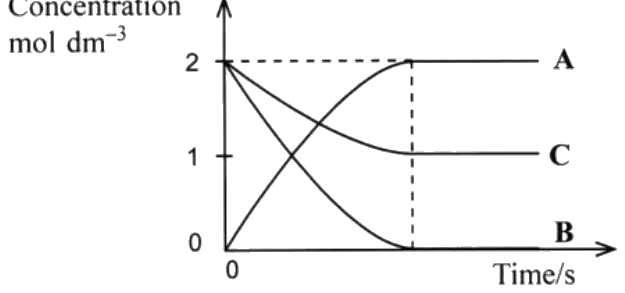
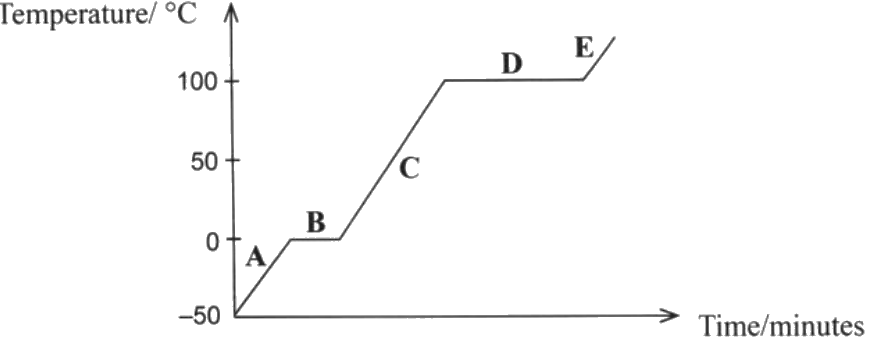
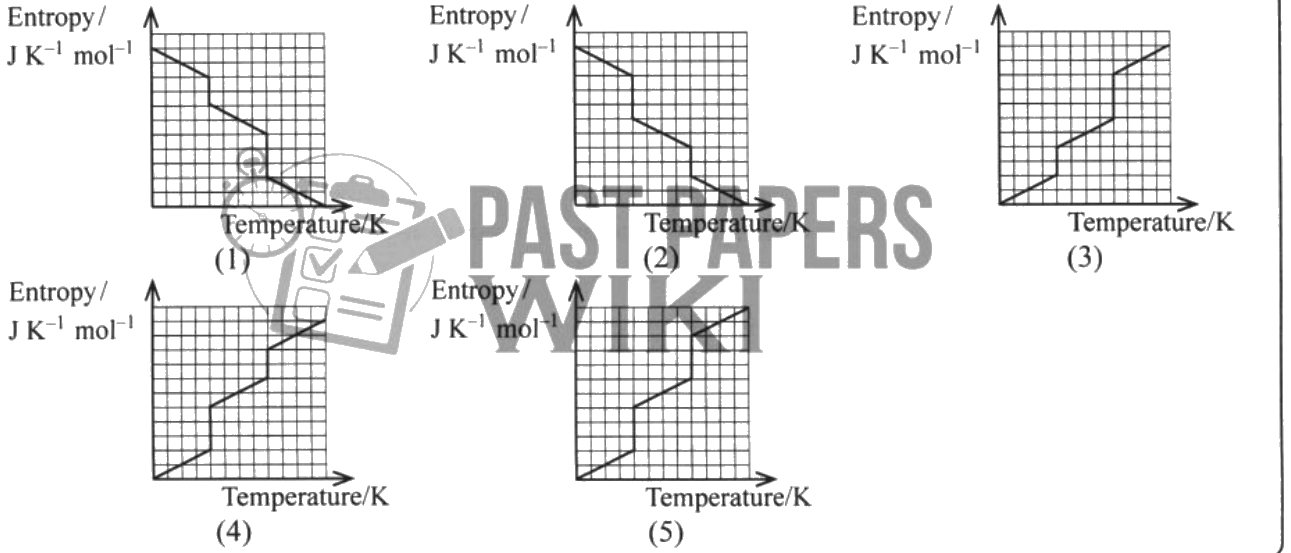
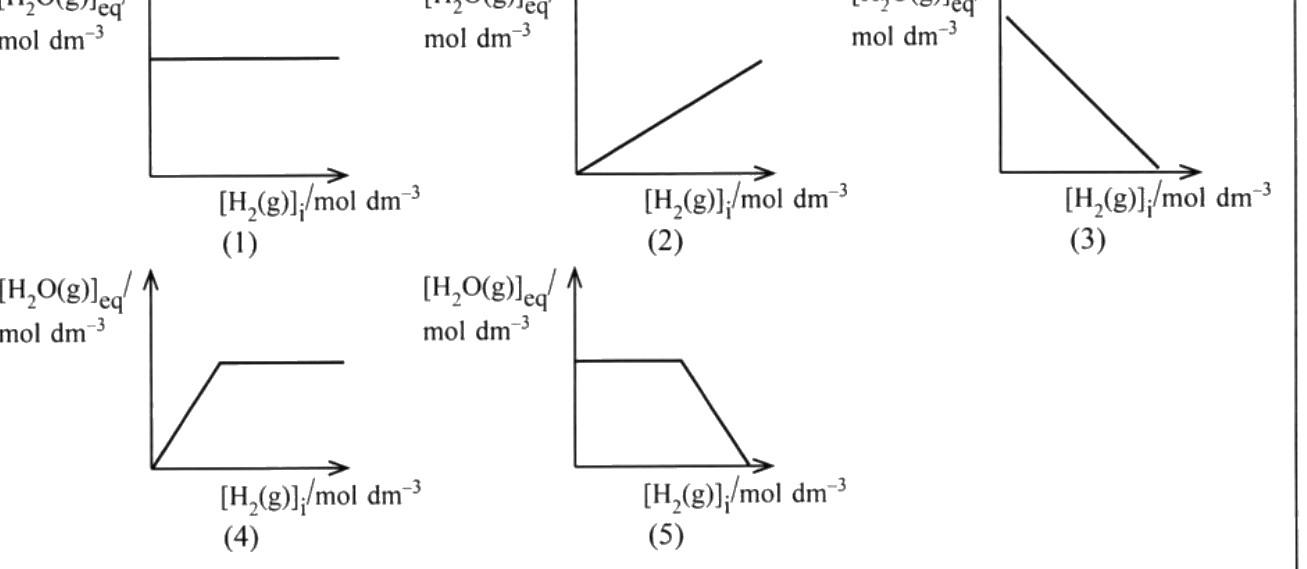
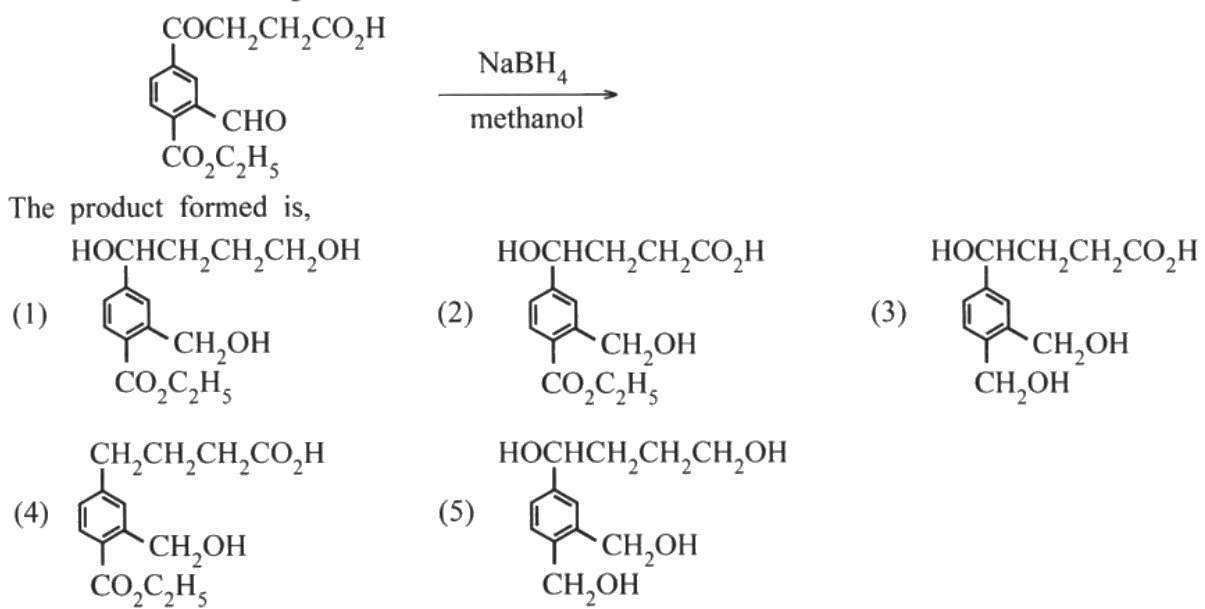
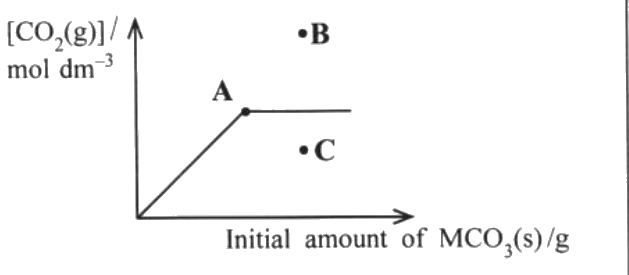
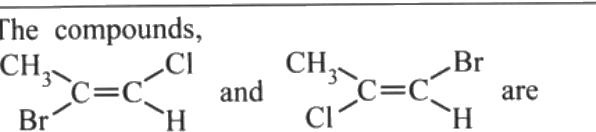
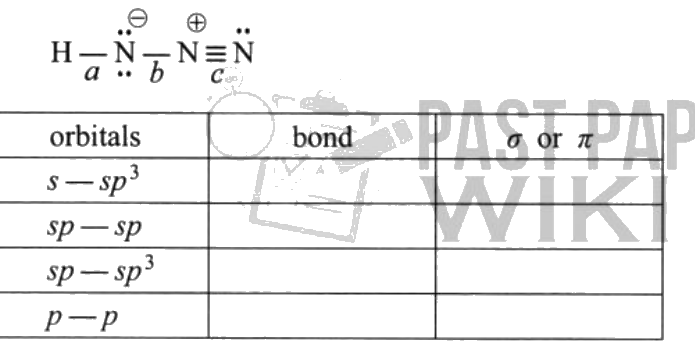
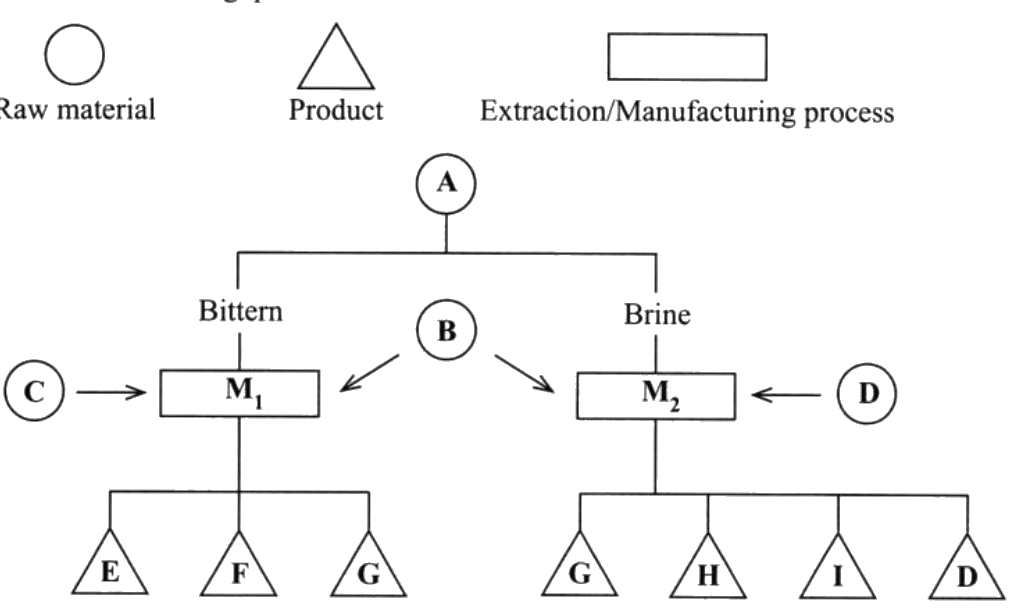

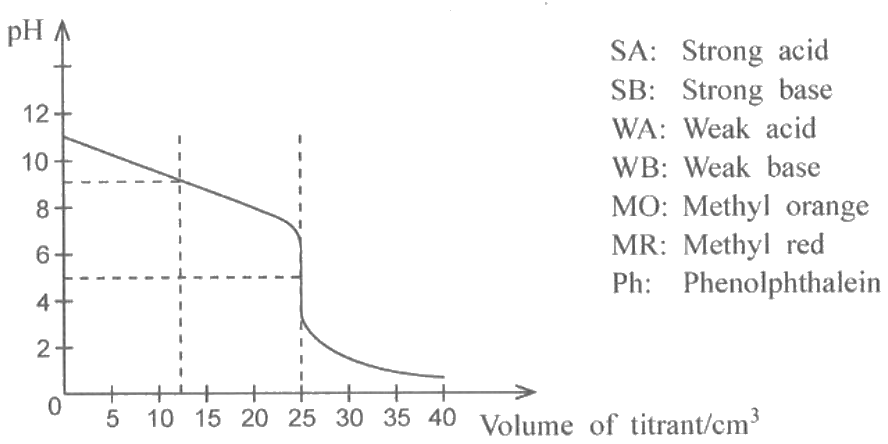
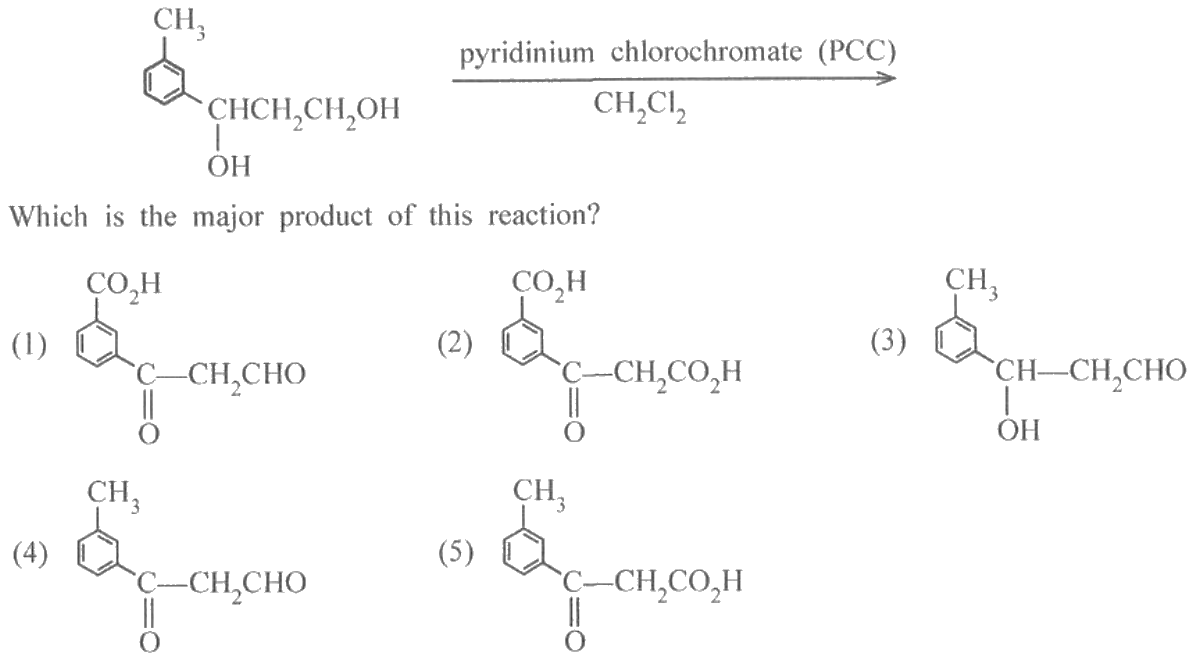
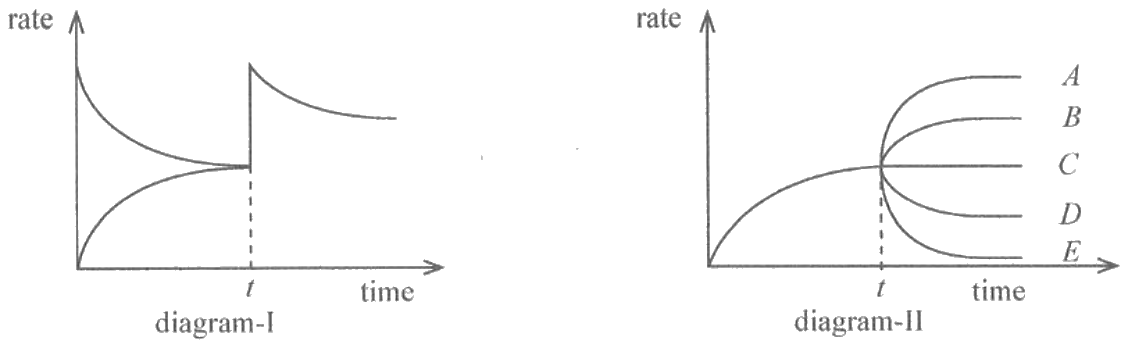

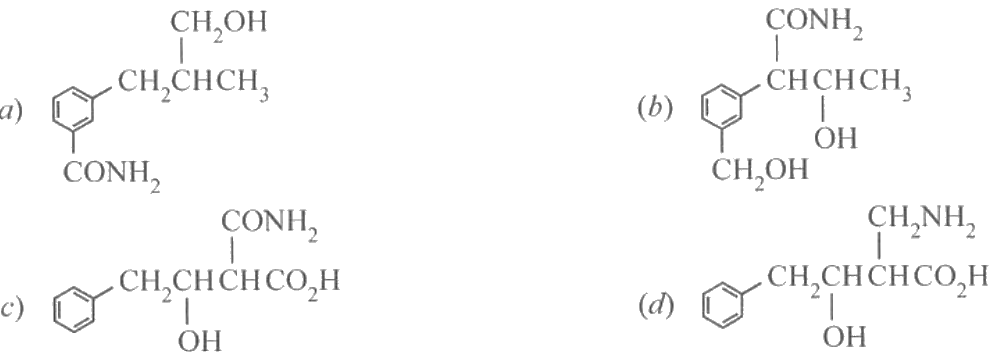
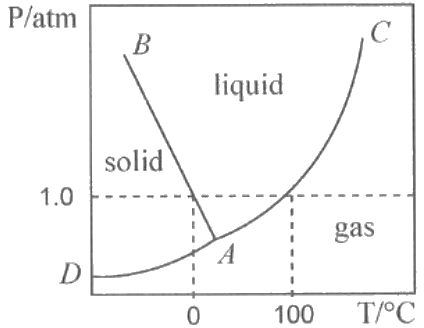
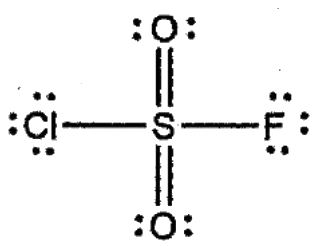
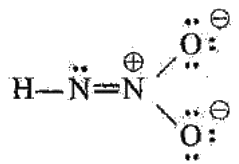
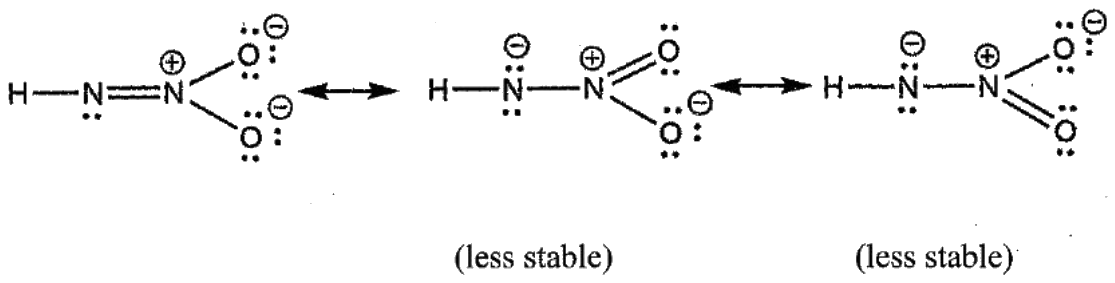

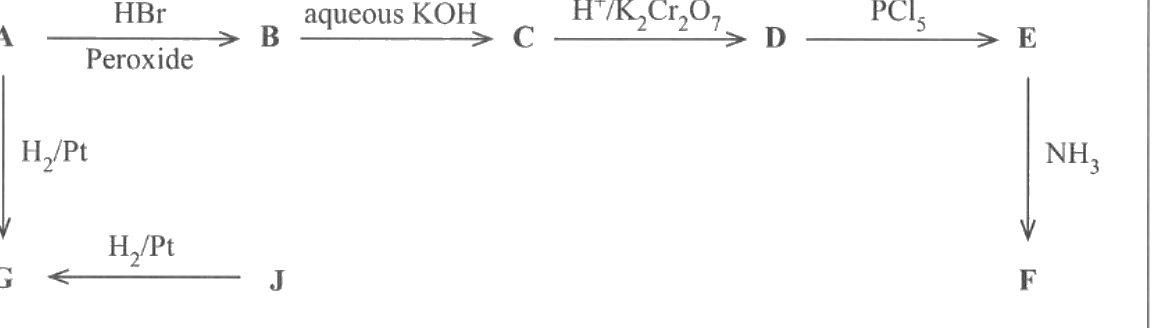
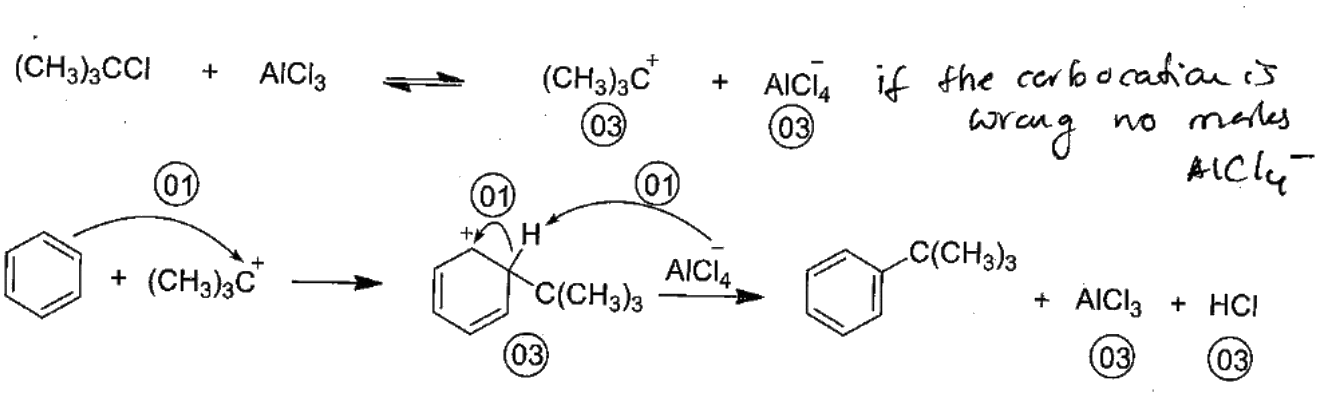
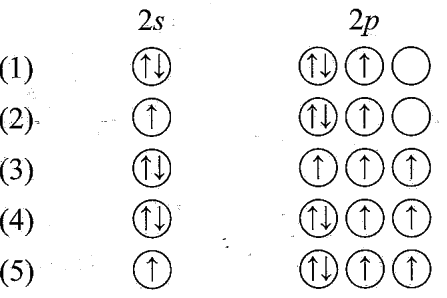
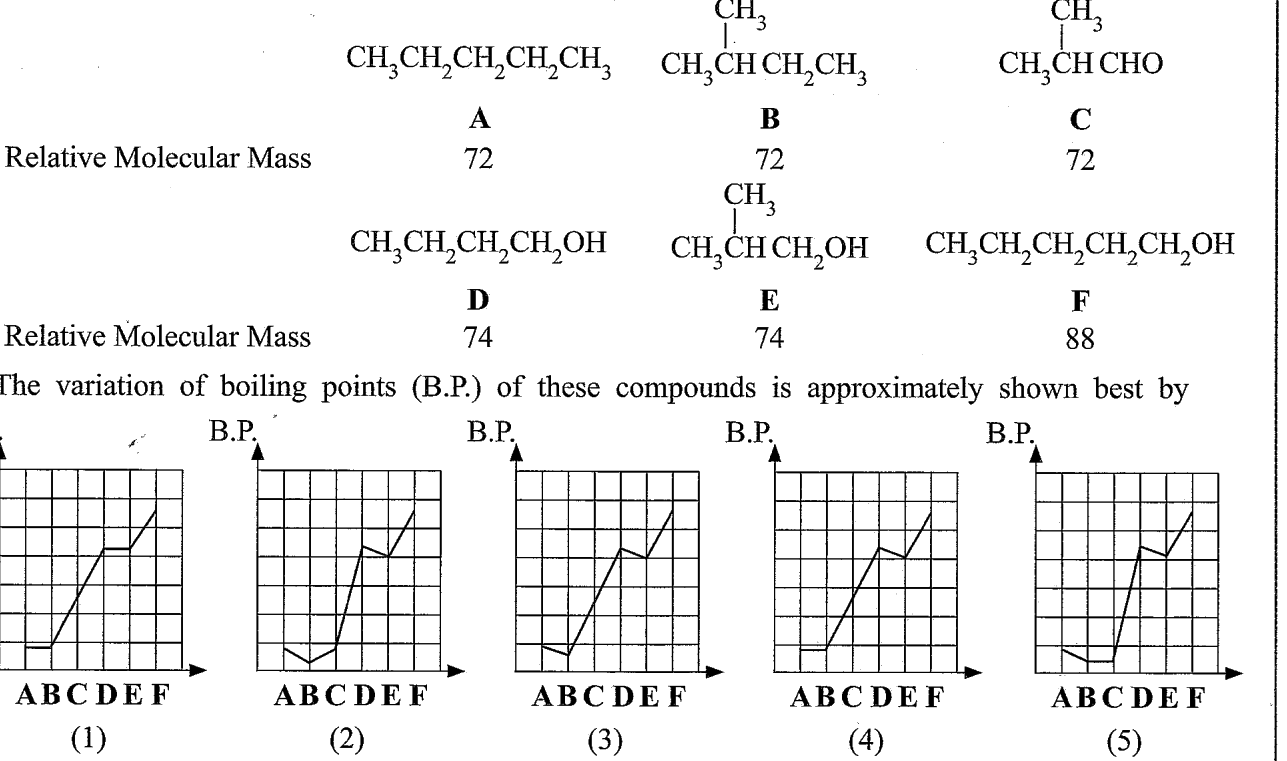
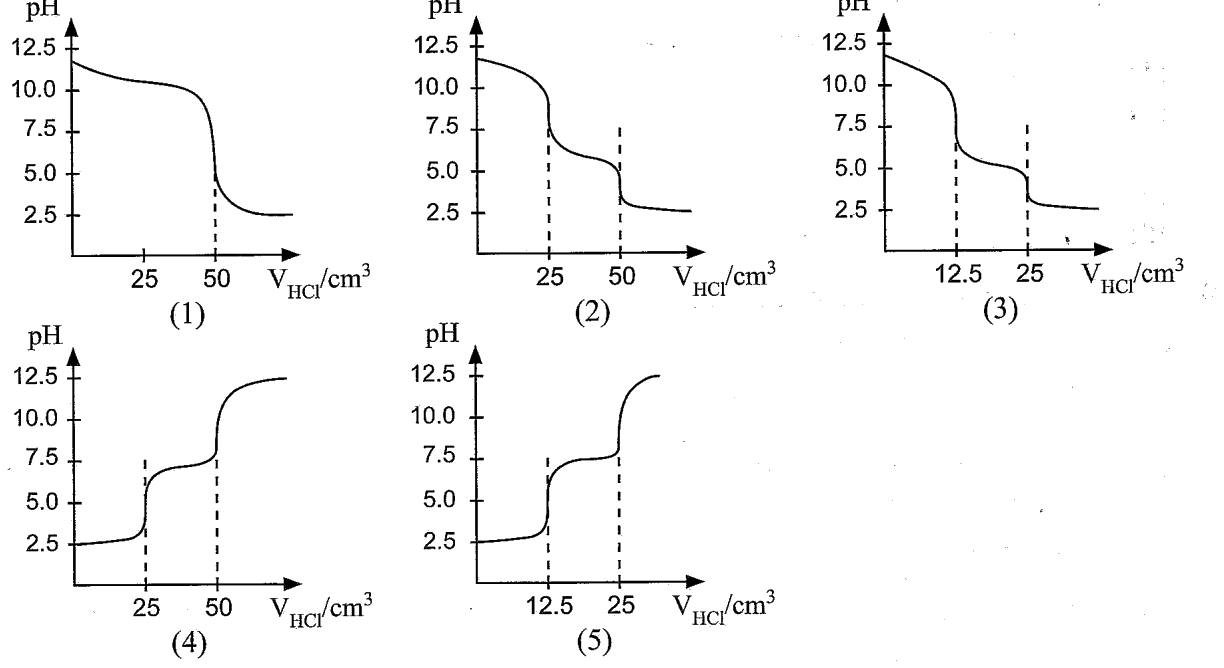
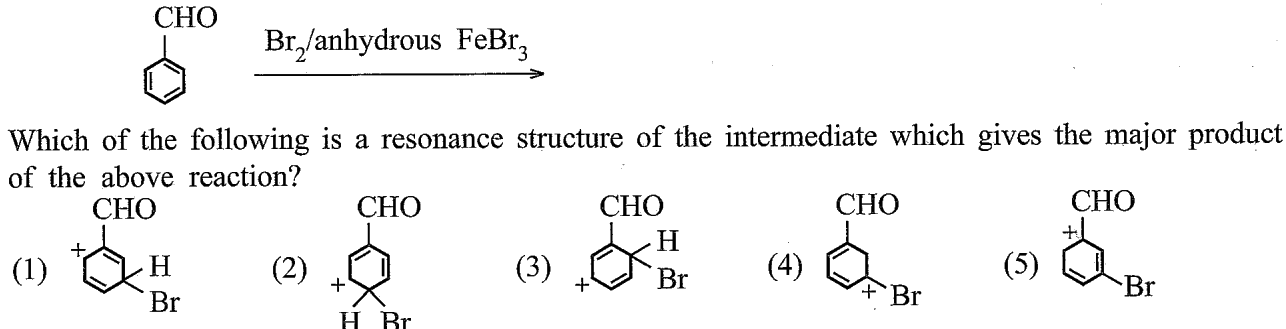
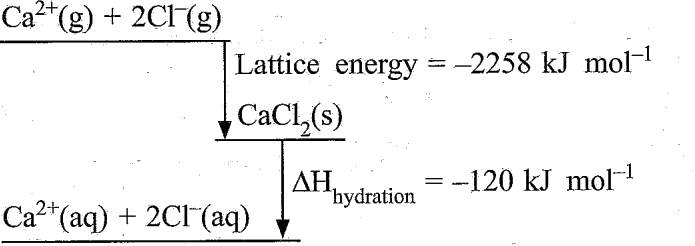
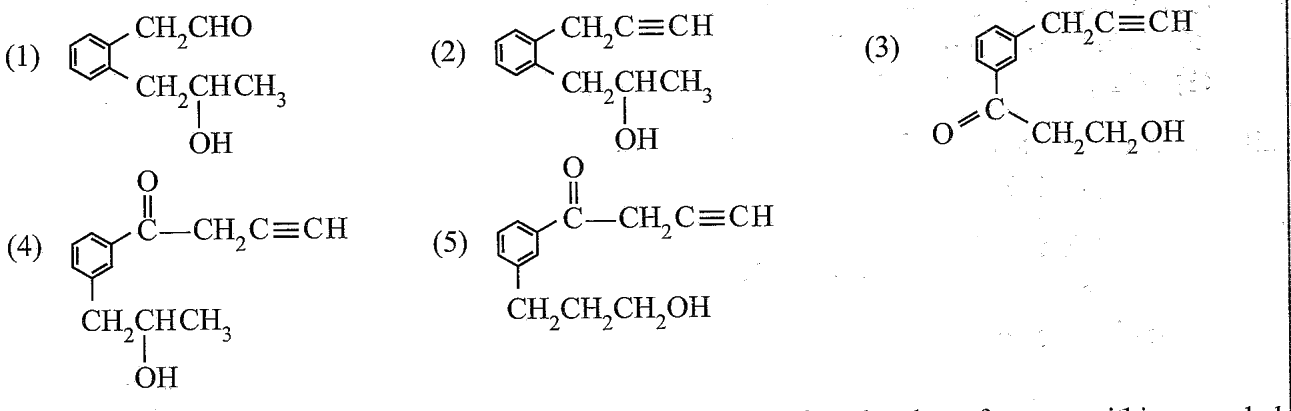
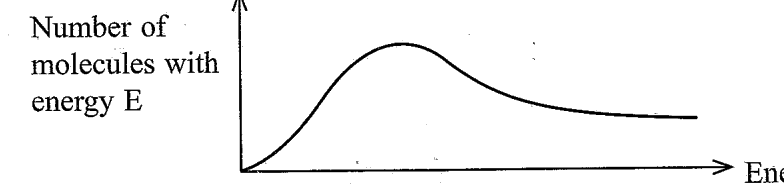
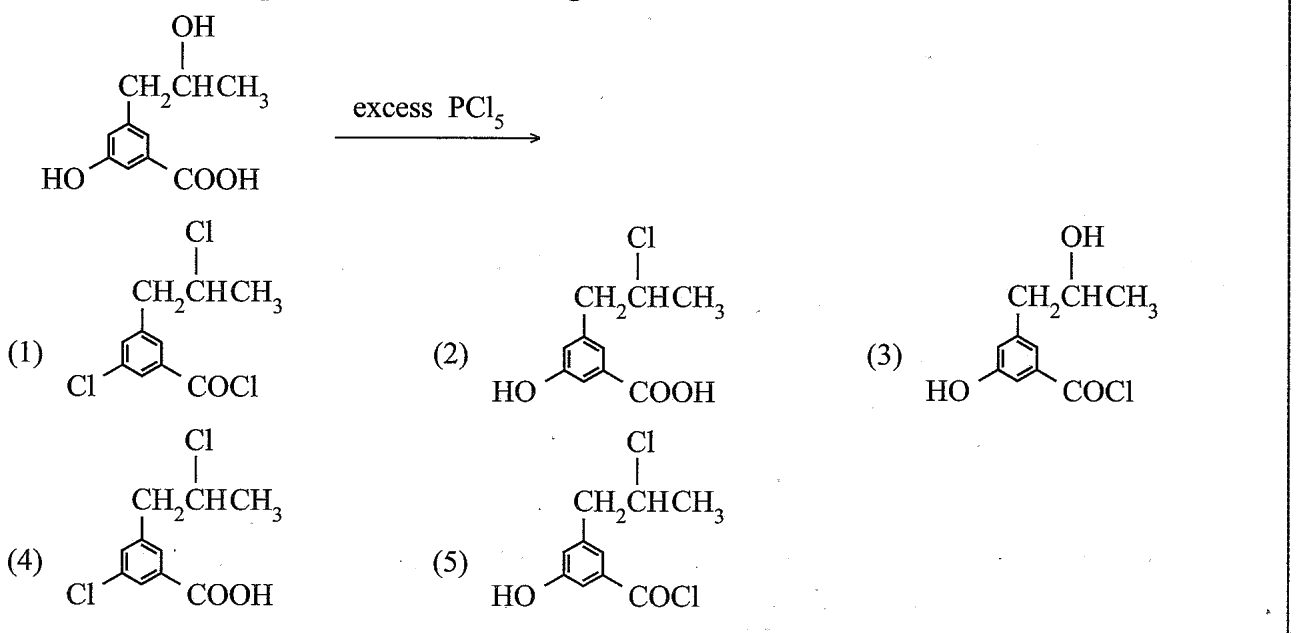
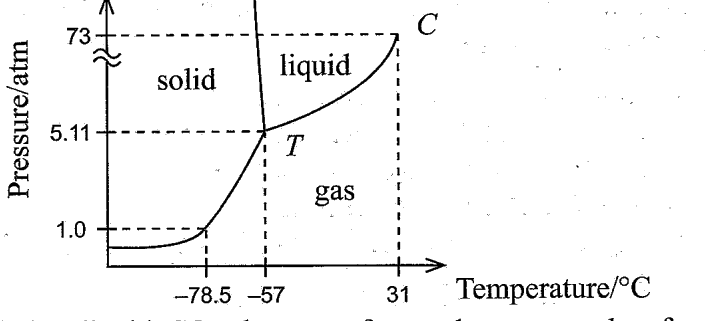
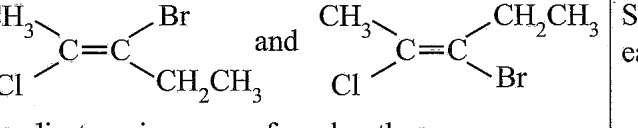
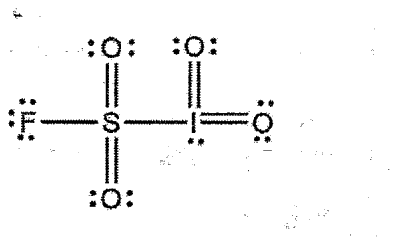


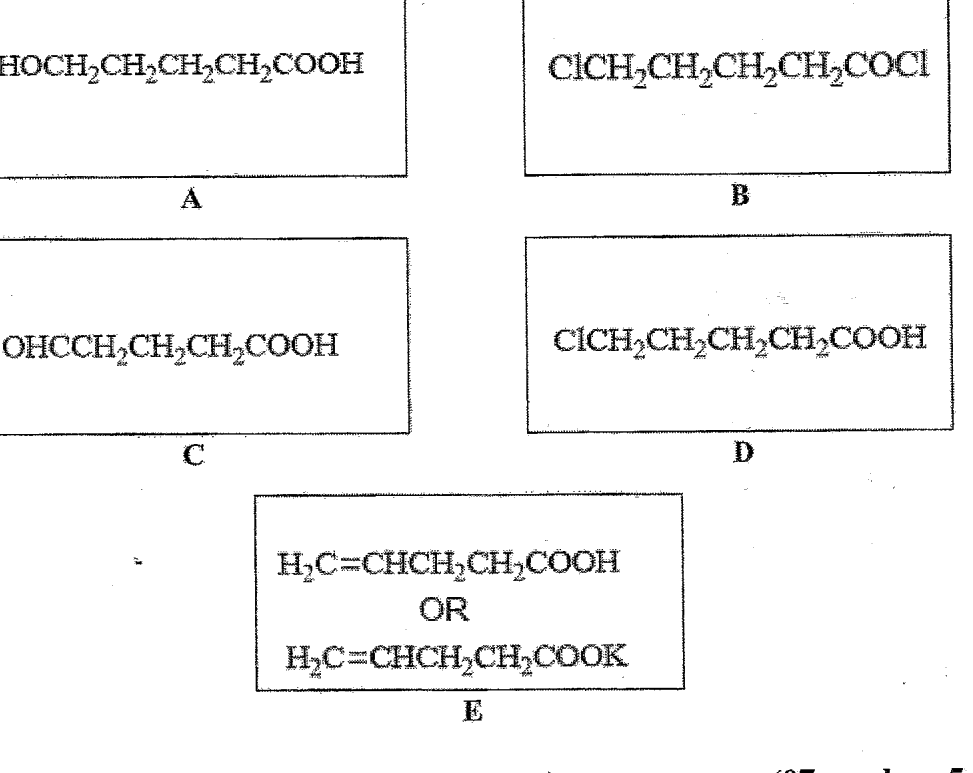
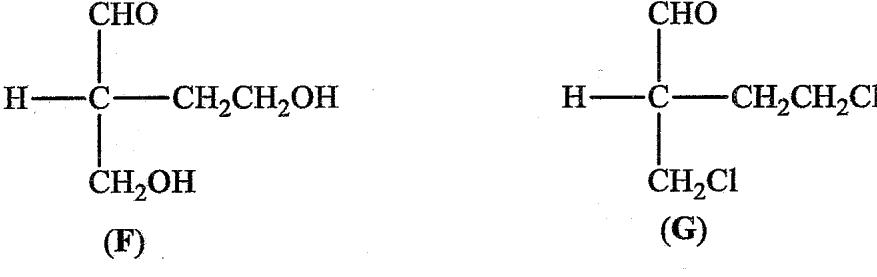
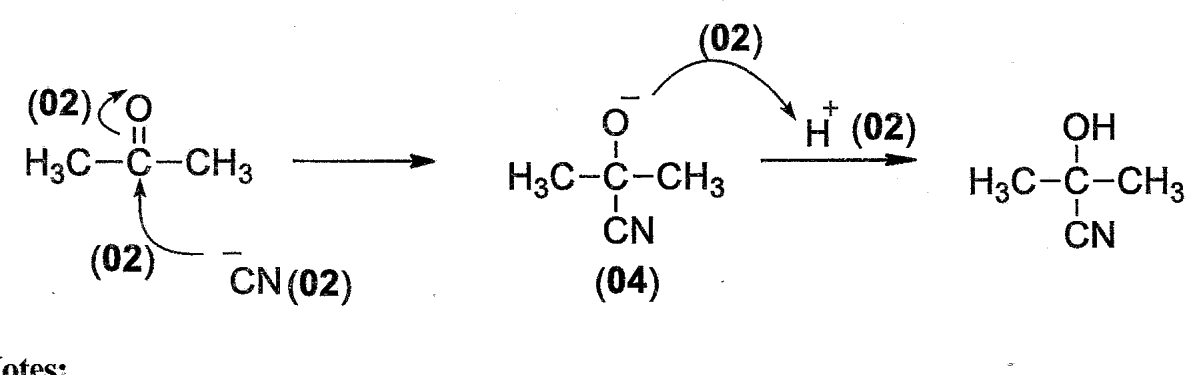
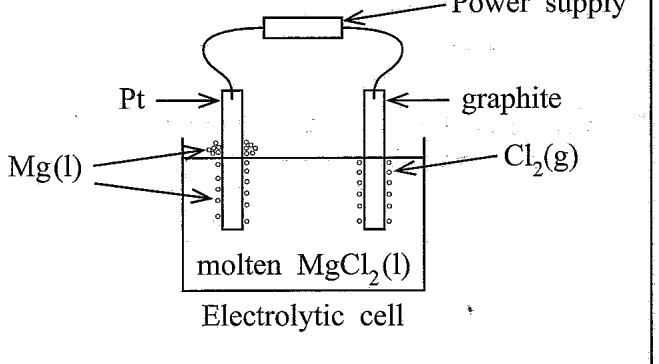
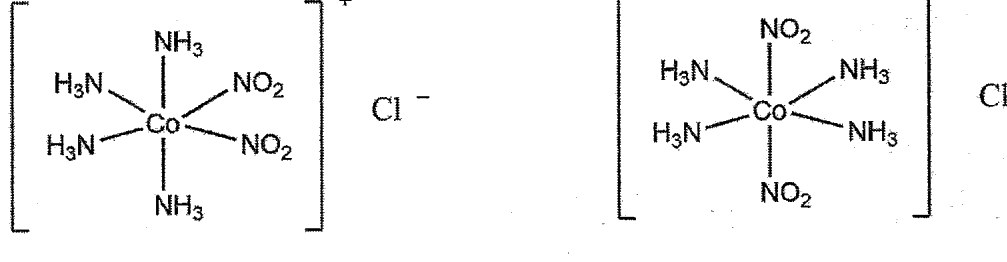
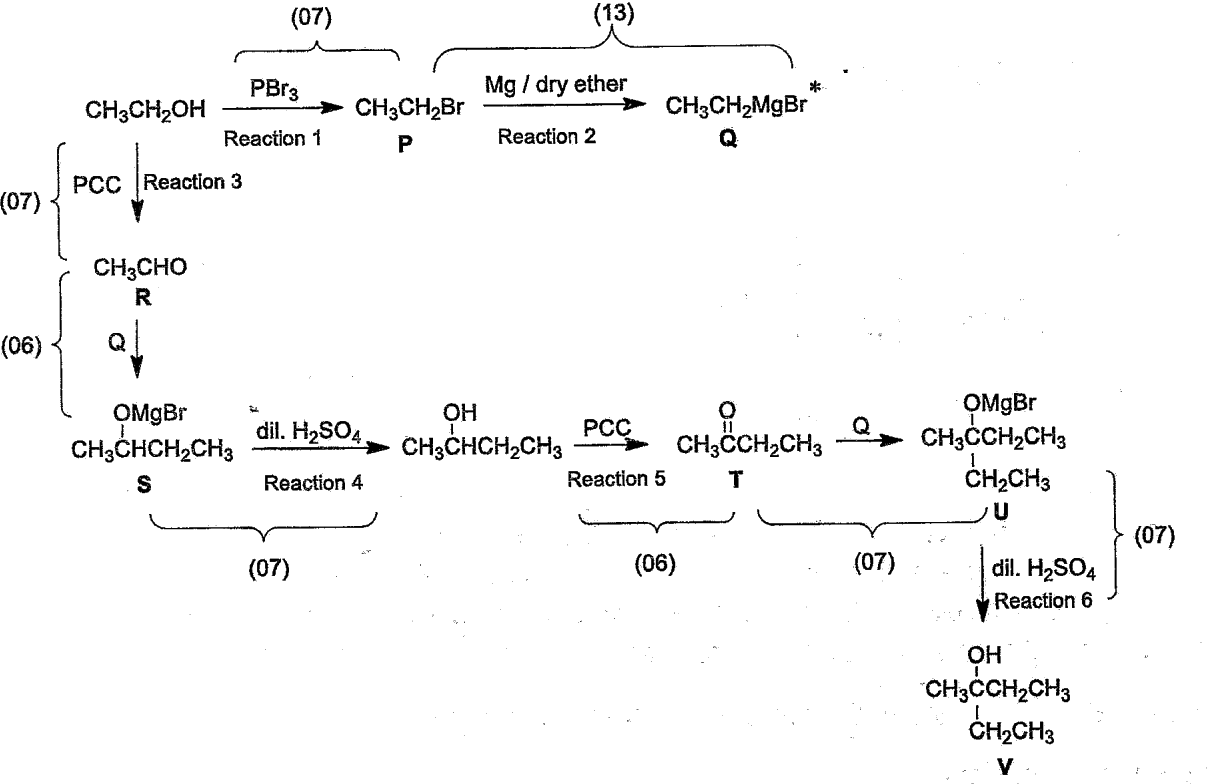
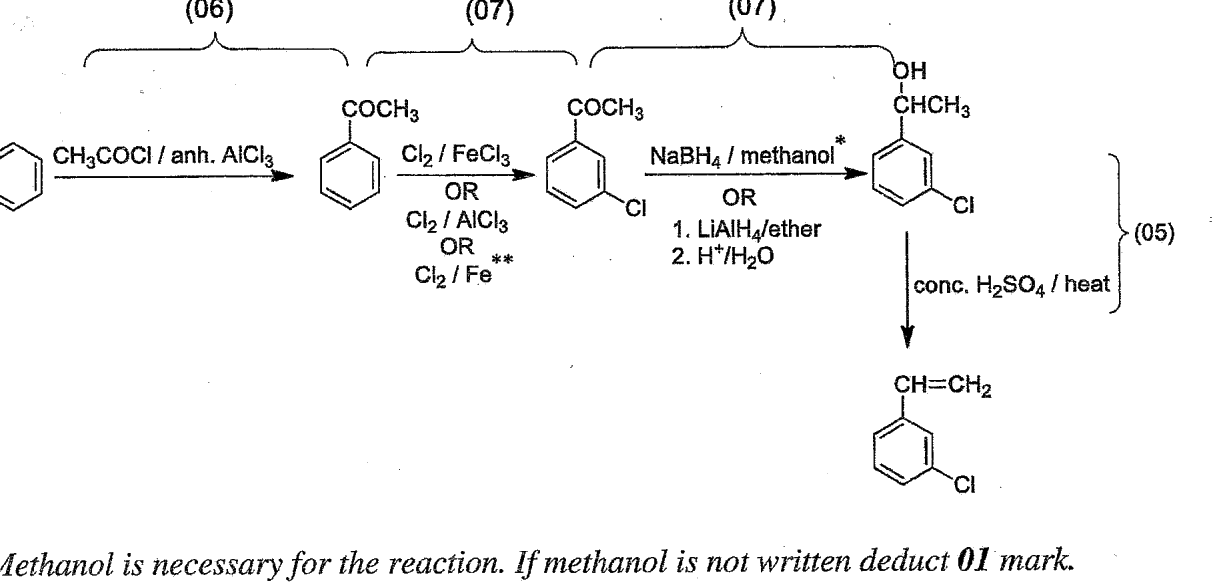
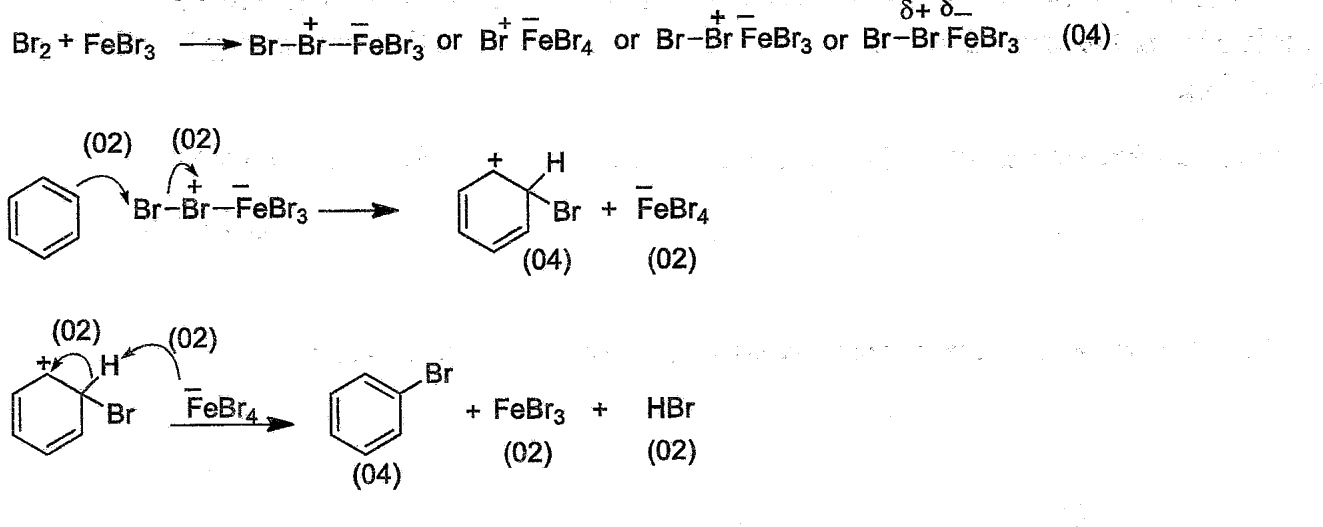
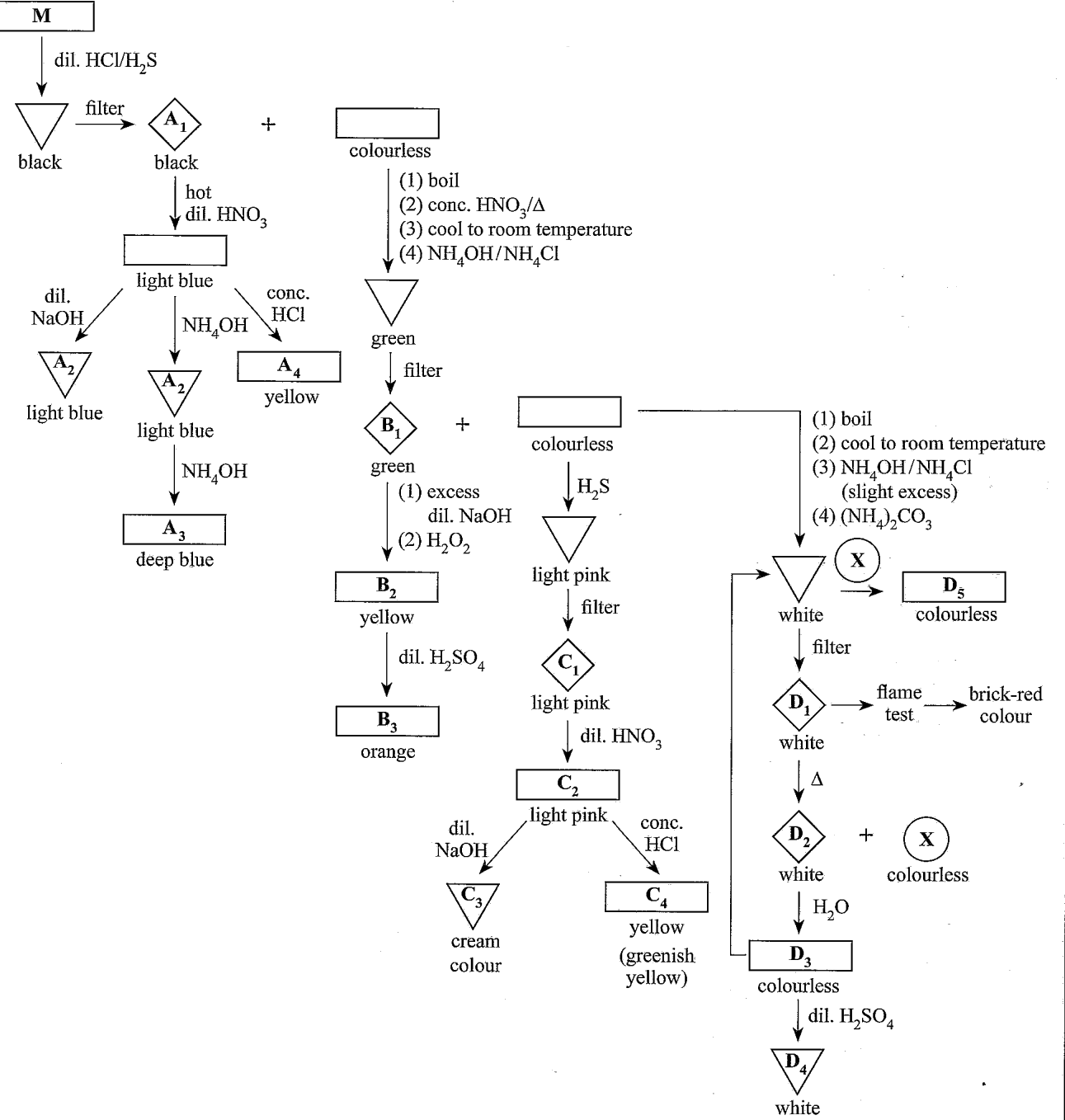
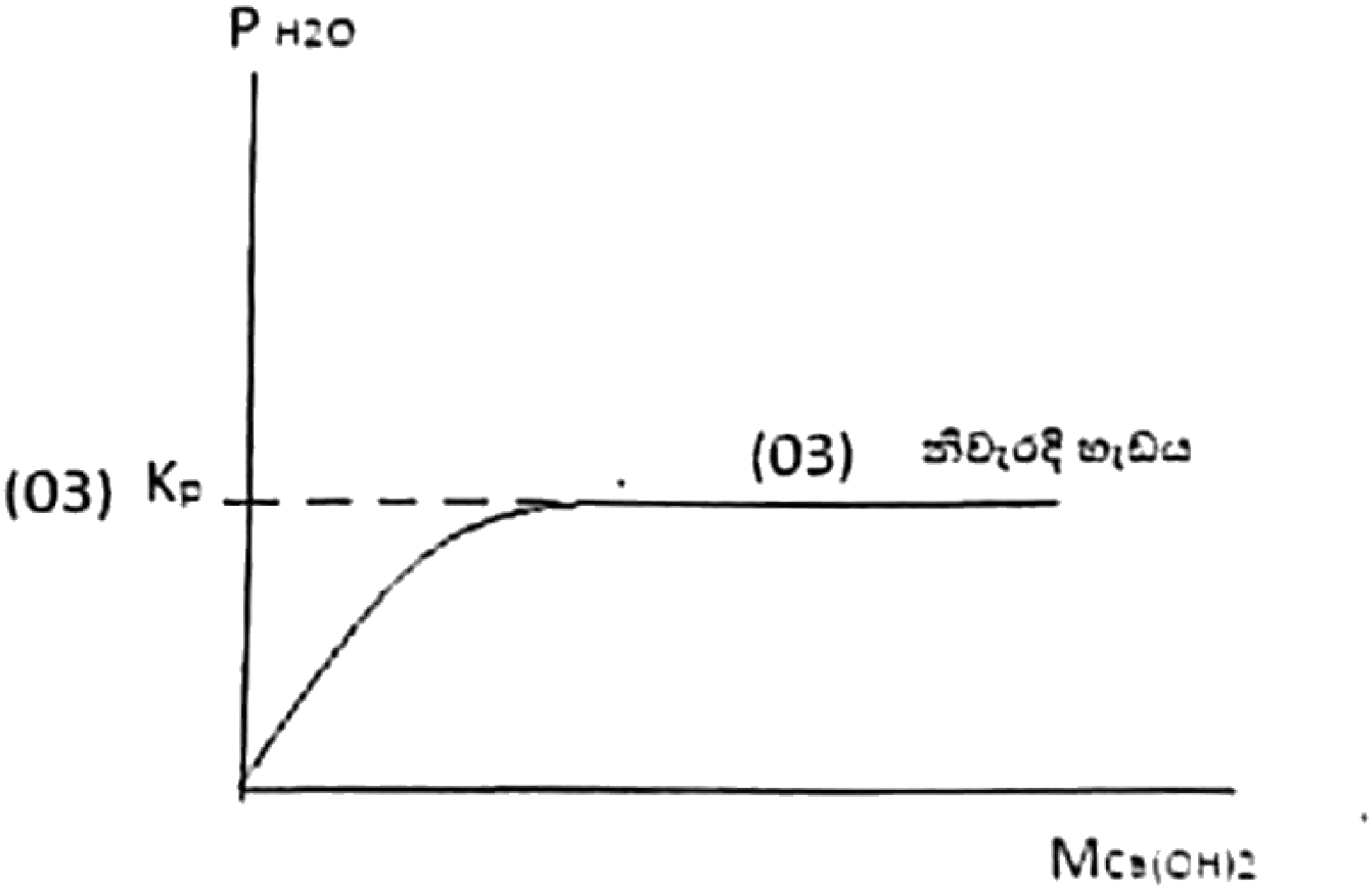
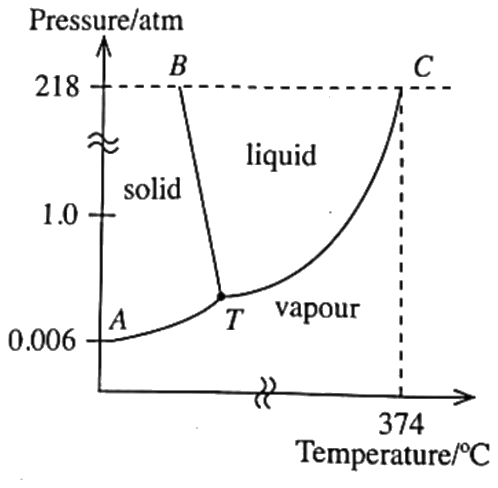
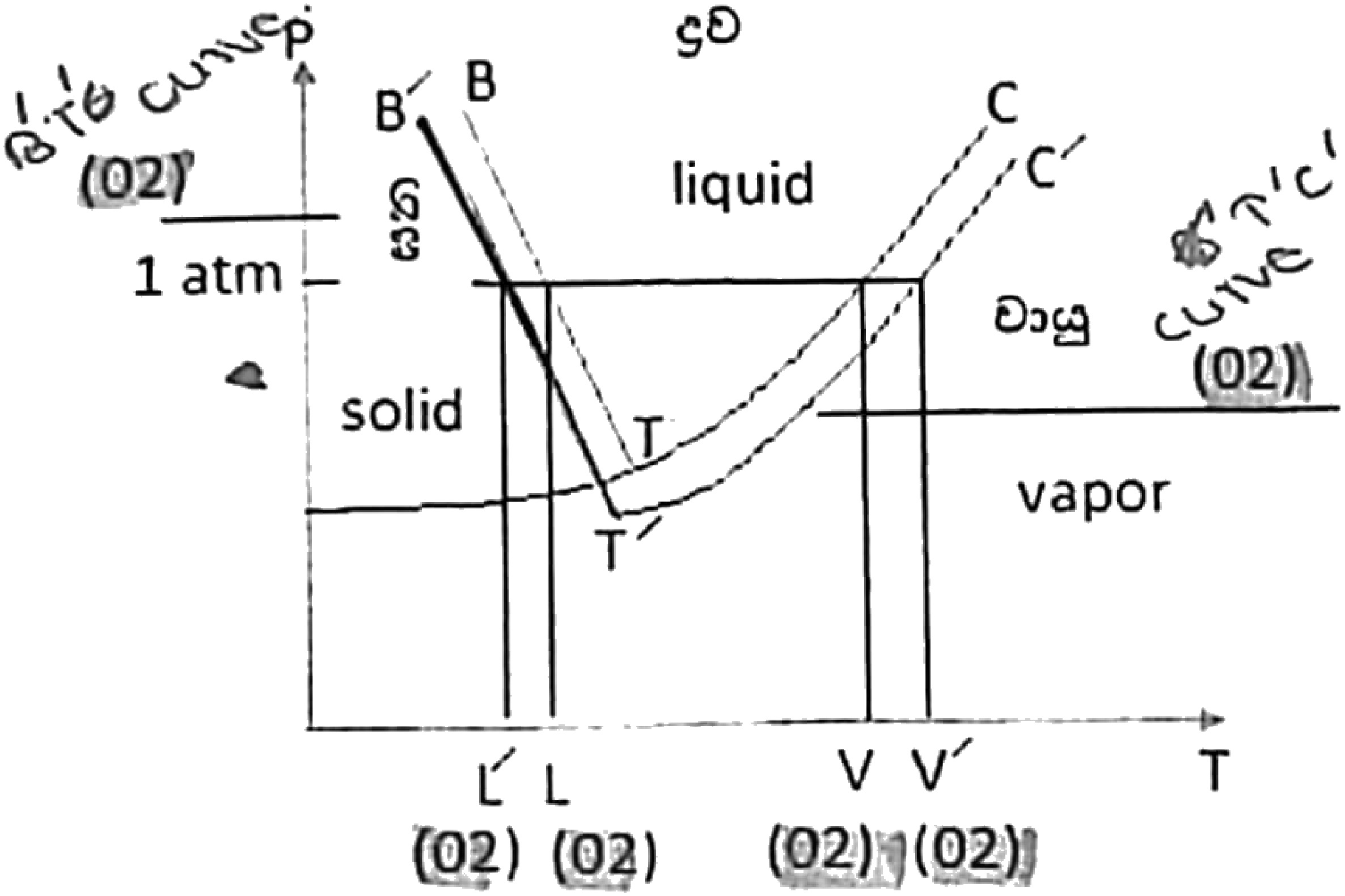
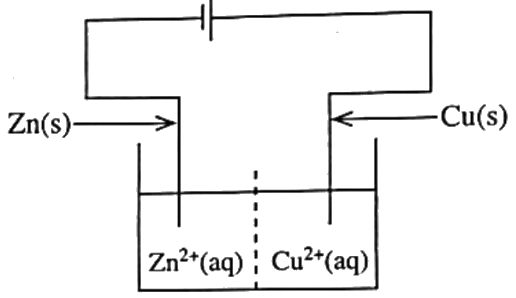
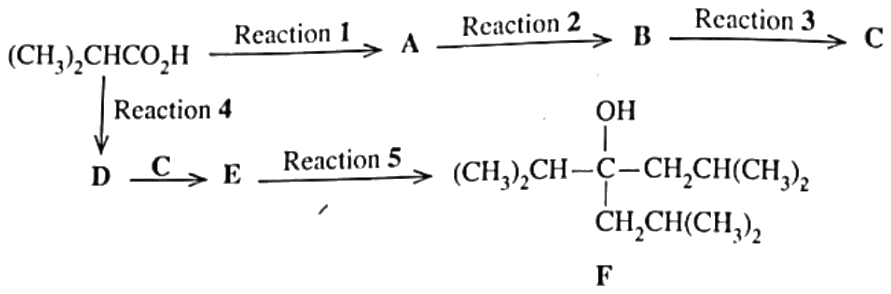
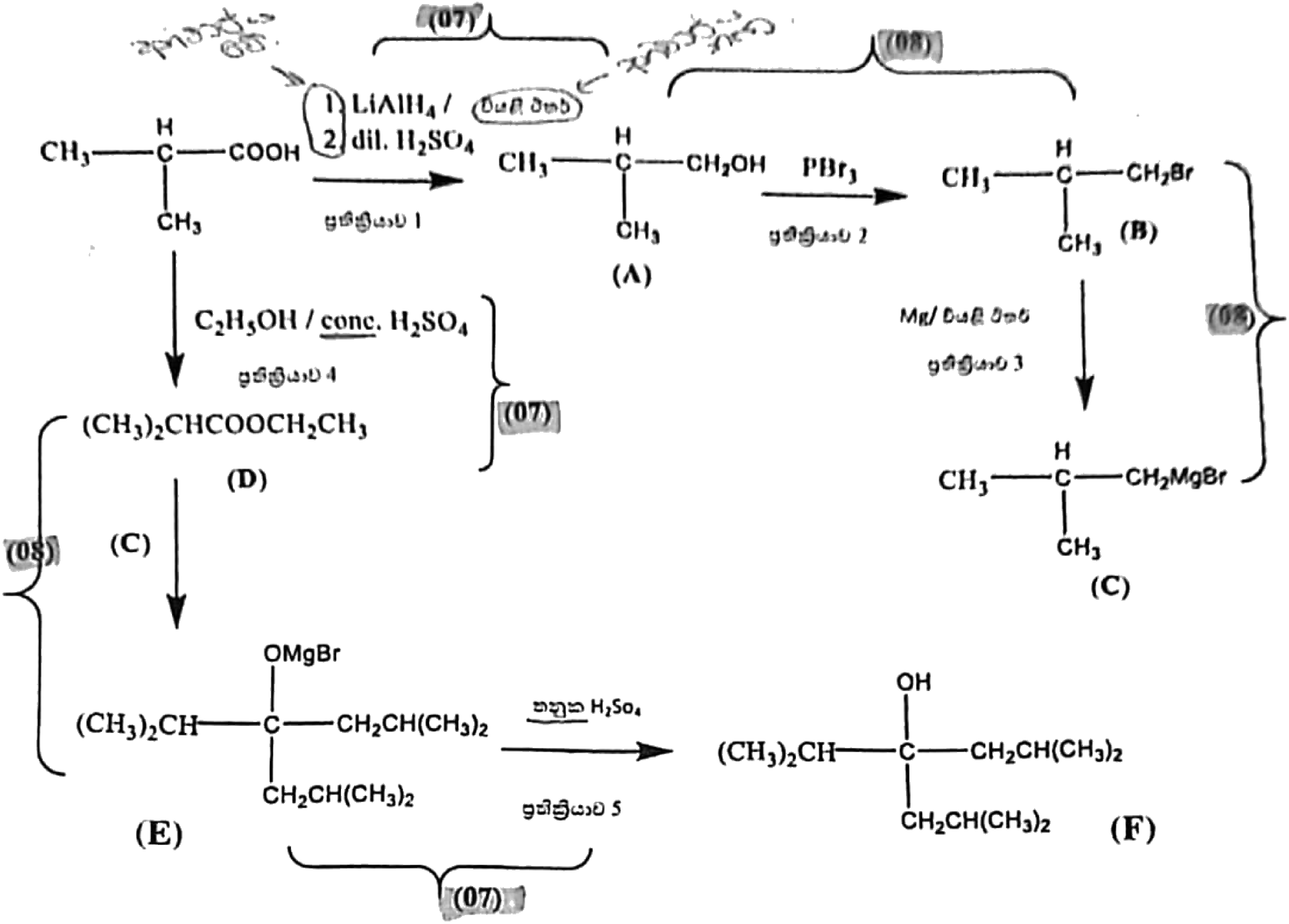
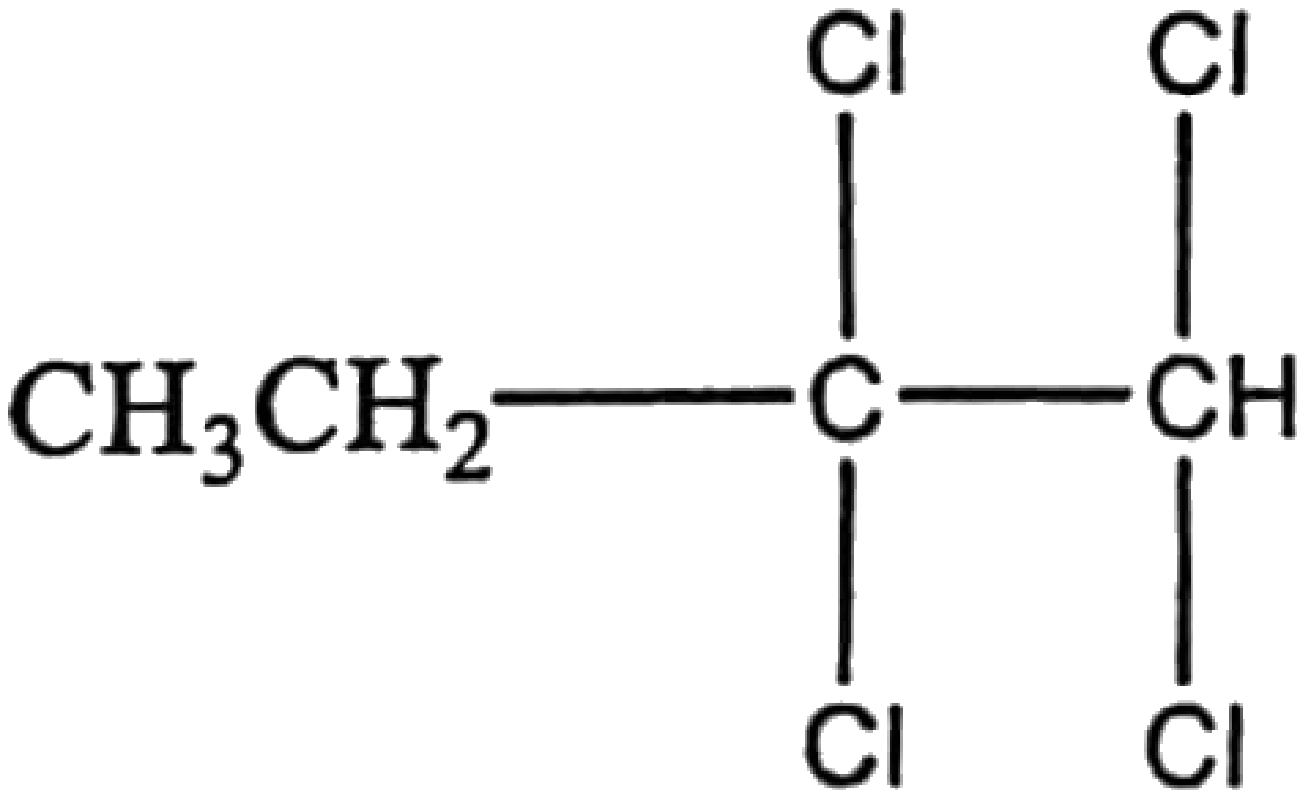
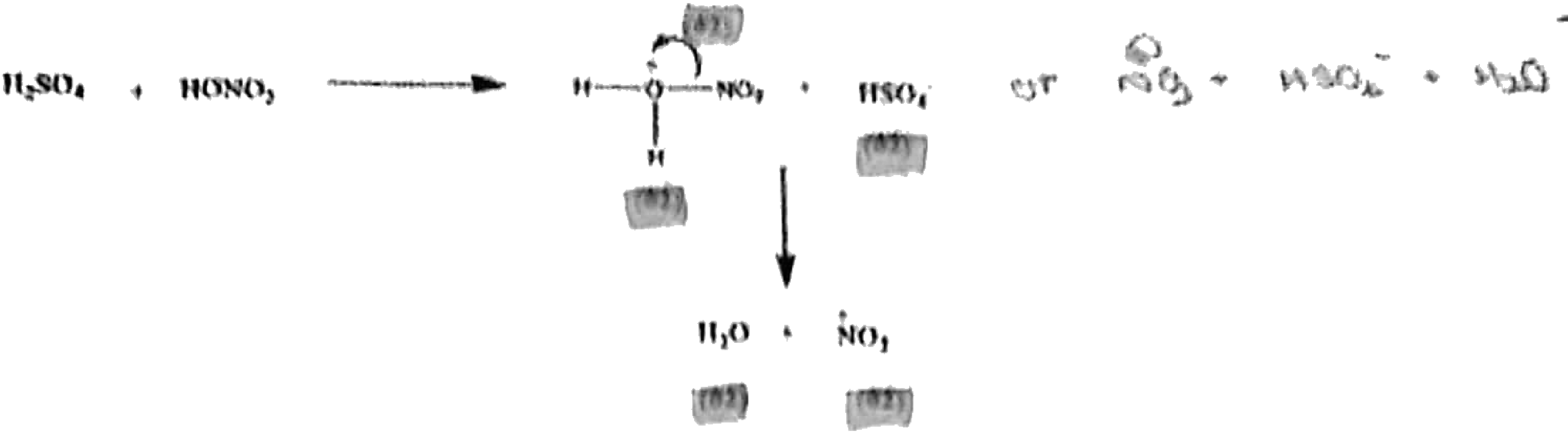
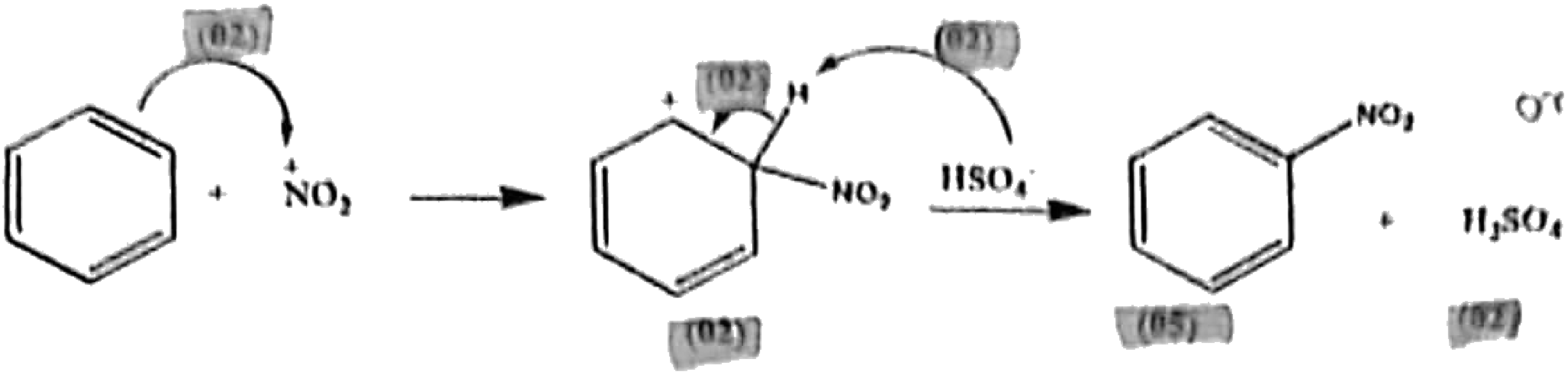
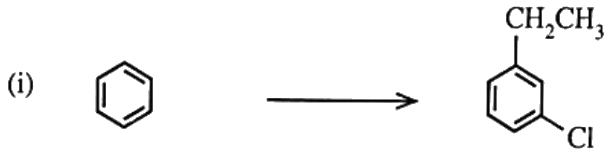
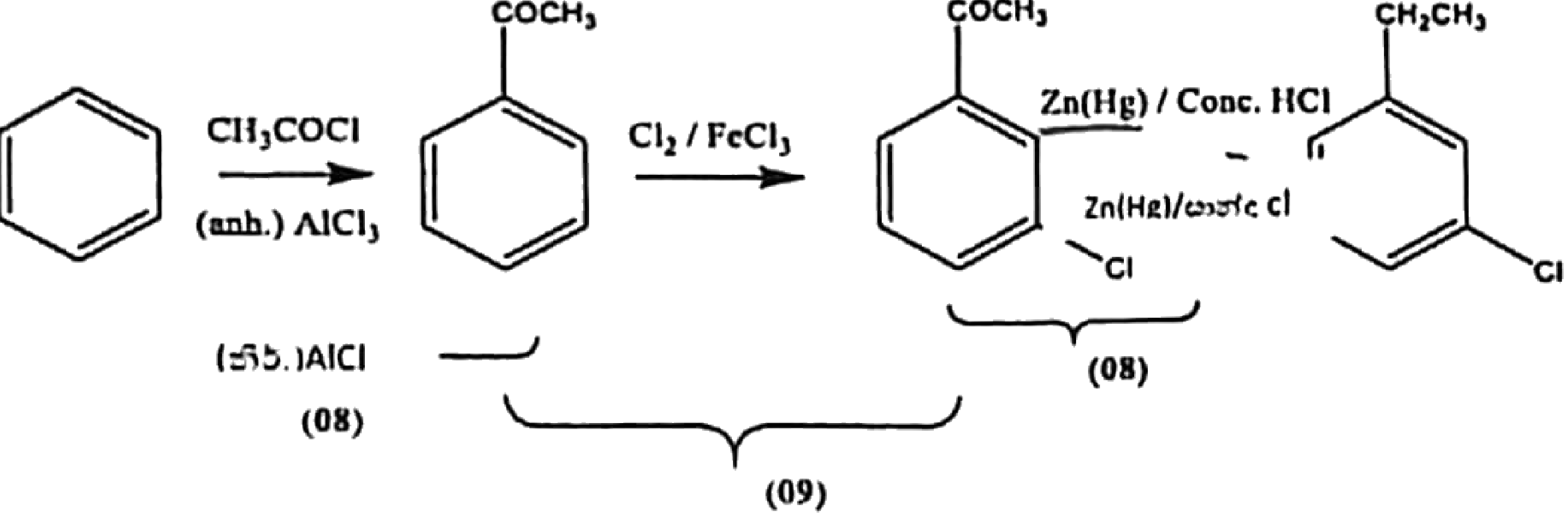
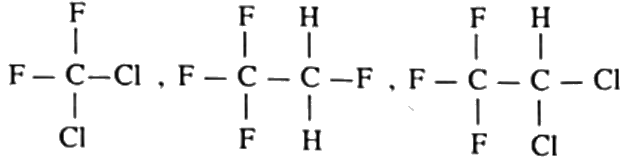
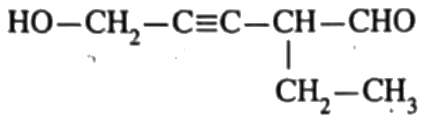
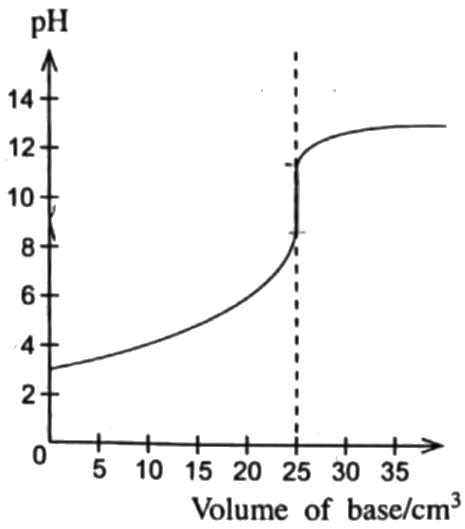

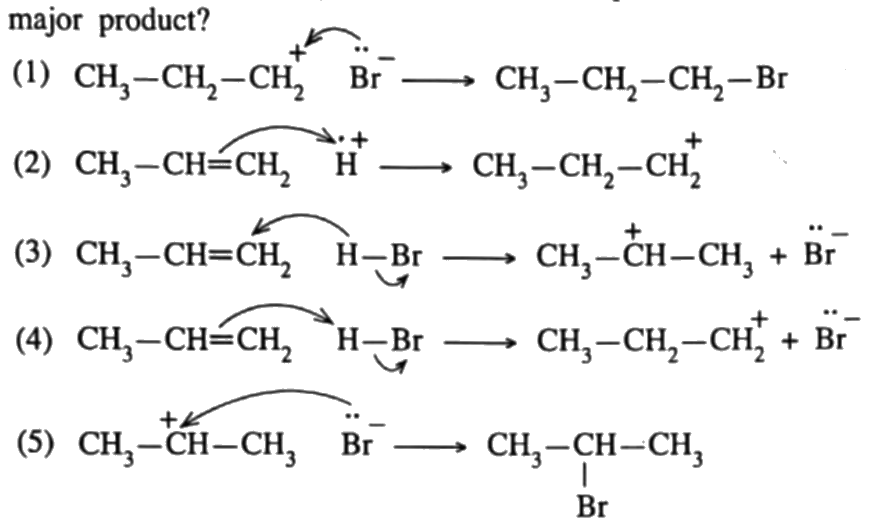
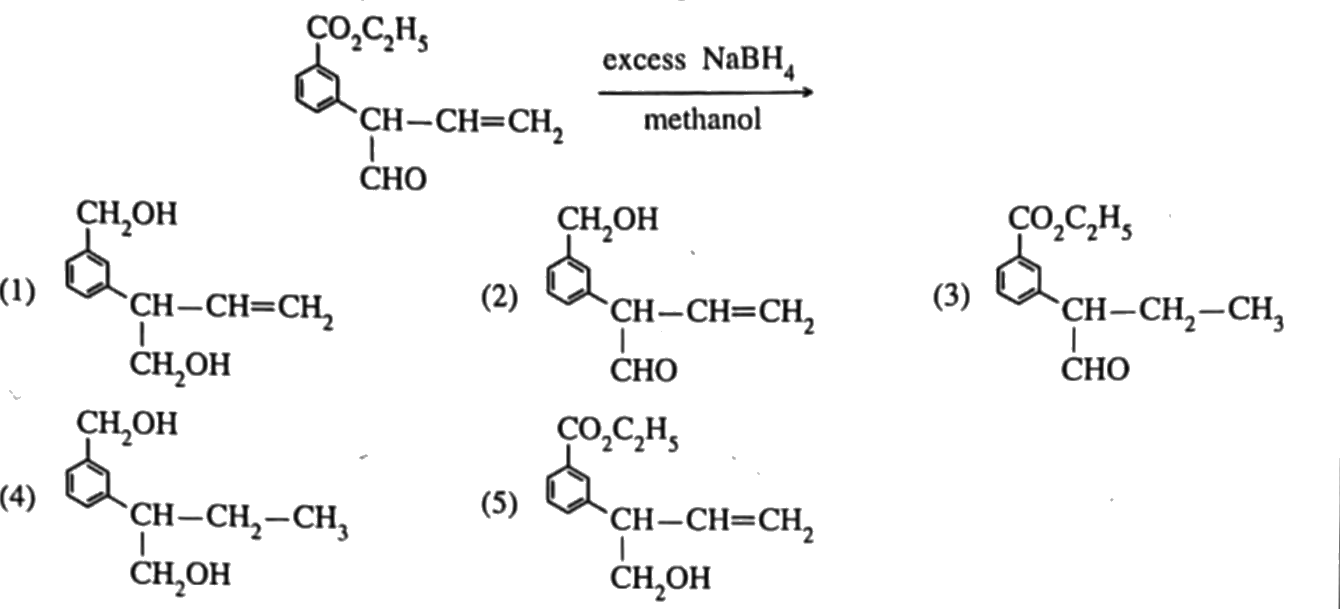
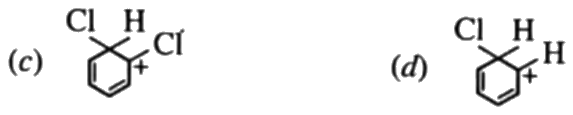
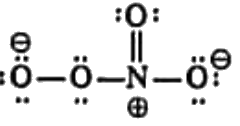

![Graph 1: rate against [O_3(g)]; Graph 2: rate against [O(g)]](figs/2022/a3b.png)
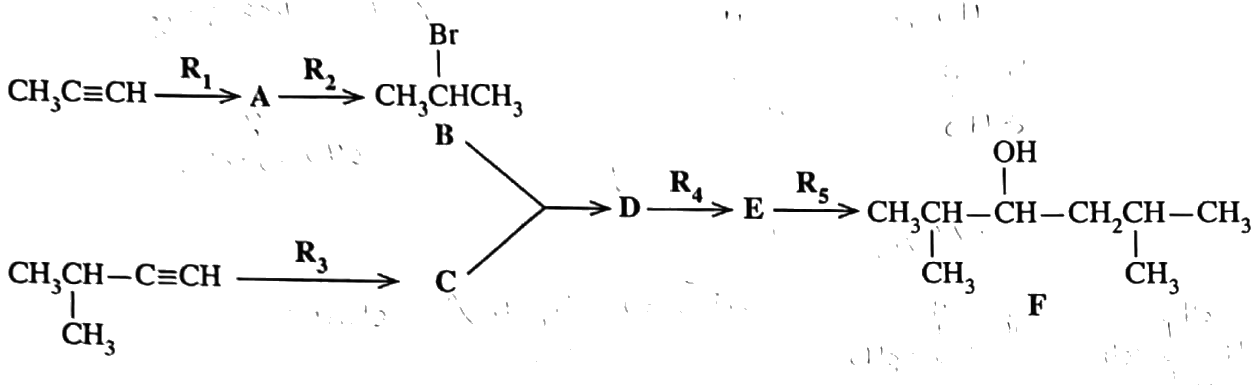
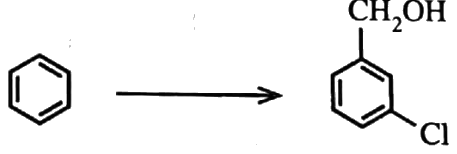
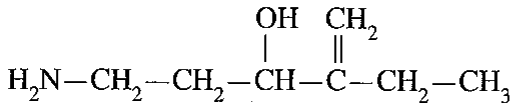
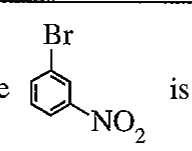
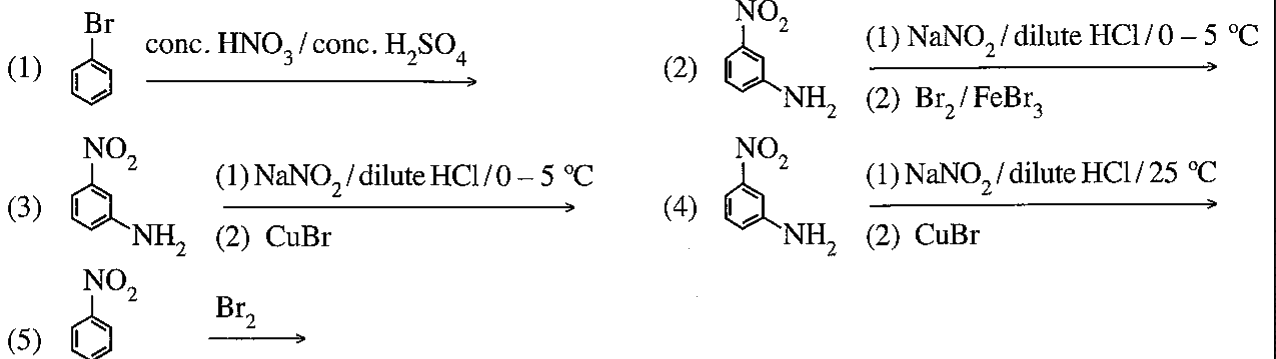
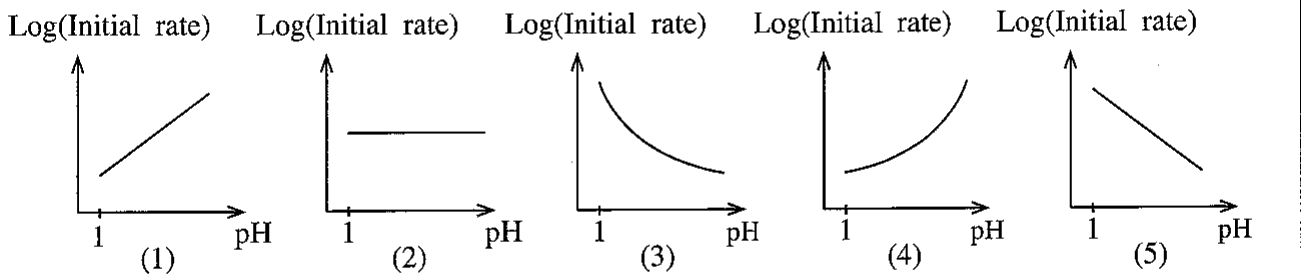
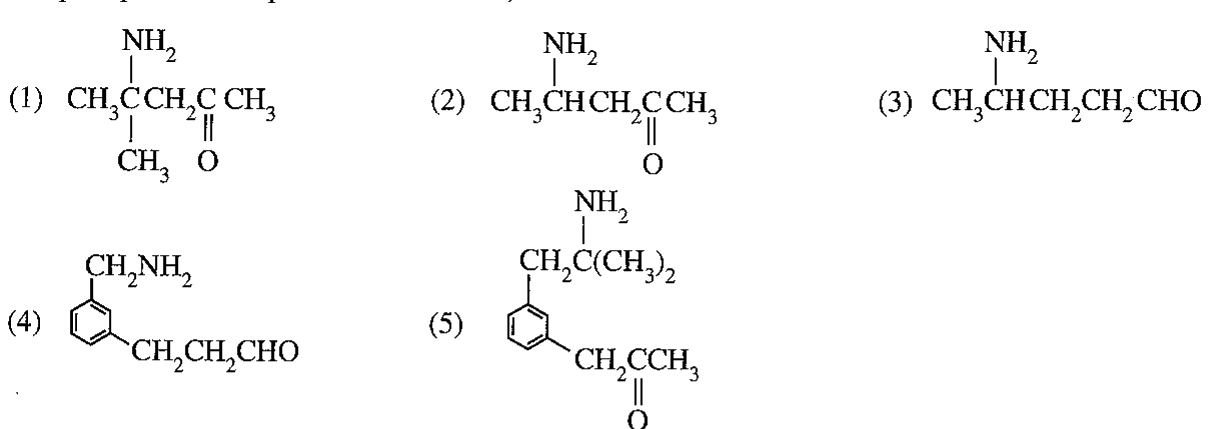

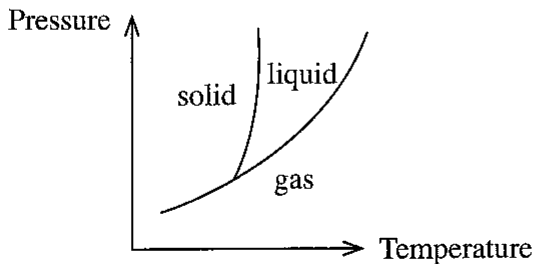
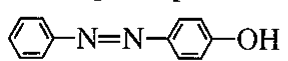
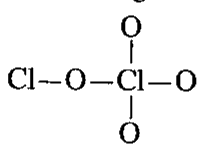
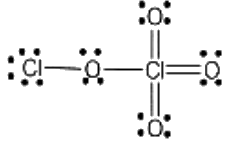
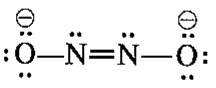


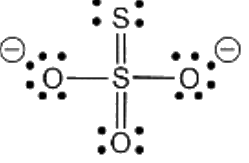
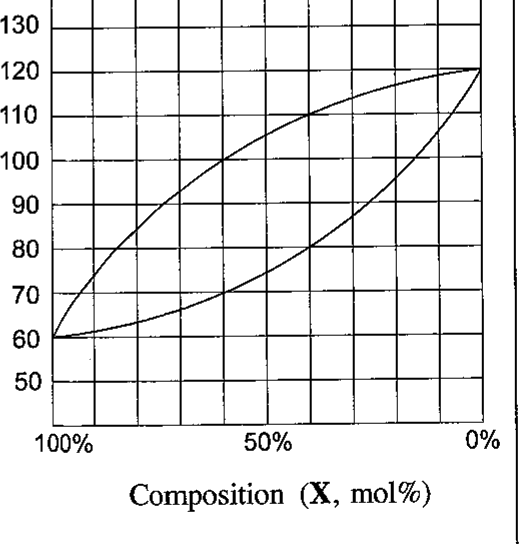
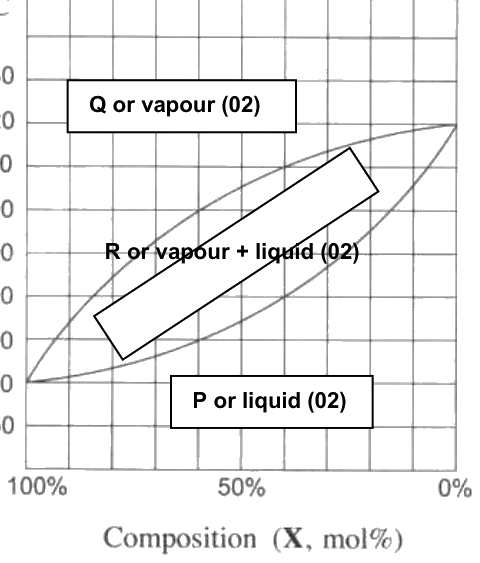
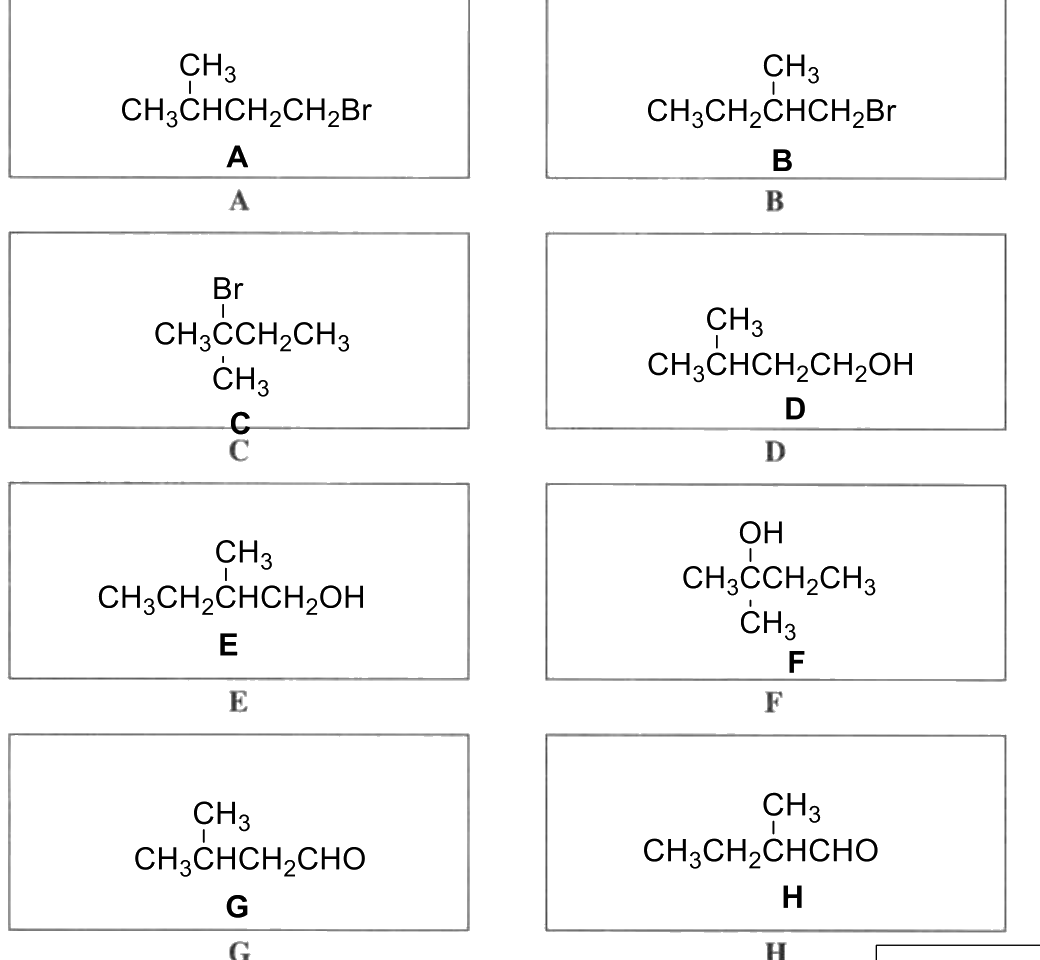
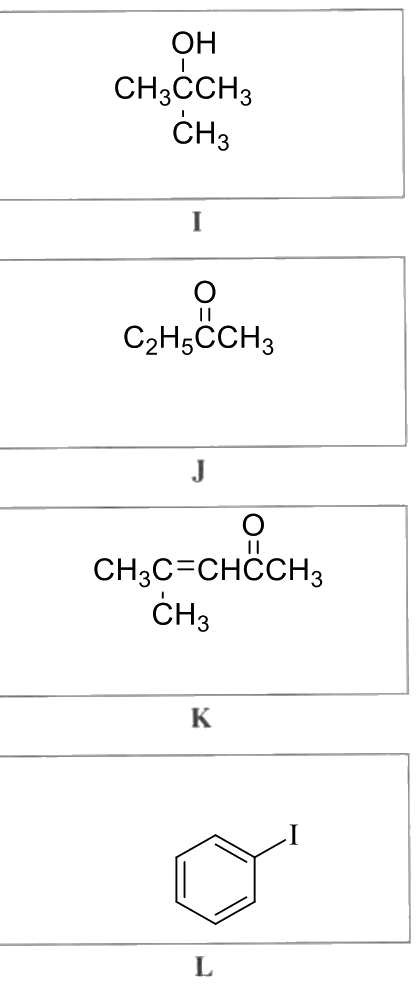
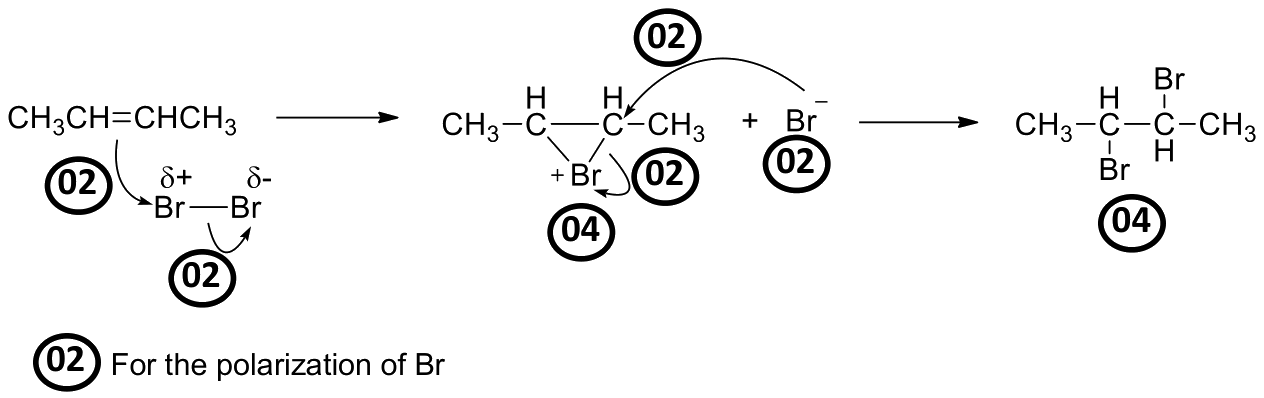
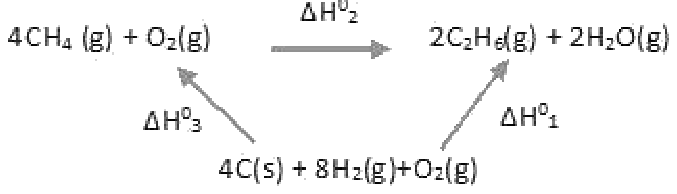
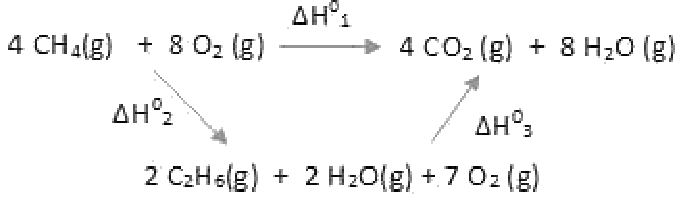
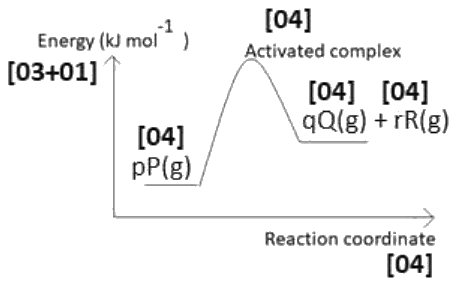
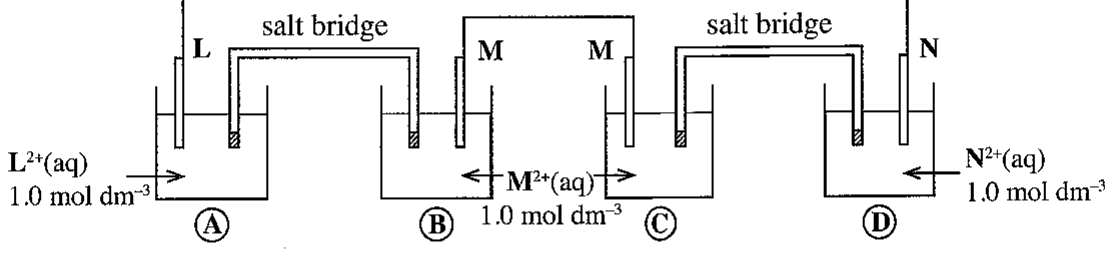
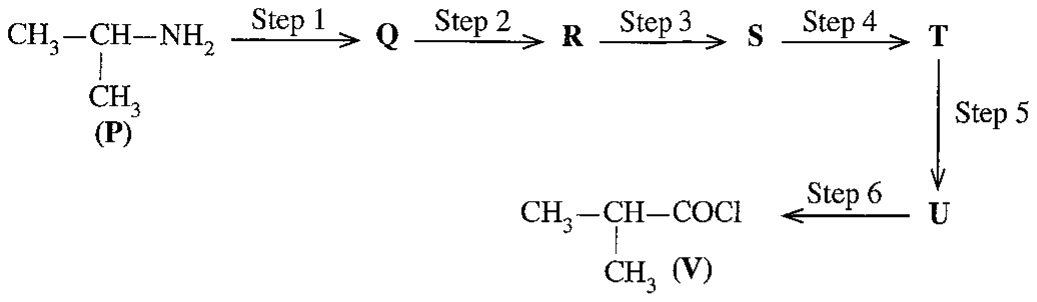
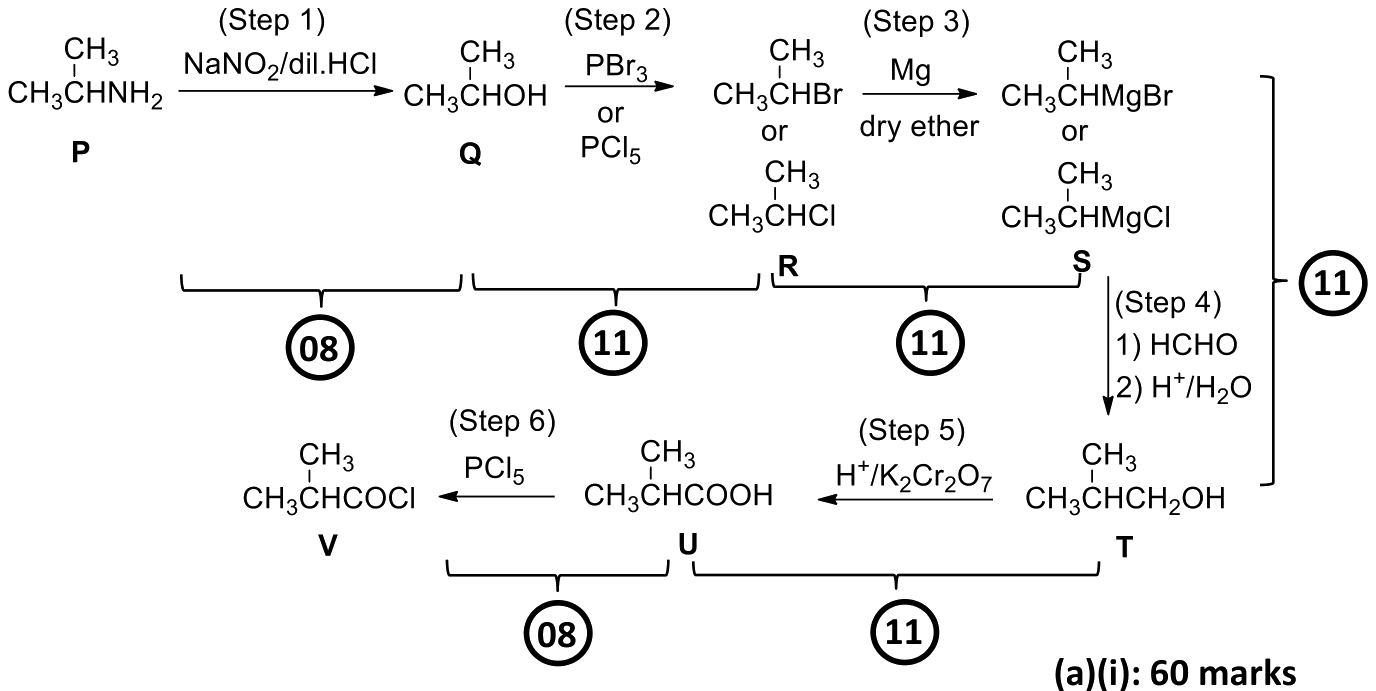
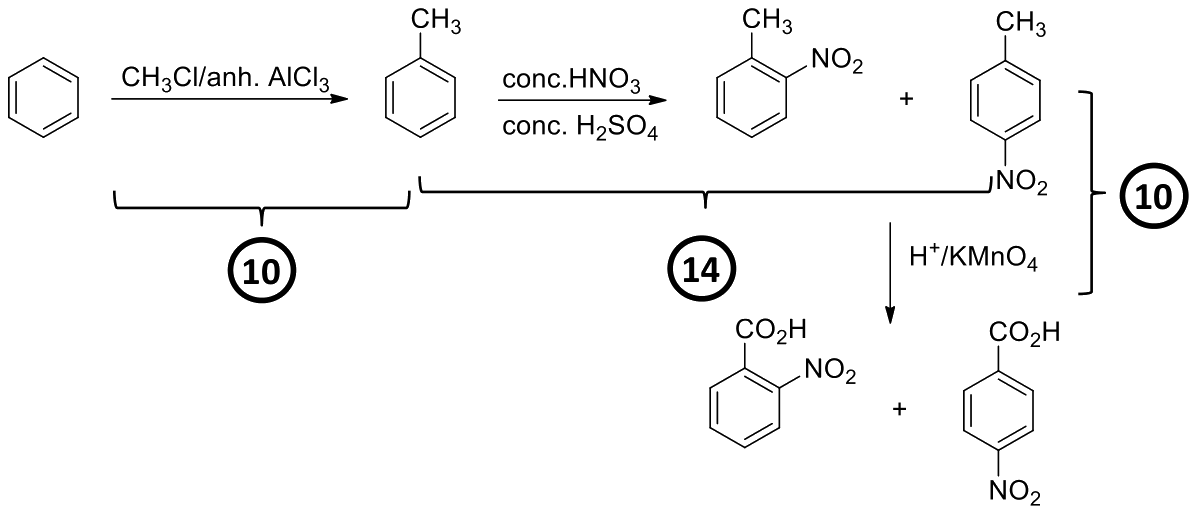
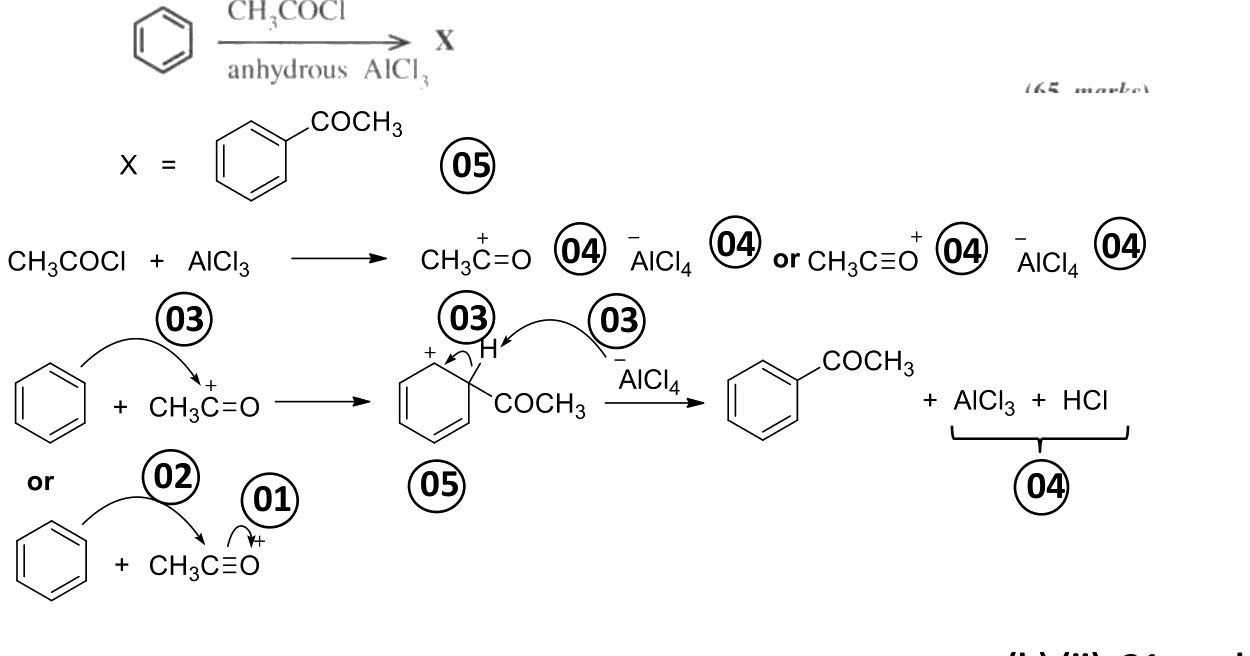
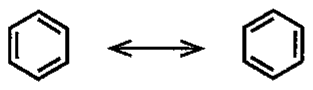

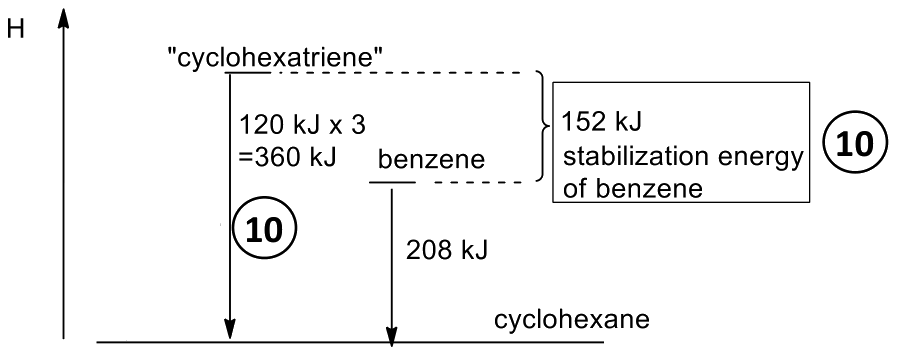
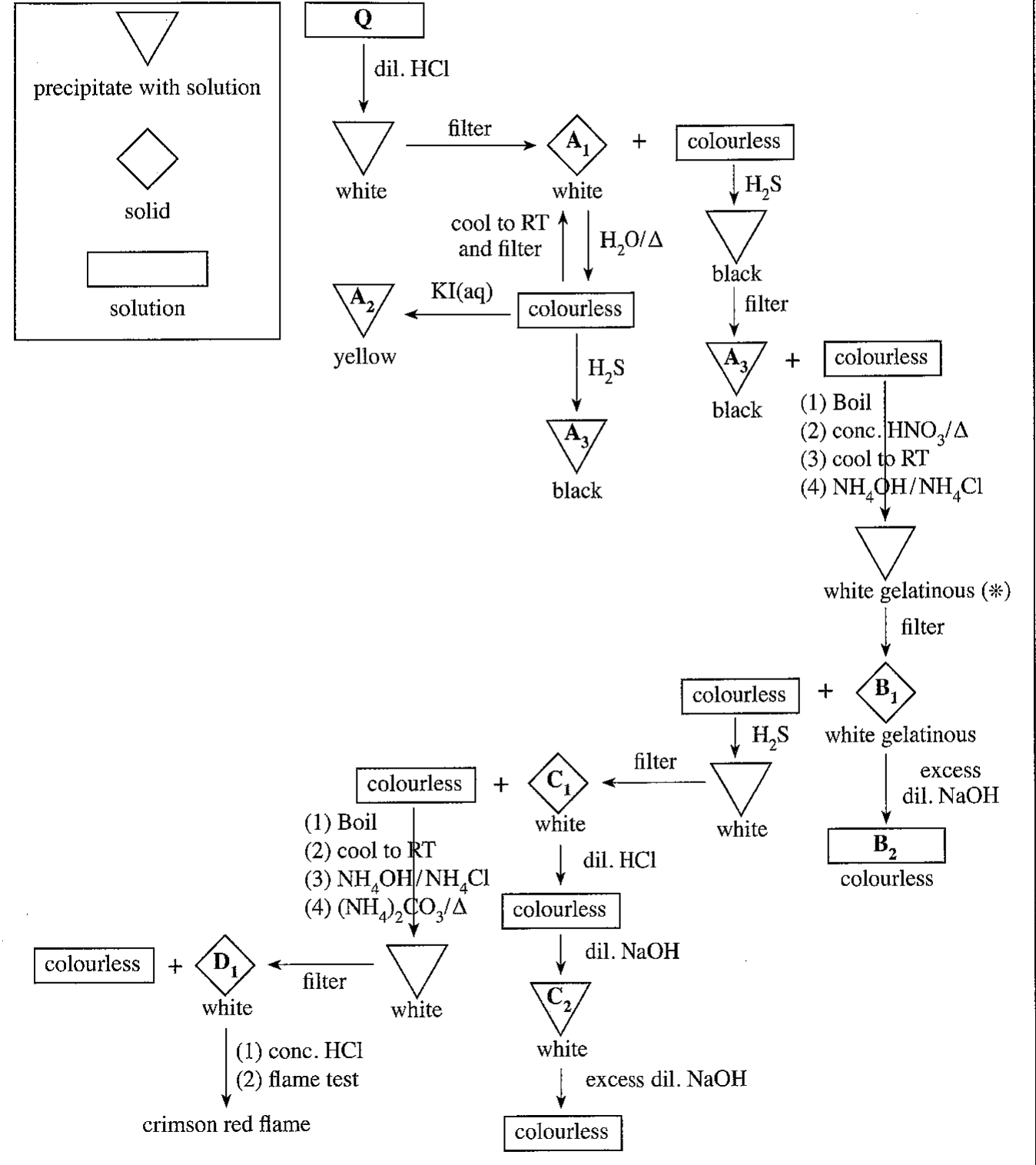
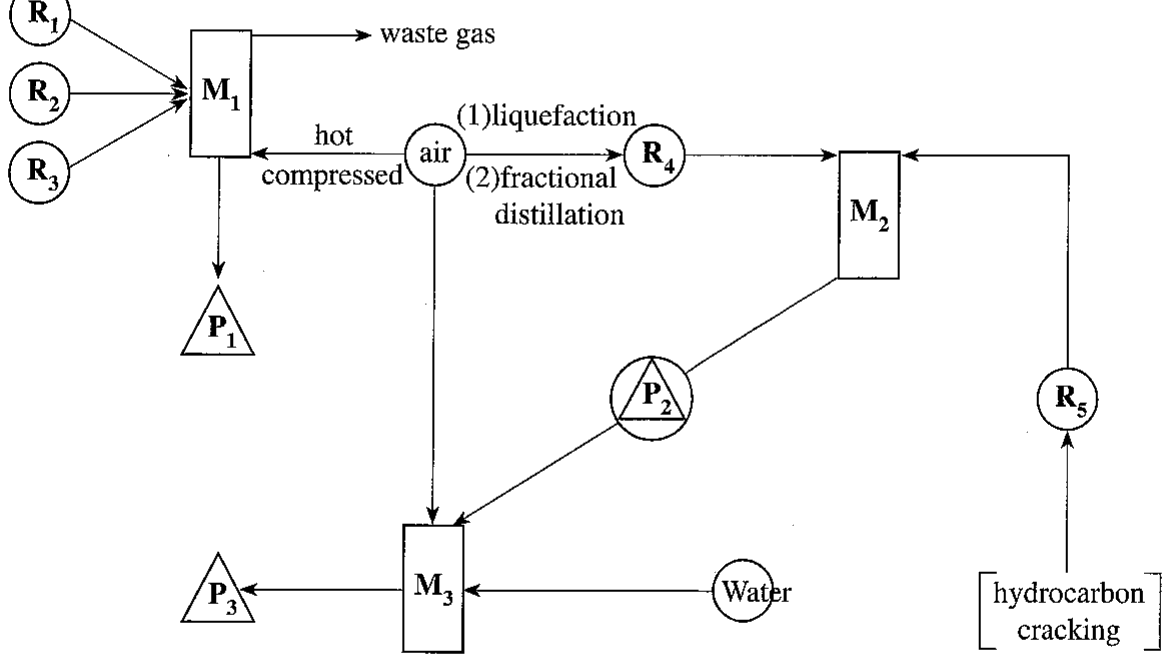
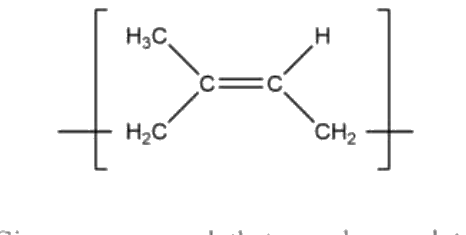
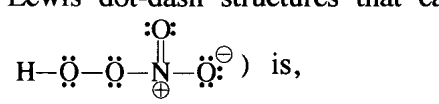
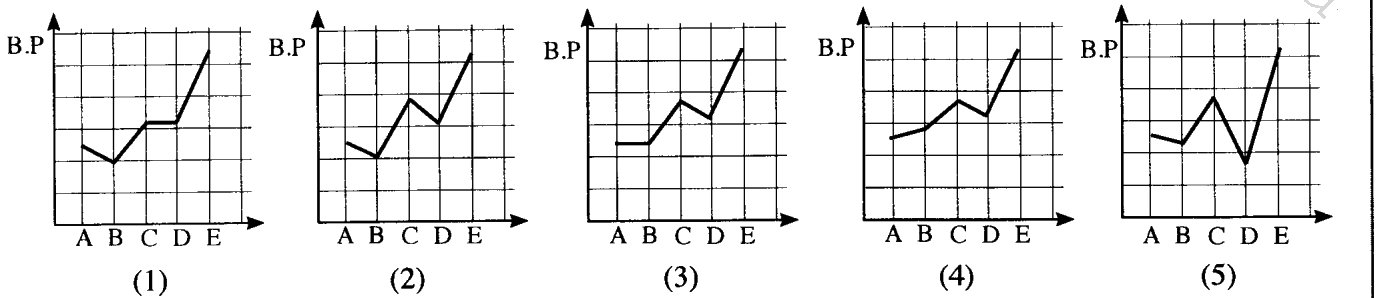

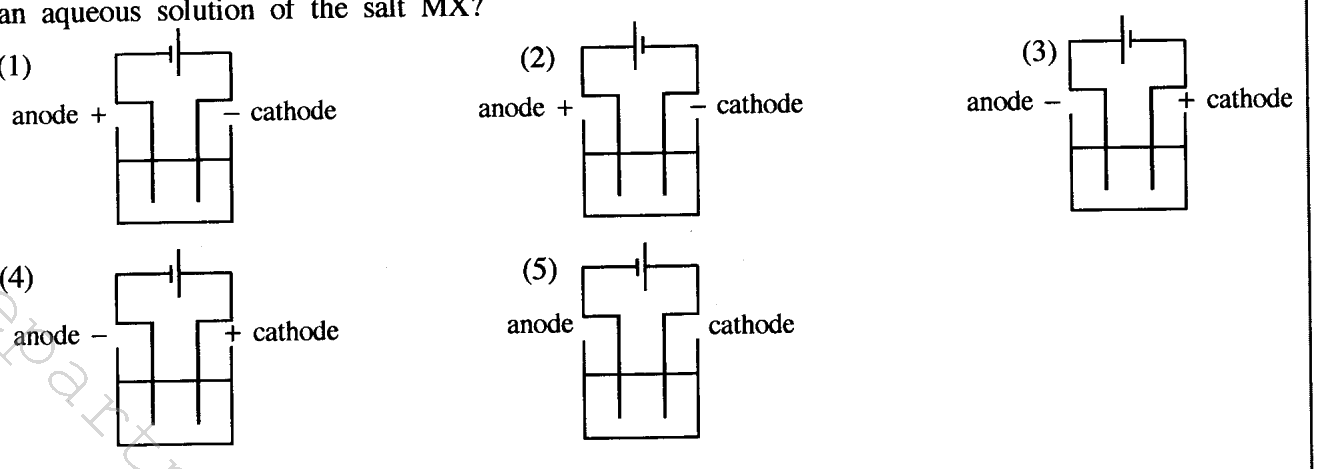
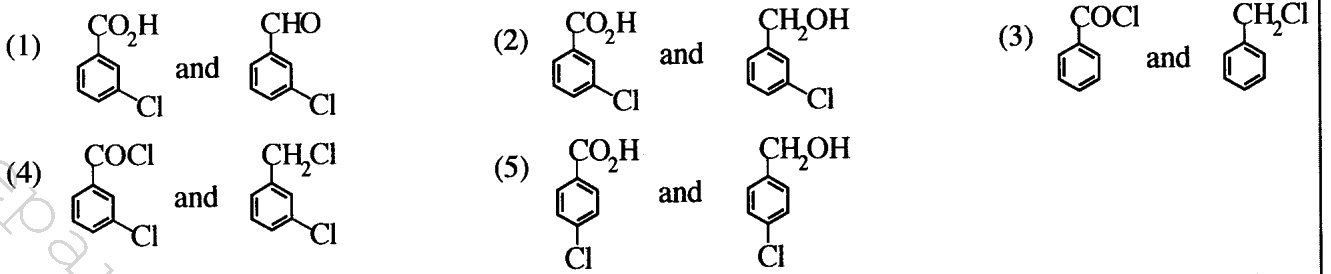
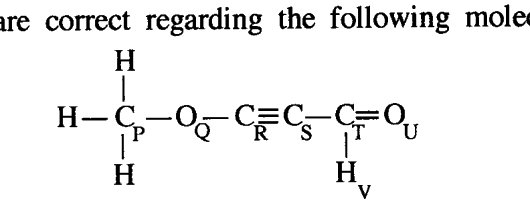
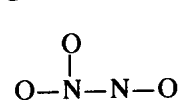
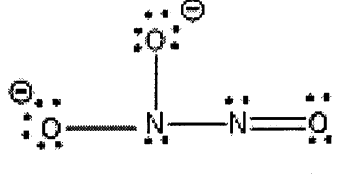
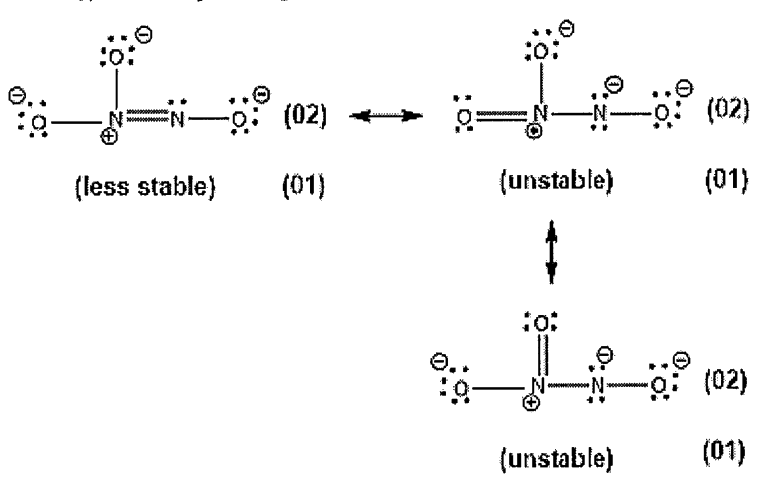

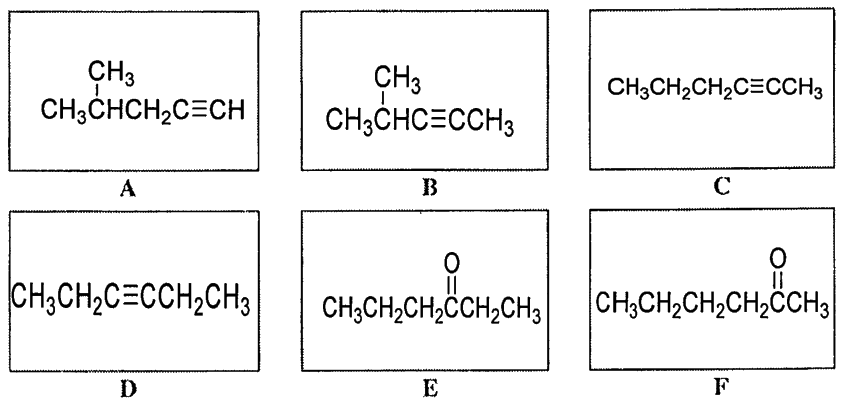
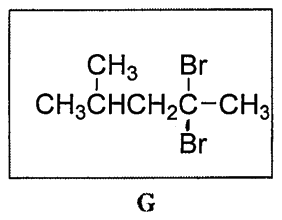
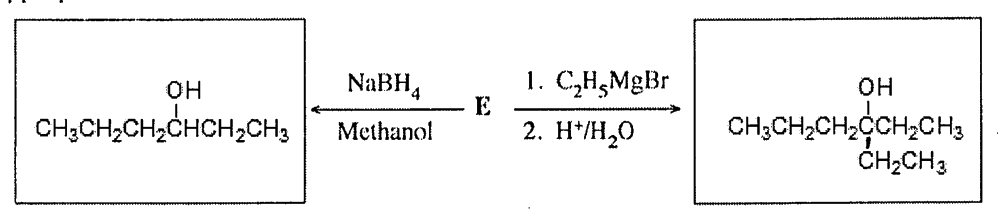
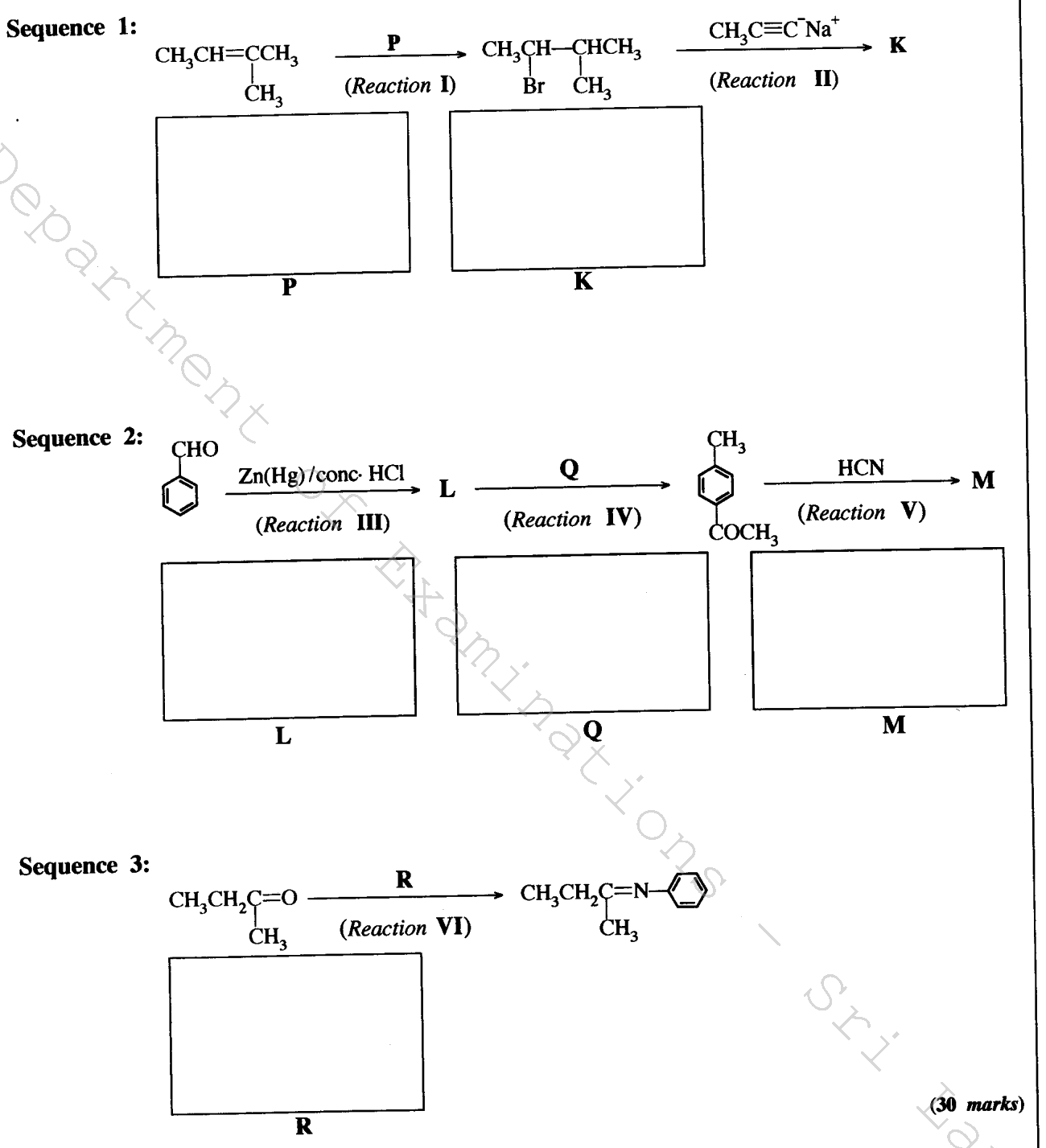
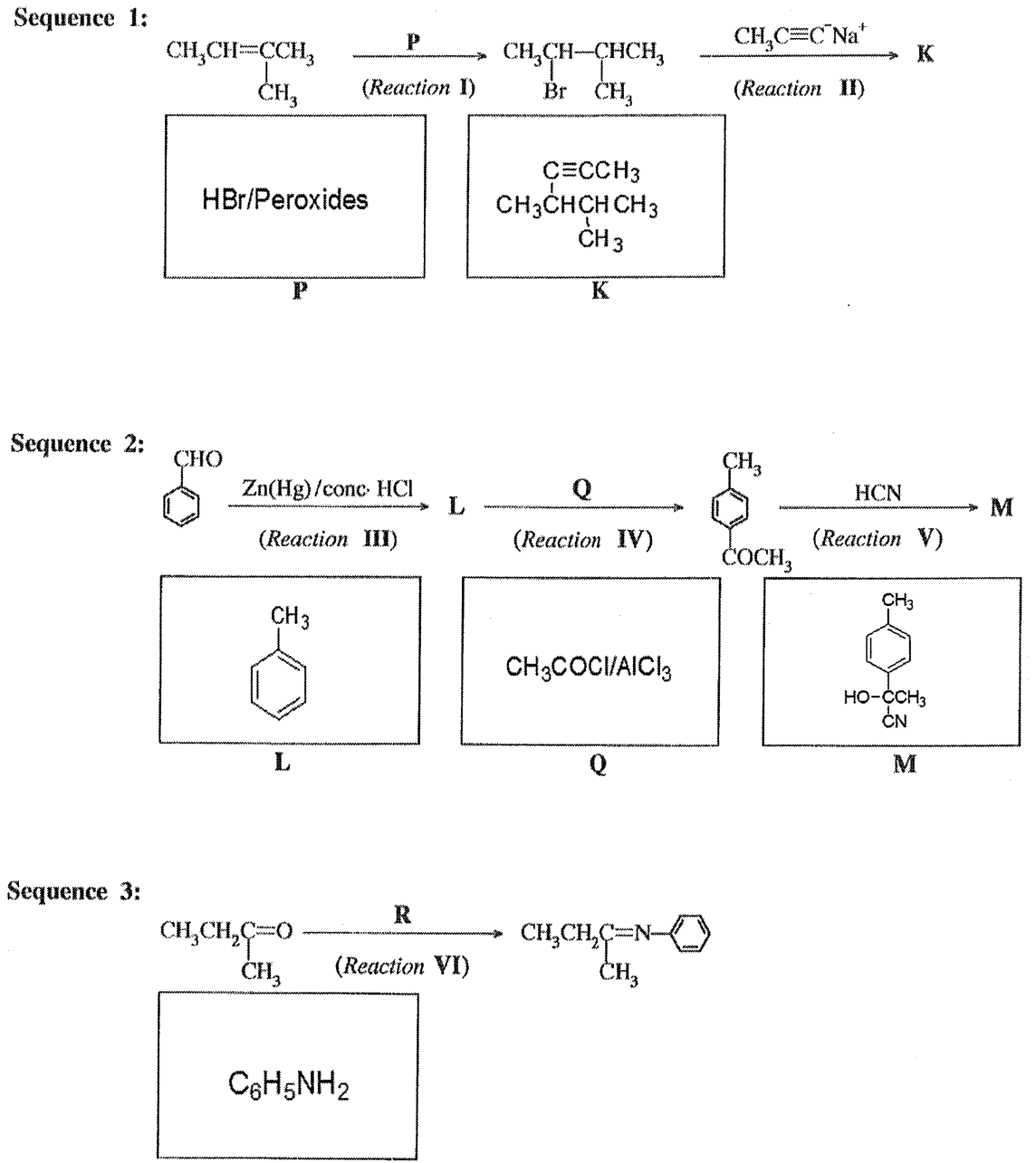
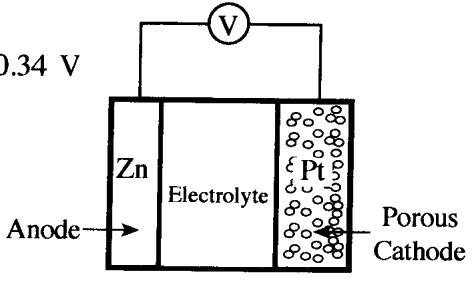
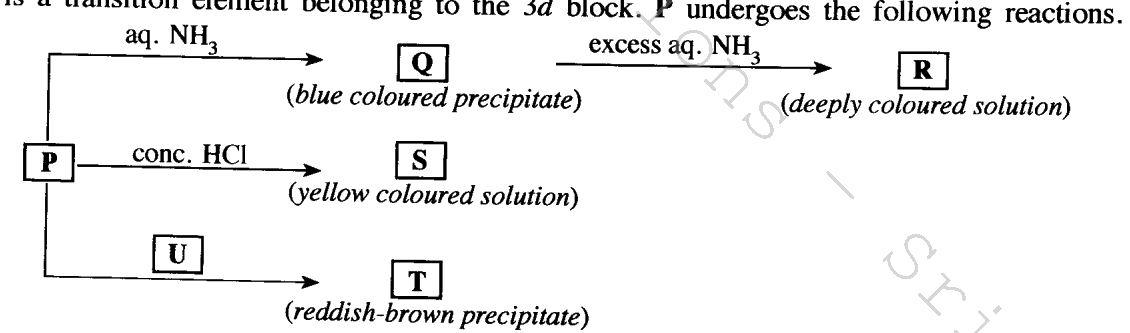
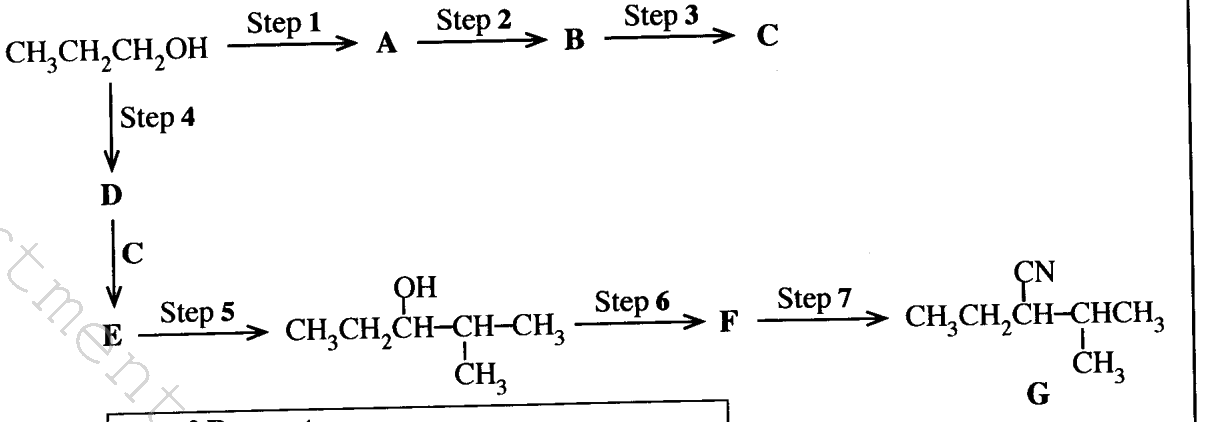
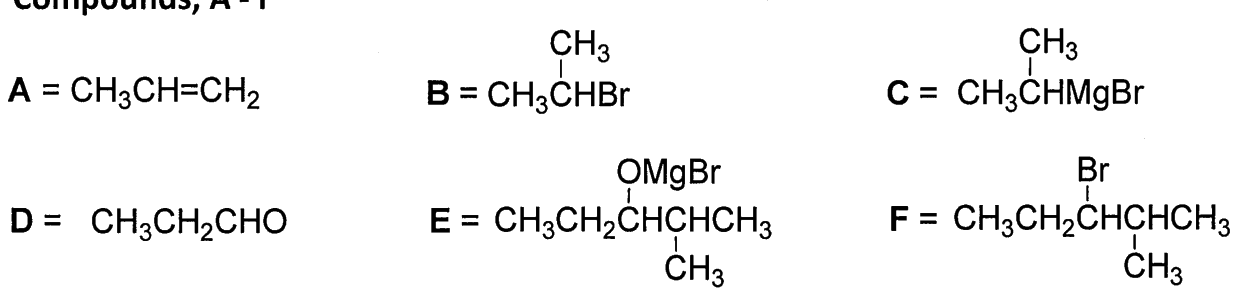


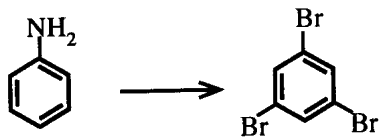
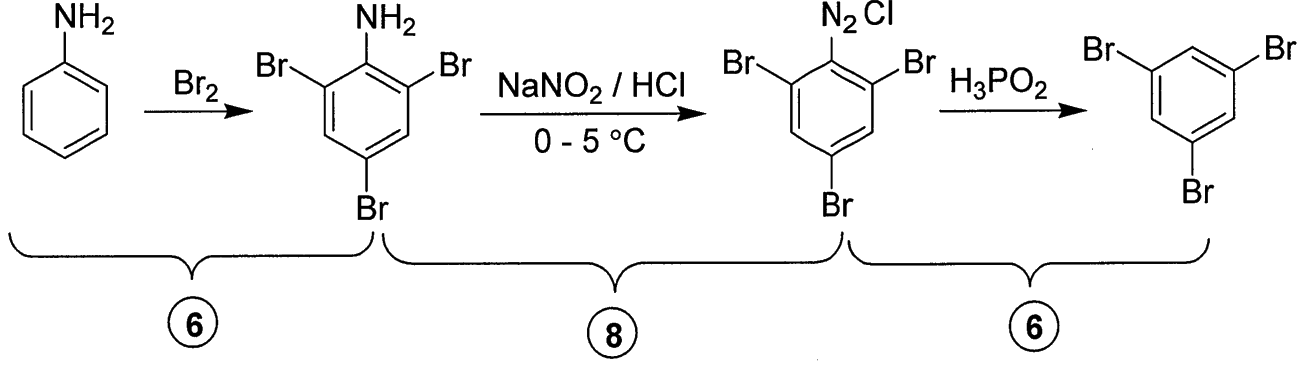
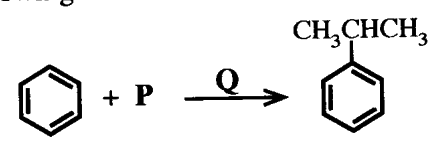
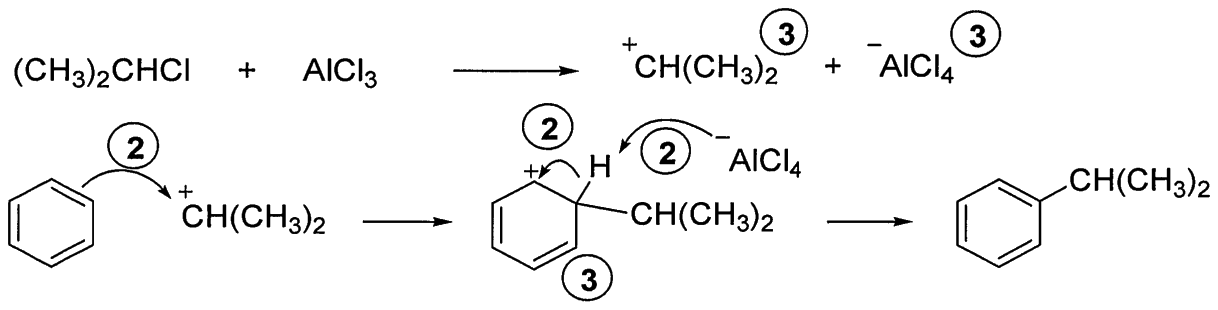
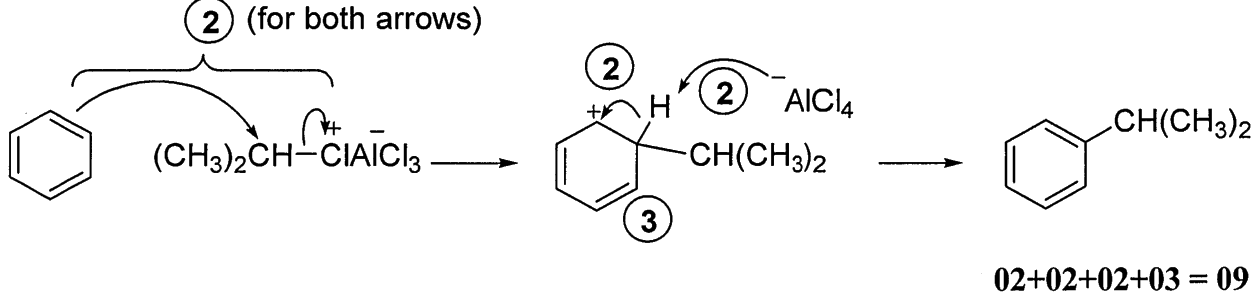
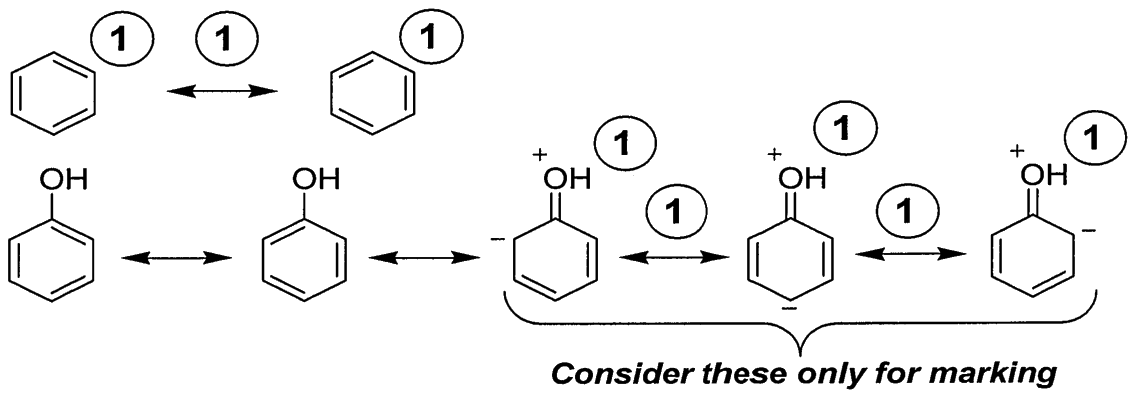
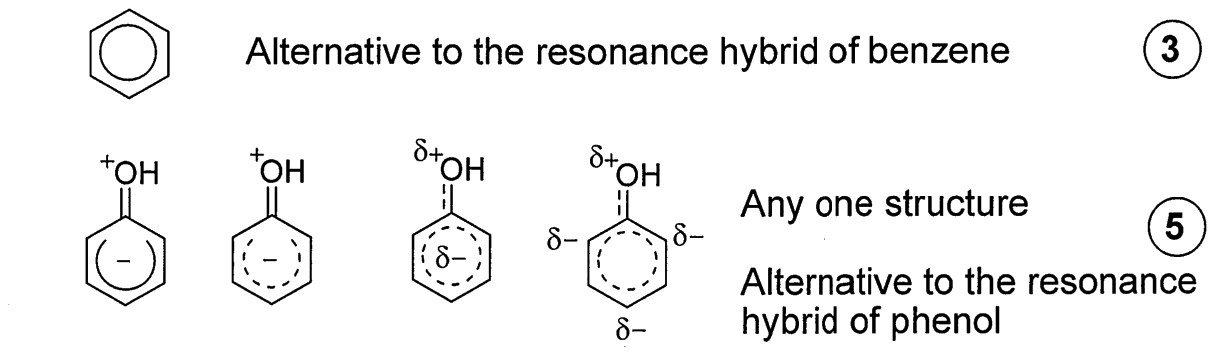
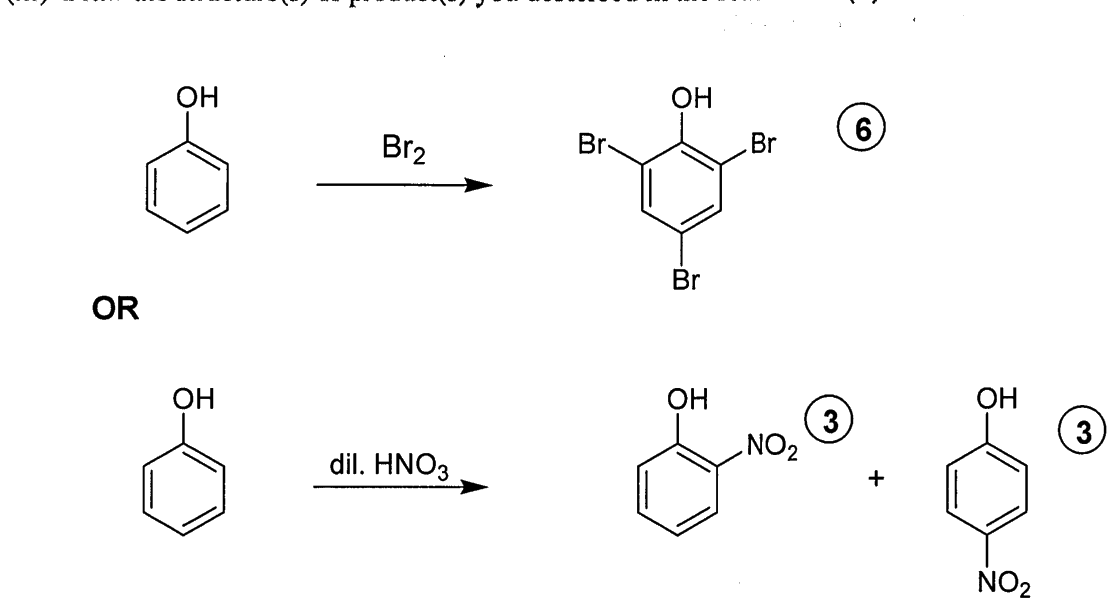
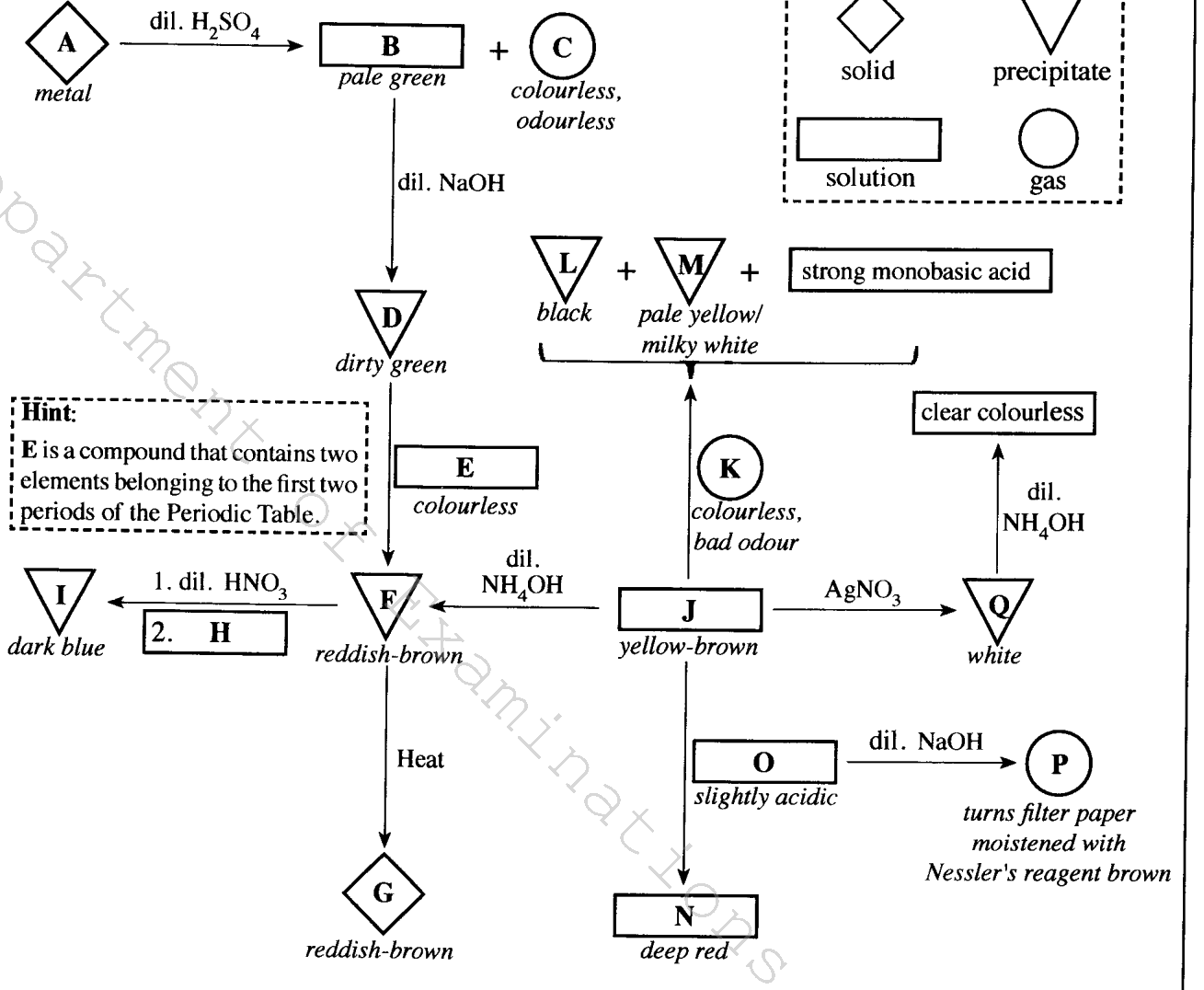
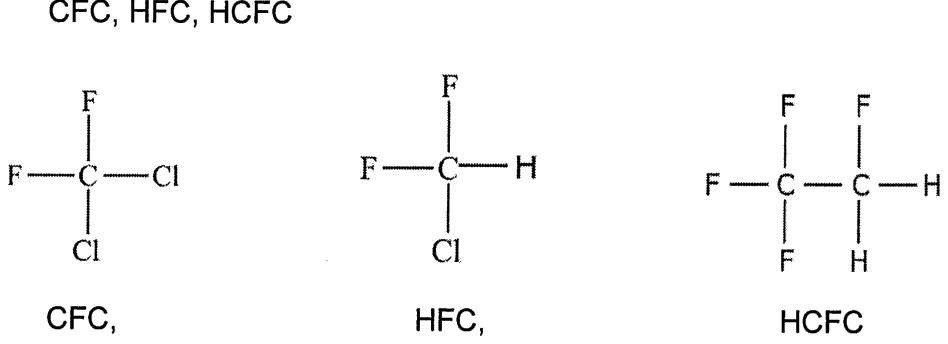
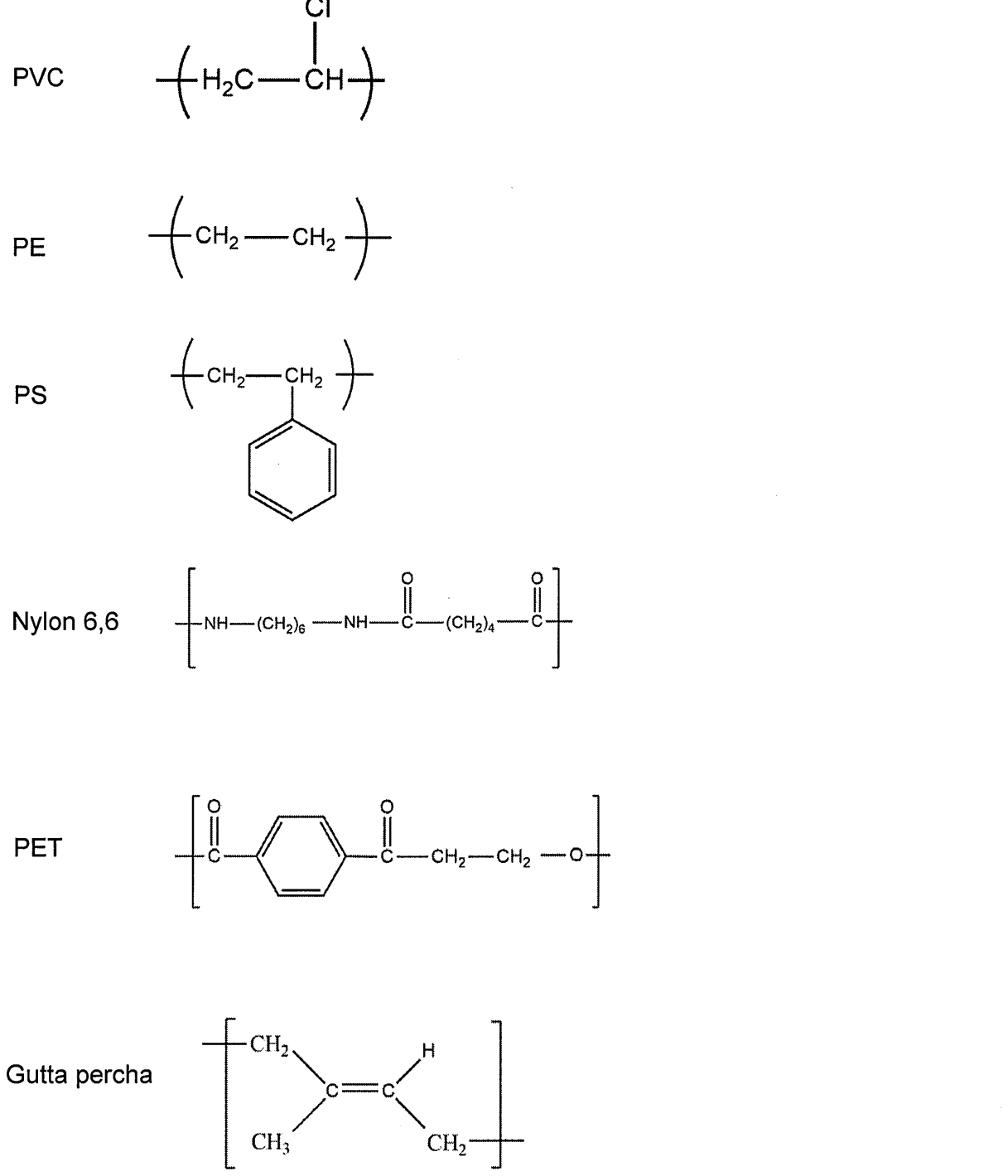
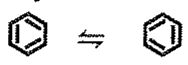
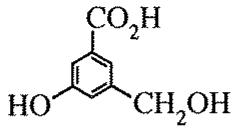
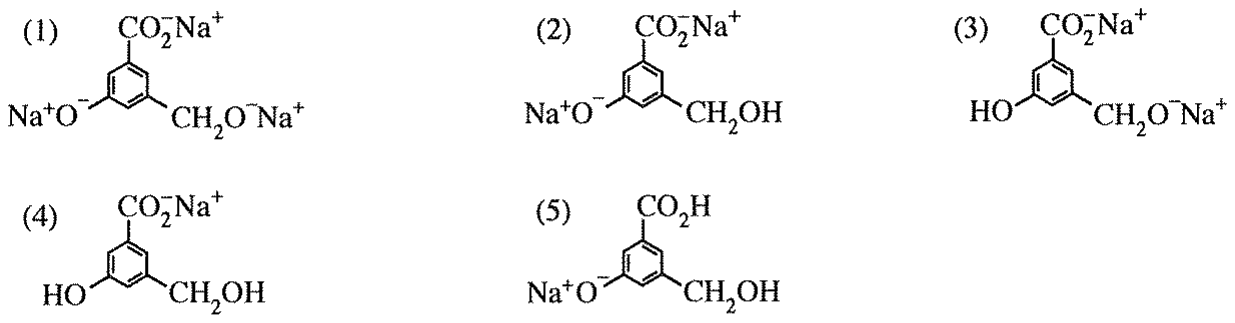
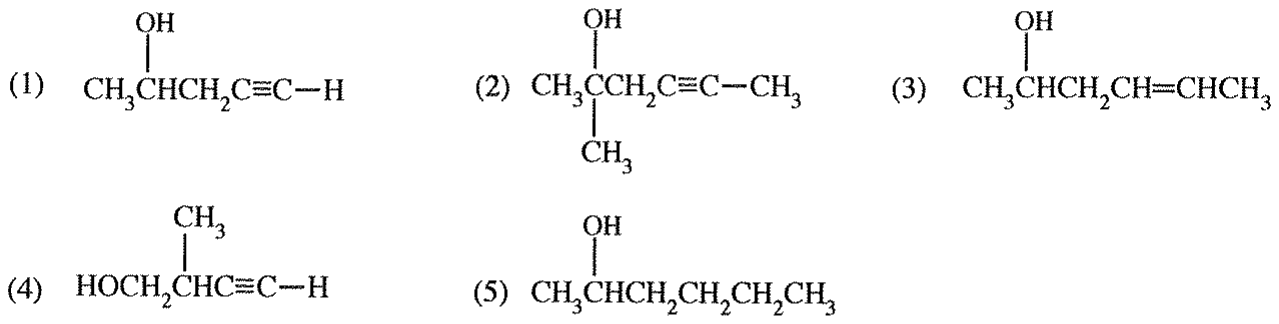
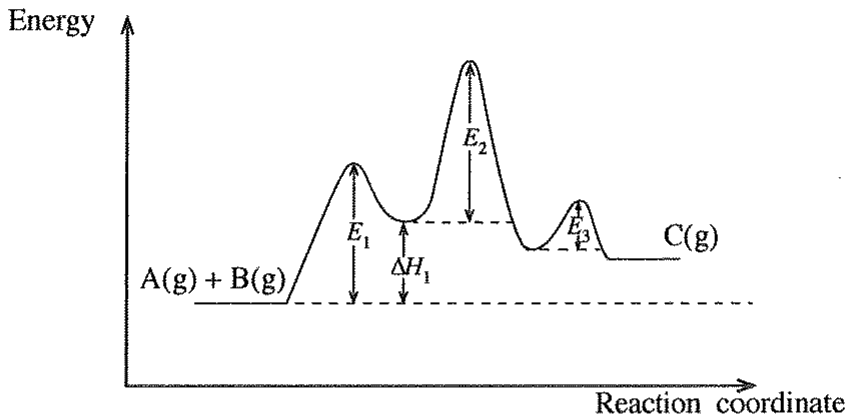

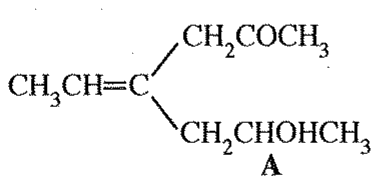
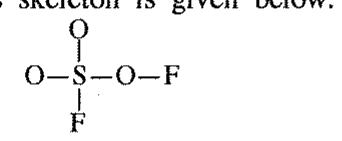
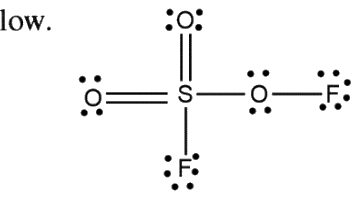
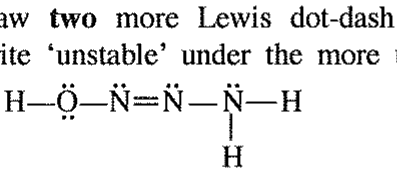
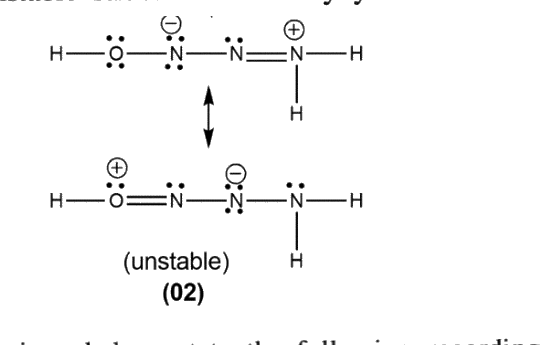

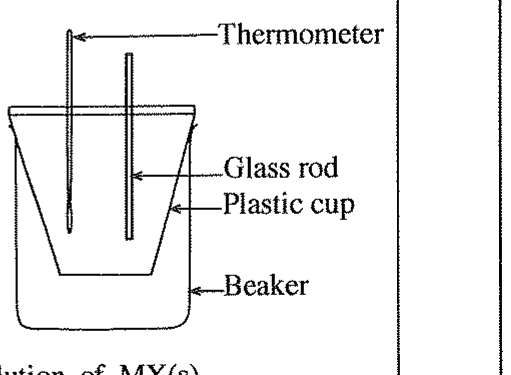
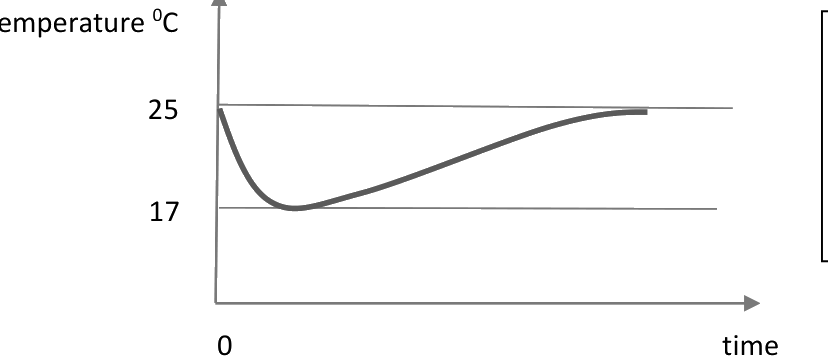
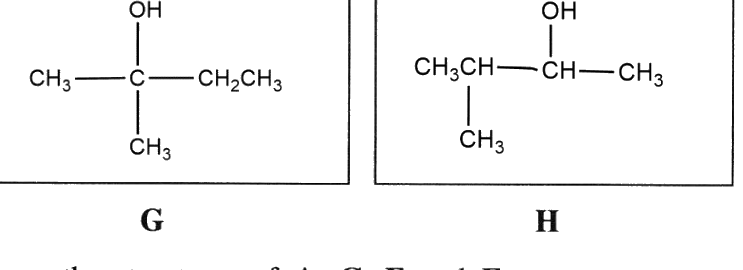
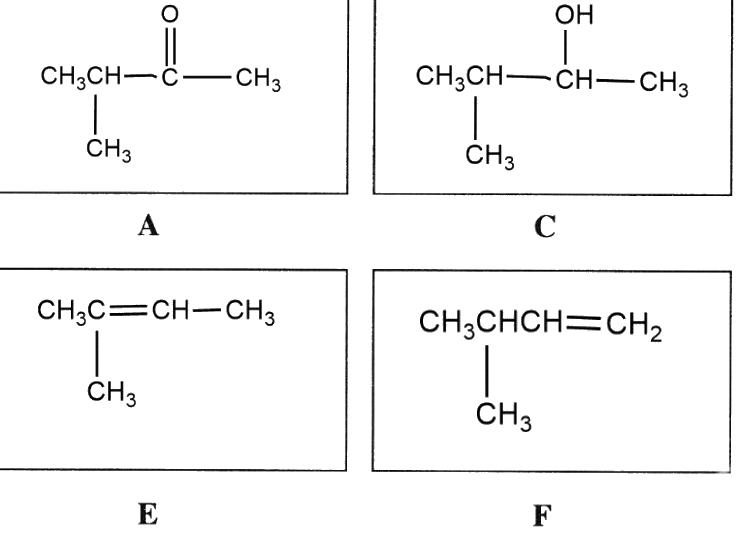


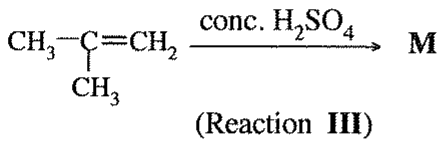
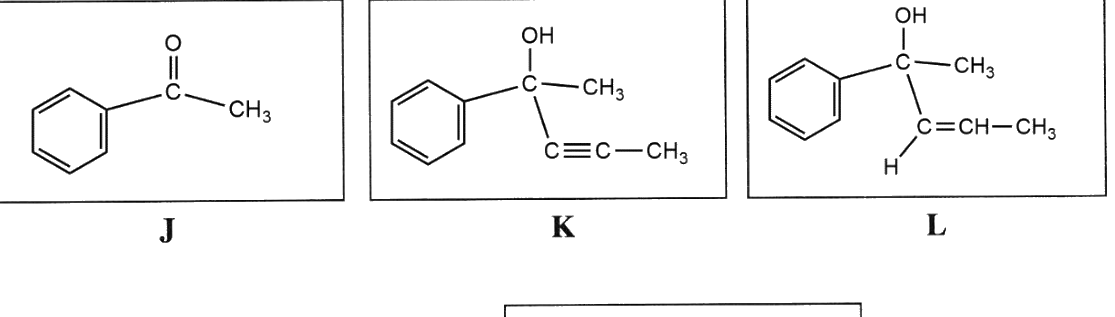
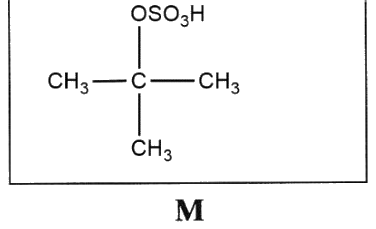
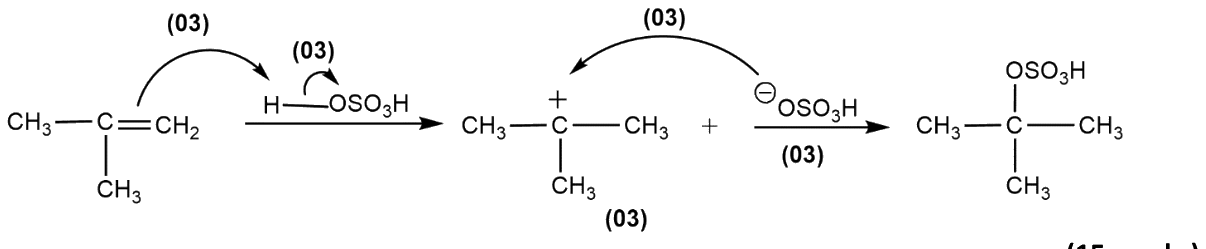
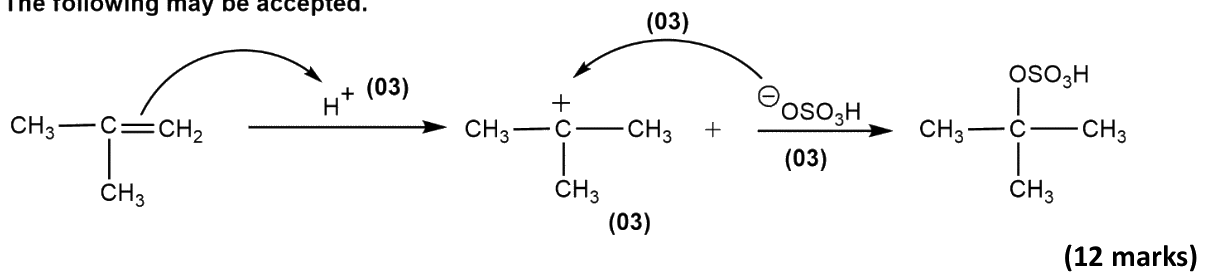
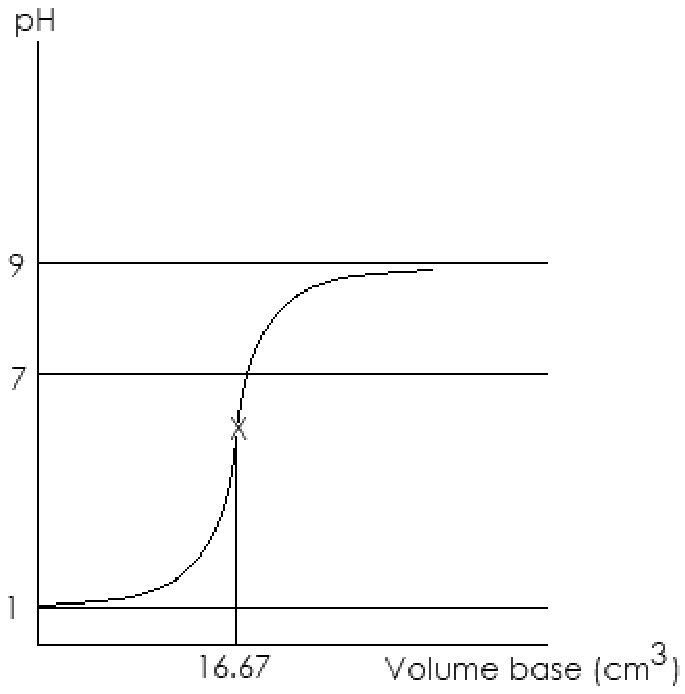
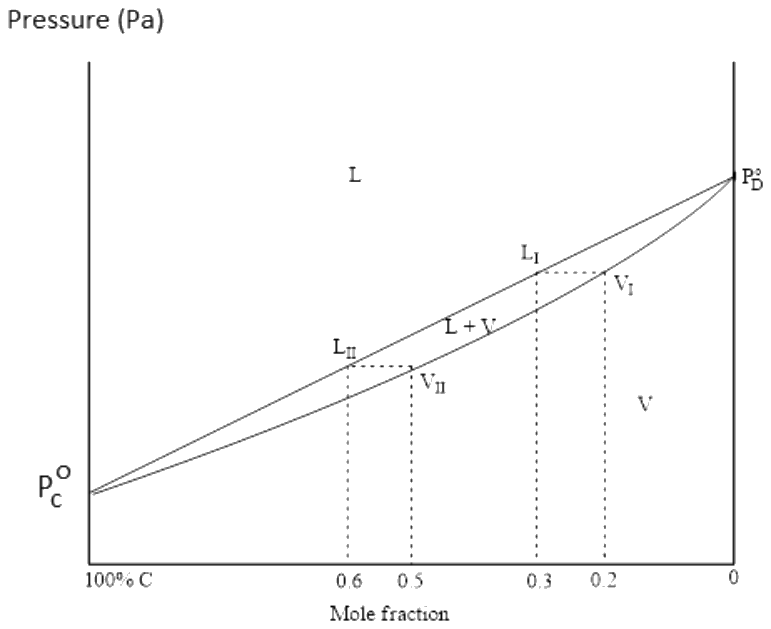
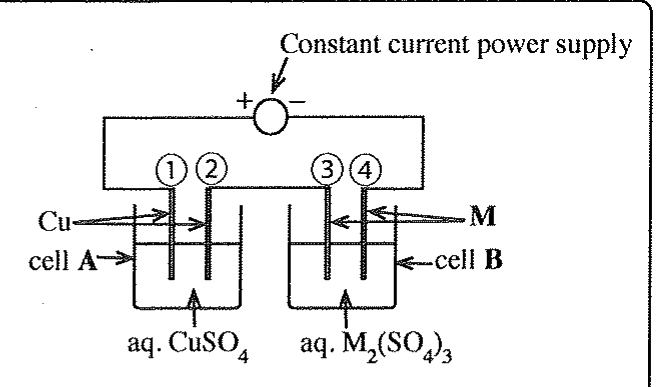
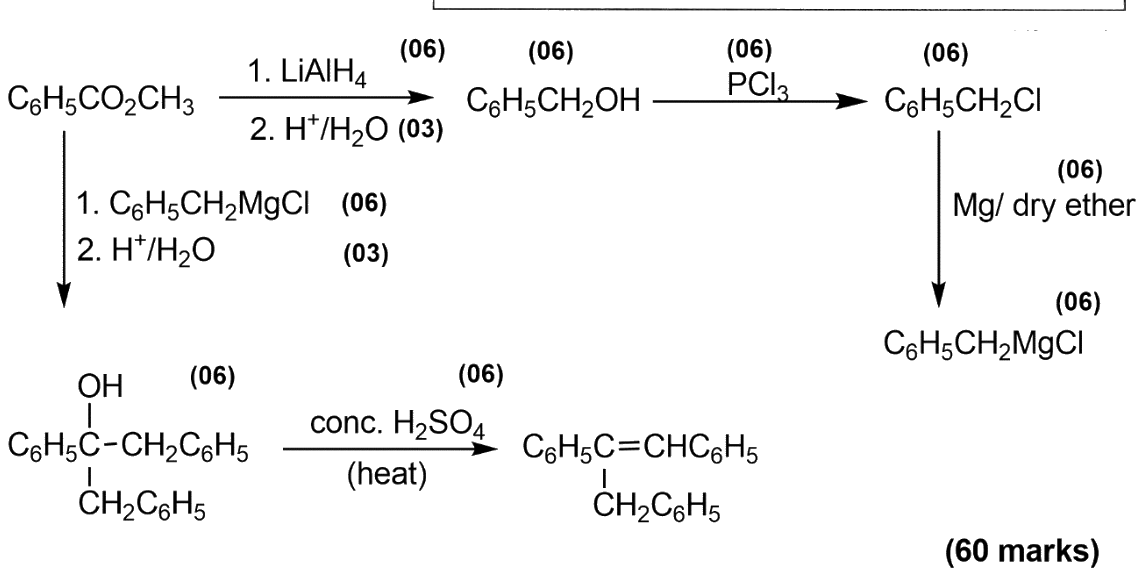
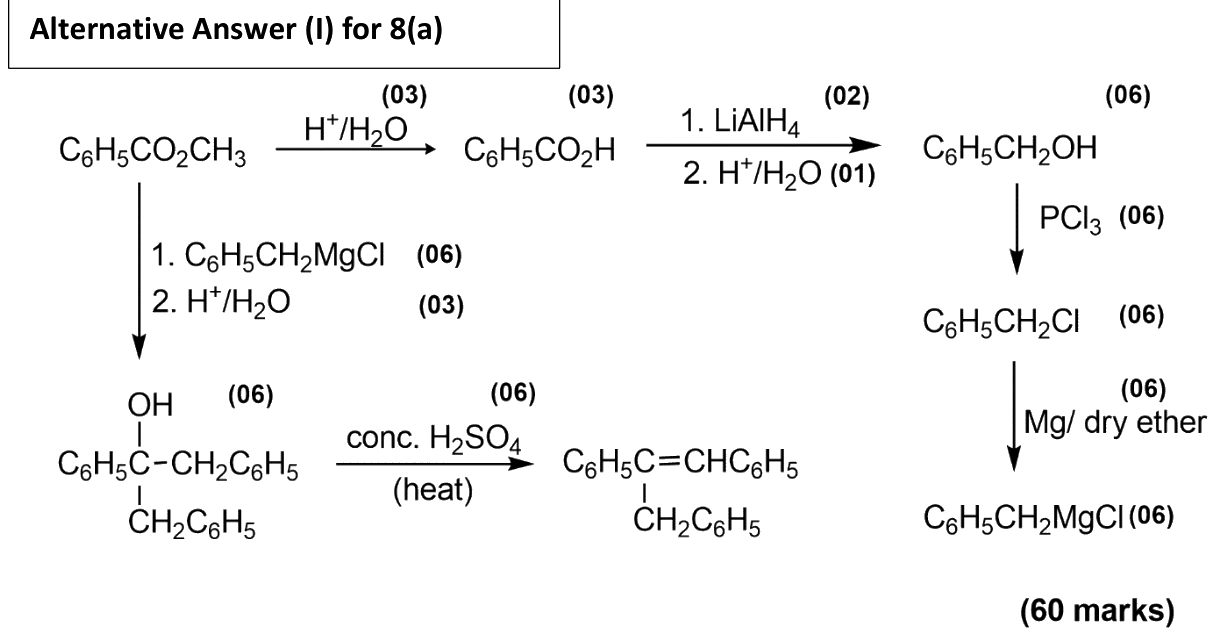
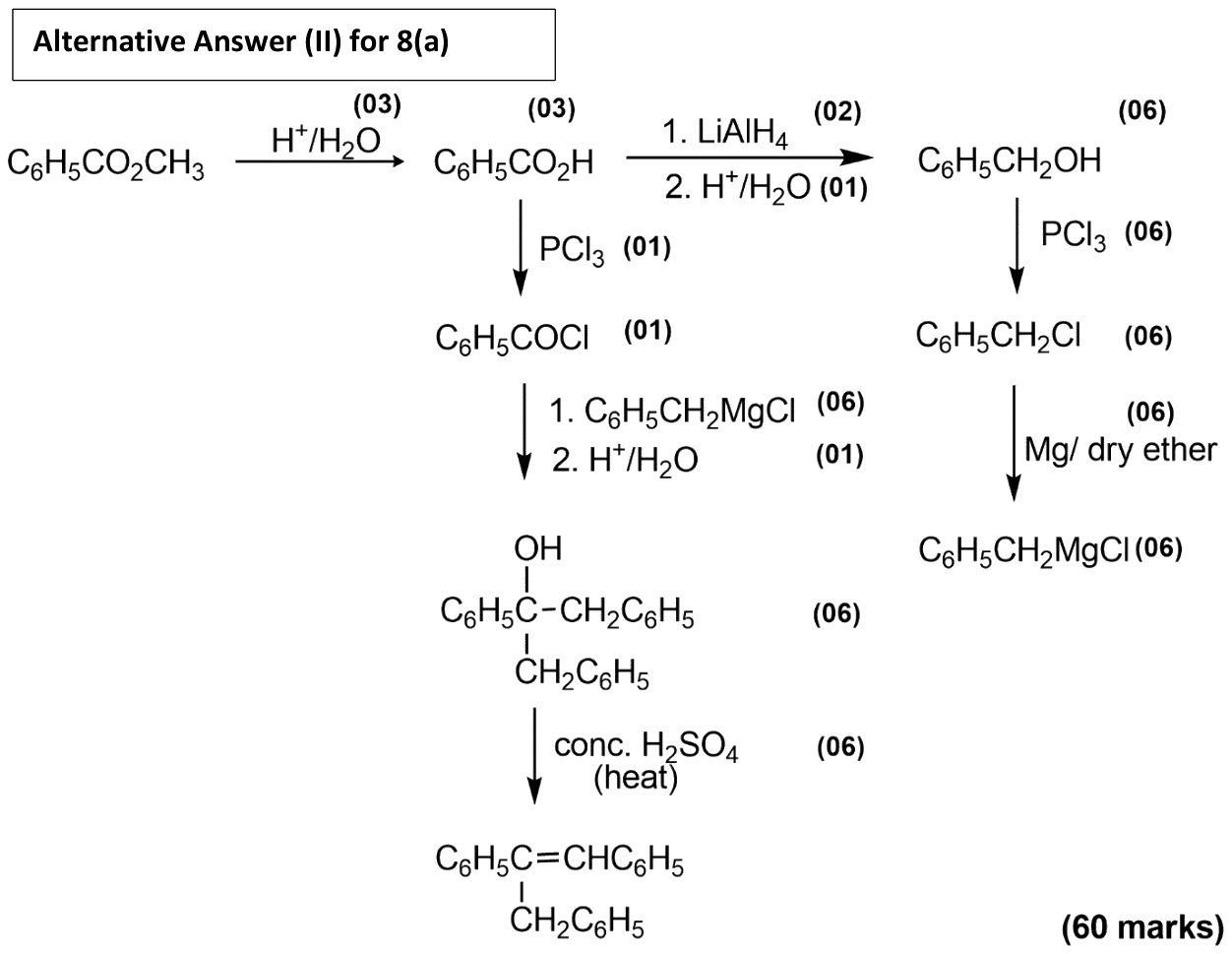
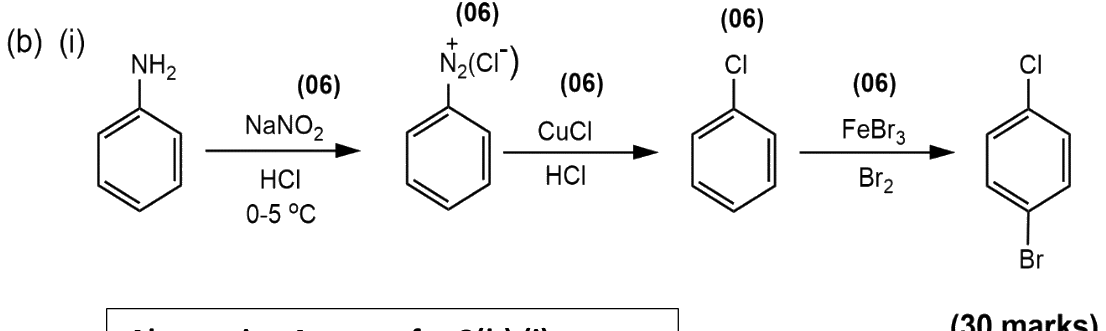
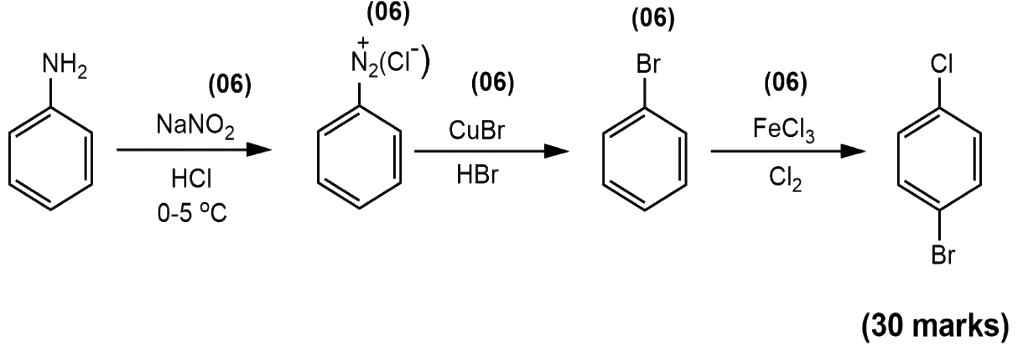
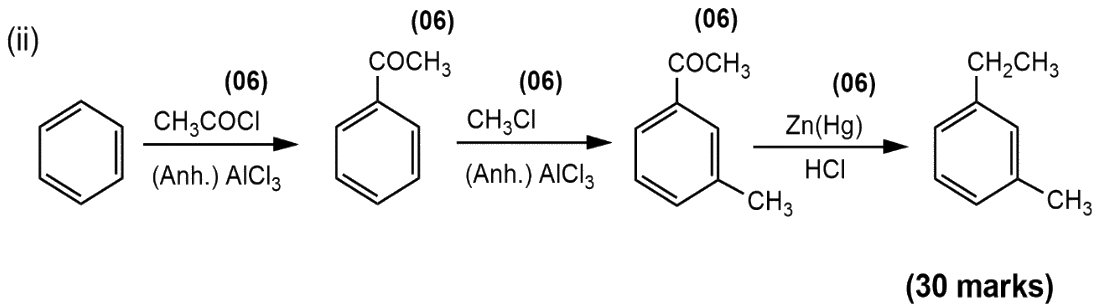
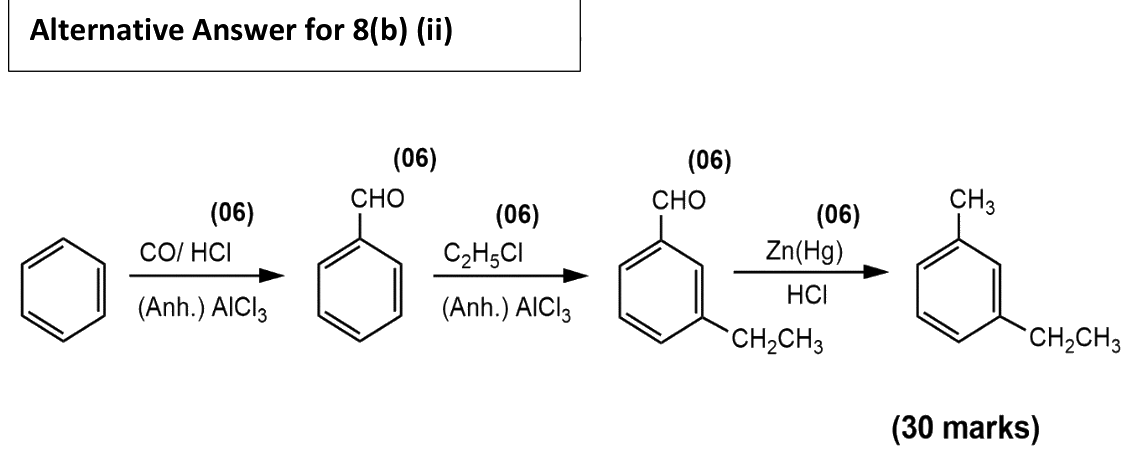
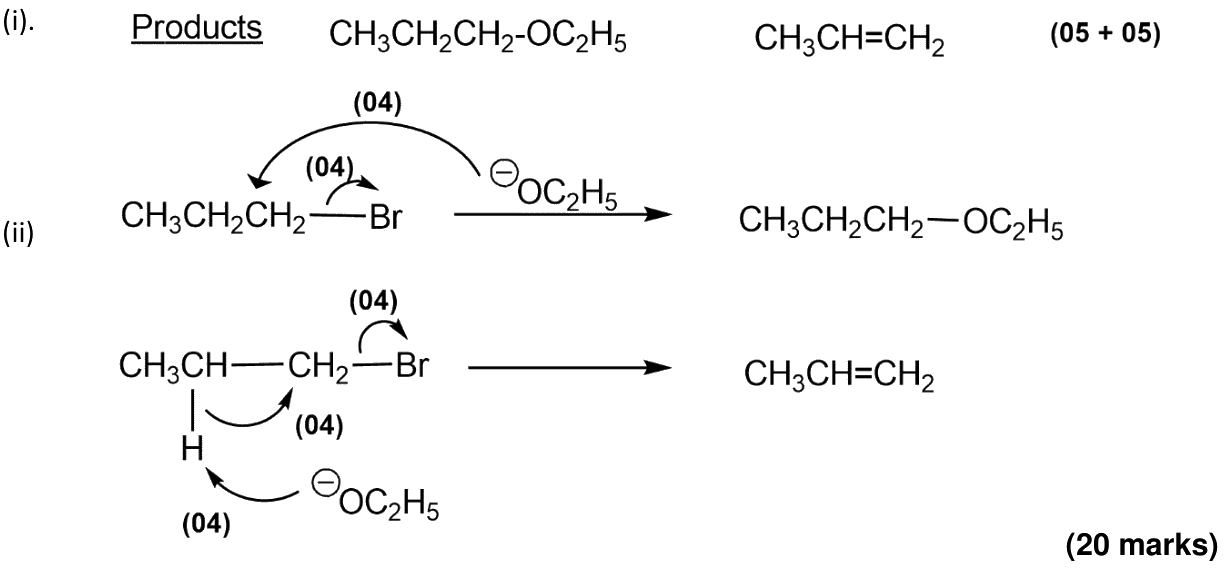
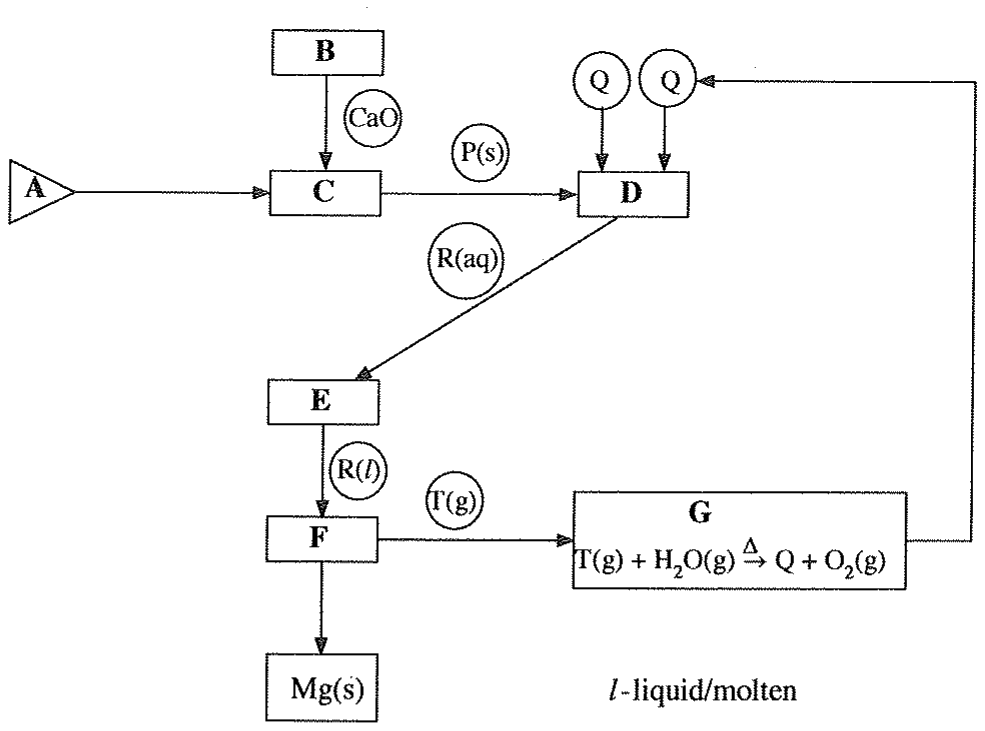
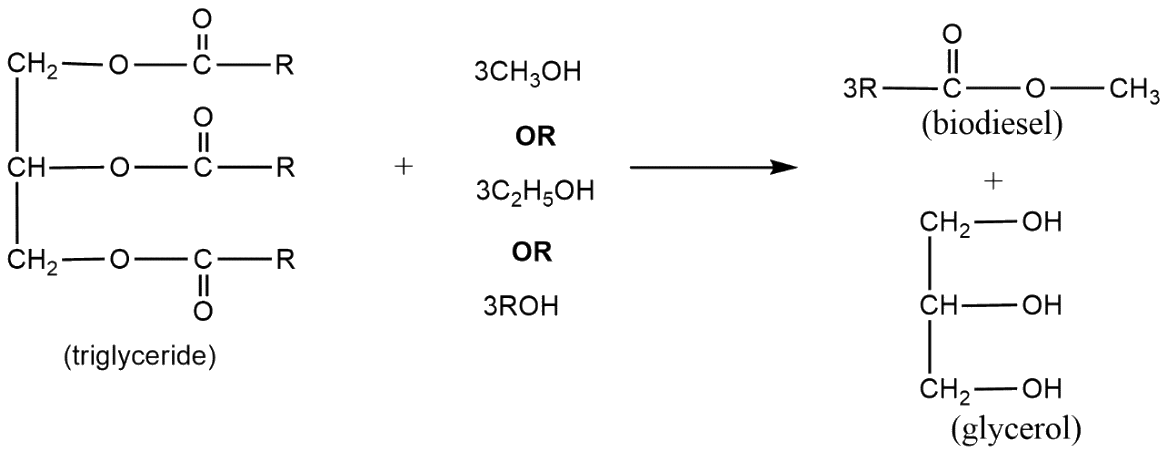

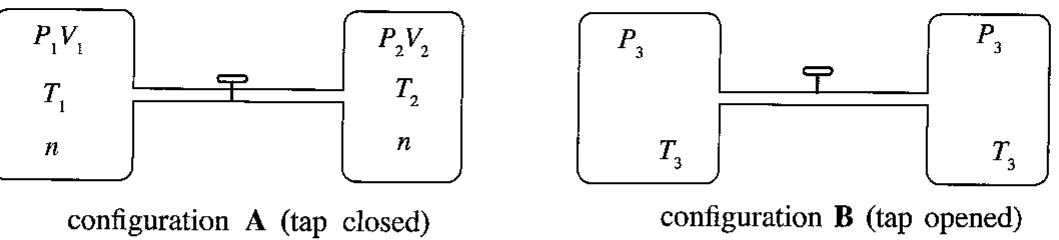
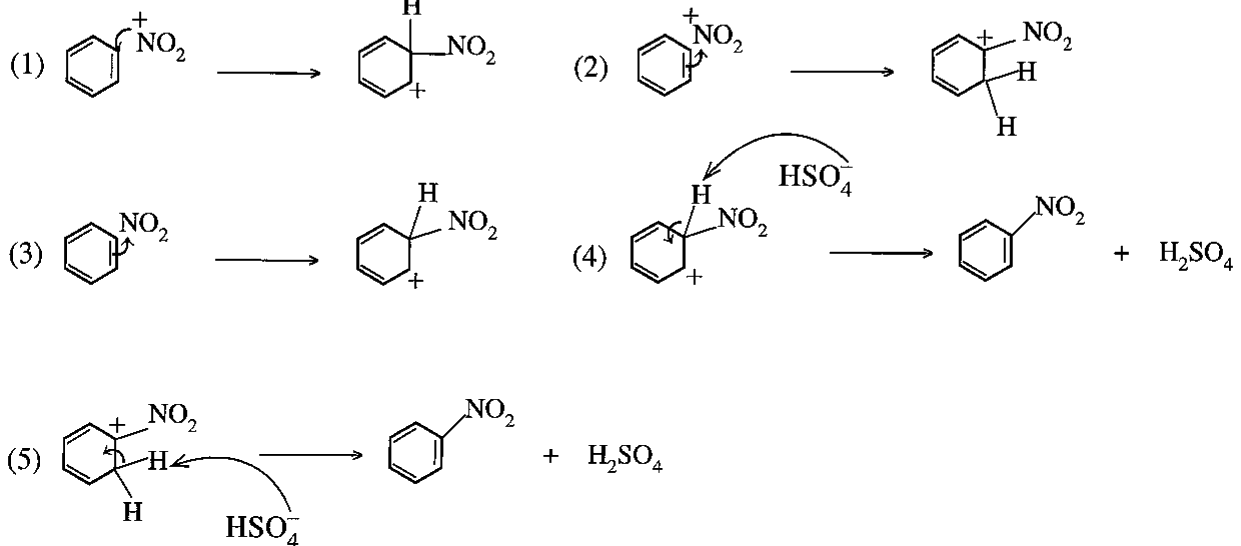

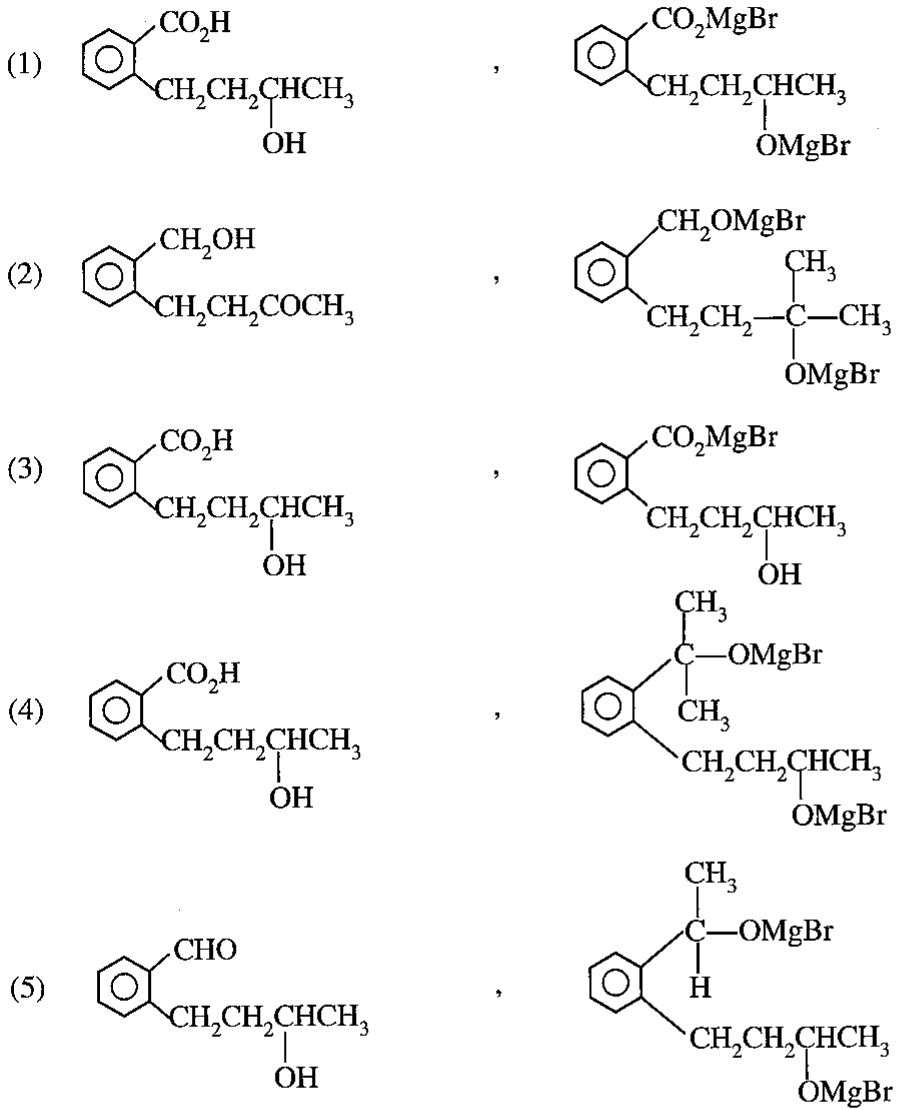
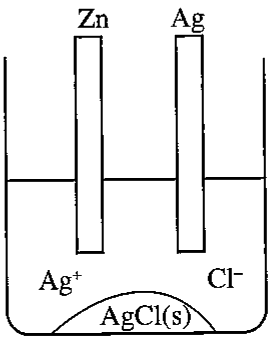
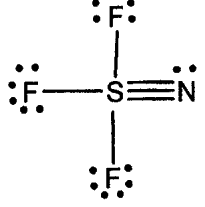
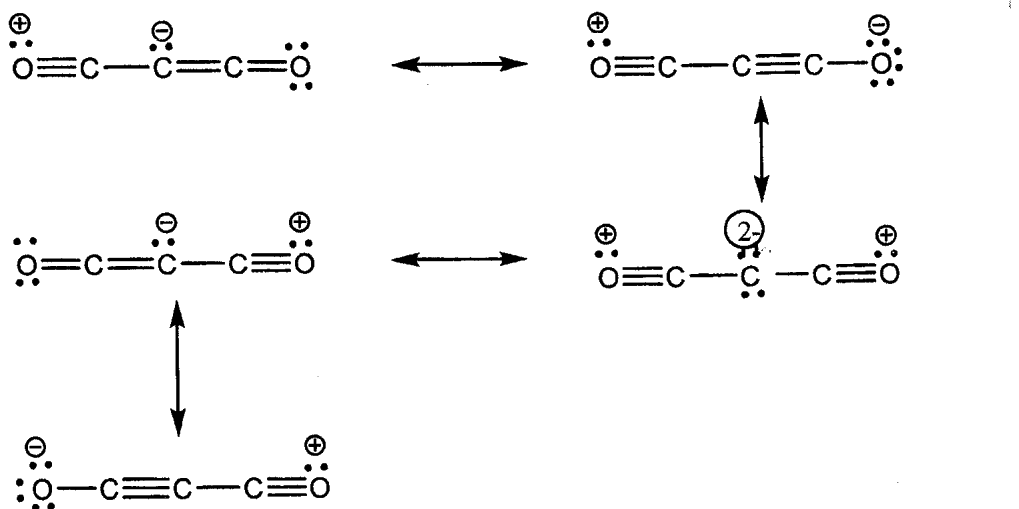
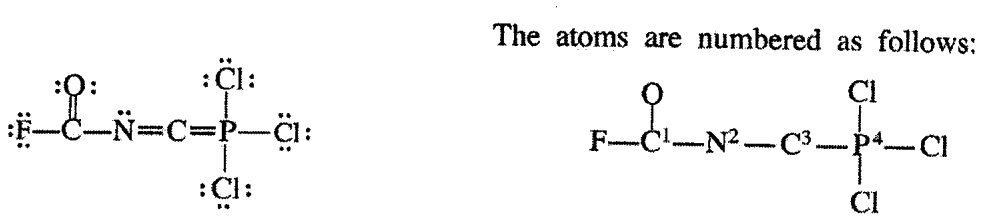
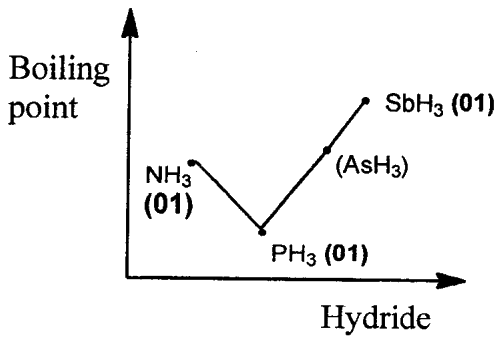
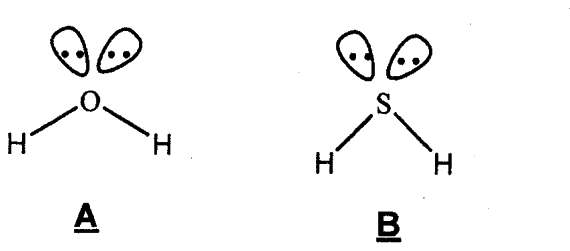
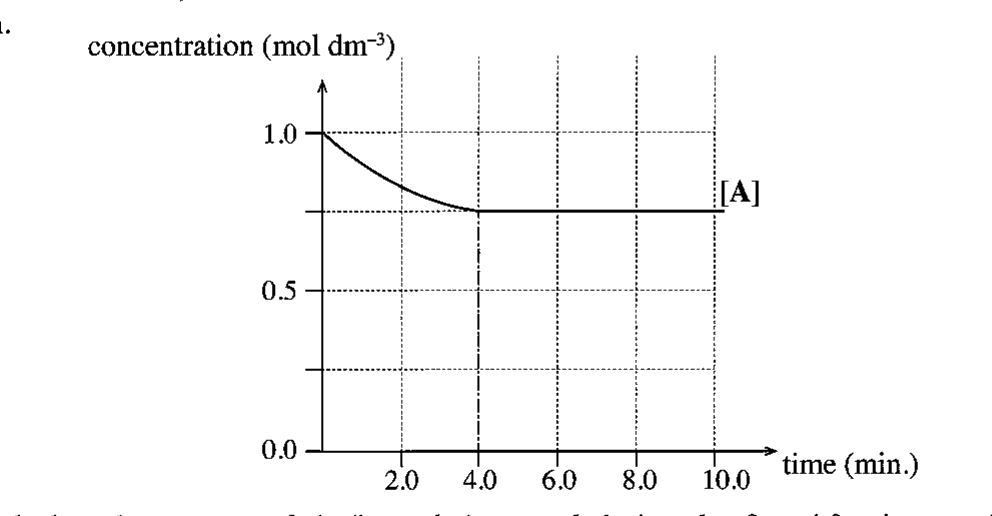
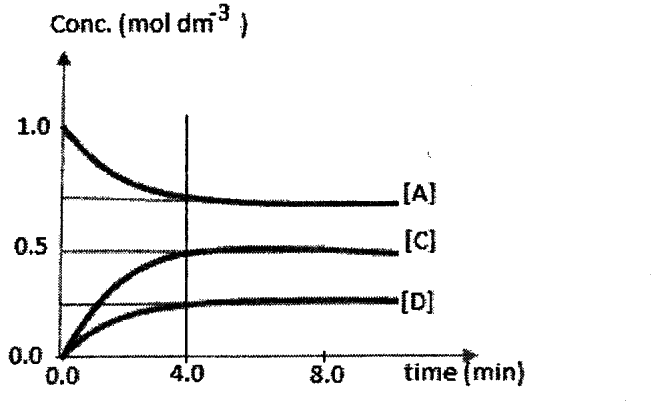
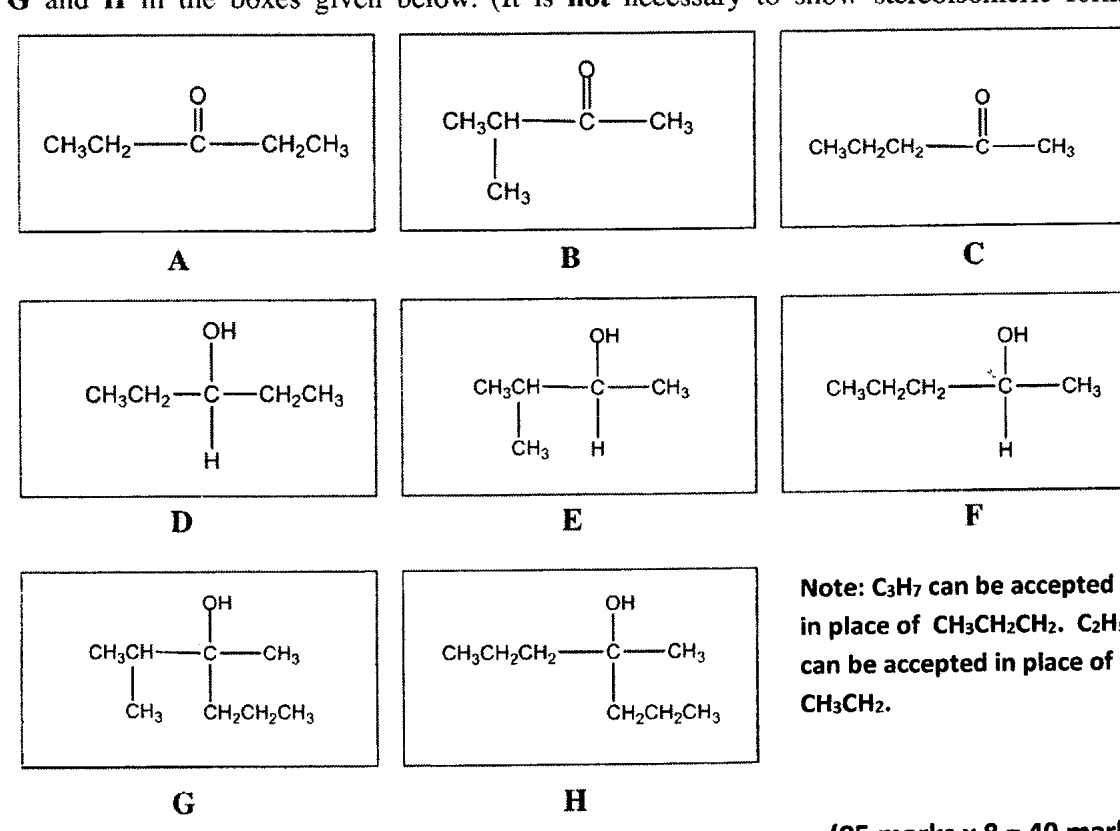
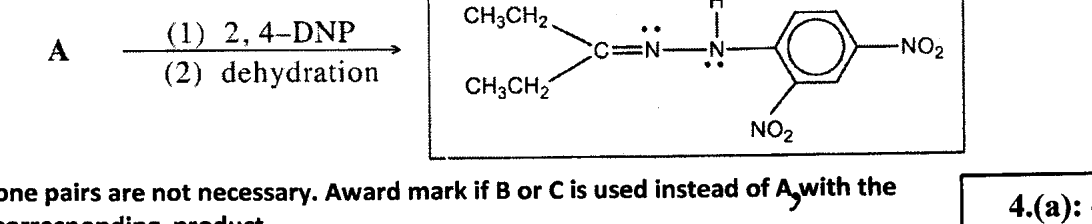
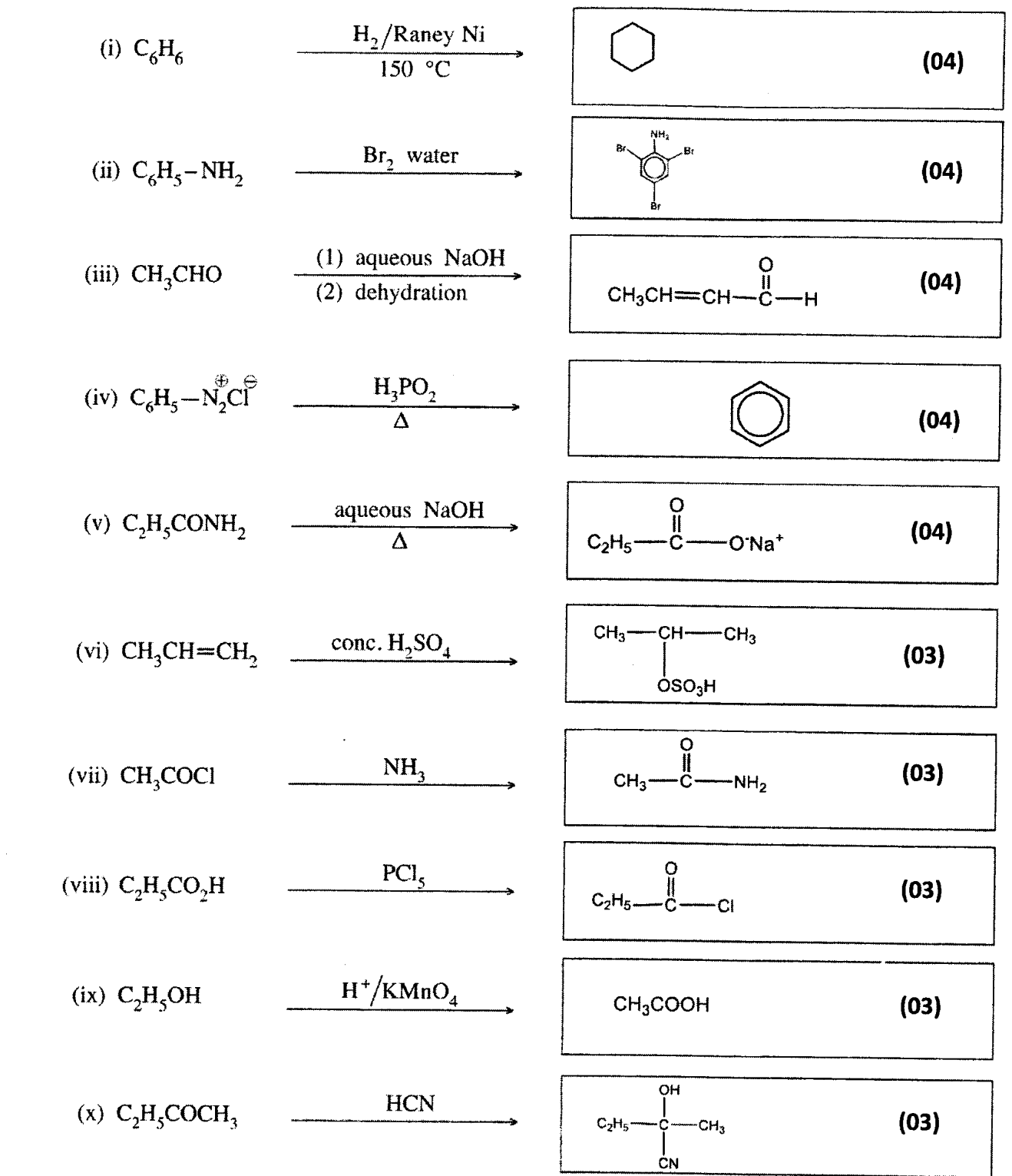
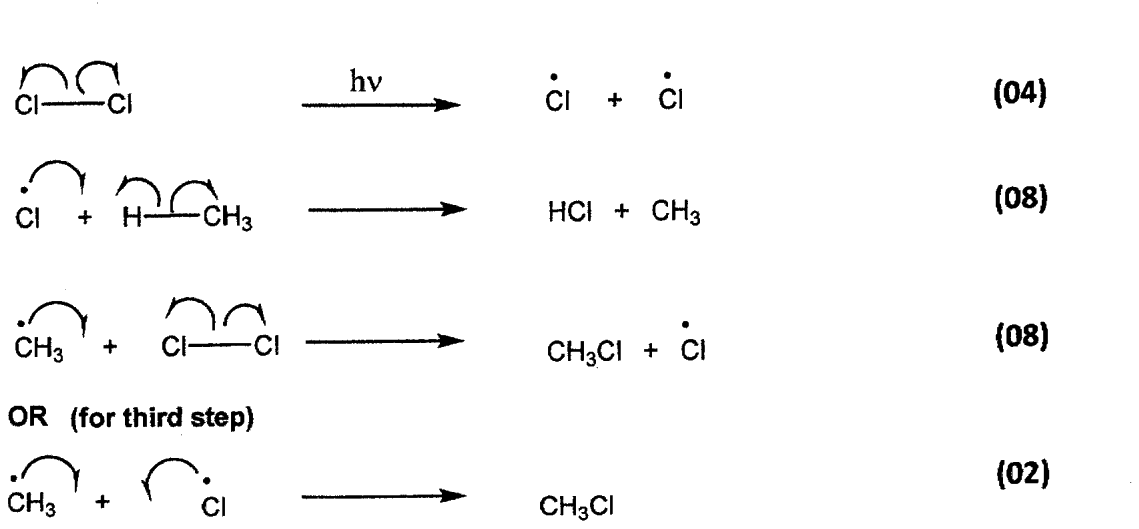
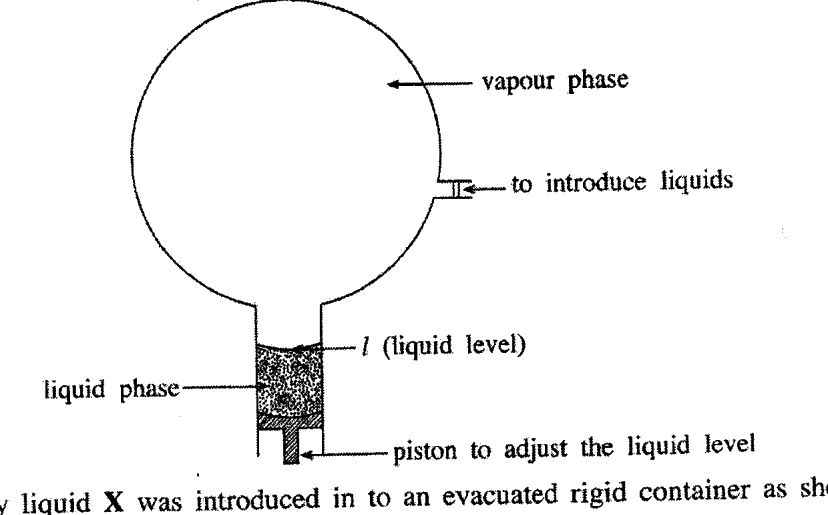
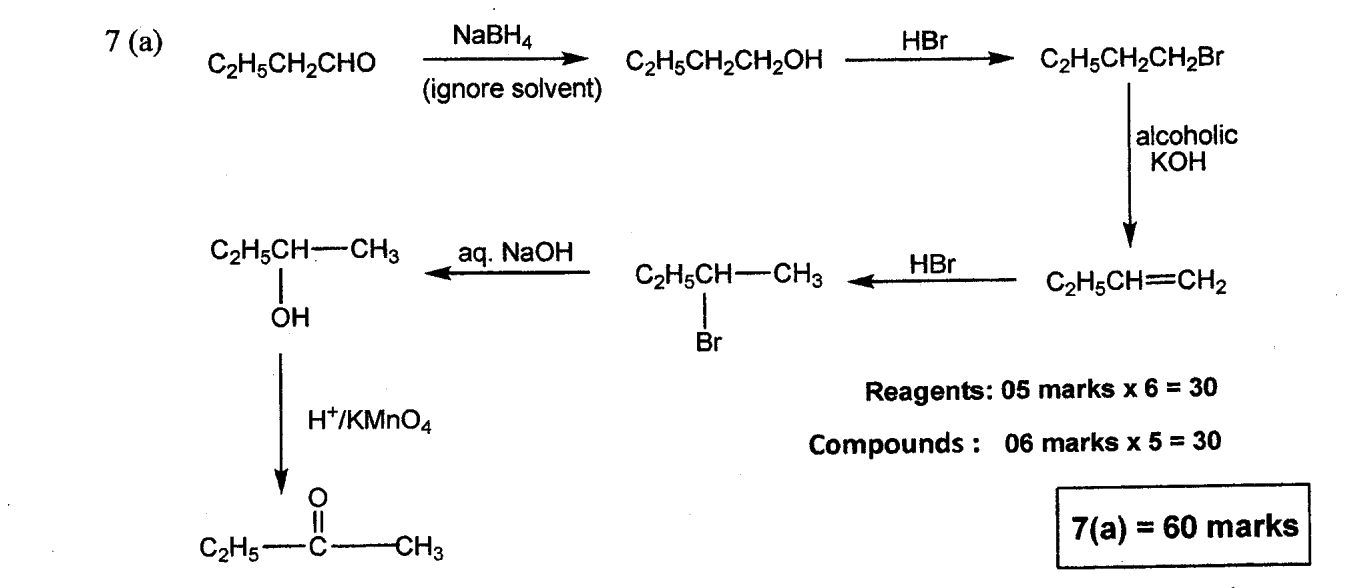
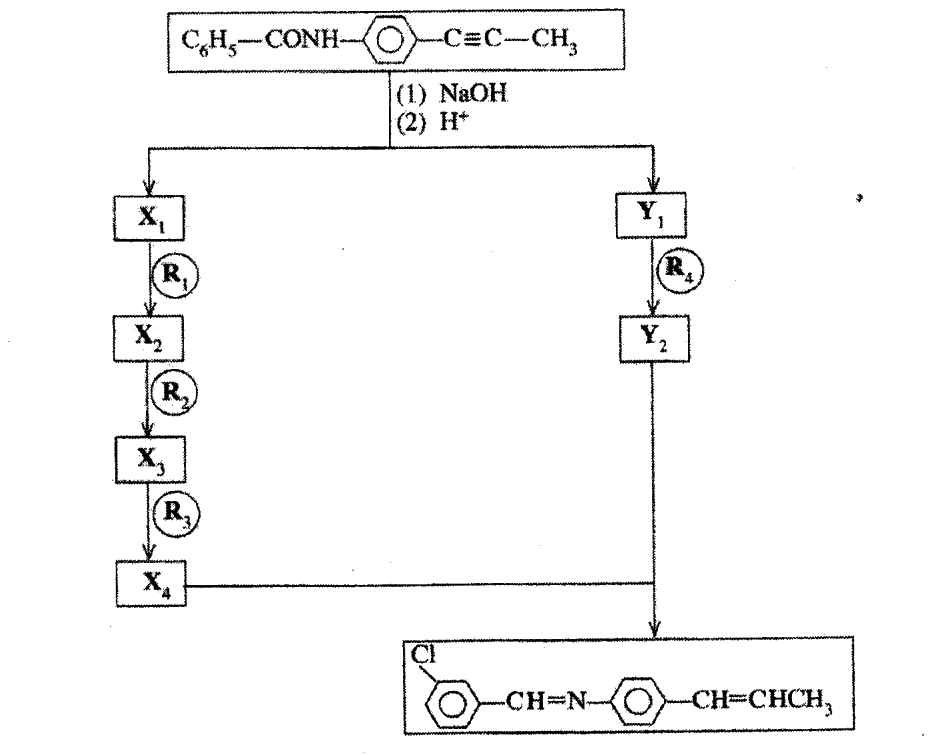
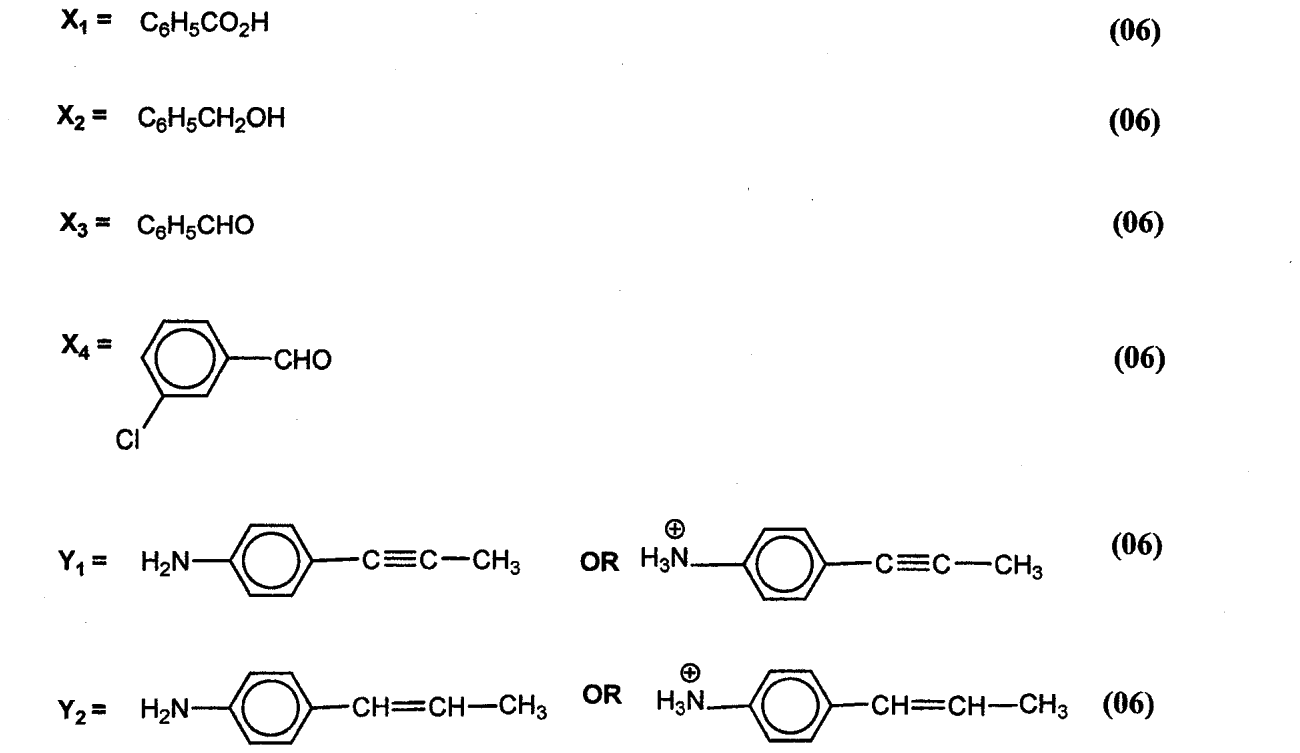
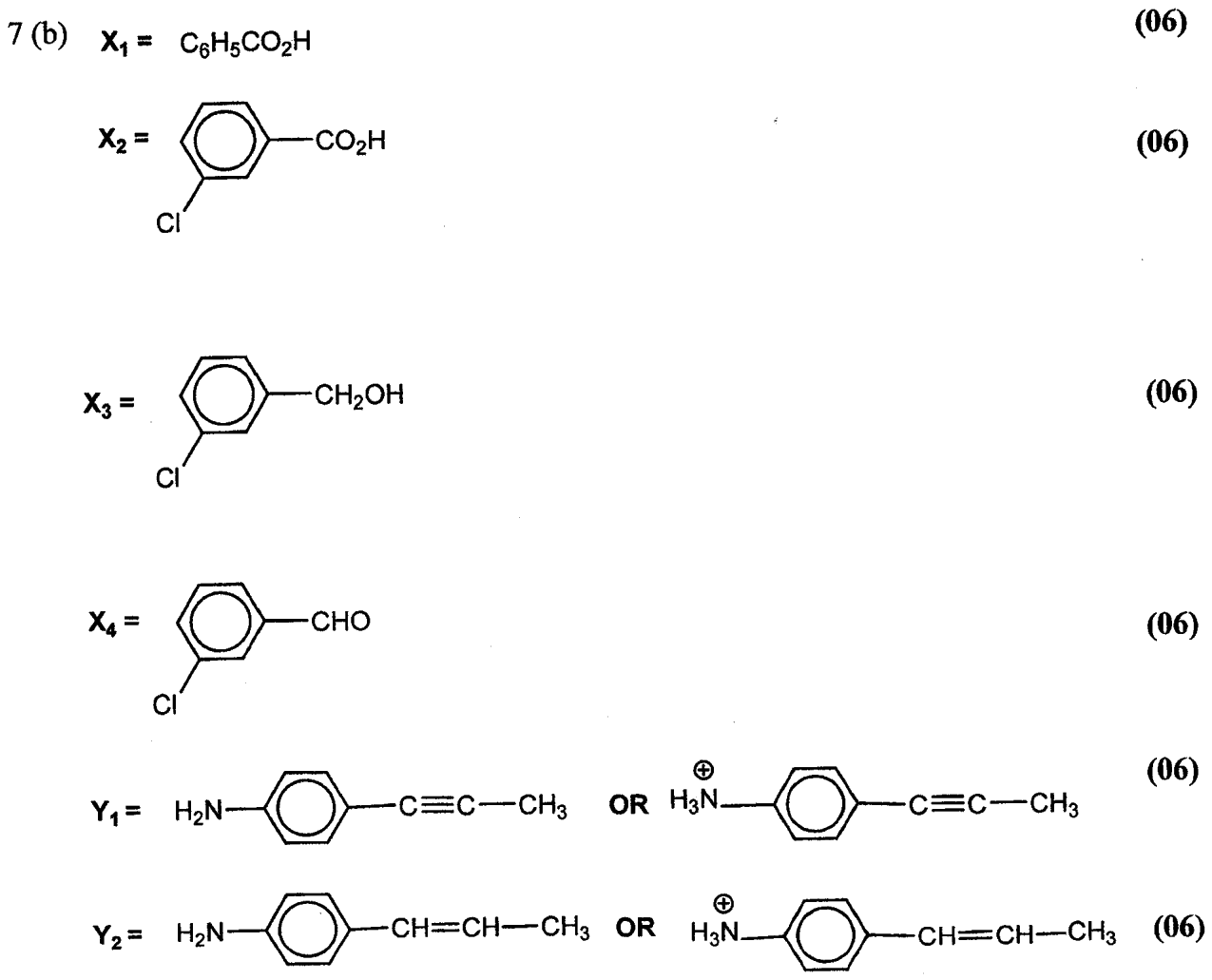
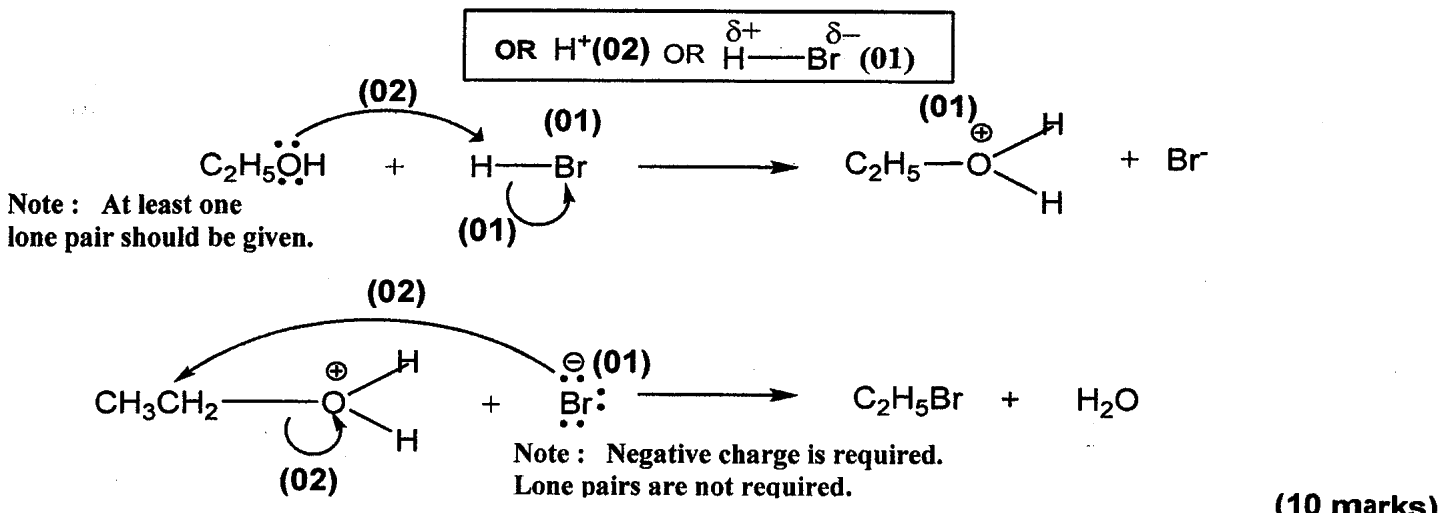
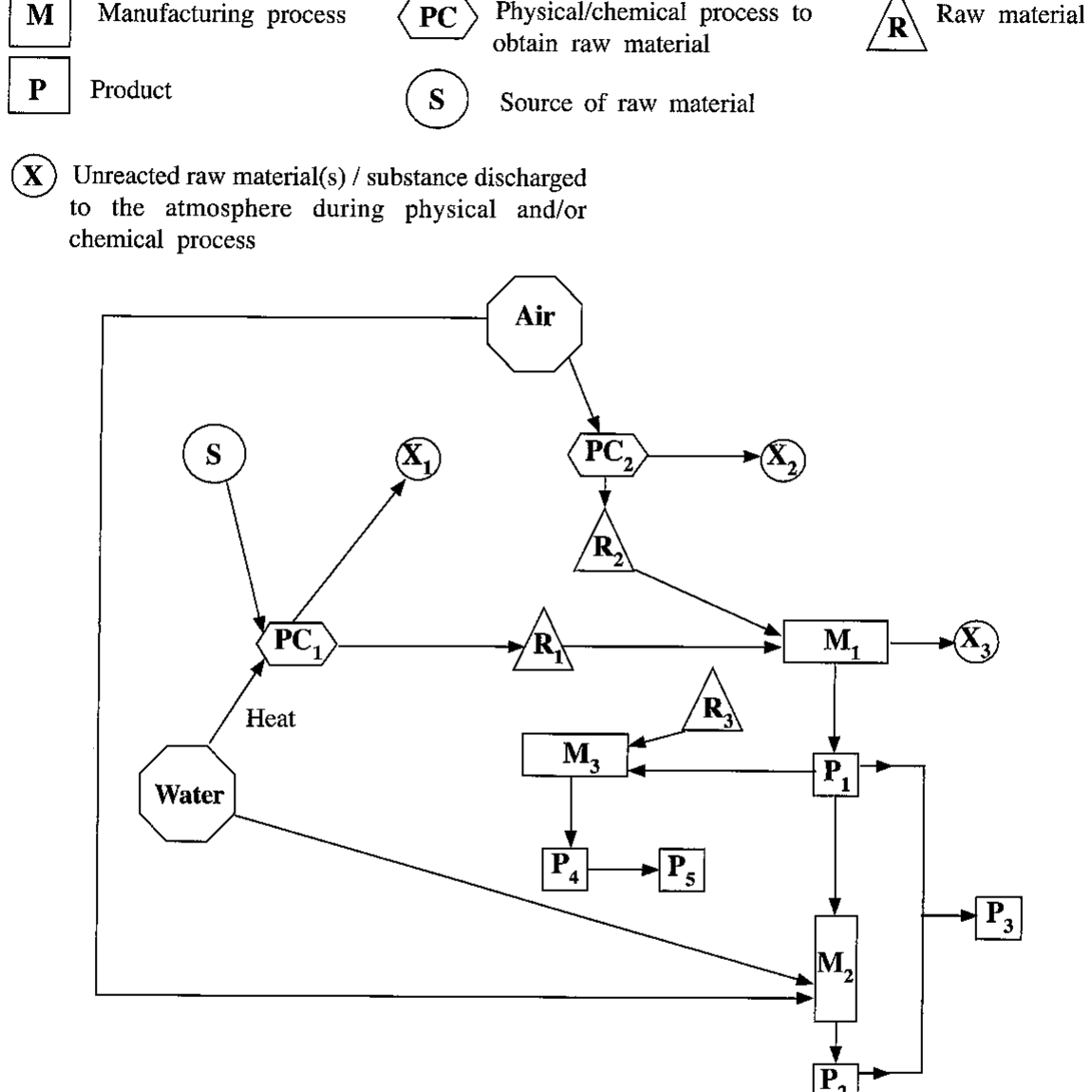
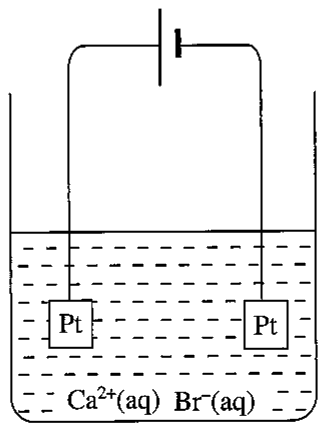
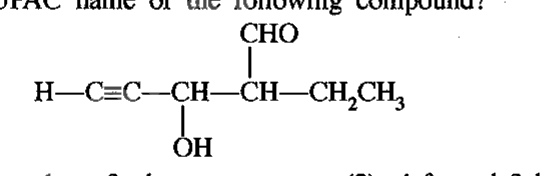


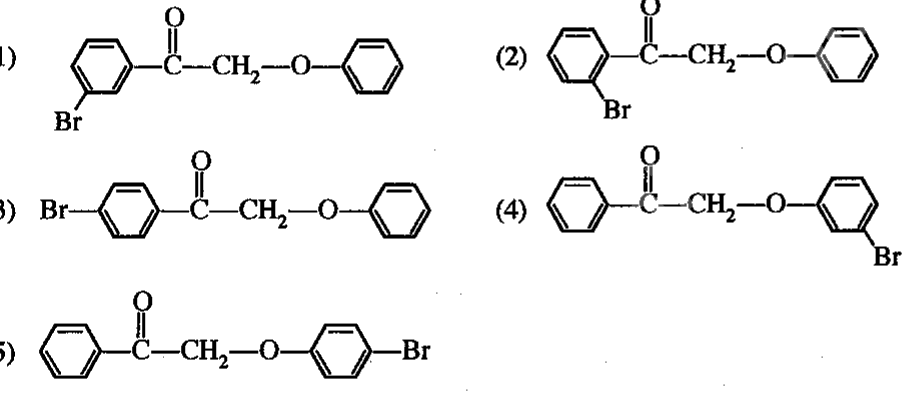
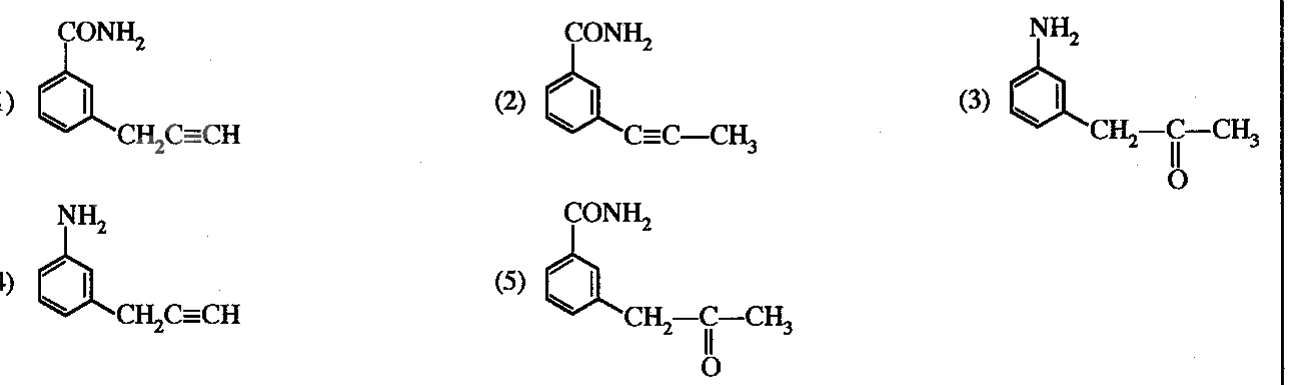
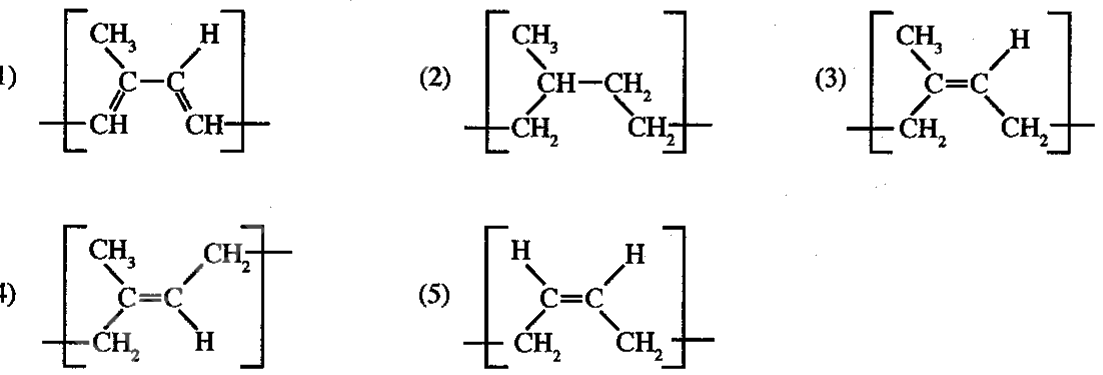
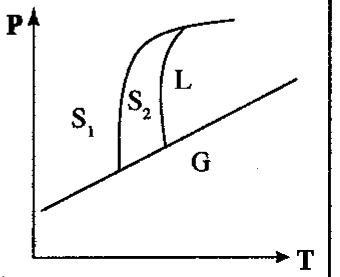
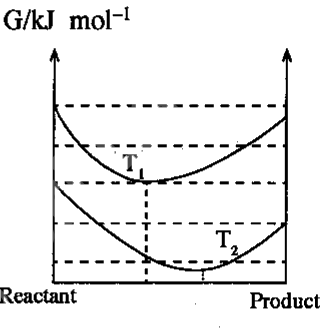
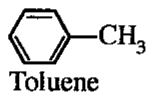
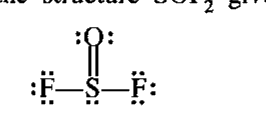
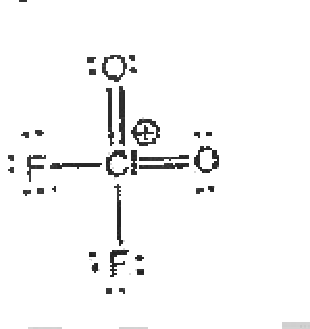
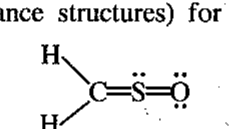
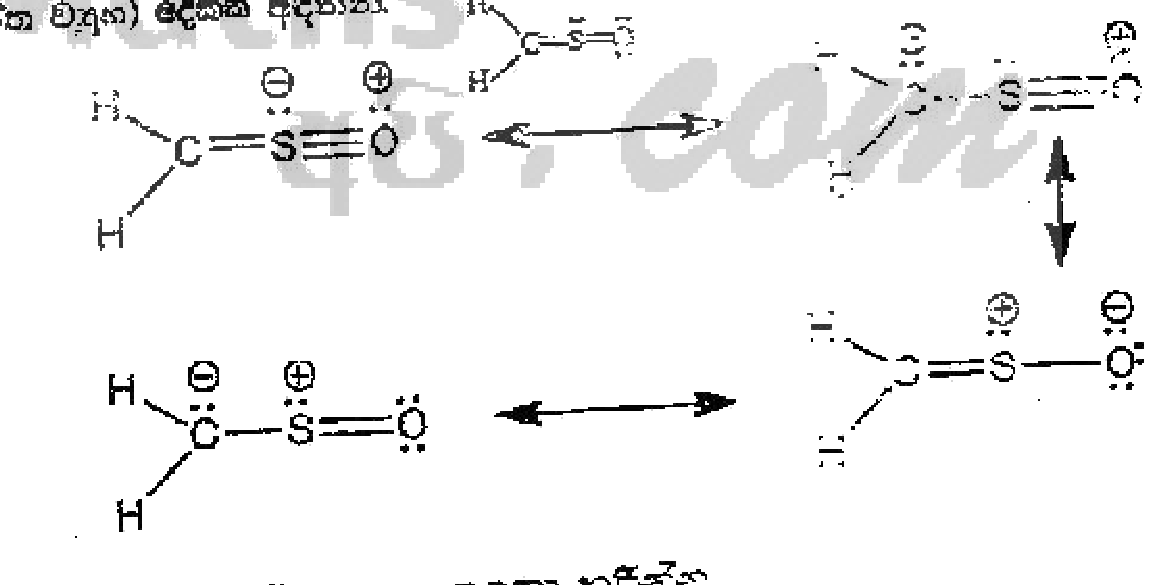
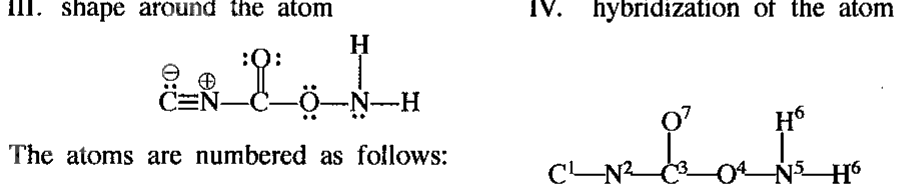
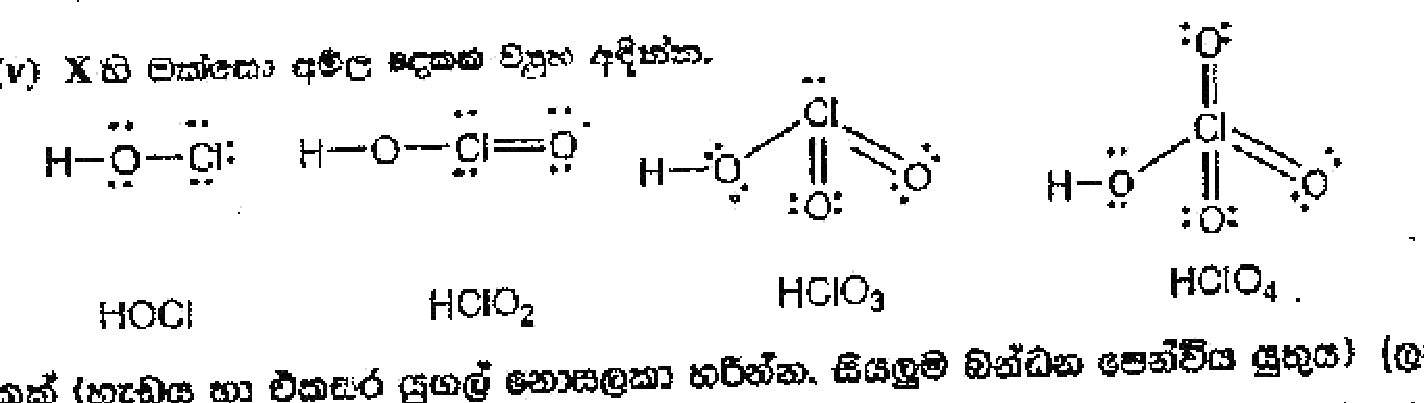
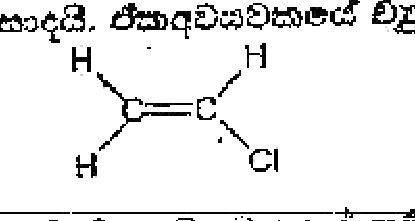

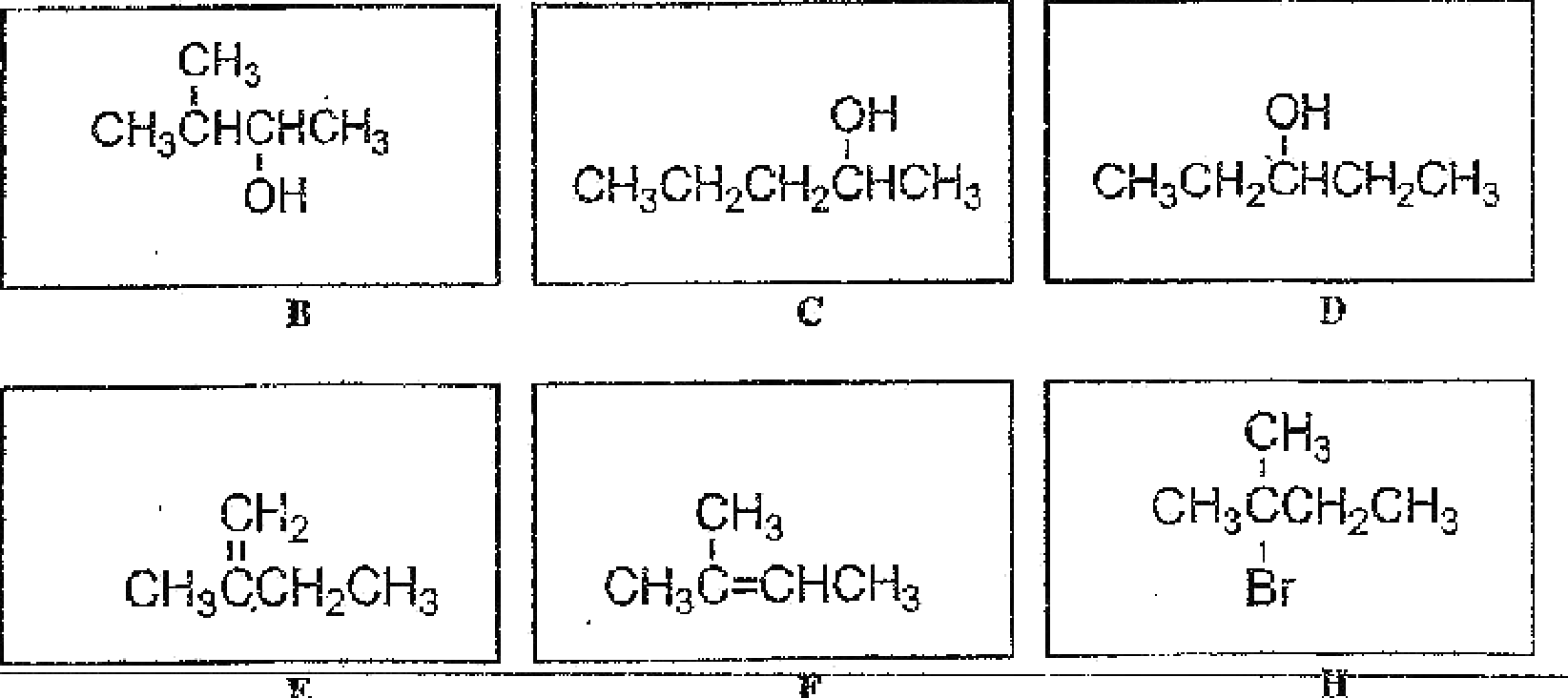
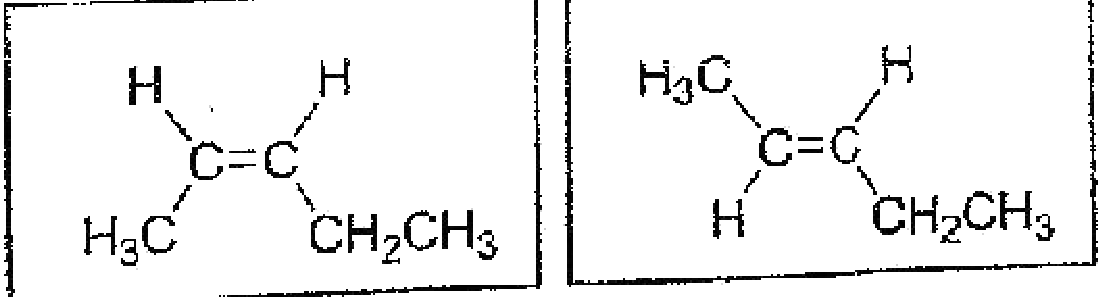
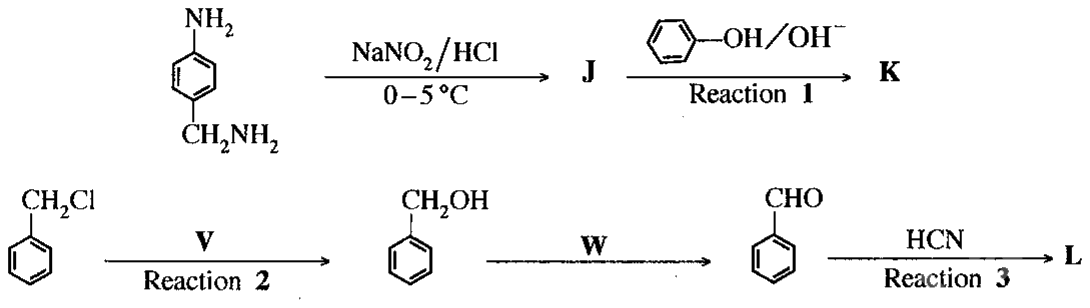
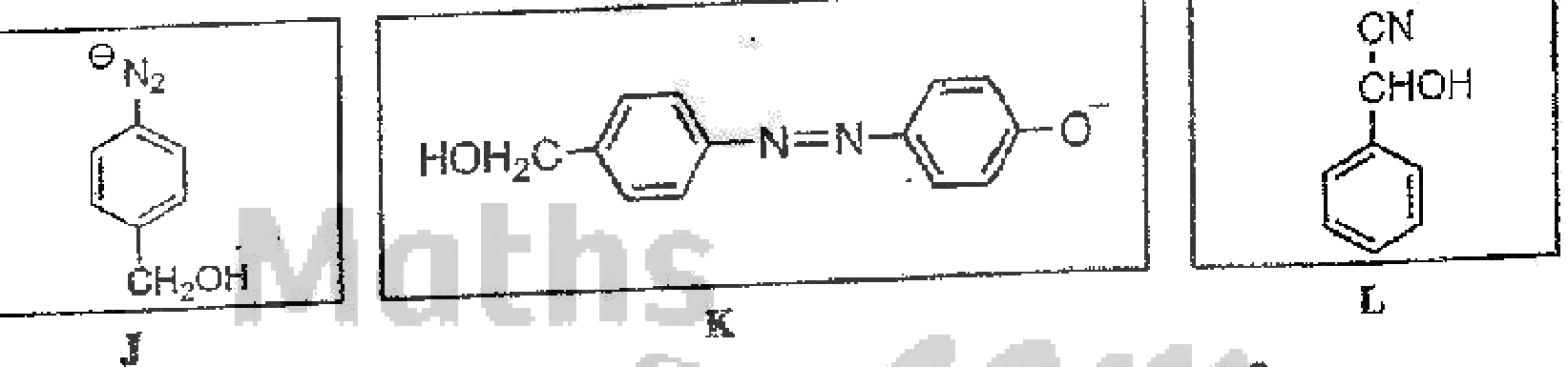

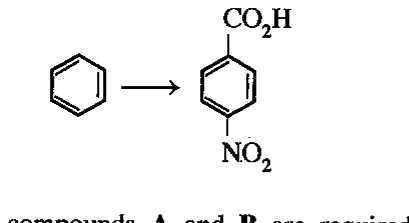
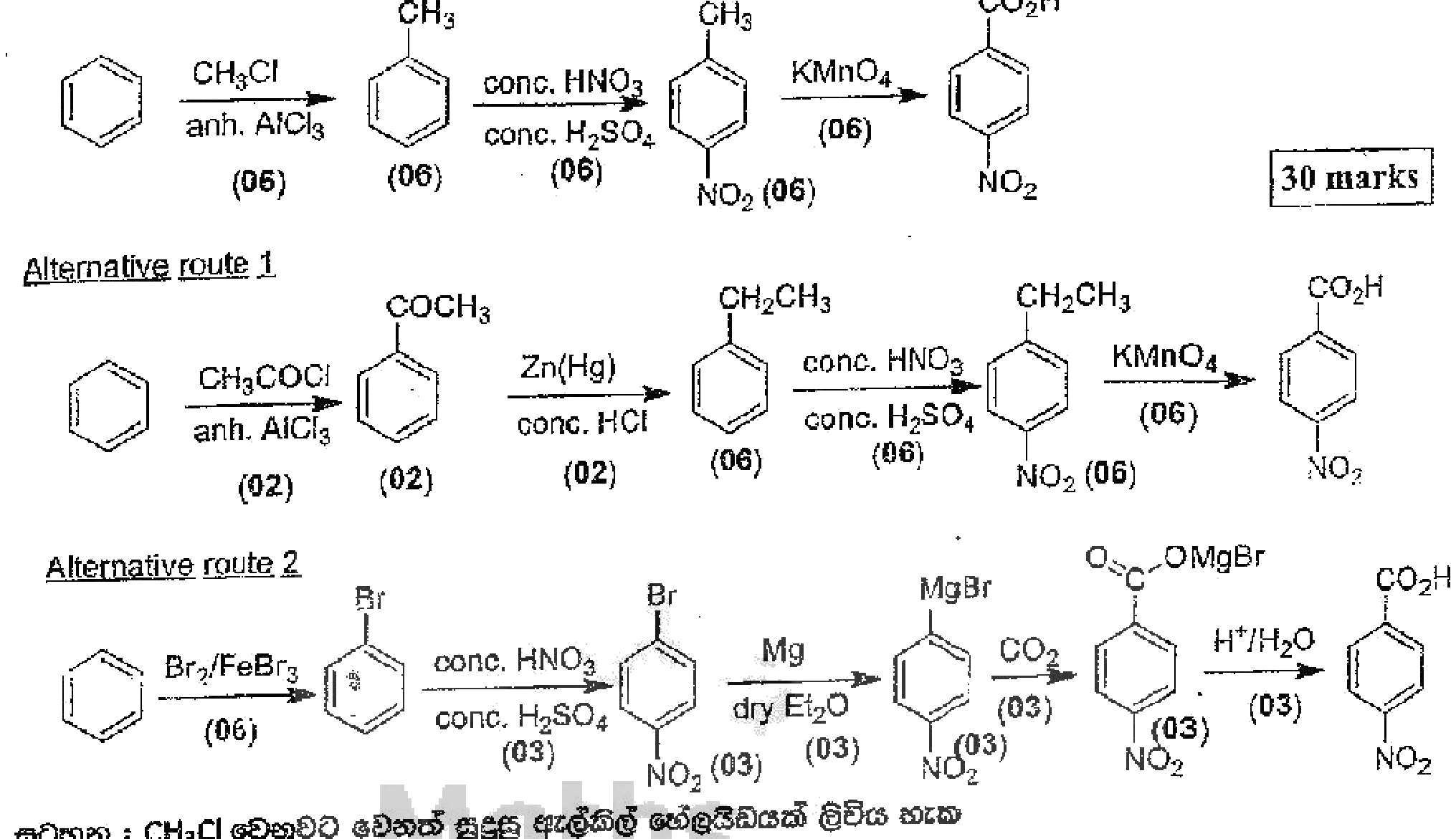
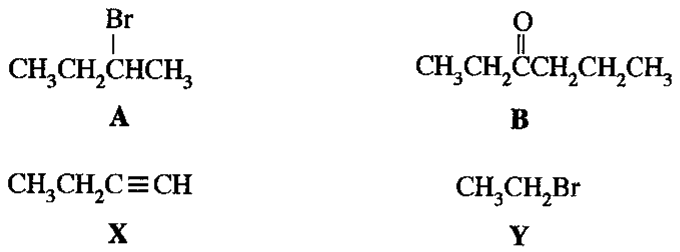
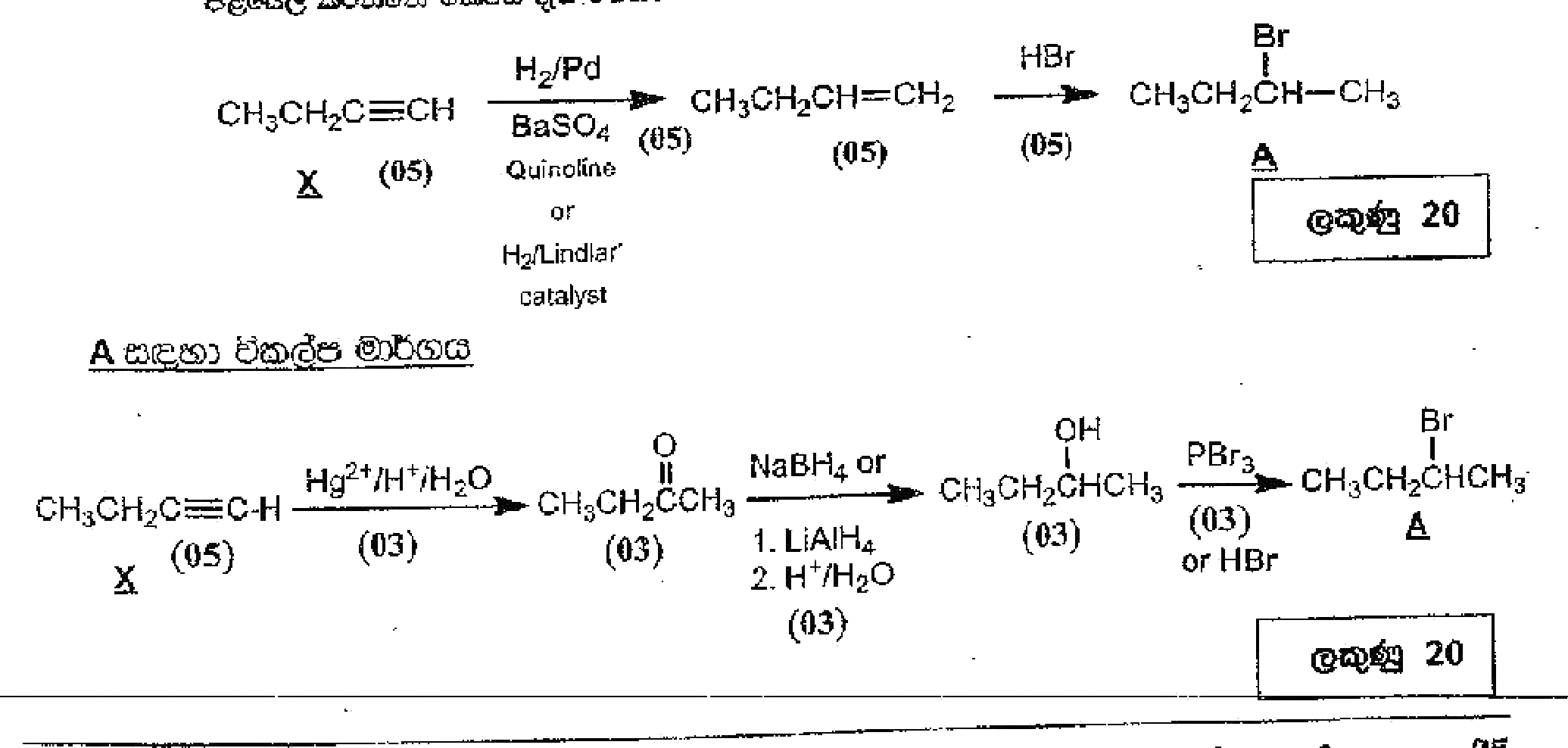
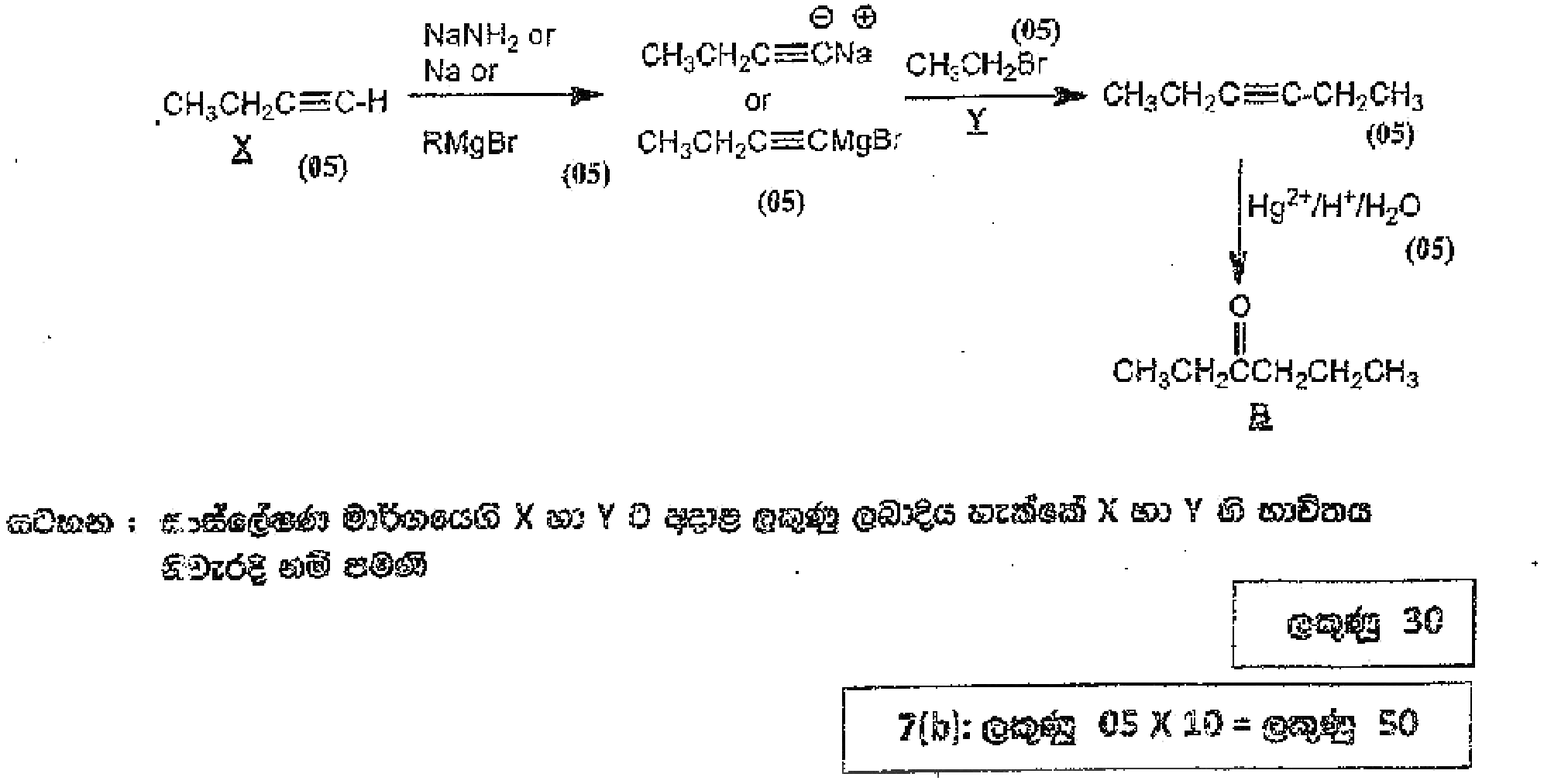
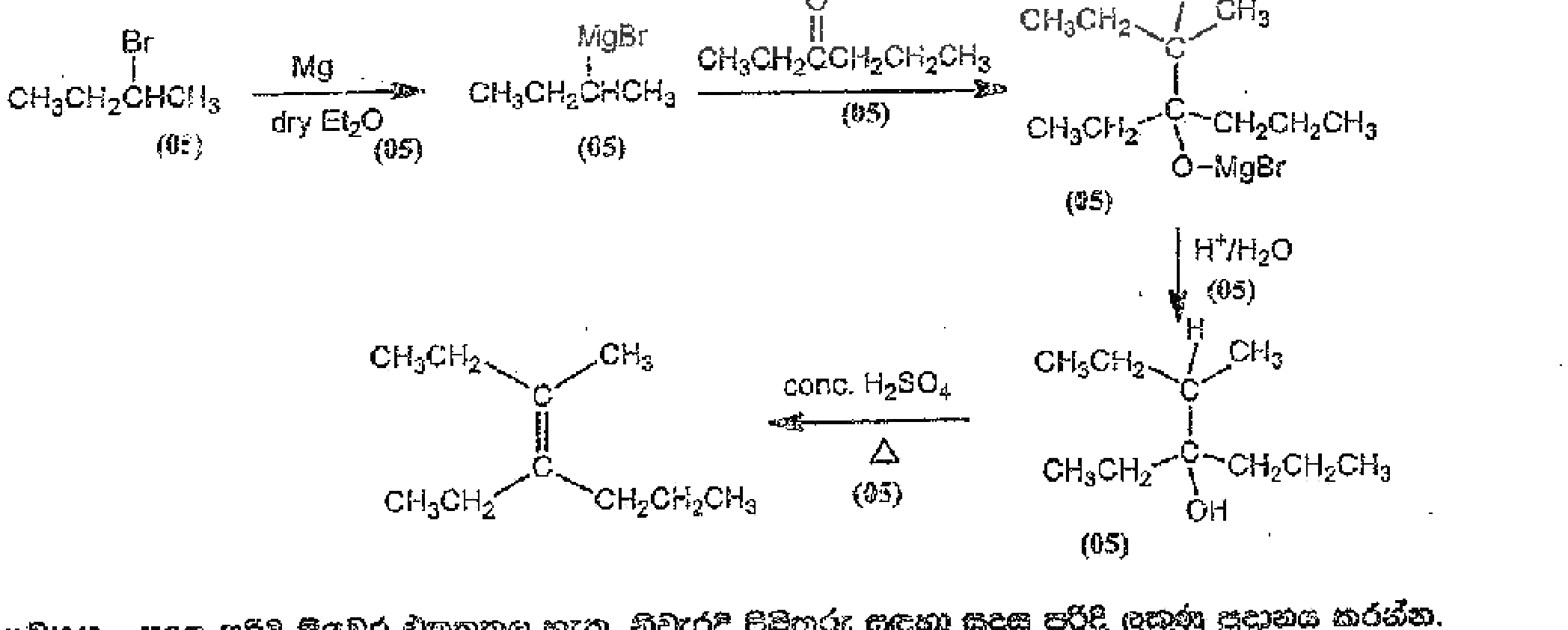
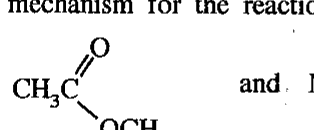
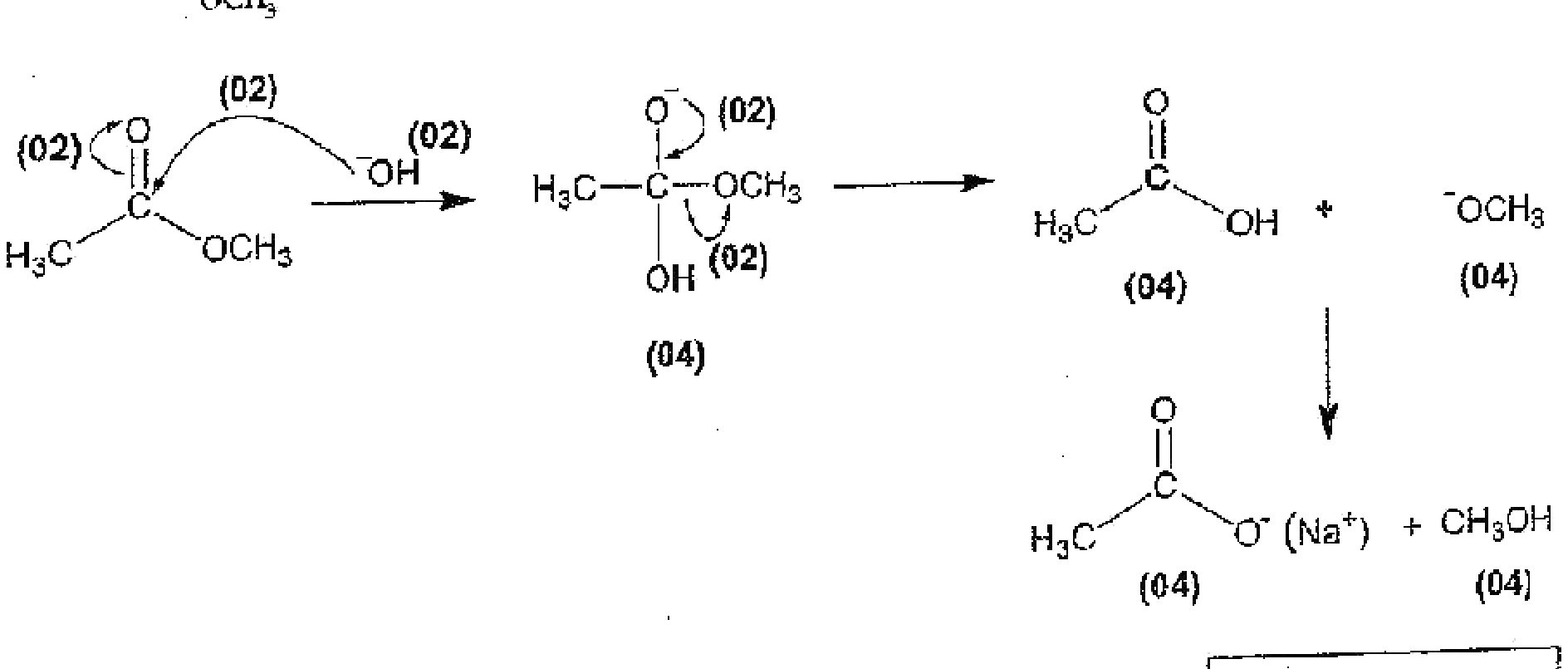
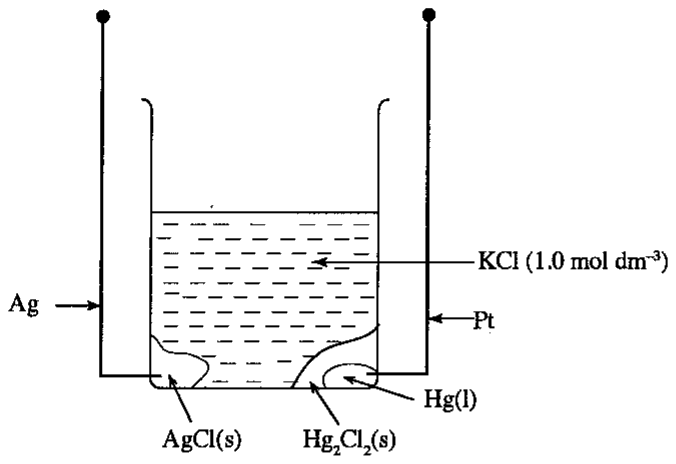
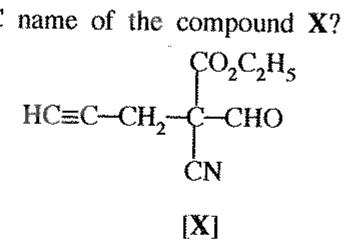
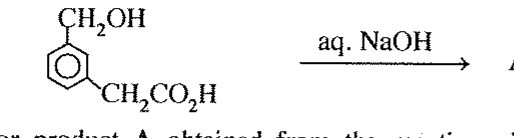
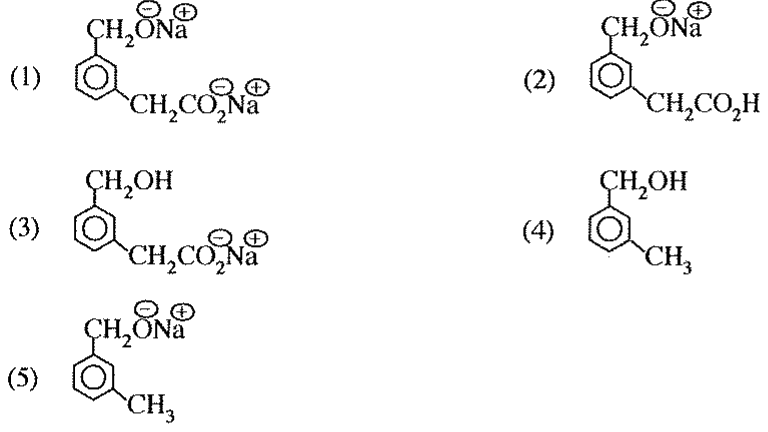
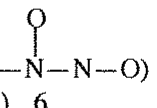
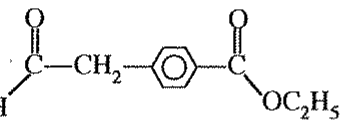
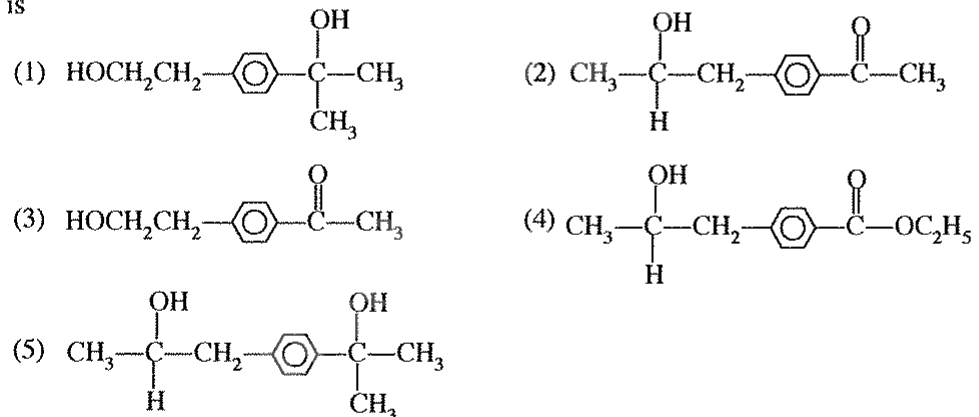
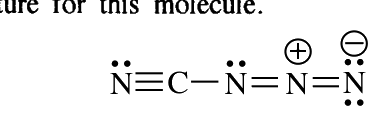
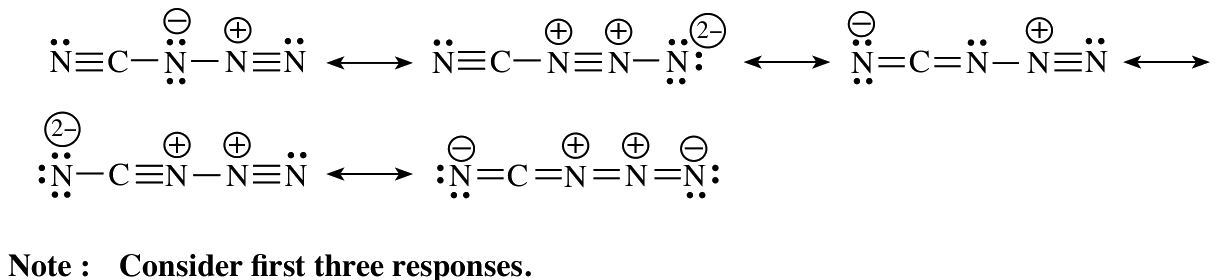
![[A]/mol dm^{−3} against time/s: a straight line falling from 0.010 mol dm^{−3} at t = 0 to about 0.002 mol dm^{−3} at t = 2000 s](figs/2016/a3a.png)
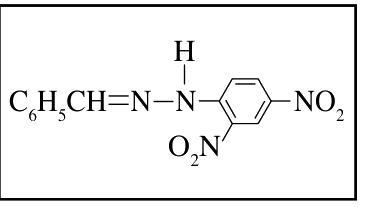
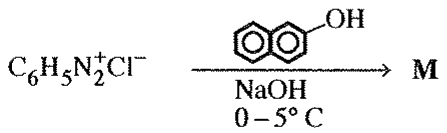
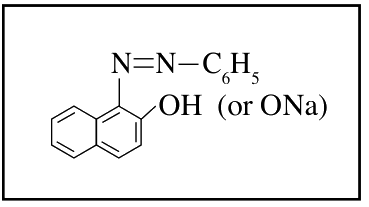
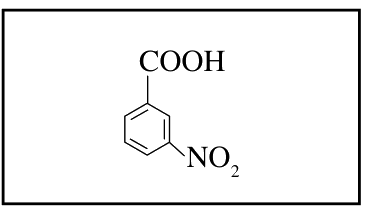
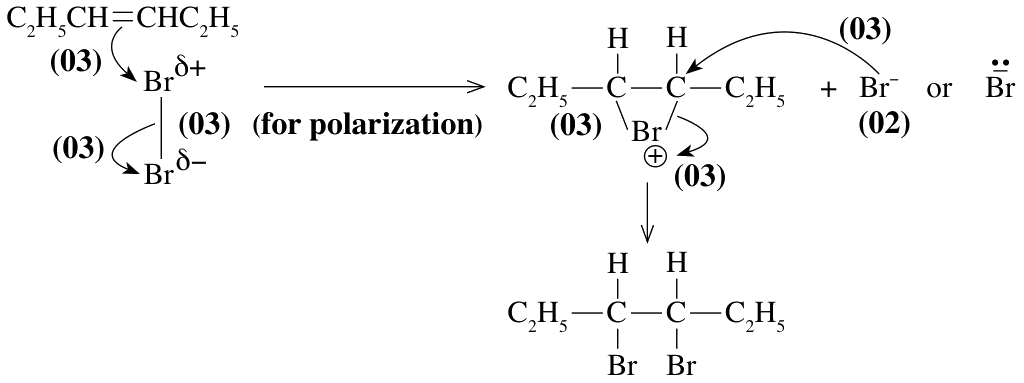
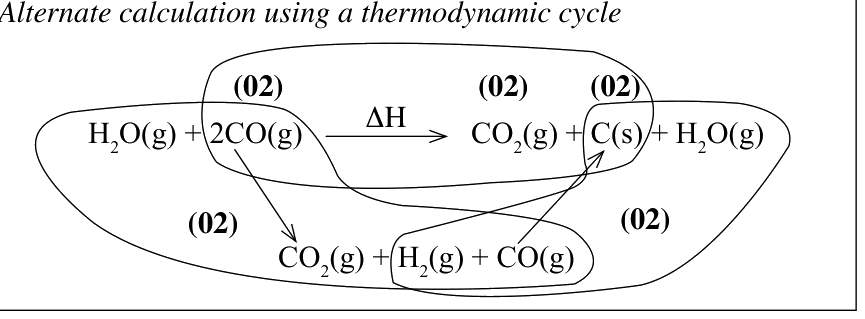
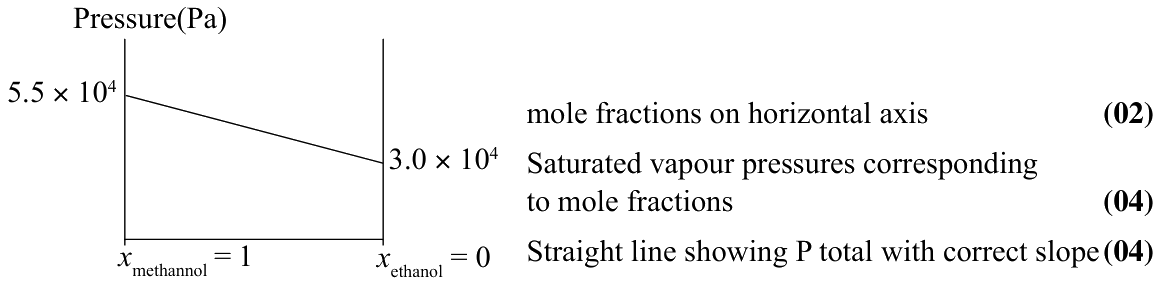

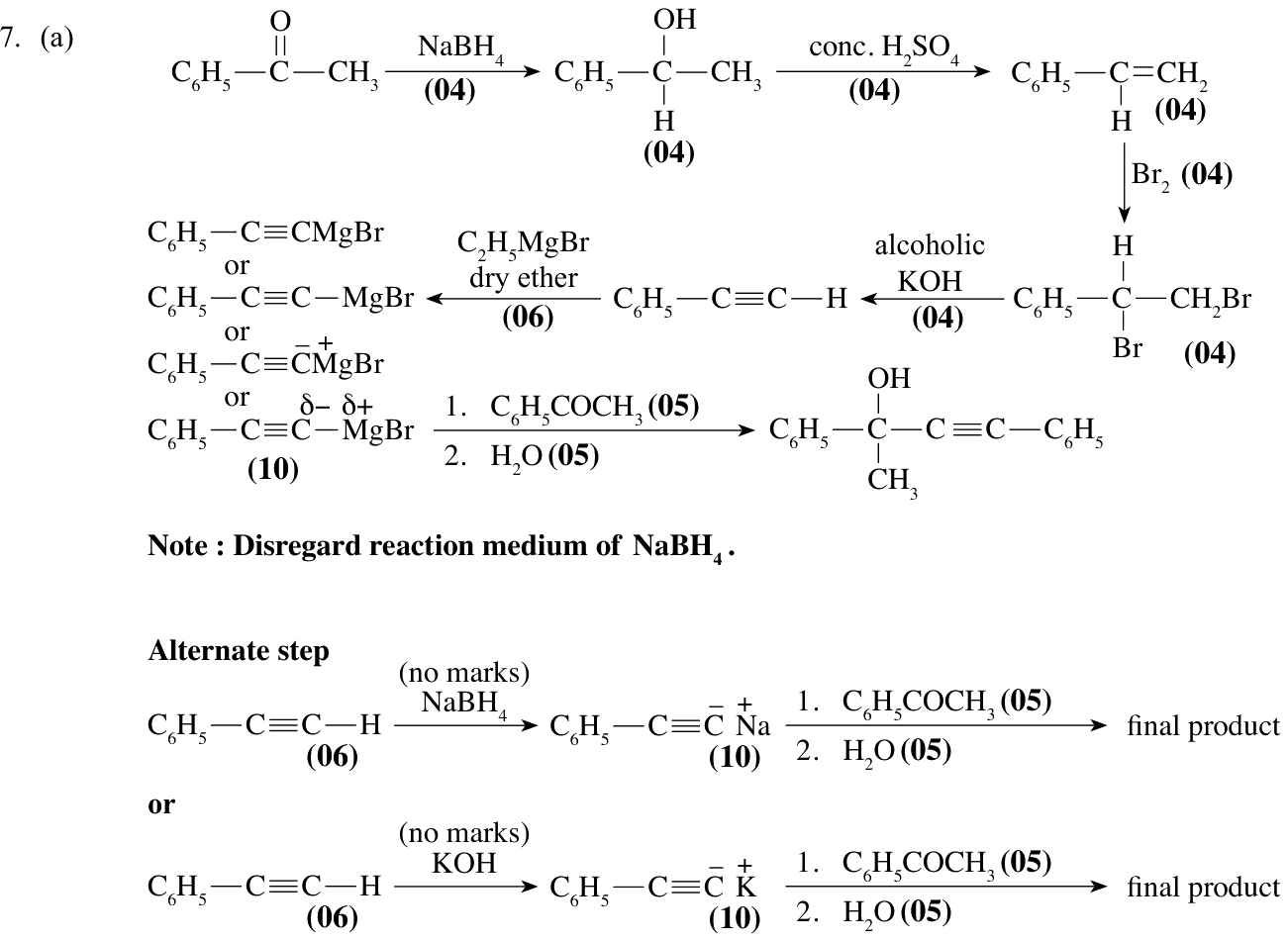
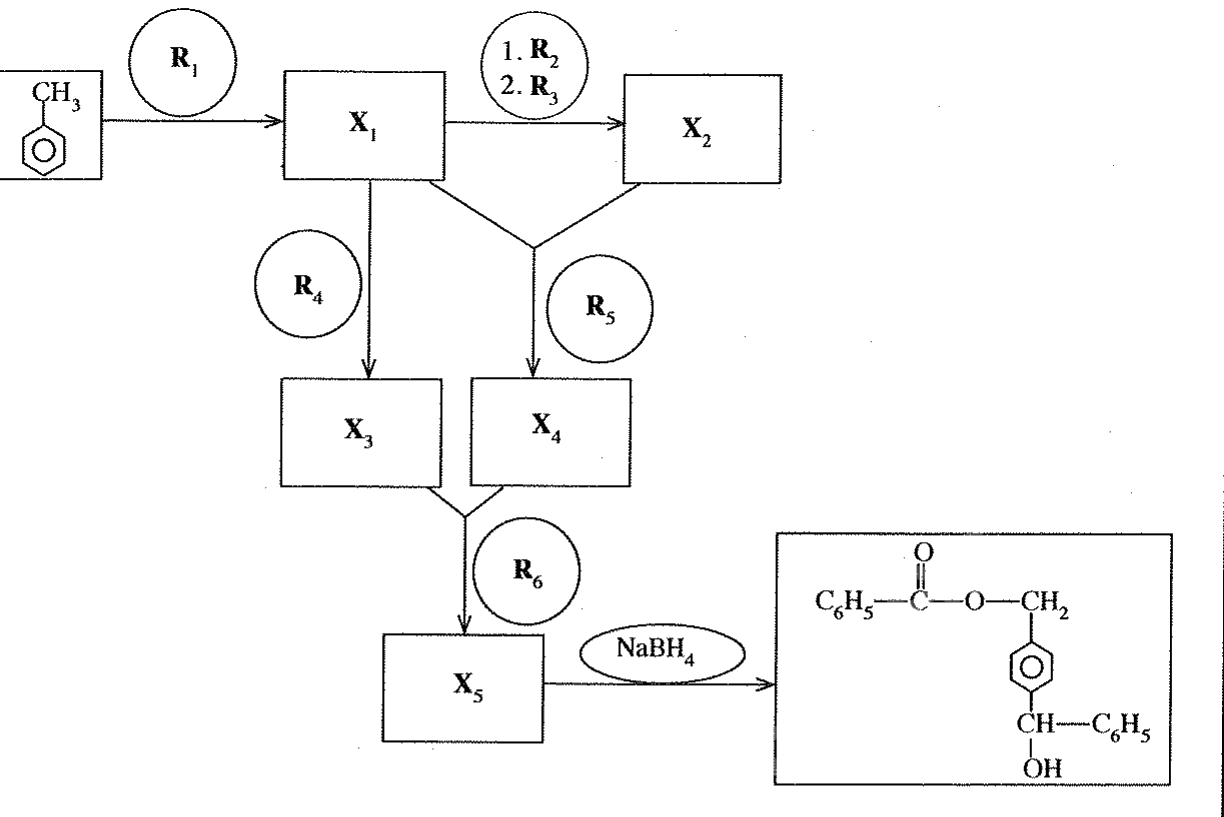

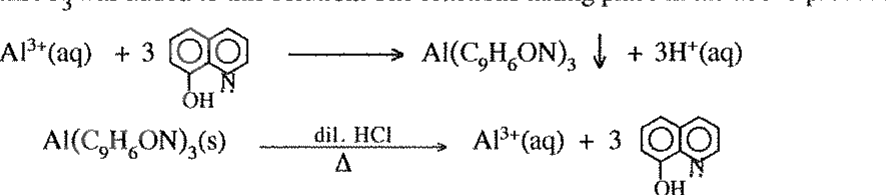
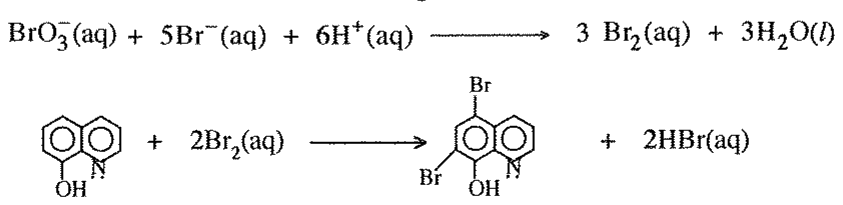
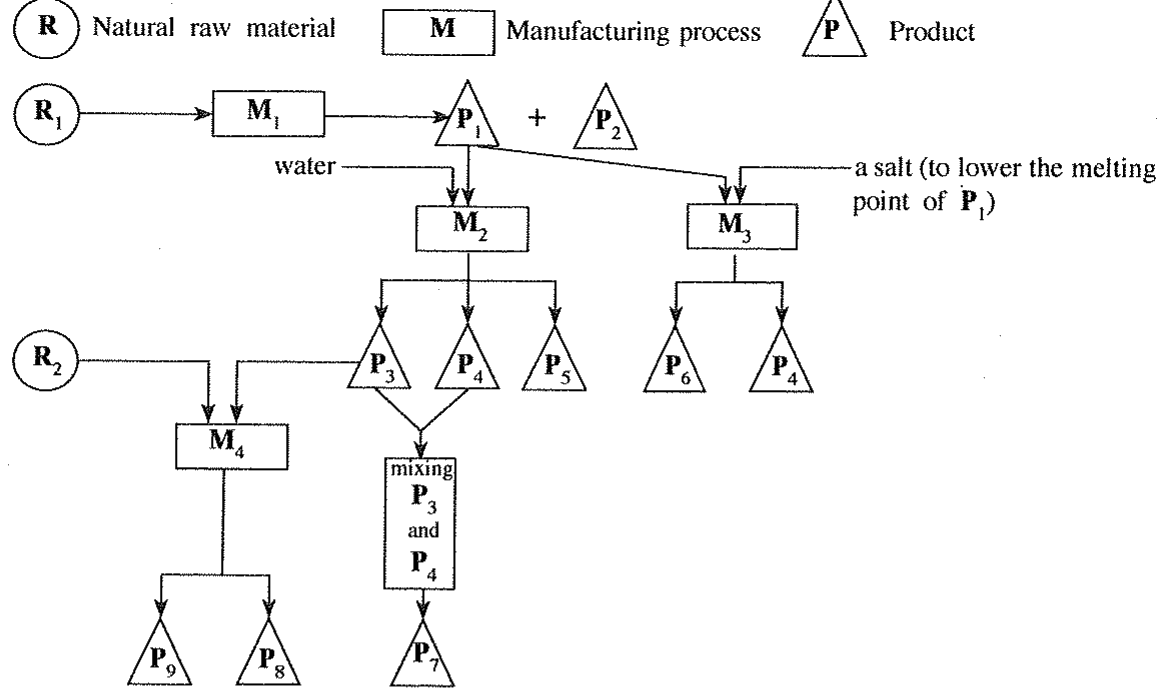
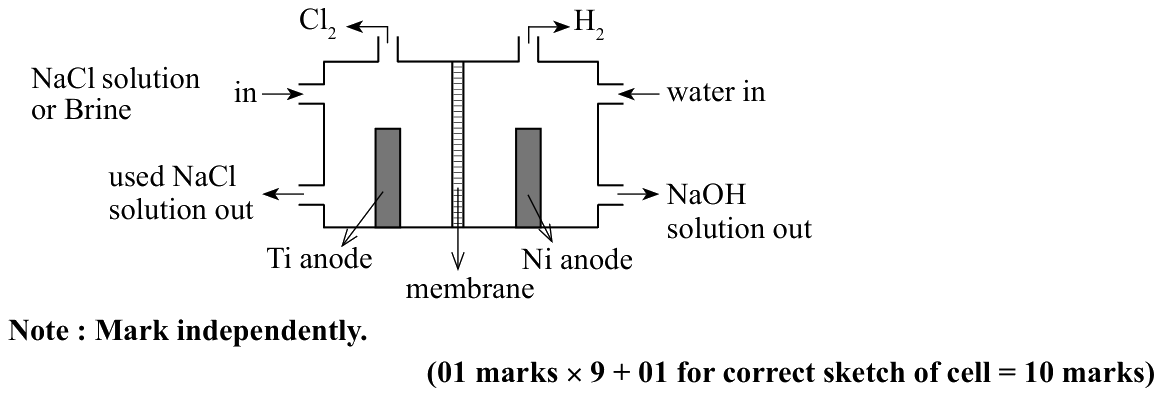
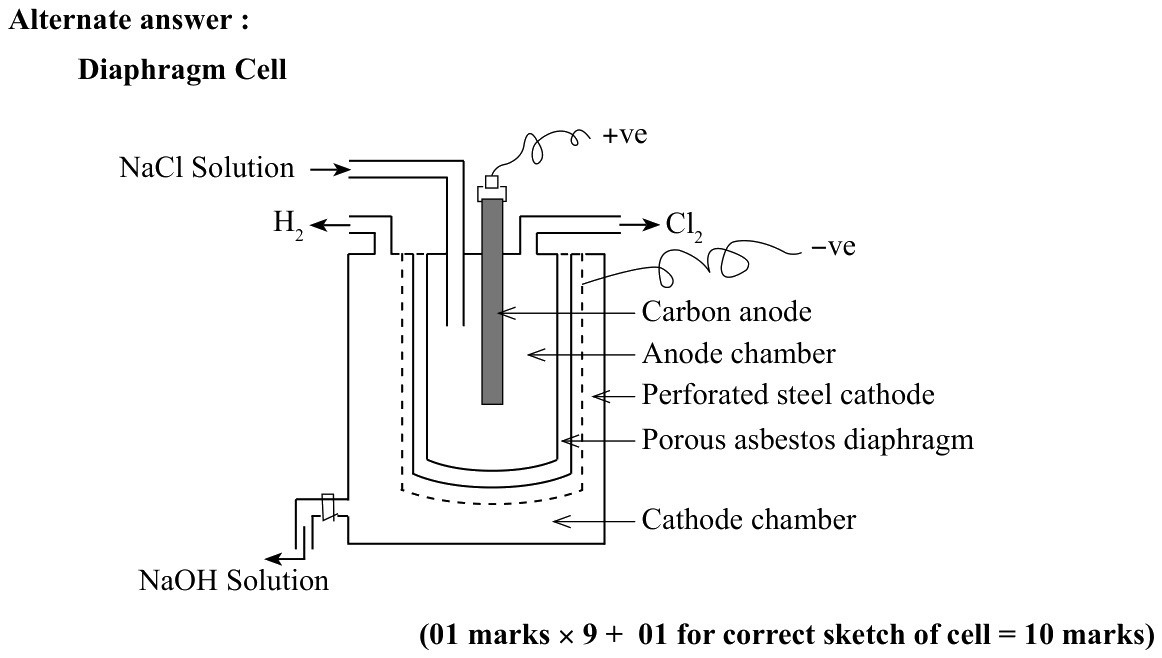
![Scheme: [M(en)_3]^{3+} and its structure (three chelating en ligands around M)](figs/2016/e10a.png)